Cranio Maxillofacial Fixation Market Summary
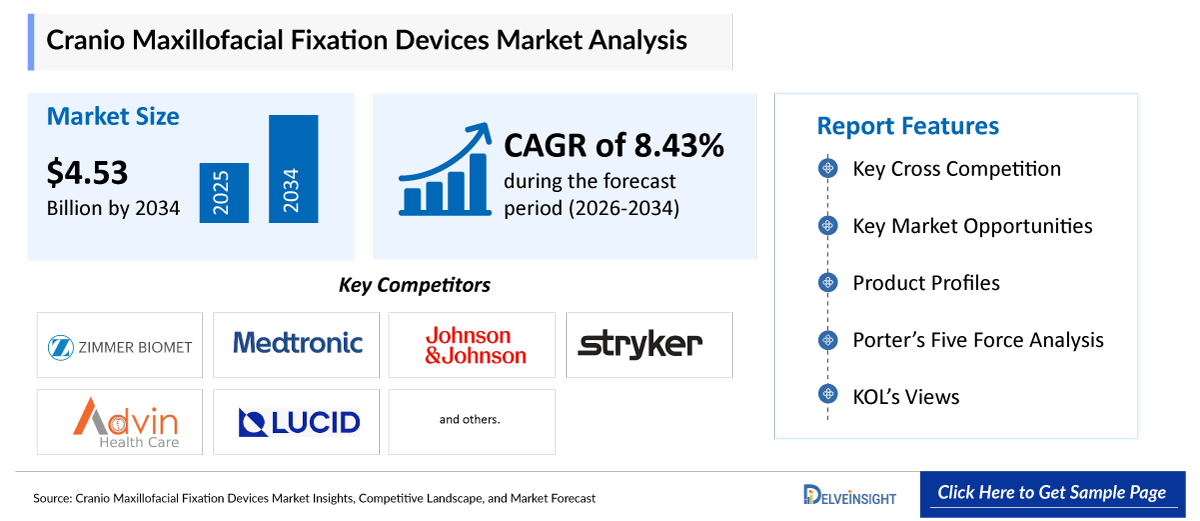
- The Global Cranio Maxillofacial Fixation Devices Market is expected to increase from ~USD 2,037.95 million in 2024 to ~USD 3,825.73 million by 2032, reflecting strong and sustained growth.
- The Global Cranio Maxillofacial Fixation Devices Market is growing at a CAGR of 8.26% during the forecast period from 2025 to 2032.
Cranio Maxillofacial Fixation Devices Market Trends & Insights
- The Global Cranio Maxillofacial Fixation Devices Market is growing due to rising cases of facial trauma, fractures, and congenital deformities. Advances in 3D-printed implants, resorbable plates, and minimally invasive techniques are enhancing outcomes and adoption. Additionally, increasing cosmetic and reconstructive surgeries, along with expanding healthcare access in emerging markets, are fueling market expansion.
- The leading Global Cranio Maxillofacial Fixation Devices Companies such as Zimmer Biomet, Stryker Corporation, Medtronic, Johnson & Johnson Services, Inc., Advin Health Care, LUCID Implants, Auxein Medical, KLS Martin Group, Medartis AG, Integra LifeSciences, Aesculap, Inc., OsteoMed, Inion, JEIL MEDICAL CORPORATION, and others.
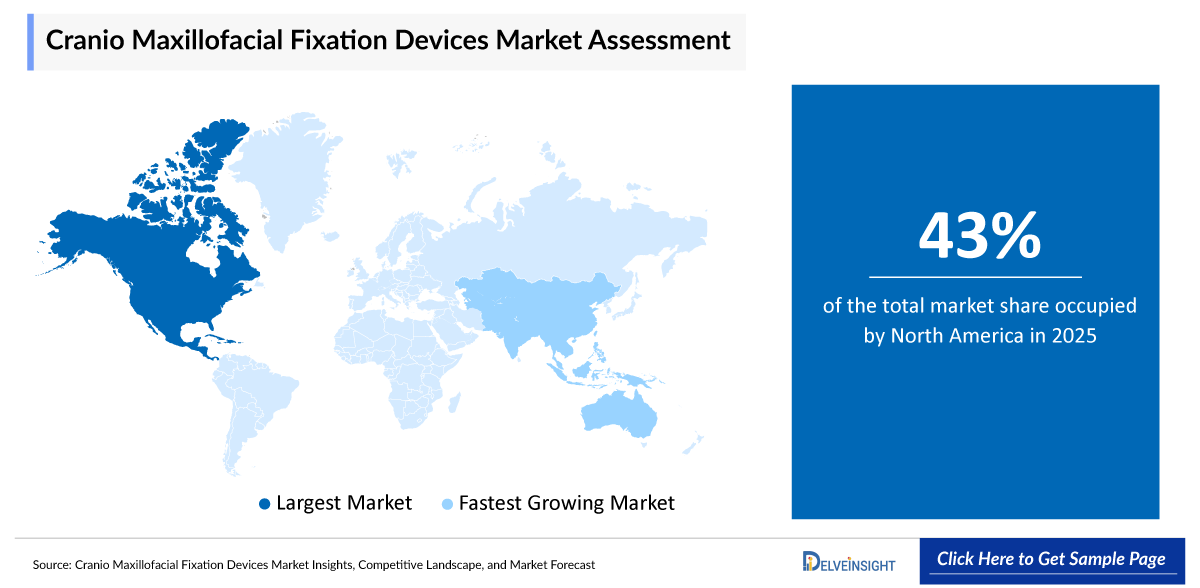
- North America is expected to dominate the Cranio Maxillofacial Fixation Devices Market due to the high prevalence of facial trauma, well-established healthcare infrastructure, advanced surgical technologies, and favorable reimbursement policies. Additionally, the region’s increasing adoption of minimally invasive and 3D-printed patient-specific fixation devices, along with growing awareness of reconstructive and cosmetic facial surgeries, further drives market growth.
- In the product type segment of the Cranio Maxillofacial Fixation Devices Market, the CMF plate and screw fixation devices category is estimated to account for the largest market share in 2024.
Request for Unlocking the Sample Page of the "Cranio Maxillofacial Fixation Devices Market"
Factors Contributing to the Growth of the Cranio-Maxillofacial Fixation Devices Market
-
Rising Incidence of Facial Trauma and Injuries
The increasing number of road traffic accidents, sports-related injuries, and workplace trauma has significantly raised the demand for cranio maxillofacial fixation devices. Facial fractures often require rigid internal fixation, driving consistent market adoption.
-
Growing Prevalence of Craniofacial Deformities
Congenital craniofacial anomalies such as cleft lip and palate, along with acquired deformities, are contributing to the rising volume of corrective and reconstructive surgeries, thereby supporting market growth.
-
Increasing Demand for Reconstructive and Aesthetic Surgeries
The growing acceptance of cosmetic and reconstructive facial procedures, including orthognathic and facial contouring surgeries, has accelerated the utilization of advanced fixation systems in maxillofacial interventions.
-
Technological Advancements in Fixation Devices
Continuous innovations such as bioresorbable plates and screws, patient-specific implants, and 3D-printed fixation systems have improved surgical precision, reduced complications, and enhanced postoperative outcomes, boosting market expansion.
-
Rising Geriatric Population
An expanding elderly population is more susceptible to falls, osteoporosis-related fractures, and dental complications, increasing the need for cranio maxillofacial surgical interventions and fixation solutions.
-
Improved Healthcare Infrastructure and Surgical Expertise
Advancements in healthcare facilities, increased availability of skilled maxillofacial surgeons, and wider access to advanced surgical technologies in emerging markets are supporting market growth.
-
Favorable Reimbursement and Insurance Coverage
Improved reimbursement policies for trauma and reconstructive surgeries in several developed regions have encouraged patients to opt for surgical treatment, positively impacting the adoption of fixation devices.
-
Growing Awareness and Early Diagnosis
Rising awareness among patients and healthcare professionals regarding timely surgical intervention for facial injuries and deformities has led to earlier treatment and higher procedural volumes.
-
Expansion of Medical Tourism
The growth of medical tourism in countries offering cost-effective and high-quality maxillofacial surgical care has increased procedural demand, further driving the cranio maxillofacial fixation devices market.
-
Increasing Investment and Product Launches by Companies
Strategic investments in research and development, along with frequent product launches by leading medical device companies, continue to strengthen product portfolios and stimulate overall market growth.
Cranio Maxillofacial Fixation Devices Market Report Segmentation
This cranio maxillofacial fixation devices market report offers a comprehensive overview of the global cranio maxillofacial fixation devices market, highlighting key trends, growth drivers, challenges, and opportunities. It covers detailed market segmentation by Product Type (CMF Plate and Screw Fixation Devices, Cranial Flap Fixation Devices, CMF Distraction Devices, Temporomandibular Joint Replacement Devices, and Bone Graft Substitute), Material (Metals & Alloys, Bioabsorbable, Ceramics, and Others), Application (Neurosurgery, Orthognathic Surgery, Plastic Surgery, and Others), End-User (Hospitals, Clinics, and Others), and Geography. The report provides valuable insights into the competitive landscape, regulatory environment, and market dynamics across major markets, including North America, Europe, and Asia-Pacific. Featuring in-depth profiles of leading industry players and recent product innovations, this report equips businesses with essential data to identify market potential, develop strategic plans, and capitalize on emerging opportunities in the rapidly growing cranio maxillofacial fixation devices market.
Cranio maxillofacial fixation Devices are specialized medical devices used in surgical procedures to treat and repair conditions affecting the bones of the skull, face, and jaw. These devices include implants, such as plates, screws, wires, and external fixators, used to stabilize and support facial and skull bones.
The Global Cranio-Maxillofacial Fixation Devices Market is witnessing strong growth due to the rising incidence of facial fractures, trauma cases, and congenital deformities requiring surgical intervention. Increasing adoption of advanced fixation systems in reconstructive and cosmetic surgeries is further fueling demand. Technological advancements such as 3D-printed implants, resorbable plates, and minimally invasive techniques are improving surgical outcomes and driving market expansion. Growing awareness and availability of healthcare facilities in emerging economies are also contributing to growth. Additionally, the surge in road accidents, sports injuries, and a rising geriatric population susceptible to bone disorders are key drivers. The trend of medical tourism for cost-effective CMF procedures is expected to support further market growth globally.
Get More Insights into the Report @ Cranio Maxillofacial Fixation Devices Market
What are the latest Cranio Maxillofacial Fixation Devices Market Dynamics and Trends?
The Global Cranio-Maxillofacial Fixation Devices Market is growing significantly, driven by a combination of increasing trauma cases, a rise in surgical procedures, and continuous technological advancements. These devices are crucial for stabilizing facial and cranial bones after injury or surgery.
Rising Cases of Trauma: A primary driver of market growth is the high incidence of maxillofacial trauma from road traffic accidents, sports injuries, and industrial incidents. According to 2024 studies, facial fractures accounted for about 10.7 million of the 76.4 million fractures reported globally, highlighting the significant demand for CMF devices to restore both function and appearance. The frequent association between traumatic brain injury (TBI) and complex facial fractures also fuels demand. With approximately 223,000 TBI hospitalizations in the U.S. annually, CMF devices are indispensable for stabilizing fractured bones and protecting vital structures. The increasing adoption of 3D-printed, patient-specific implants and resorbable fixation systems in TBI-related surgeries further enhances precision and accelerates recovery, driving market expansion.
Growth in Surgical Procedures: Beyond trauma, the market is benefiting from the increasing number of aesthetic and reconstructive surgeries. The International Society of Aesthetic Plastic Surgery reported a 4.3% increase in facial and cranial procedures worldwide in 2024, with over 7.4 million performed. CMF fixation devices, such as plates and screws, are essential for ensuring the stability and precision required in procedures like chin and cheek augmentations and facial reconstructions.
Technological Innovation: Continuous technological innovation is a key factor pushing the market forward. Companies are developing new products that offer improved patient outcomes. For example, in May 2025, RevBio, Inc. received approval in the UK for a pilot clinical trial of its regenerative bone adhesive, TETRANITE®, for cranial flap fixation. This innovative product aims to improve bone reintegration, enhance cosmetic outcomes, and reduce complications, representing a significant advancement that can increase the adoption of new and effective cranial fixation solutions.
However, Mechanical failure of the implant, including bending, loosening, or breakage, and temporary or chronic neural damage resulting from pressure or hematomas, are significant constraints that limit the end-user base and growth of cranial fixation systems. These issues create a major barrier for surgeons and patients because they can lead to instability of the surgical repair, necessitating further surgeries and increasing healthcare costs. The risk of mechanical failure and neural damage can also lead to patient complications like sensory loss or paralysis. Ultimately, these factors directly impact the safety and long-term success of the surgical outcomes, reducing confidence in the devices and thereby limiting their widespread adoption and market growth.
Cranio Maxillofacial Fixation Devices Market Segment Analysis
Cranio Maxillofacial Fixation Devices Market by Product Type (CMF Plate and Screw Fixation Devices, Cranial Flap Fixation Devices, CMF Distraction Devices, Temporomandibular Joint Replacement Devices, and Bone Graft Substitute), Material (Metals & Alloys, Bioabsorbable, Ceramics, and Others), Application (Neurosurgery, Orthognathic Surgery, Plastic Surgery, and Others), End-User (Hospitals, Clinics, and Others), and Geography (North America, Europe, Asia-Pacific, and Rest of the World)
Cranio Maxillofacial Fixation Devices Market By Product Type: CMF Plate and Screw Fixation Devices Category Dominates the Market
In the product type segment of the cranio maxillofacial fixation devices market, CMF plate and screw fixation devices are projected to hold the largest market share of 48% in 2024, largely because of their critical role in treating a wide spectrum of craniofacial injuries and abnormalities. These devices are the gold standard for internal fixation in facial trauma, fractures, congenital deformities, and reconstructive surgeries, as they deliver superior mechanical stability, precise anatomical alignment, and faster recovery. Their dominance is reinforced by continuous product innovations such as resorbable plating systems, 3D-printed plates, and patient-specific custom solutions that reduce infection risks and improve patient comfort. For example, Stryker Corporation offers the Cranio-Maxillofacial (CMF) Plating System, which includes an array of low-profile plates and screws designed for fracture fixation and reconstructive surgeries of the craniofacial skeleton.
Similarly, Zimmer Biomet provides the Trumatch CMF Solutions, a patient-specific plating system leveraging 3D printing for personalized surgical outcomes, while DePuy Synthes (Johnson & Johnson MedTech) markets its MatrixMANDIBLE and MatrixMIDFACE Plating Systems, widely adopted for trauma and reconstructive cases. Additionally, the growing incidence of road accidents, sports injuries, and corrective surgeries continues to elevate demand, while new launches with variable-angle locking technology and bioabsorbable materials further accelerate adoption.
Furthermore, the hospitals and specialty clinics prefer these systems for their reliability in both routine and complex CMF procedures, which strengthens their lead over other product types such as distraction devices, bone graft substitutes, or cranial flap fixation devices. Collectively, the widespread use of products exemplifies why CMF plate and screw fixation devices remain the most revenue-generating and widely adopted segment in the CMF fixation devices market in 2024.
Cranio Maxillofacial Fixation Devices Market By Material: Metals & Alloys Category Dominates the Market
In the material segment of the cranio maxillofacial fixation devices market, metals & alloys are projected to hold the largest market share of 62% in 2024, primarily because of their superior strength, durability, and biocompatibility compared to alternative materials. Titanium and its alloys, in particular, are widely regarded as the material of choice for CMF plates and screws due to their excellent corrosion resistance, lightweight properties, and ability to integrate well with bone without causing significant adverse reactions. These characteristics make them highly reliable for stabilizing complex craniofacial fractures, congenital deformities, and reconstructive surgeries, where long-term mechanical stability is essential. For example, DePuy Synthes (Johnson & Johnson MedTech) offers the MatrixMANDIBLE Plating System, which uses titanium plates and screws designed to provide rigid fixation in mandibular fractures and reconstructions. The consistent clinical performance of metal-based devices, combined with ongoing advancements such as low-profile plate designs and variable-angle locking technology, ensures that metals and alloys remain the dominant material choice over resorbable polymers or composite alternatives in the CMF fixation devices market.
Cranio Maxillofacial Fixation Devices Market By Application: Orthognathic Surgery Category Dominates the Market
In the application segment of the cranio-maxillofacial (CMF) fixation devices market, orthognathic surgery is projected to hold the largest market share of 49% in 2024. This is primarily driven by the increasing prevalence of jaw deformities, malocclusion, and other dentofacial abnormalities that require surgical correction for both functional and aesthetic reasons.
The Rise of Corrective Jaw Surgery: Orthognathic procedures are becoming more common as patients and surgeons recognize their benefits in improving essential functions like chewing, speech, and breathing, in addition to addressing facial asymmetry and cosmetic concerns. Recent studies from 2024 in Germany support this trend, showing a significant increase in these procedures, with mandibular procedures rising by 45% and maxillary procedures by 88.2%. This surge in demand directly fuels the need for advanced CMF fixation systems.
Role of CMF Devices and Technology: Surgeons rely heavily on plate and screw fixation devices for orthognathic surgeries, as they provide strong stability and precise alignment during bone repositioning, ensuring predictable and successful outcomes. Furthermore, technological advancements are making these surgeries more accurate and effective. The use of 3D-printed patient-specific plates, virtual surgical planning, and resorbable fixation systems has revolutionized the field, allowing for a more tailored and precise approach for each patient. This increased accuracy and reduced risk of complications are further boosting the adoption of orthognathic surgery. Coupled with a growing awareness among patients and easier access to specialized maxillofacial surgical centers, these factors position orthognathic surgery as the leading application area in the CMF fixation devices market.
Cranio Maxillofacial Fixation Devices Market By End-User: Hospitals Dominate the Market
Hospitals are playing a crucial role in boosting the cranio-maxillofacial fixation devices market, as they serve as the primary centers where complex facial trauma, congenital deformities, and reconstructive surgeries are diagnosed and treated. With the rising incidence of road accidents, sports injuries, and facial fractures, hospitals are increasingly adopting advanced CMF fixation systems such as plates, screws, and distraction devices to ensure optimal patient outcomes. They are equipped with specialized maxillofacial and trauma surgery departments, skilled surgeons, and advanced imaging and surgical planning technologies, which enable the use of innovative solutions like 3D-printed patient-specific implants and resorbable fixation systems. Hospitals also act as key hubs for clinical trials, training programs, and early adoption of newly launched fixation products, thereby accelerating their integration into routine practice. Furthermore, the growing emphasis on multidisciplinary care in hospitals—combining oral and maxillofacial surgeons, neurosurgeons, and plastic surgeons—supports the use of CMF devices across a wider range of surgical interventions. By providing access to high patient volumes, insurance coverage, and advanced surgical infrastructure, hospitals significantly drive the demand for CMF fixation devices, reinforcing their position as the dominant end-user segment in the market.
Cranio Maxillofacial Fixation Devices Market Regional Analysis
North America Cranio Maxillofacial Fixation Devices Market Trends
North America is projected to account for the largest share of the cranio-maxillofacial (CMF) fixation devices market in 2024, with 48%, driven by a confluence of factors. The region's well-established healthcare system, advanced surgical technologies, and favorable reimbursement policies create a strong foundation for market growth. A significant driver is the high prevalence of facial trauma, which often necessitates CMF devices for proper bone stabilization and healing. Additionally, the growing popularity of reconstructive and cosmetic facial surgeries, such as cheek implants and chin augmentation, is fueling demand.
Demand from Facial Surgeries and Trauma: The increasing number of both aesthetic and reconstructive facial procedures is a key contributor to the market's expansion. For instance, in 2024, the American Society of Plastic Surgeons reported over 9,000 cheek implant surgeries and more than 5,500 chin augmentation procedures in North America. These interventions rely on CMF fixation devices, like plates and screws, to ensure the secure and precise placement of implants or bone segments, preventing displacement and ensuring long-term stability.
Moreover, the high incidence of traumatic brain injuries (TBIs) in the United States, with over 214,000 hospitalizations in 2024, further boosts the need for these devices. In severe cases of facial trauma accompanying TBIs, CMF plates and screws are crucial for rigidly stabilizing fractured bones, promoting proper healing, and minimizing complications like malunion or non-union.
Technological Advancements and Innovation: The North American market is also benefiting from the adoption of minimally invasive and 3D-printed patient-specific fixation devices. These innovations offer enhanced precision and better outcomes for patients. An example of this is Stryker’s Facial iD System, a comprehensive solution for osteotomy, stabilization, and rigid fixation of maxillofacial fractures and reconstructions, which received FDA clearance in January 2024. This system provides customized surgical guides and anatomical models, allowing surgeons to perform orbital reconstructive and trauma surgeries with greater accuracy. Such advancements are accelerating market expansion by improving surgical efficiency and patient results.
All these factors, such as the high volume of facial traumas and surgeries, along with continuous technological innovation and a robust healthcare infrastructure, are collectively expected to solidify North America's position as the dominant region in the CMF fixation devices market.
Europe Cranio Maxillofacial Fixation Devices Market Trends
Europe is a significant driver of the cranio-maxillofacial (CMF) fixation devices market due to a combination of a robust healthcare infrastructure, a high incidence of facial trauma, and the widespread adoption of advanced technologies. The region's well-established network of trauma centers and specialized surgical units ensures that state-of-the-art CMF fixation solutions such as plates, screws, and patient-specific implants are readily available. Increased Demand from Trauma and Elective Procedures: The demand for these devices is fueled by a rising number of both trauma-related and elective facial procedures. For instance, a 2024 epidemiological study recorded over 374,000 facial trauma-related procedures in Germany alone, highlighting the frequent need for reconstructive surgeries. CMF devices provide the necessary stability for healing in these cases. Additionally, the market is boosted by the high prevalence of cosmetic and reconstructive surgeries, including orthognathic surgeries and chin and cheek augmentations.
Technological Adoption and Innovation: Europe's market growth is also supported by its quick adoption of innovative technologies. The region’s surgeons are increasingly using 3D-printed patient-specific plates, resorbable fixation systems, and low-profile titanium plates to achieve more precise surgical outcomes. Key countries like Germany, France, and the UK are at the forefront of this trend, thanks to their strong medical device markets and high healthcare spending. European hospitals actively participate in clinical trials, creating a favorable environment for the introduction of new products and technologies, which further bolsters the market's expansion.
Collectively, these factors position Europe as a key growth driver for the CMF fixation devices market, supporting both volume growth and technological advancement in the region.
Asia-Pacific Cranio Maxillofacial Fixation Devices Market Trends
The Asia-Pacific region is rapidly becoming a major growth driver for the Cranio-Maxillofacial (CMF) Fixation Devices market. This growth is a result of several factors, including a higher incidence of road traffic accidents and traumatic injuries, which are increasing the need for sophisticated surgical treatments. Additionally, the prevalence of congenital facial deformities is boosting the demand for advanced surgical interventions.
Key Cranio Maxillofacial Fixation Devices Market Drivers
The region's market is being propelled by significant improvements in its healthcare infrastructure. Countries like China, India, and Japan are seeing a rise in the number of skilled surgeons and a greater adoption of minimally invasive surgical procedures, which require advanced CMF devices. Furthermore, rising healthcare expenditure, a booming medical tourism industry, and government initiatives aimed at expanding access to advanced surgical care are all contributing to this upward trend. The growing public awareness of reconstructive and cosmetic facial surgeries is also playing a key role in boosting demand. The presence of both international and domestic medical device manufacturers expanding their operations in the region further strengthens its position in the global market.
Focus on Innovation and Clinical Validation: The Asia-Pacific region is not just a consumer market; it is also a hub for innovation and clinical validation. For instance, in September 2025, a multicenter clinical trial in China evaluated a new absorbable cranial flap fixation system developed by MedArt. The study compared this novel device against the established Aesculap CranioFix system. The results were highly promising, with the experimental device demonstrating non-inferior performance in terms of stability and mechanical properties, while also showing more stable fixation and faster bone healing. In vitro tests also revealed that the absorbable device had a longer degradation time, highlighting the region's commitment to developing and clinically validating advanced CMF fixation solutions.
Thus, the factors mentioned above are expected to boost the overall market of cranio maxillofacial fixation devices in the Asia-Pacific region.
Who are the major players in the Cranio-Maxillofacial Fixation Devices Market?
The following are the leading companies in the cranio-maxillofacial fixation devices market. These companies collectively hold the largest market share and dictate industry trends.
- Zimmer Biomet
- Stryker Corporation
- Medtronic
- Johnson & Johnson Services, Inc.
- Advin Health Care
- LUCID Implants
- Auxein Medical
- KLS Martin Group
- Medartis AG
- Integra LifeSciences
- Aesculap, Inc.
- OsteoMed
- Inion
- JEIL MEDICAL CORPORATION
How is the competitive landscape shaping the cranio-maxillofacial fixation devices market?
The cranio-maxillofacial (CMF) fixation devices market is shaped by both big global companies and smaller regional players, making it moderately concentrated but increasingly competitive. Large medical device firms such as Stryker, Johnson & Johnson (DePuy Synthes/Aesculap), Zimmer Biomet, Medtronic, and KLS Martin hold a strong position because of their wide product ranges, strong hospital networks, and advanced research and regulatory strengths. This makes the top part of the market more controlled by a few big names. However, rising demand, especially in Asia-Pacific, and pressure to offer affordable options are creating opportunities for mid-sized companies like Medartis, OsteoMed, Integra, and local manufacturers. These smaller players compete by offering lower costs, custom-made solutions (like 3D-printed implants), and localized support, which is reducing the overall market dominance of the big firms. At the same time, mergers, partnerships, and joint ventures are becoming common as global players try to strengthen their presence in fast-growing regions, while regional manufacturers expand production and gain clinical approval. Overall, the market is developing in two directions: global giants continue to dominate high-end, complex procedures with advanced branded products, while smaller and regional companies are making the market more competitive by offering cost-effective options, especially in price-sensitive markets like Asia-Pacific.
Recent Developmental Activities in the Cranio Maxillofacial Fixation Devices Market
- In September 2025, a multicenter clinical trial in China evaluated a new absorbable cranial flap fixation system developed by MedArt. The study compared this novel device against the established Aesculap CranioFix system. The results were highly promising, with the experimental device demonstrating non-inferior performance in terms of stability and mechanical properties, while also showing more stable fixation and faster bone healing.
- In May 2025, RevBio, Inc. received approval in the UK for a pilot clinical trial of its regenerative bone adhesive, TETRANITE®, for cranial flap fixation.
- In February 2025, Materialise received FDA clearance for its Personalized Models for Craniomaxillofacial Surgery, which include anatomical models, surgical guides, and dental splints. These tools were intended for visualization of the patient's anatomy, preparation of surgical interventions, and fitting or adjustment of implants or other medical devices, such as osteosynthesis plates or distractors in mandibular and maxillofacial surgical procedures.
- In January 2024, Stryker’s Facial iD System, a comprehensive solution for osteotomy, stabilization, and rigid fixation of maxillofacial fractures and reconstructions, was approved by the FDA.
Scope of the Cranio Maxillofacial Fixation Devices Market | |
|
Study Period |
2022 to 2032 |
|
Base Year |
2022 |
|
Forecast Period |
2025 to 2032 |
|
CAGR | |
|
Craniomaxillofacial Devices Market Size |
USD 2.48 billion by 2032 |
|
Craniomaxillofacial Devices Companies | Medtronic, Johnson & Johnson, Inc., Zimmer Biomet, Stryker Corporation, B. Braun Melsungen AG, NuVasive®, Inc., Orthofix Medical Inc., XTANT MEDICAL, and Several Others |
Cranio Maxillofacial Fixation Devices Market Segmentation
- Cranio Maxillofacial Fixation Devices by Product Type Exposure
- CMF Plate and Screw Fixation Devices
- Cranial Flap Fixation Devices
- CMF Distraction Devices
- Temporomandibular Joint Replacement Devices
- Bone Graft Substitute
- Cranio Maxillofacial Fixation Devices Material Exposure
- Metals & Alloys
- Bioabsorbable
- Ceramics
- Others
- Cranio Maxillofacial Fixation Devices Application Exposure
- Neurosurgery
- Orthognathic Surgery
- Plastic Surgery
- Others
- Cranio Maxillofacial Fixation Devices End-Users Exposure
-
- Hospitals
- Clinics
- Others
-
· Cranio Maxillofacial Fixation Devices Geography Exposure
o North America Cranio Maxillofacial Fixation Devices Market
§ United States Cranio Maxillofacial Fixation Devices Market
§ Canada Cranio Maxillofacial Fixation Devices Market
§ Mexico Cranio Maxillofacial Fixation Devices Market
o Europe Cranio Maxillofacial Fixation Devices Market
§ United Kingdom Cranio Maxillofacial Fixation Devices Market
§ Germany Cranio Maxillofacial Fixation Devices Market
§ France Cranio Maxillofacial Fixation Devices Market
§ Italy Cranio Maxillofacial Fixation Devices Market
§ Spain Cranio Maxillofacial Fixation Devices Market
§ Rest of Europe Cranio Maxillofacial Fixation Devices Market
o Asia-Pacific Cranio Maxillofacial Fixation Devices Market
§ China Cranio Maxillofacial Fixation Devices Market
§ Japan Cranio Maxillofacial Fixation Devices Market
§ India Cranio Maxillofacial Fixation Devices Market
§ Australia Cranio Maxillofacial Fixation Devices Market
§ South Korea Cranio Maxillofacial Fixation Devices Market
§ Rest of Asia-Pacific Cranio Maxillofacial Fixation Devices Market
o Rest of the World Cranio Maxillofacial Fixation Devices Market
§ South America Cranio Maxillofacial Fixation Devices Market
§ Middle East Cranio Maxillofacial Fixation Devices Market
§ Africa Cranio Maxillofacial Fixation Devices Market
Impact Analysis
What is the Impact of AI on the Cranio Maxillofacial Fixation Devices Market?
AI-Powered Innovations and Applications:
AI-powered innovations are transforming the cranio-maxillofacial fixation devices market by enhancing precision, personalization, and surgical outcomes. Advanced AI algorithms are being applied to medical imaging (CT/MRI scans) to generate highly accurate 3D reconstructions of cranial and facial structures, enabling surgeons to plan complex procedures with greater precision. AI-driven design platforms support the development of patient-specific implants and fixation devices, improving fit, reducing operative time, and enhancing bone healing outcomes. Intraoperative AI-assisted navigation systems are also gaining traction, helping surgeons position plates, screws, and grafts with real-time guidance, minimizing complications. Additionally, predictive AI models are being used to forecast surgical outcomes, optimize device selection, and assess long-term fixation stability. When combined with 3D printing and robotics, AI further strengthens personalized CMF reconstruction by automating implant design and enhancing surgical training through virtual simulations. These innovations are driving a shift from standardized implants to data-driven, patient-tailored solutions, marking a new era in CMF fixation technology.
U.S. Tariff Impact Analysis on Cranio Maxillofacial Fixation Devices Market
U.S. tariff changes over 2024-2025 have begun to squeeze the cranio-maxillofacial (CMF) fixation devices market by raising landed costs for imported implants, raw materials (titanium, stainless steel), and precision components, increasing manufacturers’ input costs, and pressuring margins. As some tariffs specifically target Chinese-origin goods under Section 301 actions (and the U.S. has layered additional reciprocal/sector tariffs), firms that source parts or finished devices from Asia face higher duties unless they qualify for an exclusion, a factor that is driving urgent supply-chain reviews. Many large medtech companies are absorbing some costs in the short term but have signaled multi-hundred-million dollar tariff impacts and are accelerating plans to localize production, re-source metals, renegotiate contracts, or pass limited increases to customers. Hospitals and smaller manufacturers are particularly exposed: higher implant prices or constrained supply can squeeze hospital budgets and slow procurement in price-sensitive markets, potentially shifting demand toward lower-cost regional suppliers or private label offerings. Finally, the net effect for the CMF market is a near-term increase in cost volatility and a strategic shift to more on-shoring, regional sourcing hubs (including APAC manufacturing for APAC demand), and supply-chain diversification, which may raise short-term prices but could stabilize access over the medium term as manufacturers re-engineer procurement and production footprints.
How This Analysis Helps Clients
- Cost Management: By understanding the tariff landscape, clients can anticipate cost increases and adjust pricing strategies accordingly, ensuring profitability.
- Supply Chain Optimization: Clients can identify alternative sourcing options and diversify their supply chains to reduce dependency on high-tariff regions, enhancing resilience.
- Regulatory Navigation: Expert guidance on navigating the evolving regulatory environment helps clients maintain compliance and avoid potential legal challenges.
- Strategic Planning: Insights into tariff impacts enable clients to make informed decisions about manufacturing locations, partnerships, and market entry strategies.
Key takeaways from the Cranio Maxillofacial Fixation Devices Market Report Study
● Market size analysis for the current cranio maxillofacial fixation devices market size (2024), and market forecast for 8 years (2025 to 2032)
● Top key product/technology developments, mergers, acquisitions, partnerships, and joint ventures happened over the last 3 years.
● Key companies dominating the cranio maxillofacial fixation devices market.
● Various opportunities available for the other competitors in the cranio maxillofacial fixation devices market space.
● What are the top-performing segments in 2024? How these segments will perform in 2032?
● Which are the top-performing regions and countries in the current cranio maxillofacial fixation devices market scenario?
● Which are the regions and countries where companies should have concentrated on opportunities for the cranio maxillofacial fixation devices market growth in the future?
Stay updated with us for Recent Articles @ New DelveInsight Blogs