
Cytokine Release Syndrome (CRS) Insights and Trends
- CRS is an acute systemic inflammatory response characterized by fever and multiple organ dysfunction associated with CAR T-cell therapy, therapeutic antibodies, and haploidentical allogeneic transplantation, etc.
- Expanding approvals of CAR-T therapies into earlier lines of treatment across hematological malignancies are expected to increase the overall patient pool exposed to therapy, thereby potentially enlarging the CRS patient population.
- Other approaches to reduce CRS toxicity include the use of oncolytic viruses and dendritic cell vaccines for cancer immunotherapy. Moreover, to circumvent CRS associated with T cell activation, efforts are underway to employ other immune cells for CAR cell therapy.
- Diagnosis of CRS is clinically based and time-linked to immune effector therapies such as CAR-T or bispecific antibodies, and is established using standardized grading systems (ASTCT criteria) that assess fever, hypotension, and hypoxia while carefully excluding other causes such as sepsis or disease progression.
- Tocilizumab (ACTEMRA) is an approved and widely used therapy for managing CRS, particularly in CAR-T settings, due to its targeted IL-6 inhibition. However, biosimilars are now available, such as TYENNE (tocilizumab-aazg) and TOFIDENCE (tocilizumab-bavi).
- The CRS pipeline remains limited, with only a few companies such as CytoAgents actively developing early-stage PGE2/PGI2 agonists focused on modulating immune hyperactivation to prevent or reduce cytokine-driven inflammation without fully suppressing anti-tumor immune activity. This reflects a gradual shift from broad, cytokine-blocking immunosuppression toward more targeted, pathway-selective immune modulation.
Cytokine Release Syndrome (CRS) Market Size and Forecast in the 7MM
- 2025 CRS Market Size: XXX million
- 2036 Projected CRS Market Size: XXX million
- CRS Growth Rate (2026–2036): 22% CAGR
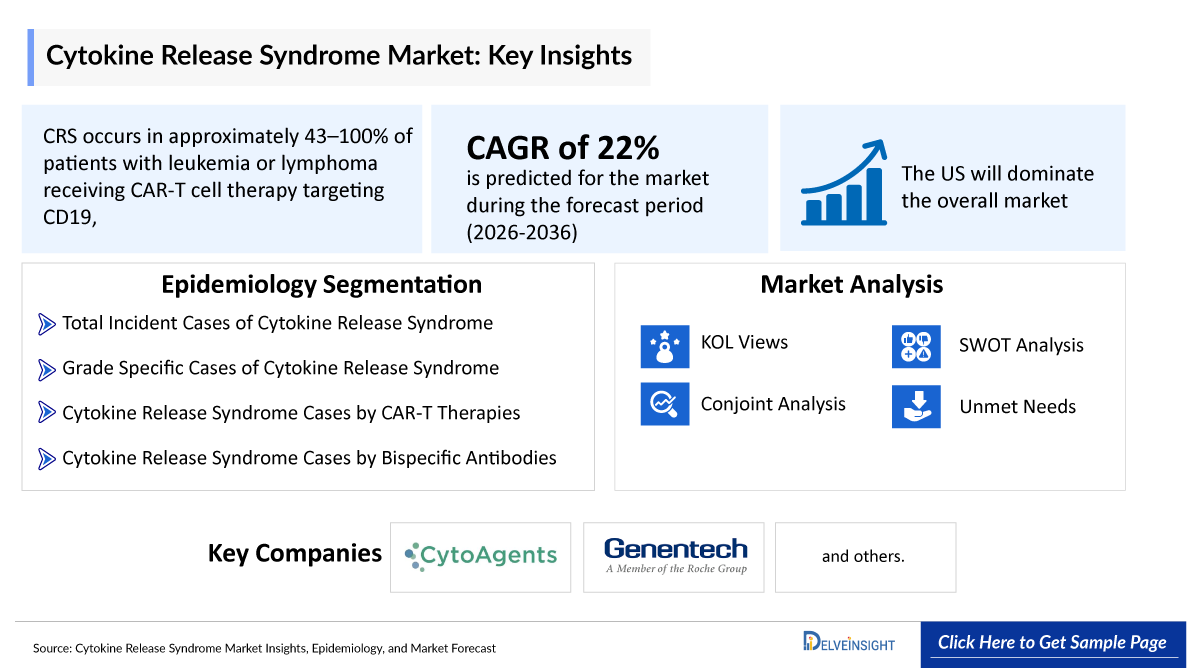
DelveInsight's ‘Cytokine Release Syndrome (CRS) – Market Insights, Epidemiology and Market Forecast – 2036’ report delivers an in-depth understanding of the CRS, historical and forecasted epidemiology, as well as the CRS market trends in the United States, EU4 (Germany, Spain, Italy, and France) and the United Kingdom, and Japan.
The Cytokine Release Syndrome (CRS) market report delivers a comprehensive analysis of the current treatment landscape, including standards of care, clinical practices, and evolving therapeutic algorithms. It evaluates Cytokine Release Syndrome (CRS) patient burden trends, revenue & market share dynamics, peak patient share & therapy uptake analysis, and provides an in-depth market size assessment, and growth rate projections (Historical & Forecast 2022–2036) across global regions. The report highlights key unmet medical needs in Cytokine Release Syndrome (CRS) and maps the competitive and clinical landscape to uncover high‑value opportunities, providing a clear outlook on future market growth potential.
|
Study Period |
2022–2036 |
|
Historical Year |
2022–2025 |
|
Forecast Period |
2026–2036 |
|
Base Year |
2026 |
|
Geographies Covered |
|
|
Cytokine Release Syndrome (CRS) Market CAGR (Forecast period) |
22% (2026–2036) |
|
Cytokine Release Syndrome (CRS) Epidemiology Segmentation Analysis |
Patient Burden Assessment
|
|
Cytokine Release Syndrome (CRS) Companies |
|
|
Cytokine Release Syndrome (CRS) Therapies |
|
|
Cytokine Release Syndrome (CRS) Market |
Segmented by
|
|
Analysis
|
|
Key Factors Driving the Cytokine Release Syndrome (CRS) Market
Rising Global Cancer Burden
The increasing incidence of hematologic malignancies and solid tumors is expanding the eligible population for immunotherapy, thereby indirectly increasing CRS cases.
Increasing Clinical Adoption of CAR-T Therapies
CAR-T therapy is a high CRS risk modality, making it a major commercial driver. The rapid increase in CAR-T utilization globally increases CRS toxicity.
Growing Awareness and Improved Diagnosis
Improved understanding of CRS pathophysiology and clinical presentation is driving earlier detection, better differentiation from sepsis or other syndromes, and hence increased treatment rates.
Cytokine Release Syndrome (CRS) Understanding and Treatment Algorithm
Cytokine Release Syndrome (CRS) Overview and Diagnosis
CRS is an acute systemic inflammatory condition driven by the rapid and excessive release of pro-inflammatory cytokines from activated immune cells. It is most commonly associated with modern immunotherapies such as CAR-T cell therapy and bispecific antibodies, though it can also occur in severe infections. Key cytokines involved include IL-6, IL-1, IFN-γ, and TNF-α, which collectively trigger fever, capillary leak, hypotension, and multi-organ dysfunction in severe cases. The severity of CRS ranges from mild flu-like symptoms to life-threatening complications requiring intensive care.
Diagnosis of CRS is primarily clinical and based on the temporal relationship between symptom onset and a triggering therapy (e.g., CAR-T infusion). Common early signs include high fever, fatigue, myalgia, and anorexia, which can rapidly progress to hypotension, hypoxia, and organ dysfunction. Laboratory findings often show elevated inflammatory markers such as C-reactive protein, ferritin, and increased cytokine levels. CRS is graded (grade 1-4) using standardized systems like the American Society for Transplantation and Cellular Therapy (ASTCT) criteria, which classify severity based on fever, oxygen requirement, and blood pressure support. Differential diagnosis is critical, as CRS can overlap with conditions like sepsis or immune effector cell–associated neurotoxicity syndrome (ICANS).
Further details are provided in the report.
Current Cytokine Release Syndrome (CRS) Treatment Landscape
Management of CRS depends on severity and ranges from supportive care to targeted immunosuppression. Mild cases may require only antipyretics and monitoring, while moderate to severe CRS often necessitates hospitalization, intravenous fluids, oxygen support, and vasopressors. Targeted therapies focus on interrupting key cytokine pathways, most notably IL-6 signaling blockade using agents such as tocilizumab, which is widely used as first-line therapy in many guidelines. Corticosteroids are added in more severe or refractory cases to broadly suppress immune activation.
Further details related to country-based variations are provided in the report.
Cytokine Release Syndrome (CRS) Unmet Needs
The section “unmet needs of CRS” outlines the critical gaps between the current state of patient care, diagnosis, and the ideal & effective management of the disease. It highlights the obstacles experienced by patients, clinicians, and researchers and identifies potential solutions for future progress.
- Lack of CRS-specific therapies
- Overlapping of symptoms
- Limited early prediction and risk stratification tools
- Challenges in outpatient management and healthcare burden, and others…..
Note: Comprehensive unmet needs insights in CRS and their strategic implications are provided in the full report.
Cytokine Release Syndrome (CRS) Epidemiology
Key Findings from Cytokine Release Syndrome (CRS) Epidemiological Analysis and Forecast
- The frequency and severity of CRS after CAR-T cell therapy vary between products; any grade 37–93%, grade 3 or 4 is around 1–23%.
- CRS occurs in approximately 43–100% of patients with leukemia or lymphoma receiving CAR-T cell therapy targeting CD19, with variability depending on the therapy and study population.
- The United States accounted for the highest incident cases of CRS, representing approximately 25% of total cases in the 7MM in 2025.
- Among the EU4 and the UK, Germany accounted for the highest incidence of CRS in 2025, followed by France, while Spain reported the lowest incidence.
Cytokine Release Syndrome (CRS) Drug Analysis & Competitive Landscape
The CRS drug chapter provides a detailed, market-focused review of the emerging pipeline across Phase I/II clinical trials. It covers the mechanism of action, clinical trial data, regulatory approvals, patents, collaborations, and strategic partnerships for each therapy, along with their advantages, limitations, and recent developments. This section offers critical insights into the CRS treatment landscape, supporting market assessment, competitive analysis, and growth forecasting for the CRS therapeutics market.
Approved Therapies for Cytokine Release Syndrome (CRS)
Tocilizumab (ACTEMRA): Genentech
ACTEMRA is a monoclonal antibody designed to target the interleukin-6 (IL-6) receptor, a key player in the body’s immune response. IL-6 is a cytokine (a signaling protein) that promotes inflammation. In many autoimmune diseases, IL-6 is overproduced, leading to chronic inflammation and tissue damage, hence making ACTEMRA a standard therapy for managing severe immune reactions like CRS. ACTEMRA can be administered either IV or via SC injection, offering flexibility in treatment.
Cytokine Release Syndrome (CRS) Marketed/Approved Therapies | ||||||
|
Drug/Therapy |
Company |
Indication |
Molecule Type |
MoA |
RoA |
Marketed Region |
|
Tocilizumab (ACTEMRA) |
Genentech |
CRS |
Monoclonal antibody |
IL-6 receptor antagonist |
IV |
US: 2017 EU: 2018 |
Note: Detailed marketed therapies assessment will be provided in the final report.
Cytokine Release Syndrome (CRS) Pipeline Analysis
CTO1681: CytoAgents
CTO1681 is an oral, small-molecule immune modulator that uses a novel approach to prevent and mitigate both inflammation in the tumor microenvironment as well as toxicity frequently seen with lymphoma patients receiving CAR T-Cell Therapy. CTO1681 reduces inflammation in the TME and prevents toxicity such as CRS. The data suggest CTO1681 could enable safer CAR T-Cell therapy administration, support outpatient treatment paradigms, and broaden patient access without compromising anti-tumor efficacy.
Competitive Landscape of Pipeline Drugs | ||||||
|
Drug Name |
Company |
Highest Phase |
Indication |
RoA |
MoA |
Anticipated Launch in the US |
|
CTO1681 |
CytoAgents |
I/II |
CRS |
Oral |
Prostaglandin (PGE2/PGI2) agonist |
Information is available in the full report |
|
Note: Launch insights are provisional and may change with future report updates or the occurrence of major key catalysts. | ||||||
Note: Detailed emerging therapies assessment will be provided in the final report.
Cytokine Release Syndrome (CRS) Key Players, Market Leaders, and Emerging Companies
- CytoAgents
- Genentech
Cytokine Release Syndrome (CRS) Drug Updates
- In December 2025, CytoAgents announced that preliminary safety data from its Phase I/II clinical trial would be presented at the 67th American Society of Hematology (ASH) Annual Meeting and Exposition. CTO1681 was shown to be well tolerated at the 10μg three times a day (TID) dose.
- In December 2025, CytoAgents announced that data from two of its Investigational New Drug (IND) applications enabling studies will be presented at the European Society for Medical Oncology (ESMO) Immuno-Oncology Congress 2025, in the UK. CTO1681 attenuates key cytokines known to drive CRS without compromising the CAR T-Cell-mediated tumor killing in vitro and in vivo.
- In September 2024, CytoAgents announced that it had been awarded a USD 2 million National Institutes of Health (NIH) grant, the third NIH grant in four years. The funding will accelerate the development of CTO1681.
- In August 2017, Genentech announced that the US FDA had approved tocilizumab (ACTEMRA) IV injection for the treatment of CAR T cell-induced severe or life-threatening CRS in patients two years of age and older. The approval was based on a retrospective analysis of pooled outcome data from clinical trials of CAR T cell therapies for blood cancers, which assessed the efficacy of ACTEMRA in the treatment of CRS.
Cytokine Release Syndrome (CRS) Market Outlook
The CRS market remains primarily centered on supportive care and cytokine-targeted immunomodulation, particularly in patients receiving CAR-T cell therapies and bispecific antibodies. The cornerstone of targeted therapy is IL-6 pathway inhibition, with the approved monoclonal antibody Tocilizumab (ACTEMRA) widely used as first-line treatment for moderate to severe CRS due to its ability to rapidly control cytokine-driven inflammation. Corticosteroids such as dexamethasone are also frequently used in moderate-to-severe cases to control systemic inflammation, particularly when rapid clinical deterioration occurs.
The pipeline for CRS is gradually evolving toward more selective and preventive immunomodulatory strategies. Emerging investigational approaches aim to modulate upstream inflammatory pathways without fully suppressing anti-tumor immune activity, including engineered biologics, pathway-selective cytokine inhibitors, and immune-regulatory agents such as PGE2/PGI2 agonist-based strategies being explored by early-stage developers like CytoAgents (CTO1681).
Overall, the launch of novel therapies, enhanced diagnostic techniques, and rising awareness of CRS are projected to propel steady market growth across the 7MM from 2022 to 2036, yielding significant commercial opportunities for existing products and pipeline candidates.
- Among the 7MM, the US accounted for the largest market size of CRS in 2025 and is projected to grow at a significant CAGR through 2036.
- Germany accounts for the highest market size of CRS, among EU4 and the UK in 2025.
Further details will be provided in the report….
Drug Class/Insights into Leading Emerging and Marketed Therapies in CRS (2022–2036 Forecast)
The CRS market (2022–2036 forecast) is evolving toward earlier intervention and mechanism-based prevention strategies rather than purely reactive treatment after symptom onset. The emerging pipeline is increasingly focused on agents that can dampen excessive immune activation upstream without fully suppressing anti-tumor response.
- Immunomodulator: CTO1681 is being explored for its potential role in modulating immune signaling pathways involved in cytokine overproduction, to reduce the severity and incidence of CRS associated with advanced immunotherapies.
- Monoclonal Antibody: Approved therapy like ACTEMRA is a monoclonal antibody that works as an IL-6 receptor antagonist, reducing excessive cytokine-driven inflammation after CAR-T cell therapy. Thereby, rapidly controlling symptoms such as fever, hypotension, and organ dysfunction makes it a key standard-of-care therapy for managing moderate to severe CRS.
Cytokine Release Syndrome (CRS) Drug Uptake
This section focuses on the uptake rate of potential drugs expected to be launched in the market during the forecast period (2026–2036). The analysis covers the CRS drug’s uptake, performance at peak, factors affecting performance during prime years of growth, patient uptake by therapy, and anticipated sales generated by each drug.
During the forecast period, uptake is expected to remain steady but gradually plateau, as most diagnosed cases are already managed effectively within existing immunotherapy protocols. The uptake of therapies in CRS is expected to vary based on clinical positioning, mechanism of action, and stage of development. The approved monoclonal antibody ACTEMRA remains the standard of care intervention for moderate to severe CRS, widely used due to its rapid IL-6 receptor blockade and established efficacy in controlling cytokine-driven inflammation. Pipeline candidate CTO1681 (immunomodulator) is expected to follow a moderate uptake trajectory, reflecting its investigational status and gradual adoption as clinical evidence emerges.
Detailed insights into emerging therapies' drug uptake are included in the report
Market Access and Reimbursement of Approved Therapies in Cytokine Release Syndrome (CRS)
Reimbursement is a crucial factor that affects the drug’s access to the market. Often, the decision to reimburse comes down to the price of the drug relative to the benefit it produces in treated patients. To reduce the healthcare burden of these high-cost therapies, many payment models are being considered by payers and other industry insiders.
NOTE: Further Details are provided in the final report….
Cytokine Release Syndrome (CRS) Therapies Price Scenario & Trends
Pricing and analogue assessment of CRS therapies highlights evolving price dynamics structures. This section summarizes the cost of approved treatments, the closest and most appropriate analogue selection for emerging therapies, and the understanding of how pricing influences market access, adherence, and long-term uptake.
Industry Experts and Physician Views for Cytokine Release Syndrome (CRS)
To keep up with CRS market trends, we take Key Opinion Leaders (KOLs) and Subject Matter Experts (SMEs) opinions working in the domain through primary research to fill the data gaps and validate our secondary research. Industry experts were contacted for insights on the CRS emerging therapies, evolving treatment landscape, patient adherence to conventional therapies, therapy switching trends, drug adoption and uptake, accessibility challenges, and epidemiology and real-world prescription patterns in CRS, including MD, PhD, Instructor, Postdoctoral Researcher, Professor, Researcher, and others.
DelveInsight’s analysts connected with 15+ KOLs to gather insights at the country level. Centers such as the MD Anderson Cancer Center, University of Heidelberg, and Stanford University School of Medicine, etc. were contacted. Their opinion helps understand and validate current and emerging CRS therapies, highlight unmet medical needs, provide epidemiological context, and support strategic decisions for market access, therapy adoption, and pipeline prioritization in CRS.
|
Region |
Key Opinion Leaders (KOLs) and Subject Matter Experts (SMEs) |
|
United States |
“The importance of supportive care in the management of patients with CRS cannot be undervalued. Close monitoring by experienced nursing staff who are well-informed of the current grading systems is crucial. To date, the most commonly used therapy for systemic treatment of CRS remains tocilizumab.” |
|
Germany |
“Even if prior foreign registration studies demonstrated clinically significant effectiveness and safety, a registration trial in Japan is, in concept, required for marketing authorization of CAR T-cell products and other regenerative medical products and drugs.” |
Qualitative Analysis: SWOT and Conjoint Analysis
We perform qualitative and market Intelligence analysis using various approaches, such as SWOT analysis and conjoint analysis.
In the SWOT analysis of Cytokine Release Syndrome (CRS), strengths, weaknesses, opportunities, and threats in terms of disease diagnosis, patient awareness, patient burden, competitive landscape, cost-effectiveness, and geographical accessibility of therapies are provided.
Conjoint analysis analyzes emerging therapies based on relevant attributes such as safety, efficacy, frequency of administration, route of administration, and order of entry. Scoring is given based on these parameters to analyze the effectiveness of therapy.
The team of analysts analyzes promising emerging therapies based on relevant attributes such as safety, efficacy, frequency of administration, route of administration, and order of entry. In efficacy, the trial’s primary and secondary outcome measures are evaluated, whereas the therapies’ safety is evaluated, wherein the acceptability, tolerability, and adverse events are mainly observed. In addition, the scoring is also based on the route of administration, order of entry, probability of success, and the addressable patient pool for each therapy. According to these parameters, the final weightage score and the ranking of the emerging therapies are decided.
Scope of the Report
- The report covers a segment of key events, an executive summary, a descriptive overview of Cytokine Release Syndrome (CRS), explaining its causes, signs and symptoms, pathogenesis, and currently available treatments.
- Comprehensive insight has been provided into the epidemiology segments and forecasts, the future growth potential of the diagnosis rate, and disease progression along treatment guidelines.
- Additionally, an all-inclusive account of both the current and emerging treatments, along with the elaborative profiles of late-stage and prominent therapies, will have an impact on the current treatment landscape.
- A detailed review of the Cytokine Release Syndrome (CRS) market, historical and forecasted market size, market share by therapies, detailed assumptions, and rationale behind our approach is included in the report, covering the 7MM drug outreach.
- The report provides an edge while developing business strategies by understanding trends through SWOT analysis and expert insights/KOL views, patient journey, and treatment preferences that help in shaping and driving the 7MM Cytokine Release Syndrome (CRS) market.
Report Insights
- Cytokine Release Syndrome (CRS) Patient Population Forecast
- Cytokine Release Syndrome (CRS) Therapeutics Market Size
- Cytokine Release Syndrome (CRS) Pipeline Analysis
- Cytokine Release Syndrome (CRS) Market Size and Trends
- Cytokine Release Syndrome (CRS) Market Opportunity (Current and forecasted)
Report Key Strengths
- Epidemiology‑based (Epi‑based) Bottom‑up Forecasting
- Artificial Intelligence (AI)-Enabled Market Research Report
- 11-Year Forecast
- Cytokine Release Syndrome (CRS) Market Outlook (North America, Europe, Asia-Pacific)
- Patient Burden Trends (By Geography)
- Cytokine Release Syndrome (CRS) Treatment Addressable Market (TAM)
- Cytokine Release Syndrome (CRS) Competitive Landscape
- Cytokine Release Syndrome (CRS)) Major Companies Insights
- Cytokine Release Syndrome (CRS) Price Trends and Analogue Assessment
- Cytokine Release Syndrome (CRS) Therapies Drug Adoption/Uptake
- Cytokine Release Syndrome (CRS) Therapies Peak Patient Share Analysis
Report Assessment
- Cytokine Release Syndrome (CRS) Current Treatment Practices
- Cytokine Release Syndrome (CRS) Unmet Needs
- Cytokine Release Syndrome (CRS) Clinical Development Analysis
- Cytokine Release Syndrome (CRS) Emerging Drugs Product Profiles
- Cytokine Release Syndrome (CRS) Market Attractiveness
- Cytokine Release Syndrome (CRS) Qualitative Analysis (SWOT and Conjoint Analysis)
FAQs
Market Insights
- What was the Cytokine Release Syndrome (CRS) market size, the market size by therapies, market share (%) distribution in 2025, and what would it look like by 2036? What are the contributing factors for this growth?
- What are the anticipated pricing variations among different geographies for the emerging therapies in the future?
- What can be the future treatment paradigm of Cytokine Release Syndrome (CRS)?
- What are the disease risks, burdens, and unmet needs of Cytokine Release Syndrome (CRS)? What will be the growth opportunities across the 7MM concerning the patient population with Cytokine Release Syndrome (CRS)?
- Who is the major future competitor in the market, and how will the competitors affect their market share?
- What are the current options for the treatment of Cytokine Release Syndrome (CRS)? What are the current guidelines for treating Cytokine Release Syndrome (CRS)in the US, Europe, and Japan?
Reasons to Buy
- The report will help in developing business strategies by understanding the latest trends and changing treatment dynamics driving the Cytokine Release Syndrome (CRS) market.
- Bottom‑up forecasting builds from the affected population to product forecasts, delivering a robust, data‑driven approach ideal for new therapies and novel classes.
- Insights on patient burden/disease incidence, evolution in diagnosis, and factors contributing to the change in the epidemiology of the disease during the forecast years.
- Understand the existing market opportunities in varying geographies and the growth potential over the coming years.
- Identifying strong upcoming players in the market will help devise strategies to help get ahead of competitors.
- Detailed analysis and ranking of class-wise potential emerging therapies under the conjoint analysis section to provide visibility around leading classes.
- To understand KOLs’ perspectives on the accessibility, acceptability, and compliance-related challenges of existing treatment to overcome barriers in the future.
- Detailed insights into the unmet needs of the existing market so that the upcoming players can strengthen their development and launch strategy.
- This Artificial Intelligence (AI)‑enabled report summarize and simplify complex datasets with in the report into clear, actionable insights for stakeholders, investors, and healthcare providers, enabling faster, data‑driven decisions.