Drug Discovery Market Summary
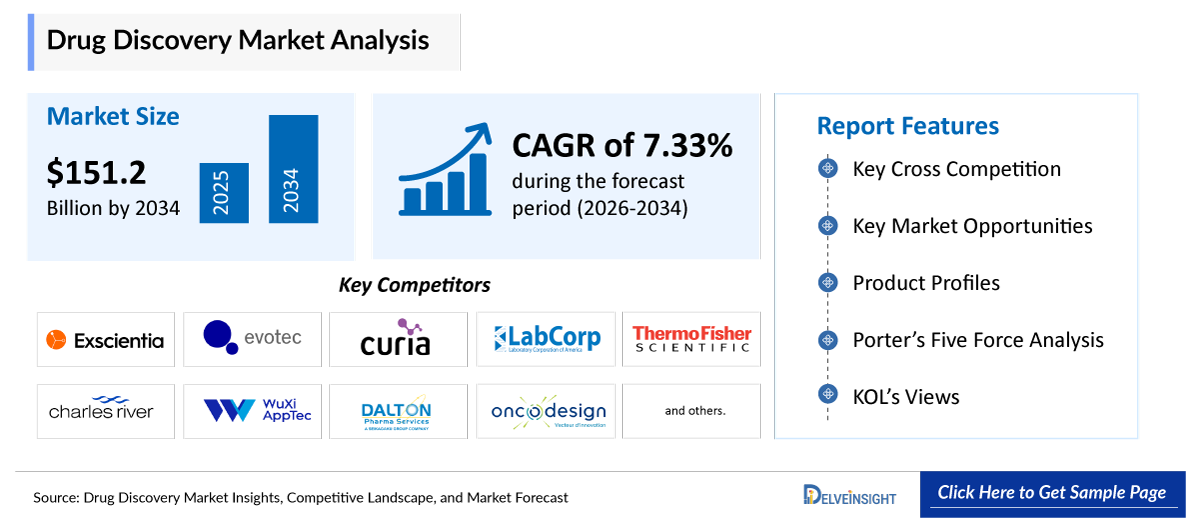
- The global drug discovery market size is expected to increase from USD 80,477.78 million in 2025 to USD 151,276.89 million by 2034, reflecting strong and sustained growth.
- The global drug discovery market is growing at a CAGR of 7.33% during the forecast period from 2026 to 2034.
- The rising burden of chronic and complex diseases such as cancer, neurological disorders, and metabolic conditions like diabetes mellitus is significantly increasing the demand for novel and effective therapies, thereby accelerating drug discovery activities worldwide. At the same time, the expansion of biologics and complex drug modalities, including monoclonal antibodies, gene therapies, and RNA-based treatments, is broadening the scope of innovation and requiring more advanced discovery platforms. In addition, increasing R&D investments by pharmaceutical and biotechnology companies is strengthening early-stage research capabilities, enabling faster target identification and lead optimization. Collectively, these factors are boosting the overall drug discovery market by driving continuous innovation, expanding therapeutic pipelines, and increasing the need for advanced technologies and research collaborations.
- The leading companies operating in the drug discovery market include Exscientia, Evotec, Curia Global, Inc., Laboratory Corporation of America Holdings, GenScript, Thermo Fisher Scientific Inc., Charles River Laboratories, WuXi AppTec, Dalton Pharma Services, Oncodesign, Jubilant Biosys Ltd., IBM Corporation, Numedii Inc, Deep Genomics, NVIDIA Corporation, Pharmaron, Domainex, TCG Lifesciences Pvt. Ltd., Cloud Pharmaceuticals Inc, Alphabet Inc (DeepMind), Merck KGaA, Recursion Pharmaceuticals, Inc., Schrödinger, Inc., Chem Bio Discovery Inc., Insilico Medicine, Atomwise Inc., Veeva Systems, Yseop, BenevolentAI, Valo Health, Owkin, Verge Genomics, BioSymetics, BeiGene, Anima Biotech, and others.
- North America is expected to dominate the drug discovery market due to its strong presence of leading pharmaceutical and biotechnology companies, high R&D investment, and advanced research infrastructure. The region benefits from a well-established ecosystem of contract research organizations (CROs), academic institutions, and technology-driven innovation hubs that accelerate early-stage drug development. In addition, supportive regulatory frameworks, rapid adoption of AI-based drug discovery tools, and strong funding for precision medicine and biologics further strengthen its leadership position in the global market.
- In the workflow segment of the drug discovery market, the hit identification category is estimated to account for the largest market share in 2025.
Request for unlocking the report of the @ Drug Discovery Market Insights
Drug Discovery Market Size and Forecasts
|
Report Metrics |
Details |
|
2025 Market Size |
USD 80,477.78 million |
|
2034 Projected Market Size |
USD 151,276.89 million |
|
Growth Rate (2026-2034) |
7.33% CAGR |
|
Largest Market |
North America |
|
Fastest Growing Market |
Asia-Pacific |
|
Market Structure |
Moderately Concentrated |
Factors Contributing to the Growth of the Drug Discovery Market
- Rising burden of chronic and complex diseases: The increasing prevalence of diseases such as cancer, neurological disorders, and metabolic conditions like diabetes mellitus is significantly driving demand for new and more effective therapies. This pushes pharmaceutical companies to invest heavily in faster and more efficient discovery processes.
- Expansion of biologics and complex drug modalities: The growing focus on biologics, including monoclonal antibodies, gene therapies, and RNA-based drugs, is expanding the scope of drug discovery and creating demand for advanced discovery platforms.
- Increasing R&D investments by pharmaceutical and biotech companies: Major pharmaceutical and biotechnology companies are significantly increasing their research budgets to develop innovative drug pipelines, especially in oncology and rare diseases.
Drug Discovery Market Report Segmentation
This drug discovery market report offers a comprehensive overview of the global drug discovery market, highlighting key trends, growth drivers, challenges, and opportunities. It covers detailed market segmentation by Workflow (Hit Identification, Target Identification & Screening, Target Validation & Functional Informatics, Lead Identification & Candidate Optimization, Preclinical Development, and Others), Drug Type (Small Molecule Drugs and Biologic Drugs), Technology (High Throughput Screening, Pharmacogenomics, Combinatorial Chemistry, Nanotechnology, and Others), Service Provider (Pharmaceutical Companies, Contract Research Organizations (CROS), and Others), and geography. The report provides valuable insights into the competitive landscape, regulatory environment, and market dynamics across major markets, including North America, Europe, and Asia-Pacific. Featuring in-depth profiles of leading industry players and recent product innovations, this report equips businesses with essential data to identify market potential, develop strategic plans, and capitalize on emerging opportunities in the rapidly growing drug discovery market.
Drug discovery is the scientific process of finding and developing new medicines (drugs) to treat diseases. It is a major part of the broader field of pharmaceutical sciences and involves biology, chemistry, medicine, and technology.
The rising burden of chronic and complex diseases, such as cancer, neurological disorders, and metabolic conditions like diabetes mellitus, is significantly increasing the demand for novel and more effective therapies, thereby accelerating drug discovery activities across global pharmaceutical and biotechnology sectors. As these diseases become more prevalent and harder to treat with conventional medicines, companies are under pressure to develop highly targeted and innovative treatment options, which is expanding research pipelines and increasing early-stage discovery efforts.
At the same time, the rapid expansion of biologics and complex drug modalities, including monoclonal antibodies, gene therapies, and RNA-based treatments, is reshaping the drug development landscape. These advanced therapies require sophisticated discovery platforms, specialized screening methods, and deeper biological understanding, which is driving greater adoption of computational tools, high-throughput technologies, and precision-based approaches.
In addition, increasing R&D investments by pharmaceutical and biotechnology companies is further strengthening early-stage research capabilities. Companies are allocating larger budgets toward innovation, collaborations, and outsourcing partnerships to Contract Research Organizations (CROs), enabling faster target identification, improved lead optimization, and reduced development timelines. Collectively, these factors are boosting the overall drug discovery market by fostering continuous innovation, expanding therapeutic pipelines, and increasing reliance on advanced technologies and global research collaborations.
Get More Insights into the Report @ Drug Discovery Market Trends
What are the latest Drug Discovery market dynamics and trends?
The rising prevalence of chronic and complex diseases such as cancer, neurological disorders, and metabolic conditions like diabetes mellitus is significantly increasing the demand for novel and effective therapies, thereby accelerating drug discovery activities worldwide.
Cancer: According to the data provided by the International Agency for Research on Cancer (2026), the estimated new cases of cancer would rise to 32.6 million by 2045 across the world. The increasing global prevalence of cancer is significantly boosting the drug discovery market by creating strong demand for targeted therapies, immunotherapies, and precision medicines. Continuous research into tumor biology, biomarkers, and personalized treatment approaches is driving pharmaceutical and biotechnology companies to invest heavily in innovative oncology drug pipelines and advanced discovery technologies.
Neurological conditions: According to the data provided by the World Health Organization (2025), neurological conditions are the leading cause of ill health and disability, affecting over 1 in 3 people worldwide. The growing incidence of neurological disorders such as Alzheimer's disease and Parkinson’s disease is accelerating drug discovery activities due to the urgent need for effective treatments with improved clinical outcomes. The complexity of brain-related diseases is encouraging the adoption of AI-based drug discovery, genomics, and advanced molecular research platforms, thereby expanding investments in neuroscience-focused therapeutics.
Metabolic disorders: According to the data provided by the International Diabetes Federation (2026), in 2025, approximately 590 million people worldwide had diabetes, and the projections further estimated that these cases would rise to 853 million by 2050. The rising burden of diabetes mellitus is driving the drug discovery market by increasing the need for safer and more effective antidiabetic therapies, including biologics, peptide drugs, and precision medicines. Growing patient populations and the long-term complications associated with diabetes are encouraging pharmaceutical companies to strengthen R&D efforts and develop next-generation treatment solutions.
Additionally, the expansion of biologics and complex drug modalities, including monoclonal antibodies, cell and gene therapies, and RNA-based medicines, is significantly boosting the drug discovery market by increasing the demand for advanced screening technologies, bioinformatics tools, and precision-based research platforms. These therapies are more complex than traditional small-molecule drugs and require sophisticated discovery workflows, driving pharmaceutical and biotechnology companies to invest heavily in innovative research capabilities.
At the same time, increasing R&D investments by pharmaceutical and biotech companies are accelerating target identification, lead optimization, and preclinical development activities, further strengthening market growth. Strategic collaborations, AI integration, and expansion of biologics pipelines are also supporting faster and more efficient drug development processes. Recent industry developments highlight this trend. In March 2025, Thermo Fisher Scientific expanded its biologics discovery and development capabilities through additional investments in advanced analytical and cell biology platforms to support complex biologic drug programs. In April 2025, WuXi AppTec announced the expansion of its integrated drug discovery services to strengthen support for peptide and oligonucleotide therapeutics. Additionally, in February 2025, Recursion Pharmaceuticals advanced its AI-enabled drug discovery collaborations to accelerate biologics and precision medicine development using machine learning and large-scale biological datasets. These developments demonstrate how increasing innovation and R&D spending are collectively driving growth in the global drug discovery market. Thus, the factors mentioned above are expected to boost the overall market of drug discovery during the forecast period.
However, the high cost of drug development and discovery processes, combined with complex regulatory requirements and compliance standards, acts as a major limitation for the drug discovery market by increasing overall development timelines and financial risks. Pharmaceutical and biotechnology companies must invest heavily in research, testing, clinical validation, and regulatory approvals, which can delay product launches and reduce the success rate of new drug candidates, particularly for smaller and emerging companies.
Drug Discovery Market Segment Analysis
Drug Discovery Market by Workflow (Hit Identification, Target Identification & Screening, Target Validation & Functional Informatics, Lead Identification & Candidate Optimization, Preclinical Development, And Others), By Drug Type (Small Molecule Drugs And Biologic Drugs), By Technology (High Throughput Screening, Pharmacogenomics, Combinatorial Chemistry, Nanotechnology, And Others), By Service Provider (Pharmaceutical Companies, Contract Research Organizations (CROS), And Others), and Geography (North America, Europe, Asia-Pacific, and Rest of the World)
By Workflow: Hit identification is expected to dominate the market with the largest revenue share.
In the workflow segment of the drug discovery market, the hit identification category is contributing to 31% of total market revenue in 2025, by enabling researchers to rapidly identify promising compounds that can interact effectively with disease-related biological targets. This stage serves as the foundation for successful lead generation and drug optimization, making it one of the most critical phases in early drug discovery. The growing adoption of high-throughput screening (HTS), AI-driven molecular screening, bioinformatics, and automated laboratory technologies is significantly improving the speed and accuracy of hit identification processes. Pharmaceutical and biotechnology companies are increasingly investing in advanced screening platforms and computational tools to reduce discovery timelines, lower R&D costs, and improve the probability of identifying viable drug candidates for complex diseases such as cancer and neurological disorders. In addition, the rising focus on biologics, precision medicine, and RNA-based therapeutics is further increasing demand for sophisticated hit identification technologies and outsourced discovery services.
Recent developments further highlight the growing importance of this segment. In March 2025, Schrödinger expanded the application of its AI-driven computational drug discovery platform to accelerate hit identification and molecular optimization for oncology and immunology programs. Similarly, in February 2025, Insilico Medicine announced progress in its generative AI-enabled drug discovery platform to improve rapid hit generation and candidate screening for multiple therapeutic areas.
These developments demonstrate how technological advancements and company investments in hit identification are strengthening the efficiency and scalability of the global drug discovery market.
By Drug Type: Small molecules category dominates the market
Within the drug type segment of the drug discovery market, the small molecules category is anticipated to dominate, accounting for around 71% of the market share in 2025, due to its broad therapeutic applicability, well-established development pathways, and strong commercial success across multiple disease areas. Small-molecule drugs remain widely preferred because they are easier to manufacture, have relatively lower production costs, and can effectively target intracellular pathways associated with diseases such as cancer, cardiovascular disorders, infectious diseases, and metabolic conditions like diabetes mellitus. In addition, advancements in medicinal chemistry, structure-based drug design, high-throughput screening, and AI-driven molecular modeling are significantly improving the efficiency of small-molecule discovery and optimization. Pharmaceutical and biotechnology companies continue to invest heavily in small-molecule pipelines because these therapies often offer favorable oral bioavailability, scalable manufacturing, and faster regulatory pathways compared to complex biologics. The growing integration of computational drug discovery platforms and precision medicine approaches is further accelerating innovation in this segment and strengthening its dominance in the global drug discovery market.
Recent company developments further support this trend. In March 2025, Exscientia expanded its AI-enabled small-molecule discovery collaborations to accelerate precision oncology and immunology programs through advanced molecular design and automated screening technologies. Similarly, in April 2025, Schrödinger announced continued expansion of its computational platform for small-molecule drug discovery to support faster hit identification and lead optimization across multiple therapeutic areas. Furthermore, in February 2025, Recursion Pharmaceuticals also strengthened its machine learning-driven small-molecule research programs aimed at accelerating drug candidate identification and development. These strategic developments demonstrate how increasing investments, AI integration, and technological advancements in small-molecule research are driving growth in the global drug discovery market.
By Technology: High-throughput screening category dominates the market.
Within the technology segment of the drug discovery market, the high-throughput screening category is anticipated to dominate, accounting for around 38% of the market share in 2025, due to its ability to rapidly analyze and evaluate thousands to millions of chemical and biological compounds for potential therapeutic activity. HTS has become a critical technology in early-stage drug discovery because it significantly accelerates hit identification, reduces manual laboratory efforts, and improves the efficiency of lead discovery programs. The increasing demand for faster drug development, growing biologics and precision medicine research, and rising adoption of laboratory automation and AI-driven analytics are further strengthening the use of HTS platforms across pharmaceutical and biotechnology companies. In addition, HTS technologies support multiple therapeutic areas, including cancer, infectious diseases, and neurological disorders, making them essential for large-scale screening and target validation activities. Continuous advancements in robotics, assay technologies, and data analytics are also improving screening accuracy and scalability, thereby boosting market growth.
Recent developments highlight the growing importance of this segment. In March 2025, Thermo Fisher Scientific expanded its automated high-throughput screening solutions to support faster compound screening and biologics discovery workflows for pharmaceutical research laboratories. Similarly, in February 2025, Charles River Laboratories strengthened its integrated discovery platform with enhanced high-throughput screening capabilities aimed at accelerating hit identification and lead optimization services for biotech clients. These developments demonstrate how continuous investments in automation, AI integration, and advanced screening technologies are reinforcing the dominance of the high-throughput screening segment in the global drug discovery market.
By Service Provider: Pharmaceutical Companies category dominates the market
Within the service provider segment of the drug discovery market, pharmaceutical companies dominate the market due to their large-scale R&D capabilities, strong financial resources, and extensive drug development pipelines across multiple therapeutic areas. These companies continuously invest in advanced technologies such as AI-driven drug discovery, high-throughput screening, and precision medicine to accelerate the identification and development of novel therapies. In addition, strategic collaborations with biotechnology firms, academic institutions, and CROs further strengthen their ability to conduct large-volume discovery activities, thereby supporting their leading position in the global drug discovery market.
Drug Discovery Market Regional Analysis
North America Drug Discovery Market Trends
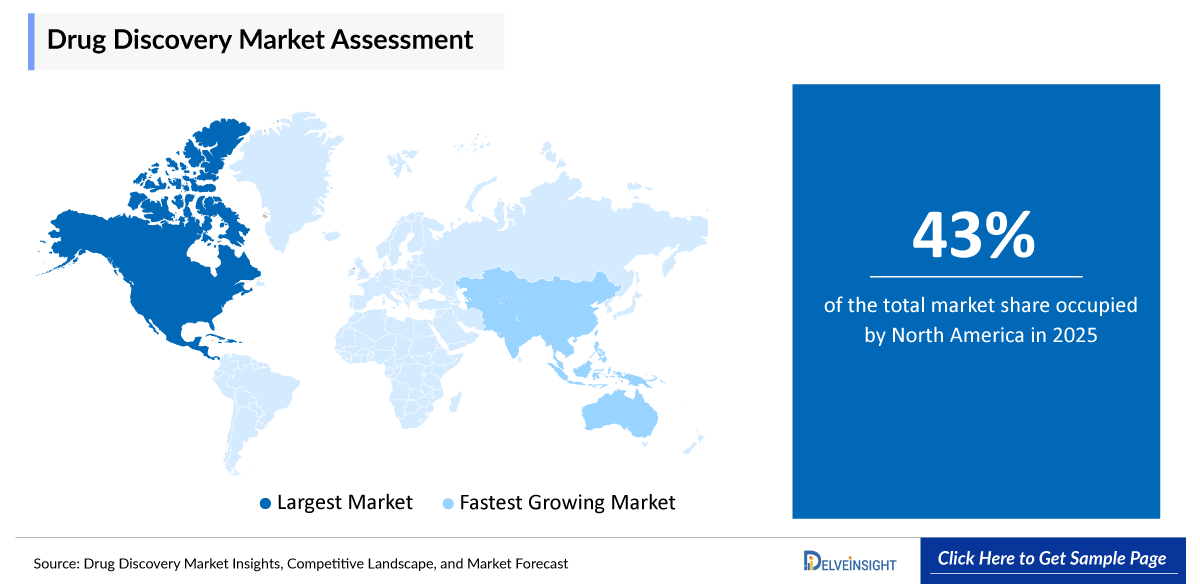
North America is expected to account for the highest proportion of 43% of the drug discovery market in 2025, out of all regions. North America is expected to dominate the drug discovery market due to the strong presence of leading pharmaceutical and biotechnology companies, advanced healthcare and research infrastructure, and substantial investments in research and development activities. The region has a highly developed ecosystem that includes major drug manufacturers, Contract Research Organizations (CROs), academic research institutes, and AI-driven biotechnology startups, all of which contribute to continuous innovation in drug discovery. In addition, the growing prevalence of chronic diseases such as cancer, neurological disorders, and diabetes mellitus is increasing the demand for novel therapeutics and precision medicines across the region.
According to the data provided by the American Academy of Neurology (2025), more than half of the people living in the U.S., 54%, were affected by a neurological disease.
Additionally, as per the data provided by the Centre for Disease Control and Prevention (2026), approximately there wer 29.1 million people were estimated to have been diagnosed with diabetes in the U.S., and 11.0 million adults aged ≥18 years with diabetes who are undiagnosed.
Furthermore, North America also benefits from strong government support, favorable funding initiatives, and rapid adoption of advanced technologies such as artificial intelligence, machine learning, high-throughput screening, genomics, and computational drug design. The presence of major regulatory bodies and established clinical research frameworks further accelerates the development and commercialization of innovative drug candidates. Moreover, strategic collaborations between pharmaceutical companies, biotech firms, and research institutions are continuously expanding biologics, gene therapy, and small-molecule drug pipelines, thereby strengthening the region’s leadership in the global drug discovery market.
Recent developments by North American companies further demonstrate the region’s strong market position. In March 2025, Recursion Pharmaceuticals expanded its AI-powered drug discovery collaborations to accelerate precision medicine and small-molecule development using large-scale biological datasets and machine learning technologies. In April 2025, Schrödinger enhanced its computational drug discovery platform to support faster molecular screening and lead optimization for oncology and immunology research programs. Additionally, in February 2025, Thermo Fisher Scientific expanded its advanced laboratory automation and high-throughput screening capabilities to improve biologics and small-molecule discovery workflows across pharmaceutical research facilities in North America. These developments highlight how continuous technological innovation, strategic investments, and expansion of research capabilities are collectively driving the growth of the drug discovery market across North America.
Europe Drug Discovery Market Trend
The drug discovery market in Europe is witnessing strong and sustained growth due to increasing investments in pharmaceutical research, expanding biotechnology innovation, and rising demand for advanced therapeutics across the region. European countries have a well-established life sciences ecosystem supported by strong academic research networks, government-funded healthcare initiatives, and collaborations between pharmaceutical companies and biotechnology firms. The growing prevalence of chronic diseases such as cancer, neurological disorders, and rare diseases is encouraging companies to accelerate the development of precision medicines, biologics, and next-generation small-molecule therapies. In addition, the rapid adoption of artificial intelligence, computational drug design, genomics, and high-throughput screening technologies is improving the efficiency of target identification and lead optimization processes. Europe also benefits from supportive regulatory frameworks, increasing venture capital investments in biotech startups, and a strong presence of Contract Research Organizations (CROs), all of which are contributing to continuous growth in the regional drug discovery market.
Recent developments by European companies further demonstrate this momentum. In March 2025, Exscientia expanded its AI-enabled precision drug discovery programs to accelerate oncology and immunology research through advanced computational modeling and automated experimentation. In April 2025, Evotec strengthened its biologics and small-molecule discovery collaborations to support faster lead identification and preclinical research for global pharmaceutical partners. Additionally, in February 2025, BenevolentAI advanced its AI-driven drug discovery platform to improve target discovery and candidate selection for complex diseases. These strategic developments are enhancing Europe’s research capabilities and reinforcing the region’s position as a major hub for innovation in the global drug discovery market.
Asia-Pacific Drug Discovery Market Trends
The Asia Pacific (APAC) region is emerging as a major growth driver for the drug discovery market due to increasing pharmaceutical and biotechnology investments, expanding clinical research activities, and the growing presence of Contract Research Organizations (CROs) across countries such as China, India, Japan, and South Korea. The region offers cost-effective research and manufacturing capabilities, a large patient population for clinical studies, and rising adoption of AI-driven drug discovery, genomics, and high-throughput screening technologies. In addition, supportive government initiatives, improving healthcare infrastructure, and increasing focus on biologics and precision medicine are further accelerating drug discovery activities across the APAC region.
Who are the major players in the drug discovery market?
The following are the leading companies in the drug discovery market. These companies collectively hold the largest market share and dictate industry trends.
- Exscientia
- Evotec
- Curia Global, Inc.
- Laboratory Corporation of America Holdings
- GenScript
- Thermo Fisher Scientific Inc.
- Charles River Laboratories
- WuXi AppTec
- Dalton Pharma Services
- Oncodesign
- Jubilant Biosys Ltd.
- IBM Corporation
- Numedii Inc.
- Deep Genomics
- NVIDIA Corporation
- Pharmaron
- Domainex
- TCG Lifesciences Pvt. Ltd.
- Cloud Pharmaceuticals Inc.
- Alphabet Inc (DeepMind)
- Merck KGaA
- Recursion Pharmaceuticals, Inc.
- Schrödinger, Inc.
- Chem Bio Discovery Inc.
- Insilico Medicine
- Atomwise Inc.
- Veeva Systems
- Yseop
- BenevolentAI
- Valo Health
- Owkin
- Verge Genomics
- BioSymetics
- BeiGene
- Anima Biotech, and others
How is the competitive landscape shaping the drug discovery market?
The competitive landscape of the drug discovery market is highly dynamic and innovation-driven, with pharmaceutical companies, biotechnology firms, Contract Research Organizations (CROs), and AI-focused technology companies competing to accelerate the development of novel therapeutics. Major industry participants are increasingly investing in artificial intelligence, machine learning, high-throughput screening, genomics, and computational drug design technologies to improve the speed and efficiency of target identification, hit discovery, and lead optimization. Strategic collaborations, licensing agreements, mergers, and partnerships between pharma companies and AI-driven biotech firms are becoming increasingly common as organizations seek to strengthen their discovery pipelines and reduce development timelines and costs. In addition, companies are expanding their focus on biologics, precision medicine, gene therapies, and RNA-based therapeutics to address complex diseases such as cancer, neurological disorders, and rare diseases. The growing role of CROs and outsourced discovery services is also intensifying competition by enabling smaller biotech companies to access advanced research capabilities and specialized technologies. Continuous investments in automation, cloud-based data platforms, and advanced analytics are further reshaping the competitive environment, encouraging faster innovation and global expansion across the drug discovery market.
Recent Developmental Activities in the Drug Discovery Market
- In April 2025, WuXi AppTec announced the expansion of its integrated drug discovery services to strengthen support for peptide and oligonucleotide therapeutics.
- In April 2025, Schrödinger announced continued expansion of its computational platform for small-molecule drug discovery to support faster hit identification and lead optimization across multiple therapeutic areas.
- In April 2025, Schrödinger enhanced its computational drug discovery platform to support faster molecular screening and lead optimization for oncology and immunology research programs.
- In March 2025, Thermo Fisher Scientific expanded its biologics discovery and development capabilities through additional investments in advanced analytical and cell biology platforms to support complex biologic drug programs.
- In March 2025, Thermo Fisher Scientific expanded its automated high-throughput screening solutions to support faster compound screening and biologics discovery workflows for pharmaceutical research laboratories.
- In March 2025, Schrödinger expanded the application of its AI-driven computational drug discovery platform to accelerate hit identification and molecular optimization for oncology and immunology programs.
- In March 2025, Recursion Pharmaceuticals expanded its AI-powered drug discovery collaborations to accelerate precision medicine and small-molecule development using large-scale biological datasets and machine learning technologies.
- In March 2025, Exscientia expanded its AI-enabled small-molecule discovery collaborations to accelerate precision oncology and immunology programs through advanced molecular design and automated screening technologies.
- In February 2025, Recursion Pharmaceuticals advanced its AI-enabled drug discovery collaborations to accelerate biologics and precision medicine development using machine learning and large-scale biological datasets.
- In February 2025, Charles River Laboratories strengthened its integrated discovery platform with enhanced high-throughput screening capabilities aimed at accelerating hit identification and lead optimization services for biotech clients.
- In February 2025, Insilico Medicine announced progress in its generative AI-enabled drug discovery platform to improve rapid hit generation and candidate screening for multiple therapeutic areas.
|
Report Metrics |
Details |
|
Study Period |
2023 to 2034 |
|
Base Year |
2025 |
|
Forecast Period |
2026 to 2034 |
|
Drug Discovery Market CAGR |
7.33% |
|
Key Companies in the Drug Discovery Market |
Exscientia, Evotec, Curia Global, Inc., Laboratory Corporation of America Holdings, GenScript, Thermo Fisher Scientific Inc., Charles River Laboratories, WuXi AppTec, Dalton Pharma Services, Oncodesign, Jubilant Biosys Ltd., IBM Corporation, Numedii Inc, Deep Genomics, NVIDIA Corporation, Pharmaron, Domainex, TCG Lifesciences Pvt. Ltd., Cloud Pharmaceuticals Inc, Alphabet Inc (DeepMind), Merck KGaA, Recursion Pharmaceuticals, Inc., Schrödinger, Inc., Chem Bio Discovery Inc., Insilico Medicine, Atomwise Inc., Veeva Systems, Yseop, BenevolentAI, Valo Health, Owkin, Verge Genomics, BioSymetics, BeiGene, Anima Biotech, and others. |
|
Drug Discovery Market Segments |
by Workflow, by Drug Type, by Technology. By Service Provider, and by Geography |
|
Drug Discovery Regional Scope |
North America, Europe, Asia Pacific, Middle East, Africa, and South America |
|
Drug Discovery Country Scope |
U.S., Canada, Mexico, Germany, United Kingdom, France, Italy, Spain, China, Japan, India, Australia, South Korea, and key Countries |
Drug Discovery Market Segmentation
- Drug Discovery by Workflow Exposure
- Hit Identification
- Target Identification & Screening
- Target Validation & Functional Informatics
- Lead Identification & Candidate Optimization
- Preclinical Development
- Others
- Drug Discovery by Drug Type Exposure
- Small Molecule Drugs
- Biologic Drugs
- Drug Discovery Technology Exposure
- High Throughput Screening
- Pharmacogenomics
- Combinatorial Chemistry
- Nanotechnology
- Others
- Drug Discovery Service Provider Exposure
- Pharmaceutical Companies
- Contract Research Organizations (CROS)
- Others
Drug Discovery Geography Exposure
- North America Drug Discovery Market
- United States Drug Discovery Market
- Canada Drug Discovery Market
- Mexico Drug Discovery Market
- Europe Drug Discovery Market
- United Kingdom Drug Discovery Market
- Germany Drug Discovery Market
- France Drug Discovery Market
- Italy Drug Discovery Market
- Spain Drug Discovery Market
- Rest of Europe Drug Discovery Market
- Asia-Pacific Drug Discovery Market
- China Drug Discovery Market
- Japan Drug Discovery Market
- India Drug Discovery Market
- Australia Drug Discovery Market
- South Korea Drug Discovery Market
- Rest of Asia-Pacific Drug Discovery Market
- Rest of the World Drug Discovery Market
- South America Drug Discovery Market
- Middle East Drug Discovery Market
- Africa Drug Discovery Market
Drug Discovery Market Recent Industry Trends and Milestones (2023-2026):
|
Category |
Key Developments |
|
Drug Discovery Product Expansion |
WuXi AppTec announced the expansion of its integrated drug discovery services to strengthen support for peptide and oligonucleotide therapeutics. Schrödinger announced continued expansion of its computational platform for small-molecule drug discovery to support faster hit identification and lead optimization across multiple therapeutic areas. |
|
Drug Discovery Product Approvals |
Insilico Medicine has received FDA Investigational New Drug (IND) clearance for AI-designed molecules such as ISM5939, targeting solid tumors. This milestone highlights AI’s ability to accelerate the development of novel therapies and bring them closer to clinical testing. Lambic Therapeutics, supported by Nvidia, launched the “Enchant” AI model with high predictive accuracy, enhancing early-stage drug candidate evaluation. This innovation helps reduce drug development costs and timelines while improving the success rate of lead compounds. |
|
Company Strategy |
Thermo Fisher Scientific
WuXi AppTec · Expanding integrated CRDMO (Contract Research, Development, and Manufacturing Organization) services · Strengthening small-molecule and biologics discovery platforms · Increasing global partnerships with pharmaceutical and biotech firms · Investing in advanced peptide, oligonucleotide, and cell therapy research capabilities. |
|
Emerging Technology |
Artificial Intelligence (AI), Machine Learning (ML), High-Throughput Screening (HTS), molecular modeling, Quantum Computing, CRISPR Gene Editing, Next-Generation Sequencing (NGS), Single-Cell Genomics, Bioinformatics, Generative AI for Drug Design, Digital Twins in Drug Development, and others |
Startup Funding & Investment Trends:
|
Company Name |
Total Funding |
Stage of Development |
Main Product |
Core Technology |
|
Chai Discovery |
$70 million |
Series A |
- |
Advances the company's AI platform for drug discovery, including its Chai-2 model for antibody design |
Key takeaways from the drug discovery market report study
- Market size analysis for the current drug discovery market size (2025), and market forecast for 8 years (2026 to 2034)
- Top key product/technology developments, mergers, acquisitions, partnerships, and joint ventures happened over the last 3 years.
- Key companies dominating the drug discovery market.
- Various opportunities available for the other competitors in the drug discovery market space.
- What are the top-performing segments in 2025? How these segments will perform in 2034?
- Which are the top-performing regions and countries in the current drug discovery market scenario?
- Which are the regions and countries where companies should have concentrated on opportunities for the drug discovery market growth in the future.
Frequently Asked Questions for the Drug Discovery Market
1. What is the growth rate of the drug discovery market?
The drug discovery market is estimated to grow at a CAGR of 7.33% during the forecast period from 2026 to 2034.
2. What is the market size for drug discovery?
The global drug discovery market size is expected to increase from USD 80,477.78 million in 2025 to USD 151,276.89 million by 2034.
3. Which region has the highest share in the drug discovery market?
North America is expected to dominate the drug discovery market due to its strong presence of leading pharmaceutical and biotechnology companies, high R&D investment, and advanced research infrastructure. The region benefits from a well-established ecosystem of contract research organizations (CROs), academic institutions, and technology-driven innovation hubs that accelerate early-stage drug development. In addition, supportive regulatory frameworks, rapid adoption of AI-based drug discovery tools, and strong funding for precision medicine and biologics further strengthen its leadership position in the global market.
4. What are the drivers for the drug discovery market?
The rising burden of chronic and complex diseases such as cancer, neurological disorders, and metabolic conditions like diabetes mellitus is significantly increasing the demand for novel and effective therapies, thereby accelerating drug discovery activities worldwide. At the same time, the expansion of biologics and complex drug modalities, including monoclonal antibodies, gene therapies, and RNA-based treatments, is broadening the scope of innovation and requiring more advanced discovery platforms. In addition, increasing R&D investments by pharmaceutical and biotechnology companies is strengthening early-stage research capabilities, enabling faster target identification and lead optimization. Collectively, these factors are boosting the overall drug discovery market by driving continuous innovation, expanding therapeutic pipelines, and increasing the need for advanced technologies and research collaborations.
5. Who are the key players operating in the drug discovery market?
Some of the key market players operating in the drug discovery market include Exscientia, Evotec, Curia Global, Inc., Laboratory Corporation of America Holdings, GenScript, Thermo Fisher Scientific Inc., Charles River Laboratories, WuXi AppTec, Dalton Pharma Services, Oncodesign, Jubilant Biosys Ltd., IBM Corporation, Numedii Inc, Deep Genomics, NVIDIA Corporation, Pharmaron, Domainex, TCG Lifesciences Pvt. Ltd., Cloud Pharmaceuticals Inc, Alphabet Inc (DeepMind), Merck KGaA, Recursion Pharmaceuticals, Inc., Schrödinger, Inc., Chem Bio Discovery Inc., Insilico Medicine, Atomwise Inc., Veeva Systems, Yseop, BenevolentAI, Valo Health, Owkin, Verge Genomics, BioSymetics, BeiGene, Anima Biotech, and others.