
Electrophysiology Devices Market Summary
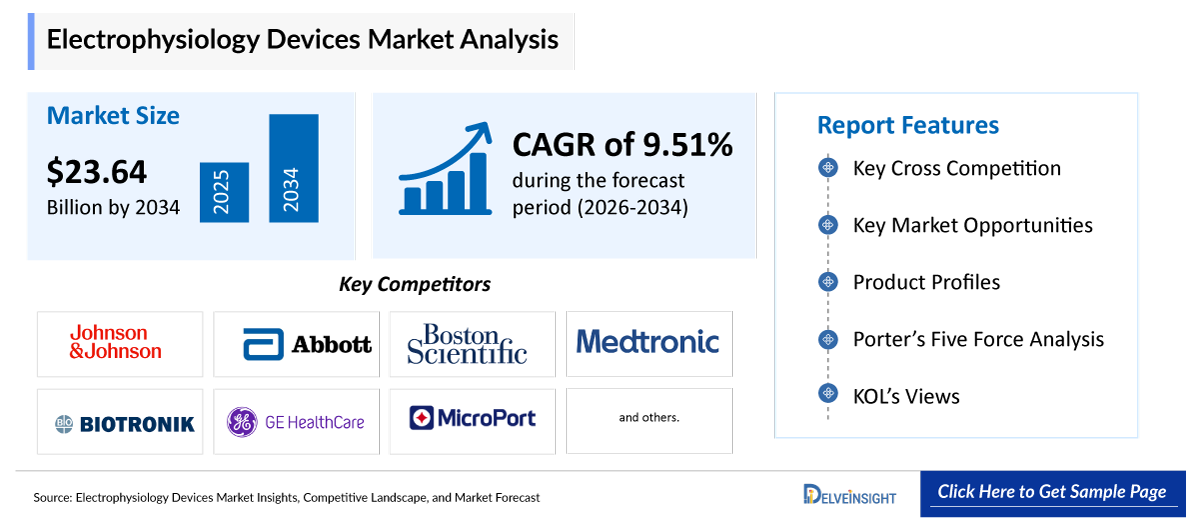
- The Global Electrophysiology Devices Market was valued at USD 10.44 billion in 2025 and is projected to reach USD 23.64 billion by 2034.
- The Electrophysiology Devices Market is expected to expand at a CAGR of 9.51% during the forecast period 2026-2034, supported by the increasing prevalence of cardiac arrhythmias, rising product development activity, the shift to pulsed field ablation, and the growing preference for minimally invasive cardiac procedures.
Electrophysiology Devices Market Trends & Insights
- By product, the ablation catheters segment dominated the electrophysiology devices market with a 45% share in 2025.
- By indication, the atrial fibrillation segment dominated the electrophysiology devices market with a 75% share in 2025.
- By energy modality, the radiofrequency ablation segment dominated the electrophysiology devices market with a 52% share in 2025.
- By end-user, the hospitals segment dominated the electrophysiology devices market with a 36% share in 2025.
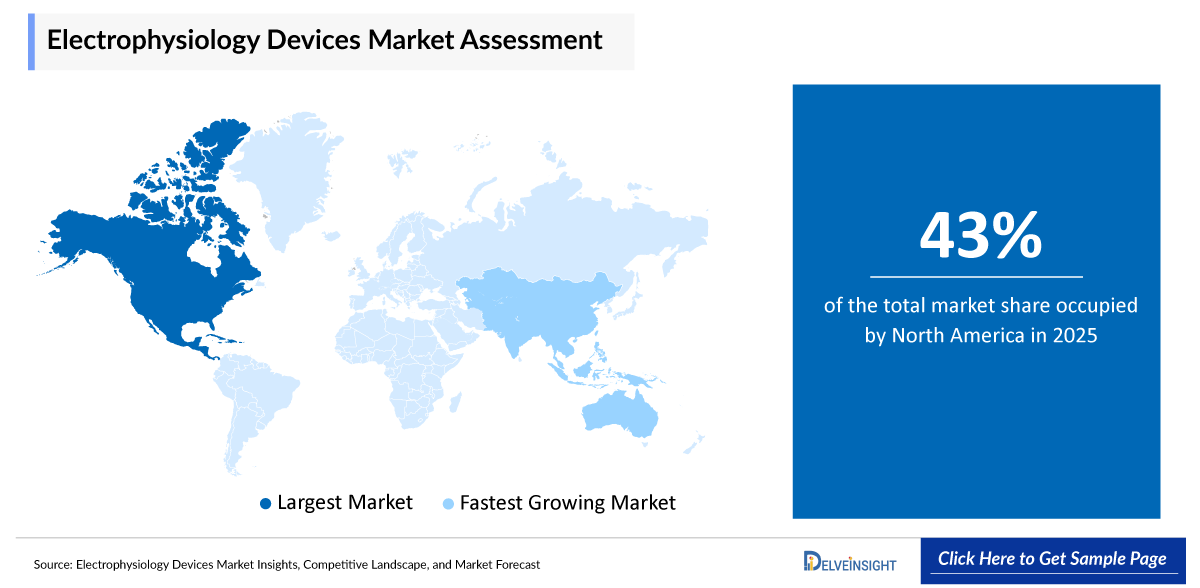
- North America accounted for the largest share of the electrophysiology devices market at 43% in 2025, while Asia-Pacific is anticipated to register the fastest growth through 2034.
Request for unlocking the Sample Page of the "Electrophysiology Devices Market"
Electrophysiology Devices Market Size
The following table summarizes the headline market metrics for the global electrophysiology devices market across the base year and the forecast horizon.
|
Report Metrics |
Details |
|
2025 Market Size |
USD 10.44 billion |
|
2034 Projected Market Size |
USD 23.64 billion |
|
Growth Rate (2026-2034) |
9.51% CAGR |
|
Largest Market |
North America (43% share in 2025) |
|
Fastest Growing Market |
Asia-Pacific |
|
Market Structure |
Moderately Consolidated |
All market values are expressed in USD and represent DelveInsight estimates synthesized from primary and secondary research.
Factors Contributing to the Growth of the Electrophysiology Devices Market
Electrophysiology Devices Market Drivers
-
Rising Prevalence of Cardiac Arrhythmias
The foundational driver of the electrophysiology devices market is the rising global prevalence of cardiac arrhythmias, particularly atrial fibrillation, which generates the procedural volume on which the entire category depends. DelveInsight estimates that over half a billion people worldwide are living with cardiovascular disease, and that the population affected by atrial fibrillation will exceed 12.5 million individuals globally by 2030.
Atrial fibrillation is the most common sustained arrhythmia, and its prevalence rises steeply with age and with the burden of lifestyle-related risk factors including hypertension, diabetes, obesity, smoking, and sedentary habits, all of which are increasing across both developed and developing markets.
Because atrial fibrillation is progressive, recurrent, and associated with a fivefold increase in stroke risk and elevated rates of heart failure, it demands active management rather than observation, and catheter ablation has become a guideline-supported therapy that is increasingly offered earlier in the disease course.
The clinical evidence that ablation is superior to antiarrhythmic drugs in reducing recurrence, and emerging evidence that earlier intervention slows disease progression, is expanding the treated population well beyond the small fraction of eligible patients currently receiving ablation. Because each procedure consumes a mapping catheter, an ablation catheter, access sheaths, and often intracardiac echocardiography, the growing arrhythmia population translates directly and durably into device demand.
-
The Shift to Pulsed Field Ablation
The rapid emergence of pulsed field ablation is the single most transformative driver of the electrophysiology market and is reshaping its competitive structure and growth trajectory. Pulsed field ablation is a non-thermal modality that ablates cardiac tissue through irreversible electroporation, selectively targeting myocardium while largely sparing the surrounding esophagus, phrenic nerve, and vasculature, which addresses the rare but serious collateral-injury complications associated with thermal radiofrequency and cryoablation.
Its advantages in safety, procedural speed, and ease of use have driven exceptionally rapid clinical adoption since the first systems reached the market, with leading platforms treating hundreds of thousands of patients within a few years of launch and randomized and large real-world registries confirming its safety and efficacy.
The modality has catalyzed a wave of product development and competition, with the three largest participants each launching pulsed field ablation platforms and integrating them with their mapping systems, and it is expanding the overall ablation market by making the procedure faster and safer, thereby increasing the number of centers and operators able to offer it and supporting the movement of ablation earlier in the treatment pathway.
Because pulsed field ablation commands premium pricing and is displacing both drug therapy and thermal ablation, it raises the value of the ablation segment and is the principal engine of market growth over the forecast period.
-
Rising Product Development Activity
A sustained wave of product development and regulatory approval is directly expanding the addressable market by broadening the technologies available, improving procedural outcomes, and intensifying competition. Continuous research and development is accelerating the innovation pipeline across every element of the electrophysiology workflow, with leading manufacturers and emerging players investing heavily in pulsed field ablation systems, artificial-intelligence-driven mapping platforms, magnetic resonance-compatible catheters, and robotic navigation.
Frequent product launches, clinical trials, and regulatory approvals reflect an industry focused on enhancing procedural safety, precision, and efficiency. Recent activity illustrates the breadth of this dynamic, including the near-simultaneous approval of three pulsed field ablation platforms, the integration of high-density and omnipolar mapping catheters with next-generation navigation systems, the addition of artificial intelligence modules that automate chamber reconstruction and signal analysis, and the first regulatory clearance of a robotically navigated mapping catheter.
Each new clearance either adds a device to an installed mapping-system base, generating recurring catheter revenue at high margin, or opens a new procedural capability that expands the treatable population. Because mapping-system placements create a durable annuity of catheter consumption tied to a proprietary ecosystem, the pace of product development is among the most direct determinants of market growth.
-
Shift Toward Minimally Invasive Cardiac Procedures
The global shift toward minimally invasive cardiac care is a durable driver of the electrophysiology market, as catheter-based ablation and diagnostic procedures are increasingly preferred over conventional open-heart and surgical approaches. Catheter ablation is performed percutaneously through venous access, avoiding sternotomy and cardiopulmonary bypass, and it delivers reduced procedural risk, shorter hospital stays, faster recovery, and lower overall treatment cost, while patients benefit from less postoperative discomfort and a quicker return to normal activity.
These advantages have made ablation the preferred interventional therapy for a widening range of arrhythmias, and health systems and physicians benefit from improved procedural efficiency and throughput. The trend is reinforced by the maturation of the enabling technologies that make minimally invasive intervention safe and reproducible, including three-dimensional electroanatomical mapping that reduces or eliminates fluoroscopy, contact-force sensing that improves lesion quality, intracardiac echocardiography that provides real-time visualization, and steerable sheaths that improve catheter stability.
As pulsed field ablation further simplifies and accelerates the procedure, the barrier to offering ablation falls, extending minimally invasive rhythm care to more centers and more patients. Because the shift toward catheter-based intervention drives the adoption of the full complement of mapping, ablation, and access devices, it is a broad-based driver across the entire product portfolio.
-
Aging Populations and Demographic Change
Demographic change is a structural driver of the electrophysiology market, because the arrhythmias that ablation treats are overwhelmingly diseases of later life and the population at risk is expanding faster than the general population.
The susceptibility to atrial fibrillation and other rhythm disorders rises sharply with age, reflecting the cumulative effect of hypertension, ischemic and valvular heart disease, and atrial remodeling, and the global population aged 65 and above is growing rapidly, with over 20% of Europeans projected to be over 65 by 2030 and comparable aging underway across North America and much of Asia-Pacific.
Atrial fibrillation alone affects some 11 million individuals across Europe, placing a substantial and rising burden on healthcare systems. As populations age, the pool of patients presenting with symptomatic arrhythmia expands, and because these patients increasingly expect active, definitive treatment rather than lifelong drug therapy, demand for ablation grows correspondingly.
The same demographic trend increases the prevalence of the comorbidities that complicate arrhythmia management and favor the tissue-selective safety profile of newer ablation modalities. Because aging is a long-term and largely irreversible trend, it provides a stable foundation for demand that is independent of economic cycles, and it is particularly consequential in the developed markets that account for the majority of current procedural volume.
-
Integration of Artificial Intelligence and Advanced Mapping
The integration of artificial intelligence into electroanatomical mapping and procedural guidance is an increasingly important driver, improving the precision, speed, and reproducibility of ablation while lowering the expertise barrier that has constrained the diffusion of complex procedures.
Contemporary mapping systems generate very large volumes of intracardiac electrical data, and artificial intelligence algorithms analyze these signals in real time to improve the accuracy of arrhythmia localization, automate the reconstruction of cardiac anatomy, distinguish meaningful near-field signals from far-field noise, and reduce procedure times.
Machine learning is increasingly integrated into ablation workflows to help predict outcomes and optimize energy delivery, and artificial-intelligence-driven decision-support tools help electrophysiologists interpret complex substrate and personalize therapy for atrial fibrillation and ventricular tachycardia. Recent platforms incorporate artificial intelligence modules that automatically generate chamber anatomy before catheter insertion using intracardiac ultrasound, saving time while improving map accuracy.
Because these capabilities make complex ablation faster, safer, and accessible to a broader range of operators, they expand the population of centers able to perform advanced procedures and increase the value captured per case. Artificial intelligence has also become a principal axis of competitive differentiation, and its integration into proprietary mapping ecosystems reinforces the recurring-revenue dynamics of the market.
-
Robotic Navigation and Remote Procedural Capability
The maturation of robotic catheter navigation is an emerging but increasingly consequential driver, addressing the operator dependence, radiation exposure, and procedural variability that characterize manual ablation. Robotic magnetic navigation systems steer specially designed catheters through externally controlled magnetic fields, allowing precise and stable catheter manipulation from a shielded workstation that removes the operator from fluoroscopic radiation and reduces the physical demands of long procedures.
The clinical value proposition centers on reproducible catheter stability, improved reach into difficult anatomy, and the potential to standardize complex ablation across operators of varying experience, and the field advanced materially with the first regulatory clearance of a robotically navigated mapping catheter, which extended robotic capability from ablation into the diagnostic phase of the procedure. Robotic navigation also underpins the longer-term prospect of remote and tele-procedural ablation, in which an expert operator could guide a procedure performed at a distant center, addressing the uneven geographic distribution of electrophysiology expertise.
As robotic platforms integrate with the dominant mapping ecosystems and as compatible catheter portfolios expand, the technology is positioned to move from specialized centers toward broader adoption, adding a further layer of capital and consumable demand to the market.
Electrophysiology Devices Market Restraints
Despite a strong and expanding demand base, the electrophysiology devices market faces material constraints that temper the pace of adoption. The most significant is the risk of procedure-related complications. Catheter ablation, while minimally invasive, carries risks including infection, cardiac perforation and tamponade, thromboembolism and stroke, vascular access complications, and, with thermal modalities, the rare but serious injuries to the esophagus and phrenic nerve that pulsed field ablation is designed to avoid.
These risks increase patient morbidity, raise safety concerns among physicians and patients, and often necessitate extensive post-procedural monitoring that adds to the overall cost of care, all of which can create hesitation in adopting or expanding advanced electrophysiology intervention. The second constraint is the availability of alternative treatment options.
Pharmacological therapy with antiarrhythmic and rate-control drugs remains a widely used first-line approach for many arrhythmias, and non-invasive imaging and monitoring modalities provide substitutes for some diagnostic functions, offering clinicians options that may be perceived as less risky or more cost-effective in particular patients, which moderates the pace at which ablation displaces medical management.
The third constraint is cost and reimbursement. Advanced mapping systems, ablation catheters, and pulsed field ablation platforms represent substantial capital and per-procedure expense, and cost-containment pressures together with fragmented and heterogeneous reimbursement structures, which vary significantly across countries, limit uniform technology penetration and can slow the uptake of the most advanced systems, particularly in cost-sensitive markets.
The fourth constraint is operational: complex ablation requires specialized electrophysiology laboratories, capital equipment, and highly trained electrophysiologists and staff whose numbers are limited, so workforce and infrastructure capacity rather than clinical demand often determine procedural volume. Product-specific setbacks, including recalls of certain ablation catheters over heating risks and the volatility that tariffs on imported components add to device pricing and supply, compound these pressures.
Together, these factors ensure that growth, while structurally supported, proceeds unevenly across geography and care setting. Source: peer-reviewed literature; national health authorities. Electrophysiology devices are specialized medical tools used to diagnose and treat cardiac arrhythmias by assessing the electrical activity of the heart and guiding targeted catheter-based intervention. The category is best understood through the workflow of a catheter ablation procedure, which is how manufacturers themselves organize their portfolios.
Access to the heart is established through steerable sheaths and transseptal puncture systems; diagnostic and high-density mapping catheters record intracardiac signals; a three-dimensional electroanatomical mapping and navigation system reconstructs the chambers and localizes the arrhythmia; intracardiac echocardiography provides real-time imaging; and an ablation catheter delivers energy to eliminate the abnormal electrical pathway.
The defining shift in the field is the energy modality used for ablation. Radiofrequency remains the established workhorse, cryoablation offers single-shot pulmonary vein isolation, and pulsed field ablation, a non-thermal method that selectively targets cardiac tissue while sparing the esophagus, phrenic nerve, and vasculature, has emerged as the fastest-growing and increasingly preferred approach for atrial fibrillation.
This scope reflects the interventional electrophysiology market as manufacturers define it and is distinct from the adjacent cardiac rhythm management market of implantable pacemakers, defibrillators, and resynchronization devices, which is treated here as a separate market. The contemporary market is defined by the rapid adoption of pulsed field ablation, the integration of artificial intelligence into mapping, and the emergence of robotic catheter navigation.
Electrophysiology Devices Market Key Growth Drivers
- Rising prevalence of cardiac arrhythmias, with DelveInsight estimating that over half a billion people worldwide are living with cardiovascular disease.
- A rapidly growing atrial fibrillation population, projected by DelveInsight to exceed 12.5 million individuals globally by 2030.
- The shift to pulsed field ablation, a non-thermal modality that has rapidly become the preferred approach for atrial fibrillation ablation on the strength of its safety and efficiency.
- Lifestyle-related risk factors, including hypertension, diabetes, obesity, smoking, and sedentary habits, that increase the incidence of cardiac rhythm disorders.
- Rising product development activity, including AI-driven mapping platforms, MRI-compatible catheters, and robotic navigation systems.
- The growing shift toward minimally invasive catheter-based procedures that reduce risk, shorten recovery, and lower overall treatment cost relative to open-heart surgery.
- Aging populations, with susceptibility to arrhythmia rising sharply with age and over 20% of Europeans projected to be over 65 by 2030.
Electrophysiology Devices Companies
The competitive field is led by a small group of diversified medical technology companies operating integrated electrophysiology franchises that span mapping, ablation, and access, supported by specialists in robotic navigation, non-contact mapping, and artificial intelligence. The leading participants in the electrophysiology devices market include the following:
- Johnson & Johnson MedTech (Biosense Webster)
- Abbott Laboratories
- Boston Scientific Corporation
- Medtronic plc
- BIOTRONIK SE & Co. KG
- GE HealthCare Technologies Inc.
- MicroPort Scientific Corporation
- AtriCure Inc.
- Stereotaxis Inc.
- Acutus Medical Inc.
For illustrative purposes, only the top 10 companies are listed in the Table of Contents. The report may include analysis and references to additional companies relevant to the market assessment.
Electrophysiology Devices Market Segment Analysis
The global electrophysiology devices market is segmented by product into ablation catheters, electrophysiology mapping and navigation systems, diagnostic and mapping catheters, access and transseptal devices, intracardiac echocardiography and recording systems, and others; by energy modality into radiofrequency ablation, cryoablation, and pulsed field ablation; by indication into atrial fibrillation, atrial flutter and supraventricular tachycardia, ventricular tachycardia, and others; by end-user into hospitals, ambulatory surgical centers, and diagnostic and cardiac centers; and by geography into North America, Europe, Asia-Pacific, and the Rest of the World.
-
Electrophysiology Devices Market Segmentation By Product
Dominant Subsegment: Ablation Catheters.
The ablation catheters category is expected to dominate the market.
Dominant: Ablation Catheters ~ 45%
The ablation catheters segment accounted for a 45% share of the electrophysiology devices market in 2025. Ablation catheters dominate the product structure because the ablation catheter is the definitive therapeutic device of an electrophysiology procedure and the single highest-value consumable in a typical case, delivering the energy that eliminates the abnormal electrical pathway. The segment reflects the widespread clinical adoption and versatility of catheter ablation across a broad spectrum of arrhythmias, including atrial fibrillation, atrial flutter, and ventricular tachycardia, and its effectiveness stems from the ability to deliver controlled energy to specific cardiac tissue without open-heart surgery.
Technological advancement has strengthened the dominance of the segment, with contact force-sensing, irrigated-tip designs, and real-time mapping integration improving procedural precision, safety, and long-term success, exemplified by established radiofrequency catheters such as the Biosense Webster ThermoCool SmartTouch and the Abbott TactiCath and TactiFlex platforms. The pivotal development within the segment is the arrival of pulsed field ablation catheters, which have been adopted with exceptional speed and are reconfiguring the competitive landscape.
Electrophysiology mapping and navigation systems form the essential capital anchor of the laboratory and drive the catheter placement cycle on which recurring revenue depends, while diagnostic and mapping catheters, access and transseptal devices, and intracardiac echocardiography and recording systems complete the workflow. Ablation catheters are expected to retain and modestly extend their leading share throughout the forecast period as pulsed field ablation raises the value of each procedure.
-
Electrophysiology Devices Market Segmentation By Indication
Dominant Subsegment: Atrial Fibrillation.
The atrial fibrillation category is expected to dominate the market.
Dominant: Atrial Fibrillation ~ 75%
The atrial fibrillation segment accounted for a 75% share of the electrophysiology devices market in 2025. Atrial fibrillation dominates the indication structure because it is by a wide margin the most common sustained cardiac arrhythmia and the principal driver of ablation volume worldwide. The dominance follows directly from its epidemiology, with DelveInsight projecting that the atrial fibrillation population will exceed 12.5 million individuals globally by 2030 and with some 11 million individuals affected across Europe alone, and from the strong and growing clinical consensus that catheter ablation is superior to antiarrhythmic drug therapy in maintaining sinus rhythm and is increasingly warranted earlier in the disease course.
Factors such as hypertension, diabetes, obesity, and lifestyle-related cardiovascular risk are enlarging the patient pool, while ablation for atrial fibrillation is also the most device-intensive procedure in electrophysiology, typically consuming a high-density mapping catheter, an ablation catheter, transseptal access, and intracardiac echocardiography, which concentrates market value in this indication. The advent of pulsed field ablation, developed and validated first and foremost for atrial fibrillation through pulmonary vein isolation, has further reinforced the dominance of the segment by making the procedure faster and safer and thereby expanding the treatable population.
Atrial flutter and supraventricular tachycardia constitute an established indication served by radiofrequency ablation, while ventricular tachycardia represents a smaller but complex and growing segment. Atrial fibrillation is expected to retain its leading position throughout the forecast period.
-
Electrophysiology Devices Market Segmentation By Energy Modality
Dominant Subsegment: Radiofrequency Ablation.
The radiofrequency ablation category is expected to dominate the market.
Dominant: Radiofrequency Ablation ~ 52%
The radiofrequency ablation segment accounted for a 52% share of the electrophysiology devices market in 2025. Radiofrequency ablation dominates the energy-modality structure in the base year because it is the long-established workhorse of catheter ablation, supported by decades of clinical evidence, the largest installed base of compatible mapping systems and catheters, and the broadest range of treatable arrhythmias. Radiofrequency delivers thermal energy through the catheter tip to create precise, contiguous lesions, and its integration with contact force-sensing and high-density mapping has continually improved its safety and durability, making it the reference modality against which newer approaches are measured and the mainstay for atrial flutter, supraventricular tachycardia, and ventricular tachycardia as well as a large share of atrial fibrillation procedures.
Cryoablation holds an established position in pulmonary vein isolation, offering a single-shot balloon-based workflow and a distinct safety profile. The decisive dynamic in this axis, however, is the rapid ascent of pulsed field ablation, the non-thermal modality that is the fastest-growing energy source and that is projected to overtake radiofrequency in atrial fibrillation over the forecast period as its adoption accelerates and its catheter portfolios broaden.
The base-year dominance of radiofrequency therefore coexists with a decisive shift in new-procedure mix toward pulsed field ablation, and the modality structure of the market is expected to change more substantially than any other segmentation dimension over the forecast horizon. Source scope reflects the transitional state of the ablation energy market.
-
Electrophysiology Devices Market Segmentation By End-User
Dominant Subsegment: Hospitals.
The hospitals category is expected to dominate the market.
Dominant: Hospitals ~ 36%
The hospitals segment accounted for a 36% share of the electrophysiology devices market in 2025. Hospitals dominate end-user demand because they serve as the central hubs for advanced cardiac care, offering the comprehensive infrastructure, specialized electrophysiology laboratories, and highly trained personnel that complex ablation procedures require.
Hospitals are typically the first point of care for patients with cardiac arrhythmias, including atrial fibrillation and ventricular tachycardia, where accurate diagnosis and timely intervention are critical, and they possess the capital capacity to invest in the high-resolution mapping systems, ablation platforms, and intracardiac imaging that these procedures demand and that require significant expenditure and specialized maintenance.
The concentration of procedural volume in hospitals is reinforced by the acuity and complexity of ablation, which requires on-site surgical and intensive-care backup, and by the multidisciplinary heart-team model through which advanced arrhythmia care is delivered.
Ambulatory surgical centers form a growing end-user segment as reimbursement policy in several markets extends coverage for selected lower-complexity electrophysiology procedures to the outpatient setting, a shift enabled by the improving safety and efficiency of catheter-based intervention and particularly by the speed of pulsed field ablation. Diagnostic and cardiac centers serve a specialized role in arrhythmia diagnosis and monitoring.
Hospitals are expected to retain their dominant position throughout the forecast period, as the infrastructure requirements of complex ablation are unlikely to be met outside the hospital setting for the majority of procedures.
Electrophysiology Devices Market Region Analysis
- Dominant Region: North America
- Dominant: North America ~ 43% (Largest)
North America accounted for a 43% share of the global electrophysiology devices market in 2025. The region leads the global landscape, driven by the high prevalence of cardiovascular disorders, particularly atrial fibrillation, coupled with advanced healthcare infrastructure and the widespread availability of specialized electrophysiology laboratories.
The rising incidence of arrhythmias, fueled by aging populations and lifestyle-related risk factors such as hypertension, diabetes, and obesity, has significantly increased demand for both diagnostic and therapeutic electrophysiology solutions, and DelveInsight estimates that 12.5 million people will be affected by atrial fibrillation within the next five years, underscoring the growing clinical need.
Technological advancement has played a critical role in enhancing procedural precision and safety, driving broader adoption of electrophysiology intervention, with innovations including contact force-sensing ablation catheters, high-resolution mapping systems, robotic-assisted navigation, and the rapid clinical uptake of pulsed field ablation.
The United States is the reference market for regulatory approval, hosting the near-simultaneous clearance of the leading pulsed field ablation platforms and the first robotically navigated mapping catheter, and supportive reimbursement policies and substantial healthcare expenditure have enabled hospitals and specialized cardiac centers to invest in state-of-the-art devices.
Ablation catheters remain the leading product segment on the strength of their proven efficacy across arrhythmias, while diagnostic and mapping systems expand as artificial intelligence and advanced imaging improve their accuracy. The leading manufacturers are predominantly based in or anchored to the region, reinforcing its leadership. North America is expected to retain its dominant position throughout the forecast period.
- Fastest Growing Region: Asia-Pacific
Asia-Pacific is projected to register the fastest compound annual growth rate in the electrophysiology devices market through 2034. The region is witnessing rapid expansion, reflecting a robust growth rate driven by the rising prevalence of atrial fibrillation and other arrhythmias, increasing healthcare expenditure, and the rapid expansion of advanced cardiac care infrastructure. Countries including China, Japan, India, and South Korea are emerging as key growth hubs, supported by government initiatives to improve access to minimally invasive procedures and by the rising number of specialized electrophysiology laboratories across the region.
The growing geriatric population, coupled with lifestyle-related risk factors such as hypertension, diabetes, and obesity, is further accelerating demand for diagnostic and therapeutic electrophysiology devices. Multinational players are expanding their regional presence through partnerships with local hospitals and distributors, while regional manufacturers are increasingly investing in cost-effective mapping systems and ablation catheters to serve price-sensitive markets.
Japan combines an aged population with a mature, high-standard interventional practice and early adoption of advanced technologies; China contributes the largest incremental volume, supported by expanding catheterization and electrophysiology laboratory capacity and a growing domestic device industry; and India represents a substantial long-term opportunity as access broadens.
Although challenges remain, including limited awareness in rural areas and uneven reimbursement, the region is poised to become a major growth engine, fueled by increasing adoption of pulsed field ablation, artificial-intelligence-driven mapping, and robotic navigation. Regional growth is expected to exceed the global average across every product segment.
Electrophysiology Devices Regional Commentary
- North America
North America leads on value, innovation, and regulatory precedence, holding a 43% share in 2025. The United States is the reference market for pulsed field ablation and robotic mapping approvals and hosts the major manufacturers, and DelveInsight estimates 12.5 million people will be affected by atrial fibrillation within five years.
Adoption is supported by advanced electrophysiology laboratory infrastructure, supportive reimbursement, and substantial healthcare expenditure that enables investment in high-resolution mapping and ablation platforms. Near-term dynamics are shaped by the rapid displacement of thermal ablation by pulsed field ablation, artificial-intelligence-driven mapping, robotic navigation, and the extension of selected procedures into ambulatory settings.
- Europe
Europe is a center of electrophysiology innovation and adoption, with Germany, the United Kingdom, France, and Italy accounting for the highest procedural volumes and with the region often leading the introduction of next-generation ablation systems, several of which achieved European approval and large-scale rollout ahead of other markets.
Demand is amplified by a rapidly aging population, with over 20% of Europeans projected to be over 65 by 2030 and atrial fibrillation affecting some 11 million individuals across the continent, supported by favorable reimbursement for catheter-based ablation in the major markets. Europe is also a hub for clinical research and collaborative validation of artificial-intelligence mapping and robotic navigation, tempered by cost-containment pressures and reimbursement structures that vary significantly across countries.
- Asia-Pacific
Asia-Pacific is the fastest-growing region, propelled by rising atrial fibrillation prevalence, increasing healthcare expenditure, and the rapid expansion of advanced cardiac care infrastructure across China, Japan, India, and South Korea. Government initiatives to improve access to minimally invasive procedures and a rising number of specialized electrophysiology laboratories support adoption, while the aging population and lifestyle-related risk factors accelerate demand.
Multinational players expand through local partnerships and regional manufacturers invest in cost-effective mapping systems and ablation catheters. Despite limited rural awareness and uneven reimbursement, the region is a major growth engine, and growth exceeds the global average across every segment.
- Rest of World
The Rest of the World comprises the Middle East, Africa, and South America. Adoption is highly stratified. The Gulf Cooperation Council states and the larger South American markets, particularly Brazil, have invested in electrophysiology laboratory capacity and increasingly perform contemporary ablation, representing growing markets, while much of Africa lacks the specialized laboratory infrastructure, trained electrophysiology workforce, and financing required, so a substantial share of arrhythmia is never treated interventionally.
Cost and reimbursement constraints limit access in developing countries. Regional growth will be driven by investment in cardiac centers, government health initiatives, and lower-cost mapping systems and catheters from regional manufacturers.
Electrophysiology Devices Market Competitive Landscape
The global electrophysiology devices market is classified as Moderately Consolidated. A small group of global leaders dominates the core segments of ablation catheters, mapping systems, and access devices, leveraging strong product portfolios, global distribution networks, and continuous research and development investment, while barriers to entry are high because the ablation catheter must integrate with a proprietary mapping ecosystem and because regulatory approval demands extensive clinical evidence.
At the same time, a group of emerging players is introducing disruptive technologies including non-contact mapping, artificial-intelligence-based decision support, robotic navigation, and magnetic resonance-compatible ablation, challenging the incumbents and reshaping procedural workflows. The competitive landscape is evaluated across the following dimensions:
- Market concentration: Moderately consolidated, with a small group of diversified medical technology companies holding integrated mapping and ablation franchises that account for the majority of revenue, alongside a growing set of niche innovators.
- Leading players: Johnson & Johnson MedTech through Biosense Webster leads in mapping and ablation, Abbott and Boston Scientific hold strong integrated positions, and Medtronic competes across cryoablation and pulsed field ablation, with the three largest each having launched pulsed field ablation platforms.
- Geographic reach: The leading participants maintain global commercial and clinical education organizations built upon electrophysiology laboratory relationships, while regional manufacturers including MicroPort and Lepu Medical leverage cost advantages to serve price-sensitive markets.
- Product portfolio strength: Competitive advantage rests on the integration of a proprietary mapping ecosystem with a full ablation and access portfolio, since a mapping-system placement anchors recurring catheter revenue and creates high switching costs.
- Pipeline strength: Development is concentrated in pulsed field ablation platforms and next-generation catheters, artificial-intelligence-driven and high-density mapping, magnetic resonance-compatible systems, and robotic navigation.
- Strategic partnerships: Collaboration is active across mapping and navigation integration, imaging, and robotics, exemplified by alliances between mapping-system developers and robotic navigation providers and between device makers and academic centers validating artificial-intelligence guidance.
- M&A activity: Acquisition has reshaped the field, most consequentially the acquisition of the pioneering pulsed field ablation developer Farapulse by Boston Scientific, alongside investments by the leaders in artificial-intelligence and access technologies.
- Innovation focus: Competitive differentiation is shifting toward pulsed field ablation, artificial-intelligence-enabled and non-contact mapping, single-catheter mapping-and-ablation workflows, and robotic and magnetic resonance-guided procedures.
- Regulatory standing: United States premarket approval and 510(k) clearance and European Union Medical Device Regulation certification are decisive competitive credentials, and the near-simultaneous approval of competing pulsed field ablation platforms has intensified the race for label expansion.
Electrophysiology Devices Market Recent Developmental Activities
- In July 2025, Stereotaxis Inc. received U.S. Food and Drug Administration clearance for its MAGiC Sweep diagnostic mapping catheter, recognized as the first robotically navigated electrophysiology mapping catheter to gain approval in the United States. Strategic significance: extending robotic magnetic navigation from ablation into the diagnostic mapping phase advanced the prospect of fully robotic and potentially remote ablation procedures, and it strengthened the position of robotic navigation as a distinct capability integrated with the dominant mapping ecosystems.
- In July 2025, Boston Scientific Corporation received an expanded U.S. Food and Drug Administration label for its FARAPULSE Pulsed Field Ablation System to include persistent atrial fibrillation, broadening the approved population beyond paroxysmal disease, with the platform having treated over 500,000 patients globally. Strategic significance: label expansion into persistent atrial fibrillation enlarged the addressable population for the clinical leader in pulsed field ablation and reinforced the displacement of thermal ablation, consolidating the position of pulsed field ablation as the standard of care.
- In October 2024, Boston Scientific Corporation received U.S. Food and Drug Administration approval for the navigation-enabled FARAWAVE NAV Ablation Catheter and clearance for FARAVIEW Software, integrated with the OPAL HDx Mapping System, becoming the first to offer mapping-integrated pulsed field ablation. Strategic significance: combining mapping and pulsed field ablation in a single navigation-enabled workflow addressed the principal limitation of early pulsed field ablation, which had relied on separate mapping tools, and it moved the company toward a fully integrated single-ecosystem offering.
- In March 2025, Abbott Laboratories secured an early CE Mark for its Volt Pulsed Field Ablation System, positioning the company to compete in the modality that has rapidly become the preferred ablation technique for atrial fibrillation. Strategic significance: European approval allowed Abbott to close the gap with competing pulsed field ablation systems already on the market and to integrate the modality with its EnSite X mapping platform, ensuring the company remained competitive as the ablation energy mix shifted.
- In 2024, Medtronic plc obtained U.S. Food and Drug Administration approval for its PulseSelect Pulsed Field Ablation System, the first pulsed field ablation platform to receive United States approval, and continued to advance its Affera mapping and Sphere-9 ablation platform. Strategic significance: first-to-approval status in the United States established Medtronic as an early pulsed field ablation competitor and, together with its Affera integrated mapping-and-ablation system, positioned the company to contest the single-catheter, single-ecosystem model that is emerging as the competitive standard.
- In 2024, Johnson & Johnson MedTech advanced its Biosense Webster VARIPULSE Pulsed Field Ablation Platform, integrated with the CARTO 3 mapping system, securing CE Mark in February 2024 and pursuing United States approval, with the platform combining the variable-loop VARIPULSE catheter, the TRUPULSE generator, and CARTO 3 software. Strategic significance: leveraging the market-leading CARTO mapping installed base to introduce a contact-sensing pulsed field ablation catheter defended the dominant position of Biosense Webster in mapping and ablation as the modality transition accelerated.
- In May 2024, Biosense Webster, part of Johnson & Johnson MedTech, launched CARTO 3 System Version 8, adding the CARTO ELEVATE and CARTOSOUND FAM modules, the latter using the first artificial intelligence algorithm cleared by the United States Food and Drug Administration in intracardiac ultrasound for the company to automatically generate left atrial anatomy. Strategic significance: embedding artificial intelligence into the market-leading mapping platform automated a time-consuming procedural step and reinforced the recurring-revenue advantage of the proprietary ecosystem into which catheters are sold.
- In 2024, Abbott Laboratories expanded its EnSite X EP System mapping ecosystem, including integration with intracardiac echocardiography through the ViewFlex Xtra ICE catheter and the TactiFlex Sensor Enabled ablation catheter, and pursued open-architecture integration with third-party catheters including pulsed field ablation devices. Strategic significance: an open-architecture mapping strategy differentiated Abbott from the closed proprietary ecosystems of competitors, allowing its system to map procedures performed with a range of catheters and broadening its relevance across the transitioning ablation market.
- In February 2024, X-trodes received U.S. Food and Drug Administration 510(k) clearance for its at-home electrophysiological monitoring system, enabling monitoring of biopotential signals as a convenient alternative to traditional in-clinic testing. Strategic significance: the clearance advanced the extension of electrophysiological monitoring beyond the hospital into the home, reflecting the broader movement toward remote and continuous rhythm monitoring that complements the interventional market and supports earlier arrhythmia detection.
- In May 2024, Implicity, a leader in remote patient monitoring and cardiac data management, received U.S. Food and Drug Administration 510(k) clearance for SignalHF, an algorithm within its remote monitoring solution designed to support the early identification of heart failure risk. Strategic significance: the clearance illustrated the growing role of software, data management, and artificial intelligence in the cardiac care continuum surrounding electrophysiology intervention, and the emergence of remote monitoring platforms as an adjacent and complementary segment.
- In 2024, Boston Scientific Corporation completed the integration of Farapulse following its acquisition of the pioneering pulsed field ablation developer, and scaled global commercialization of the FARAPULSE platform toward market leadership in electrophysiology. Strategic significance: the acquisition proved to be among the most consequential strategic moves in the field, giving Boston Scientific the clinical lead in the fastest-growing ablation modality and repositioning a historically smaller electrophysiology participant as a contender for overall category leadership.
- In 2025, Volta Medical advanced its artificial-intelligence-based ablation guidance software through continued clinical validation with academic hospital partners, applying machine learning to identify ablation targets in persistent atrial fibrillation beyond pulmonary vein isolation. Strategic significance: artificial-intelligence-driven identification of ablation targets addressed the persistent challenge of treating atrial fibrillation beyond the pulmonary veins, where outcomes have been poorer, and exemplified the wave of software innovators augmenting the hardware-centric offerings of the incumbents.
Electrophysiology Devices Market Segmentation
Electrophysiology Devices Market Assessment by Product
- Ablation Catheters
- Radiofrequency Ablation Catheters
- Cryoablation Catheters
- Pulsed Field Ablation (PFA) Catheters
- EP Mapping and Navigation Systems
- 3D Electroanatomical Mapping Systems
- Robotic and Magnetic Navigation Systems
- Diagnostic and Mapping Catheters
- High-Density and Multipolar Mapping Catheters
- Conventional Diagnostic Catheters
- Access and Transseptal Devices
- Steerable and Fixed Sheaths
- Transseptal Needles and RF Puncture Systems
- Intracardiac Echocardiography and Recording Systems
- Intracardiac Echocardiography (ICE) Catheters
- EP Recording Systems
- Others (Generators, Accessories, and Software)
Electrophysiology Devices Market Assessment by Energy Modality
- Radiofrequency Ablation
- Cryoablation
- Pulsed Field Ablation (PFA)
Electrophysiology Devices Market Assessment by Indication
- Atrial Fibrillation
- Atrial Flutter and Supraventricular Tachycardia
- Ventricular Tachycardia
- Others
Electrophysiology Devices Market Assessment by End-User
- Hospitals
- Ambulatory Surgical Centers (ASCs)
- Diagnostic and Cardiac Centers
Electrophysiology Devices Market Assessment by Geography
- North America
- United States Electrophysiology Devices Market Size in USD million (2023-2034)
- Canada Electrophysiology Devices Market Size in USD million (2023-2034)
- Mexico Electrophysiology Devices Market Size in USD million (2023-2034)
- Europe
- France Electrophysiology Devices Market Size in USD million (2023-2034)
- Germany Electrophysiology Devices Market Size in USD million (2023-2034)
- United Kingdom Electrophysiology Devices Market Size in USD million (2023-2034)
- Italy Electrophysiology Devices Market Size in USD million (2023-2034)
- Spain Electrophysiology Devices Market Size in USD million (2023-2034)
- Rest of Europe Electrophysiology Devices Market Size in USD million (2023-2034)
- Asia-Pacific
- China Electrophysiology Devices Market Size in USD million (2023-2034)
- Japan Electrophysiology Devices Market Size in USD million (2023-2034)
- India Electrophysiology Devices Market Size in USD million (2023-2034)
- Australia Electrophysiology Devices Market Size in USD million (2023-2034)
- South Korea Electrophysiology Devices Market Size in USD million (2023-2034)
- Rest of Asia-Pacific Electrophysiology Devices Market Size in USD million (2023-2034)
- Rest of the World
- Middle East Electrophysiology Devices Market Size in USD million (2023-2034)
- Africa Electrophysiology Devices Market Size in USD million (2023-2034)
- South America Electrophysiology Devices Market Size in USD million (2023-2034)
Electrophysiology Devices Market Recent Industry Trends and Milestones (2023-2026)
|
Category |
Key Developments |
|
Electrophysiology Devices Market Product Approval |
The 2023 to 2026 period was dominated by the near-simultaneous arrival of pulsed field ablation. Medtronic secured the first United States approval for its PulseSelect system, followed by Boston Scientific FARAPULSE and, in Europe, Johnson & Johnson MedTech VARIPULSE, which gained CE Mark in February 2024. Boston Scientific added the navigation-enabled FARAWAVE NAV catheter and FARAVIEW software in October 2024 and secured a persistent atrial fibrillation label expansion in July 2025, while Abbott obtained an early CE Mark for its Volt pulsed field ablation system in March 2025. In mapping, Biosense Webster launched CARTO 3 Version 8 with artificial intelligence modules in May 2024, and Stereotaxis obtained clearance for the first robotically navigated mapping catheter, MAGiC Sweep, in July 2025. Regulatory activity also advanced remote monitoring, including the X-trodes at-home electrophysiological monitoring clearance in February 2024. |
|
Electrophysiology Devices Market Product Expansion |
Product expansion advanced along three axes. The first is energy modality, as pulsed field ablation catheter portfolios broadened rapidly from single-shot pulmonary vein isolation toward focal and navigation-enabled designs capable of mapping and ablation in one device, and as label expansion extended pulsed field ablation from paroxysmal to persistent atrial fibrillation. The second is mapping integration, as every leading participant moved to combine pulsed field ablation with its proprietary three-dimensional mapping ecosystem and to embed artificial intelligence and intracardiac ultrasound for automated chamber reconstruction. The third is workflow consolidation, as the field advanced toward single-catheter mapping-and-ablation solutions and open-architecture systems able to map procedures performed with third-party catheters. Robotic navigation expanded from ablation into diagnostic mapping, and high-density and omnipolar mapping catheters extended the substrate detail available for complex ablation. |
|
Electrophysiology Devices Market Investment |
Investment was dominated by the strategic repositioning upon pulsed field ablation, most consequentially the acquisition and integration of the pioneering developer Farapulse by Boston Scientific, which propelled the company toward electrophysiology leadership. The leaders invested heavily in pulsed field ablation platform development, mapping-system integration, and manufacturing scale to meet exceptional demand, while also acquiring or partnering for artificial-intelligence mapping, access technologies, and robotic navigation. Venture capital concentrated on software and niche hardware innovators, including artificial-intelligence ablation-guidance developers such as Volta Medical, non-contact mapping and magnetic resonance-compatible ablation specialists, and remote monitoring platforms. Partnerships proliferated between mapping-system developers and robotic navigation providers and between device makers and academic centers validating artificial-intelligence guidance, reflecting the shift of competitive value toward software and integration. |
|
Company Strategy |
The unifying strategic theme is the race to lead pulsed field ablation while defending the mapping ecosystems that anchor recurring catheter revenue. Boston Scientific is pursuing overall electrophysiology leadership on the strength of FARAPULSE and the OPAL HDx mapping system. Johnson & Johnson MedTech is leveraging the market-leading CARTO installed base to introduce the contact-sensing VARIPULSE catheter and artificial-intelligence mapping modules. Medtronic is combining early pulsed field ablation approval with its Affera integrated mapping-and-ablation platform. Abbott is differentiating through an open-architecture EnSite X mapping strategy and its Volt pulsed field ablation system. Smaller and emerging players, including Stereotaxis in robotics, Volta Medical in artificial-intelligence guidance, AtriCure in surgical and hybrid ablation, and Imricor in magnetic resonance-guided electrophysiology, pursue differentiated positions adjacent to the incumbent ecosystems. |
|
Emerging Technologies |
The defining emerging technology is pulsed field ablation, the non-thermal, tissue-selective modality that has been adopted with exceptional speed and is displacing thermal ablation for atrial fibrillation. Complementing it are artificial-intelligence-powered mapping and ablation decision-support platforms that automate chamber reconstruction, analyze intracardiac signals in real time, and identify ablation targets beyond the pulmonary veins; single-catheter systems that combine high-density mapping and ablation in one device; robotic and magnetic navigation that improves catheter stability and reduces operator radiation while enabling the prospect of remote procedures; and magnetic resonance-guided electrophysiology that offers radiation-free, soft-tissue-guided ablation. Adjacent innovation includes intracardiac echocardiography with artificial intelligence, non-contact charge-density mapping, and remote and continuous rhythm monitoring platforms that extend the care continuum beyond the laboratory. Across these, the trajectory is toward faster, safer, more automated, and more reproducible ablation. |
Electrophysiology Devices Market Startup Funding and Investment Trends
Investment in the electrophysiology field has concentrated on technologies that address the limitations of the incumbent mapping-and-ablation model, namely the operator dependence of manual ablation, the difficulty of treating atrial fibrillation beyond the pulmonary veins, and the radiation and soft-tissue-guidance constraints of fluoroscopy-based procedures. The dominant theses are artificial-intelligence-driven ablation guidance, robotic and magnetic navigation, magnetic resonance-guided electrophysiology, and novel pulsed field ablation architectures.
Because the ablation catheter must integrate with a proprietary mapping ecosystem, most innovators pursue either software that augments existing systems or hardware that a strategic acquirer can absorb. The table below summarizes representative companies advancing the next generation of electrophysiology devices.
|
Company |
Total Funding |
Funding Stage |
Main Product/Offering |
Core Technology |
|
Volta Medical |
Venture-backed |
Growth venture |
VX1 AI ablation guidance |
Machine learning substrate mapping |
|
Field Medical |
Venture-backed |
Early-stage venture |
FieldForce focal PFA |
Focal pulsed field ablation |
|
Request for unlocking the report of the @ Electrophysiology Devices Market | ||||
Capital formation in this field is shaped by the difficulty of competing directly against incumbents whose proprietary mapping ecosystems, electrophysiology laboratory relationships, and full-workflow portfolios create high switching costs, so investors have favored companies that either augment those ecosystems with software or create a differentiated hardware niche that a strategic acquirer can absorb. Artificial-intelligence ablation guidance is the clearest software thesis, seeking to improve outcomes in persistent atrial fibrillation where the incumbents have struggled, while robotic navigation, magnetic resonance-guided ablation, and non-contact mapping represent differentiated hardware approaches.
The archetypal outcome is the acquisition of the pulsed field ablation pioneer Farapulse by Boston Scientific, which demonstrated that a venture-backed developer creating a genuinely new category can achieve an exit of extraordinary value and reshape the competitive order, and which has drawn sustained investment into the next wave of pulsed field ablation and mapping innovators. The principal risks to the funding environment are the evidentiary and capital burden of pivotal clinical trials for the highest-risk device classes, the challenge of achieving mapping-ecosystem integration, and the pricing power of incumbents defending installed bases.
Key Takeaways from the Electrophysiology Devices Market Report Study
- Market size analysis for the current electrophysiology devices market size (2025), and market forecast for 9 years (2026 to 2034).
- Top key product/technology developments, mergers, acquisitions, partnerships, and joint ventures that happened over the last 3 years.
- Key companies dominating the global electrophysiology devices market.
- Various opportunities available for competitors in the electrophysiology devices market space.
- What are the top-performing segments in 2025? How will these segments perform in 2034?
- Which are the top-performing regions and countries in the current electrophysiology devices market scenario?
- Which are the regions and countries where companies should concentrate their opportunities for electrophysiology devices market growth in the future?
Target audience who can benefit from this Electrophysiology Devices Market Report Study
- Electrophysiology Devices product providers
- Research organizations and consulting companies
- Electrophysiology Devices-related organizations, associations, forums, and other alliances
- Government and corporate offices
- Start-up companies, venture capitalists, and private equity firms
- Distributors and traders dealing in electrophysiology devices
- Various end-users who want to know more about the electrophysiology devices market and the latest technological developments in the electrophysiology devices market.
Stay updated with us for Recent Articles @ New DelveInsight Blogs

