Germ Cell Tumor Market
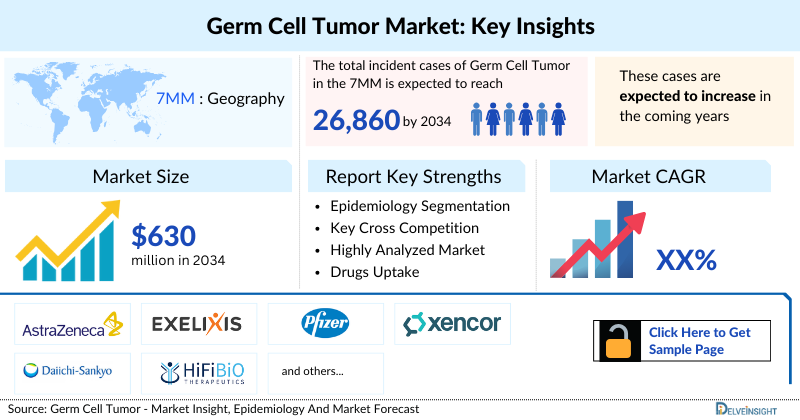
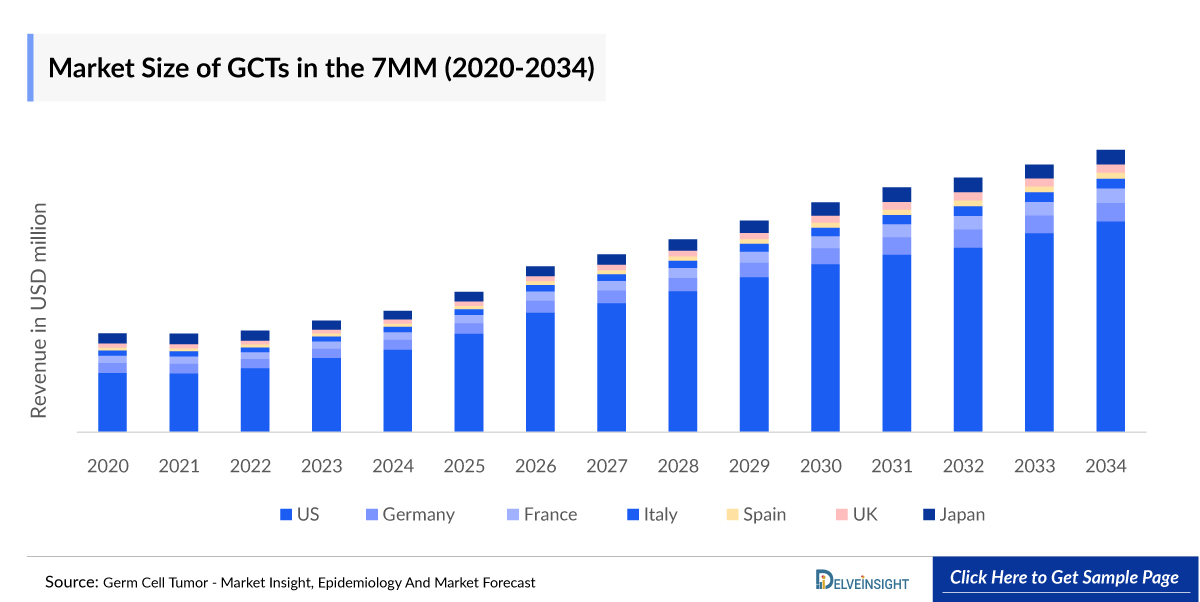
- In 2020, the total Germ Cell Tumor market size in the 7MM was ~USD 290 million, which is expected to increase and reach approximately USD 630 million by 2034.
- Germ Cell Tumors are a unique and diverse group of neoplasms that arise from primordial germ cells, which are the precursors to gametes.
- While they are predominantly found in the gonads—the testes in males and ovaries in females—these tumors can also occur in extragonadal sites such as the mediastinum, retroperitoneum, and central nervous system, areas along the midline of the body where germ cells may aberrantly migrate during embryonic development.
- In 2020, the total Germ Cell Tumor market size in the US was approximately USD 170 million, which is expected to increase and reach approximately USD 440 million by 2034.
- In EU4 and the UK, the total Germ Cell Tumor market size was approximately USD 100 million in 2020. This market is anticipated to increase and reach approximately USD 160 million by 2034.
Key Factors Driving the Germ Cell Tumor Market
Expanding Germ Cell Tumor Patient Pool
In the 7MM, Germ Cell Tumors (GCTs) most commonly affect individuals aged 30–44 years, with approximately 11.4K cases reported in 2023, a figure projected to rise to 11.7K cases by 2034. This age-specific prevalence highlights the disease’s significant impact on a younger demographic, driving long-term treatment needs and sustained healthcare burden. The overall market, valued at USD 290 million in 2020, is expected to nearly double and reach USD 630 million by 2034, reflecting both rising prevalence and advancements in therapy.
Advancements in Targeted and Systemic Therapies
Historically managed with chemotherapy and surgery, the GCT treatment paradigm is evolving with emerging targeted therapies such as cabozantinib (Exelixis) and ongoing trials exploring immuno-oncology approaches. These advances aim to address refractory or relapsed cases, improve durability of response, and reduce long-term toxicity, marking a shift toward precision and less invasive management strategies.
Competitive Dynamics and Emerging Players
The GCT market is witnessing robust R&D investment from leading pharma and biotech companies including Takeda, Novartis, Bristol Myers Squibb, Merck & Co., Roche, and Bayer. Their pipelines feature diverse investigational approaches spanning kinase inhibitors, immune checkpoint inhibitors, and combination regimens. Such competitive dynamics are expected to enhance treatment choices, drive innovation, and expand market share in the forecast period.
DelveInsight’s "Germ Cell Tumors Market Insight, Epidemiology, and Market Forecast – 2034" report delivers an in-depth understanding of the Germ Cell Tumors historical and forecasted epidemiology as well as the Germ Cell Tumors therapeutics market trends in the United States, EU4 (Germany, France, Italy, and Spain) and the United Kingdom, and Japan.
The Germ Cell Tumors market report provides current treatment practices, emerging drugs/devices, Germ Cell Tumors market share of individual therapies, and current and forecasted Germ Cell Tumors market size from 2020 to 2034, segmented by seven major markets. The report also covers current Germ Cell Tumors treatment market/Germ Cell Tumors treatment algorithms and unmet medical needs to curate the best of the opportunities and assess the underlying potential of the market.
|
Study Period |
2020 to 2034 |
|
Forecast Period |
2024-2034 |
|
Geographies Covered |
|
|
Germ Cell Tumor Market |
|
|
Germ Cell Tumors Market Size | |
|
Germ Cell Tumor Companies |
AstraZeneca, Exelixis, Pfizer, Xencor, Inc., Daiichi Sankyo, HiFiBiO Therapeutics, and others. |
|
Germ Cell Tumor Epidemiology Segmentation |
|
Germ Cell Tumors Treatment Market
Germ Cell Tumors are a unique and diverse group of neoplasms that arise from primordial germ cells, which are the precursors to gametes. While they are predominantly found in the gonads—the testes in males and ovaries in females—these tumors can also occur in extragonadal sites such as the mediastinum, retroperitoneum, and central nervous system, areas along the midline of the body where germ cells may aberrantly migrate during embryonic development. Germ Cell Tumors account for a significant proportion of neoplasms in specific age groups, such as testicular cancer in males aged 15–35 years, making them a critical focus in oncology.
Germ Cell Tumors Diagnosis
The diagnosis of germ cell tumors (Germ Cell Tumors) involves clinical history, physical examination, imaging (CT, MRI), and serum tumor markers such as AFP, ß-hCG, and LDH. For ovarian Germ Cell Tumors, markers like AFP and ß-hCG are crucial, with imaging and histological evaluation confirming the diagnosis. Testicular Germ Cell Tumors require immunohistochemistry for subtype identification using markers like OCT3/4, CD117, CD30, and SALL4. Extragonadal Germ Cell Tumors are diagnosed via cytology, biopsy, immunohistochemistry, and elevated serum markers (AFP, ß-hCG, LDH). Emerging biomarkers like miR-371a-3p enhance sensitivity and specificity for Germ Cell Tumor detection.
Further details related to diagnosis will be provided in the report…
Germ Cell Tumors Treatment
Germ cell tumors treatment varies by type, stage, and location. Ovarian Germ Cell Tumors often involve fertility-sparing surgery with adjuvant chemotherapy for advanced stages. Testicular Germ Cell Tumors are managed with orchiectomy, followed by active surveillance, radiotherapy, or chemotherapy based on risk factors and staging. For nonseminomas, p-RPLND or chemotherapy is preferred for advanced cases. Extragonadal Germ Cell Tumors benefit from cisplatin-based chemotherapy, with residual mass resection as needed. Modern chemotherapy has dramatically improved survival across Germ Cell Tumor subtypes, with tailored strategies optimizing outcomes and fertility preservation.
Further details related to treatment will be provided in the report…
Germ Cell Tumors Epidemiology
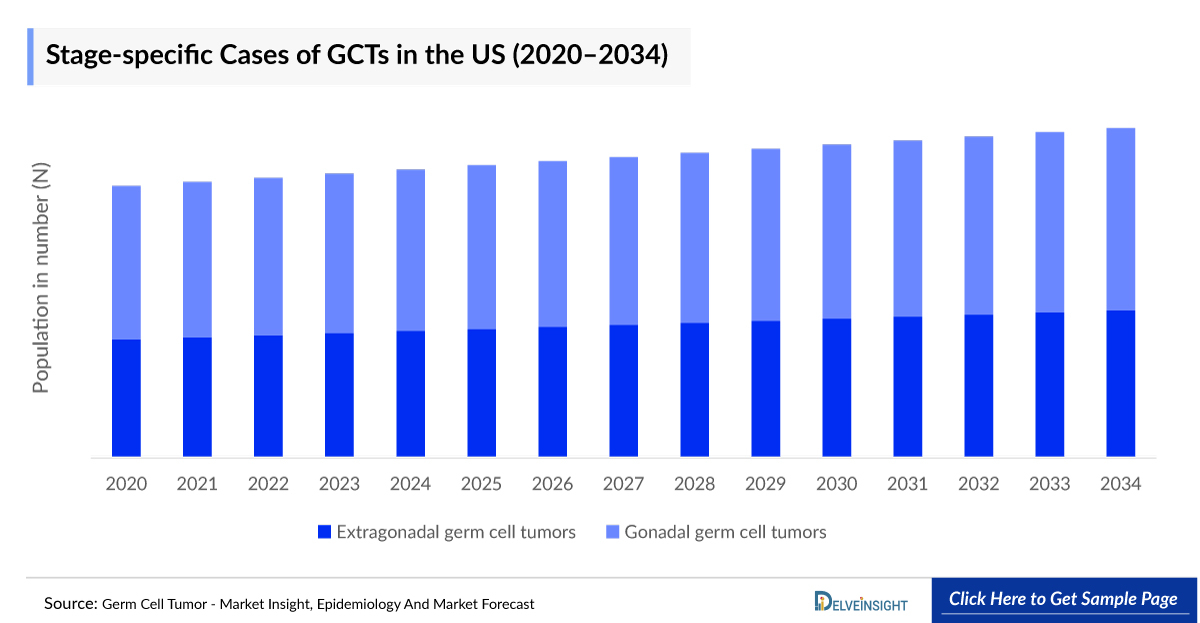
The Germ Cell Tumors epidemiology chapter in the report provides historical as well as forecasted Germ Cell Tumors epidemiology segmented by the Total Incidence Cases of Germ Cell Tumor, Type-specific Incidence Cases of Germ Cell Tumor, Age-specific Cases of Germ Cell Tumor, Sub-type specific Cases of Gonadal Germ Cell Tumor, Gender-specific Incidence Cases of Germ Cell Tumors, Total Incident Cases of Germ Cell Tumors by Stage, Total treatable Patient pool of Germ Cell Tumor, Total Treatable Cases of Germ Cell Tumor by Line of Therapy in the 7MM covering the United States, EU4 (Germany, France, Italy, and Spain) and the United Kingdom, and Japan from 2020 to 2034.
- In the 7MM, individuals 30-44 years of age were the most affected by Germ Cell Tumor, with approximately 11,390 cases reported in 2023. This number is projected to increase to 11,770 by 2034.
- The total incident cases of Germ Cell Tumor in the 7MM is expected to reach approximately 26,860 by 2034 from 25,770 in 2020.
- In Japan, In 2020, the type-specific incidence cases of Germ Cell Tumors in Japan was approximately 2,150 cases for gonadal type and 90 cases for extragonadal type, which is estimated to increase up to approximately 2,180 cases, and 90 cases, respectively by 2034.
Germ Cell Tumors Drug Chapters
The drug chapter segment of the Germ Cell Tumors report encloses a detailed analysis of the early-stage (Phase I/II and Phase I) and mid-stage (Phase II) pipeline drug. The current key germ cell tumors companies for emerging germ cell tumors drugs and their respective drug candidates include Cabozantinib (Exelixis), Pfizer (Talazoparib). The drug chapter also helps understand the germ cell tumor clinical trial details, expressive pharmacological action, agreements and collaborations, approval, and patent details, and the latest news and press releases.
Germ Cell Tumors Emerging Drugs
Cabozantinib: Exelixis
Cabozantinib is a multi-kinase inhibitor targeting pathways critical to tumor growth and metastasis, including MET, VEGFR, and AXL. While primarily approved for conditions like advanced renal cell carcinoma and hepatocellular carcinoma, it has shown promise in investigational studies for Germ Cell Tumors. For refractory or relapsed Germ Cell Tumors, cabozantinib is being evaluated for its ability to inhibit tumor progression by disrupting the tumor microenvironment and angiogenesis. Clinical trials suggest potential benefits, especially for patients who have exhausted standard therapies. The purpose of the CTO-IUSCCC-0752 study is to investigate the use of Cabozantinib for patients with incurable, refractory germ cell tumors. Patients will be treated until evidence of disease progression, non-compliance with study protocol, unacceptable major toxicity, at subject’s request for withdrawal, or if the study closes for any reason.
In the U.S., CABOMETYX tablets are approved as monotherapy for the treatment of patients with advanced Renal Cell Carcinoma (RCC) and in combination with nivolumab as a first-line treatment for patients with advanced RCC; for the treatment of patients with hepatocellular carcinoma (HCC) (Exelixis, 2024). Currently, Cabozantinib is in the Phase II stage of its clinical development for for treating refractory Germ Cell Tumor.
Germ Cell Tumors Market Outlook
Germ cell tumors (Germ Cell Tumors) are neoplasms originating from primordial germ cells, the precursors to gametes. While primarily found in the gonads—testes in males and ovaries in females—they can also develop in extragonadal sites such as the mediastinum, retroperitoneum, and central nervous system due to aberrant germ cell migration during embryonic development. Germ Cell Tumors are especially significant in young males aged 15–35, as they are a leading cause of testicular cancer. Surgical management can help reduce the symptomatic burden and improve the functional outcomes of patients with germ cell tumors. Surgery plays a pivotal role in the management of germ cell tumors (Germ Cell Tumors), particularly in specific scenarios like residual disease after chemotherapy, removal of primary tumors, and treatment of teratomas or relapsed cases. some key players such as AstraZeneca (Durvalumab (MEDI4736) + Tremelimumab), Exelixis (Cabozantinib), and several others are investigating their candidates to treat Germ Cell Tumor in the 7MM.
Detailed market assessment will be provided in the final report.
Germ Cell Tumors Drugs Uptake
This section focuses on the uptake rate of potential germ cell tumors drugs expected to be launched in the market during 2024–2034, which depends on the competitive landscape, safety, and efficacy data along with order of entry. It is important to understand that the key players evaluating their novel therapies in the pivotal and confirmatory trials should remain vigilant when selecting appropriate comparators to stand the greatest chance of a positive opinion from regulatory bodies, leading to approval, smooth launch, and rapid uptake.
Germ Cell Tumors Pipeline Development Activities
The report provides insights into Germ Cell Tumors clinicaltrials within Phase I, Phase I/II, Phase II. It also analyzes key players involved in developing targeted therapeutics. Companies like Astrazeneca, Exelixis, Pfizer, and others are actively engaging their product in research and development efforts for Germ Cell Tumors. The pipeline of Germ Cell Tumors possesses many potential germ cell tumors drugs and there is a positive outlook for the germ cell tumor therapeutics market, with expectations of growth during the forecast period (2024–2034).
Pipeline Development Activities
The report covers information on collaborations, acquisitions and mergers, licensing, and patent details for Germ Cell Tumors emerging therapy.
KOL- Views
To keep up with current market trends, we take KOLs and SMEs’ opinions working in the domain through primary research to fill the data gaps and validate our secondary research. Industry Experts contacted for insights on the Germ Cell Tumors evolving treatment landscape, patient reliance on conventional therapies, patient therapy switching acceptability, and drug uptake, along with challenges related to accessibility, including Medical Directors, Clinical Professors, and Oncologists, and others.
DelveInsight’s analysts connected with 30+ KOLs to gather insights; however, interviews were conducted with 10+ KOLs in the 7MM. Centers such as the University of California,University of Michigan, Washington Hospital Healthcare System, University Hospital Münster, Germany etc., were contacted. Their opinion helps understand and validate current and emerging therapy treatment patterns or Germ Cell Tumors market trends. This will support the clients in potential upcoming novel treatments by identifying the overall scenario of the market and the unmet needs.
Qualitative Analysis
We perform Qualitative and market Intelligence analysis using various approaches, such as SWOT and Conjoint Analysis. In the SWOT analysis, strengths, weaknesses, opportunities, and threats in terms of disease diagnosis, patient awareness, patient burden, competitive landscape, cost-effectiveness, and geographical accessibility of therapies are provided. These pointers are based on the Analyst’s discretion and assessment of the patient burden, cost analysis, and existing and evolving treatment landscape.
Market Access and Reimbursement
The treatment and management of GERM CELL TUMORS are expensive. Botulinum toxin injections, commonly used to treat spasmodic torticollis, are costly and require frequent administration, leading to significant ongoing expenses for patients and healthcare systems. Effective reimbursement policies are crucial, as they can enhance treatment adherence, improve symptom control, and potentially reduce long-term healthcare costs by decreasing the need for additional medical services. To support patients, various organizations in the Seven Major Markets (7MM) offer programs like CMS coverage for botulinum toxin types A and B, the IPSEN CARES Patient Access Program, the BOTOX Savings Program, and the XEOMIN Savings Program. These initiatives help mitigate the financial burden and improve access to essential treatments.
Detailed market access and reimbursement assessment will be provided in the final report...
Scope of the Germ Cell Tumors Market Report
- The report covers a segment of key events, an executive summary, and a descriptive overview of Germ Cell Tumors, explaining its causes, signs, symptoms, pathogenesis, and currently used therapies.
- Comprehensive insight into the epidemiology segments and forecasts, disease progression, and treatment guidelines has been provided.
- Additionally, an all-inclusive account of the emerging therapies and the elaborative profiles of late-stage and prominent products will impact the current treatment landscape.
- A detailed review of the Germ Cell Tumors market, historical and forecasted market size, market share by therapies, detailed assumptions, and rationale behind our approach is included in the report, covering the 7MM drug outreach.
- The report provides an edge while developing business strategies by understanding trends through SWOT analysis and KOL views, patient journey, and treatment preferences that help shape and drive Germ Cell Tumors.
Germ Cell Tumors Report Insights
- Germ Cell Tumors Patient Population
- Germ Cell Tumors Therapeutic Approaches
- Germ Cell Tumors Pipeline Analysis
- Germ Cell Tumors Market Size and Trends
- Existing and Future Market Opportunity
- Germ Cell Tumors Market Drugs
Germ Cell Tumors Report Key Strengths
- Eleven Years Forecast
- The 7MM Coverage
- Germ Cell Tumors Epidemiology Segmentation
- Key Cross Competition
- Germ cell tumors Drugs Uptake
- Key Germ Cell Tumors Market Forecast Assumptions
Germ Cell Tumors Report Assessment
- Current Germ Cell Tumors Treatment Practices
- Germ Cell Tumors Unmet Needs
- Germ Cell Tumors Pipeline Product Profiles
- Germ Cell Tumors Market Attractiveness
- Qualitative Analysis (SWOT and Conjoint Analysis)
- Germ Cell Tumors Market Drivers
- Germ Cell Tumors Market Barriers
FAQs
- What was the Germ Cell Tumors market size, the market size by therapies, market share (%) distribution in 2020, and what would it look like by 2034? What are the contributing factors for this growth?
- What can be the future treatment paradigm for Germ Cell Tumors?
- What are the disease risks, burdens, and unmet needs of Germ Cell Tumors? What will be the growth opportunities across the 7MM concerning the patient population with Germ Cell Tumors?
- What are the current options for the treatment of Germ Cell Tumors? What are the current guidelines for treating Germ Cell Tumors in the 7MM?
- What are the recent novel therapies, targets, germ cell tumors mechanism of action (MOA), and technologies being developed to overcome the limitations of existing therapies?
- What is the patient share in Germ Cell Tumors?
Reasons to Buy Germ Cell Tumors Market Forecast Report
- The report will help develop business strategies by understanding the latest trends and changing treatment dynamics driving the Germ Cell Tumors market.
- Insights on patient burden/germ cell tumors prevalence, evolution in diagnosis, and factors contributing to the change in the epidemiology of the disease during the forecast years.
- Understand the existing market opportunities in varying geographies and the growth potential over the coming years.
- Identifying strong upcoming players in the market will help devise strategies to help get ahead of competitors.
- Highlights of access and reimbursement policies of current therapies, and patient assistance programs.
- To understand Key Opinion Leaders’ perspectives around the accessibility, acceptability, and compliance-related challenges of existing treatment to overcome barriers in the future.
- Detailed insights on the unmet needs of the existing market so that the upcoming players can strengthen their development and launch strategy.
Get detailed insights into our blog section @ DelveInsight's Blogs.