
Invasive Fungal Infections Market Summary
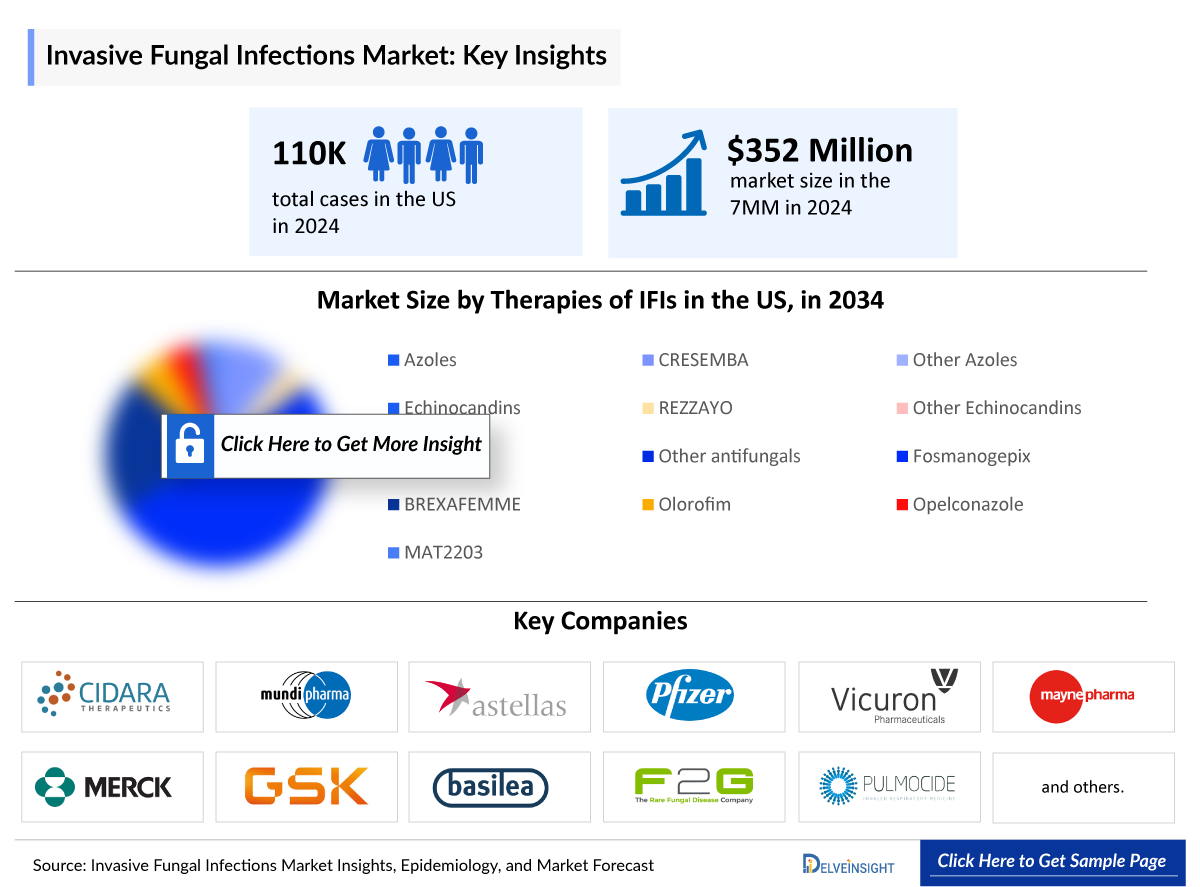
- The total Invasive Fungal Infections market size in the United States was approximately USD 352 million in 2024 and is projected to increase during the forecast period (2025–2034).
Invasive Fungal Infection Market and Epidemiology Analysis
- Invasive fungal infections primarily affect immunocompromised patients, including those with cancer, HIV/AIDS, organ transplants, critical illness, systemic glucocorticoid use, respiratory conditions, or other severe underlying diseases.
- The analysis covers major invasive fungal infections such as aspergillosis, candidiasis, histoplasmosis, blastomycosis, coccidioidomycosis, cryptococcosis, mucormycosis, and fusariosis, along with other specified and unspecified IFIs, representing the core spectrum of clinical and market relevance.
- The current IFI market is overwhelmingly dominated by the azole class, which accounts for more than 95% of usage, with fluconazole, itraconazole, and voriconazole being the most widely prescribed agents.
- The marketed landscape for invasive fungal infections includes key approved therapies such as REZZAYO, CRESEMBA, ERAXIS, TOLSURA, and NOXAFIL; additionally, several other drugs including MYCAMINE (micafungin), SPORANOX (itraconazole), VFEND (voriconazole), and AMBISOME (amphotericin B) are available but face extensive generic competition, shaping the broader treatment landscape.
- CRESEMBA leads the invasive fungal infections market, capturing approximately 45% share, highlighting its dominance among existing oral and IV therapies.
- Emerging antifungal drug classes for invasive fungal infections are expanding options beyond azoles and echinocandins, addressing resistance and improving convenience. Key candidates include BREXAFEMME (oral triterpenoid, effective against azole- and echinocandin-resistant Candida), fosmanogepix (Gwt1 inhibitor with broad activity against resistant yeasts and molds), olorofim (DHODH inhibitor for azole-resistant Aspergillus), opelconazole (inhaled azole targeting pulmonary infections), and MAT2203 (oral amphotericin B with reduced toxicity).
- Key companies driving pipeline activity in invasive fungal infections include F2G Biotech GmbH, Basilea Pharmaceutica, Scynexis, Pulmocide, Matinas Biopharma, and others.
- In the emerging landscape, BREXAFEMME is poised to maintain first-mover advantage in invasive fungal infections despite fosmanogepix addressing a broader patient population, owing to its prior approval for Vulvovaginal Candidiasis (VVC) and established clinical footprint, while opelconazole represents the first inhalation-based antifungal, with the potential to enhance patient compliance compared with conventional oral or IV therapies.
- In the United States, invasive candidiasis remains the most common hospital-associated fungal infection, while invasive aspergillosis and mucormycosis have emerged as significant causes of mortality among transplant recipients and patients with hematological malignancies.
DelveInsight’s “Invasive Fungal Infections Market Insights, Epidemiology, and Market Forecast 2034” report delivers an in-depth understanding of the invasive fungal infections, historical and forecasted epidemiology, as well as the invasive fungal infections therapeutics market trends in the United States, EU4 (Germany, Spain, Italy, and France) and the United Kingdom, and Japan.
The Invasive fungal infections market report provides real-world prescription pattern analysis, emerging drugs, market share of individual therapies, and historical and forecasted 7MM invasive fungal infections market size from 2020 to 2034. The report also covers current invasive fungal infections treatment practices/algorithms and unmet medical needs to curate the best opportunities and assess the market’s potential.
Key Factors Driving the Invasive Fungal Infections Market
- Rising Immunocompromised Population: The growing number of immunocompromised patients is a major driver of the IFI market. Individuals undergoing chemotherapy, organ transplantation, hematopoietic stem cell transplantation, or long-term corticosteroid therapy are at significantly higher risk of invasive fungal infections. Additionally, patients with HIV/AIDS and autoimmune disorders contribute to the expanding patient pool.
- Increasing Incidence of Hospital-Acquired Infections (HAIs): Invasive fungal infections such as candidemia and invasive aspergillosis are frequently associated with intensive care units (ICUs), prolonged hospitalization, catheter use, and mechanical ventilation. The rise in hospital-acquired infections continues to drive demand for effective antifungal therapies and rapid diagnostic tools.
- Growing Antifungal Resistance: Emerging resistance to commonly used antifungal agents, particularly azoles and echinocandins, has intensified the need for novel therapeutics. Drug-resistant pathogens such as Candida auris are creating urgency for next-generation antifungal drugs with broader spectra and improved safety profiles, thereby stimulating pipeline development and market growth.
- Advancements in Diagnostic Technologies: Improved molecular diagnostics, biomarker-based assays, and rapid fungal detection techniques are enabling earlier and more accurate diagnosis. Early detection reduces mortality and supports timely treatment initiation, increasing the overall utilization of antifungal therapies.
- Expanding Research and Drug Development Pipeline: Pharmaceutical companies are actively investing in innovative antifungal agents with novel mechanisms of action to address unmet clinical needs. Increased regulatory incentives, orphan drug designations, and growing awareness of IFI-related mortality are accelerating clinical development and commercialization activities.
Scope of the Invasive Fungal Infections Market | |
|
Study Period |
2020 to 2034 |
|
Forecast Period |
2025-2034 |
|
Geographies Covered |
|
|
Invasive Fungal Infections Market |
|
|
Invasive Fungal Infections Market Size | |
|
Invasive Fungal Infections Companies |
Cidara Therapeutics, Mundipharma, Astellas Pharma, Pfizer, Vicuron Pharmaceuticals, Mayne Pharma, Merck, Glaxosmithkline, Basilea Pharmaceutica, F2G, Pulmocide, Mycovia pharmaceuticals, Matinas BioPharma, and others |
|
Invasive Fungal Infections Epidemiology Segmentation |
|
Invasive Fungal Infections Disease Understanding
Invasive Fungal Infections Overview
Invasive fungal infections, are severe conditions characterized by the invasion of fungal pathogens into normally sterile sites, including deep tissues and vital organs, often leading to prolonged illness and life-threatening complications. They predominantly affect individuals with weakened immunity, such as patients undergoing chemotherapy, individuals with Human Immunodeficiency Virus (HIV)/Acquired Immune Deficiency Syndrome (AIDS), or organ transplant recipients receiving immunosuppressive therapy. Invasive fungal infections are most commonly caused by Candida species (especially Candida albicans, C. glabrata, C. tropicalis, among others), Aspergillus species (especially Aspergillus fumigatus), Cryptococcus species, dimorphic fungi and many more. The fungi involved are usually opportunistic pathogens that are part of the environment or normal human flora but become pathogenic when host defenses are impaired.
Invasive Fungal Infections Diagnosis
The diagnosis of invasive fungal infections relies on a combination of laboratory, imaging, and histopathological approaches, as no single method is sufficiently sensitive or specific on its own. Traditional fungal culture remains the gold standard for species identification and susceptibility testing, though it is time-consuming. Rapid diagnostic tools such as antigen detection assays (e.g., galactomannan and ß-D-glucan) and molecular methods (PCR) are increasingly used for early detection and species-level identification, particularly in immunocompromised patients. Imaging modalities like high-resolution CT and MRI are critical for identifying pulmonary and systemic involvement, while direct microscopy and histopathology provide quick, though less sensitive, evidence of fungal presence in tissue or fluids.
Further details related to country-based variations in diagnosis are provided in the report…
Invasive Fungal Infections Treatment
The treatment of invasive fungal infections requires timely initiation of appropriate antifungal therapy, guided by pathogen type, patient status, and resistance patterns. First-line therapy typically includes azoles (e.g., fluconazole, voriconazole, posaconazole) targeting ergosterol synthesis, echinocandins (e.g., caspofungin, micafungin) disrupting cell wall integrity, and polyenes such as liposomal amphotericin B for severe systemic infections, with pyrimidines like flucytosine used in combination for cryptococcal meningitis. If standard therapy fails or resistance emerges, combination regimens (e.g., azole plus echinocandin) or salvage therapy with liposomal amphotericin B are employed. Adjunctive management involves surgical debridement or resection in infections like mucormycosis and aspergillosis, correction of underlying risk factors (neutropenia, immunosuppression), and immune support with colony-stimulating factors. Treatment is usually prolonged, with duration continuing for at least 14 days after clearance of infection from the bloodstream, and follows a stepwise algorithm integrating first-line, salvage, and emerging therapies for optimal outcomes.
Note: Further Details are provided in the final report...
Invasive Fungal Infections Epidemiology
The Invasive Fungal Infections epidemiology chapter in the report provides historical as well as forecasted epidemiology segmented by total incident cases of invasive fungal infections, total incident cases of invasive fungal infections by type, total treatment-eligible cases of invasive fungal infections, and total refractory cases of invasive fungal infections covering the United States, EU4 (Germany, France, Italy, and Spain) and the United Kingdom, and Japan from 2020 to 2034.
Key Findings from Invasive Fungal Infections Epidemiological Analyses and Forecast
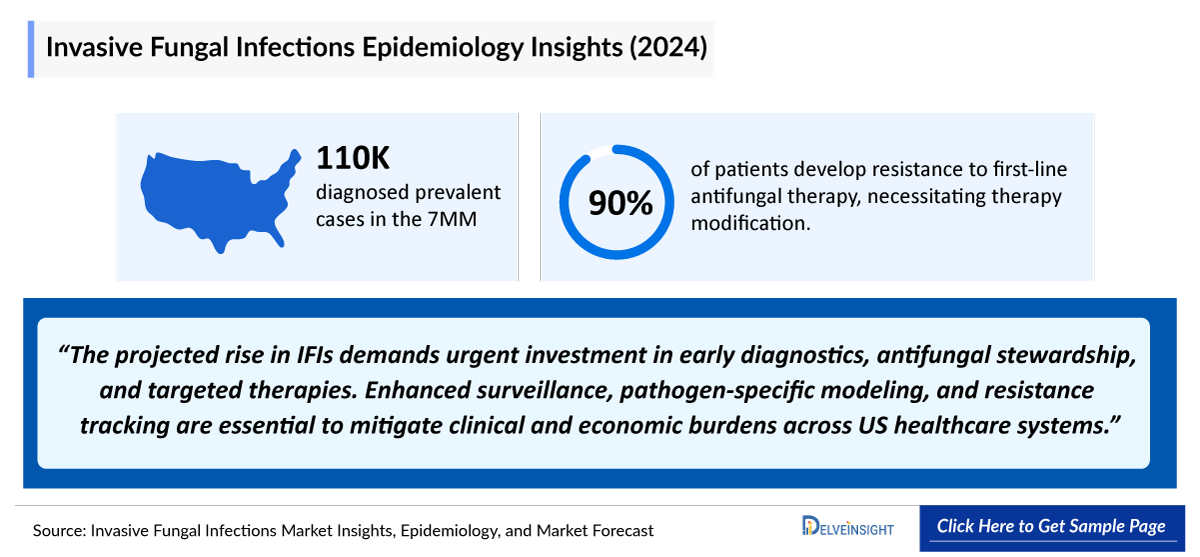
- The global burden of invasive fungal infections has continued to rise in line with the expanding population at risk. In the United States, the burden is estimated at approximately 110,000 cases in 2024 and is projected to increase during the forecast period (2025–2034).
- Invasive candidiasis and aspergillosis form the largest group of opportunistic invasive fungal infections, primarily affecting immunocompromised populations, together contributing around 50% of the total burden.
- Histoplasmosis and coccidioidomycosis together represent a major portion of the endemic pool. Histoplasmosis cases have been steadily rising.
- Approximately, 90% of patients develop resistance to first-line antifungal therapy, necessitating therapy modification. Among these, nearly 30% also develop resistance to second-line agents, forcing switches within drug classes (e.g., azoles) or across classes (e.g., from azoles to echinocandins or polyenes).
Invasive Fungal Infections Epidemiology Segmentation
- Total Incident Cases of Invasive fungal infections
- Total Incident Cases of Invasive fungal infections by type
- Total Treatment-eligible Cases of Invasive fungal infections
- Total Refractory Cases of Invasive fungal infections
Key updates on Invasive Fungal Infections Market
- In March 2026, Thermo Fisher Scientific launched a new color-based chromogenic culture media designed to rapidly detect and identify Candida species. This diagnostic tool allows lab technicians to identify various fungal pathogens—including the difficult-to-treat Candida auris—by the specific color the colonies produce on the plate. This innovation is expected to significantly reduce the time required to diagnose fungal infections, enabling faster administration of appropriate antifungal therapies.
- In February 2026, SCYNEXIS, Inc. initiated a Phase 1 clinical trial for SCY-247, its next-generation intravenous antifungal candidate. Following the FDA’s Qualified Infectious Disease Product (QIDP) and Fast Track designations, the study will evaluate the safety and pharmacokinetics of this compound. SCY-247 is being developed to address multidrug-resistant fungal infections, including the highly resilient Candida auris, which represents an urgent global public health threat.
- In October 2025, Zepto Life Technology announced the launch of its plasma-based FungiFlex™ Mold Panel as a CLIA-validated reference laboratory test. This diagnostic panel utilizes high-sensitivity molecular technology to detect invasive mold infections directly from blood samples. By providing faster and more accurate identification than traditional culture methods, the panel aims to improve survival outcomes for immunocompromised patients at risk for invasive aspergillosis and mucormycosis.
- In January 2026, Basilea Pharmaceutica and Prokaryotics, Inc. entered a strategic collaboration to develop a novel, broad-spectrum antifungal agent. The partnership focuses on a "first-in-class" mechanism of action intended to treat severe invasive fungal infections that are resistant to currently available therapies. This agreement combines Basilea’s established expertise in anti-infectives with Prokaryotics’ innovative discovery platform to accelerate the candidate toward clinical entry.
- In January 2026, (reiterated news) Basilea confirmed the expansion of its antifungal portfolio through the Prokaryotics partnership, highlighting that the global increase in antifungal resistance has created a multi-billion dollar market for new therapeutic classes. The companies intend to target "high-priority" pathogens as defined by the WHO, focusing on systemic infections in the hospital setting.
- SCYNEXIS is actively working with GSK to transfer the BREXAFEMME NDA to GSK by the end of this year, ahead of anticipated GSK Regulatory interactions in 2026 to discuss the relaunch of the product.
- In April 2025, the FDA notified SCYNEXIS that the clinical hold on ibrexafungerp had been lifted and concluded that the Phase III MARIO study could resume.
- In February 2025, Biosergen reported the successful completion of treatment for the second cohort of patients in its proof-of-concept clinical trial for BSG005.
- In October 2024, Matinas BioPharma reported that negotiations under the previously disclosed non-binding term sheet for the global rights to MAT2203 were terminated following notification from the prospective partner.
- In October 2024, SCYNEXIS presented the preclinical efficacy and pharmacokinetic data on SCY-247 in multiple models of invasive fungal infections at IDWeek 2024.
- In April 2024, Pulmocide reported top-line results from the Phase II OPERA-S study for Opelconazole.
Invasive Fungal Infections Drug Analysis
The drug chapter segment of the invasive fungal infections report encloses a detailed analysis of marketed and emerging drugs of late-stage (Phase III, Phase II, Phase I) Invasive Fungal Infections pipeline drugs. It also deep dives into the invasive fungal infections pivotal clinical trial details, recent and expected market approvals, patent details, the latest news, and recent deals and collaborations.
Invasive Fungal Infections Marketed Therapies
REZZAYO (rezafungin): Cidara Therapeutics/Mundipharma
REZZAYO is a novel once-weekly antifungal injection indicated in patients 18 years of age or older who have limited or no alternative options for the treatment of candidemia and invasive candidiasis. It belongs to the echinocandin class of antifungals and works by inhibiting the synthesis of 1,3-ß-D-glucan, an essential component of the fungal cell wall.
In April 2024, Napp Pharmaceuticals, a member of Mundipharma, acquired all the assets and rights related to REZZAYO globally from Cidara Therapeutics. In March 2023, the US FDA approved REZZAYO.
CRESEMBA (isavuconazonium sulfate): Basilea Pharmaceutica/Astellas Pharma
CRESEMBA is an azole antifungal medication used primarily for the treatment of invasive aspergillosis and invasive mucormycosis in adults. It is a prodrug of isavuconazole and is available in both oral capsules and intravenous formulations. This medication works by inhibiting the synthesis of ergosterol, an essential component of fungal cell membranes, thereby helping to treat severe fungal infections. Astellas Pharma and Basilea Pharmaceutica jointly developed and commercialized CRESEMBA.
- In March 2024, the FDA granted orphan drug and pediatric exclusivity to CRESEMBA for the treatment of invasive aspergillosis and invasive mucormycosis in pediatric patients.
- In December 2023, the FDA approved CRESEMBA for the treatment of invasive aspergillosis and invasive mucormycosis in pediatric patients.
- In March 2015, the FDA approved CRESEMBA for the treatment of adult patients with invasive aspergillosis and invasive mucormycosis.
Comparison of Invasive Fungal Infections Marketed Drugs | ||||||
|
Drug Name |
Company Name |
MoA |
Molecule Type |
RoA |
Patient Segment |
US Approval Date |
|
REZZAYO (rezafungin) |
Cidara Therapeutics/ Mundipharma |
Inhibits the 1,3-β-D-glucan synthase enzyme complex |
Small molecule |
IV infusion |
Candidemia and invasive candidiasis |
2023 |
|
TOLSURA (itraconazole) |
Mayne Pharma |
Inhibits cytochrome P450-dependent, 14C-demethylation of ergosterol |
Small molecule |
Oral |
Blastomycosis, Histoplasmosis, Aspergillosis |
2018 |
|
CRESEMBA (isavuconazonium sulfate) |
Astellas Pharma |
Inhibits lanosterol 14-alpha-demethylase |
Small molecule |
Oral, IV infusion |
Invasive aspergillosis and invasive mucormycosis |
2015 |
|
ERAXIS (anidulafungin) |
Pfizer/Vicuron Pharmaceuticals |
Inhibits the 1,3-β-D-glucan synthase enzyme |
Semi-synthetic echinocandin |
IV infusion |
Candidemia, esophageal candidiasis, and other forms of candida infections |
2006 |
Invasive Fungal Infections Emerging Drugs
BREXAFEMME (Ibrexafungerp): GlaxoSmithKline/SCYNEXIS
Ibrexafungerp is the first agent in a novel class of structurally distinct glucan synthase inhibitors known as triterpenoids. It demonstrates broad-spectrum antifungal activity against a wide range of pathogens, including Candida, Aspergillus, Pneumocystis, dimorphic fungi, and mucorales, with efficacy even against MDR and pan-resistant species such as Candida auris. It is already approved for the treatment of Vulvovaginal Candidiasis (VVC). Currently, the company is evaluating the drug in a Phase III (NCT05178862) trial for invasive candidiasis and other refractory fungal infections.
- In May 2025, the company announced that the first new patient was dosed in the Phase III MARIO study following the lifting of the FDA clinical hold.
- The FDA has granted QIDP and FTDs to both the oral and intravenous formulations of ibrexafungerp for the treatment of invasive candidiasis. Additionally, the FDA has awarded ODD for this indication.
Fosmanogepix: Basilea Pharmaceutica
Fosmanogepix is a first-in-class, broad-spectrum antifungal agent in clinical development that targets the fungal enzyme Glycosylphosphatidylinositol-anchored wall transfer Protein 1 (Gwt1), a novel pathway critical for cell wall integrity and fungal survival. Through this unique mechanism, it demonstrates potent activity against a wide array of pathogens, including Candida species (notably C. auris and azole-resistant strains), Aspergillus, Fusarium, Scedosporium, various rare molds, and endemic fungi.
- In September 2024, Basilea initiated a Phase III study with fosmanogepix in candidemia and invasive candidiasis, and in July 2025 a second Phase III study in invasive mold infections.
- In July 2025, Basilea received USD 39 million in funding under the BARDA agreement to continue to advance novel antifungal fosmanogepix.
- QIDP and FTD granted by the FDA for invasive candidiasis, invasive aspergillosis, scedosporiosis, fusariosis, mucormycosis, cryptococcosis, and coccidioidomycosis.
- In October 2016, the FDA granted Orphan Drug Designation (ODD) to fosmanogepix for the treatment of invasive candidiasis.
Comparison of Invasive Fungal Infections Emerging Drugs Under Development | ||||||
|
Drug Name |
Company |
Highest Phase |
Indication |
MoA |
ROA |
Molecule Type |
|
BREXAFEMME (ibrexafungerp) |
GlaxoSmithKline/SCYNEXIS |
III |
Invasive candidiasis and other refractory fungal infections |
Beta-1,3-D glucan synthetase inhibitors |
IV and Oral |
Small molecule |
|
Fosmanogepix |
Basilea pharmaceutica |
III |
Candidemia, invasive candidiasis, invasive mold infections |
GWT1 protein inhibitors |
IV and Oral |
Small molecule |
|
Olorofim |
Shionogi/ F2G |
III |
Invasive aspergillosis |
Dihydroorotate Dehydrogenase (DHODH) inhibition |
Oral |
Small molecule |
|
Opelconazole |
Pulmocide |
III |
Invasive pulmonary aspergillosis, aspergilloma, chronic necrotizing pulmonary aspergillosis, allergic bronchopulmonary aspergillosis, and severe asthma with fungal sensitization |
14-alpha demethylase inhibitors |
Inhalation |
Small molecule |
Invasive Fungal Infections Drug Class Analysis
Currently, the market includes a range of therapeutic options for invasive fungal infections, such as echinocandin, azole, and polyene. Meanwhile, novel therapies like Orotomide (olorofim), Gepix (fosmanogepix), and other emerging mechanisms are under development to expand treatment choices.
Azole
Azole antifungals, such as fluconazole, itraconazole, voriconazole, and posaconazole, help manage invasive fungal infections by disrupting fungal cell membrane synthesis. In fungi, the enzyme lanosterol 14a-demethylase (CYP51) converts lanosterol into ergosterol, a key component that maintains membrane structure and function. By inhibiting this enzyme, azoles block ergosterol production, leading to defective cell membranes, leakage of cellular contents, and fungal death. Voriconazole is highly effective against Aspergillus, fluconazole is commonly used for Candida, and posaconazole and isavuconazole provide broader coverage, including resistant strains. Their broad spectrum, oral and IV availability, and safer profile compared to amphotericin B make azoles the cornerstone of IFI treatment.
Invasive Fungal Infections Market Outlook
The treatment of invasive fungal infections remains highly challenging due to limited drug classes, rising resistance, and safety concerns. Current therapy relies on azoles, echinocandins, polyenes, and 5-FC, but multidrug-resistant strains such as Candida auris, Candida glabrata, and azole-resistant Aspergillus fumigatus are straining the effectiveness of these options. Market growth is driven by improved diagnostics, expanding prophylaxis use in high-risk patients, and innovation in antifungal design and delivery. Recently approved drugs like REZZAYO (rezafungin) and CRESEMBA (isavuconazole) highlight progress, while late-stage candidates such as fosmanogepix, ibrexafungerp, and olorofim promise to reshape treatment by offering novel mechanisms, oral formulations, and activity against resistant pathogens. Despite this momentum, toxicity, drug-drug interactions, and resistance trends continue to highlight major unmet needs, making the invasive fungal infection market one of cautious evolution where next-generation therapies are expected to play a pivotal role.
- The Invasive fungal infections treatment landscape is evolving as new therapies advance through development. Companies like Glaxosmithkline/SCYNEXIS (BREXAFEMME), Basilea Pharmaceutica (fosmanogepix), Shionogi/F2G (Olorofim), Pulmocide (Opelconazole), and others are actively exploring candidates to address symptoms and improve disease management across the 7MM.
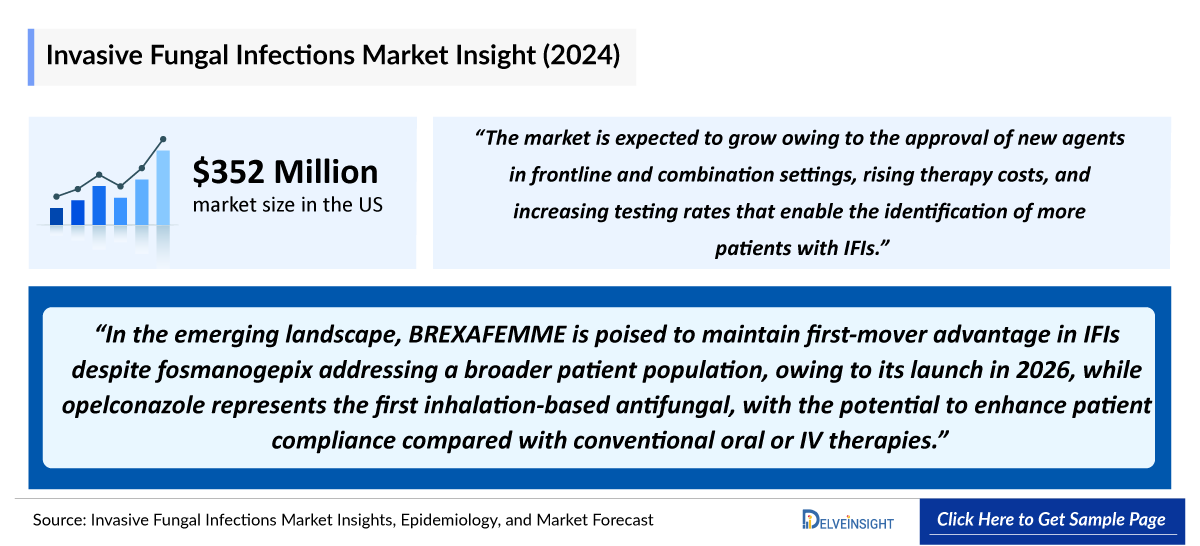
- The total market size of invasive fungal infections in the United States was approximately USD 352 million in 2024 and is projected to increase during the forecast period (2025–2034).
- As per DelveInsight’s analysis, by 2034, among the emerging therapies, the highest revenue is expected to be generated by fosmanogepix in the United States.
Invasive Fungal Infections Competitive Landscape
The competitive landscape of the Invasive Fungal Infections market is characterized by a mix of established pharmaceutical companies and emerging biotech innovators focused on developing effective antifungal therapies and advanced diagnostics. Key players compete based on drug efficacy, safety profiles, spectrum of activity, route of administration, and pricing strategies.
- Established antifungal portfolios: Large pharmaceutical companies dominate the market with well-established brands of antifungal drugs such as azoles, echinocandins, and polyenes. These companies benefit from broad clinician familiarity, extensive distribution networks, and significant clinical data supporting long-term use.
- Pipeline innovation and differentiation: Biotech firms and specialized pharmaceutical developers are focusing on next-generation antifungals with novel mechanisms of action to overcome drug resistance and reduce toxicity. Differentiation through unique formulations, oral availability, and improved tolerability is a key competitive strategy.
- Diagnostic solution integrations: Diagnostic companies are increasingly partnering with or acquiring technology platforms to offer rapid and precise fungal detection tests. These compete by enabling earlier diagnosis, which drives timely treatment decisions and can influence therapeutic choice.
- Strategic collaborations and acquisitions: Major players engage in strategic partnerships, licensing agreements, and acquisitions to expand their antifungal portfolios, access innovative technologies, and enter new geographic markets. This consolidation enhances market reach and accelerates product development timelines.
- Focus on emerging markets: Companies are strengthening their presence in emerging regions such as Asia-Pacific and Latin America by tailoring pricing, obtaining regulatory approvals, and increasing healthcare infrastructure support to tap into growing patient populations.
Key Invasive Fungal Infections Companies
The Key Invasive Fungal Infections companies actively involved in the Invasive Fungal Infections treatment landscape include -
- Cidara Therapeutics
- Mundipharma
- Astellas Pharma
- Pfizer
- Vicuron Pharmaceuticals
- Mayne Pharma
- Merck
- Glaxosmithkline
- Basilea Pharmaceutica
- F2G
- Pulmocide
- Mycovia pharmaceuticals
- Matinas BioPharma, and others
Invasive Fungal Infections Drugs Uptake
This section focuses on the uptake rate of potential drugs expected to be launched in the market during 2025-2034, which depends on the competitive landscape, safety, efficacy data, and order of entry. It is important to understand that the key players evaluating their novel therapies in the pivotal and confirmatory trials should remain vigilant when selecting appropriate comparators to stand the greatest chance of a positive opinion from regulatory bodies, leading to approval, smooth launch, and rapid uptake. In the emerging landscape, BREXAFEMME is poised to maintain first-mover advantage in IFIs despite fosmanogepix addressing a broader patient population, owing to its launch in 2026, while opelconazole represents the first inhalation-based antifungal, with the potential to enhance patient compliance compared with conventional oral or IV therapies.
Further detailed analysis of emerging therapies' drug uptake in the report…
Invasive Fungal Infections Clinical Trial Activities
The Invasive Fungal Infections pipeline report provides insights into Invasive Fungal Infections clinical trials within Phase III, II, and I. It also analyzes key players involved in developing targeted therapeutics.
Invasive Fungal Infections Pipeline Development Activities
The Invasive Fungal Infections clinical trial analysis report covers information on collaborations, acquisitions and mergers, licensing, and patent details for invasive fungal infections emerging therapies.
Latest KOL Views on Invasive Fungal Infections Market
To keep up with the real-world scenario in current and emerging market trends, we take opinions from Key Industry leaders working in the domain through primary research to fill the data gaps and validate our secondary research. Industry Experts were contacted for insights on the evolving treatment landscape, patient reliance on conventional therapies, patient therapy switching acceptability, and drug uptake, along with challenges related to accessibility, including MDs, PhD, Senior Researcher, and others.
DelveInsight’s analysts connected with 20+ KOLs to gather insights; however, interviews were conducted with 10+ KOLs in the 7MM. Centers such as the University of Southern California, University of North Carolina at Chapel Hill, University of Santo Tomas, Medicine and Surgery, etc., were contacted. Their opinion helps understand and validate current and emerging therapy treatment patterns or invasive fungal infections market trends.
|
KOL Views |
|
“The growing threat of azole-resistant aspergillus and echinocandin-resistant candida is recognized as a critical clinical concern. Although drug repurposing strategies may offer short-term benefits, the primary need remains the development of novel antifungals such as olorofim, fosmanogepix, and ibrexafungerp. These emerging agents show considerable promise but currently represent only partial solutions to the escalating challenge of antifungal resistance.” ̶ Professor, University of Southern California, US |
Invasive Fungal Infections Report Qualitative Analysis
We perform qualitative and market Intelligence analysis using various approaches, such as SWOT and Conjoint analysis. In the SWOT analysis, strengths, weaknesses, opportunities, and threats in terms of gaps in disease diagnosis, patient awareness, physician acceptability, competitive landscape, cost-effectiveness, and geographical accessibility of therapies are provided.
Conjoint Analysis analyzes multiple approved and emerging therapies based on relevant attributes such as safety, efficacy, frequency of administration, designation, route of administration, and order of entry. Scoring is given based on these parameters to analyze the effectiveness of therapy.
Further, the therapies’ safety is evaluated, wherein the acceptability, tolerability, and adverse events are majorly observed, and it sets a clear understanding of the side effects posed by the drug in the trials. In addition, the scoring is also based on the route of administration, order of entry and designation, probability of success, and the addressable patient pool for each therapy. According to these parameters, the final weightage score and the ranking of the emerging therapies are decided.
Invasive Fungal Infections Market Access and Reimbursement Scenario
Reimbursement is a crucial factor that affects the drug’s access to the market. Often, the decision to reimburse comes down to the price of the drug relative to the benefit it produces in treated patients. To reduce the healthcare burden of these high-cost therapies, many payment models are being considered by payers and other industry insiders.
REZZAYO
Melinta Therapeutics announced expanded reimbursement and access for REZZAYO (rezafungin for injection). CMS assigned a permanent product-specific J-Code (J0349) effective October 1, 2023, and also granted NTAP for eligible hospitals treating Medicare patients in the inpatient acute care setting.
REZZAYO has a dedicated J-Code for use across all outpatient settings. Beginning October 2023, it also qualifies for NTAP, allowing hospitals to receive an additional payment on top of the standard MS-DRG for inpatient Medicare cases. The NTAP covers lesser of 75% of REZZAYO’s cost or 75% of the cost above the MS-DRG, capped at USD 4,387.50 per case.
Co-pay assistance
Eligible patients with commercial insurance may receive
- Up to USD 400 per 200 mg vial
- Up to USD 800 for the 400 mg loading dose
- No minimum out-of-pocket requirement
NOTE: Further Details are provided in the final report
Scope of the Invasive Fungal Infections Market Report
- The report covers a segment of key events, an executive summary, and a descriptive overview of invasive fungal infections, explaining its causes, signs and symptoms, and currently available therapies.
- Comprehensive insight has been provided into the epidemiology segments and forecasts, the future growth potential, and treatment guidelines.
- Additionally, an all-inclusive account of the current and emerging therapies, along with the elaborate profiles of late-stage and prominent therapies, will impact the current treatment landscape.
- A detailed review of the invasive fungal infections market, historical and forecasted market size, market share by therapies, detailed assumptions, and rationale behind our approach is included in the report, covering the 7MM drug outreach.
- The report provides an edge while developing business strategies by understanding trends through SWOT analysis and expert insights/KOL views, patient journey, and treatment preferences that help shape and drive the 7MM invasive fungal infections.
Invasive Fungal Infections Market Report Insights
- Invasive Fungal Infections Patient Population
- Invasive Fungal Infections Therapeutic Approaches
- Invasive fungal infections Pipeline Analysis
- Invasive fungal infections Market Size and Trends
- Existing and future Market Opportunity
Invasive Fungal Infections Report Key Strengths
- Ten-Year Forecast
- The 7MM Coverage
- Invasive fungal infections Epidemiology Segmentation
- Key Cross Competition
- Conjoint analysis
- Invasive Fungal Infections Drugs Uptake
- Key Invasive Fungal Infections Market Forecast Assumptions
Invasive Fungal Infections Report Assessment
- Current Invasive Fungal Infections Treatment Practices
- Invasive Fungal Infections Unmet Needs
- Invasive Fungal Infections Pipeline Product Profiles
- Analyst Views
- Invasive Fungal Infections Market Attractiveness
- Qualitative Analysis (SWOT and Conjoint Analysis)
- Invasive Fungal Infections Market Drivers
- Invasive Fungal Infections Market Barriers
Key Questions Answered in the Invasive Fungal Infections Market Report:
- What is the historical and forecasted invasive fungal infections patient pool in the United States, EU4 (Germany, France, Italy, and Spain) and the United Kingdom, and Japan?
- What was the total invasive fungal infections market size, the market size by therapies, market share (%) distribution in 2024, and what would it look like in 2034? What are the contributing factors for this growth?
- What are the pricing variations among different geographies for approved and off-label therapies?
- How would the market drivers, barriers, and future opportunities affect the market dynamics and subsequent analysis of the associated trends?
- With CRESEMBA’s exclusivity expiring in 2027, sales are expected to decline post-2028. Can fosmanogepix, with its broader clinical profile, become the next commercial blockbuster in the IFI space?
- Despite confirmed diagnoses, case-fatality rates exceed 30–50%, with many patients dying before treatment begins. What structural and clinical barriers are delaying timely intervention, and how can early diagnostics and antifungal stewardship close this gap?
- What are the recent novel therapies, targets, mechanisms of action, and technologies developed to overcome the limitations of existing therapies?
- Patient acceptability in terms of preferred treatment options as per real-world scenarios?
- What are the country-specific accessibility issues of expensive, recently approved therapies?
Reasons to buy Invasive Fungal Infections Market Forecast Report
- The report will help develop business strategies by understanding the latest trends and changing treatment dynamics driving the invasive fungal infections Market.
- Insights on patient burden/disease prevalence, evolution in diagnosis, and factors contributing to the change in the epidemiology of the disease during the forecast years.
- Understand the existing market opportunities in varying geographies and the growth potential over the coming years.
- Distribution of historical and current patient share based on real-world prescription data along with reported sales of approved products in the US, EU4 (Germany, France, Italy, and Spain) and the United Kingdom, and Japan.
- Identifying strong upcoming players in the market will help devise strategies to help get ahead of competitors.
- Highlights of access and reimbursement policies of approved therapies, barriers to accessibility of expensive off-label therapies, and patient assistance programs.
- To understand Key Opinion Leaders’ perspectives around the accessibility, acceptability, and compliance-related challenges of existing treatment to overcome barriers in the future.
- Detailed insights on the unmet needs of the existing market so that the upcoming players can strengthen their development and launch strategy.




