
Membranous Nephropathy Market Summary
Membranous Nephropathy Insights and Trends
- Membranous nephropathy accounts for the second most common nephropathy in adults after focal segmental glomerulosclerosis (FSGS).
- Primary Membranous Nephropathy (PMN) accounted for the largest share of market revenue in 2025, primarily driven by its high prevalence as an idiopathic autoimmune kidney disorder.
- It most commonly occurs between 50 to 60 years of age in the US and is more common among males than females.
- According to the National Kidney Foundation, PLA2R-associated membranous nephropathy accounts for 70% of PMN.
- Membranous nephropathy management is challenged by no approved therapies, high treatment costs, and variable patient responses. Long-term immunosuppression carries safety concerns, and the disease’s rarity hinders large trials, slowing progress in developing targeted, effective, and accessible treatment options.
- Emerging drugs have the potential to reshape the treatment landscape. Notable examples include Obinutuzumab (GAZYVA/GAZYVARO, RG7159, GA101) by Roche, Zanubrutinib (BRUKINSA) by BeOne Medicines, Felzartamab by Biogen, and among others.
- Povetacicept could establish a distinct position by simultaneously inhibiting BAFF and APRIL, two key cytokines involved in B-cell maturation and plasma-cell survival. This dual-target approach may provide broader immune suppression than single-pathway therapies and potentially deeper disease control.
- Unlike several emerging therapies that require intravenous or subcutaneous administration, Zanubrutinib (BRUKINSA) offers the advantage of oral administration, providing greater convenience and potentially improving patient adherence to treatment.
- Obinutuzumab holds an advantage in clinical maturity and physician familiarity, potentially supporting earlier adoption upon approval as it is already marketed for multiple hematologic malignancies.
- Rising disease burden of autoimmune and chronic kidney disorders, along with improved disease awareness and diagnosis rates, is supporting the demand for advanced nephrology care and precision treatment approaches in membranous nephropathy.
- The increasing focus on rare kidney diseases through clinical trials, orphan drug incentives, and strategic research collaborations is fostering therapeutic innovation and advancing the pipeline of novel targeted treatments for membranous nephropathy.
Membranous Nephropathy Market Size and Forecast in the US
- 2025 Membranous Nephropathy Market Size: XX
- 2036 Projected Membranous Nephropathy Market Size: XX
- Membranous Nephropathy Growth Rate (2026–2036): XX% CAGR
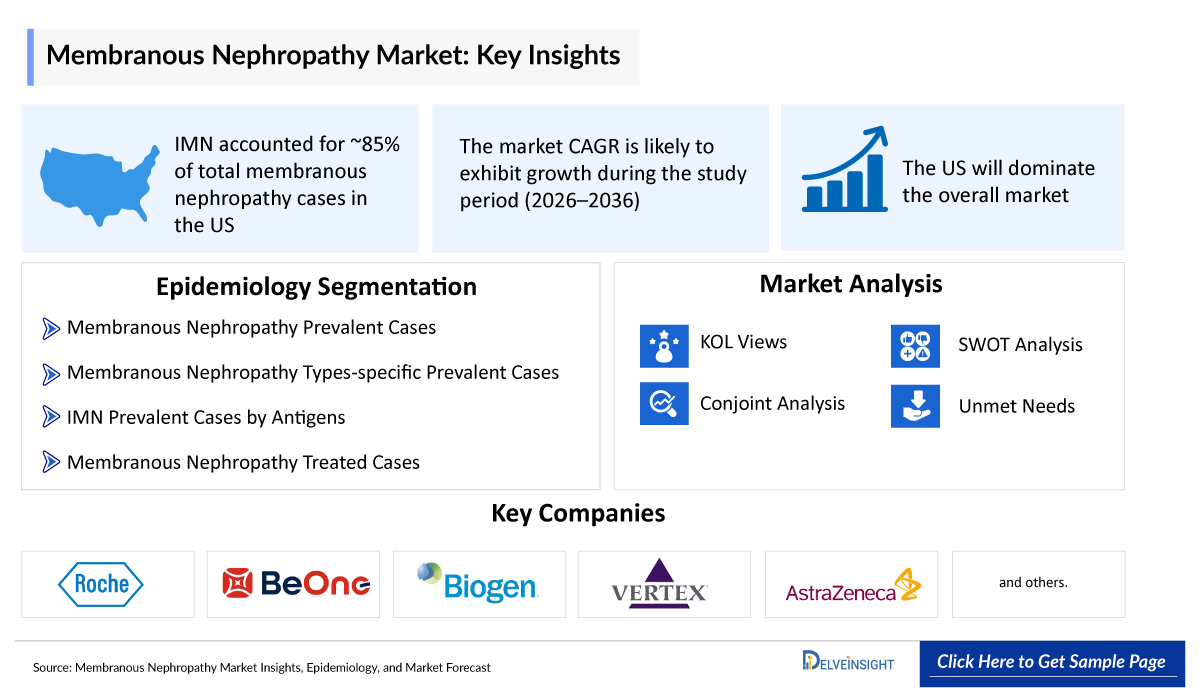
DelveInsight's ‘Membranous Nephropathy Market Insights, Epidemiology and Market Forecast – 2036’ report delivers an in-depth understanding of the Membranous nephropathy, historical and forecasted epidemiology, as well as the Membranous nephropathy market trends in the United States, EU4 (Germany, Spain, Italy, and France) and the United Kingdom, and Japan.
The Membranous nephropathy market report delivers a comprehensive analysis of the current treatment landscape, including standards of care, clinical practices, and evolving therapeutic algorithms. It evaluates Membranous nephropathy patient burden trends, revenue & market share dynamics, peak patient share & therapy uptake analysis, and provides an in-depth market size assessment, and growth rate projections (Historical & Forecast 2022–2036) across global regions. The report highlights key unmet medical needs in Membranous nephropathy and maps the competitive and clinical landscape to uncover high‑value opportunities, providing a clear outlook on future market growth potential.
|
Study Period |
2022–2036 |
|
Historical Year |
2022–2025 |
|
Forecast Period |
2026–2036 |
|
Base Year |
2026 |
|
Geographies Covered |
|
|
Membranous Nephropathy Market CAGR (Forecast period) |
XX% (2026–2036) |
|
Membranous Nephropathy Epidemiology Segmentation Analysis |
Patient Burden Assessment
|
|
Membranous Nephropathy Companies |
|
|
Membranous Nephropathy Therapies |
|
|
Membranous Nephropathy Market |
Segmented by
|
|
Analysis |
|
Key Factors Driving the Membranous Nephropathy Market
Increasing Understanding of Autoimmune Disease Mechanisms
Advances in understanding the autoimmune basis of membranous nephropathy, particularly the role of anti-PLA2R and anti-THSD7A antibodies, are supporting the development of targeted therapies and improving disease diagnosis and monitoring.
Rising Clinical Trial and Research Activity
The membranous nephropathy pipeline is expanding with increasing clinical investigation of anti-CD20 B-cell–depleting therapies, Bruton’s tyrosine kinase (BTK) inhibitors, anti-CD38 plasma cell–targeting therapies, dual APRIL/BAFF inhibitors, complement pathway inhibitors, and CD19-directed B-cell therapies, reflecting growing pharmaceutical interest in rare autoimmune kidney diseases.
Rising Chronic Kidney Disease (CKD) Burden
The increasing prevalence of CKD and growing recognition of autoimmune glomerular disorders are contributing to a larger patient pool requiring effective disease-modifying therapies, supporting demand for innovative treatment options in membranous nephropathy.
Membranous Nephropathy Understanding and Treatment Algorithm
Membranous Nephropathy Overview and Diagnosis
Membranous nephropathy is a rare autoimmune glomerular kidney disease characterized by thickening of the glomerular basement membrane due to immune complex deposition within the kidneys. It is one of the leading causes of nephrotic syndrome in adults and commonly presents with proteinuria, edema, hypoalbuminemia, and hyperlipidemia. Membranous nephropathy may occur as primary (idiopathic) disease, often associated with autoantibodies against phospholipase A2 receptor (PLA2R) or thrombospondin type-1 domain-containing 7A (THSD7A), or as secondary disease linked to infections, autoimmune disorders, malignancies, or medications. Disease progression varies widely, ranging from spontaneous remission to chronic kidney disease and eventual kidney failure in some patients.
Diagnosis of membranous nephropathy involves a combination of clinical evaluation, laboratory investigations, serologic testing, and kidney biopsy. Urinalysis and quantification of proteinuria are essential for identifying nephrotic-range protein loss, while blood tests assess kidney function, albumin levels, lipid abnormalities, and the presence of autoantibodies such as anti-PLA2R antibodies. Kidney biopsy remains the gold standard for confirming diagnosis and evaluating disease severity, demonstrating characteristic immune complex deposition along the glomerular basement membrane. Increasing use of biomarker testing has improved diagnostic precision and disease monitoring, enabling more personalized assessment of treatment response and relapse risk.
Further details are provided in the report.
Current Membranous Nephropathy Treatment Landscape
The treatment landscape for membranous nephropathy has traditionally relied on supportive care and broad immunosuppressive therapies aimed at reducing proteinuria and slowing disease progression. Supportive management includes blood pressure control, renin-angiotensin system blockade, diuretics, anticoagulation in selected patients, and lipid-lowering therapy. Treatment options for membranous nephropathy include immunosuppressive agents such as corticosteroids, cyclophosphamide, calcineurin inhibitors, and rituximab; however, no therapies have yet received specific regulatory approval for the disease. Emerging therapies such as obinutuzumab, zanubrutinib, and felzartamab are being investigated to provide more targeted immunologic control by modulating B cells and plasma cells involved in pathogenic autoantibody production, potentially improving long-term remission and renal outcomes.
Further details related to country-based variations are provided in the report.
Membranous Nephropathy Unmet Needs
The section “unmet needs of membranous nephropathy” outlines the critical gaps between the current state of patient care, diagnosis, and the ideal & effective management of the disease. It highlights the obstacles experienced by patients, clinicians, and researchers and identifies potential solutions for future progress.
- Lack of disease-specific approved therapies
- Safety concerns with current immunosuppressive therapies
- Risk of progression to chronic kidney disease
- Economic and access burden, and others…..
Note: Comprehensive unmet needs insights in Membranous Nephropathy and their strategic implications are provided in the full report.
Membranous Nephropathy Epidemiology
Key Findings from Membranous Nephropathy Epidemiological Analysis and Forecast
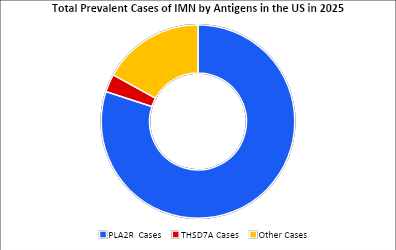
- IMNis often characterized by the antigens associated with the sub-epithelial immune complex deposits, some of them being PLA2R and THSD7A. Among the 7MM, PLA2R antigen accounted for maximum number of cases of IMN.
- In 2025, IMN accounted for ~85% of total membranous nephropathy cases in the US, while secondary membranous nephropathy contributed to the remaining ~15%, highlighting the dominance of autoimmune origin in disease prevalence.
- Across EU4 and the UK, nearly 20,000 IMN patients tested positive for the PLA2R antigen, while around 1,000 were associated with THSD7A, emphasizing the diagnostic importance of these target antigens in IMN.
- Data from Japan indicates that the prevalence of IMN is expected to remain relatively consistent throughout the forecast period from 2026 to 2036, reflecting a stable epidemiological trend without significant increases or decreases in disease occurrence across the population during this timeframe.
Membranous Nephropathy Drug Analysis & Competitive Landscape
The membranous nephropathy drug chapter provides a detailed, market-focused review of the emerging pipeline across Phase III clinical trials and preclinical trials. It covers the mechanism of action, clinical trial data, regulatory approvals, patents, collaborations, and strategic partnerships for each therapy, along with their advantages, limitations, and recent developments. This section offers critical insights into the membranous nephropathy treatment landscape, supporting market assessment, competitive analysis, and growth forecasting for the membranous nephropathy therapeutics market.
Membranous Nephropathy Pipeline Analysis
Obinutuzumab (GAZYVA/GAZYVARO, RG7159, GA101): Roche
It is the first glycoengineered, type II, humanised anti-CD20 monoclonal antibody. It has a distinct mode of action compared with other anti-CD20s, and was specifically designed to selectively target the CD20 protein on B cells and to bind with high affinity to the cell surface in a type II configuration. The therapy is approved for adults with lupus nephritis in the US and EU. Obinutuzumab could become the first approved treatment for PMN.
Zanubrutinib (BRUKINSA): BeOne Medicines
Zanubrutinib is an orally available, targeted treatment known as a BTK inhibitor. Currently, the drug is in Phase III (ALMOND) for the PMN. The drug is approved for multiple B-cell malignancies and is being investigated in autoimmune diseases, including membranous nephropathy, due to its potential to suppress autoreactive B-cell responses and reduce pathogenic autoantibody production.
Table 1: Competitive Landscape of Pipeline Drugs | ||||||
|
Drug Name |
Company |
Highest Phase |
Indication |
RoA |
MoA |
Anticipated Launch in the US |
|
Obinutuzumab (GAZYVA/GAZYVARO, RG7159, GA101) |
Roche |
III |
Membranous nephropathy |
IV infusion |
Targets CD20 proteins on B-cells |
Information is available in the full report |
|
Zanubrutinib (BRUKINSA) |
BeOne Medicines |
III |
Primary membranous nephropathy |
Oral |
BTK inhibitor |
Information is available in the full report |
|
Felzartamab |
Biogen |
III |
Primary membranous nephropathy |
IV infusion |
Targets CD38-expressing cells |
Information is available in the full report |
|
Povetacicept |
Vertex Pharmaceuticals |
II/III |
Primary membranous nephropathy |
SC |
BAFF+APRIL inhibitor |
Information is available in the full report |
|
ALXN1920 |
AstraZeneca / Alexion Pharmaceuticals |
II |
Primary membranous nephropathy |
SC |
Kidney-targeted factor H fusion protein |
Information is available in the full report |
|
Budoprutug |
Climb Bio |
II |
Primary membranous nephropathy |
IV |
Anti-CD19 |
Information is available in the full report |
|
Note: Launch insights are provisional and may change with future report updates or the occurrence of major key catalysts. | ||||||
Note: Detailed emerging therapies assessment will be provided in the final report.
Membranous Nephropathy Key Players and Emerging Companies
- Roche
- BeOne Medicines
- Biogen
- Vertex Pharmaceuticals
- AstraZeneca
- Alexion Pharmaceuticals
- Climb Bio
- and others
Membranous Nephropathy Drug Updates
- In April 2026, Climb Bio announced that the US FDA had granted Fast Track Designation (FTD) to budoprutug for the treatment of PMN.
- In February 2026, Roche announced that the Phase III MAJESTY study in adults with primary membranous nephropathy met its primary endpoint, showing statistically significant and clinically meaningful results with obinutuzumab.
- Roche in its Q1 2026 presentation anticipates BLA submission for obinutuzumab in membranous nephropathy in 2026.
- Biogen in its Q1 2026 busines update anticipates felzartamab approval in 2028-2030 in primary membranous nephropathy.
- In November 2025, povetacicept was granted FTD by the US FDA in PMN.
- In June 2025, Biogen announced the initiation of dosing in the global clinical study, PROMINENT. The Phase III study will evaluate the efficacy and safety of the investigational drug felzartamab compared to tacrolimus in adults diagnosed with PMN. Phase III data expected to read out in 2029.
Membranous Nephropathy Market Outlook
The treatment landscape for membranous nephropathy has traditionally relied on supportive care and broad immunosuppressive therapies, including corticosteroids, calcineurin inhibitors, cyclophosphamide, and rituximab, aimed at reducing proteinuria and slowing disease progression.
Currently, there are no approved therapies specifically indicated for membranous nephropathy, creating a significant unmet clinical need.
The emerging pipeline for membranous nephropathy is increasingly focused on targeted B-cell and plasma cell-directed therapies designed to reduce pathogenic autoantibody production involved in disease pathogenesis. Obinutuzumab, an anti-CD20 monoclonal antibody, is being investigated for its enhanced B-cell depletion capabilities compared with earlier CD20-targeted therapies. Zanubrutinib, an oral BTK inhibitor is under evaluation for its potential to suppress autoreactive B-cell signaling and antibody-mediated kidney injury, with its oral administration it’ll provides geter patient convenience and adherence. Additionally, felzartamab, an anti-CD38 monoclonal antibody, is being developed to target plasma cells responsible for producing pathogenic autoantibodies such as anti-PLA2R antibodies associated with membranous nephropathy.
Advances in biomarker-guided diagnosis, increasing understanding of membranous nephropathy immunopathology, and the development of novel targeted agents are expected to expand treatment options and drive market growth across the 7MM from 2022 to 2036, yielding significant commercial opportunities for existing products and pipeline candidates.
- The membranous nephropathy market across the 7MM remains significantly underserved, as there are currently no therapies specifically approved for membranous nephropathy, and treatment primarily relies on supportive care and broad immunosuppressive regimens with variable efficacy and considerable safety limitations.
- The United States is expected to remain the largest membranous nephropathy market within the 7MM, supported by higher treatment uptake of premium biologics, earlier adoption of novel targeted therapies, greater healthcare spending, and favorable reimbursement for innovative immunotherapies.
- The KDIGO guidelines recommend conservative therapy for patients with membranous nephropathy and proteinuria, including the use of diuretics, ACE inhibitors or ARBs, and sodium restriction, to reduce edema and prevent cardiovascular complications.
- Anti-CD20 monoclonal antibodies such as rituximab are now routinely used in the treatment of membranous nephropathy and are often preferred for their favorable safety profile, ease of use, and reduced monitoring burden.
- Calcineurin inhibitors (CNIs), including tacrolimus and cyclosporine, have long been established as effective therapeutic options for the treatment of membranous nephropathy.
Further details will be provided in the report….
Drug Class/Insights into Leading Emerging Therapies in Membranous Nephropathy (2022–2036 Forecast)
The membranous nephropathy market (2022–2036 forecast) is increasingly shifting toward targeted immunologic therapies designed to address the underlying autoimmune mechanisms driving disease progression, rather than relying solely on broad immunosuppressive regimens and supportive care.
- Anti-CD20 Monoclonal Antibodies (B-cell Depleting Therapies): Obinutuzumab depletes CD20-positive B cells, reducing the production of pathogenic autoantibodies implicated in membranous nephropathy. This class has demonstrated the ability to induce durable immunologic and clinical remissions in autoimmune kidney diseases.
- Anti-CD38 Monoclonal Antibodies (Plasma Cell-Targeted Therapies): Felzartamab targets CD38-expressing plasma cells, directly suppressing the source of pathogenic autoantibody production.
- BTK Inhibitors: Zanubrutinib inhibits BTK, reducing B-cell activation and autoantibody-mediated immune responses in membranous nephropathy. As an oral therapy, this class offers a targeted approach that may improve treatment convenience and long-term disease control.
Membranous Nephropathy Drug Uptake
This section focuses on the uptake rate of potential drugs expected to be launched in the market during the forecast period (2026–2036). The analysis covers the membranous nephropathy drug’s uptake, performance at peak, factors affecting performance during prime years of growth, patient uptake by therapy, and anticipated sales generated by each drug.
Among emerging pipeline therapies for membranous nephropathy, obinutuzumab is expected to gain attention as a next-generation anti-CD20 monoclonal antibody with enhanced B-cell depletion capabilities and the potential to achieve deeper immunologic remission compared with earlier CD20-targeted therapies. Zanubrutinib, potentially among the first BTK inhibitors evaluated in membranous nephropathy, represents a novel oral targeted approach aimed at suppressing autoreactive B-cell signaling and pathogenic autoantibody production, thereby expanding the treatment landscape beyond conventional antibody-mediated B-cell depletion. Meanwhile, felzartamab is anticipated to emerge as a highly differentiated candidate due to its plasma cell-targeting mechanism via CD38 inhibition, which may enable more depper and durable reductions in pathogenic anti-PLA2R autoantibodies, particularly in refractory or relapsing disease settings where long-lived plasma cells contribute to persistent immune activity.
Detailed insights of emerging therapies' drug uptake is included in the report
Recent Development
- In June 2026, Biogen announced it has initiated patient dosing in the global Phase 3 PROMINENT trial to evaluate its investigational anti-CD38 antibody, felzartamab. The study focuses on treating primary membranous nephropathy (PMN), a severe autoimmune kidney disease lacking FDA-approved therapies. Felzartamab selectively targets and depletes CD38-expressing plasma cells that generate harmful autoantibodies. Previously granted FDA Breakthrough Therapy and Orphan Drug designations, this trial represents a critical step forward in addressing significant unmet needs in nephrology.
Market Access and Reimbursement of Approved Therapies in Membranous Nephropathy
Reimbursement is a crucial factor that affects the drug’s access to the market. Often, the decision to reimburse comes down to the price of the drug relative to the benefit it produces in treated patients. To reduce the healthcare burden of these high-cost therapies, many payment models are being considered by payers and other industry insiders.
The United States
Reimbursement is a crucial factor that affects the drug’s access to the market. Often, the decision to reimburse comes down to the price of the drug relative to the benefit it produces in treated patients. To reduce the healthcare burden of these high-cost therapies, many payment models are being considered by payers and other industry insiders.
NOTE: Further Details are provided in the final report….
Membranous Nephropathy Therapies Price Scenario & Trends
Pricing and analogue assessment of membranous nephropathy therapies highlights evolving price dynamics structures. This section summarizes the cost of approved treatments, closest and most appropriate analogue selection for emerging therapies, and understanding of how pricing influences market access, adherence, and long-term uptake.
Industry Experts and Physician Views for Membranous Nephropathy
To keep up with membranous nephropathy market trends, we take Key Opinion Leaders (KOLs) and Subject Matter Experts (SMEs) opinions working in the domain through primary research to fill the data gaps and validate our secondary research. Industry experts were contacted for insights on the membranous nephropathy emerging therapies, evolving treatment landscape, patient adherence to conventional therapies, therapy switching trends, drug adoption and uptake, accessibility challenges, and epidemiology and real-world prescription patterns in membranous nephropathy, including MD, PhD, Instructor, Postdoctoral Researcher, Professor, Researcher, and others.
DelveInsight’s analysts connected with 15+ KOLs to gather insights at the country level. Centers such as University of Minnesota, UCL Centre for Nephrology, and University Hospital Erlangen etc. were contacted. Their opinion helps understand and validate current and emerging membranous nephropathy therapies, highlight unmet medical needs, provide epidemiological context, and support strategic decisions for market access, therapy adoption, and pipeline prioritization in membranous nephropathy.
Region |
Key Opinion Leaders (KOLs) and Subject Matter Experts (SMEs) |
|
United States |
“With no approved therapies, treatment decisions in membranous nephropathy rely heavily on clinical experience. There’s a clear need for disease-specific agents that can standardize care and improve long-term renal outcomes.” |
|
Germany |
“Anti-PLA2R antibody testing has transformed our understanding of primary membranous nephropathy. It’s not just a diagnostic tool—it’s becoming central to disease monitoring and potentially guiding personalized treatment strategies.” |
Qualitative Analysis: SWOT and Conjoint Analysis
We perform qualitative and market Intelligence analysis using various approaches, such as SWOT analysis and conjoint analysis.
In the SWOT analysis of membranous nephropathy, strengths, weaknesses, opportunities, and threats in terms of disease diagnosis, patient awareness, patient burden, competitive landscape, cost-effectiveness, and geographical accessibility of therapies are provided.
Conjoint analysis analyzes emerging therapies based on relevant attributes such as safety, efficacy, frequency of administration, route of administration, and order of entry. Scoring is given based on these parameters to analyze the effectiveness of therapy.
The team of analysts analyzes promising emerging therapies based on relevant attributes such as safety, efficacy, frequency of administration, route of administration, and order of entry. In efficacy, the trial’s primary and secondary outcome measures are evaluated, whereas the therapies’ safety is evaluated, wherein the acceptability, tolerability, and adverse events are majorly observed. In addition, the scoring is also based on the route of administration, order of entry, probability of success, and the addressable patient pool for each therapy. According to these parameters, the final weightage score and the ranking of the emerging therapies are decided.
Scope of the Report
- The report covers a segment of key events, an executive summary, a descriptive overview of membranous nephropathy, explaining their causes, signs and symptoms, pathogenesis, and currently available treatments.
- Comprehensive insight has been provided into the epidemiology segments and forecasts, the future growth potential of the diagnosis rate, and disease progression along treatment guidelines.
- Additionally, an all-inclusive account of both the current and emerging treatments, along with the elaborative profiles of late-stage and prominent therapies, will have an impact on the current treatment landscape.
- A detailed review of the membranous nephropathy market, historical and forecasted market size, market share by therapies, detailed assumptions, and rationale behind our approach is included in the report, covering the 7MM drug outreach.
- The report provides an edge while developing business strategies by understanding trends through SWOT analysis and expert insights/KOL views, patient journey, and treatment preferences that help in shaping and driving the 7MM membranous nephropathy market.
Report Insights
- Membranous Nephropathy Patient Population Forecast
- Membranous Nephropathy Therapeutics Market Size
- Membranous Nephropathy Pipeline Analysis
- Membranous Nephropathy Market Size and Trends
- Membranous Nephropathy Market Opportunity (Current and Forecasted)
Report Key Strengths
- Epidemiology‑based (Epi‑based) Bottom‑up Forecasting
- Artificial Intelligence (AI)-Enabled Market Research Report
- 11-Year Forecast
- Membranous Nephropathy Market Outlook (North America, Europe, Asia-Pacific)
- Patient Burden Trends (By Geography)
- Membranous Nephropathy Treatment Addressable Market (TAM)
- Membranous Nephropathy Competitve Landscape
- Membranous Nephropathy) Major Companies Insights
- Membranous Nephropathy Price Trends and Analogue Assessment
- Membranous Nephropathy Therapies Drug Adoption/Uptake
- Membranous Nephropathy Therapies Peak Patient Share Analysis
Report Assessment
- Membranous Nephropathy Current Treatment Practices
- Membranous Nephropathy Unmet Needs
- Membranous Nephropathy Clinical Development Analysis
- Membranous Nephropathy Emerging Drugs Product Profiles
- Membranous Nephropathy Market Attractiveness
- Membranous Nephropathy Qualitative Analysis (SWOT and Conjoint Analysis)
FAQs
Market Insights
- What was the membranous nephropathy market size, the market size by therapies, market share (%) distribution in 2025, and what would it look like by 2036? What are the contributing factors for this growth?
- What are the anticipated pricing variations among different geographies for the emerging therapies in the future?
- What can be the future treatment paradigm of membranous nephropathy?
- What are the disease risks, burdens, and unmet needs of membranous nephropathy? What will be the growth opportunities across the 7MM concerning the patient population with membranous nephropathy?
- Who is the major future competitor in the market, and how will the competitors affect their market share?
- What are the current options for the treatment of membranous nephropathy? What are the current guidelines for treating membranous nephropathy in the US, Europe, and Japan?
Reasons to Buy
- The report will help in developing business strategies by understanding the latest trends and changing treatment dynamics driving the membranous nephropathy market.
- Bottom-up forecasting builds from the affected population to product forecasts, delivering a robust, data-driven approach ideal for new therapies and novel classes.
- Insights on patient burden/disease incidence, evolution in diagnosis, and factors contributing to the change in the epidemiology of the disease during the forecast years.
- Understand the existing market opportunities in varying geographies and the growth potential over the coming years.
- Identifying strong upcoming players in the market will help devise strategies to help get ahead of competitors.
- Detailed analysis and ranking of class-wise potential emerging therapies under the conjoint analysis section to provide visibility around leading classes.
- To understand KOLs’ perspectives on the accessibility, acceptability, and compliance-related challenges of existing treatment to overcome barriers in the future.
- Detailed insights on the unmet needs of the existing market so that the upcoming players can strengthen their development and launch strategy.
- This Artificial Intelligence (AI)-enabled report summarize and simplify complex datasets with in the report into clear, actionable insights for stakeholders, investors, and healthcare providers, enabling faster, data-driven decisions.