
Metastatic HER2 positive Breast Cancer Market Summary
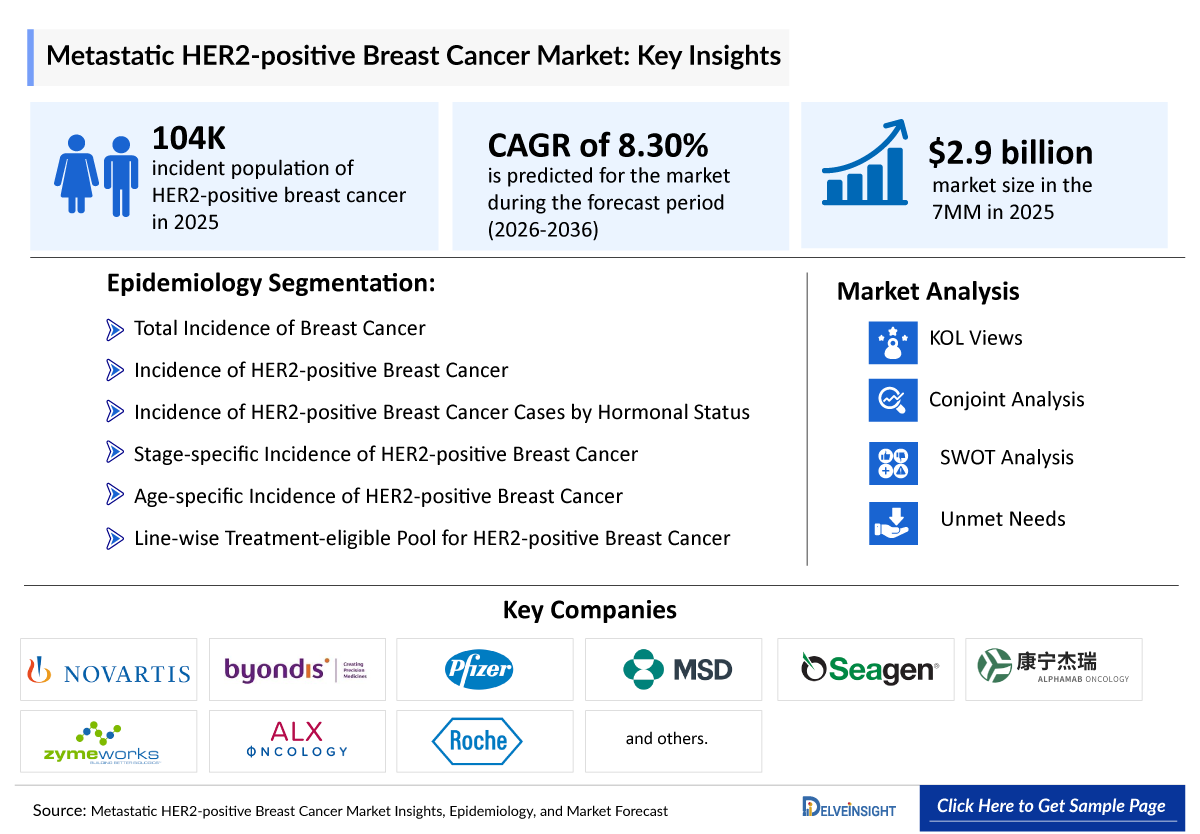
- The Metastatic HER2-positive breast cancer market size was valued at approximately USD 2.9 billion in 2025 and is projected to grow at a compound annual growth rate (CAGR) of around 8.3% from 2026 to 2036.
- The leading Metastatic HER2-positive breast cancer companies developing therapies in the treatment market include - Byondis, Roche, Pfizer, Ambrx, Bolt Biotherapeutics, BioInvent International AB, Klus Pharma, DualityBio, Artiva Biotherapeutics, Vaccinex, Suzhou Zanrong Pharma, Dizal Pharmaceuticals and others.
Key Metastatic HER2-positive breast cancer Market & Epidemiology Insights
- Recent advancements in HER2 treatments have enhanced HER2-positive breast cancer management, yet relapse remains a primary challenge due to disease heterogeneity and drug resistance mechanisms.
- The approval of HERCEPTIN marked a turning point in HER2-positive breast cancer treatment. HERCEPTIN was the first targeted treatment for a solid tumor and the first drug to be paired with a companion diagnostic.
- Despite the effectiveness of HERCEPTIN in combination with chemotherapy, a substantial portion (30–50%) of treatment-naïve HER2-positive metastatic breast cancer patients do not respond well initially, indicating resistance to HERCEPTIN. This underscores its limitations and the need for ongoing research to tackle resistance issues with novel therapies.
- PERJETA is often used alongside HERCEPTIN and chemotherapy; PERJETA’s approval marked a significant milestone. The combination of HERCEPTIN and PERJETA has become a standard of care for neoadjuvant and metastatic front-line settings.
- The development of ADCs represents a breakthrough in treating metastatic breast cancer, particularly in HER2-positive breast cancer. Among these, KADCYLA was the first to gain FDA approval for breast cancer treatment.
- Anti-HER2 therapies, such as HERCEPTIN, PERJETA, KADCYLA, ENHERTU, and others, have changed the treatment paradigm of HER2-positive cancers, which were previously associated with more aggressive disease and poorer outcomes.
- Seagen's comprehensive TUKYSA development plan includes a Phase II trial (HER2CLIMB-04) combining TUKYSA with ENHERTU for second-line HER2-positive breast cancer and a Phase III trial (HER2CLIMB-05) evaluating TUKYSA with HERCEPTIN and Roche’s PERJETA as a first-line maintenance regimen.
- Both TUKYSA and KADCYLA are HER2-targeted agents, and both are under pressure from AstraZeneca and Daiichi Sankyo’s ADC ENHERTU, which has handily beaten KADCYLA in a head-to-head trial.
- Companies like Byondis, Hoffmann-La Roche, Ambrx, and Zymeworks/Jazz Pharmaceuticals actively engage in mid and late-stage research and development efforts for HER2-positive breast cancer. The pipeline of HER2-positive breast cancer possesses few potential drugs.
- ARX788 may potentially become the ADC of choice for post-ENHERTU patients with its unique ADC structure.
- As promising novel anti-HER2 treatments emerge, the field will continue to revolutionize, with guidelines beginning to include novel treatment options in the third-line setting and thereafter.
- In 2025, the United States accounted for the maximum share of the total market of HER2-positive breast cancer in the 7MM was around 60%.
Metastatic HER2-positive Breast Cancer Market size and Forecast in the 7MM
- 2025 Metastatic HER2-positive Breast Cancer Market Size: ~USD 2900 million
- Metastatic HER2-positive Breast Cancer Growth Rate (2026–2036): ~8.3% CAGR
Request for unlocking the report of the @ Metastatic HER2-positive Breast Cancer Market Insights
Key Factors Driving the Metastatic HER2-positive Breast Cancer Market
- Rising disease burden and patient pool: HER2-positive breast cancer accounts for roughly 15–20% of breast cancer cases, and a meaningful proportion of these patients eventually develop metastatic disease, sustaining demand for long-term treatment options.
- Strong uptake of HER2-targeted therapies: The market is being driven by continued use of established HER2-directed agents and rapid adoption of newer targeted therapies, which have significantly improved survival and expanded treatment duration in metastatic settings.
- Shift toward premium novel therapies (especially ADCs): Newer high-value agents such as antibody-drug conjugates (ADCs) are reshaping the treatment landscape and increasing market value because they are being used earlier and more broadly in treatment sequencing.
DelveInsight's ‘Metastatic HER2-positive Breast Cancer Market Insights, Epidemiology and Market Forecast – 2036’ report delivers an in-depth understanding of the metastatic HER2-positive breast cancer, historical and forecasted epidemiology, as well as the metastatic HER2-positive breast cancer market trends in the United States, EU4 (Germany, Spain, Italy, and France) and the United Kingdom, and Japan.
The metastatic HER2-positive breast cancer market report delivers a comprehensive analysis of the current treatment landscape, including standards of care, clinical practices, and evolving therapeutic algorithms. It evaluates metastatic HER2-positive breast cancer patient burden trends, revenue & market share dynamics, peak patient share & therapy uptake analysis, and provides an in-depth market size assessment, and growth rate projections (Historical & Forecast 2022–2036) across global regions. The report highlights key unmet medical needs in metastatic HER2-positive breast cancer and maps the competitive and clinical landscape to uncover high value opportunities, providing a clear outlook on future market growth potential.
Scope of the Metastatic HER2-positive Breast Cancer Market Report | |
|
Study Period |
2022–2036 |
|
Historical Year |
2022–2025 |
|
Forecast Period |
2026–2036 |
|
Base Year |
2026 |
|
Geographies Covered |
ü North America : The US; ü Europe: Germany, France, Italy, Spain and the UK; ü Asia-Pacific: Japan |
|
Metastatic HER2-positive Breast Cancer Market CAGR (Study period/Forecast period) |
~8.3% (2026–2036) |
|
Metastatic HER2-positive Breast Cancer Epidemiology Segmentation Analysis |
Patient Burden Assessment · Total Incidence Cases of Breast Cancer · Total Incident Cases of HER2-positive Breast Cancer · Hormonal Status of HER2-positive Breast Cancer · Age-specific Cases of HER2-positive Breast Cancer · Stage-specific Cases of HER2-positive Breast Cancer · Line-wise Metastatic Cases of HER2-positive Breast Cancer |
|
Metastatic HER2-positive Breast Cancer Companies |
· Byondis · Roche · Pfizer · Ambrx · Bolt Biotherapeutics · BioInvent International AB · Klus Pharma · DualityBio · Artiva Biotherapeutics · Vaccinex · Suzhou Zanrong Pharma · Dizal Pharmaceuticals, and others |
|
Metastatic HER2-positive Breast Cancer Therapies |
· HERCEPTIN · PHESGO · PERJETA · KADCYLA · NERLYNX · TUKYSA · SYD985 · Zanidatamab · ARX788 · A166 · DB-1303, and others |
|
Metastatic HER2-positive Breast Cancer Market |
Segmented by · Region/Geographies · Drugs/Therapies · Line of therapies |
|
Analysis |
· Addressable Patient Population · Market drivers and Market Barriers · Cost assumptions and Pricing Analogues · KOL Views · SWOT Analysis · Reimbursement · Conjoint Analysis · Unmet Need |
Metastatic HER2-positive Breast Cancer Disease Understanding
HER2-positive Breast Cancer Overview and Diagnosis
Breast cancer develops when abnormal cells in the breast grow uncontrollably, usually beginning in the ducts or lobules and forming a tumor. Some breast cancers are driven by overexpression or amplification of the HER2 gene/protein; these are known as HER2-positive (HER2+) breast cancers. HER2+ breast cancer tends to grow faster and is more likely to spread or recur than HER2-negative disease.
HER2 status is determined through biomarker testing, most commonly using Immunohistochemistry (IHC) and Fluorescence in Situ Hybridization (FISH), although other tests such as NGS, PCR, PD-1/PD-L1, MSI-H/dMMR, and BRCA testing may also be used. In general, only tumors that are IHC 3+ or FISH-positive are considered HER2-positive and are likely to respond to HER2-targeted therapies. An IHC 2+ result is considered borderline and typically requires confirmatory FISH testing.
Further details related to diagnosis will be provided in the report...
Metastatic HER2-positive Breast Cancer Treatment
Metastatic breast cancer is primarily treated with targeted therapy and hormonal therapy. First-line treatment choice depends on receptor status, including estrogen, progesterone, and HER2 receptors. In cases where both HER2 and estrogen receptors are positive, initial treatment may involve hormonal therapy, HER2-targeted therapy, or a combination of both.
Anti-HER2 therapies are a class of medicines used to treat all stages of HER2-positive breast cancer, from early-stage to metastatic. HERCEPTIN (trastuzumab) treats early-stage and advanced HER2-positive breast cancer and can be given with chemotherapy and sometimes another targeted therapy called PERJETA (pertuzumab). ADCs such as ENHERTU, KADCYLA, and PHESGO can treat unresectable or metastatic HER2-positive breast cancer. Another therapy, NERLYNX, combines chemotherapy to treat advanced-stage and metastatic HER2-positive breast cancer. Apart from this, TUKYSA (tucatinib) treats metastatic or locally advanced HER2-positive breast cancer that cannot be completely removed with surgery after the cancer has been treated with at least one anti-HER2 medicine.
Further details related to treatment will be provided in the report...
Metastatic HER2-positive Breast Cancer Unmet Needs
The section “unmet needs of metastatic HER2-positive breast cancer” outlines the critical gaps between the current state of patient care, diagnosis, and the ideal & effective management of the disease. It highlights the obstacles experienced by patients, clinicians, and researchers and identifies potential solutions for future progress.
- Resistance to antibody-drug conjugates (ADCs)
- Toxicity assessment and management
- Predictive biomarkers in advanced, HER2-positive breast cancer
- Poor overall survival and others…..
Note: Comprehensive unmet needs insights in metastatic HER2-positive breast cancer and their strategic implications are provided in the full report...
Metastatic HER2-positive Breast Cancer Epidemiology
The Metastatic HER2-positive Breast Cancer epidemiology section provides insights about the historical and current Metastatic HER2-positive Breast Cancer patient pool and forecasted trends for individual seven major countries. It helps to recognize the causes of current and forecasted trends by exploring numerous studies and views of key opinion leaders. This part of the Metastatic HER2-positive Breast Cancer market report also provides the diagnosed patient pool and their trends along with assumptions undertaken.
Key Findings from Metastatic HER2-positive Breast Cancer Epidemiological Analysis and Forecast
- According to the estimates, the total incident population of HER2-positive breast cancer in the seven major markets was nearly 104,000 cases in 2025. The cases in the 7MM are expected to increase during the forecast period, i.e., 2025–2036.
- The metastatic HER2+ breast cases were highest in the treatment eligible pool for HER2+ breast cancer in the US, accounting for ~14,500 cases.
- According to the estimates, most cases of HER2-positive breast cancer occur in people between 40 and 60 in the United States, accounting for ~52% of total cases in 2025.
- Among EU4 and the UK, Germany had the maximum total incident cases of HER2-positive breast cancer, with ~10,800 cases in 2025, while Spain accounted for the least number of cases.
- In Japan, stage-specific cases of HER2-positive breast cancer were highest in Stage II, accounting for ~6,600 cases in 2025.
Metastatic HER2-positive Breast Cancer Epidemiology Segmentation
- Total Incidence Cases of Breast Cancer
- Total Incident Cases of HER2-positive Breast Cancer
- Hormonal Status of HER2-positive Breast Cancer
- Age-specific Cases of HER2-positive Breast Cancer
- Stage-specific Cases of HER2-positive Breast Cancer
- Line-wise Metastatic Cases of HER2-positive Breast Cancer
Recent Developments in the Metastatic HER2-positive Breast Cancer Treatment Landscape:
- In December 2025, the US FDA approved fam-trastuzumab deruxtecan-nxki (ENHERTU) in combination with pertuzumab for the first-line treatment of adults with unresectable or metastatic HER2-positive (IHC 3+ or ISH+) breast cancer as determined by an FDA-approved test.
- In October 2025, Pfizer announced positive topline results from the Phase III HER2CLIMB-05 trial of first-line combination therapy with the tyrosine kinase inhibitor TUKYSA (tucatinib) in patients with HER2+ MBC.
Metastatic HER2-positive Breast Cancer Drug Analysis & Competitive Landscape
The metastatic HER2-positive breast cancer drug chapter provides a detailed, market-focused review of approved therapies and the emerging pipeline across Phase I–III Metastatic HER2-positive Breast Cancer clinical trials. It covers mechanism of action, clinical trial data, regulatory approvals, patents, collaborations, strategic partnerships upcoming key catalyst for each therapy, along with their advantages, limitations, and recent developments. This section offers critical insights into the metastatic HER2-positive breast cancer treatment landscape, supporting market assessment, competitive analysis, and growth forecasting for the metastatic HER2-positive breast cancer market.
Approved Therapies for Metastatic HER2-positive Breast Cancer
ENHERTU (fam-trastuzumab deruxtecan-nxk): Daiichi Sankyo/AstraZeneca
ENHERTU is the lead product in the ADC franchise of the Daiichi Sankyo and the most advanced program in AstraZeneca’s ADC Scientific platform. ADCs are targeted cancer medicines that deliver cytotoxic chemotherapy (payload) to cancer cells via a linker attached to a monoclonal antibody that binds to a specific target expressed on cancer cells. ENHERTU is designed by using Daiichi Sankyo’s proprietary DXd ADC technology. ENHERTU comprises a HER2 monoclonal antibody attached to topoisomerase I inhibitor payload, an exatecan derivative, via a stable tetrapeptide-based cleavable linker.
In December 2025, AstraZeneca and Daiichi Sankyo’s ENHERTU in combination with pertuzumab has been approved in the US for the 1st-line treatment of adult patients with unresectable or metastatic HER2-positive breast cancer. The approval follows Priority Review and Breakthrough Therapy Designation by the FDA and is based on the results of the DESTINY-Breast09 Phase III trial.
TUKYSA (tucatinib): Seagen
TUKYSA is an oral medicine that is a tyrosine kinase inhibitor of the HER2 protein. In vitro (in lab studies), TUKYSA inhibited phosphorylation of HER2 and HER3, which inhibited downstream MAPK and AKT signaling and cell growth (proliferation) and showed anti-tumor activity in HER2-expressing tumor cells. In vivo (in living organisms), TUKYSA inhibited the growth of HER2-expressing tumors.
In December 2025, Pfizer announced detailed results from the Phase III HER2CLIMB-05 trial of TUKYSA as part of an investigational first-line maintenance treatment combination, following chemotherapy-based induction, in patients with human epidermal growth factor receptor 2-positive (HER2+) metastatic breast cancer. These findings were published in the Journal of Clinical Oncology, shared in an oral presentation at the 48th San Antonio Breast Cancer Symposium (SABCS), and highlighted in the SABCS official press program.
Marketed Metastatic HER2-positive Breast Cancer Drug Key Cross | ||||||
|
Drugs |
Company Name |
Combination |
MoA |
US |
Patient Segment |
Line of Therapy |
|
HERCEPTIN HYLECTA |
Roche |
Monotherapy |
HER2 inhibitor |
US: 2019 EU: 2013 |
Early and Metastatic Breast Cancer |
Adjuvant and 1L+ |
|
PHESGO |
Roche |
Chemotherapy |
HER2 inhibitor |
US: 2020 EU: 2020 |
Early and Metastatic Breast Cancer |
Neoadjuvant Adjuvant and 1L |
|
KADCYLA |
Roche/ Chugai |
Monotherapy |
HER2 inhibitor |
US: 2013 EU: 2013 JP: 2013 |
Metastatic Breast Cancer |
2L |
|
TUKYSA |
Seagen |
Trastuzumab + capecitabine |
Tyrosine kinase inhibitor |
US: 2020 EU: 2021 |
Metastatic Breast Cancer |
2L+ |
|
MARGENZA |
MacroGenics |
Chemotherapy |
HER2 inhibitor |
2020 |
Metastatic Breast Cancer |
3L+ |
|
ENHERTU |
Daiichi/ AstraZeneca |
Monotherapy |
HER2 inhibitor |
US: 2019 EU: 2021 JP: 2020 |
Metastatic Breast Cancer |
3L+ |
|
US; EU; JP:2022 |
2L+ | |||||
Note: Detailed marketed therapies assessment will be provided in the final report..
Metastatic HER2-positive Breast Cancer Pipeline Analysis
SYD985 (trastuzumab duocarmazine): Byondis
SYD985 (trastuzumab duocarmazine) is comprised of the monoclonal antibody trastuzumab and a cleavable linker-drug called valine-citrulline-seco-DUocarmycin-hydroxyBenzamide-Azaindole (vc-seco-DUBA).
In May 2023, the FDA issued a complete response letter for a biologics license application for vic-trastuzumab duocarmazine (SYD985) to treat patients with HER2-positive, unresectable, locally advanced or metastatic breast cancer.
ARX788: Ambrx
ARX788, an anti-HER2 ADC, is currently being investigated in multiple clinical trials for the treatment of breast cancer, gastric/gastroesophageal junction (GEJ) cancer, and other solid tumors, including ongoing Phase II/III clinical trials for the treatment of HER2-positive metastatic breast cancer and gastric cancer.
In March 2024, Johnson & Johnson announced that it had successfully completed the acquisition of Ambrx Biopharma. The acquisition presents a distinct opportunity for Johnson & Johnson to design, develop and commercialize targeted oncology therapeutics.
Competitive Landscape of Metastatic HER2-positive Breast Cancer Pipeline Drugs | ||||||
|
Drug Name |
Company |
Indication |
Highest Phase |
RoA |
MoA |
Anticipated Launch in the US |
|
SYD985 (Trastuzumab duocarmazine) |
Byondis |
HER2+ MBC |
III |
IV infusion |
Anti-HER2 targeted therapy with cytotoxic vc-seco-DUBA |
2026+ |
|
IBRANCE + HERCEPTIN + PERJETA + Hormonal Therapies |
Pfizer |
HR+/ HER2+ MBC after induction therapy |
III |
Oral + IV infusion |
CDK 4,6 kinase inhibitor + Anti-HER2 |
Information is available in the full report |
|
ARX788 |
Ambrx |
HER2+ MBC |
II |
IV infusion |
Anti-HER2 targeted therapy with tubulin inhibitor payload AS269 |
Information is available in the full report |
|
BDC-1001 ± pertuzumab |
Bolt Biotherapeutics |
HER2+ MBC previously treated with ENHERTU |
II |
IV |
Anti-HER2 targeted Therapy |
Information is available in the full report |
|
BI-1607 + Trastuzumab |
BioInvent International AB |
HER2-positive MBC Previously treated with ENHERTU/KADCYLA |
I/II |
IV infusion |
Anti-FcGRIIB |
Information is available in the full report |
|
Note: Launch insights are provisional and may change with future report updates or the occurrence of major key catalysts. | ||||||
Metastatic HER2-positive Breast Cancer Key Players, Market Leaders and Emerging Companies
- Byondis
- Roche
- Pfizer
- Ambrx
- Bolt Biotherapeutics
- BioInvent International AB
- Klus Pharma
- DualityBio
- Artiva Biotherapeutics
- Vaccinex
- Suzhou Zanrong Pharma
- Dizal Pharmaceuticals and others.
Metastatic HER2-positive Breast Cancer Market Outlook
The metastatic HER2-positive breast cancer market has evolved significantly from conventional chemotherapy to a highly targeted, biomarker-driven treatment landscape led by HER2-directed antibodies, TKIs, and ADCs. Roche’s HERCEPTIN transformed care as the first targeted therapy in this setting, followed by newer agents such as PERJETA, KADCYLA, ENHERTU, TUKYSA, and PHESGO, which have progressively expanded treatment options across lines of therapy. Despite these advances, the market continues to face key challenges including relapse, resistance, treatment sequencing uncertainty, and increasing competition from biosimilar and next-generation ADCs. ENHERTU’s strong efficacy has notably reshaped the second-line and broader treatment paradigm, while newer pipeline agents and combination approaches are expected to further intensify competition. Overall, the market outlook remains positive, driven by continued innovation, label expansions, lifecycle management strategies, and growing demand for more effective and convenient HER2-targeted therapies.
At present, the HER2-positive metastatic breast cancer treatment landscape includes a broad range of therapeutic options, such as HER2-targeted monoclonal antibodies, ADCs, tyrosine kinase inhibitors (TKIs), chemotherapy, endocrine therapy (for HR+/HER2+ disease), and fixed-dose subcutaneous combinations, with emerging approaches including novel ADCs, immunotherapy-based combinations, and cell-based therapies under clinical development.
The advancement of ADCs is a significant breakthrough in treating metastatic breast cancer, especially in the context of HER2-positive breast cancer. The introduction of KADCYLA (T-DM1) as a second-line treatment for HER2-positive metastatic breast cancer stemmed from the successful Phase III trial known as EMILIA. The patent for T-DM1 is set to expire in September 2026 in the US.
TUKYSA became the first new molecular entity (NME) to undergo review under Project Orbis, an initiative by the FDA Oncology Center of Excellence (OCE). Project Orbis facilitates the simultaneous submission and review of oncology drugs by multiple international regulatory authorities. This streamlined approach enhances access to innovative treatments for patients on a global scale.
Since gaining FDA approval in 2020, TUKYSA has been employed alongside trastuzumab and chemotherapy to combat HER2-positive breast cancer following prior treatments in the metastatic setting. KADCYLA, an ADC, utilizes HERCEPTIN as a guide to delivering chemotherapy directly to HER2-expressing cancer cells.
While both are HER2-targeted therapies, they face formidable competition from AstraZeneca and Daiichi Sankyo's ENHERTU, which outperformed KADCYLA in a head-to-head trial. Following this setback, KADCYLA has been focusing on its use in post-surgical early-stage breast cancer and expanding its reach geographically.
In 2025, the total market size of HER2+ MBC in first-line was USD 521 million in the US. The highest revenue was captured by Taxane + Trastuzumab + PERJETA (Pertuzumab) ± Hormone therapies accounting for USD 236 million in 2025.
Increased competition in the HER2-positive space is emerging with the development of ADCs like trastuzumab duocarmazine. Byondis’ SYD985 has shown promising initial efficacy data and aims to enter the market, pending successful efficacy demonstration. However, the ADC market, heavily dominated by Big Pharma, poses a challenge for newcomers like SYD985 (Byondis).
Further details will be provided in the report...
Drug Class/Insights into Leading Emerging and Marketed Therapies in Metastatic HER2-positive Breast Cancer (2022–2036 Forecast)
The HER2-positive MBC treatment landscape comprises HER2 inhibitors, tyrosine kinase inhibitors (TKIs), and HER2-targeted ADCs, each designed to target distinct mechanisms involved in tumor growth, HER2 signaling, and treatment resistance.
HER2 inhibitors: Monoclonal antibodies such as HERCEPTIN (trastuzumab) and PERJETA (pertuzumab) form the backbone of HER2+ MBC treatment. These agents target the HER2 receptor and inhibit HER2-driven signaling pathways, thereby suppressing tumor cell proliferation and survival. They are widely used in combination with chemotherapy and remain central to first-line treatment strategies.
Tyrosine kinase inhibitors (TKIs): Agents such as TYKERB (lapatinib), NERLYNX (neratinib), and TUKYSA (tucatinib) represent oral HER2-directed therapies used mainly in later-line or refractory settings. These small molecules inhibit intracellular HER2 signaling and are particularly valuable in overcoming resistance to prior HER2-targeted therapies. Some TKIs, especially tucatinib, have also shown meaningful activity in patients with brain metastases, an important unmet need in HER2+ MBC.
Anti-HER2 targeted therapy with cytotoxic vc-seco-DUBA: Investigational agents such as trastuzumab duocarmazine (SYD985) represent next-generation HER2-targeted ADCs designed to selectively deliver a potent cytotoxic payload, vc-seco-DUBA, to HER2-expressing tumor cells. This approach combines the targeting precision of HER2 antibodies with the cell-killing activity of chemotherapy, with the goal of improving efficacy in patients who have progressed on earlier HER2-directed therapies.
Metastatic HER2-positive Breast Cancer Drug Uptake
This section focuses on the uptake rate of potential Metastatic HER2-positive Breast Cancer drugs expected to be launched in the market during the forecast period (2026–2036). The analysis covers the HER2-positive MBC drug’s uptake, performance at peak, factors affecting performance during prime years of growth, patient uptake by therapy, and anticipated sales generated by each drug.
Among the first-line transplant, Taxane + Trastuzumab + PERJETA (Pertuzumab) ± Hormone therapies, and PHESGO, are expected to capture the largest market share.
Detailed insights of emerging therapies' drug uptake is included in the report…
Market Access and Reimbursement of Approved therapies in Metastatic HER2-positive Breast Cancer
The report further provides detailed insights on the country-wise accessibility and reimbursement scenarios, cost-effectiveness scenario of approved therapies, programs making accessibility easier and out-of-pocket costs more affordable, insights on patients insured under federal or state government prescription drug programs, etc.
The United States
MARGENZA
MARGENZA is indicated, in combination with chemotherapy, for the treatment of adult patients with metastatic HER2¬ positive breast cancer who have received two or more prior anti-HER2 regimens, at least one of which was for metastatic disease.
Coding & Reimbursement support
MARGENZA Access Support is here to help healthcare professionals (HCPs) obtain insurance reimbursement for MARGENZA.
HERCEPTIN
HERCEPTIN has been the foundation of traditional HER2+ cancer treatment. It targets HER2 receptors, which may keep the cancer from growing.
The Genentech Oncology Co-pay Assistance Program helps people with commercial health insurance.
Reimbursement is a crucial factor that affects the drug’s access to the market. Often, the decision to reimburse comes down to the price of the drug relative to the benefit it produces in treated patients. To reduce the healthcare burden of these high-cost therapies, many payment models are being considered by payers and other industry insiders.
NOTE: Further Details are provided in the final report...
Metastatic HER2-positive Breast Cancer therapies Price Scenario & Trends
Pricing and analogue assessment of metastatic HER2-positive breast cancer therapies highlights evolving price dynamics structures. This section summarizes the cost of approved treatments, closest and most appropriate analogue selection for emerging therapies, and understanding of how pricing influences market access, adherence, and long-term uptake.
Pricing of Metastatic HER2-positive Breast Cancer Approved Drugs
PHEGSO is administered as SC as initial dose, followed by the maintenance dose over approximately 5 min every 3 weeks. The estimated annual treatment cost is approximately USD 143,122.
Industry Experts and Physician Views for Metastatic HER2-positive Breast Cancer
To keep up with metastatic HER2-positive breast cancer market trends, we take Key Opinion Leaders (KOLs) and Subject Matter Experts (SMEs) opinions working in the domain through primary research to fill the data gaps and validate our secondary research. Industry Experts were contacted for insights on the metastatic HER2-positive breast cancer emerging therapies, evolving treatment landscape, patient adherence to conventional therapies, therapy switching trends, drug adoption and uptake, accessibility challenges, and epidemiology and real-world prescription patterns in metastatic HER2-positive breast cancer, including MD, PhD, Instructor, Postdoctoral Researcher, Professor, Researcher, and others.
DelveInsight’s analysts connected with 10+ KOLs to gather insights at country level. Centers such as the National Breast Cancer Foundation (NBCF), University of Texas MD Anderson Cancer Center, and Iwate Medical University, etc. were contacted. Their opinion helps understand and validate current and emerging metastatic HER2-positive breast cancer therapies, highlight unmet medical needs, provide epidemiological context, and support strategic decisions for market access, therapy adoption, and pipeline prioritization in metastatic HER2-positive breast cancer.
| Region | Key Opinion Leaders (KOLs) and Subject Matter Experts (SMEs) |
|
United States |
“In advanced disease, ARX788 offers us additional advantages: it delivers a toxin or payload that patients will not have seen. It has a different action mechanism than the toxin attached to trastuzumab deruxtecan, which has a big benefit. In addition, the toxin itself is highly potent, meaning you can deliver a fairly small amount of toxin per ADCs to have efficacy. Then, there is a high ADC uptake within the tumor cell.” |
|
United Kingdom |
“The acceptance of ENHERTU as an option for treatment by the Scottish Medicines Consortium is a noteworthy milestone for the people in Scotland living with HER2-positive metastatic breast cancer. Early treatment options and equitable access to care throughout the UK are essential in addressing the disease burden. There is still a sizable unmet need for metastatic breast cancer.” |
Qualitative Analysis: SWOT and Conjoint Analysis
We perform qualitative and market Intelligence analysis using various approaches, such as SWOT analysis and conjoint analysis.
In the SWOT analysis of metastatic HER2-positive breast cancer, strengths, weaknesses, opportunities, and threats in terms of disease diagnosis, patient awareness, patient burden, competitive landscape, cost-effectiveness, and geographical accessibility of therapies are provided.
Conjoint analysis analyzes emerging therapies based on relevant attributes such as safety, efficacy, frequency of administration, route of administration, and order of entry. Scoring is given based on these parameters to analyze the effectiveness of therapy. The team of analysts analyzes promising emerging therapies based on relevant attributes such as safety, efficacy, frequency of administration, route of administration, and order of entry. In efficacy, the trial’s primary and secondary outcome measures are evaluated, whereas the therapies’ safety is evaluated, wherein the acceptability, tolerability, and adverse events are majorly observed. In addition, the scoring is also based on the route of administration, order of entry, probability of success, and the addressable patient pool for each therapy. According to these parameters, the final weightage score and the ranking of the emerging therapies are decided.
Scope of the Metastatic HER2-positive Breast Cancer Market Report
- The report covers a segment of key events, an executive summary, a descriptive overview of metastatic HER2-positive breast cancer, explaining their causes, signs and symptoms, pathogenesis, and currently available treatments.
- Comprehensive insight has been provided into the epidemiology segments and forecasts, the future growth potential of the diagnosis rate, and disease progression along treatment guidelines.
- Additionally, an all-inclusive account of both the current and emerging treatments, along with the elaborative profiles of late-stage and prominent therapies, will have an impact on the current treatment landscape.
- A detailed review of the metastatic HER2-positive breast cancer market, historical and forecasted market size, market share by therapies, detailed assumptions, and rationale behind our approach is included in the report, covering the 7MM drug outreach.
- The report provides an edge while developing business strategies by understanding trends through SWOT analysis and expert insights/KOL views, patient journey, and treatment preferences that help in shaping and driving the 7MM metastatic HER2-positive breast cancer market.
Metastatic HER2-positive Breast Cancer Market Report Insights
- Metastatic HER2-positive Breast Cancer Patient Population Forecast
- Metastatic HER2-positive Breast Cancer Therapeutics Market Size
- Metastatic HER2-positive Breast Cancer Market Opportunity (Current and forecasted)
- Metastatic HER2-positive Breast Cancer Pipeline Analysis
- Metastatic HER2-positive Breast Cancer Market Size and Trends
Metastatic HER2-positive Breast Cancer Market Report Key Strengths
- Epidemiology based (Epi based) bottom up forecasting
- Artificial Intelligence (AI)-enabled market research report
- 11-year forecast
- Metastatic HER2-positive breast cancer market outlook (North America, Europe, Asia-Pacific)
- Patient Burden trends (by geography)
- Metastatic HER2-positive breast cancer treatment addressable Market (TAM)
- Metastatic HER2-positive Breast Cancer Competitive Landscape
- Metastatic HER2-positive Breast Cancer major companies Insights
- Metastatic HER2-positive Breast Cancer price trends and analogue assessment
- Metastatic HER2-positive Breast Cancer therapies and Drug Adoption/Uptake
- Metastatic HER2-positive Breast Cancer therapies Peak Patient Share Analysis
Metastatic HER2-positive Breast Cancer Market Report Assessment
- Metastatic HER2-positive Breast Cancer Current treatment practices
- Metastatic HER2-positive Breast Cancer Unmet needs
- Metastatic HER2-positive Breast Cancer Clinical development Analysis
- Metastatic HER2-positive Breast Cancer Emerging drugs product profiles
- Metastatic HER2-positive Breast Cancer Market attractiveness
- Metastatic HER2-positive Breast Cancer Qualitative analysis (SWOT and conjoint analysis)
- Metastatic HER2-positive Breast Cancer Market Drivers
- Metastatic HER2-positive Breast Cancer Market Barriers
FAQs Realted to Metastatic HER2-positive Breast Cancer Market Report:
Metastatic HER2-positive Breast Cancer Market Insights
- What was the metastatic HER2-positive breast cancer market size, the market size by therapies, market share (%) distribution in 2025, and what would it look like by 2036? What are the contributing factors for this growth?
- What are the anticipated pricing variations among different geographies for the emerging therapies in the future?
- What can be the future treatment paradigm of metastatic HER2-positive breast cancer?
- What are the disease risks, burdens, and unmet needs of metastatic HER2-positive breast cancer? What will be the growth opportunities across the 7MM concerning the metastatic HER2-positive breast cancer patient population?
- Who is the major future competitor in the market, and how will the competitors affect their market share?
- What are the current options for the treatment of metastatic HER2-positive breast cancer? What are the current guidelines for treating metastatic HER2-positive breast cancer in the US, Europe, and Japan?
Reasons to Buy Metastatic HER2-positive Breast Cancer Market Forecast Report
- The report will help in developing business strategies by understanding the latest trends and changing treatment dynamics driving the metastatic HER2-positive breast cancer market.
- Bottom up forecasting builds from the affected population to product forecasts, delivering a robust, data driven approach ideal for new therapies and novel classes.
- Insights on patient burden/disease incidence, evolution in diagnosis, and factors contributing to the change in the epidemiology of the disease during the forecast years.
- Understand the existing market opportunities in varying geographies and the growth potential over the coming years.
- Identifying strong upcoming players in the market will help devise strategies to help get ahead of competitors.
- Detailed analysis and ranking of class-wise potential current and emerging therapies under the conjoint analysis section to provide visibility around leading classes.
- To understand KOLs’ perspectives on the accessibility, acceptability, and compliance-related challenges of existing treatment to overcome barriers in the future.
- Detailed insights on the unmet needs of the existing market so that the upcoming players can strengthen their development and launch strategy.
- This Artificial Intelligence (AI) enabled report summarize and simplify complex datasets within the report into clear, actionable insights for stakeholders, investors, and healthcare providers, enabling faster, data driven decisions.