Migraine Market Summary
Migraine Insights and Trends
- According to DelveInsight’s analysis, the migraine market size was found to be ~USD 8,300 million in the leading markets (the United States, the EU4 (Germany, France, Italy, and Spain), the United Kingdom, and Japan) in 2025.
- Migraine diagnosis is standardized through ICHD-3 clinical criteria, but remains largely dependent on symptom history rather than an objective biomarker. This creates challenges in atypical or first-time presentations and in distinguishing migraine, particularly aura, from neurological mimics such as transient ischemic attack, creating a need for more objective diagnostic tools.
- The migraine treatment market remains heavily reliant on established therapies, with acute treatment consisting primarily of triptans, NSAIDs, analgesics, ergot alkaloids and other off-label options, while prevention includes anticonvulsants, antidepressants, beta blockers, calcium-channel blockers, onabotulinumtoxinA, CGRP monoclonal antibodies and gepants.
- Prevention has rapidly shifted toward CGRP-targeted therapies, but inconsistent responses leave many patients with limited alternatives, keeping the market highly concentrated around CGRP-based treatment options. OnabotulinumtoxinA and established off-label oral preventives remain relevant due to their long-standing use, familiarity, and lower treatment costs, particularly in cost-sensitive markets.
- Medication-overuse headache remains a persistent challenge in migraine management, particularly among patients requiring frequent acute treatment, as repeated use of triptans, NSAIDs, analgesics, and other acute medications can contribute to headache chronification and further complicate treatment.
- Off-label and conventional therapies remain important despite the availability of newer targeted agents, largely due to their established use and lower cost, while reimbursement restrictions, patient affordability, and treatment access can limit uptake of higher-priced CGRP mAbs and gepants, creating a persistent gap between clinical availability and real-world utilization.
- The discontinuation of Lasmiditan (REYVOW) in the US in 2026 highlights the commercial challenges of differentiated acute therapies. Despite offering a distinct, non-vasoconstrictive mechanism, lasmiditan failed to achieve sustained commercial success, underscoring that mechanistic novelty alone may not be sufficient to drive market uptake and further concentrating acute treatment around established and CGRP-based approaches.
- The market is also increasingly segmented by disease burden. Episodic migraine provides a large addressable population, but chronic migraine represents a disproportionately intensive-treatment segment, supporting greater use of preventive therapies and specialist interventions such as onabotulinumtoxinA.
Migraine Market Size and Forecast in the 7MM
- 2025 Migraine Market Size: ~USD 8,300 million
- 2036 Projected Migraine Market Size: ~USD 15,700 million
- Migraine Growth Rate (2026–2036): ~6% CAGR
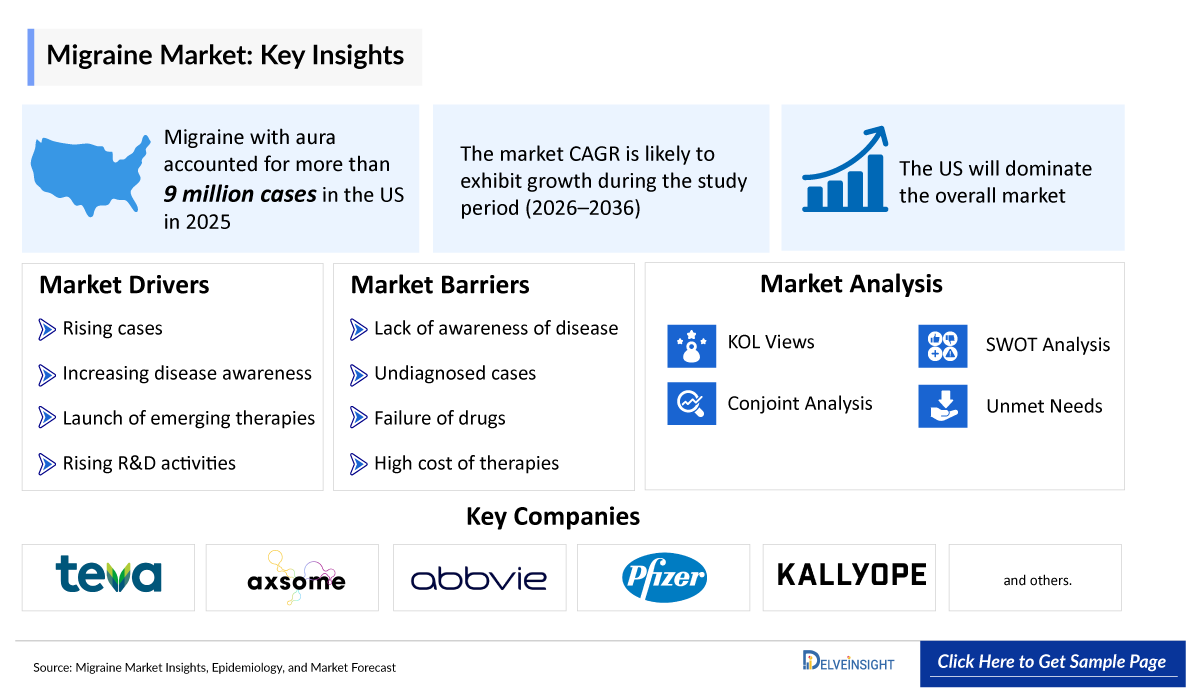
DelveInsight's ‘Migraine – Market Insights, Epidemiology and Market Forecast – 2036’ report delivers an in-depth understanding of migraine, historical and forecasted epidemiology, as well as the migraine market trends in the United States, EU4 (Germany, Spain, Italy, and France), the United Kingdom, and Japan.
The Migraine market report delivers a comprehensive analysis of the current treatment landscape, including standards of care, clinical practices, and evolving therapeutic algorithms. It evaluates migraine patient burden trends, revenue & market share dynamics, peak patient share & therapy uptake analysis. It provides an in-depth market size assessment and growth rate projections (historical & forecast 2022–2036) across global regions. The report highlights key unmet medical needs in migraine and maps the competitive and clinical landscape to uncover high value opportunities, providing a clear outlook on future market growth potential.
|
Study Period |
2022–2036 |
|
Historical Year |
2022–2025 |
|
Forecast Period |
2026–2036 |
|
Base Year |
2026 |
|
Geographies Covered |
|
|
Migraine Market CAGR (Forecast period) |
~6% (2026–2036) |
|
Migraine Epidemiology Segmentation Analysis |
Patient Burden Assessment
|
|
Migraine Companies |
|
|
Migraine Therapies |
|
|
Migraine Market |
Segmented by
|
|
Analysis |
|
Key Factors Driving the Migraine Market
Increasing migraine burden and unmet treatment needs
The high prevalence of migraine and its substantial impact on daily functioning, productivity, and quality of life continue to drive demand for effective treatment options. The need remains particularly high among patients with frequent or severe attacks, inadequate response to existing therapies, or treatment-limiting adverse effects.
Advances in migraine-specific therapies
Advances in the understanding of migraine pathophysiology have supported the development of targeted therapies, particularly calcitonin gene-related peptide (CGRP)-directed treatments. The growing availability of CGRP monoclonal antibodies, gepants, and other migraine-specific therapies is expanding treatment options across both acute and preventive management.
Growing preference for convenient and well-tolerated treatment options
Patients and physicians are increasingly seeking therapies that provide effective symptom control with convenient dosing and improved tolerability. The availability of oral, nasal, injectable, and longer-acting preventive options is broadening treatment choices and may improve treatment adherence, particularly among patients who experience frequent migraine attacks.
Migraine Understanding Algorithm
Migraine Overview and Diagnosis
Migraine is a common, disabling neurological disorder characterized by recurrent attacks of moderate-to-severe headache, often accompanied by symptoms such as nausea, vomiting, and sensitivity to light and sound. Migraine can occur with or without aura, with migraine without aura being the more common presentation. Attacks typically last several hours to a few days and can substantially affect daily activities, work productivity, and quality of life. Diagnosis is primarily clinical and is based on the patient’s medical history, symptom pattern, headache characteristics, and neurological examination. There is no single laboratory test or imaging procedure that confirms migraine. Clinicians generally assess the frequency, duration, location, and intensity of headaches, associated symptoms, presence of aura, and potential triggers while ruling out other causes of headache. Neuroimaging or additional investigations may be considered when patients present with atypical symptoms, abnormal neurological findings, or warning signs suggestive of a secondary headache disorder.
Further details are provided in the report.
Migraine Treatment
Migraine treatment is generally divided into acute (abortive) therapy to relieve ongoing attacks and preventive therapy to reduce attack frequency, severity, and associated disability. Acute treatment commonly includes NSAIDs, acetaminophen, triptans, and newer CGRP-targeted agents, while preventive treatment includes CGRP monoclonal antibodies, oral gepants, onabotulinumtoxinA for chronic migraine, and traditional agents such as beta-blockers, antiepileptics, and antidepressants. Treatment selection depends on attack frequency, severity, comorbidities, treatment response, and patient preference.
Further details are provided in the report.
Migraine Unmet Needs
The section “unmet needs of migraine” outlines critical gaps between the current state of patient care and diagnosis and the ideal & effective management of the disease. It highlights the obstacles experienced by patients, clinicians, and researchers and identifies potential solutions for future progress.
- Lack of Validated Diagnostic Biomarkers
- Limited Toxin-Based Treatment Options for Episodic Migraine
- Need for Specialized Treatment Options for Menstrual Migraine
- Limited Efficacy and Inadequate Response to CGRP-Targeted Therapies
- Persistent Gaps in Acute Migraine Treatment and Limited Therapeutic Differentiation, and others…..
Note: Comprehensive unmet needs insights in migraine and their strategic implications are provided in the full report.
Migraine Epidemiology
Key Findings from Migraine Epidemiological Analysis and Forecast
The migraine epidemiology chapter in the report provides historical as well as forecasted epidemiology segmented by Migraine Prevalent Cases, Migraine Prevalent Cases by Gender, Acute and Chronic Migraine Prevalent Cases, Menstrual Migraine Prevalent Cases, Migraine Prevalent Cases by Severity (MIDAS Grading), Chronic/Episodic Migraine Receiving Treatments, Chronic/Episodic Migraine Receiving Preventive Treatments covering the United States, EU4 (Germany, France, Italy, and Spain) and the United Kingdom, and Japan from 2022 to 2036.
Migraine represents a substantial epidemiological burden across the 7MM, with adults accounting for the majority of prevalent cases, with 85 million cases in 2025, compared with the pediatric population with 7 million cases.
- Migraine prevalence in Japan is relatively low compared with the overall 7MM burden. In 2025, Japan accounted for approximately 10.1% of the total migraine prevalent cases across the 7MM.
- Migraine prevalence is consistently higher among women than men. This female predominance is largely associated with hormonal and biological factors, particularly fluctuations in estrogen during the menstrual cycle, which can increase susceptibility to migraine attacks. Menstrual-related migraine consequently represents a substantial component of the migraine burden among women, with approximately 30–70% of female migraineurs reporting attacks during the perimenstrual period.
- In the United States, the acute migraine severity distribution in 2025 was estimated at 16 million, 7 million, 8 million, and 14 million for MIDAS Grade I, Grade II, Grade III, and Grade IV, respectively.
- Despite the high prevalence of migraine in the United States, treatment uptake remains relatively low, with only around half of patients seeking or receiving treatment. Among EU4 and the UK countries, Italy reported the highest acute treatment pool, whereas France had the lowest; among EU4 and the UK countries, Germany reported the highest chronic treatment pool, whereas Spain had the lowest.
Migraine Drug Analysis & Competitive Landscape
The migraine drug chapter provides a detailed, market-focused review of approved therapies and the emerging pipeline across Phase I–III clinical trials. It covers the mechanism of action, clinical trial data, patents, collaborations, and strategic partnerships, key upcoming catalysts for each therapy, and their advantages, limitations, and recent developments. This section offers critical insights into the migraine treatment landscape, supporting market assessment, competitive analysis, and growth forecasting for the migraine therapeutics market.
Approved Therapies for Migraine
Dihydroergotamine mesylate (TRUDHESA): Impel Pharmaceuticals
Dihydroergotamine mesylate (TRUDHESA) nasal spray (0.725 mg per spray) is approved by the US FDA for the acute treatment of migraine with or without aura in adults in the US. Using Impel’s proprietary Precision Olfactory Delivery (POD) Technology, TRUDHESA gently delivers Dihydroergotamine mesylate (DHE), a proven, well-established therapeutic19 quickly to the bloodstream through the vascular-rich upper nasal space.
- In September 2021, Impel NeuroPharma announced that the US FDA approved TRUDHESA (DHE) nasal spray (0.725 mg per spray) for acute migraine with or without aura in adults. TRUDHESA was previously known as INP104.
Dihydroergotamine mesylate (BREKIYA): Amneal Pharmaceuticals
BREKIYA provides a novel, patient-friendly approach for the rapid and effective treatment of acute migraine and cluster headaches, improving access to care outside hospital settings. It offers patients a convenient, self-administered solution for sustained pain relief. Delivering dihydroergotamine, a medication traditionally used in hospitals, it allows patients to administer a single subcutaneous dose into the mid-thigh.
- In October 2025, Amneal Pharmaceuticals announced the US commercial launch of dihydroergotamine mesylate (BREKIYA) injection, the first and only ready-to-use DHE autoinjector for the acute treatment of migraine and cluster headaches in adults.
- In May 2025, the US FDA approved dihydroergotamine mesylate (BREKIYA) injection for the acute treatment of migraine with or without aura and cluster headaches in adults.
|
Competitive Landscape of Marketed Therapies Related to Migraine | |||||
|
Product |
Company |
Indication |
Molecule Type |
MoA |
Marketed Region |
|
Dihydroergotamine mesylate (TRUDHESA) |
Impel NeuroPharma |
Acute treatment of migraine with or without aura in adults |
Small molecule |
Non-selective agonist at 5-HT1B/1D/1F receptors |
The US: 2021 |
|
Dihydroergotamine (ATZUMI) |
Satsuma Pharmaceuticals |
Acute treatment of migraine with or without aura in adults |
Small molecule |
Agonist at 5-HT1B/1D/1F receptors |
The US: 2025 |
|
Dihydroergotamine mesylate (BREKIYA) |
Amneal Pharmaceuticals |
Acute treatment of migraine with or without aura, and acute treatment of cluster headache, in adults |
Small molecule |
Agonist at 5-HT1D receptors |
The US: 2025 |
|
Meloxicam + Rizatriptan (SYMBRAVO) |
Axsome Therapeutics |
Acute treatment of migraine with or without aura in adults |
Small molecule |
COX-2 inhibitor and 5-HT1B/1D receptor agonist |
The US: 2025 |
Emerging Therapies for Migraine
Elismetrep (K-304): Kallyope
Elismetrep (K-304) is an investigational, novel, oral, Transient Receptor Potential Melastatin 8 (TRPM8) migraine-associated channel blocker (MACB) that is highly selective for TRPM8 migraine-associated channels vs. other TRP channels. Specifically designed to block TRPM8 activity, elismetrep has been shown to reduce migraine pain and associated symptoms. It is currently in Phase III.
- In June 2026, Kallyope presented results from several clinical and preclinical studies that support the initiation of Phase III studies of elismetrep. The data were presented at the American Headache Society 68th Annual Scientific Meeting.
- In April 2026, the company presented results from a Phase IIb dose-ranging and proof of concept study of elismetrep. The data were reported during an oral presentation titled, “TRPM8 Antagonism with Elismetrep: A Novel Approach for Treating Migraine,” at the 2026 American Academy of Neurology (AAN) Annual Meeting.
Dysport (abobotulinumtoxinA): Ipsen
Dysport (abobotulinumtoxinA) is an injectable form of a botulinum neurotoxin type A (BoNT-A) product, which is a substance derived from Clostridium bacteria producing BoNT-A that inhibits the effective transmission of nerve impulses and thereby reduces muscular contractions. It is supplied as a lyophilized powder.
|
Emerging Drugs Competitive Landscape | |||||
|
Product |
Company |
Phase |
Indication |
Molecule Type |
MoA |
|
Elismetrep (K-304) |
Kallyope |
III |
Acute Migraine with or without aura |
Oral |
TRPM8 migraine-associated channel blocker |
|
Dysport (abobotulinumtoxinA) |
Ipsen |
III |
Episodic and Chronic Migraine with or without aura |
Intramuscular injection |
Acetylcholine inhibitors |
|
Xeomin (incobotulinumtoxinA) |
Merz Therapeutics |
III |
Episodic and Chronic with or without aura |
Intramuscular injection |
Acetylcholine inhibitors |
|
EVO756 |
Evommune |
II |
Chronic Migraine with or without aura |
Oral |
MRGPRX2 antagonist |
Migraine Key Players, Market Leaders and Emerging Companies
- Impel NeuroPharma
- Satsuma Pharmaceuticals
- Amneal Pharmaceuticals
- Axsome Therapeutics
- Dr. Reddy's Laboratories
- Tonix Pharmaceuticals
- Avanir Pharmaceuticals
- Currax Pharmaceuticals, and others
Migraine Drug Updates
- In June 2026, Kallyope presented results from several clinical and preclinical studies that support the initiation of Phase III studies of elismetrep. The data were presented at the American Headache Society 68th Annual Scientific Meeting.
- In April 2026, the company presented results from a Phase IIb dose-ranging and proof of concept study of elismetrep. The data were reported during an oral presentation titled “TRPM8 Antagonism with Elismetrep: A Novel Approach for Treating Migraine,” at the 2026 American Academy of Neurology (AAN) Annual Meeting.
- In June 2026, Lundbeck announced the presentation of new eptinezumab-jjmr (VYEPTI) data at the American Headache Society’s (AHS) 68th Annual Scientific Meeting, in Orlando, Florida. The presentations shared findings from the INFUSE, DELIVER, SUNSET, and RESOLUTION trials, featuring real-world data and phase III clinical trial post-hoc analyses of VYEPTI and patient-reported outcomes on headache hours, brain fog and other cognitive symptoms, and dose escalation.
- In July 2026, Evommune announced the first patient was dosed in its Phase IIb clinical trial evaluating a potent, highly selective oral small molecule antagonist of MRGPRX2, EVO756, for the prophylactic treatment of migraine.
- In June 2026, Satsuma Pharmaceuticals announced that two abstracts highlighting findings from its clinical development program have been selected for presentation at the AHS 68th Annual Scientific Meeting.
- In June 2026, Axsome Therapeutics presented four posters at the AHS 68th Annual Scientific Meeting highlighting new SYMBRAVO data, including post hoc analyses from the Phase III MOMENTUM, MOVEMENT, and INTERCEPT trials, as well as a network meta-analysis comparing SYMBRAVO with gepants for the acute treatment of migraine.
Migraine Market Outlook
Historically, acute migraine management relied heavily on non-specific analgesics and NSAIDs, including ibuprofen, naproxen, diclofenac, and acetylsalicylic acid. Triptans, beginning with sumatriptan (IMITREX) in 1992, subsequently became the leading migraine-specific acute treatment class, with multiple agents and non-oral formulations developed to improve onset, duration, and tolerability. Ergot derivatives, particularly dihydroergotamine, also played an important role before the widespread adoption of triptans. More recently, CGRP-targeted gepants, including ubrogepant, rimegepant, and zavegepant, have expanded acute treatment options, while atogepant has further broadened the use of CGRP-targeted therapies into acute and preventive management.
For migraine prevention, treatment has evolved from traditional agents toward more targeted therapies. OnabotulinumtoxinA (BOTOX) remains an established option for chronic migraine, while CGRP monoclonal antibodies, including erenumab, fremanezumab, galcanezumab, and eptinezumab, have expanded preventive treatment for episodic and chronic migraine. Overall, the migraine treatment landscape is shifting toward migraine-specific, CGRP-targeted, and more convenient therapies, supported by ongoing formulation and indication expansion.
- The therapeutic market size of migraine in the 7MM was approximately USD 8,300 million in 2025.
- The market size in the 7MM will increase at a CAGR of 6% due to increasing awareness of the disease, better diagnosis, and the launch of emerging therapies.
- The United States accounted for the highest market size of migraine, approximately 87% (~USD 7,100 million) of the total market size in 7MM in 2025, in comparison to the other major markets, i.e., EU4 countries (Germany, France, Italy, and Spain), the United Kingdom, and Japan.
- The current emerging migraine landscape is largely dominated by preventive therapies, including next-generation botulinum toxin approaches such as Dysport and incobotulinumtoxinA (Xeomin), alongside novel candidates such as EVO756 and bocunebart (AG09222). In acute treatment, elismetrep (K-304) is among the key late-stage candidates, highlighting the limited late-stage innovation in the acute market.
Further details will be provided in the report….
Drug Class/Insights into Leading Emerging and Marketed Therapies in Migraine (2022–2036)
The migraine pipeline includes therapies targeting multiple mechanisms involved in migraine pathophysiology, with the broader goal of improving acute symptom relief, reducing attack frequency, and addressing patients who have an inadequate response or poor tolerability to existing treatments. Emerging approaches include TRPM8 channel blockers, MRGPRX2 antagonists, anti-PACAP monoclonal antibodies, acetylcholine-targeting therapies, and next-generation serotonergic agents, expanding the therapeutic landscape beyond established CGRP-targeted treatments.
TRPM8 migraine-associated channel blockers: Target the transient receptor potential melastatin 8 (TRPM8) channel, which has been implicated in migraine pain signaling, with the potential to reduce migraine-associated nociception.
MRGPRX2 antagonists: Target mast-cell-mediated pathways associated with migraine, potentially reducing neurogenic inflammation and downstream pain signaling.
Anti-PACAP monoclonal antibodies: Block pituitary adenylate cyclase-activating polypeptide (PACAP) signaling, an emerging migraine pathway that may provide an alternative to CGRP-targeted therapies.
Migraine Drug Uptake
This section focuses on the uptake rate of potential drugs expected to be launched in the market during the forecast period (2026–2036). The analysis covers the migraine drug’s uptake, performance at peak, factors affecting performance during prime years of growth, patient uptake by therapy, and anticipated sales generated by each drug. The uptake of emerging migraine therapies is expected to vary based on clinical efficacy, durability of response, safety, tumor type, administration route, combination potential, physician familiarity, and reimbursement.
Elismetrep (K-304), abobotulinumtoxinA (Dysport), incobotulinumtoxinA (Xeomin), and EVO756 may see gradual uptake as efficacy and safety data mature. Dihydroergotamine mesylate may gain adoption among patients requiring non-oral acute treatment, while meloxicam + rizatriptan may benefit from its combination approach. Sumatriptan succinate and sumatriptan may retain use where rapid or non-oral administration is preferred.
Overall, adoption is expected to build gradually, with broader uptake driven by durable tumor responses, systemic immune activation, favorable safety, compatibility with checkpoint inhibitors, ease of administration, and supportive reimbursement.
Further detailed analysis of emerging therapies' drug uptake in the report…
Market Access and Reimbursement of Approved Therapies in Migraine
The report also provides detailed insights on country-wise accessibility and reimbursement scenarios, cost-effectiveness scenarios for approved therapies, programs that make access easier and out-of-pocket costs more affordable, and insights on patients insured under federal or state government prescription drug programs.
The United States
|
The US Reimbursement for Migraine | |
|
Drug |
Access Program |
|
NURTEC ODT (Rimegepant) |
NURTEC ODT co-pay card |
|
EMGALITY (galcanezumab) |
EMGALITY savings card |
|
ELYXYB (celecoxib) |
Patient access support & savings program |
|
TRUDHESA (dihydroergotamine mesylate) |
TRUDHESA direct savings program |
Reimbursement is a crucial factor that affects the drug’s access to the market. Often, the decision to reimburse comes down to the price of the drug relative to the benefit it produces in treated patients. To reduce the healthcare burden of these high-cost therapies, many payment models are being considered by payers and other industry insiders.
Migraine Therapies Price Scenario & Trends
Pricing and analogue assessment of migraine therapies highlights evolving price dynamics structures. This section summarizes the cost of approved treatments, the closest and most appropriate analogue selection for emerging therapies, and the understanding of how pricing influences market access, adherence, and long-term uptake.
Pricing of Migraine Approved Drugs
Impel Pharmaceuticals launched dihydroergotamine mesylate (TRUDHESA) in the US with a Wholesale Acquisition Cost (WAC) of USD 850 per pack of four doses. The annual treatment cost is estimated at approximately USD 9,193.
Industry Experts and Physician Views for Migraine
To keep up with migraine market trends, we take Key Opinion Leaders (KOLs) and Subject Matter Experts (SMEs) opinions working in the domain through primary research to fill the data gaps and validate our secondary research. Industry Experts were contacted for insights on migraine emerging therapies, evolving treatment landscape, patient adherence to conventional therapies, therapy switching trends, drug adoption and uptake, accessibility challenges, and epidemiology and real-world prescription patterns in migraine, including MD, PhD, Instructor, Postdoctoral Researcher, Professor, Researcher, and others.
DelveInsight’s analysts connected with 10+ KOLs to gather insights; however, interviews were conducted with 6+ KOLs in the 7MM. Centers such as the National Institutes of Health, Heidelberg University Hospital, The Institute of Cancer Research, University of Milan, etc., were contacted. Their opinions help understand and validate current and emerging migraine therapies, highlight unmet medical needs, provide epidemiological context, and support strategic decisions for market access, therapy adoption, and pipeline prioritization in migraine.
|
Region |
Key Opinion Leaders (KOLs) and Subject Matter Experts (SMEs) |
|
United States |
A substantial proportion of patients continue to experience inadequate or inconsistent relief with currently available acute treatments. Faster, more complete, and durable control of migraine attacks remains an important unmet need. |
|
Germany |
Migraine is one of the most common neurological disorders in childhood and adolescence, but it is still frequently overlooked or misdiagnosed in clinical practice. The clinical presentation often differs considerably from that in adults and is frequently less typical. In addition to classic headache attacks, numerous atypical manifestations occur particularly in childhood. |
Qualitative Analysis: SWOT and Conjoint Analysis
We perform qualitative and market Intelligence analysis using various approaches, such as SWOT analysis and conjoint analysis.
In the SWOT analysis of Migraine, strengths, weaknesses, opportunities, and threats in terms of disease diagnosis, patient awareness, patient burden, competitive landscape, cost-effectiveness, and geographical accessibility of therapies are provided.
Conjoint analysis analyzes emerging therapies based on relevant attributes such as safety, efficacy, frequency of administration, route of administration, and order of entry. Scoring is given based on these parameters to analyze the effectiveness of therapy.
The team of analysts analyzes promising emerging therapies based on relevant attributes such as safety, efficacy, frequency of administration, route of administration, and order of entry. For efficacy, the trial’s primary and secondary outcome measures are evaluated, whereas the therapies’ safety is evaluated, wherein acceptability, tolerability, and adverse events are mainly observed. In addition, the scoring is also based on the route of administration, order of entry, probability of success, and the addressable patient pool for each therapy. According to these parameters, the final weightage score and the ranking of the emerging therapies are decided.
Scope of the Report
- The report covers a segment of key events, an executive summary, and a descriptive overview of migraine, explaining its causes, signs and symptoms, pathogenesis, and currently available therapies.
- Comprehensive insight has been provided into the epidemiology segments and forecasts, the future growth potential of diagnosis rates, disease progression, and treatment guidelines.
- Additionally, an all-inclusive account of the current and emerging therapies and the elaborative profiles of late-stage and prominent therapies will impact the current treatment landscape.
- A detailed review of the migraine market, historical and forecasted market size, market share by therapies, detailed assumptions, and rationale behind our approach is included in the report, covering the 7MM drug outreach.
- The report provides an edge while developing business strategies by understanding trends through SWOT analysis and expert insights/KOL views, patient journey, and treatment preferences that help in shaping and driving the 7MM migraine market.
Report Insights
- Migraine Patient Population Forecast
- Migraine Therapeutics Market Size
- Migraine Pipeline Analysis
- Migraine Market Size and Trends
- Migraine Market Opportunity (Current and Forecasted)
Report Key Strengths
- Epidemiology based (Epi based) Bottom up Forecasting
- Artificial Intelligence (AI)-Enabled Market Research Report
- 11-Year Forecast
- Migraine Market Outlook (North America, Europe, Asia-Pacific)
- Patient Burden Trends (By Geography)
- Migraine Treatment Addressable Market (TAM)
- Migraine Competitive Landscape
- Migraine Major Companies Insights
- Migraine Price Trends and Analogue Assessment
- Migraine Therapies Drug Adoption/Uptake
- Migraine Therapies Peak Patient Share Analysis
Report Assessment
- Migraine Current Treatment Practices
- Migraine Unmet Needs
- Migraine Clinical Development Analysis
- Migraine Emerging Drugs Product Profiles
- Migraine Market Attractiveness
- Migraine Qualitative Analysis (SWOT and Conjoint analysis)
FAQs
- What is the historical and forecasted migraine patient pool in the United States, EU4 (Germany, France, Italy, and Spain), the United Kingdom, and Japan?
- What was the migraine total market size, the market size by therapy, and the market share (%) distribution in 2025, and what would it look like by 2036? What are the contributing factors for this growth?
- Which therapy is going to be the largest contributor by 2036?
- What are the pricing variations among different geographies for approved and off-label therapies?
- What are the recent novel therapies, targets, mechanisms of action, and technologies developed to overcome the limitations of existing therapies?
- Patient acceptability in terms of preferred treatment options as per real-world scenarios?
- What are the country-specific accessibility issues of expensive, recently approved therapies?
Reasons to Buy
- The report will help in developing business strategies by understanding the latest trends and changing treatment dynamics driving the migraine market.
- Insights on patient burden/disease cases, evolution in diagnosis, and factors contributing to the change in the epidemiology of the disease during the forecast years.
- Understand the existing market opportunities in varying geographies and the growth potential over the coming years.
- Distribution of historical and current patient share based on real-world prescription data along with reported sales of approved products in the US, EU4 (Germany, France, Italy, and Spain), the United Kingdom, and Japan.
- Identifying strong upcoming players in the market will help devise strategies to help get ahead of competitors.
- Highlights of access and reimbursement policies of approved therapies, barriers to accessibility of expensive off-label therapies, and patient assistance programs.
- To understand Key Opinion Leaders’ perspectives around the accessibility, acceptability, and compliance-related challenges of existing treatment to overcome barriers in the future.
- Detailed insights on the unmet needs of the existing market so that the upcoming players can strengthen their development and launch strategy.