Personalized Medicine Market Summary
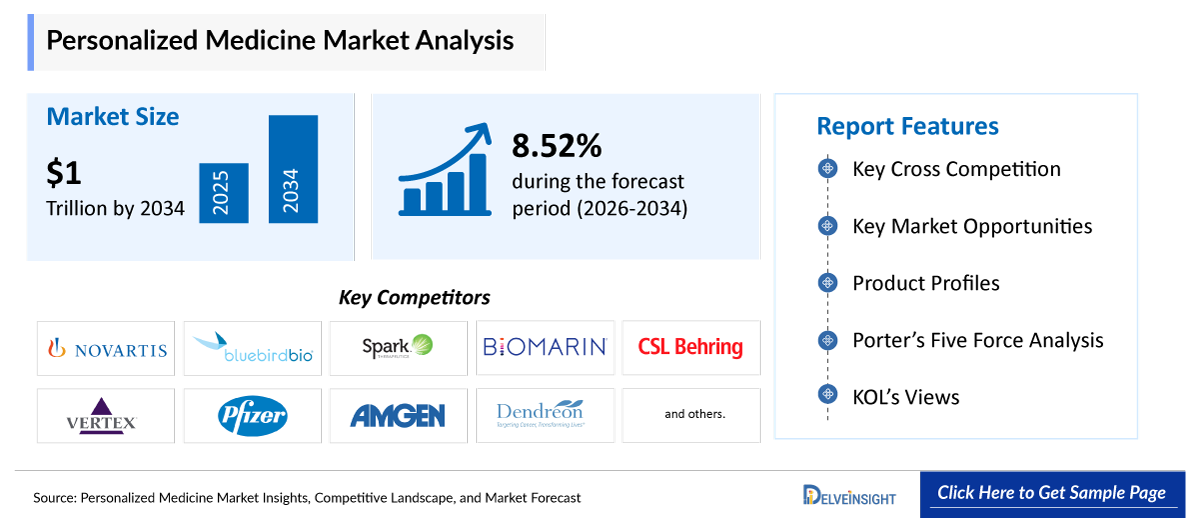
- The global personalized medicine market is expected to increase from USD 523.99 billion in 2025 to USD 1,088.66 billion by 2034, reflecting strong and sustained growth.
- The global personalized medicine market is growing at a CAGR of 8.52% during the forecast period from 2026 to 2034.
- The rising prevalence of chronic and genetic diseases, coupled with rapid advancements in genomic technologies such as Next-Generation Sequencing, is significantly accelerating the demand for personalized medicine. These technologies enable precise identification of disease-causing mutations, supporting the growing adoption of targeted therapies that improve treatment efficacy and reduce side effects. At the same time, the expansion of Pharmacogenomics allows clinicians to tailor drug selection and dosage based on individual genetic profiles. Collectively, these factors are transforming healthcare toward more precise, effective, and patient-specific treatment approaches, thereby driving substantial growth in the personalized medicine market.
- The leading companies operating in the personalized medicine market include Novartis AG, bluebird bio, Spark Therapeutics, BioMarin Pharmaceutical, CSL Behring, Vertex Pharmaceuticals, Pfizer Inc., Amgen Inc., Dendreon Pharmaceuticals, Kite Pharma, Janssen Biotech, Bristol-Myers Squibb, Ferring Pharmaceuticals, Krystal Biotech, Myriad Genetics, Illumina, Inc., Thermo Fisher Scientific, Roche Diagnostics, 23andMe, Helix, Tempus, Foundation Medicine, Guardant Health, Nutrigenomix, Vitl, GenoPalate, DayTwo, Panaceutics, AHARA, Ayble Health, Season Health, ModifyHealth, LifeNome, Viome, Zoe, Amway (Nutrilite), Herbalife Nutrition, BASF, Nestlé Health Science, Vita Bella Health, Practo, mfine, Lybrate, Teladoc Health, Amwell, Doctor On Demand, and others.
- North America is expected to dominate the personalized medicine market due to its advanced healthcare infrastructure, strong presence of leading biotechnology and pharmaceutical companies, and high adoption of innovative technologies such as Next-Generation Sequencing and Artificial Intelligence. Additionally, significant government funding, supportive regulatory frameworks, and increasing demand for targeted therapies and precision diagnostics further contribute to the region’s market leadership.
- In the product type segment of the personalized medicine market, the personalized nutrition & wellness category is estimated to account for the largest market share in 2025.
Request for unlocking the report of the @Personalized Medicine Market
Personalized Medicine Market Size and Forecasts
|
Report Metrics |
Details |
|
2025 Market Size |
USD 523.99 billion |
|
2034 Projected Market Size |
USD 1,088.66 billion |
|
Growth Rate (2026-2034) |
8.52% CAGR |
|
Largest Market |
North America |
|
Fastest Growing Market |
Asia-Pacific |
|
Market Structure |
Moderately Concentrated |
Factors Contributing to the Growth of the Personalized Medicine Market
Rising prevalence of chronic & genetic diseases leading to a surge in personalized medicine:
The increasing incidence of diseases such as cancer, cardiovascular disorders, and rare genetic conditions is a major driver. Personalized medicine enables targeted treatment based on individual genetic profiles, improving outcomes and reducing trial-and-error approaches.
Advancements in genomic technologies:
Rapid progress in technologies like next-generation sequencing and polymerase chain reaction has significantly reduced the cost and time required for genetic analysis. This has made personalized diagnostics and therapies more accessible and scalable.
Growing adoption of targeted therapies:
There is increasing demand for therapies that act on specific molecular targets, especially in oncology and rare diseases. Personalized medicine minimizes adverse effects and enhances treatment efficacy compared to conventional therapies.
Expansion of pharmacogenomics:
The rising importance of Pharmacogenomics allows healthcare providers to select drugs and dosages based on a patient’s genetic makeup, improving safety and effectiveness.
Personalized Medicine Market Report Segmentation
This personalized medicine market report offers a comprehensive overview of the global personalized medicine market, highlighting key trends, growth drivers, challenges, and opportunities. It covers detailed market segmentation by Product Type (Personalized Therapeutics, Personalized Diagnostics, Personalized Nutrition & Wellness, and Personalized Digital Health & Telemedicine), Application (Oncology, Cardiovascular Diseases, Neurology, Infectious Diseases, and Others), End-Users (Hospitals & Clinics, Diagnostic Laboratories, Pharmaceutical & Biotechnology Companies, Research & Academic Institutes, and Others), and geography. The report provides valuable insights into the competitive landscape, regulatory environment, and market dynamics across major markets, including North America, Europe, and Asia-Pacific. Featuring in-depth profiles of leading industry players and recent product innovations, this report equips businesses with essential data to identify market potential, develop strategic plans, and capitalize on emerging opportunities in the rapidly growing personalized medicine market.
Personalized medicine is a medical approach that tailors prevention, diagnosis, and treatment strategies to an individual’s unique genetic makeup, lifestyle, and environmental factors. By leveraging insights from fields such as Genomics and Pharmacogenomics, it enables more precise, effective, and targeted healthcare interventions, improving patient outcomes while minimizing side effects.
The rising prevalence of chronic and genetic diseases, including cancer, cardiovascular disorders, and rare inherited conditions, is significantly increasing the need for more precise and effective treatment approaches. At the same time, rapid advancements in genomic technologies such as Next-Generation Sequencing have made it faster and more cost-effective to analyze an individual’s genetic profile. This enables accurate identification of disease-causing mutations and biomarkers, which in turn supports the growing adoption of targeted therapies designed to act on specific molecular pathways, improving treatment outcomes while minimizing adverse effects.
Furthermore, the expansion of Pharmacogenomics is playing a crucial role in optimizing drug selection and dosage based on a patient’s genetic makeup, reducing trial-and-error prescribing and enhancing patient safety. These advancements are also fostering the development of companion diagnostics and precision treatment strategies across multiple therapeutic areas. Collectively, these factors are transforming healthcare from a generalized approach to a more precise, predictive, and patient-centric model, thereby driving substantial growth and innovation in the personalized medicine market.
Get More Insights into the Report @Personalized Medicine Market
What are the latest personalized medicine market dynamics and trends?
The rising prevalence of chronic and genetic diseases, including cancer, cardiovascular disorders, and rare inherited conditions, is significantly increasing the need for more precise and effective treatment approaches.
According to the data provided by the International Agency for Research on Cancer (2025), in 2025, the global estimated new cases of overall cancer were 21.3 million, and the projections further estimated that these cases would rise to 32.6 million by 2045.
As per the same source, in 2025, the global estimated new cases of breast cancer were 2.45 million.
Additionally, according to the World Heart Report (2023), more than half a billion people around the world continue to be affected by cardiovascular diseases. Thus, the rising burden of cancers such as lung cancer and breast cancer is a major driver of the personalized medicine market, as these conditions increasingly rely on biomarker-based diagnostics and targeted therapies tailored to specific genetic mutations. At the same time, cardiovascular disorders like coronary artery disease and hypertension are boosting demand through the growing use of precision approaches such as pharmacogenomic-guided drug selection and risk prediction models. Together, these disease areas are accelerating the shift toward more precise, patient-specific treatment strategies, thereby significantly driving the growth of the personalized medicine market.
Additionally, advancements in genomic technologies, growing adoption of targeted therapies, and the expansion of Pharmacogenomics are collectively accelerating the personalized medicine market by enabling more precise and effective treatment approaches. Technologies such as Next-Generation Sequencing have significantly improved the ability to identify genetic mutations and disease biomarkers, which directly support the development of targeted therapies tailored to individual patients. This is evident from recent breakthroughs such as the approval of Casgevy in December 2023, the first CRISPR-based gene-editing therapy for sickle cell disease, marking a major milestone in precision therapeutics.
Additionally, the increasing number of gene and cell therapy approvals in recent years is further reinforcing this trend. For instance, in February 2024, the U.S. FDA approved multiple advanced therapies such as Amtagvi and Beqvez, marking significant progress in personalized, gene-based treatments. These recent developments highlight how genomic insights are increasingly being translated into highly targeted, and in many cases potentially curative, one-time treatments, thereby strengthening the growth trajectory of the personalized medicine market.
Furthermore, personalized diagnostics is significantly boosting the personalized medicine market by enabling early, accurate detection of disease-specific biomarkers and identifying patients who are most likely to benefit from targeted therapies. Advanced tools based on Next-Generation Sequencing and liquid biopsy are improving clinical decision-making and reducing ineffective treatments. For instance, in August 2023, Illumina, Inc. received FDA approval for its TruSight Oncology (TSO) Comprehensive test, a companion diagnostic that helps match cancer patients with targeted therapies based on genetic mutations. Similarly, in July 2024, Guardant Health expanded the clinical adoption of its Guardant360 CDx liquid biopsy test for multiple cancer indications. Such advancements are accelerating the integration of diagnostics with therapeutics, thereby driving the growth of the personalized medicine market.
Thus, the factors mentioned above are expected to boost the overall market of personalized medicine during the forecast period.
However, data privacy and ethical concerns, along with stringent regulatory approval processes, are collectively acting as significant limiting factors for the personalized medicine market. The use of sensitive genetic data raises issues related to data security, patient consent, and potential misuse, making both patients and providers cautious about adoption. At the same time, strict and evolving regulatory frameworks for advanced therapies and companion diagnostics increase the complexity, cost, and time required for product approvals. Together, these challenges slow down innovation, delay market entry of new therapies, and restrict the widespread adoption of personalized medicine solutions.
Personalized Medicine Market Segment Analysis
Personalized Medicine Market by Product Type (Personalized Therapeutics, Personalized Diagnostics, Personalized Nutrition & Wellness, and Personalized Digital Health & Telemedicine), Application (Oncology, Cardiovascular Diseases, Neurology, Infectious Diseases, and Others), End-Users (Hospitals & Clinics, Diagnostic Laboratories, Pharmaceutical & Biotechnology Companies, Research & Academic Institutes, and Others), and Geography (North America, Europe, Asia-Pacific, and Rest of the World)
By Product Type: Personalized Nutrition & Wellness in personalized medicine is expected to dominate the market with the largest revenue share.
In the product type segment of the personalized medicine market, the personalized nutrition & wellness category is contributing to 35% of total market revenue in 2025, by expanding personalized healthcare from a disease-centric model to a holistic, preventive, and consumer-driven approach. This segment utilizes advanced scientific disciplines such as Nutrigenomics and Microbiomics to design individualized diet plans, functional foods, and supplement regimens based on a person’s genetic profile, metabolic activity, and gut microbiome composition. With the rising global burden of lifestyle-related disorders such as obesity, diabetes, and cardiovascular diseases, consumers are increasingly adopting personalized nutrition solutions to manage health proactively and reduce disease risk. Additionally, the integration of digital health tools, wearable devices, and AI-driven platforms is enabling real-time monitoring and continuous personalization of dietary and wellness recommendations, further enhancing user engagement and outcomes.
Recent product launches and developments are reinforcing the growth of this segment. For instance, in March 2026, ZOE Limited announced the launch of ZOE 2.0, the latest step toward revolutionizing gut health and improving the health of millions. The new ZOE app is a personalised nutrition science powerhouse based on the world’s largest nutrition and microbiome science study. Furthermore, in April 2025, Viome introduced upgraded full-body intelligence tests using RNA sequencing technology to provide highly personalized food and supplement recommendations.
As a result, personalized nutrition & wellness is not only increasing market penetration but also creating recurring revenue models and long-term consumer engagement, thereby significantly boosting the overall growth of the personalized medicine market.
By Application: The Oncology category dominates the market.
Within the application segment of the personalized medicine market, the oncology category is anticipated to dominate, accounting for around 38% of the market share in 2025, due to the high global burden of cancer, strong adoption of biomarker-driven therapies, and continuous advancements in precision oncology. Cancer treatment has shifted significantly from conventional chemotherapy to targeted therapies, immunotherapies, and gene-based treatments that are tailored according to a patient’s genetic profile, tumor mutations, and molecular characteristics. This shift is further reinforced by the increasing availability of companion diagnostics, which enable clinicians to identify specific biomarkers such as HER2, EGFR, and NTRK, ensuring more accurate and effective treatment selection. According to recent data from Personalized Medicine at the FDA (2024), a substantial proportion of new drug approvals are now personalized medicines, with nearly 38% of all newly approved therapies in 2024 falling under this category, many of which are oncology-focused, highlighting the dominance of cancer-related applications in this market.
Recent approvals and launches strongly demonstrate this trend. For instance, in August 2024, Vorasidenib received FDA approval for treating IDH1/IDH2-mutated gliomas, marking a significant milestone in targeted brain cancer therapy. Similarly, in November 2024, Zanidatamab was granted accelerated approval for HER2-positive biliary tract cancer, showcasing the growing role of biomarker-specific monoclonal antibodies. Another key example is Revumenib, approved in November 2024, targeting specific genetic alterations in acute leukemia. Furthermore, in December 2024, Zenocutuzumab became the first therapy approved for cancers harboring NRG1 gene fusions, representing a breakthrough in tumor-agnostic precision oncology.
In addition, ongoing innovations such as antibody-drug conjugates and bispecific antibodies are expanding the oncology pipeline, as seen with targeted therapies like Datroway for lung cancer approved in 2025, and emerging radiotheranostic approaches like Terbium-161–based therapies that combine diagnostics with treatment.
These advancements, along with increasing investments in oncology research, rising cancer prevalence, and strong regulatory support for precision-based therapies, are collectively driving the dominance of oncology within the personalized medicine market, making it the leading and fastest-evolving application segment.
By End-Users: The Hospitals & Clinics category dominates the market.
Within the end-users segment of the personalized medicine market, the hospitals & clinics category is anticipated to dominate due to their central role in disease diagnosis, treatment planning, and delivery of advanced precision therapies. These settings are the primary points of care where patients undergo genetic testing, biomarker analysis, and receive targeted treatments such as immunotherapies and gene-based therapies, making them the most important adopters of personalized medicine solutions. Hospitals and clinics also have better access to advanced diagnostic infrastructure, multidisciplinary oncology teams, and integrated electronic health records, which support data-driven treatment decisions. In addition, the increasing prevalence of cancer and chronic diseases is driving higher patient inflow to hospitals for specialized care, further strengthening their dominance. Growing investments in hospital-based molecular diagnostic laboratories and partnerships with pharmaceutical and diagnostic companies for companion diagnostics are also accelerating adoption, ensuring that hospitals and clinics remain the leading end-user segment in the personalized medicine market.
Personalized Medicine Market Regional Analysis
North America Personalized Medicine Market Trends
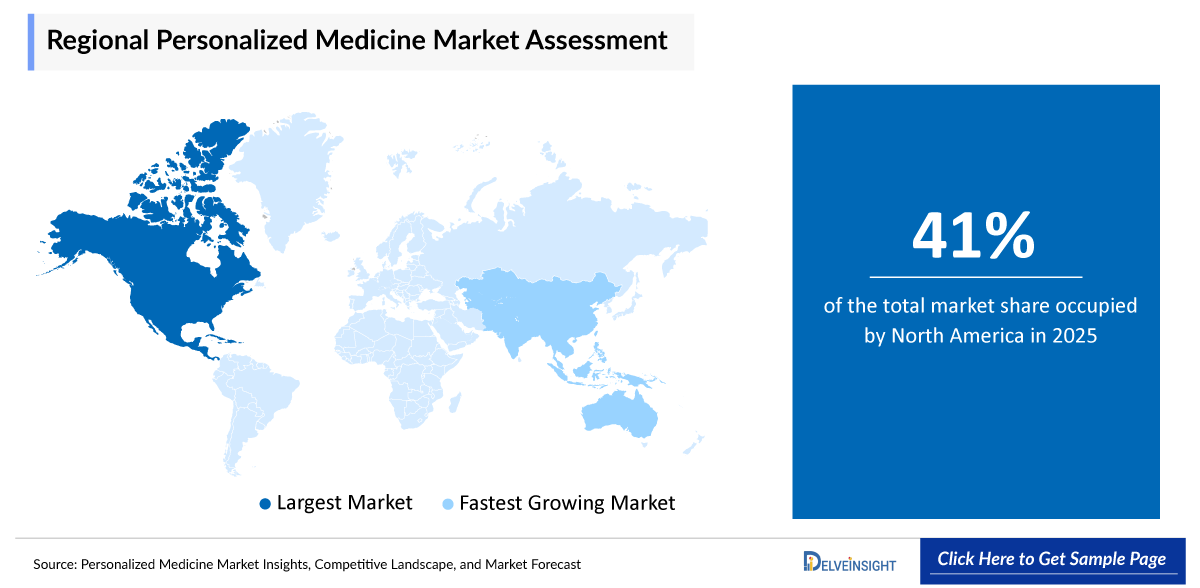
North America is expected to account for the highest proportion of 41% of the personalized medicine market in 2025, out of all regions. North America is expected to dominate the personalized medicine market due to its advanced healthcare infrastructure, strong presence of leading biotechnology and pharmaceutical companies, and high adoption of innovative technologies such as Next-Generation Sequencing and Artificial Intelligence. Additionally, significant government funding, supportive regulatory frameworks, and increasing demand for targeted therapies and precision diagnostics further contribute to the region’s market leadership.
According to the data provided by the International Agency for Research on Cancer (2026), in 2025, the estimated new cases were 2.85 million, and the projections further estimated that these new cases would rise to 3.83 million by 2045.
Additionally, the advancements in genomic technologies, growing adoption of targeted therapies, and rapid expansion of pharmacogenomics. Continuous improvements in next-generation sequencing (NGS), CRISPR-based gene editing, and liquid biopsy techniques have significantly enhanced the ability to detect genetic mutations and disease biomarkers at an early stage, enabling highly precise and individualized treatment approaches.
At the same time, the increasing use of targeted therapies, especially in oncology, has transformed treatment pathways by focusing on specific molecular drivers of disease rather than a one-size-fits-all approach, improving efficacy and reducing adverse effects. Pharmacogenomics is also playing a crucial role by helping clinicians predict patient responses to drugs based on genetic profiles, thereby optimizing dosing and improving therapeutic outcomes. These factors collectively support faster clinical decision-making and broader adoption of precision medicine across healthcare systems in the U.S. and Canada. Recent regulatory and development activities further highlight this momentum. For instance, in November 2024, revumenib was approved for genetically defined acute leukemias, marking a key pharmacogenomic advancement; and in December 2024, zenocutuzumab was approved for NRG1 fusion-positive solid tumors, representing a significant step toward tumor-agnostic precision oncology.
Additionally, ongoing advancements such as expanded CAR-T cell therapy indications and increased integration of genomic screening into routine clinical practice across major U.S. healthcare networks are further accelerating the adoption of personalized medicine in North America.
Collectively, these factors are expected to significantly drive the growth of the personalized medicine market in the U.S. throughout the forecast period of 2026 to 2034.
Europe Personalized Medicine Market Trends
The personalized medicine market in Europe is witnessing strong and sustained growth, primarily driven by rapid advancements in genomic technologies, increasing adoption of targeted therapies, expansion of pharmacogenomics, and strong regulatory support from the European Medicines Agency (EMA). The widespread use of next-generation sequencing (NGS), liquid biopsy, and advanced molecular diagnostics is enabling early detection of genetic mutations and facilitating highly precise treatment selection, particularly in oncology and rare diseases. At the same time, the growing adoption of targeted therapies such as monoclonal antibodies, gene therapies, and CAR-T cell therapies is reshaping treatment pathways by focusing on disease-specific biomarkers, thereby improving clinical outcomes and reducing adverse effects. Pharmacogenomics is also gaining significant traction across European healthcare systems, allowing physicians to tailor drug selection and dosage based on individual genetic profiles, which is improving treatment safety and effectiveness. Regulatory agencies like EMA (June 2025) are actively supporting innovation, with a record 114 medicines recommended for approval in 2024, including 46 with new active substances, and a strong focus on oncology, rare diseases, and advanced therapies. In 2025, EMA continued this momentum by recommending 104 medicines, including breakthrough therapies such as the first treatment to delay type 1 diabetes progression and multiple rare-disease and cancer therapies.
Recent development activities further highlight Europe’s strong pipeline. For instance, in May 2024, the EMA recommended conditional approval of Pfizer’s gene therapy (Durveqtix/Beqvez) for hemophilia B, marking a major step in personalized gene-based treatment in Europe (with formal EU approval following regulatory review). Additionally, in February 2025, EMA’s committee recommended Lynozyfic (linvoseltamab) for relapsed/refractory multiple myeloma, expanding precision immunotherapy options. Most recently, in April 2026, Roche initiated a new late-stage study for its gene therapy Elevidys following EMA feedback, reflecting ongoing regulatory engagement to enable future approval in Duchenne muscular dystrophy.
Collectively, these developments, along with increasing R&D investments, strong biosimilar uptake, expansion of real-world evidence frameworks, and growing integration of AI and digital health in drug development, are reinforcing Europe’s position as a key growth region for personalized medicine. The combination of innovation-friendly regulation and rapid adoption of precision therapies is expected to continue accelerating market expansion across oncology, rare diseases, and chronic disease management in the region.
Asia-Pacific Personalized Medicine Market Trends
The Asia Pacific (APAC) region is emerging as a major growth driver for the personalized medicine market due to rapid advancements in genomic technologies, strong government support for precision healthcare, rising burden of chronic diseases, and increasing adoption of targeted therapies and pharmacogenomics-based treatment approaches. Countries such as China, Japan, South Korea, and India are heavily investing in next-generation sequencing (NGS), AI-driven diagnostics, and large-scale genomic research programs, which are significantly improving disease detection and enabling highly individualized treatment strategies. The region is also witnessing a strong expansion of biotechnology ecosystems and clinical trial activities, positioning APAC as a global hub for innovative drug development and precision therapies, with its share of the global innovative biopharma pipeline rising sharply in recent years.
Recent development activities further highlight this momentum. In February 2026, Japan continued strengthening its precision medicine ecosystem, with regulatory approvals for advanced medical technologies such as the Clarity II laser platform approved in China and Japan, reflecting faster adoption of advanced medical and diagnostic innovations in the region. Additionally, Japan’s growing focus on regenerative medicine and iPSC-based therapies, with new approvals and industry-academia collaborations reported in 2026, further demonstrates APAC’s leadership in next-generation personalized treatments.
Overall, the combination of expanding healthcare infrastructure, strong regulatory modernization, rising investment in biotech R&D, and increasing patient demand for precise, effective therapies is collectively making APAC one of the fastest-growing and most strategically important regions for the global personalized medicine market.
Who are the major players in the personalized medicine market?
The following are the leading companies in the personalized medicine market. These companies collectively hold the largest market share and dictate industry trends.
- Novartis AG
- bluebird bio
- Spark Therapeutics
- BioMarin Pharmaceutical
- CSL Behring
- Vertex Pharmaceuticals
- Pfizer Inc.
- Kite Pharma
- Janssen Biotech
- Bristol-Myers Squibb
- Ferring Pharmaceuticals
- Krystal Biotech
- Myriad Genetics
- Illumina, Inc.
- Thermo Fisher Scientific
- Roche Diagnostics
- 23andMe
- Tempus
- Foundation Medicine
- Guardant Health
- Season Health
- ModifyHealth
- LifeNome
- Zoe
- Amway (Nutrilite)
- Herbalife Nutrition
- Nestlé Health Science
- Vita Bella Health
- Practo
- Lybrate
- Teladoc Health
- Amwell
- Doctor On Demand
- Others
How is the competitive landscape shaping the personalized medicine market?
The competitive landscape of the personalized medicine market is becoming increasingly dynamic and innovation-driven, shaped by strong participation from pharmaceutical companies, biotechnology firms, diagnostic leaders, and technology companies collaborating to develop integrated precision healthcare solutions. Competition is primarily centered on the development of targeted therapies, companion diagnostics, and genomic-based treatment platforms, with companies racing to identify novel biomarkers and expand indications for existing precision drugs. Strategic partnerships, mergers, and acquisitions are becoming a key feature of the market as players aim to combine drug development capabilities with advanced diagnostic and data analytics expertise. For example, collaborations between pharmaceutical companies and genomic sequencing firms are accelerating the co-development of targeted oncology therapies linked with biomarker testing. Additionally, major players such as Roche, Novartis, Pfizer, and AstraZeneca are investing heavily in precision oncology pipelines, while diagnostic companies like Illumina are enabling large-scale genomic testing infrastructure that supports personalized treatment decisions. The entry of AI and digital health companies is further intensifying competition by improving patient stratification, predictive analytics, and drug discovery efficiency. At the same time, biotech startups are driving innovation in niche areas such as gene therapy, rare diseases, and pharmacogenomics, often attracting significant venture funding and acquisition interest from larger players. Overall, the competitive landscape is increasingly characterized by the convergence of pharmaceuticals, diagnostics, and digital technologies, with companies competing not only on drug efficacy but also on their ability to deliver fully integrated, data-driven personalized healthcare ecosystems.
Recent Developmental Activities in the Personalized Medicine Market
- In April 2026, Roche initiated a new late-stage study for its gene therapy Elevidys following EMA feedback, reflecting ongoing regulatory engagement to enable future approval in Duchenne muscular dystrophy.
- In March 2026, ZOE Limited announced the launch of ZOE 2.0, the latest step toward revolutionizing gut health and improving the health of millions. The new ZOE app is a personalised nutrition science powerhouse based on the world’s largest nutrition and microbiome science study.
- In February 2026, Japan continued strengthening its precision medicine ecosystem, with regulatory approvals for advanced medical technologies such as the Clarity II laser platform approved in China and Japan.
- In April 2025, Viome introduced upgraded full-body intelligence tests using RNA sequencing technology to provide highly personalized food and supplement recommendations.
- In February 2025, EMA’s committee recommended Lynozyfic (linvoseltamab) for relapsed/refractory multiple myeloma, expanding precision immunotherapy options.
- In November 2024, Zanidatamab was granted accelerated approval for HER2-positive biliary tract cancer, showcasing the growing role of biomarker-specific monoclonal antibodies.
- In August 2024, Vorasidenib received FDA approval for treating IDH1/IDH2-mutated gliomas, marking a significant milestone in targeted brain cancer therapy.
- In July 2024, Guardant Health expanded the clinical adoption of its Guardant360 CDx liquid biopsy test for multiple cancer indications. Such advancements are accelerating the integration of diagnostics with therapeutics, thereby driving the growth of the personalized medicine market.
- In May 2024, the EMA recommended conditional approval of Pfizer’s gene therapy (Durveqtix/Beqvez) for hemophilia B, marking a major step in personalized gene-based treatment in Europe (with formal EU approval following regulatory review).
|
Report Metrics |
Details |
|
Study Period |
2023 to 2034 |
|
Base Year |
2025 |
|
Forecast Period |
2026 to 2034 |
|
Personalized Medicine Market CAGR |
8.52% |
|
Key Companies in the Personalized Medicine Market |
Novartis AG, bluebird bio, Spark Therapeutics, BioMarin Pharmaceutical, CSL Behring, Vertex Pharmaceuticals, Pfizer Inc., Kite Pharma, Janssen Biotech, Bristol-Myers Squibb, Ferring Pharmaceuticals, Krystal Biotech, Myriad Genetics, Illumina, Inc., Thermo Fisher Scientific, Roche Diagnostics, 23andMe, Tempus, Foundation Medicine, Guardant Health, Season Health, ModifyHealth, LifeNome, Zoe, Amway (Nutrilite), Herbalife Nutrition, Nestlé Health Science, Vita Bella Health, Practo, Lybrate, Teladoc Health, Amwell, Doctor On Demand, and others. |
|
Personalized Medicine Market Segments |
by Product Type, by Application, by End-Users, and by Geography |
|
Personalized Medicine Regional Scope |
North America, Europe, Asia Pacific, Middle East, Africa, and South America |
|
Personalized Medicine Country Scope |
U.S., Canada, Mexico, Germany, United Kingdom, France, Italy, Spain, China, Japan, India, Australia, South Korea, and key Countries |
Personalized Medicine Market Segmentation
- Personalized Medicine by Product Type Exposure
- Personalized Therapeutics
- Personalized Diagnostics
- Personalized Nutrition & Wellness
- Personalized Digital Health & Telemedicine
- Personalized Medicine Application Exposure
- Oncology
- Cardiovascular Diseases
- Neurology
- Infectious Diseases
- Others
- Personalized Medicine End-Users Exposure
- Hospitals & Clinics
- Diagnostic Laboratories
- Pharmaceutical & Biotechnology Companies
- Research & Academic Institutes
- Others
- Personalized Medicine Geography Exposure
- North America Personalized Medicine Market
- United States Personalized Medicine Market
- Canada Personalized Medicine Market
- Mexico Personalized Medicine Market
- Europe Personalized Medicine Market
- United Kingdom Personalized Medicine Market
- Germany Personalized Medicine Market
- France Personalized Medicine Market
- Italy Personalized Medicine Market
- Spain Personalized Medicine Market
- Rest of Europe Personalized Medicine Market
- Asia-Pacific Personalized Medicine Market
- China Personalized Medicine Market
- Japan Personalized Medicine Market
- India Personalized Medicine Market
- Australia Personalized Medicine Market
- South Korea Personalized Medicine Market
- Rest of Asia-Pacific Personalized Medicine Market
- Rest of the World Personalized Medicine Market
- South America Personalized Medicine Market
- Middle East Personalized Medicine Market
- Africa Personalized Medicine Market
Personalized Medicine Market Recent Industry Trends and Milestones (2022-2026)
|
Category |
Key Developments |
|
Personalized Medicine Product Launch |
ZOE Limited launched ZOE 2.0, and Viome introduced upgraded full-body intelligence tests using RNA sequencing technology |
|
Personalized Medicine Product Approval |
Regeneron Pharmaceuticals, Inc. – Lynozyfic (EMA), Illumina, Inc. - TruSight Oncology (TSO) (FDA) |
|
Personalized Medicine Partnership |
NVIDIA, Illumina, IQVIA, and Mayo Clinic, which focus on leveraging AI and next-generation sequencing to enhance genomics-driven drug discovery and clinical trial efficiency, particularly in precision medicine workflows. Novartis expanded its collaboration with AI-enabled biotech companies such as Monte Rosa Therapeutics, with deals worth multi-billion-dollar deals aimed at developing molecular glue degraders for immune-mediated diseases, reflecting the growing role of AI-driven drug discovery in personalized therapies. |
|
Company Strategy |
Novartis is focusing heavily on next-generation cell and gene therapies, particularly “second-generation” cell therapies with improved safety and scalability, alongside AI-driven patient identification models that enhance precision oncology targeting and accelerate commercialization of high-value therapies. Merck KGaA is positioning itself as a critical enabler of personalized medicine by focusing on advanced bioprocessing technologies, automated cell and gene therapy manufacturing systems, and digitalized “Bioprocess 4.0” solutions that ensure scalable production of highly individualized therapies. |
|
Emerging Technology |
Next-Generation Sequencing (NGS), CRISPR and Gene Editing Technologies, Liquid Biopsy, Artificial Intelligence (AI) & Machine Learning, Pharmacogenomics, and others |
Impact Analysis
AI-Powered Innovations and Applications:
AI-powered innovations are rapidly transforming personalized medicine by enabling faster drug discovery, improved patient stratification, and highly accurate treatment personalization based on genomic, clinical, and real-world data. One of the most important applications is in precision diagnostics, where AI algorithms analyze genomic sequencing, imaging data, and biomarker profiles to identify disease risk and match patients with the most effective targeted therapies, particularly in oncology. AI is also accelerating drug discovery and development by screening millions of molecular combinations, predicting drug–target interactions, and optimizing clinical trial design, significantly reducing development time and cost. In clinical practice, machine learning models are being used for predictive analytics, helping physicians forecast disease progression, treatment response, and potential adverse drug reactions based on a patient’s genetic makeup and medical history. AI is further enhancing pharmacogenomics, where it interprets genetic variations to recommend personalized drug dosing and reduce trial-and-error prescribing. Additionally, AI-powered digital platforms and “digital twins” are enabling simulation of individual patient responses to therapies, allowing clinicians to test treatment strategies virtually before real-world application. Companies are increasingly integrating AI with next-generation sequencing and electronic health records to create comprehensive precision medicine ecosystems. For example, collaborations between pharmaceutical companies and AI firms are improving biomarker discovery and accelerating targeted oncology pipelines. Overall, AI is acting as a central enabler of personalized medicine by connecting genomics, diagnostics, and therapeutics into a unified, data-driven healthcare model that improves accuracy, efficiency, and patient outcomes.
U.S. Tariff Impact Analysis on Personalized Medicine Market:
The U.S. tariff impact on the personalized medicine market is significant because recent trade policies targeting imported pharmaceuticals, APIs (active pharmaceutical ingredients), and patented biologics are reshaping global supply chains, manufacturing strategies, and pricing structures. In 2026, the U.S. government introduced steep tariffs of up to 100% on imported branded and patented drugs, along with differentiated rates such as 15% for key trade partners and exemptions for generics, aiming to encourage domestic manufacturing and reduce dependency on foreign supply chains. These tariffs directly affect personalized medicine, which relies heavily on globally sourced inputs such as genomic reagents, biologics, cell and gene therapy components, and precision diagnostic tools.
As a result, pharmaceutical and biotech companies involved in personalized medicine are increasingly shifting toward onshoring and regionalized manufacturing models, investing in U.S.-based production facilities to avoid tariff exposure and ensure supply continuity. However, this transition increases short-term production costs due to the high complexity of biologics and precision therapies, potentially raising treatment costs for advanced therapies like CAR-T, gene therapies, and targeted oncology drugs. Additionally, tariffs on APIs and raw materials may disrupt supply chains for companion diagnostics and genomic testing platforms, which are critical components of personalized medicine workflows.
Overall, the tariff environment is accelerating supply chain restructuring, domestic manufacturing expansion, and pricing pressure across the personalized medicine ecosystem. While it supports long-term U.S. self-reliance in advanced therapeutics, in the short term, it introduces cost inflation risks, regulatory uncertainty, and potential delays in the global availability of precision medicines, especially in oncology and rare disease treatment segments.
How This Analysis Helps Clients
- Cost Management: By understanding the tariff landscape, clients can anticipate cost increases and adjust pricing strategies accordingly, ensuring profitability.
- Supply Chain Optimization: Clients can identify alternative sourcing options and diversify their supply chains to reduce dependency on high-tariff regions, enhancing resilience.
- Regulatory Navigation: Expert guidance on navigating the evolving regulatory environment helps clients maintain compliance and avoid potential legal challenges.
- Strategic Planning: Insights into tariff impacts enable clients to make informed decisions about manufacturing locations, partnerships, and market entry strategies.
Startup Funding & Investment Trends
|
Company Name |
Total Funding |
Stage of Development |
Main Product |
Core Technology |
|
Mirador Therapeutics (USA) |
$400 million |
Series A |
Mirador360 precision medicine platform |
AI-driven genomics + machine learning-based drug discovery for immune-related diseases |
Key takeaways from the Personalized Medicine market report study
- Market size analysis for the current personalized medicine market size (2025), and market forecast for 8 years (2026 to 2034)
- Top key product/technology developments, mergers, acquisitions, partnerships, and joint ventures happened over the last 3 years.
- Key companies dominating the personalized medicine market.
- Various opportunities available for the other competitors in the personalized medicine market space.
- What are the top-performing segments in 2025? How these segments will perform in 2034?
- Which are the top-performing regions and countries in the current personalized medicine market scenario?
- Which are the regions and countries where companies should have concentrated on opportunities for the personalized medicine market growth in the future?
Frequently Asked Questions for the Personalized Medicine Market
What is the growth rate of the personalized medicine market?
The personalized medicine market is estimated to grow at a CAGR of 8.52% during the forecast period from 2026 to 2034.
What is the market for personalized medicine?
The global personalized medicine market is expected to increase from USD 523.99 billion in 2025 to USD 1,088.66 billion by 2034.
Which region has the highest share in the personalized medicine market?
North America is expected to dominate the personalized medicine market due to its advanced healthcare infrastructure, strong presence of leading biotechnology and pharmaceutical companies, and high adoption of innovative technologies such as Next-Generation Sequencing and Artificial Intelligence. Additionally, significant government funding, supportive regulatory frameworks, and increasing demand for targeted therapies and precision diagnostics further contribute to the region’s market leadership.
What are the drivers for the personalized medicine market?
The rising prevalence of chronic and genetic diseases, coupled with rapid advancements in genomic technologies such as Next-Generation Sequencing, is significantly accelerating the demand for personalized medicine. These technologies enable precise identification of disease-causing mutations, supporting the growing adoption of targeted therapies that improve treatment efficacy and reduce side effects. At the same time, the expansion of Pharmacogenomics allows clinicians to tailor drug selection and dosage based on individual genetic profiles. Collectively, these factors are transforming healthcare toward more precise, effective, and patient-specific treatment approaches, thereby driving substantial growth in the personalized medicine market.
Who are the key players operating in the personalized medicine market?
Some of the key market players operating in the personalized medicine market include Novartis AG, bluebird bio, Spark Therapeutics, BioMarin Pharmaceutical, CSL Behring, Vertex Pharmaceuticals, Pfizer Inc., Kite Pharma, Janssen Biotech, Bristol-Myers Squibb, Ferring Pharmaceuticals, Krystal Biotech, Myriad Genetics, Illumina, Inc., Thermo Fisher Scientific, Roche Diagnostics, 23andMe, Tempus, Foundation Medicine, Guardant Health, Season Health, ModifyHealth, LifeNome, Zoe, Amway (Nutrilite), Herbalife Nutrition, Nestlé Health Science, Vita Bella Health, Practo, Lybrate, Teladoc Health, Amwell, Doctor On Demand, and others.