
Restrictive Cardiomyopathy Market
- The Restrictive Cardiomyopathy market size in the 7MM was around USD 26.09 million in 2023. This is estimated to increase by 2034 at a significant CAGR.
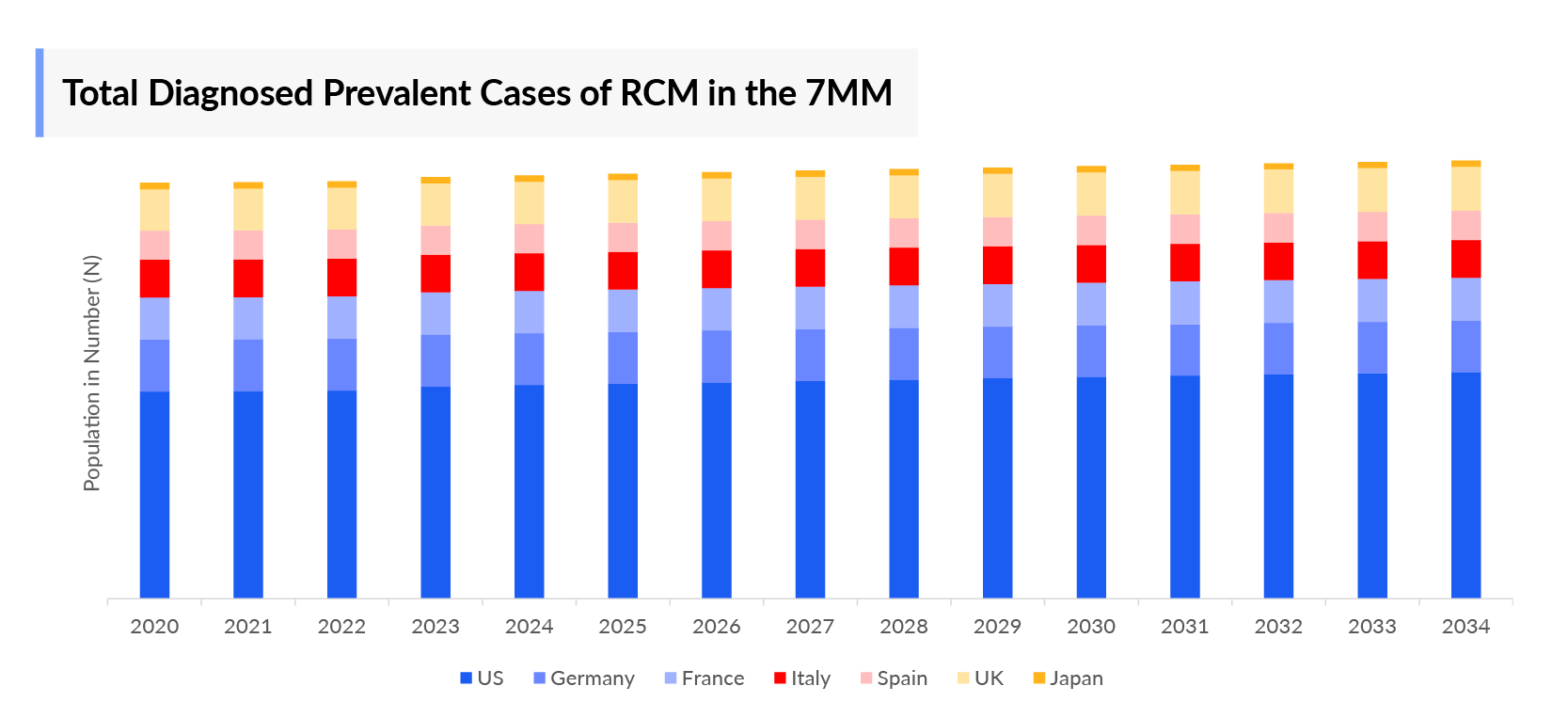
- DelveInsight’s analyst projects that the total diagnosed prevalent cases of Restrictive Cardiomyopathy in 7MM were approximately 73 thousand in 2023 and these cases are further expected to increase during the forecasted period (2024–2034).
- Most number of diagnosed prevalent cases were estimated in the US, followed by Germany, France, and the UK in 2023.
- In the US, the market mainly consisted of RASI (ACEi/ ARB), beta-blockers, diuretics, mineralocorticoid receptor, antiarrhythmic drugs, and others, which generated nearly USD 18 million in 2023.
- The total size of the Restrictive Cardiomyopathy treatment market is anticipated to experience growth during the forecast period due to the increase in diagnosed prevalent population of Restrictive Cardiomyopathy.
Key Factors Driving Restrictive Cardiomyopathy Market
Growing Restrictive Cardiomyopathy Patient Pool
According to DelveInsight’s analysis, the total diagnosed prevalent cases of Restrictive Cardiomyopathy (RCM) in the 7MM were approximately 73K in 2023. These cases are expected to steadily increase during the forecast period (2024–2034), driven by improved clinical awareness, advanced diagnostic modalities such as cardiac MRI and genetic testing, and greater physician vigilance in differentiating RCM from other cardiomyopathies. This rising patient pool highlights the expanding demand for effective therapies.
Expanding Role of Restrictive Cardiomyopathy Treatment Options
In the United States, the RCM treatment market mainly consisted of RASI (ACEi/ARB), beta-blockers, diuretics, mineralocorticoid receptor antagonists, and antiarrhythmic drugs, which together generated nearly USD 18 million in 2023. Within the 7MM, RASI therapies alone contributed around USD 11.03 million, underlining their central role in the current treatment paradigm. Although these therapies primarily address symptom management, their widespread adoption reflects the steady demand for cardiovascular supportive care in RCM.
Unmet Need and Future Opportunities in Restrictive Cardiomyopathy
The absence of targeted therapies addressing the underlying pathophysiology of RCM underscores a significant unmet need in cardiovascular medicine. Current therapeutic approaches largely focus on managing symptoms and preventing complications rather than modifying disease progression. This creates a substantial opportunity for pharmaceutical innovation aimed at developing novel therapies targeting the molecular and genetic mechanisms of RCM. Such advancements could potentially transform outcomes for patients who currently rely on supportive care.
Restrictive Cardiomyopathy Market Outlook
With no novel or emerging therapies currently in development for RCM, the market growth in the US and across the 7MM is projected to depend on the expanded use of existing off-label therapies. The market is expected to grow from USD 18 million in 2023 to approximately USD 20.23 million by 2034, reflecting incremental adoption of current drug classes. However, this untapped therapeutic space highlights immense opportunities for biopharma companies to pioneer breakthrough treatments in RCM, which could reshape the future market dynamics.
DelveInsight’s “Restrictive Cardiomyopathy Market Insights, Epidemiology, and Market Forecast – 2034” report delivers an in-depth understanding of the Restrictive Cardiomyopathy, historical and forecasted epidemiology and the Restrictive Cardiomyopathy therapeutics market trends in the United States, EU4 (Germany, France, Italy, and Spain) and the United Kingdom, and Japan.
The Restrictive Cardiomyopathy market report provides current treatment practices, market share of individual therapies, and current and forecasted 7MM, Restrictive Cardiomyopathy market size from 2020 to 2034. The report also covers current Restrictive Cardiomyopathy treatment practices/algorithms and unmet medical needs to curate the best of the opportunities and assesses the underlying potential of the market.
Restrictive Cardiomyopathy Treatment Market
Restrictive Cardiomyopathy Overview
Restrictive cardiomyopathy (Restrictive Cardiomyopathy) is a heart condition characterized by stiffness of the heart muscle, impairing its ability to fill properly with blood during the relaxation phase of the cardiac cycle. This stiffness restricts the heart’s capacity to pump effectively, leading to symptoms of heart failure.

Restrictive Cardiomyopathy can be caused by various factors, including infiltrative diseases such as amyloidosis, hemochromatosis, or sarcoidosis, where abnormal substances accumulate in the heart muscle. Other causes may include storage diseases, endomyocardial fibrosis, radiation therapy, genetic factors, and systemic diseases like connective tissue disorders.
Symptoms of Restrictive Cardiomyopathy typically manifest as heart failure symptoms, including shortness of breath, especially with exertion or when lying flat (orthopnea), fatigue, weakness, swelling in the legs and abdomen (edema), abdominal discomfort due to liver congestion, palpitations, irregular heartbeats, and exercise intolerance. These symptoms may worsen over time as the heart’s ability to pump effectively becomes increasingly compromised.
Restrictive Cardiomyopathy Diagnosis
Diagnosing Restrictive Cardiomyopathy typically involves a combination of medical history assessment, physical examination, and various diagnostic tests. Medical professionals may look for signs and symptoms such as shortness of breath, fatigue, and fluid retention. Diagnostic tests commonly used to confirm Restrictive Cardiomyopathy include echocardiography, which can show the characteristic features of stiffened heart chambers, and cardiac MRI, which provides detailed images of the heart’s structure and function. Additional tests like cardiac catheterization or endomyocardial biopsy may be performed to evaluate the heart’s function further and to determine the underlying cause of the Restrictive Cardiomyopathy.
Further details related to country-based variations are provided in the report...
Restrictive Cardiomyopathy Treatment
Treatment of Restrictive Cardiomyopathy focuses on managing symptoms, improving cardiac function, and addressing underlying causes. Medications such as diuretics, ACE inhibitors or ARBs, beta-blockers, and mineralocorticoid receptor antagonists are prescribed to alleviate symptoms, reduce fluid retention, and improve heart function. Lifestyle modifications, including sodium and fluid restriction, regular exercise, and weight management, are also recommended. In some cases, specific therapies may be indicated to target underlying conditions contributing to Restrictive Cardiomyopathy, such as chemotherapy for amyloidosis or immunomodulatory therapy for sarcoidosis. Advanced therapies such as heart transplantation or left ventricular assist device (LVAD) implantation may be considered for eligible patients with end-stage Restrictive Cardiomyopathy and refractory symptoms.
Restrictive Cardiomyopathy Epidemiology
As the market is derived using the patient-based model, the Restrictive Cardiomyopathy epidemiology chapter in the report provides historical as well as forecasted epidemiology segmented by Total Diagnosed Prevalent Cases of Restrictive Cardiomyopathy and Gender-specific Diagnosed Prevalent Cases of Restrictive Cardiomyopathy in the 7MM covering the United States, EU4 countries (Germany, France, Italy, and Spain) and the United Kingdom, and Japan, from 2020 to 2034.
- According to DelveInsight estimations, 73 thousand Diagnosed Prevalent Cases of Restrictive Cardiomyopathy were found in 2023 in the 7MM.
- As per DelveInsight’s estimations, the total number of diagnosed prevalent cases with Restrictive Cardiomyopathy in the United States were 36 thousand in 2023 and are projected to increase during the forecast period.
- According to DelveInsight’s estimates, the Total Diagnosed Prevalent Cases of Restrictive Cardiomyopathy in EU4 and the UK were found to be 35 thousand in 2023. The highest proportion of Restrictive Cardiomyopathy cases was reported in Germany among the EU4 countries, while the least number of cases was found in Spain.
- The estimates show the number of Restrictive Cardiomyopathy cases in Japan was found to be approximately 1 thousand in 2023, which is estimated to decrease by 2034.
Restrictive Cardiomyopathy Drug Chapters
Numerous pharmaceutical firms are engaged in the exploration and advancement of treatments for various forms of cardiomyopathy, including hypertrophic cardiomyopathy, dilated cardiomyopathy, restrictive cardiomyopathy (Restrictive Cardiomyopathy), other related conditions.
Restrictive Cardiomyopathy Market Outlook
Amidst the existing treatment landscape for Restrictive Cardiomyopathy, the focus predominantly centers on alleviating symptoms and decelerating disease progression rather than effecting substantial disease modification. Despite the array of available interventions, addressing the underlying molecular intricacies remains elusive, underscoring the imperative for innovative therapeutic strategies.
Pharmacotherapy forms the cornerstone of Restrictive Cardiomyopathy management, focusing on symptom alleviation and optimizing cardiac function. Pharmacological interventions, including diuretics, beta-blockers, calcium channel blockers, and ACE inhibitors, serve as the mainstay for symptom control. These medications aim to mitigate symptoms such as dyspnea and fatigue by reducing fluid overload and optimizing cardiac function.
The market for Restrictive Cardiomyopathy is expected to experience positive growth.
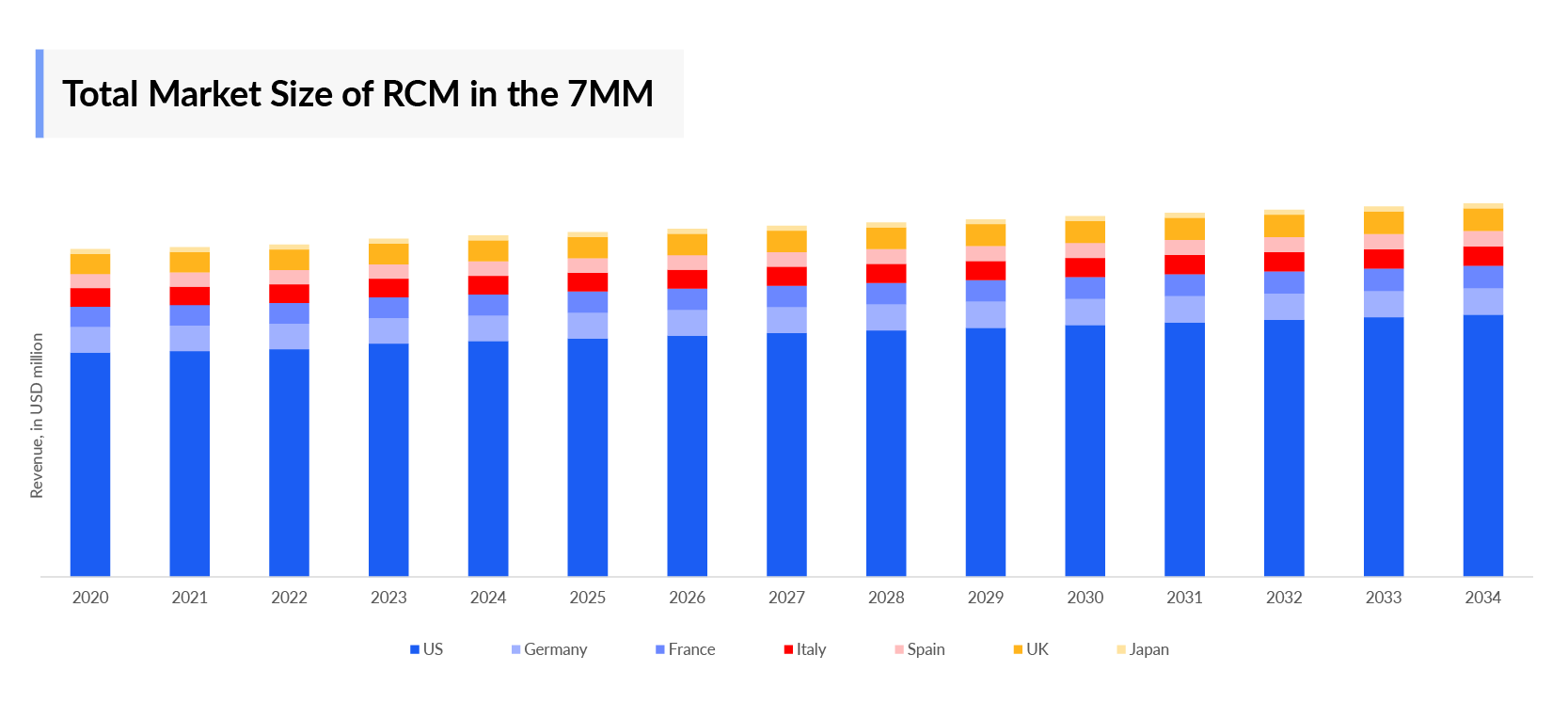
- The total market size of Restrictive Cardiomyopathy in the 7MM was around USD 26.09 million in 2023. This is estimated to increase by 2034 at a significant CAGR.
- In the 7MM, most of the market share was accommodated by RASI (ACEi/ARB) generating nearly USD 11.03 million in 2023.
- Among the 7MM, the US captured the highest market in 2023, covering a total of 69% market, followed by EU4 and the UK, which is anticipated to grow during the forecast period (2024–2034).
- In 2023, EU4 and the UK captured nearly 30% of the total market in the 7MM.
- Japan secured the smallest market share across all 7MM, and it is anticipated to decrease by 2034.
KOL Views
To keep up with current market trends, we take KOLs and SMEs’ opinions working in the domain through primary research to fill the data gaps and validate the secondary research. Industry Experts were contacted for insights on Restrictive Cardiomyopathy evolving treatment landscape, patient reliance on conventional therapies, patient therapy switching acceptability, and drug uptake along with challenges related to accessibility, including KOL from State University of New York at Stony Brook Health Sciences Center, US, Mayo Clinic, Rochester, Minnesota, US, National Naval Medical Center, San Diego, US, University and University Hospital Würzburg, Germany, La Timone Hospital, Marseille, France, University of Ferrara, Ferrara, Italy, Hospital Central de Asturias, University of Oviedo, Spain, Guy’s and St. Thomas’ Foundation Trust, London, United Kingdom, Nippon Medical School, Tokyo, Japan, and others.
DelveInsight’s analysts connected with 50+ KOLs to gather insights; however, interviews were conducted with 15+ KOLs in the 7MM. Their opinion helps to understand and validate current and emerging therapies and treatment patterns or Restrictive Cardiomyopathy market trends. This will support the clients in potential upcoming novel treatments by identifying the overall scenario of the market and the unmet needs.
Qualitative Analysis
We perform Qualitative and market Intelligence analysis using various approaches, such as SWOT analysis. In the SWOT analysis, strengths, weaknesses, opportunities, and threats in terms of disease diagnosis, patient awareness, patient burden, competitive landscape, cost-effectiveness, and geographical accessibility of therapies are provided. These pointers are based on the Analyst’s discretion and assessment of the patient burden, cost analysis, and existing and evolving treatment landscape.
Market Access and Reimbursement
The high cost of therapies for the treatment is a major factor restraining the growth of the drug market. Because of the high cost, the economic burden is increasing, leading the patient to escape from proper treatment.
The report further provides detailed insights on the country accessibility and reimbursement scenarios, cost-effectiveness scenario of approved therapies, programs making accessibility easier and out-of-pocket costs more affordable, insights on patients insured under federal or state government prescription drug programs, etc.
Scope of the Restrictive Cardiomyopathy Market Report
- The report covers a segment of key events, an executive summary, descriptive overview of Restrictive Cardiomyopathy, explaining its causes, signs and symptoms, and currently available therapies.
- Comprehensive insight has been provided into the epidemiology segments and forecasts, the future growth potential of diagnosis rate, disease progression, and treatment guidelines.
- Additionally, a comprehensive overview of existing therapies, along with an analysis of how the introduction of generic drugs will impact the current treatment landscape.
- A detailed review of the Restrictive Cardiomyopathy market, historical and forecasted market size, market share by therapies, detailed assumptions, and rationale behind the approach is included in the report covering the 7MM drug outreach.
- The report provides an edge while developing business strategies, by understanding trends, through SWOT analysis and expert insights/KOL views, patient journey, and treatment preference that help shape and drive the 7MM Restrictive Cardiomyopathy market.
Restrictive Cardiomyopathy Report Insights
- Restrictive Cardiomyopathy Patient Population
- Restrictive Cardiomyopathy Therapeutic Approaches
- Restrictive Cardiomyopathy Market Size and Trends
- Existing and Future Market Opportunity
- Restrictive Cardiomyopathy Drugs Market
Restrictive Cardiomyopathy Report Key Strengths
- 11 years Forecast
- The 7MM Coverage
- Restrictive Cardiomyopathy Epidemiology Segmentation
- Restrictive Cardiomyopathy Drugs Uptake
- Key Restrictive Cardiomyopathy Market Forecast Assumptions
Restrictive Cardiomyopathy Report Assessment
- Current Restrictive Cardiomyopathy Treatment Practices
- Restrictive Cardiomyopathy Unmet Needs
- Restrictive Cardiomyopathy Market Attractiveness
- Qualitative Analysis (SWOT Analysis)
- Restrictive Cardiomyopathy Market Drivers
- Restrictive Cardiomyopathy Market Barriers
Key Questions Answered In The Restrictive Cardiomyopathy Market Report
- Restrictive Cardiomyopathy Market Insights
- What was the Restrictive Cardiomyopathy total market size, the market size by therapies, and market share (%) distribution in 2020, and how would it all look in 2034? What are the contributing factors for this growth?
- What unmet needs are associated with the current treatment market of Restrictive Cardiomyopathy?
- Which drug is going to be the largest contributor by 2034?
- What are the pricing variations among different geographies for off-label therapies?
- How would the market drivers, barriers, and future opportunities affect the market dynamics and subsequent analysis of the associated trends?
Restrictive Cardiomyopathy Epidemiology Insights
- What are the disease risk, burdens, and unmet needs of Restrictive Cardiomyopathy? What will be the growth opportunities across the 7MM concerning the patient population of Restrictive Cardiomyopathy?
- What is the historical and forecasted Restrictive Cardiomyopathy patient pool in the United States, EU4 (Germany, France, Italy, and Spain), the United Kingdom, and Japan?
- What factors are affecting the diagnosis of the indication?
Current Restrictive Cardiomyopathy Treatment Scenario, Marketed Drugs, and Emerging Therapies
- What are the current options for treating Restrictive Cardiomyopathy? What are the current guidelines for treating Restrictive Cardiomyopathy in the US and Europe?
- How many companies are developing therapies for treating Cardiomyopathy?
- How many emerging therapies are in the mid-stage and late stage of development for treating Cardiomyopathy?
- What are the key designations that have been granted for the emerging therapies for Cardiomyopathy?
- What is the cost burden of approved therapies on the patient?
- Patient acceptability in terms of preferred treatment options as per real-world scenarios?
- What are the country-specific accessibility issues of expensive, recently approved therapies? Focus on reimbursement policies.
- What are the 7MM historical and forecasted markets of Restrictive Cardiomyopathy?
Reasons to Buy Restrictive Cardiomyopathy Market Forecast Report
- The report will help develop business strategies by understanding the latest trends and changing treatment dynamics driving the Restrictive Cardiomyopathy Market.
- Insights on patient burden/disease prevalence, evolution in diagnosis, and factors contributing to the change in the epidemiology of the disease during the forecast years.
- To understand the existing market opportunity in varying geographies and the growth potential over the coming years.
- Distribution of historical and current patient share based on real-world prescription data along with reported sales of approved products in the US, EU4 (Germany, France, Italy, and Spain), the United Kingdom, and Japan.
- Identifying strong upcoming players in the market will help devise strategies that will help get ahead of competitors.
- Detailed analysis, ranking of class-wise potential current, and emerging therapies under the conjoint analysis section to provide visibility around leading classes.
- Highlights of Access and Reimbursement policies of approved therapies, barriers to accessibility of off-label expensive therapies, and patient assistance programs.
- To understand the perspective of Key Opinion Leaders around the accessibility, acceptability, and compliance-related challenges of existing treatment to overcome barriers in the future.
- Detailed insights on the unmet need of the existing market so that the upcoming players can strengthen their development and launch strategy.
Frequently Asked Questions
1. What is the forecast period covered in the report?
The Restrictive Cardiomyopathy Epidemiology and Market Insight report for the 7MM covers the forecast period from 2024 to 2034, providing a projection of market dynamics and trends during this timeframe.
2. How is the market size estimated in the forecast report?
The market size is estimated through data analysis, statistical modeling, and expert opinions. It may consider factors such as prevalent cases, treatment costs; revenue generated, and market trends.
3. What is the key driver of the Restrictive Cardiomyopathy market?
The increasing prevalent population is attributed to be the key driver for increasing Restrictive Cardiomyopathy market.
4. What is the expected impact of emerging therapies or advancements in Cardiomyopathy treatment on the market?
Introducing new therapies, advancements in disease understanding and diagnostic techniques, and innovations in treatment approaches can significantly affect the Cardiomyopathy treatment market. Market forecast reports might provide analysis and predictions regarding the potential impact of these developments.
5. Does the report provide insights into the competitive landscape of the market?
The market forecast report may include information on the competitive landscape, profiling key market players, their product offerings, partnerships, and strategies, and helping stakeholders understand the competitive dynamics of the Restrictive Cardiomyopathy market.