Synovial Sarcoma Market Summary
- The Synovial Sarcoma market size is expected to experience steady growth across the major markets during the study period, led by the United States, followed by the EU4 (Germany, France, Italy, and Spain), the United Kingdom, and Japan, driven by ongoing therapeutic advancements and increasing market activity.
- The leading Synovial Sarcoma companies developing therapies in the treatment market include - Adaptimmune Therapeutics, Advenchen Laboratories, Takara Bio, US WorldMeds, and others.
Synovial Sarcoma Market & Epidemiology Insights
- Japan holds the third-largest share of the 7MM synovial sarcoma market in 2025, which is expected to increase by 2036.
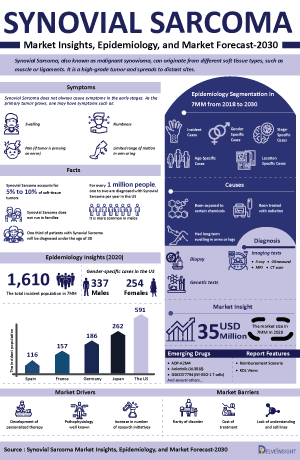
- Synovial sarcoma is a rare cancer with a small patient population. Its burden is disproportionately concentrated among adolescents and young adults, particularly males, underscoring the need for early diagnosis, timely referral to specialized sarcoma centers, access to advanced therapies, and multidisciplinary care to reduce disease progression, recurrence, and mortality.
- Treatment of synovial sarcoma includes surgery, radiation therapy, chemotherapy (e.g., doxorubicin and ifosfamide), and advanced cellular therapies such as afamitresgene autoleucel (TECELRA). These approaches aim to achieve tumor control, reduce recurrence, manage metastatic disease, and improve survival, with multidisciplinary care and regular follow-up remaining essential for optimal outcomes.
- TECELRA is the first engineered cell therapy for a solid tumor cancer approved in the US, and the first new therapy option in more than a decade for synovial sarcoma.
- Various diagnostic and clinical assessment approaches for synovial sarcoma include MRI, CT, histopathological evaluation, immunohistochemistry, and molecular testing for the SS18::SSX gene fusion. These tools support accurate diagnosis, disease staging, treatment planning, and long-term monitoring to optimize patient outcomes.
- The emerging synovial sarcoma pipeline is focused on TCR-based cell therapies and targeted agents designed to improve outcomes in advanced disease. Key candidates include TBI-1301 (Takara Bio), lete-cel and afami-cel (US WorldMeds), ADP-600 (Adaptimmune Therapeutics), and catequentinib hydrochloride/AL3818 (Advenchen Laboratories), all of which aim to enhance tumor-specific targeting and address significant unmet needs in synovial sarcoma management.
Synovial Sarcoma Market Size and Forecast in the 7MM
- 2025 Synovial Sarcoma Market Size: ~USD XXXX million
- 2036 Projected Synovial Sarcoma Market Size: ~USD XXXX million
- Synovial Sarcoma Growth Rate (2026–2036): ~XX% CAGR
Request for unlocking the sample page of the "Synovial Sarcoma Market Forecast"
Key Factors Driving the Synovial Sarcoma Market:
- Rising Synovial Sarcoma Incidence: The increasing incidence of synovial sarcoma, particularly among males, is a primary driver of synovial sarcoma market expansion, supported by the growing burden of advanced and recurrent disease, improving diagnostic capabilities, and the emergence of novel targeted and cellular immunotherapies.
- Rising Opportunities in Novel Synovial Sarcoma Therapies: Significant unmet needs in advanced and metastatic synovial sarcoma are driving the development of targeted therapies, engineered T-cell receptor (TCR) therapies, and other immuno-oncology approaches to improve treatment durability, overcome resistance, and enhance long-term outcomes.
- Emerging Synovial Sarcoma Competitive Landscape: The synovial sarcoma pipeline is advancing with TCR-based cell therapies and targeted therapies. Key candidates, including TBI-1301, lete-cel, afami-cel, ADP-600, and catequentinib hydrochloride, are being developed to address unmet needs and improve outcomes in advanced and metastatic disease.
DelveInsight's "Synovial Sarcoma Market Insights, Epidemiology and Market Forecast – 2036" report delivers an in-depth understanding of the Synovial Sarcoma, historical and forecasted epidemiology, as well as the Synovial Sarcoma therapeutics market trends in the United States, EU4 (Germany, Spain, Italy, and France), the United Kingdom, and Japan.
The Synovial Sarcoma market report delivers a comprehensive analysis of the current treatment landscape, including standards of care, clinical practices, and evolving therapeutic algorithms. It evaluates Synovial Sarcoma patient burden trends, revenue & market share dynamics, peak patient share & therapy uptake analysis, and provides an in-depth market size assessment, and growth rate projections (Historical & Forecast 2022–2036) across global regions. The report highlights key unmet medical needs in Synovial Sarcoma and maps the competitive and clinical landscape to uncover high-value opportunities, providing a clear outlook on future market growth potential.
Scope of the Synovial Sarcoma Market Report | |
|
Study Period |
2022–2036 |
|
Historical Year |
2022–2025 |
|
Forecast Period |
2026–2036 |
|
Base Year |
2026 |
|
Geographies Covered |
ü North America: The US; ü Europe: Germany, France, Italy, Spain, and the UK; ü Asia-Pacific: Japan |
|
Synovial Sarcoma Market CAGR (Forecast period) |
XX% (2026–2036) |
|
Synovial Sarcoma Epidemiology Segmentation Analysis |
Patient Burden Assessment · Total Incident Cases of Synovial Sarcoma · Gender-specific Cases of Synovial Sarcoma · Age-specific Cases of Synovial Sarcoma · Location-specific Cases of Synovial Sarcoma · Stage-specific Cases of Synovial Sarcoma · Antigen-specific (MAGE-A4, NY-ESO-1, PRAME, and others) Cases of Synovial Sarcoma · Line-wise treated Patient Pool of Synovial Sarcoma |
|
Synovial Sarcoma Companies |
· Adaptimmune Therapeutics · Advenchen Laboratories · Takara Bio · US WorldMeds, and others |
|
Synovial Sarcoma Therapies |
· Afamitresgene autoleucel (TECELRA) · Catequentinib Hydrochloride (VEGFr, FGFr)/Anlotinib · Mipetresgene autoleucel (TBI-1301) · Letetresgene autoleucel (Lete-Cel (GSK3377794)) [NY-ESO-1] · Afamitresgene autoleucel (afami-cel) [MAGE-A4] · ADP-600 [PRAME], and others |
|
Synovial Sarcoma Market |
Segmented by · Region/Geographies · Drugs/Therapies |
|
Analysis |
· KOL Views · SWOT Analysis · Reimbursement · Conjoint Analysis · Unmet Need · Market Drivers and Barriers · Epidem Patient Burden |
Synovial Sarcoma Disease Understanding
Synovial Sarcoma Overview and Diagnosis
Synovial sarcoma is a rare, aggressive soft tissue sarcoma characterized by a chromosomal translocation involving the SS18 (SYT) gene, which leads to oncogenic fusion proteins driving tumor development. Despite its name, it does not arise from synovial tissue but most commonly occurs in the deep soft tissues near joints, tendons, and bursae, especially in the extremities. It typically affects adolescents and young adults, though it can occur at any age, and often presents as a deep-seated mass with a high risk of metastasis, most commonly to the lungs. Disease behavior and prognosis depend on factors such as tumor size, location, histologic subtype, metastatic status, and response to multimodal treatment, including surgery, radiotherapy, and systemic therapy.
Synovial sarcoma is diagnosed using a combination of clinical assessment, imaging, histopathology, and molecular testing. MRI is used to evaluate tumor size and local extent, while a biopsy provides definitive histological confirmation. The diagnosis is further supported by identifying the characteristic SS18::SSX gene fusion using techniques such as FISH, RT-PCR, or next-generation sequencing, which also aid in treatment planning.
Note: Further details are provided in the report...
Synovial Sarcoma Treatment
The primary goals of synovial sarcoma treatment are to achieve complete tumor control, prevent recurrence and metastasis, preserve function, and improve long-term survival. Management is multidisciplinary, typically combining surgery, radiation therapy, and systemic chemotherapy, with agents such as doxorubicin and ifosfamide used in advanced or high-risk disease. For unresectable or metastatic cases, emerging targeted and cellular therapies are expanding treatment options. TECELRA, a MAGE-A4–directed T-cell receptor (TCR) therapy, represents a key engineered cell therapy in this setting. Ongoing monitoring with imaging and clinical evaluation is essential to assess response, detect recurrence, and guide further management decisions.
Note: Further details related to country-based variations are provided in the report...
Synovial Sarcoma Unmet Needs
The section “unmet needs of Synovial Sarcoma” outlines the critical gaps between the current state of patient care, diagnosis, and the ideal & effective management of the disease. It highlights the obstacles experienced by patients, clinicians, and researchers and identifies potential solutions for future progress.
1. Limited treatment options for advanced and metastatic disease.
2. High rates of recurrence after treatment and lack of approved targeted therapies.
3. Need for reliable predictive biomarkers, and others…..
Note: Comprehensive unmet needs insights and their strategic implications are provided in the full report...
Synovial Sarcoma Epidemiology
The Synovial Sarcoma epidemiology section provides insights about the historical and current Synovial Sarcoma patient pool and forecasted trends for individual seven major countries. It helps to recognize the causes of current and forecasted trends by exploring numerous studies and views of key opinion leaders. This part of the Synovial Sarcoma market report also provides the diagnosed patient pool and their trends along with assumptions undertaken.
Key Findings from Synovial Sarcoma Epidemiological Analysis and Forecast
- The total number of incident Synovial Sarcoma cases across the 7MM is expected to increase over 2022–2036, driven by improved diagnostics, greater awareness of rare soft tissue sarcomas, wider use of molecular testing, and improved survival from multidisciplinary care.
- Among the 7MM, the United States has the highest incidence of Synovial Sarcoma in 2025, and these cases are expected to increase during the forecast period.
- Among the EU-4 & UK, Germany reported the highest incidence of Synovial Sarcoma. Spain was found to have the fewest cases in 2025 among all European countries.
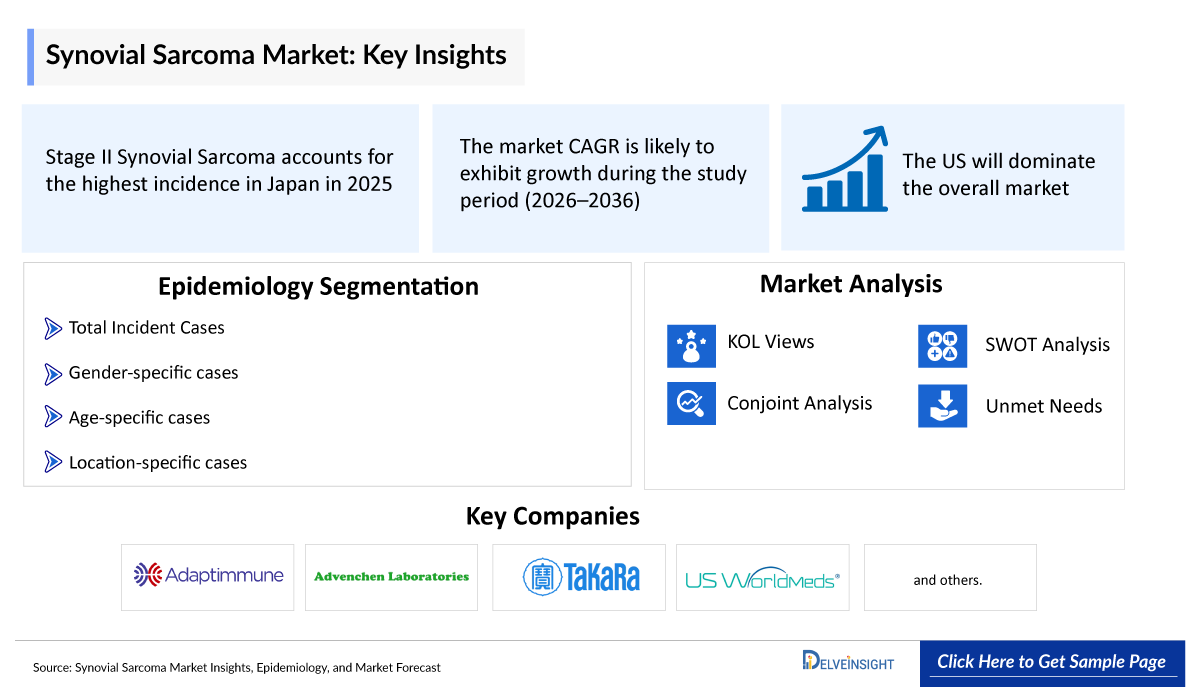
- According to DelveInsight estimates, Stage II Synovial Sarcoma accounts for the highest incidence in Japan in 2025, with cases expected to rise over the forecast period.
- The male predominance and earlier onset of Synovial Sarcoma underscore the need for early diagnosis, prompt referral to specialized sarcoma centers, and age- and risk-adapted treatment strategies to improve long-term outcomes.
Synovial Sarcoma Epidemiology Segmentation
- Total Incident Cases of Synovial Sarcoma
- Gender-specific Cases of Synovial Sarcoma
- Age-specific Cases of Synovial Sarcoma
- Location-specific Cases of Synovial Sarcoma
- Stage-specific Cases of Synovial Sarcoma
- Antigen-specific (MAGE-A4, NY-ESO-1, PRAME, and others) Cases of Synovial Sarcoma
- Line-wise treated Patient Pool of Synovial Sarcoma
Recent Developments in the Synovial Sarcoma Treatment Landscape:
- In June 2025, Catequentinib Hydrochloride (AL3818) EMA Market Authorization Application (MAA) was successfully submitted.
- In September 2025, Takara Bio announced completion of PMDA review for the confirmatory clinical study of TBI-1301, an NY-ESO-1–targeted TCR gene therapy for synovial sarcoma. Following IRB approvals, patient enrollment and treatment initiation are expected to begin. After revising its regulatory strategy in May 2025, the company is now pursuing full approval based on confirmatory study outcomes rather than conditional approval.
Synovial Sarcoma Drug Analysis & Competitive Analysis
The Synovial Sarcoma drug chapter provides a detailed, market-focused review of approved therapies and the emerging pipeline across Phase I–III Synovial Sarcoma clinical trials. It covers the mechanism of action, clinical trial data, regulatory approvals, patents, collaborations, and strategic partnerships for each therapy, along with their advantages, limitations, and recent developments. This section offers critical insights into the Synovial Sarcoma treatment landscape, supporting market assessment, competitive analysis, and growth forecasting for the Synovial Sarcoma therapeutics market.
Approved Therapies for Synovial Sarcoma
Afamitresgene autoleucel (TECELRA): Adaptimmune Therapeutics
TECELRA is a MAGE-A4–directed autologous TCR-engineered cell therapy administered as a single intravenous infusion after lymphodepleting chemotherapy. It received FDA accelerated approval in August 2024 based on results from the SPEARHEAD-1 (Cohort 1) trial for adults with unresectable or metastatic synovial sarcoma who have received prior chemotherapy, are HLA-A*02 positive, and have MAGE-A4–positive tumors. The therapy is used in the second-line or later setting and works by engineering patient T cells to recognize and destroy MAGE-A4–expressing tumor cells. Approval was based on overall response rate and duration of response, with continued approval dependent on confirmation of clinical benefit in ongoing studies.
Competitive Landscape of Synovial Sarcoma Marketed Therapies | ||||||
|
Drug/Therapy |
Company |
Indication |
Molecule Type |
RoA |
MoA |
Marketed Region |
|
TECELRA |
Adaptimmune Therapeutics |
Synovial sarcoma |
Autologous TCR-T cell therapy |
IV |
TCR T-cell therapy |
US: 2024 |
Synovial Sarcoma Pipeline Insights
Catequentinib Hydrochloride (anlotinib, AL3818): Advenchen Laboratories
Catequentinib hydrochloride (AL3818), developed by Advenchen Laboratories, is an investigational oral multi-target tyrosine kinase inhibitor being evaluated for synovial sarcoma. It targets key angiogenesis and tumor growth pathways, including VEGFR, FGFR, PDGFR, and c-Kit, with the aim of inhibiting tumor vascularization and disease progression. Separately, anlotinib is another multi-target tyrosine kinase inhibitor under investigation for advanced or metastatic synovial sarcoma, addressing the need for more effective targeted treatment options in this rare disease.
Mipetresgene autoleucel (TBI-1301): Takara Bio
TBI-1301 is an investigational autologous TCR gene therapy for the treatment of synovial sarcoma. The therapy utilizes genetically engineered patient-derived T cells that target the NY-ESO-1 tumor antigen, which is highly expressed in synovial sarcoma cells. By enhancing tumor-specific immune responses, TBI-1301 aims to provide a targeted treatment option for patients with advanced or recurrent disease and improve clinical outcomes beyond those achieved with conventional therapies.
Competitive landscape of Synovial Sarcoma Emerging Therapies | |||||||
|
Drug Name |
Company |
Highest Phase |
Indication |
RoA |
MoA |
Molecule Type |
Anticipated Launch in the US |
|
Mipetresgene autoleucel (TBI-1301) |
Takara Bio |
III |
Synovial sarcoma |
IV |
TCR gene therapy |
Autologous TCR-T cell therapy |
Information is available in the full report |
|
Letetresgene autoleucel (GSK3377794) |
US WorldMeds |
II |
Synovial sarcoma |
IV |
Targets NY-ESO-1-expressing tumor cells via engineered T cells |
Autologous TCR-T cell therapy |
Information is available in the full report |
|
Afamitresgene autoleucel [MAGE-A4] |
US WorldMeds |
I/II |
Synovial sarcoma |
IV |
Targets MAGE-A4-expressing tumor cells via engineered T cells |
Autologous TCR-T cell therapy |
Information is available in the full report |
|
Note: Launch insights are provisional and may change with future report updates or the occurrence of major key catalysts. | |||||||
Note: A detailed emerging therapies assessment will be provided in the final report..
Synovial Sarcoma Key Players, Market Leaders, and Emerging Companies
- Adaptimmune Therapeutics
- Advenchen Laboratories
- Takara Bio
- US WorldMeds, and others
Synovial Sarcoma Market Outlook
The Synovial Sarcoma market is undergoing a significant transformation driven by advances in precision oncology, cellular immunotherapies, and improved understanding of sarcoma biology. It is currently anchored in conventional treatments such as surgery, radiation therapy, and systemic chemotherapy, alongside the approval of TECELRA, the first engineered TCR-T cell therapy for advanced synovial sarcoma, marking a major milestone in the treatment landscape.
The therapeutic paradigm is increasingly shifting toward biomarker-driven and antigen-targeted therapies designed to improve efficacy and durability of response. Emerging candidates such as Mipetresgene autoleucel, lete-cel, afami-cel, and catequentinib hydrochloride are advancing novel approaches that leverage engineered T-cell receptor technologies, tumor-associated antigen targeting, and multi-kinase inhibition to address the significant unmet needs in this rare cancer.
Continued advances in adoptive cell therapies, targeted agents, and immuno-oncology are expected to drive the Synovial Sarcoma market growth. An expanding pipeline, better tumor characterization, and a strong focus on improving outcomes in advanced disease are creating significant opportunities for developers in this space.
According to the estimates, the United States accounted for the largest share of the synovial sarcoma market among the major markets during the study period.
The United States leads in research activity and commercial potential, while Europe and Japan demonstrate strong engagement driven by active clinical development, supportive rare disease frameworks, and growing adoption of innovative cell and precision therapies.
Note: Further details will be provided in the report...
Drug Class/Insights into Leading Emerging and Marketed Therapies in Synovial Sarcoma (2022–2036 Forecast)
The synovial sarcoma treatment landscape comprises conventional chemotherapy, multi-target tyrosine kinase inhibitors (TKIs), and emerging engineered TCR therapies targeting tumor-associated antigens such as NY-ESO-1, MAGE-A4, and PRAME. These approaches aim to improve tumor control, enhance anti-tumor immune responses, and address the significant unmet needs in advanced and metastatic disease.
- Tyrosine Kinase Inhibitors (TKIs): Investigational therapies such as Catequentinib hydrochloride target receptor tyrosine kinases, including VEGFR and FGFR, to inhibit tumor growth and angiogenesis.
- NY-ESO-1-Targeted TCR Therapies: Emerging cell therapies such as TBI-1301 and lete-cel (GSK3377794) utilize genetically engineered T cells to recognize and eliminate tumor cells expressing the NY-ESO-1 antigen, enhancing tumor-specific immune activity.
- MAGE-A4- and PRAME-Targeted TCR Therapies: Therapies including TECELRA, afami-cel, and ADP-600 are designed to target MAGE-A4 or PRAME antigens expressed on synovial sarcoma cells, enabling precise immune-mediated tumor cell destruction and potentially improving clinical outcomes.
Overall, chemotherapy remains a key component of synovial sarcoma management, while TCR-based cellular therapies and targeted kinase inhibitors are driving innovation and reshaping the future treatment landscape for patients with advanced disease.
Note: Further details will be provided in the report….
Synovial Sarcoma Drug Uptake
This section focuses on the uptake rate of potential Synovial Sarcoma drugs expected to be launched in the market during the forecast period (2026–2036). The analysis covers the synovial sarcoma market's uptake by drugs, patient uptake by therapy, and sales of each drug.
Note: Further detailed analysis of emerging therapies' drug uptake in the report...
Synovial Sarcoma Market Access and Reimbursement of Ascites
Reimbursement is a crucial factor that affects the drug’s access to the market. Often, the decision to reimburse comes down to the price of the drug relative to the benefit it produces in treated patients. To reduce the healthcare burden of these high-cost therapies, many payment models are being considered by payers and other industry insiders.
Note: Further details are provided in the final report...
Synovial Sarcoma Therapies Price Scenario & Trends
Pricing and analogue assessment of synovial sarcoma therapies highlights evolving price dynamics structures. This section summarizes the cost of approved treatments, the closest and most appropriate analogue selection for emerging therapies, and the understanding of how pricing influences market access, adherence, and long-term uptake.
Note: Further details are provided in the final report...
Industry Experts and Physician Views for Synovial Sarcoma
To keep up with Synovial Sarcoma market trends, we take Key Opinion Leaders (KOLs) and Subject Matter Experts (SMEs) opinions working in the domain through primary research to fill the data gaps and validate our secondary research. Industry experts were contacted for insights on the Synovial Sarcoma emerging therapies, evolving treatment landscape, patient adherence to conventional therapies, therapy switching trends, drug adoption and uptake, accessibility challenges, and epidemiology and real-world prescription patterns in Synovial Sarcoma, including MD, PhD, Instructor, Postdoctoral Researcher, Professor, Researcher, and others.
DelveInsight’s analysts connected with 10+ KOLs to gather insights; however, interviews were conducted with 6+ KOLs in the 7MM. Centers such as the University of Mississippi Medical Center, University of Bologna, and Teikyo University School of Medicine, etc. were contacted. Their opinion helps understand and validate current and emerging Synovial Sarcoma therapies, highlight unmet medical needs, provide epidemiological context, and support strategic decisions for market access, therapy adoption, and pipeline prioritization in Synovial Sarcoma.
|
Region |
Key Opinion Leaders (KOLs) and Subject Matter Experts (SMEs) |
|
United States |
“Synovial sarcoma remains a challenging, rare cancer with limited treatment options in advanced disease. The emergence of TCR-based cell therapies and other targeted approaches has the potential to improve response rates and expand therapeutic options for eligible patients.” |
|
Japan |
“Despite advances in multimodal treatment, recurrent and metastatic synovial sarcoma continues to carry a poor prognosis. Novel T-cell receptor therapies and precision medicine approaches may help address unmet needs and improve long-term patient outcomes.” |
Synovial Sarcoma Report Qualitative Analysis: SWOT and Conjoint Analysis
We perform qualitative and market intelligence analysis using various approaches, such as SWOT analysis and conjoint analysis.
In the SWOT analysis of Synovial Sarcoma, strengths, weaknesses, opportunities, and threats in terms of disease diagnosis, patient awareness, patient burden, competitive landscape, cost-effectiveness, and geographical accessibility of therapies are provided.
Conjoint analysis analyzes emerging therapies based on relevant attributes such as safety, efficacy, frequency of administration, route of administration, and order of entry. Scoring is given based on these parameters to analyze the effectiveness of therapy.
The team of analysts analyzes promising emerging therapies based on relevant attributes such as safety, efficacy, frequency of administration, route of administration, and order of entry. In efficacy, the trial’s primary and secondary outcome measures are evaluated, whereas the therapies’ safety is evaluated, wherein the acceptability, tolerability, and adverse events are mainly observed. In addition, the scoring is also based on the route of administration, order of entry, probability of success, and the addressable patient pool for each therapy. According to these parameters, the final weightage score and the ranking of the emerging therapies are decided.
Scope of the Synovial Sarcoma Market Report
- The report covers a segment of key events, an executive summary, a descriptive overview of Synovial Sarcoma, explaining its causes, signs and symptoms, pathogenesis, and currently available treatments.
- Comprehensive insight has been provided into the epidemiology segments and forecasts, the future growth potential of the diagnosis rate, and disease progression along treatment guidelines.
- Additionally, an all-inclusive account of both the current and emerging treatments, along with the elaborative profiles of late-stage and prominent therapies, will have an impact on the current treatment landscape.
- A detailed review of the synovial sarcoma market, historical and forecasted market size, market share by therapies, detailed assumptions, and rationale behind our approach is included in the report, covering the 7MM drug outreach.
- The report provides an edge while developing business strategies by understanding trends through SWOT analysis and expert insights/KOL views, patient journey, and treatment preferences that help in shaping and driving the 7MM Synovial Sarcoma market.
Synovial Sarcoma Market Report Insights
- Synovial Sarcoma Patient Population Forecast
- Synovial Sarcoma Therapeutics Market Size
- Synovial Sarcoma Pipeline Analysis
- Synovial Sarcoma Market Size and Trends
- Synovial Sarcoma Market Opportunity (Current and forecasted)
Synovial Sarcoma Market Report Key Strengths
- Synovial Sarcoma EpidemiologyEpidemiology-based (Epi-based) Bottom-up Forecasting
- Artificial Intelligence (AI)-enabled Market Research Report
- 11-year Forecast
- Synovial Sarcoma Market Outlook (North America, Europe, Asia-Pacific)
- Synovial Sarcoma Epidemiology Patient Burden Trends (by geography)
- Synovial Sarcoma Treatment Addressable Market (TAM)
- Synovial Sarcoma Competitive Landscape
- Synovial Sarcoma Major Companies Insights
- Synovial Sarcoma Price Trends and Analogue Assessment
- Synovial Sarcoma Therapies Drug Adoption/Uptake
- Synovial Sarcoma Therapies Peak Patient Share Analysis
Synovial Sarcoma Market Report Assessment
- Synovial Sarcoma Current Treatment Practices
- Synovial Sarcoma Unmet Needs
- Synovial Sarcoma Clinical Development Analysis
- Synovial Sarcoma Emerging Drugs Product Profiles
- Synovial Sarcoma Market Attractiveness
- Synovial Sarcoma Qualitative Analysis (SWOT and Conjoint Analysis)
- Synovial Sarcoma Market Drivers
- Synovial Sarcoma Market Barriers
FAQs Related to the Synovial Sarcoma Market Report:
Synovial Sarcoma Market Insights
- What was the Synovial Sarcoma market size, the market size by therapies, market share (%) distribution in 2025, and what would it look like by 2036? What are the contributing factors for this growth?
- What are the anticipated pricing variations among different geographies for the emerging therapies in the future?
- What can be the future treatment paradigm of Synovial Sarcoma?
- What are the disease risks, burdens, and unmet needs of Synovial Sarcoma? What will be the growth opportunities across the 7MM concerning the Synovial Sarcoma Epidemiology patient population?
- Who is the major future competitor in the market, and how will the competitors affect their market share?
- What are the current options for the treatment of Synovial Sarcoma? What are the current guidelines for treating Synovial Sarcoma in the US, Europe, and Japan?
Reasons to Buy Synovial Sarcoma Market Forecast Report
- The report will help in developing business strategies by understanding the latest trends and changing treatment dynamics driving the Synovial Sarcoma market.
- Bottom up forecasting builds from the affected population to product forecasts, delivering a robust, data driven approach ideal for new therapies and novel classes.
- Insights on patient burden/disease incidence, evolution in diagnosis, and factors contributing to the change in the epidemiology of the disease during the forecast years.
- Understand the existing market opportunities in varying geographies and the growth potential over the coming years.
- Identifying strong upcoming players in the market will help devise strategies to help get ahead of competitors.
- Detailed analysis and ranking of class-wise potential current and emerging therapies under the conjoint analysis section to provide visibility around leading classes.
- To understand KOLs’ perspectives on the accessibility, acceptability, and compliance-related challenges of existing treatment to overcome barriers in the future.
- Detailed insights into the unmet needs of the existing market so that the upcoming players can strengthen their development and launch strategy.
- This Artificial Intelligence (AI) enabled report summarizes and simplifies complex datasets within the report into clear, actionable insights for stakeholders, investors, and healthcare providers, enabling faster, data driven decisions.