
Ultrasound Devices Market Summary
- The global ultrasound devices market size is expected to increase from USD 9,315.06 million in 2024 to USD 13,054.68 million by 2032, reflecting strong and sustained growth.
- The global ultrasound devices market is growing at a CAGR of 4.38% during the forecast period from 2025 to 2032.
- The global ultrasound device market is growing due to rising demand for early and accurate diagnosis, increasing use in minimally invasive procedures, and advancements like 3D/4D imaging, AI, and portable systems. Its cost-effectiveness, safety, and wide applications in obstetrics, cardiology, and chronic disease management further boost adoption. Expanding healthcare access in emerging markets also supports growth.
- The leading companies operating in the ultrasound devices market include GE HealthCare, Siemens Healthineers, Canon Medical Systems Corporation, Shenzhen Mindray Bio-Medical Electronics Co., Ltd., Canon Medical Systems Corporation, Samsung Healthcare, FUJIFILM Holdings Corporation, Esaote SpA, Hologic, Inc., Hitachi, Ltd, BPL Medical Technologies, SonoScape Medical Corporation, Butterfly Network, Inc., Carestream Health, Clarius Mobile Health, Trivitron Healthcare, Chison Medical Imaging Co., Ltd., Teratech Corporation, Wuhan Zoncare Bio-medical Electronics Co., Ltd., SuperSonic Imagine, DMS Imaging, and Others.
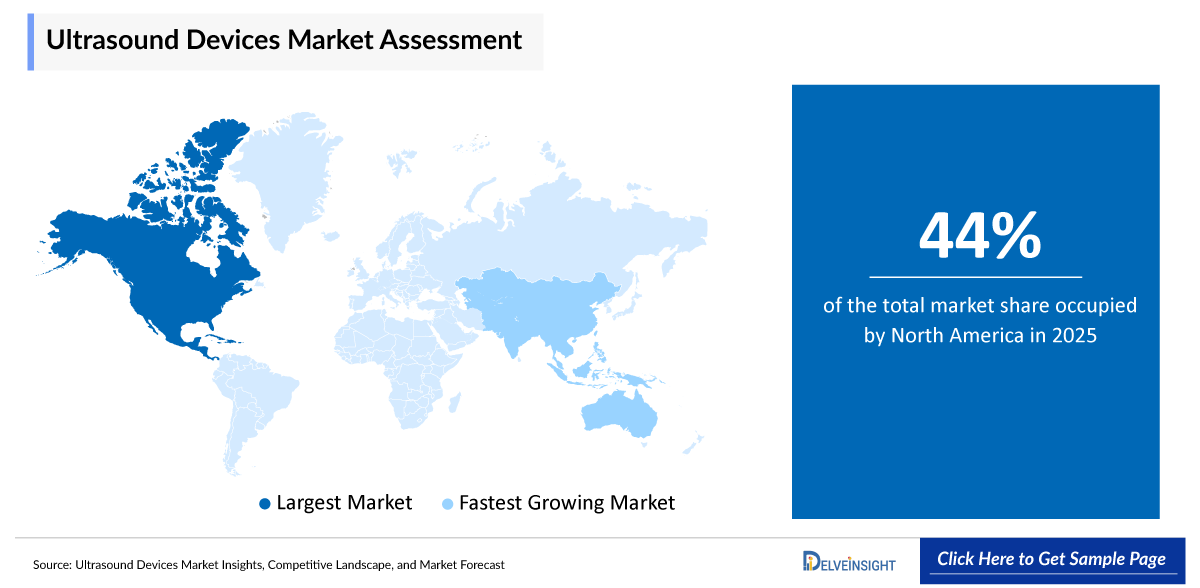
- The North American ultrasound device market is dominating and growing due to its well-established healthcare infrastructure, high adoption of advanced imaging technologies, and strong presence of leading medical device manufacturers. The rising prevalence of chronic diseases such as cardiovascular disorders, cancer, and liver diseases is driving demand for early and accurate diagnostic imaging. The region also benefits from favorable reimbursement policies, higher healthcare expenditure, and growing awareness of preventive healthcare. Continuous product innovations, such as AI-powered ultrasound and portable point-of-care systems, are further fueling adoption across hospitals and outpatient centers. In addition, the aging population and increasing use of ultrasound in women’s health, cardiology, and emergency medicine are reinforcing the market’s strong growth trajectory.
- In the product type segment of the ultrasound devices market, the 2D category is estimated to account for the largest market share in 2024.
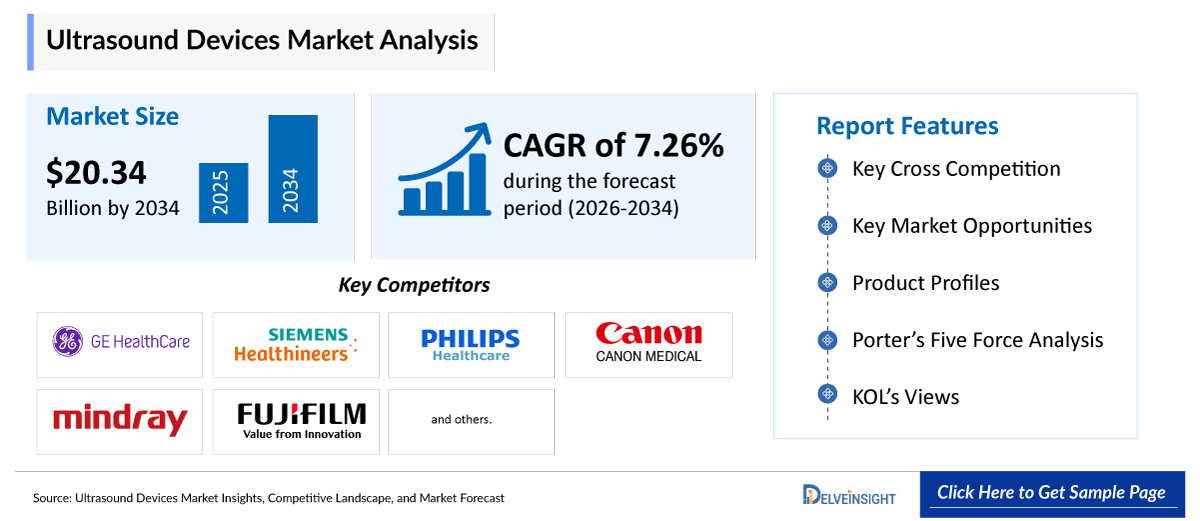
Request for unlocking the report of the @ Ultrasound Devices Market Forecast
Ultrasound Devices Market Size and Forecasts
| Report Metrics | Details |
| 2024 Market Size |
USD 9,315.06 million |
| 2032 Projected Market Size |
USD 13,054.68 million |
| Growth Rate (2025-2032) |
4.38% CAGR |
| Largest Market |
North America |
| Fastest Growing Market |
Asia-Pacific |
| Market Structure |
Moderately Consolidated |
Factors Contributing to the Growth of the Ultrasound Devices Market
- Rising prevalence of chronic diseases leading to a surge in the ultrasound devices market: The increasing incidence of chronic diseases such as cardiovascular conditions, cancer, and liver disorders is a major market driver. Ultrasound is a vital tool for the diagnosis, monitoring, and management of these conditions due to its non-invasive and real-time nature.
- Growing Preference for Non-Invasive and Safer Diagnostics: Ultrasound does not use ionizing radiation, unlike X-rays or CT scans. This makes it a safer option for repeated use, particularly for sensitive patients like pregnant women and children, as well as for monitoring chronic conditions. This inherent safety profile makes it a preferred imaging modality.
- Advancement in Technology: This is arguably the most significant driver. Innovations have made ultrasound systems more powerful, versatile, and accessible:
- Miniaturization and Portability: The development of compact, portable, and handheld ultrasound devices (often called Point-of-Care Ultrasound or POCUS) is a game-changer. These devices, some of which connect to smartphones or tablets, allow for real-time imaging at the patient's bedside, in emergency rooms, ambulances, and remote or rural areas, dramatically expanding the reach of ultrasound.
- Integration of Artificial Intelligence (AI): AI and machine learning algorithms are being integrated into ultrasound systems to improve image quality, automate measurements, and assist in diagnosis. AI can help less experienced users acquire high-quality images and can flag potential abnormalities for further review, increasing diagnostic accuracy and efficiency.
- Enhanced Imaging Capabilities: Advancements in imaging technology, such as high-resolution 3D and real-time 4D imaging, elastography (which measures tissue stiffness to detect tumors and liver fibrosis), and contrast-enhanced ultrasound (CEUS), provide more detailed and accurate diagnostic information.
- Wireless Connectivity and Tele-Ultrasound: Wireless transducers and cloud-based platforms enable images to be transmitted and shared instantly for remote consultations and real-time guidance, which is crucial for telemedicine and remote healthcare delivery.
Ultrasound Devices Market Report Segmentation
This ultrasound devices market report offers a comprehensive overview of the global ultrasound devices market, highlighting key trends, growth drivers, challenges, and opportunities. It covers detailed market segmentation by Product Type (2D, 3D/4D, Doppler, and High-Intensity Focused Ultrasound (HIFU)), Device Display (Color Ultrasound, B/W Ultrasound), Portability (Stationary, Portable), Application (Gynecology, Cardiology, Urology, Orthopedic, and Others), End-Users (Hospitals, Diagnostic Centers, Clinics, Ambulatory Surgical Centers, and Others), and Geography. The report provides valuable insights into the competitive landscape, regulatory environment, and market dynamics across major markets, including North America, Europe, and Asia-Pacific. Featuring in-depth profiles of leading industry players and recent product innovations, this report equips businesses with essential data to identify market potential, develop strategic plans, and capitalize on emerging opportunities in the rapidly growing ultrasound devices market.
An ultrasound device is a medical imaging tool that uses high-frequency sound waves to create real-time images of the inside of the body. Unlike X-rays, it does not use ionizing radiation, making it a safe and non-invasive way to visualize soft tissues and organs, such as the heart, liver, kidneys, and an unborn baby.
The global ultrasound device market is growing due to the rising prevalence of chronic diseases, increasing demand for early and accurate diagnosis, and the expanding use of minimally invasive procedures. Advancements in ultrasound technology, such as 3D/4D imaging, AI integration, and portable handheld systems, are further driving adoption across hospitals, diagnostic centers, and point-of-care settings. Growing awareness of prenatal care and maternal health, coupled with the aging population, has also boosted demand for ultrasound in obstetrics and cardiology. Additionally, ultrasound is cost-effective, safe, and radiation-free compared to other imaging modalities, making it a preferred diagnostic tool. Expanding healthcare infrastructure in emerging markets and favorable government initiatives to enhance access to imaging services are further contributing to market growth.
Get More Insights into the Report @ Ultrasound Devices Market Trends
What are the latest Ultrasound Devices Market Dynamics and Trends?
The global ultrasound device market is growing due to rising demand for early and accurate diagnosis, increasing use in minimally invasive procedures, and advancements like 3D/4D imaging, AI, and portable systems. This expansion is fundamentally driven by a confluence of technological innovation, an aging global population, and the escalating burden of chronic diseases. For instance, according to the World Health Organization, chronic diseases were responsible for approximately 74% of all deaths worldwide in 2019, a significant increase from 67% in 2010. This alarming trend, rising chronic disease prevalence, with cardiovascular disease alone impacting over 523 million people globally, and cancer cases projected to increase by nearly 50% by 2040, is creating sustained demand for safe and non-invasive imaging.
Ultrasound, being a radiation-free modality, is increasingly preferred for routine check-ups, early screening, and long-term monitoring of such conditions, directly addressing this public health challenge.
Furthermore, the global rise of the geriatric population, with a significant percentage of individuals aged 60 and above having at least one chronic condition, is a major demographic factor fueling demand. The number of people aged 60+ was about 1 billion in 2019 and is projected to reach ~1.4 billion by 2030 and 2.1 billion by 2050, increasing screening and diagnostic needs.
The market's growth is also being supercharged by the miniaturization of technology, leading to the proliferation of portable and handheld ultrasound devices. This has democratized access to imaging by transforming ultrasound from a static, hospital-based tool into a versatile, point-of-care solution. The widespread adoption of smartphones, with over 7.2 billion active subscriptions globally, has created a massive user base for these compact devices, as many can connect directly to a smartphone for a real-time display. This technical synergy with common consumer technology is enabling healthcare providers to perform quick and accurate diagnostics in a variety of settings, from a rural clinic to an ambulance, leading to faster treatment decisions and improved patient outcomes.
The integration of artificial intelligence and machine learning is further amplifying this effect, as AI-powered systems can automatically optimize image quality, perform measurements, and assist in diagnosis, making ultrasound even more accessible to professionals with limited training. As developing nations, particularly in the Asia-Pacific region, increase their healthcare spending and infrastructure investment, the demand for these affordable and effective diagnostic solutions will continue to accelerate, solidifying the market's global expansion.
Together, these epidemiologic, demographic, and technological trends are accelerating ultrasound adoption across hospitals, clinics, and community care, supporting robust market growth.
Despite the robust growth, the ultrasound devices market faces significant restraints and challenges, primarily stemming from high costs and the shortage of skilled professionals. The high initial investment required for advanced systems, which can range from tens to hundreds of thousands of dollars, remains a major barrier for smaller clinics and healthcare providers in developing countries. This financial hurdle is compounded by ongoing maintenance and servicing costs, often forcing institutions to opt for more affordable, refurbished equipment or to delay crucial technology upgrades. A second, equally critical challenge is the global shortage of trained sonographers and radiologists. The effectiveness of an ultrasound device is highly dependent on the operator's skill, and a lack of qualified personnel can lead to diagnostic errors, even with the most advanced machines. The demand for sonographers is increasing faster than the supply, with a significant gap between the number of open positions and the number of graduates entering the workforce. This shortage contributes to longer patient wait times and places a heavy workload on existing professionals, increasing the risk of burnout. Additionally, the market is subject to stringent regulatory hurdles from agencies like the U.S. FDA and the EU, which can delay product launches and increase costs for manufacturers. Finally, the market's oligopolistic nature, dominated by a few large companies, creates intense competition and price pressure, which can limit the ability of smaller, innovative players to enter and thrive in the market.
Ultrasound Devices Market Segment Analysis
Ultrasound Devices Market by Product Type Product Type (2D, 3D/4D, Doppler, and High-Intensity Focused Ultrasound (HIFU)), Device Display (Color Ultrasound, B/W Ultrasound), Portability (Stationary, Portable), Application (Gynecology, Cardiology, Urology, Orthopedic, and Others), End-Users (Hospitals, Diagnostic Centers, Clinics, Ambulatory Surgical Centers, and Others), and Geography (North America, Europe, Asia-Pacific, and Rest of the World)
By Product Type: The 2D category is the Market Leader
The 2D ultrasound category accounted for over 44% of the global ultrasound device market share in 2024, driven by its low cost, ease of use, and dominance in routine diagnostics, especially in obstetrics, general radiology, and cardiology in resource-constrained settings. It remains the workhorse because the volume of 2D procedures, from prenatal scans to abdominal and musculoskeletal imaging, is massive, and for many clinics, 2D is “good enough” given budget and infrastructure limitations.
New product launches and regulatory approvals are reinforcing the strength of 2D and handheld/portable ultrasound: for example, Esaote’s MyLab A50 and A70 systems received FDA clearance in August 2025; these are compact, battery-operated units designed to be portable yet with strong imaging performance.
Also, Philips introduced the Flash 5100 POC (Point-of-Care) ultrasound system in mid-2025, optimized for fast workflows in critical care settings, which typically rely heavily on 2D or simple Doppler imaging modes.
This influx of affordable, portable, regulatory-cleared 2D/POC ultrasound devices, plus rising adoption in emerging markets, helps ensure that, while higher modes like 3D/4D and Doppler will grow rapidly, 2D will likely continue to dominate overall share in the near-to-mid future, both because of its entrenched use and because newer devices tend to integrate 2D as a baseline mode.
By Portability: Stationary Category Dominates the Market
The stationary ultrasound category dominated the market with nearly 68% of global revenue in 2024, owing to its superior imaging quality, advanced functionalities, and ability to handle high patient volumes in hospitals and diagnostic centers. These systems are equipped with powerful transducers, multimodal features such as 3D/4D, Doppler, and elastography, and robust processing power that make them indispensable for complex diagnostic applications in cardiology, oncology, obstetrics, and abdominal imaging.
Their integration with PACS and EMR systems ensures seamless data management and workflow efficiency, a critical factor for tertiary care hospitals. Recent innovations are further strengthening their dominance. For example, GE HealthCare launched its LOGIQ E10 Series upgrade in June 2025, adding AI-driven automation and enhanced contrast imaging tailored for high-acuity departments, while Philips introduced the Affiniti CVx 2025 edition in May 2025, designed for advanced cardiovascular imaging with faster throughput and superior Doppler capabilities. These launches reflect how stationary systems remain the gold standard for comprehensive, high-precision diagnostics, supported by hospital investments, favorable reimbursement policies, and continuous technological upgrades.
While portable and handheld systems are expanding access in point-of-care and emerging markets, stationary platforms continue to anchor the market’s revenue base by delivering unmatched accuracy, speed, and versatility.
By End-Users: Hospitals Dominate the Market
Hospitals are projected to dominate the ultrasound devices market with the largest market share, holding over 40% and maintaining their position as the primary end-user. This is driven by their role as comprehensive healthcare hubs, offering a wide range of services from emergency care to specialized departments like cardiology and obstetrics, all of which require diverse ultrasound systems. Their high patient volume and significant financial capacity allow for investment in expensive, high-end equipment.
While hospitals will remain the dominant force, Diagnostic Centers represent a major growth segment, specializing in efficient, high-volume diagnostic imaging. Meanwhile, Clinics, Ambulatory Surgical Centers, and other smaller settings are poised for rapid growth, particularly with the rise of portable and handheld Point-of-Care Ultrasound (POCUS) devices. These compact, affordable systems are making ultrasound accessible outside of traditional hospital environments, enabling quicker diagnoses in clinics, ambulances, and even home care, which is fueling the market's expansion beyond its traditional strongholds.
Ultrasound Devices Market Regional Analysis
North America Ultrasound Devices Market Trends
North America, led by the U.S., accounted for a dominant ~35% share of the global ultrasound devices market in 2024. North America is a key growth engine for the global ultrasound market thanks to high healthcare spending, rapid POCUS adoption, and a large burden of chronic disease that drives demand for imaging and monitoring. North America held roughly one-third of the POCUS market in 2024, underscoring strong point-of-care uptake across ERs, primary care, and ambulatory settings.
The region’s epidemiology amplifies demand; heart disease alone caused about 919,032 deaths in the U.S. in 2023, keeping cardiac imaging and Doppler use high. Demographics also matter: the U.S. population aged 65+ reached ~61.2 million in 2024, expanding screening, chronic-care follow-up, and geriatric imaging needs.
Technological advances and AI are accelerating uptake, and manufacturers are rolling out higher-performance stationary and POC systems with AI workflow tools, exemplified by GE HealthCare’s new Vivid Pioneer cardiovascular ultrasound (CE/FDA 510(k) cleared) and Philips’ recent Flash 5100 POC launch, both aimed at faster, more accurate bedside imaging and higher throughput in hospitals.
Finally, increasing regulatory approvals for therapeutic ultrasound and investments in tele-ultrasound and smartphone-connected probes are broadening clinical use cases (from routine prenatal scans to emergency cardiac triage), which together sustain North America’s outsized contribution to market growth.
Europe Ultrasound Devices Market Trends
The European ultrasound devices market is a major global player, holding a significant share driven by its advanced healthcare infrastructure and a high demand for efficient diagnostic tools. One of the most prominent trends is the rising adoption of portable and handheld ultrasound devices, which are increasingly being used in point-of-care settings like emergency rooms, primary care clinics, and even home care. This is a direct response to the need for faster, more accessible diagnostics and is further fueled by the growth of telemedicine. The market is also heavily influenced by Europe's aging population and the corresponding increase in chronic diseases, such as cardiovascular conditions and cancer. Ultrasound's non-invasive nature and ability to provide real-time monitoring make it an ideal tool for managing these long-term conditions.
Furthermore, European healthcare systems are actively embracing technological innovation. There is a strong trend toward the integration of artificial intelligence (AI) to enhance image quality, automate measurements, and assist with diagnostic accuracy, which helps to mitigate the challenge of a shortage of skilled sonographers. While diagnostic ultrasound remains the largest segment, the therapeutic ultrasound market, particularly High-Intensity Focused Ultrasound (HIFU), is a key growth area, driven by a rising focus on non-invasive treatment options. Despite strong growth, the market faces challenges from stringent regulatory frameworks like the EU Medical Device Regulation (MDR) and pressure from price erosion, particularly in the lower-end segments due to the entry of more affordable Chinese vendors.
Asia-Pacific Ultrasound Devices Market Trends
The Asia-Pacific ultrasound devices market is poised to become the fastest-growing regional market globally, with China and Japan leading the way. This trend is driven by a unique set of factors, including a massive and aging population, rapid economic development, and increasing healthcare expenditure.
The region's healthcare landscape is characterized by a high prevalence of chronic and non-communicable diseases, such as cardiovascular diseases and cancer. This growing disease burden, coupled with increasing public awareness about early diagnosis, is creating a substantial demand for non-invasive and affordable diagnostic tools like ultrasound.
Furthermore, government initiatives aimed at improving healthcare infrastructure and accessibility in both urban and rural areas are playing a crucial role. This includes a push for domestic manufacturing of medical devices, which, particularly in China and India, is leading to the production of cost-effective ultrasound systems. This makes them more accessible to a wider patient base, especially in developing economies.
While established players like GE HealthCare and Siemens Healthineers have a strong presence, the market is also being shaped by key regional manufacturers like Mindray and Canon Medical Systems, who are known for their innovative and competitively priced products. The market is also seeing a rapid adoption of portable and handheld ultrasound devices, as they are ideal for addressing the need for point-of-care diagnostics in a region with diverse healthcare infrastructure and a large, spread-out population.
Who are the major players in the ultrasound devices market?
The following are the leading companies in the Ultrasound Devices market. These companies collectively hold the largest market share and dictate industry trends.
- GE HealthCare
- Siemens Healthineers
- Canon Medical Systems Corporation
- Shenzhen Mindray Bio-Medical Electronics Co., Ltd.
- Canon Medical Systems Corporation
- Samsung Healthcare
- FUJIFILM Holdings Corporation
- Esaote SpA
- Hologic, Inc.
- Hitachi, Ltd
- BPL Medical Technologies
- SonoScape Medical Corporation
- Butterfly Network, Inc.
- Carestream Health
- Clarius Mobile Health
- Trivitron Healthcare
- Chison Medical Imaging Co., Ltd.
- Teratech Corporation
- Wuhan Zoncare Bio-medical Electronics Co., Ltd.
- SuperSonic Imagine
- DMS Imaging
- Others
How is the competitive landscape shaping the ultrasound devices market?
The competitive landscape of the ultrasound devices market is highly dynamic and is characterized by a moderate to high level of market concentration. It is dominated by a few major, well-established multinational corporations, often referred to as the "Big Four": GE HealthCare, Koninklijke Philips N.V., Siemens Healthineers, and Canon Medical Systems Corporation. These companies leverage their strong brand recognition, extensive global distribution networks, and substantial R&D budgets to maintain a commanding presence. GE HealthCare, for example, is estimated to hold a significant global market share, particularly due to its leadership in women's health with the Voluson series.
However, this competitive dynamic is being challenged by a new wave of innovative players. Companies like Mindray Medical International Limited and Samsung Medison are rapidly gaining market share, particularly in emerging markets, by offering a blend of advanced technology and competitive pricing. Furthermore, the rise of specialized manufacturers like FUJIFILM Sonosite and Butterfly Network is reshaping the market through their focus on portable, handheld ultrasound devices, which directly compete with the traditional cart-based systems. This has intensified competition and is driving an innovation race, compelling all players to integrate cutting-edge technologies like AI, enhanced imaging, and cloud connectivity to differentiate their products and secure their market position.
Recent Developmental Activities in the Ultrasound Devices Market
- In August 2025, Esaote’s compact platforms MyLab™ A50 and MyLab™ A70 received FDA clearance, marking their U.S. entry as battery-operated, portable systems with advanced imaging and AI features.
- In August 2025, Philips announced the global launch of the Flash 5100 POC ultrasound system, a point-of-care device built for fast bedside use in anesthesia, ICU, emergency, and MSK settings.
- In June 2025, Exo expanded clinical capability on its handheld Exo Iris® by receiving FDA 510(k) clearance for on-device AI that detects pleural effusion and consolidation, advancing AI-enabled POCUS diagnostics.
- In May 2025, Exo Imaging and Samsung Medison announced a strategic collaboration that includes equity investment from Samsung, aimed at co-developing next-generation ultrasound platforms.
- In April 2025, Exo added real-time Global Longitudinal Strain (GLS) analysis to the Exo Iris® (FDA cleared), making it the first handheld to offer on-device GLS for bedside cardiac assessment.
- In April 2025, Philips rolled out the Elevate AI-enabled platform upgrade for its EPIQ Elite (and related Affiniti platforms), introducing automated image optimization and workflow tools to speed exams and increase diagnostic consistency.
- In January 2025, Samsung Medison launched the premium OB/GYN system HERA / Z20 in the U.S. (debut at SMFM 2025), featuring AI tools for live quality assistance, automated labeling, and advanced fetal imaging.
- In January 2025, Hologic finalized a $350 million acquisition of Gynesonics, the developer of the Sonata System (an ultrasound-guided system for uterine fibroid treatment).
- In August 2024, Siemens Healthineers received FDA clearance for the ACUSON Origin cardiovascular ultrasound system and the AcuNav Lumos 4D ICE intracardiac catheter, notable for AI features and 4D intracardiac imaging.
- In August 2024, Samsung Medison completed the acquisition of Sonio SAS, a French fetal ultrasound AI software company, to enhance its AI-driven prenatal ultrasound guidance and reporting capabilities.
- In July 2024, GE HealthCare agreed (~$51 million) to acquire the clinical AI business of Intelligent Ultrasound Group PLC (Wales), adding tools like ScanNav Assist and streamlining ultrasound workflow across its portfolio.
- In November 2023, Samsung launched the V6 ultrasound system, a cost-effective cart system emphasizing image clarity, automation, and women’s health workflows for daily clinical use.
| Report Metrics | Details |
| Study Period |
2022 to 2032 |
| Base Year |
2024 |
| Forecast Period |
2025 to 2032 |
| Ultrasound Devices Market CAGR |
4.38% |
| Key Companies in the Ultrasound Devices Market |
GE HealthCare, Siemens Healthineers, Canon Medical Systems Corporation, Shenzhen Mindray Bio-Medical Electronics Co., Ltd., Canon Medical Systems Corporation, Samsung Healthcare, FUJIFILM Holdings Corporation, Esaote SpA, Hologic, Inc., Hitachi, Ltd, BPL Medical Technologies, SonoScape Medical Corporation, Butterfly Network, Inc., Carestream Health, Clarius Mobile Health, Trivitron Healthcare, Chison Medical Imaging Co., Ltd., Teratech Corporation, Wuhan Zoncare Bio-medical Electronics Co., Ltd., SuperSonic Imagine, DMS Imaging, and Others. |
| Ultrasound Devices Market Segments |
by Product Type, by Device Display, by Portability, by Application, by End-Users, and by Geography |
| Ultrasound Devices Regional Scope |
North America, Europe, Asia Pacific, Middle East, Africa, and South America |
| Ultrasound Devices Country Scope |
U.S., Canada, Mexico, Germany, United Kingdom, France, Italy, Spain, China, Japan, India, Australia, South Korea, and key Countries |
Ultrasound Devices Market Segmentation
Ultrasound Devices by Product Type Exposure
- 2D
- 3D/4D
- Doppler
- High-Intensity Focused Ultrasound (HIFU)
Ultrasound Devices Device Display Exposure
- Color Ultrasound
- B/W Ultrasound
Ultrasound Devices Portability Exposure
- Stationary
- Portable
Ultrasound Devices Application Exposure
- Gynecology
- Cardiology
- Urology
- Orthopedic
- Others
Ultrasound Devices End-Users Exposure
- Hospitals
- Diagnostic Centers
- Clinics
- Ambulatory Surgical Centers
- Others
Ultrasound Devices Geography Exposure
- North America Ultrasound Devices Market
- United States Ultrasound Devices Market
- Canada Ultrasound Devices Market
- Mexico Ultrasound Devices Market
Europe Ultrasound Devices Market
- United Kingdom Ultrasound Devices Market
- Germany Ultrasound Devices Market
- France Ultrasound Devices Market
- Italy Ultrasound Devices Market
- Spain Ultrasound Devices Market
- Rest of Europe Ultrasound Devices Market
Asia-Pacific Ultrasound Devices Market
- China Ultrasound Devices Market
- Japan Ultrasound Devices Market
- India Ultrasound Devices Market
- Australia Ultrasound Devices Market
- South Korea Ultrasound Devices Market
Rest of Asia-Pacific Ultrasound Devices Market
- Rest of the World Ultrasound Devices Market
- South America Ultrasound Devices Market
- Middle East Ultrasound Devices Market
- Africa Ultrasound Devices Market
Ultrasound Devices Market Recent Industry Trends and Milestones (2022-2025)
| Category | Key Developments |
| Ultrasound Devices Product Launches & Approvals |
Esaote’s MyLab™ A50 and MyLab™ A70 (FDA), Global Launch of Flash 5100 POC Ultrasound System, ACUSON Origin (FDA), Ultromics FDA 510(k) approval for its EchoGo Amyloidosis solution |
| Partnerships in the Ultrasound Devices Market |
· Sonus Microsystems entered a partnership with Providence Health Care Ventures. · Exo Imaging and Samsung Medison announced a strategic collaboration that includes equity investment from Samsung, aimed at co-developing next-generation ultrasound platforms. · Mindray also partnered with TeleRay, a virtual care/radiology communications platform, to enable secure tele-ultrasound access using Mindray’s Resona 7 and Resona I9 systems, facilitating real-time image streaming and remote consultations. · Pulsenmore Ltd. expanded its partnership with Clalit Health Services (Israel’s largest health maintenance organization) to deliver 25,000 home ultrasound devices over 5 years for remote prenatal care, including synchronous (clinician-guided) scan support. · Edan Instruments partnered with Global Health Labs, Inc. (GH Labs) to co-develop AI-enabled ultrasound devices aimed particularly at low- and middle-income countries, to improve accessibility and maternal/infant health outcomes. |
| Acquisitions in the Ultrasound Devices Market |
· Hologic - Gynesonics (2025) · GE HealthCare - Intelligent Ultrasound (Clinical AI business) (2024) · Samsung Healthcare - Sonio (2024) · KronosMD (KNOS) - Patent portfolio for S-WAVE™ 3D ultrasound (2023) |
| Company Strategy |
· GE HealthCare: Focus on AI integration, particularly for workflow automation and image guidance. Acquired Intelligent Ultrasound's AI business and is expanding its portable ultrasound portfolio with products like the Vscan Air. · Siemens Healthineers: Building a scalable ecosystem with a consistent user interface across its ACUSON product line. Emphasizes advanced transducer technology and AI-powered workflow to enhance efficiency and reduce training time. · Koninklijke Philips N.V.: Investing in AI-based software and manufacturing to offer end-to-end solutions. The Lumify handheld device and a focus on cardiovascular and women's health are key pillars of its strategy. |
| Emerging Technology |
· Artificial Intelligence (AI) and Machine Learning (ML) · Miniaturization and Portable Ultrasound Devices · Advanced Imaging and Visualization Techniques · Tele-Ultrasound and Cloud Connectivity |
Impact Analysis
AI-Powered Innovations and Applications:
The integration of artificial intelligence (AI) is a transformative force in the ultrasound devices market, fundamentally reshaping its capabilities and expanding its reach. AI-powered innovations are addressing long-standing challenges by automating time-consuming and operator-dependent tasks, which has a significant impact on workflow efficiency and accuracy. For instance, AI algorithms can automatically acquire and analyze images, freeing up clinicians to focus on patient interaction and reducing examination times.
Furthermore, AI acts as a powerful diagnostic assistant by detecting subtle anomalies and assisting in the classification of lesions, thereby improving diagnostic accuracy and reducing the risk of human error. The most profound impact of AI, however, is the democratization of ultrasound, as AI-guided systems can provide real-time, step-by-step feedback to users, empowering healthcare professionals with limited training to perform diagnostic-quality scans. This is a key driver for the explosive growth of the Point-of-Care Ultrasound (POCUS) market, extending its use to clinics, remote areas, and emergency settings. While challenges such as high costs and the need for large, high-quality datasets for training AI models exist, the future of ultrasound technology is inextricably linked with AI, which will continue to enhance its utility and redefine its role in global healthcare.
U.S. Tariff Impact Analysis on the Ultrasound Devices Market:
The implementation of U.S. tariffs, particularly on medical devices and components from China and the European Union, is creating a significant and multifaceted challenge for the global ultrasound devices market. These tariffs, which can add a considerable percentage to import costs, directly impact manufacturers by either compressing their profit margins or forcing them to pass on the added expenses to healthcare providers and, ultimately, patients. This price increase could potentially slow down the adoption of new ultrasound technology, as hospitals and clinics, especially smaller ones, may find it more difficult to afford capital-intensive equipment.
Furthermore, the tariffs are disrupting established, complex global supply chains, compelling companies to urgently find new suppliers or even consider reshoring manufacturing to avoid the added costs. This can lead to supply shortages, logistical delays, and increased operational expenses, creating market instability. While the tariffs are intended to incentivize domestic production and reduce reliance on foreign suppliers in the long term, they also pose a risk of reducing R&D spending and slowing down innovation, as companies prioritize cost management over new product development. Additionally, the possibility of retaliatory tariffs from affected countries could further harm U.S. medical device exports, adding another layer of complexity to the competitive landscape.
How This Analysis Helps Clients
- Cost Management: By understanding the tariff landscape, clients can anticipate cost increases and adjust pricing strategies accordingly, ensuring profitability.
- Supply Chain Optimization: Clients can identify alternative sourcing options and diversify their supply chains to reduce dependency on high-tariff regions, enhancing resilience.
- Regulatory Navigation: Expert guidance on navigating the evolving regulatory environment helps clients maintain compliance and avoid potential legal challenges.
- Strategic Planning: Insights into tariff impacts enable clients to make informed decisions about manufacturing locations, partnerships, and market entry strategies.
Startup Funding & Investment Trends
| Company Name | Total Funding | Main Products | Stage of Development | Core Technology |
| Exo |
Over $390M | A handheld, multi-purpose ultrasound device integrated with a cloud-based software platform. | Pre-commercial/Late-stage Clinical Trials | Proprietary piezoelectric micromachined ultrasonic transducer (pMUT) technology and AI-powered software for imaging and analysis. |
| Butterfly Network, Inc. |
Over $350M | A single-probe, whole-body ultrasound system connected to a smartphone. | Commercialized (but continuous R&D with new funding) | A "Ultrasound-on-a-Chip" that replaces the traditional piezoelectric crystal technology with a single silicon chip. |
| Clarius Mobile Health |
Over $20M | A series of wireless, handheld ultrasound scanners for various applications. | Commercialized (but continuous R&D with new funding) | Wireless, app-based ultrasound technology with a focus on ease of use and point-of-care applications. |
| EchoNous |
Over $50M | AI-powered portable ultrasound devices for point-of-care. | Commercialized (but continuous R&D with new funding) | Advanced AI algorithms for real-time image guidance and quality assessment, as well as a range of specialized probes. |
| Sound Blade Medical |
Not Disclosed (Seed Funding) | A non-invasive therapeutic ultrasound device. | Early Stage/Pre-clinical | Utilizes therapeutic ultrasound to treat soft tissue damage and fibrosis. |
| Verasonics |
Not disclosed (Private) | Research ultrasound systems for advanced product development. | R&D/Pre-clinical | Highly flexible and programmable ultrasound platforms for developing new imaging techniques and therapeutic applications. |
Key takeaways from the ultrasound devices market report study
- Market size analysis for the current ultrasound devices market size (2024), and market forecast for 8 years (2025 to 2032)
- Top key product/technology developments, mergers, acquisitions, partnerships, and joint ventures happened over the last 3 years.
- Key companies dominating the ultrasound devices market.
- Various opportunities available for the other competitors in the ultrasound devices market space.
- What are the top-performing segments in 2024? How these segments will perform in 2032?
- Which are the top-performing regions and countries in the current ultrasound devices market scenario?
- Which are the regions and countries where companies should have concentrated on opportunities for the ultrasound devices market growth in the future?