
Urinary Tract Obstruction Treatment Devices Market Summary
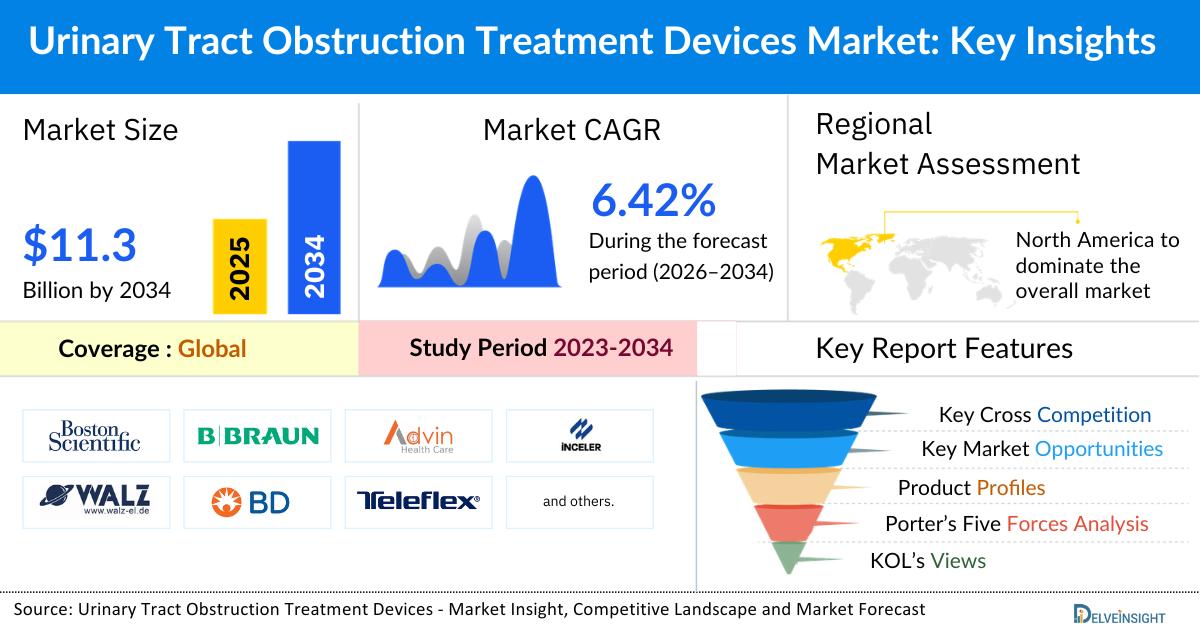
- The Global Urinary Tract Obstruction Treatment Devices Market is expected to increase from USD 6,515.92 million in 2025 to USD 11,358.52 million by 2034, reflecting strong and sustained growth.
- The Global Urinary Tract Obstruction Treatment Devices Market is growing at a CAGR of 6.42% during the forecast period from 2026 to 2034.
- The Urinary Tract Obstruction Treatment Devices Market is primarily driven by the rising prevalence of urological disorders, such as bladder cancer and kidney stones. Furthermore, ongoing technological advancements and innovative product designs are contributing to market growth. Additionally, progress in minimally invasive technologies, including urethral stents and dilators, is further boosting the adoption of these treatment devices.
- The leading Urinary Tract Obstruction Treatment Devices Companies such as Boston Scientific Corporation, B.Braun SE, Advin Healthcare, Inceler Medikal Ltd., Walz Electronik GmbH, Cook, BD, Teleflex Incorporated, Storz Medical AG, Olympus Corporation, EMS Urology, Dornier MedTech, ACE Medical Devices, Applied Medical Resources Corporation, Richard Wolf GmbH, Coloplast A/S, Quanta System, CUBIT MEDISURGE LLP, Steris, and others.
- North America is expected to dominate the Urinary Tract Obstruction Treatment Devices Market due to several key factors. The region has a high and rising prevalence of urological conditions such as Bladder Cancer, kidney stones, and other urinary disorders, which is increasing the demand for advanced treatment devices. In addition, strong healthcare infrastructure and higher healthcare spending support the early adoption of new technologies. Continuous technological advancements and innovative product designs are improving treatment effectiveness and patient outcomes.
- Moreover, the growing use of minimally invasive technologies, including urethral stents and dilators, is enabling safer procedures, faster recovery, and reduced hospital stays, further strengthening the market growth in the region.
- In the product segment of the Urinary Tract Obstruction Treatment Devices Market, the urinary catheters category is estimated to account for the largest market share in 2025.
Request for unlocking the Sample Page of the @ Urinary Tract Obstruction Treatment Devices Market
Urinary Tract Obstruction Treatment Devices Market Size and Forecasts
|
Report Metrics |
Details |
|
2025 Market Size |
USD 6,515.92 million |
|
2034 Projected Market Size |
USD 11,358.52 million |
|
Growth Rate (2026-2034) |
6.42% CAGR |
|
Largest Market |
North America |
|
Fastest Growing Market |
Asia-Pacific |
|
Market Structure |
Moderately Concentrated |
Factors Contributing to the Growth of the Urinary Tract Obstruction Treatment Devices Market
-
Rising prevalence of urological disorders such as bladder cancer, kidney stones, and others
The rising prevalence of urological disorders such as bladder cancer, kidney stones, and other urinary tract conditions is increasing the demand for Urinary Tract Obstruction Treatment Devices. As more people are being diagnosed with these disorders, the need for effective devices to relieve blockages and restore normal urine flow is growing. Additionally, aging populations and lifestyle-related health issues are contributing to a higher number of urinary complications, which is supporting market growth. Furthermore, increased awareness, early diagnosis, and improved access to healthcare are encouraging patients to seek treatment, leading to greater adoption of advanced obstruction management devices.
-
Increasing technological advancements and innovative product designs
Increasing technological advancements and innovative product designs are improving the effectiveness of Urinary Tract Obstruction Treatment Devices. New devices are being developed with better precision, safety features, and ease of use, which help doctors perform procedures more efficiently and improve patient outcomes. Additionally, modern technologies are enabling minimally invasive treatments that reduce pain, recovery time, and hospital stays. Furthermore, continuous research and development are leading to smarter and more durable devices, supporting better long-term management of urinary tract obstruction and increasing their adoption in healthcare settings.
-
Advancements in minimally invasive technologies, including urethral stents and dilators
Advancements in minimally invasive technologies are improving the treatment of urinary tract obstruction by making procedures safer and less painful for patients. Devices such as urethral stents and dilators help open blocked urinary pathways without the need for major surgery, which supports faster recovery and shorter hospital stays. Additionally, these technologies reduce the risk of complications and improve patient comfort during treatment. Furthermore, continuous innovation in device design and materials is helping doctors perform procedures more accurately, increasing the effectiveness of urinary tract obstruction management.
Urinary Tract Obstruction Treatment Devices Market Report Segmentation
This Urinary Tract Obstruction Treatment Devices market report offers a comprehensive overview of the global Urinary Tract Obstruction Treatment Devices market, highlighting key trends, growth drivers, challenges, and opportunities. It covers detailed market segmentation by Product (Urinary Catheters {Intermittent Catheter, Indwelling Foley Catheter, and Exernal Catheter}, Urinary Stents, Shockwave Lithotripters {Intracorporeal and Extracorporeal}, Ureterscope, Resectoscopes, and Others), Indication (Stones, Tumour, Benign Prostatic Hyperplasia and Others), End-Users (Hospitals, Ambulatory Surgical Centers, and Others), and geography. The report provides valuable insights into the competitive landscape, regulatory environment, and market dynamics across major markets, including North America, Europe, and Asia-Pacific. Featuring in-depth profiles of leading industry players and recent product innovations, this report equips businesses with essential data to identify market potential, develop strategic plans, and capitalize on emerging opportunities in the rapidly growing Urinary Tract Obstruction Treatment Devices market.
Urinary Tract Obstruction Treatment Devices are medical devices designed to manage or relieve blockages in the urinary tract, which can occur in the kidneys, ureters, bladder, or urethra. These obstructions can result from kidney stones, tumors, strictures, or other pathological conditions that impede the normal flow of urine, potentially leading to pain, infections, kidney damage, or impaired renal function. The devices used for treatment include ureteral stents, nephrostomy catheters, balloon dilators, and other minimally invasive instruments that help restore urine flow, reduce pressure, and prevent complications.
The Urinary Tract Obstruction Treatment Devices Market is largely fueled by the increasing incidence of urological conditions, including kidney stones, bladder cancer, and other disorders that cause urinary blockages. Furthermore, continuous technological innovations and the development of advanced product designs are playing a significant role in expanding the market. Additionally, the rise of minimally invasive treatment options, such as ureteral stents, dilators, and catheter-based devices, is making these therapies safer, more effective, and more widely adopted in clinical practice. Together, these factors are driving higher demand for Urinary Tract Obstruction Treatment Devices, as healthcare providers increasingly prefer solutions that improve patient outcomes while reducing recovery times and procedural risks.
Get More Insights into the Report @ Urinary Tract Obstruction Treatment Devices Market
What are the latest Urinary Tract Obstruction Treatment Devices market dynamics and trends?
The global Urinary Tract Obstruction Treatment Devices market has experienced notable growth in recent years, primarily due to the increasing prevalence of urological conditions such as kidney stones, bladder cancer, and other urinary disorders. Moreover, continuous technological advancements and the introduction of innovative product designs have further supported market expansion. Additionally, the rise of minimally invasive solutions, including urethral stents and dilators, has enhanced treatment safety and effectiveness, encouraging broader adoption of these devices in clinical practice.
According to a study by the National Library of Medicine (2025), there were 106 million new cases of urolithiasis worldwide, with men accounting for more than 67% of the cases. Kidney stones have been a major factor driving the growth of the Urinary Tract Obstruction Treatment Devices market, as they often cause blockages in the urinary tract that require medical intervention. These obstructions can lead to severe pain, infections, and impaired kidney function, creating a strong demand for devices such as ureteral stents, nephrostomy catheters, and lithotripsy systems. Furthermore, the increasing prevalence of kidney stones globally, combined with the need for effective and minimally invasive treatment options, significantly boosted the adoption of Urinary Tract Obstruction Treatment Devices. As a result, kidney stones were closely linked to the market, directly influencing the development, innovation, and widespread use of these therapeutic devices.
Furthermore, according to a study published in 2025, benign prostatic hyperplasia (BPH) was a common urological condition affecting elderly men worldwide, with 112,502 thousand prevalent cases reported globally. Benign prostatic hyperplasia (BPH) is a key driver of the Urinary Tract Obstruction Treatment Devices market, as it is a leading cause of urinary blockage in aging men. The enlarged prostate compresses the urethra, causing difficulty in urination, incomplete bladder emptying, and a higher risk of infections, which increases demand for devices such as urethral stents, prostatic implants, catheters, and minimally invasive surgical tools.
The growing global prevalence of BPH, coupled with advances in minimally invasive implants, shape‑memory stents, and smart catheters, has made treatments safer, more efficient, and widely adoptable in hospitals and outpatient settings. Consequently, BPH significantly drives market growth by increasing the need for effective urinary obstruction interventions. Furthermore, the increase in product development activites are further boosting the overall market of IVUS. For instance, in April 2024, Olympus Corporation received FDA 510(k) clearance for its RenaFlex single-use ureteroscope system. The device enables access and visualization within the urinary tract, supporting the diagnosis and treatment of urinary conditions, including kidney stones.
Thus, the factors mentioned above are expected to boost the overall market of Urinary Tract Obstruction Treatment Devices during the forecast period from 202 to 2034. However, the Urinary Tract Obstruction Treatment Devices market is restrained by the risk of post-procedure complications and stringent regulatory approval processes.
Devices such as ureteral stents and catheters can lead to infections, biofilm formation, stent migration, encrustation, hematuria, and patient discomfort, often requiring repeat interventions and increasing overall healthcare costs, which reduces physician and patient confidence in long-term device use. At the same time, strict regulatory requirements demand extensive clinical evidence for safety, biocompatibility, and performance, resulting in prolonged approval timelines, higher development costs, and delayed product launches. Together, these clinical risks and regulatory barriers limit innovation, slow market entry of new technologies, and restrain overall market growth.
Urinary Tract Obstruction Treatment Devices Market Segment Analysis
Urinary Tract Obstruction Treatment Devices Market by Product (Urinary Catheters {Intermittent Catheter, Indwelling Foley Catheter, and Exernal Catheter}, Urinary Stents, Shockwave Lithotripters {Intracorporeal and Extracorporeal}, Ureterscope, Resectoscopes, and Others), Indication (Stones, Tumour, Benign Prostatic Hyperplasia, and Others), End-Users (Hospitals, Ambulatory Surgical Centers, and Others), and Geography (North America, Europe, Asia-Pacific, and Rest of the World)
By Product: Intermittent Catheters within the Urinary Catheters Segment Projected to Dominate the Market
Within the product type segmentation of the Urinary Tract Obstruction Treatment Devices market, under the Urinary Catheter segment, the Intermittent catheters category is projected to dominate, accounting for an estimated 57% market share in 2025. Intermittent catheters are widely used to manage conditions that cause incomplete bladder emptying or urinary retention, such as strictures, neurogenic bladder, or post-surgical obstruction. These catheters are designed for temporary insertion to drain urine from the bladder and are removed immediately after voiding, reducing the risk of long-term complications associated with indwelling catheters.
The primary applications of intermittent catheters include short-term management of acute urinary retention, chronic management in patients with neurological disorders, and post-operative care to ensure proper bladder emptying. The advantages of intermittent catheters include lower infection rates compared to permanent catheters, improved patient comfort, convenience for home use, and reduced risk of urethral trauma or encrustation. Additionally, their ease of use and portability have contributed to growing adoption among both hospital and home-care settings, driving their demand within the Urinary Tract Obstruction Treatment Devices market.
However, the increase in product development activities is further boosting the overall market of the sling system. For instance, in May 2024, Coloplast expanded its Luja™ catheter line by launching a next‑generation intermittent catheter for women, which featured Micro‑hole Zone Technology to promote complete bladder emptying and reduce the risk of urinary tract infections (UTIs). As a result, the intermittent catheters category is projected to witness substantial growth within the overall Urinary Tract Obstruction Treatment Devices (IVUS) market throughout the forecast period.
By Indication: Tumors Category Dominates the Market
The tumors category dominates the Urinary Tract Obstruction Treatment Devices market with a market share of 38% in 2025 due to the high prevalence of urological cancers, such as bladder, prostate, and kidney cancers, which frequently lead to urinary obstructions. Tumors can block the normal flow of urine, resulting in complications such as hydronephrosis, kidney damage, or infections, which necessitate timely intervention with specialized treatment devices. Consequently, medical devices such as ureteral stents, nephrostomy catheters, and balloon dilators are widely used to relieve obstruction in cancer patients.
Additionally, advances in minimally invasive technologies and targeted device designs have made these interventions safer and more effective, further increasing their adoption in oncology care. This strong clinical demand from cancer patients has made the oncology segment the largest contributor to the growth of the Urinary Tract Obstruction Treatment Devices market.
By End-Users: Hospitals Category Dominates the Market
The hospitals category dominates the Urinary Tract Obstruction Treatment Devices market due to the critical nature of urinary obstructions, which often require immediate and specialized medical intervention. Hospitals are equipped with advanced infrastructure, skilled urologists, and trained healthcare personnel, enabling the use of sophisticated treatment devices such as ureteral stents, nephrostomy catheters, and intermittent catheters for both acute and complex cases.
Additionally, hospitals handle a high volume of patients with urological disorders, including kidney stones, bladder cancer, and post-surgical urinary complications, which drives the demand for these devices. Furthermore, the availability of advanced surgical suites and ICU facilities allows hospitals to adopt minimally invasive technologies and integrate novel devices, contributing to better patient outcomes and faster recovery. As a result, hospitals remain the primary end-users and key revenue contributors in the Urinary Tract Obstruction Treatment Devices market.
Urinary Tract Obstruction Treatment Devices Market Regional Analysis
North America Urinary Tract Obstruction Treatment Devices Market Trends
North America is expected to account for the highest proportion of 41% of the Urinary Tract Obstruction Treatment Devices market in 2025, out of all regions. This market dominance is driven by the increasing prevalence of urological conditions, including kidney stones and bladder cancer. In addition, continuous technological innovations and the development of advanced product designs are supporting market expansion. Moreover, the growing adoption of minimally invasive solutions, such as urethral stents and dilators, is further enhancing the uptake of these treatment devices.
According to the American Urological Association Education and Research (2024), a survey was conducted among 37,857 U.S. adults after exclusions. Of these participants, 9.25% reported having experienced kidney stones. The prevalence was higher in men (54.8%) than in women (45.2%) and increased with age, reaching a peak of 23.9% among individuals aged 70 years and older. Kidney stones are a key driver of growth in the Urinary Tract Obstruction Treatment Devices market, as they can partially or completely block the urinary tract, causing pain, infections, and potential kidney damage. The increasing global incidence of kidney stones has heightened the demand for effective treatment solutions, including ureteral stents, dilators, nephrostomy catheters, and minimally invasive surgical devices, all of which help restore urine flow and alleviate obstructions.
Moreover, according to the American Cancer Society (2025), one in eight men (12.8%) in the United States developed prostate cancer, with an estimated 313,780 new cases reported in 2025. The risk of developing prostate cancer increased sharply with age, rising from 0.2% in men under 50 years to 6.5% in men aged 70–79 years. Prostate cancer can cause urinary blockages by compressing the urethra or obstructing urine flow, creating a clinical need for devices such as urethral stents, catheters, and minimally invasive implants to restore normal urinary function. The rising incidence of prostate cancer globally is therefore driving demand for these treatment solutions.
Similarly, benign prostatic hyperplasia (BPH), a non-cancerous enlargement of the prostate, is a major contributor to urinary obstruction, particularly in older men. BPH leads to lower urinary tract symptoms, including difficulty in urination, incomplete bladder emptying, and urinary retention, which necessitate the use of obstruction treatment devices. Consequently, the prevalence of both malignant and benign prostate conditions is boosting market growth by increasing the need for safe, effective, and minimally invasive devices that relieve obstruction and improve patient quality of life. Thus, all the above-mentioned factors are anticipated to propel the market for Urinary Tract Obstruction Treatment Devices in North America during the forecast period.
Europe Urinary Tract Obstruction Treatment Devices Market Trends
In Europe, the dominance of this market is fueled by the rising prevalence of urological disorders, including kidney stones and bladder cancer. Continuous technological advancements and the introduction of innovative product designs are further supporting market growth. Additionally, the increasing adoption of minimally invasive solutions, such as urethral stents and dilators, is driving greater utilization of these treatment devices across healthcare settings.
As reported by the National Library of Medicine (2025), Eastern Europe had the highest age-standardized incidence of kidney stones, with 3,560 cases per 100,000 people. Kidney stones are a key factor driving the growth of the Urinary Tract Obstruction Treatment Devices market, as they can obstruct urine flow in the kidneys, ureters, or bladder, causing pain, infections, and potential kidney damage. Treating these obstructions often requires medical devices such as ureteral stents, nephrostomy catheters, and minimally invasive lithotripsy systems to restore proper urinary function. Moreover, the increasing global prevalence of kidney stones linked to lifestyle factors like poor diet, obesity, and physical inactivity is fueling demand for advanced treatment solutions. In addition, technological advancements, including laser lithotripsy, smart stents, and hydrophilic catheters, are enhancing the safety and effectiveness of procedures, promoting wider adoption of these devices and further supporting market growth.
Additionally, according to the European Cancer Organisation (2025), prostate cancer was the most common cancer among men in Europe, with over 330,000 new cases reported annually. Prostate cancer is significantly boosting the Urinary Tract Obstruction Treatment Devices market because the disease often leads to urinary blockages. As tumors grow, they can compress the urethra or obstruct urine flow, causing symptoms such as difficulty urinating, incomplete bladder emptying, and urinary retention. This creates a clinical need for devices like urethral stents, catheters, and minimally invasive implants to restore proper urinary function.
The rising incidence of prostate cancer globally has therefore increased the demand for these treatment devices, driving market growth as healthcare providers seek safe and effective solutions to manage obstruction and improve patients' quality of life. Hence, all the factors mentioned above are expected to drive the market for Urinary Tract Obstruction Treatment Devices in Europe during the forecast period.
Asia-Pacific Urinary Tract Obstruction Treatment Devices Market Trends
In the Asia-Pacific region, the market’s dominance is driven by the growing prevalence of urological disorders, such as kidney stones and bladder cancer. Ongoing technological innovations and the development of advanced product designs are further fueling market growth. Moreover, the rising adoption of minimally invasive treatments, including urethral stents and dilators, is promoting wider use of these devices across hospitals and clinical settings.
According to Urological Science 2025, in India, approximately 12% of the population was affected by urinary stones, indicating a significant prevalence of urolithiasis in the country and highlighting the growing need for effective Urinary Tract Obstruction Treatment Devices. Urolithiasis, or kidney stone formation, is a key driver of the Urinary Tract Obstruction Treatment Devices market. Stones can block urine flow, causing pain, retention, and kidney damage, which increases demand for devices like ureteral stents, catheters, nephrostomy tubes, and minimally invasive stone removal systems. The growing global prevalence of kidney stones due to aging, lifestyle, and dietary factorscombined with innovations such as advanced lithotripsy, hydrophilic stents, and smart catheters, is boosting adoption across hospitals, outpatient centers, and home care, driving market growth.
Furthermore, according to the International Agency for Research on Cancer, the estimated number of new prostate cancer cases was 41.7 thousand in 2025, and it was projected to rise to 82.3 thousand by 2045. Prostate cancer is significantly driving the growth of the Urinary Tract Obstruction Treatment Devices market because it can cause urinary blockages by compressing the urethra or impeding normal urine flow. Furthermore, this obstruction creates a clinical need for devices such as urethral stents, catheters, and minimally invasive implants to restore proper urinary function.
Additionally, the rising global incidence of prostate cancer has increased the number of patients requiring interventions to relieve urinary obstruction, boosting demand for advanced treatment devices. Moreover, the emphasis on minimally invasive and patient-friendly solutions for managing obstruction caused by prostate tumors further supports market expansion, as hospitals and clinics seek safer and more effective therapeutic options. Hence, all the factors mentioned above are expected to drive the market for Urinary Tract Obstruction Treatment Devices in the Asia-Pacific during the forecast period.
Who are the major players in the Urinary Tract Obstruction Treatment Devices market?
The following are the leading companies in the Urinary Tract Obstruction Treatment Devices market. These companies collectively hold the largest market share and dictate industry trends.
- Boston Scientific Corporation
- B.Braun
- Advin Healthcare
- İnceler Medikal Ltd.
- Walz Elektronik GmbH
- Cook
- BD
- Teleflex Incorporated
- Storz Medical AG
- Olympus Corporation
- EMS Urology
- Dornier MedTech
- ACE Medical Devices
- Applied Medical Resources Corporation
- Richard Wolf GmbH
- Coloplast
- Quanta System
- UROMED
- CUBIT MEDISURGE LLP
- Steris
How is the competitive landscape shaping the Urinary Tract Obstruction Treatment Devices market?
The Urinary Tract Obstruction Treatment Devices market is highly competitive, driven by ongoing innovation, strategic alliances, and efforts to expand product portfolios to address diverse clinical requirements. Leading companies focus on developing advanced, user-friendly devices, including improved ureteral stents, hydrophilic and closed-system intermittent catheters, and minimally invasive solutions that help minimize complications such as infections and patient discomfort. Significant investments in research and development allow manufacturers to introduce products with superior materials, ergonomic designs, and technologies that enhance both patient outcomes and procedural efficiency.
In addition, strategic partnerships, mergers, and acquisitions are widely pursued to extend geographic presence and diversify offerings across hospital and home-care settings. Marketing strategies and educational initiatives targeting healthcare professionals and patients also play a key role in establishing market position. Regulatory approvals and favorable reimbursement policies in major regions further influence competition by facilitating quicker market entry and broader adoption. Overall, the competitive environment fosters continuous innovation and the creation of value-driven solutions, promoting market growth while providing clinicians with a wide array of effective options for managing urinary tract obstruction.
Recent Developmental Activities in the Urinary Tract Obstruction Treatment Devices Market
- In April 2024, Olympus Corporation received FDA 510(k) clearance for its RenaFlex single‑use ureteroscope system, which was designed to enhance access and visualization during the diagnosis and treatment of urinary tract disorders, including kidney stones and obstructions.
- In May 2024, Coloplast expanded its Luja™ catheter line by launching a next‑generation intermittent catheter for women, which featured Micro‑hole Zone Technology to promote complete bladder emptying and reduce the risk of urinary tract infections (UTIs).
|
Report Metrics |
Details |
|
Study Period |
2023 to 2034 |
|
Base Year |
2025 |
|
Forecast Period |
2026 to 2034 |
|
Urinary Tract Obstruction Treatment Devices Market CAGR |
6.42% |
|
Key Companies in the Urinary Tract Obstruction Treatment Devices Market |
Boston Scientific Corporation, B.Braun SE, Advin Healthcare, Inceler Medikal Ltd., Walz Electronik GmbH, Cook, BD, Teleflex Incorporated, Storz Medical AG, Olympus Corporation, EMS Urology, Dornier MedTech, ACE Medical Devices, Applied Medical Resources Corporation, Richard Wolf GmbH, Coloplast A/S, Quanta System, CUBIT MEDISURGE LLP, Steris, and others. |
|
Urinary Tract Obstruction Treatment Devices Market Segments |
by Product, by Indication, by End-Users, and by Geography |
|
Urinary Tract Obstruction Treatment Devices Regional Scope |
North America, Europe, Asia Pacific, Middle East, Africa, and South America |
|
Urinary Tract Obstruction Treatment Devices Country Scope |
U.S., Canada, Mexico, Germany, United Kingdom, France, Italy, Spain, China, Japan, India, Australia, South Korea, and key Countries |
Urinary Tract Obstruction Treatment Devices Market Segmentation
· Urinary Tract Obstruction Treatment Devices by Product Exposure
o Urinary Catheters
-
-
- Intermittent Catheter
- Indwelling Foley Catheter
- External Catheter
-
o Urinary Stents
o Shockwave Lithotripters
§ Intracorporeal
§ Extracorporeal
o Ureterscope
o Resectoscope
o Others
· Urinary Tract Obstruction Treatment Devices Indication Exposure
o Cancer
o Stones
o Benign Prostatic Hyperplasia
o Hydronephrosis
o Others
· Urinary Tract Obstruction Treatment Devices End-Users Exposure
o Hospitals
o Ambulatory Surgical Centers
o Others
· Urinary Tract Obstruction Treatment Devices Geography Exposure
o North America Urinary Tract Obstruction Treatment Devices Market
§ United States Urinary Tract Obstruction Treatment Devices Market
§ Canada Urinary Tract Obstruction Treatment Devices Market
§ Mexico Urinary Tract Obstruction Treatment Devices Market
o Europe Urinary Tract Obstruction Treatment Devices Market
§ United Kingdom Urinary Tract Obstruction Treatment Devices Market
§ Germany Urinary Tract Obstruction Treatment Devices Market
§ France Urinary Tract Obstruction Treatment Devices Market
§ Italy Urinary Tract Obstruction Treatment Devices Market
§ Spain Urinary Tract Obstruction Treatment Devices Market
§ Rest of Europe Urinary Tract Obstruction Treatment Devices Market
o Asia-Pacific Urinary Tract Obstruction Treatment Devices Market
§ China Urinary Tract Obstruction Treatment Devices Market
§ Japan Urinary Tract Obstruction Treatment Devices Market
§ India Urinary Tract Obstruction Treatment Devices Market
§ Australia Urinary Tract Obstruction Treatment Devices Market
§ South Korea Urinary Tract Obstruction Treatment Devices Market
§ Rest of Asia-Pacific Urinary Tract Obstruction Treatment Devices Market
o Rest of the World Urinary Tract Obstruction Treatment Devices Market
§ South America Urinary Tract Obstruction Treatment Devices Market
§ Middle East Urinary Tract Obstruction Treatment Devices Market
§ Africa Urinary Tract Obstruction Treatment Devices Market
Urinary Tract Obstruction Treatment Devices Market Recent Industry Trends and Milestones (2022-2026)
|
Category |
Key Developments |
|
Urinary Tract Obstruction Treatment Devices Product Approvals |
Olympus Corporation- RenaFlex™ (FDA) |
|
Acquisition in the Urinary Tract Obstruction Treatment Devices Market |
Boston Scientific Corporation acquired Axonics, Inc. |
|
Company Strategy |
Boston Scientific Corporation – Boston Scientific Corporation’s company strategy focuses on developing and delivering innovative medical technologies that improve patient care and outcomes across a wide range of medical conditions. The company invests heavily in research and development to create advanced devices and solutions that doctors can use to diagnose and treat diseases more effectively and with less risk to patients. Boston Scientific also emphasizes strategic partnerships, acquisitions, and global expansion to strengthen its product portfolio and reach new markets. |
|
Emerging Technology |
AI‑Enabled Imaging and Surgical Planning, Minimally Invasive Laser‑Assisted Technologies, Biodegradable and Drug‑Eluting Devices, Biodegradable Ureteral Stents (BUS), Hydrophilic and Coated Catheter Solutions. |
Impact Analysis
AI-Powered Innovations and Applications:
The impact of AI‑powered innovations and applications in the Urinary Tract Obstruction Treatment Devices market is becoming increasingly significant as artificial intelligence technologies enhance diagnostic accuracy, procedural efficiency, and patient outcomes. AI‑driven imaging and decision‑support tools help clinicians detect and assess urinary obstructions more quickly and precisely, enabling more timely interventions with devices such as ureteral stents and catheters. The integration of machine learning algorithms in treatment planning platforms also aids in predicting patient risk profiles, optimizing device selection, and customizing therapeutic approaches based on individual anatomical and clinical data.
Additionally, AI‑enabled monitoring systems allow real‑time tracking of device performance and patient responses, improving post‑operative care and reducing complications. These advancements not only streamline clinical workflows in hospitals and outpatient facilities but also support remote patient management, contributing to broader adoption of smart and connected therapeutic solutions. As a result, AI‑powered innovations are enhancing the overall value proposition of Urinary Tract Obstruction Treatment Devices, driving market growth by improving efficiency, reducing costs, and elevating the standard of care.
U.S. Tariff Impact Analysis on Urinary Tract Obstruction Treatment Devices Market:
The imposition of tariffs on imported medical devices in the United States has had a notable impact on the Urinary Tract Obstruction Treatment Devices market, particularly because many such devices, including ureteral stents, catheters, and other urology products, are manufactured overseas and imported into the U.S. healthcare system. Tariffs raise the cost of these devices and their components by increasing import duties, which can compress manufacturer profit margins or lead companies to pass higher prices on to hospitals and patients, potentially making advanced obstruction treatment devices less affordable or slowing their adoption by healthcare providers.
To cope with these cost pressures, some firms are rethinking their global supply chains, shifting production closer to the U.S., diversifying sourcing, or absorbing tariff‑related expenses, which can affect investment decisions and competitive dynamics. Additionally, uncertainty about evolving tariff policies can disrupt planning and create supply chain challenges, influencing how companies price, produce, and market urological devices in one of the world’s largest healthcare markets.
How This Analysis Helps Clients
- Cost Management: By understanding the tariff landscape, clients can anticipate cost increases and adjust pricing strategies accordingly, ensuring profitability.
- Supply Chain Optimization: Clients can identify alternative sourcing options and diversify their supply chains to reduce dependency on high-tariff regions, enhancing resilience.
- Regulatory Navigation: Expert guidance on navigating the evolving regulatory environment helps clients maintain compliance and avoid potential legal challenges.
- Strategic Planning: Insights into tariff impacts enable clients to make informed decisions about manufacturing locations, partnerships, and market entry strategies.
Startup Funding & Investment Trends
|
Company Name |
Total Funding |
Main Products |
Stage of Development |
Core Technology |
|
Zenflow, Inc. |
$24 million |
Spring® System |
Series C |
It is based on a small, super‑elastic, spring‑shaped implant crafted from a shape‑memory nitinol coil, designed to gently hold the urethra open and relieve obstruction from benign prostatic hyperplasia (BPH) without the need for tissue removal or cutting. |
Key takeaways from the Urinary Tract Obstruction Treatment Devices market report study
- Market size analysis for the current Urinary Tract Obstruction Treatment Devices market size (2025), and market forecast for 8 years (2026 to 2034)
- Top key product/technology developments, mergers, acquisitions, partnerships, and joint ventures happened over the last 3 years.
- Key companies dominating the Urinary Tract Obstruction Treatment Devices market.
- Various opportunities available for the other competitors in the Urinary Tract Obstruction Treatment Devices market space.
- What are the top-performing segments in 2025? How these segments will perform in 2034?
- Which are the top-performing regions and countries in the current Urinary Tract Obstruction Treatment Devices market scenario?
- Which are the regions and countries where companies should have concentrated on opportunities for the Urinary Tract Obstruction Treatment Devices market growth in the future?

