
Urinary Catheters Market Summary
- The global urinary catheters market is expected to increase from USD 4,464.41 million in 2025 to USD 7,747.60 million by 2034, reflecting strong and sustained growth.
- The global urinary catheters market is growing at a CAGR of 6.36% during the forecast period from 2026 to 2034.
Urinary Catheters Market Insight and Trends
- The market for urinary catheters is primarily driven by the rising prevalence of urinary disorders such as urinary incontinence, benign prostatic hyperplasia (BPH), urinary retention, and other urological disorders, particularly among the growing elderly population. Increasing numbers of surgical procedures, higher incidence of chronic diseases such as diabetes and spinal cord injuries, and expanding use of catheterization in long-term and home care settings are also fueling demand. Additionally, improvements in catheter materials, infection-prevention technologies, and greater awareness of hygiene and patient care standards are supporting steady market growth.
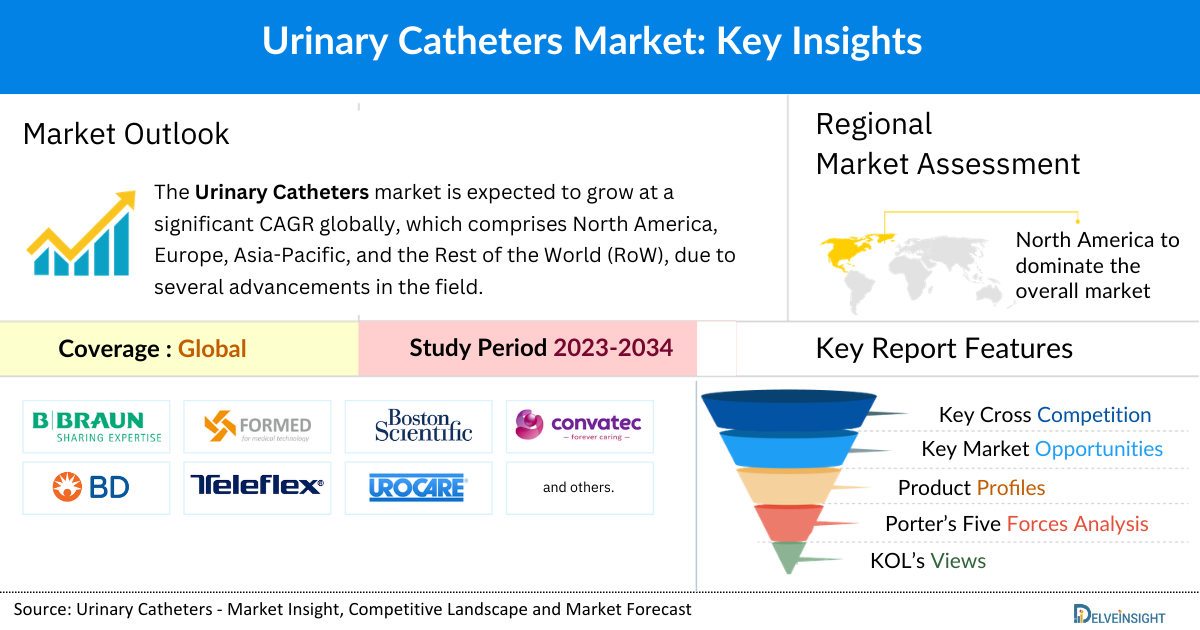
- The leading companies operating in the urinary catheters market include B. Braun Melsungen AG, Hangzhou Formed Medical Devices Co., Ltd., Boston Scientific Corporation, Cook, ConvaTec Inc., Becton, Dickinson, and Company., Teleflex Incorporated, Urocare Products, Inc., BACTIGUARD AB, Hollister Incorporated, Cardinal Health, Rocamed., Amecath, Go Medical Industries Pty Ltd., CURE MEDICAL, LLC, QMD™, Amsino International, Inc., J and M Urinary Catheters LLC., CompactCath, Ribbel International Limited, and others.
- North America is expected to dominate the urinary catheters market because of the increasing occurrence of targeted indications, such as urinary retention, urinary incontinence, bladder obstruction, Benign Prostatic Hyperplasia & Bladder Cancers, among others. In addition, the presence of well-established healthcare facilities and reimbursement scenarios in the region will also contribute to the urinary catheters market. Furthermore, increase in product development activites among the key market players are further escalating the overall market of urinary catheters.
- In the product type segment of the urinary catheters market, the intermittent catheters category is estimated to account for the largest market share in 2025.
Request for unlocking the report of the @Urinary Catheters Market
Urinary Catheters Market Size and Forecasts | |
|
Report Metrics |
Details |
|
2025 Market Size |
USD 4,464.41 million |
|
2034 Projected Market Size |
USD 7,747.60 million |
|
Growth Rate (2026-2034) |
6.36% CAGR |
|
Largest Market |
North America |
|
Fastest Growing Market |
Asia-Pacific |
|
Market Structure |
Moderately Concentrated |
Factors Contributing to the Growth of the Urinary Catheters Market
Increasing cases of urological disorders are leading to a surge in urinary catheters:
Increasing cases of urological disorders such as urinary retention, benign prostatic hyperplasia (BPH), urinary incontinence, kidney stones, bladder obstruction, and neurogenic bladder conditions are significantly driving the demand for urinary catheters. As these conditions impair normal urine flow or bladder control, catheterization becomes essential for effective bladder drainage, monitoring urine output, and preventing complications such as infections or kidney damage.
The growing number of surgical procedures and hospital admissions escalating the market of urinary catheters:
The growing number of surgical procedures and rising hospital admissions are significantly escalating the market for urinary catheters because catheterization is a routine and essential part of perioperative care. During major surgeries such as abdominal, pelvic, orthopedic, cardiovascular, and urological procedures urinary catheters are used to monitor urine output, maintain bladder decompression, and prevent urinary retention. In intensive care units (ICUs) and emergency settings, critically ill patients often require continuous urine output monitoring, further increasing catheter utilization. As global surgical volumes rise due to an aging population, increasing chronic diseases, and expanding healthcare infrastructure, the demand for both short-term indwelling and intermittent urinary catheters continues to grow, thereby driving overall market expansion.
Increase in product development activites among the key market players:
Companies are investing in innovations such as antimicrobial and hydrophilic coatings to reduce catheter-associated urinary tract infections (CAUTIs), silicone-based materials for improved biocompatibility, and pre-lubricated intermittent catheters for enhanced comfort and ease of use. Additionally, the development of compact, discreet designs for self-catheterization supports the growing home healthcare segment. These technological improvements not only enhance clinical outcomes and patient satisfaction but also encourage premium product adoption, thereby driving revenue growth and expanding the overall urinary catheters market.
Urinary Catheters Market Report Segmentation
This urinary catheters market report offers a comprehensive overview of the global urinary catheters market, highlighting key trends, growth drivers, challenges, and opportunities. It covers detailed market segmentation by Product Type (Indwelling/Foley Catheters, Intermittent Catheters, and External Catheters), Type (Coated and Uncoated), Design (Single Lumen, Double Lumen, and Triple Lumen), Usage (Male Urinary Catheters and Female Urinary Catheters), Application (Benign Prostatic Hyperplasia, Urinary Incontinence, General Surgery, and Others), End-User (Hospitals, Ambulatory Surgical Centers, and Others), and geography. The report provides valuable insights into the competitive landscape, regulatory environment, and market dynamics across major markets, including North America, Europe, and Asia-Pacific. Featuring in-depth profiles of leading industry players and recent product innovations, this report equips businesses with essential data to identify market potential, develop strategic plans, and capitalize on emerging opportunities in the rapidly growing urinary catheters market.
Urinary catheters are thin, flexible medical tubes inserted into the bladder through the urethra (or sometimes through a small abdominal incision) to drain urine when a person is unable to urinate naturally. They are commonly used in cases of urinary retention, during and after surgery, in critically ill patients, or for individuals with bladder control problems. Urinary catheters can be temporary (intermittent) or long-term (indwelling), depending on the patient’s medical condition.
The market for urinary catheters is primarily driven by the rising prevalence of urinary disorders such as urinary incontinence, benign prostatic hyperplasia (BPH), urinary retention, and other urological disorders, particularly among the growing elderly population. Increasing numbers of surgical procedures, higher incidence of chronic diseases such as diabetes and spinal cord injuries, and expanding use of catheterization in long-term and home care settings are also fueling demand. Additionally, improvements in catheter materials, infection-prevention technologies, and greater awareness of hygiene and patient care standards are supporting steady market growth.
Get More Insights into the Report @Urinary Catheters Market
What are the latest urinary catheters market dynamics and trends?
The increasing cases of urological disorders such as colorectal cancer, urinary retention, benign prostatic hyperplasia (BPH), and urinary incontinence are significantly boosting the overall market for urinary catheters.
According to the facts and data provided the National Institute of Diabetes and Digestive and Kidney Disease (2024), urologic diseases and conditions had affected individuals of all ages, leading to significant healthcare costs and considerable disability, along with reduced quality of life. Common non-cancerous urologic problems had included urinary tract infections, kidney stones, urinary incontinence, and benign prostatic hyperplasia. Interstitial cystitis/bladder pain syndrome (IC/BPS) had impacted approximately 3.3 million women, while an estimated 1.6 million men had experienced chronic prostatitis/chronic pelvic pain syndrome (CP/CPPS), often characterized by pain during bladder filling. National public health surveys conducted over several years had shown that about 54% of women aged 20 years and older reported experiencing urinary incontinence within the previous 12 months, while approximately 15% of men had self-reported the condition.
Thus, the high prevalence of urologic conditions and urinary incontinence reflected in these statistics significantly boosted the urinary catheters market by expanding the overall patient pool requiring bladder management solutions. With more than half of adult women and a notable proportion of men experiencing urinary incontinence, along with millions affected by interstitial cystitis and chronic pelvic pain syndromes, the demand for both short-term and long-term catheterization increased substantially.
According to the recent data and stats provided by DelveInsight Business Research LLP in 2025, globally, the estimated new cases of colorectal cancer was 20,64,416 and the projections further estimated to increase 32,85,215 cases by 2045. Patients undergoing colorectal cancer surgeries such as tumor resection, colectomy, or pelvic surgery often require temporary urinary catheterization to monitor urine output, prevent urinary retention, and manage postoperative bladder function. Additionally, advanced-stage disease or pelvic nerve involvement may lead to bladder dysfunction, increasing the need for intermittent or long-term catheter use.
Furthermore, the presence of key market players are further escalating the overall market of urinary catheters. For instance, in May 2024, Coloplast expanded its Luja™ portfolio with a next-generation intermittent catheter designed specifically for women. This innovative catheter facilitates complete bladder emptying in a single, continuous flow, aiming to help reduce the risk of urinary tract infections (UTIs).
Thus, the factors mentioned above are expected to boost the overall market of urinary catheters during the forecast period from 2026 to 2034.
However, complications such as catheter-associated urinary tract infections (CAUTIs) act as a major restraint on the urinary catheters market because they increase patient morbidity, prolong hospital stays, and raise healthcare costs. Growing concerns about infection risks have led hospitals to adopt stricter catheter usage protocols and reduce unnecessary catheterization, thereby limiting product demand. Additionally, the stringent regulatory approval process for urinary catheters delays product launches and increases development costs for manufacturers. Compliance with rigorous safety, quality, and clinical performance standards requires extensive testing and documentation, which can slow innovation and market entry. Together, infection-related risks and regulatory challenges restrict overall market growth.
Urinary Catheters Market Segment Analysis
Urinary Catheters Market Product Type (Indwelling/Foley Catheters, Intermittent Catheters, and External Catheters), Type (Coated and Uncoated), Design (Single Lumen, Double Lumen, and Triple Lumen), Usage (Male Urinary Catheters and Female Urinary Catheters), Application (Benign Prostatic Hyperplasia, Urinary Incontinence, General Surgery, and Others), End-User (Hospitals, Ambulatory Surgical Centers, and Others), and Geography (North America, Europe, Asia-Pacific, and Rest of the World)
Urinary Catheters Market By Product Type: Intermittent Catheters Category Dominates the Market
In the product type segment of the urinary catheters market, the intermittent catheters category is estimated to account for the largest market share of 58% in 2025. Unlike long-term indwelling catheters, intermittent catheters are inserted several times a day to empty the bladder and then removed immediately, which substantially reduces the risk of catheter-associated urinary tract infections (CAUTIs) and other complications such as urethral trauma and bladder spasms. This clinical advantage has led healthcare providers to increasingly recommend intermittent catheterization as the gold standard for managing chronic urinary retention and neurogenic bladder conditions caused by spinal cord injuries, multiple sclerosis, spina bifida, diabetes, and post-prostate surgery complications. Furthermore, the rising preference for home-based care and self-catheterization has accelerated demand, as intermittent catheters are designed for ease of use, portability, and discretion, allowing patients to maintain independence and improve quality of life.
Additionally, the technological advancements including hydrophilic coatings, pre-lubricated and ready-to-use designs, compact pocket-sized packaging, and silicone-based materials have enhanced comfort, reduced friction, and minimized infection risk, thereby encouraging higher compliance and repeat purchases. In addition, supportive reimbursement policies in developed markets and growing awareness about clean intermittent catheterization techniques have expanded product accessibility. The increasing prevalence of urological disorders, aging populations, and improved survival rates among patients with chronic neurological conditions further enlarge the target patient pool.
Furthermore, the increasing product development activities are further escalating the overall market of intermittent catheters. For instance, in July 2024, ConvaTec launched GentleCath Air™ for Women, an intermittent catheter with FeelClean™ technology that integrates hydrophilic properties into the catheter material to reduce urethral damage and improve user comfort.
Collectively, the clinical benefits, technological innovation, patient convenience, and expanding home healthcare adoption associated with intermittent catheters are strongly driving volume growth and revenue expansion in the global urinary catheters market
Urinary Catheters Market By Type: Coated Category Dominates the Market
In the type segment of the urinary catheters market, the coated category is estimated to account for the largest market share of 60% in 2025. Coated urinary catheters are playing a crucial role in driving the growth of the overall urinary catheters market by addressing major clinical concerns such as infection risk, patient discomfort, and urethral trauma. Compared to conventional uncoated catheters, hydrophilic and antimicrobial-coated variants significantly reduce friction during insertion and removal, thereby minimizing pain and microtrauma to the urethral lining. This is particularly important for patients requiring long-term or frequent catheterization, such as those with neurogenic bladder, spinal cord injuries, or chronic urinary retention.
For instance, Convatec offers GentleCath™ hydrophilic catheters that activate with water to create a smooth, lubricated surface, improving comfort and reducing complications. Similarly, Coloplast markets SpeediCath™, a sterile, ready-to-use hydro-coated intermittent catheter widely adopted in home healthcare settings for its convenience and safety. In hospital environments, Becton Dickinson (BD) provides antimicrobial-coated Foley catheters designed to inhibit bacterial colonization and help reduce catheter-associated urinary tract infections (CAUTIs), which are a major healthcare burden. As infection prevention guidelines become stricter and patient preference shifts toward safer, more comfortable options, coated catheters are increasingly favored over traditional products. Their premium pricing, higher adoption in home-based self-catheterization, and alignment with quality improvement initiatives collectively contribute to higher revenue generation, thereby significantly boosting the overall urinary catheters market.
Urinary Catheters Market By Design: Single Lumen Category Dominates the Market
In the design segment of the urinary catheters market, the single lumen category is estimated to account for the largest market share in 2025. Single-lumen urinary catheters are substantially boosting the overall urinary catheters market by offering a simple, cost-effective, and widely applicable solution for bladder drainage across clinical and home care settings, thereby expanding product utilization and market demand. Single-lumen catheters characterized by a single internal channel for urine drainage are commonly used for intermittent catheterization as well as indwelling catheter procedures in hospitals, long-term care facilities, and self-catheterizing patients at home. Their versatility and ease of use make them especially attractive for clinicians and patients alike, particularly in routine urological care, perioperative management, and chronic bladder dysfunction. Leading medical device manufacturers have capitalized on this demand by offering a broad range of single-lumen products tailored to different patient needs.
For example, B. Braun Melsungen AG markets its Introcan® Safety Intermittent Single-Lumen Catheters, designed with safety and simplicity in mind for short-term catheterization during surgical procedures or acute care. Likewise, Teleflex offers the Rusch® single-lumen intermittent catheters, which are widely used in both hospital and outpatient settings due to their reliable performance and broad size availability. Single-lumen designs also serve as the foundation for specialized variations, such as hydrophilic-coated or pre-lubricated catheters, which combine the simplicity of a single channel with comfort-enhancing features. As healthcare providers increasingly favor products that reduce procedural complexity and training burden especially in home healthcare and aging populations requiring self-catheterization the demand for single-lumen catheters continues to rise. This has translated into higher purchase volumes and broader clinical adoption, contributing meaningfully to the steady expansion of the global urinary catheters market.
Urinary Catheters Market By Usage: Female Urinary Catheters Category Dominates the Market
In the usgae segment of the urinary catheters market, the female urinary catheters category is estimated to account for the largest market share in 2025. The female urinary catheters category has become a significant growth driver within the broader urinary catheters market by addressing the distinct anatomical and clinical needs of women, thereby expanding patient adoption, improving quality of life, and increasing overall catheter utilization. Female-specific catheters are designed with shorter lengths, ergonomic grips, and user-friendly features that make self-catheterization more comfortable, discreet, and accessible especially for women managing conditions such as urinary retention, neurogenic bladder, multiple sclerosis, or postpartum urinary dysfunction.
For example, Convatec has developed female-focused products like the GentleCath™ for Women, which combines a hydrophilic coating with a design tailored to female anatomy, facilitating smoother insertion and reducing urethral trauma. Similarly, Wellspect HealthCare markets LoFric Elle™, an ergonomic hydrophilic intermittent catheter built specifically for women, emphasizing ease of handling and improved self-catheterization experience. The growth of this category has been reinforced by rising awareness among female patients of available catheterization options, increased healthcare provider education, and expansion of reimbursement policies that cover female-oriented devices. Additionally, the aging global population particularly women who are more prone to bladder dysfunction and incontinence with age further amplifies demand. Female urinary catheters also drive innovation, as manufacturers introduce advanced coatings, compact packaging, and discreet designs to enhance compliance and independence. As more women seek effective and comfortable bladder management solutions, the female catheter segment continues to expand rapidly, contributing substantially to the overall growth of the urinary catheters market.
Urinary Catheters Market By Application: Urinary Incontinence Category Dominates the Market
In the application segment of the urinary catheters market, the urinary incontinence category is estimated to account for the largest market share of 38% in 2025. The urinary incontinence category is significantly boosting the overall urinary catheters market due to the rising number of patients requiring effective bladder management solutions. Urinary incontinence affects a large population, particularly elderly individuals, women after childbirth, and patients with neurological disorders, increasing the need for intermittent and indwelling catheterization. As awareness of treatment options grows, more patients are opting for medical catheter solutions instead of relying only on absorbent products. Companies such as Convatec and Coloplast offer advanced intermittent catheters designed for improved comfort and ease of use, further encouraging adoption. Additionally, the aging population and improved reimbursement coverage are expanding access to these devices. Together, these factors are driving higher demand and accelerating growth in the urinary catheters market.
Urinary Catheters Market By End-Users: Hospitals Category Dominates the Market
The hospitals category significantly boosts the urinary catheters market because hospitals are the primary setting for catheter use in surgeries, ICU care, and treatment of urological conditions. Catheters are widely used for urine output monitoring during operations, managing postoperative urinary retention, and caring for critically ill patients. The rising number of hospital admissions, surgical procedures, and emergency cases has increased overall catheter demand. Additionally, hospitals often prefer advanced products such as antimicrobial and hydrophilic-coated catheters to reduce infection risks, contributing to higher revenue growth. As healthcare infrastructure expands globally, the hospital segment continues to drive strong demand in the urinary catheters market.
Urinary Catheters Market Regional Analysis
North America Urinary Catheters Market Trends
North America is poised to secure the largest share of 39% in the global urinary catheters market in 2025, driven by a confluence of factors. The increasing occurrence of targeted indications, such as urinary retention, urinary incontinence, bladder obstruction, benign prostatic hyperplasia & bladder cancers, among others are boosting the overall market of urinary catheters. In addition, the presence of well-established healthcare facilities and reimbursement scenarios in the region will also contribute to the urinary catheters market. Furthermore, increase in product development activites among the key market players are further escalating the overall market of urinary catheters.
Supporting this trend are compelling statistics. According to data from International Agency for Research on Cancer, in 2025, the espected new cases of colorectal cancer cases was 1,94,879 and the projections further estimated that these case would rise upto 2,50,208 by 2045 in North America.
Additionally, accoprding to the data provided by the National Institute of Health (2024), Each year, about 3 in 100,000 women develop acute urinary retention in the United States. Patients undergoing colorectal cancer surgeries often require temporary catheterization to monitor urine output during and after surgery, prevent bladder distension, and manage postoperative urinary retention. Additionally, colorectal tumors or related treatments such as radiation therapy can affect nearby pelvic nerves, leading to urinary dysfunction that necessitates intermittent or indwelling catheter use. Similarly, urinary retention caused by conditions such as benign prostatic hyperplasia (BPH), neurological disorders, or postoperative complications creates sustained demand for catheterization to ensure proper bladder emptying and prevent kidney damage. The growing incidence of colorectal cancer and retention-related disorders, combined with increasing surgical procedures and hospital admissions, is driving higher utilization of urinary catheters, thereby supporting overall market growth.
Furthermore, the market's growth is being propelled by robust innovation and strategic activities among key market players in the region. A notable example is, InnoCare Urologics announced in December 2024 that it received FDA 510(k) clearance for its Egress™ Safety Catheter, designed to prevent injury during accidental or intentional catheter pull-outs. The device is the first to be cleared under a new classification code for “Foley Catheters and Accessories with Additional Safety Features.”
Thus, the factors mentioned above are expected to boost the overall market of urinary catheters in North America during the forecasted period.
Europe Urinary Catheters Market Trends
Europe is driving the growth of the urinary catheters market due to its well-established healthcare infrastructure, rising aging population, and increasing prevalence of urological disorders such as urinary incontinence and benign prostatic hyperplasia (BPH). The region has a high volume of surgical procedures and hospital admissions, which increases the routine use of intermittent and indwelling catheters. Additionally, strong reimbursement policies, early adoption of advanced technologies such as hydrophilic and antimicrobial-coated catheters, and the presence of major medical device manufacturers further support market expansion. Growing awareness about infection prevention and home-based self-catheterization is also contributing to sustained demand across European countries.
According to the data provided by the Urology Foundation Europe (2024), 1 in 2 of the UK population experience a urology condition during their lifetime. Disorders such as urinary retention, benign prostatic hyperplasia (BPH), urinary incontinence, neurogenic bladder, kidney stones, and bladder cancer often impair normal urine flow, requiring intermittent or indwelling catheterization to ensure complete bladder emptying and prevent complications such as infections or kidney damage. The rising global prevalence of these conditions particularly among the aging population has increased hospital visits, surgical interventions, and long-term care needs, all of which drive catheter usage.
Additionally, increasing product development activites among the key market players are further boosting the overall market of urinary catheters. For instance, in July 2024, Convatec, a leading medical products and technologies company, announces the launch of GentleCath Air™ catheter for Women with FeelClean Technology™, in the UK and Italy, following its successful launch in France.
Thus, the factors mentioned above are expected to boost the overall market of urinary catheters in Europe.
Asia-Pacific Urinary Catheters Market Trends
The Asia-Pacific region is emerging as a key growth driver in the urinary catheters market due to its large and rapidly aging population, rising prevalence of urological disorders, and expanding healthcare infrastructure. Increasing cases of urinary incontinence, benign prostatic hyperplasia (BPH), and postoperative urinary retention are driving higher demand for intermittent and indwelling catheters. Additionally, improving access to healthcare services, growing medical tourism, and rising healthcare expenditure in countries such as China, India, and Japan are supporting market expansion. The presence of local manufacturers offering cost-effective products, along with increasing awareness about infection prevention and home-based care, is further accelerating the adoption of urinary catheters across the region.
According to a study published by the National Library of Medicine in 2024, the overall rate of female stress urinary incontinence in China was estimated at 24.5%. The study also reported that, in 2023, stress urinary incontinence was consistently observed in about 10% of individuals in their 20s and 30s, including males in Japan.
Thus, the factors mentioned are expected to boost the overall market of urinary catheters in the Asia-Pacific region during the forecast period.
Who are the major players in the urinary catheters market?
The following are the leading companies in the urinary catheters market. These companies collectively hold the largest market share and dictate industry trends.
- B. Braun Melsungen AG
- Hangzhou Formed Medical Devices Co., Ltd.
- Boston Scientific Corporation
- Cook
- ConvaTec Inc.
- Becton, Dickinson, and Company.
- Teleflex Incorporated
- Urocare Products, Inc.
- BACTIGUARD AB
- Hollister Incorporated
- Cardinal Health
- Rocamed.
- Amecath
- Go Medical Industries Pty Ltd.
- CURE MEDICAL, LLC
- QMD™
- Amsino International, Inc.
- J and M Urinary Catheters LLC.
- CompactCath
- Ribbel International Limited
- Others
How is the competitive landscape shaping the urinary catheters market?
The competitive landscape of the urinary catheters market is shaping its growth dynamics through a mix of well-established global players and emerging regional manufacturers, resulting in moderate to high market concentration within key product segments. Large multinational medical device companies such as Becton Dickinson (BD), Convatec, Coloplast, B. Braun Melsungen AG, and Teleflex Incorporated dominate significant share of the market due to their strong brand presence, broad product portfolios, extensive distribution networks, and long-standing relationships with hospitals and healthcare providers worldwide. These players invest heavily in research and development to introduce advanced products such as hydrophilic-coated catheters, antimicrobial catheters, and ergonomic designs that address infection risks and improve patient comfort, reinforcing their competitive positions. Despite this concentration, the market also features numerous regional manufacturers and niche innovators that compete on cost, customization, and local regulatory familiarity especially in emerging markets across Asia-Pacific, Latin America, and the Middle East & Africa. Collaborations, strategic partnerships, mergers & acquisitions, and product line expansions are increasingly common as companies seek to enhance their geographic reach and technological capabilities. Altogether, the competitive landscape is characterized by a blend of concentrated leadership from major global firms and dynamic competition from smaller players, which together drive innovation, pricing strategies, and broader market penetration.
Recent Developmental Activities in the Urinary Catheters Market
- In May 2025, BEVER Medical highlighted emerging trends in intermittent catheter design, emphasizing the increasing adoption of hydrophilic-coated catheters made with DEHP-free PVC and pre-lubricated, compact designs tailored for home use, hospital settings, and military/emergency deployment.
- In December 2024, InnoCare Urologics announced that it received FDA 510(k) clearance for its Egress™ Safety Catheter, designed to prevent injury during accidental or intentional catheter pull-outs. The device is the first to be cleared under a new classification code for “Foley Catheters and Accessories with Additional Safety Features.”
- In July 2024, ConvaTec launched GentleCath Air™ for Women, an intermittent catheter with FeelClean™ technology that integrates hydrophilic properties into the catheter material to reduce urethral damage and improve user comfort.
- In May 2024, Coloplast expanded its Luja™ portfolio with a next-generation intermittent catheter designed specifically for women. This innovative catheter facilitates complete bladder emptying in a single, continuous flow, aiming to help reduce the risk of urinary tract infections (UTIs).
Scope of the Urinary Catheters Market | |
|
Report Metrics |
Details |
|
Study Period |
2023 to 2034 |
|
Base Year |
2025 |
|
Forecast Period |
2026 to 2034 |
|
Urinary Catheters Market CAGR (2026-2034) |
6.36% |
|
Key Companies in the Urinary Catheters Market |
B. Braun Melsungen AG, Hangzhou Formed Medical Devices Co., Ltd., Boston Scientific Corporation, Cook, ConvaTec Inc., Becton, Dickinson, and Company., Teleflex Incorporated, Urocare Products, Inc., BACTIGUARD AB, Hollister Incorporated, Cardinal Health, Rocamed., Amecath, Go Medical Industries Pty Ltd., CURE MEDICAL, LLC, QMD™, Amsino International, Inc., J and M Urinary Catheters LLC., CompactCath, Ribbel International Limited., and others. |
|
Urinary Catheters Market Segments |
by Product Type, by Type, by Design, by Usage, by Application, by End-Users, and by Geography |
|
Urinary Catheters Regional Scope |
North America, Europe, Asia Pacific, Middle East, Africa, and South America |
|
Urinary Catheters Country Scope |
U.S., Canada, Mexico, Germany, United Kingdom, France, Italy, Spain, China, Japan, India, Australia, South Korea, and key Countries |
Urinary Catheters Market Segmentation
Urinary Catheters by Product Type Exposure
- Indwelling/Foley Catheters
- Intermittent Catheters
- External Catheters
Urinary Catheters Type Exposure
- Coated
- Uncoated
Urinary Catheters Design Exposure
- Single Lumen
- Double Lumen
- Triple Lumen
Urinary Catheters Usage Exposure
- Male Urinary Catheters
- Female Urinary Catheters
Urinary Catheters Application Exposure
- Benign Prostatic Hyperplasia
- Urinary Incontinence
- General Surgery
- Other
Urinary Catheters End-Users Exposure
- Hospitals
- Ambulatory Surgical Centers
- Others
Urinary Catheters Geography Exposure
North America Urinary Catheters Market
- United States Urinary Catheters Market
- Canada Urinary Catheters Market
- Mexico Urinary Catheters Market
Europe Urinary Catheters Market
- United Kingdom Urinary Catheters Market
- Germany Urinary Catheters Market
- France Urinary Catheters Market
- Italy Urinary Catheters Market
- Spain Urinary Catheters Market
- Rest of Europe Urinary Catheters Market
Asia-Pacific Urinary Catheters Market
- China Urinary Catheters Market
- Japan Urinary Catheters Market
- India Urinary Catheters Market
- Australia Urinary Catheters Market
- South Korea Urinary Catheters Market
- Rest of Asia-Pacific Urinary Catheters Market
Rest of the World Urinary Catheters Market
- South America Urinary Catheters Market
- Middle East Urinary Catheters Market
- Africa Urinary Catheters Market
Urinary Catheters Market Recent Industry Trends and Milestones (2022-2026) | |
|
Category |
Key Developments |
|
Urinary Catheters Product Launch |
ConvaTec launched GentleCath Air™ for Women. |
|
Urinary Catheters Regulatory Approvals |
InnoCare Urologics - Egress™ Safety Catheter (FDA). |
|
Company Strategy |
Convatec pursues a strategy centered on user-centric design and consumer convenience, particularly for intermittent catheter users, Coloplast adopts a strategy of customized solutions and niche targeting, especially for female and pediatric catheter segments. |
|
Emerging Technology |
Advanced hydrophilic coatings and antimicrobial (silver-alloy or antibiotic) coatings, no-touch insertion systems, biofilm-resistant surfaces, drug-eluting catheters, and smart sensor-enabled catheters. |
Impact Analysis
AI-Powered Innovations and Applications:
AI-powered innovations in urinary catheters are emerging as transformative solutions aimed at improving infection control, patient monitoring, and clinical decision-making. Advanced “smart catheter” systems are being developed with embedded sensors that continuously monitor urine output, temperature, flow rate, and biochemical markers, transmitting real-time data to hospital monitoring platforms where artificial intelligence algorithms analyze patterns to detect early signs of catheter-associated urinary tract infections (CAUTIs), blockages, or kidney dysfunction. AI models can also predict the risk of urinary retention or sepsis by integrating catheter data with electronic health records, enabling clinicians to intervene earlier and reduce complications. In hospital settings, AI-driven alert systems help determine optimal catheter removal timing, minimizing unnecessary catheter days and lowering infection rates. Additionally, machine learning is being used in product design and material research to develop biofilm-resistant and antimicrobial coatings by simulating bacterial behavior on catheter surfaces. Companies such as Becton Dickinson (BD) and Coloplast are exploring digital health integration and smart monitoring capabilities to complement traditional catheter products. As healthcare increasingly shifts toward connected care and predictive analytics, AI-enabled catheter technologies are expected to enhance patient safety, reduce hospital costs, and create new growth opportunities within the urinary catheters market.
U.S. Tariff Impact Analysis on Urinary Catheters Market:
The U.S. tariff impact on urinary catheters has influenced the market by increasing the cost of imported catheter products and raw materials, which can lead to higher prices for healthcare providers and patients. Since many medical devices including catheters and related supplies are manufactured overseas, particularly in Asia and Europe, tariffs imposed on imports raise production costs for companies that rely on global supply chains. This can reduce profit margins for manufacturers and distributors or shift costs onto healthcare systems. In some cases, tariff-related cost pressures have encouraged manufacturers to localize production, restructure supply chains, or source materials domestically to mitigate import duties. Overall, U.S. tariffs have created a dynamic where cost management and supply chain strategy become key competitive factors in the urinary catheters market.
How This Analysis Helps Clients
- Cost Management: By understanding the tariff landscape, clients can anticipate cost increases and adjust pricing strategies accordingly, ensuring profitability.
- Supply Chain Optimization: Clients can identify alternative sourcing options and diversify their supply chains to reduce dependency on high-tariff regions, enhancing resilience.
- Regulatory Navigation: Expert guidance on navigating the evolving regulatory environment helps clients maintain compliance and avoid potential legal challenges.
- Strategic Planning: Insights into tariff impacts enable clients to make informed decisions about manufacturing locations, partnerships, and market entry strategies.
Startup Funding & Investment Trends
|
Company Name |
Total Funding |
Main Products |
Stage of Development |
Core Technology |
|
Aurie |
$9.1 million |
Smart catheter system for intermittent use |
Seed |
Reusable no-touch catheter designed to reduce urinary tract infections (UTIs), targeted especially at individuals with spinal cord injuries or long-term catheter users. |
Key takeaways from the Urinary Catheters market report study
● Market size analysis for the current urinary catheters market size (2025), and market forecast for 8 years (2026 to 2034)
● Top key product/technology developments, mergers, acquisitions, partnerships, and joint ventures happened over the last 3 years.
● Key companies dominating the Urinary Catheters market.
● Various opportunities available for the other competitors in the urinary catheters market space.
● What are the top-performing segments in 2025? How these segments will perform in 2034?
● Which are the top-performing regions and countries in the current urinary catheters market scenario?
● Which are the regions and countries where companies should have concentrated on opportunities for the urinary catheters market growth in the future?
Frequently Asked Questions for the Urinary Catheters Market
1. What is the growth rate of the urinary catheters market?
The urinary catheters market is estimated to grow at a CAGR of 6.36% during the forecast period from 2026 to 2034.
2. What is the market for urinary catheters?
The global urinary catheters market is expected to increase from USD 4,464.41 million in 2025 to USD 7,747.60 million by 2034, reflecting strong and sustained growth.
3. Which region has the highest share in the urinary catheters market?
North America is poised to secure the largest share of XX% in the global urinary catheters market in 2025, driven by a confluence of factors. The increasing occurrence of targeted indications, such as urinary retention, urinary incontinence, bladder obstruction, benign prostatic hyperplasia & bladder cancers, among others are boosting the overall market of urinary catheters. In addition, the presence of well-established healthcare facilities and reimbursement scenarios in the region will also contribute to the urinary catheters market. Furthermore, increase in product development activites among the key market players are further escalating the overall market of urinary catheters.
4. What are the drivers for the urinary catheters market?
The market for urinary catheters is primarily driven by the rising prevalence of urinary disorders such as urinary incontinence, benign prostatic hyperplasia (BPH), urinary retention, and other urological disorders, particularly among the growing elderly population. Increasing numbers of surgical procedures, higher incidence of chronic diseases such as diabetes and spinal cord injuries, and expanding use of catheterization in long-term and home care settings are also fueling demand. Additionally, improvements in catheter materials, infection-prevention technologies, and greater awareness of hygiene and patient care standards are supporting steady market growth.
5. Who are the key players operating in the urinary catheters market?
Some of the key market players operating in the urinary catheters market include B. Braun Melsungen AG, Hangzhou Formed Medical Devices Co., Ltd., Boston Scientific Corporation, Cook, ConvaTec Inc., Becton, Dickinson, and Company., Teleflex Incorporated, Urocare Products, Inc., BACTIGUARD AB, Hollister Incorporated, Cardinal Health, Rocamed., Amecath, Go Medical Industries Pty Ltd., CURE MEDICAL, LLC, QMD™, Amsino International, Inc., J and M Urinary Catheters LLC., CompactCath, Ribbel International Limited, and others.