Triple Negative Breast Cancer Market Size Set for Strong Growth Through 2036
Get a Sneak Peek at the Latest triple negative breast cancer treatment market Report
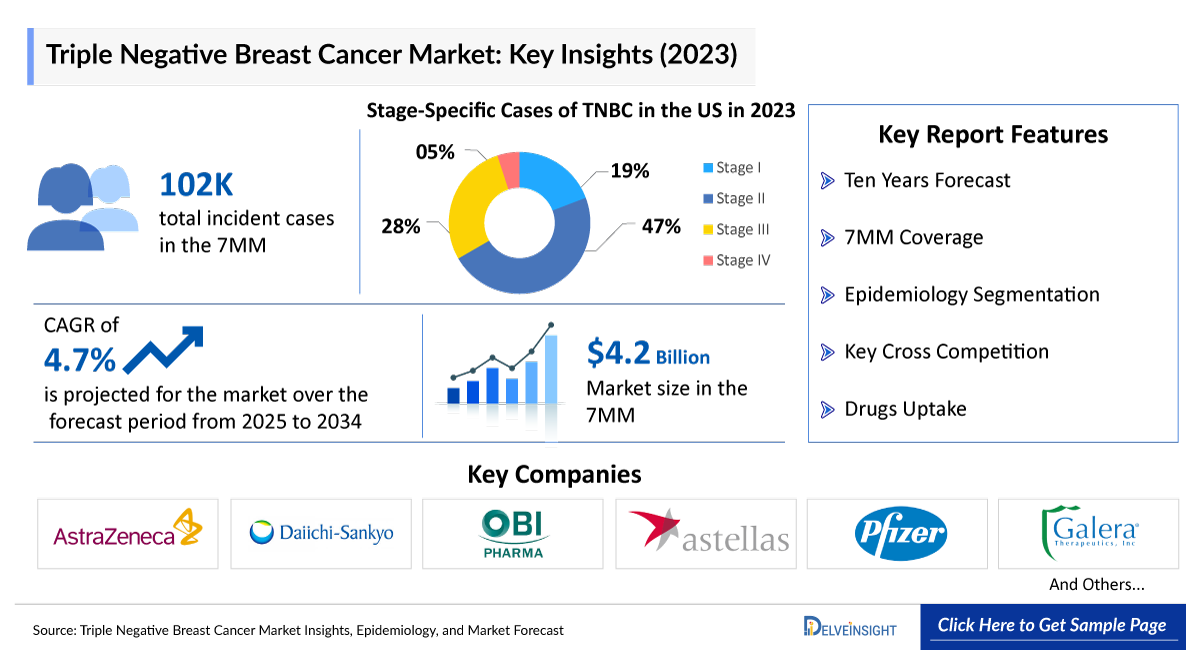
- Across the 7MM, the Triple Negative Breast Cancer (TNBC) market was valued at approximately USD 5 billion in 2025 and is projected to expand at a CAGR of 13.3% during 2026–2036. The market covers the United States, EU4 (Germany, France, Italy, and Spain), the United Kingdom, and Japan. DelveInsight’s analysis highlights the increasing incidence of TNBC, substantial unmet medical needs, advances in immunotherapy and targeted treatments, and a robust pipeline of emerging therapies as key factors shaping the future market.
- In 2025, the total incident cases of breast cancer across the 7MM were nearly 700,000, with cases expected to increase because of lifestyle changes, obesity, delayed childbirth, alcohol consumption, environmental exposures, and enhanced detection through screening programs. TNBC remains a particularly aggressive subtype, with diagnosis often occurring at younger ages and delays in recognizing symptoms contributing to poorer outcomes.
To Know in detail about the Non-Alcoholic Steatohepatitis market outlook, drug uptake, treatment scenario and epidemiology trends, Click here; Triple Negative Breast Cancer Market Forecast
Triple Negative Breast Cancer Market Size and Forecast
According to DelveInsight’s estimates, the Triple Negative Breast Cancer Treatment Market across the 7MM was approximately USD 5 billion in 2025. The market is projected to grow at a 13.3% CAGR from 2026 to 2036. The United States represented approximately 70% of total TNBC market revenues in 2025, followed by the EU4 and the United Kingdom.
Japan’s Triple Negative Breast Cancer Market was valued at approximately USD 200 million in 2025 and is expected to expand during the forecast period, primarily due to increasing incidence and the anticipated launch of emerging therapies. Spain represented the smallest TNBC market among the 7MM countries, with a market size of nearly USD 100 million in 2025.
Key Facts of the Triple Negative Breast Cancer Market Report
- 2025 TNBC Market Size in the 7MM: Approximately USD 5 billion
- TNBC Growth Rate: 13.3% CAGR during 2026–2036
- Study Period: 2022–2036
- Historical Period: 2022–2025
- Forecast Period: 2026–2036
- Base Year: 2025
- Geographies Covered: United States, Germany, France, Italy, Spain, United Kingdom, and Japan
- 2025 Total Incident TNBC Cases in the 7MM: Approximately 100,000
- Key TNBC Companies: Merck, Gilead Sciences, Pfizer, AstraZeneca/Merck, and Hoffmann-La Roche
- Emerging TNBC Therapies: DATROWAY + IMFINZI, Tilarginine, and FPI-1434 ± pembrolizumab
Triple Negative Breast Cancer Overview
Triple Negative Breast Cancer is a breast cancer subtype characterized by the lack of hormone receptor expression and minimal HER2 protein expression, making hormonal and HER2-targeted therapies ineffective. Breast cancer is genetically and clinically diverse, and classification commonly relies on immunohistochemical assessment of Estrogen Receptor, Progesterone Receptor, and Human Epidermal Growth Factor Receptor 2 expression.
TNBC has a distinctive immune microenvironment involving vascular endothelial growth factors, tumor-infiltrating lymphocytes, tumor-associated macrophages, and other molecules that can support tumor growth, migration, progression, and spread. Mammography, ultrasound, and MRI are among the imaging techniques used for diagnosis, while core biopsy, fine needle aspiration, stereotactic biopsy, and surgical biopsy are used for tissue assessment.
Get a Free sample for the Triple Negative Breast Cancer Market Forecast, Size & Share Analysis Report
Triple Negative Breast Cancer Treatment Landscape
The TNBC treatment landscape remains challenging because the absence of hormone receptors and minimal HER2 expression limits the effectiveness of hormone-based and HER2-targeted treatments. Consequently, chemotherapy continues to be a cornerstone of treatment across different stages of the disease.
In early-stage TNBC, neoadjuvant chemotherapy is commonly used to reduce tumor size and evaluate treatment response. It can also support breast-conserving surgery. Depending on residual disease following surgery, adjuvant chemotherapy may be administered to reduce recurrence risk. Radiation therapy can also be considered, particularly in patients with lymph node involvement or those undergoing breast-conserving surgery.
Common chemotherapy combinations include cyclophosphamide, doxorubicin, and paclitaxel, along with combinations involving cyclophosphamide and doxorubicin or docetaxel. Paclitaxel may also be used as a standalone treatment, while capecitabine can be administered for residual disease.
Key Trends in Triple Negative Breast Cancer Therapeutics
The TNBC therapeutics landscape is increasingly moving beyond chemotherapy toward immunotherapy, targeted therapies, antibody-drug conjugates, and precision medicine approaches. Pembrolizumab (KEYTRUDA), an immune checkpoint inhibitor targeting PD-1, has become an important treatment option for early-stage TNBC when used with chemotherapy followed by adjuvant monotherapy after surgery.
Targeted therapies are also gaining importance for patients with BRCA mutations. PARP inhibitors such as olaparib (LYNPARZA) and talazoparib (TALZENNA) exploit impaired DNA repair mechanisms in cancer cells and have demonstrated efficacy in BRCA-mutated TNBC.
The pipeline is also shifting toward mechanism-driven and combination approaches. DATROWAY, including combinations with IMFINZI, and Tilarginine represent emerging strategies designed to address different stages and lines of TNBC treatment and potentially improve outcomes.
Triple Negative Breast Cancer Epidemiology
DelveInsight’s epidemiological analysis evaluates TNBC across the seven major markets and provides insights into total incident cases, gene mutation-specific cases, stage-specific cases, age-specific cases, line-wise treated cases, and treated patient populations.
In 2025, approximately 100,000 incident TNBC cases were recorded across the 7MM, and the number is projected to rise through 2036. The United States accounted for nearly 42% of total incident TNBC cases in 2025. Among US patients, individuals younger than 45 years represented the age group with the highest number of cases, at approximately 16,000.
In the United Kingdom, Stage II TNBC accounted for the highest number of cases in 2025, with nearly 4,000 cases. In Japan, BRCA1-mutated TNBC represented the highest number of gene mutation-specific cases, approaching 1,000 cases in 2025.
Triple Negative Breast Cancer Epidemiology Segmentation
The Triple Negative Breast Cancer market report evaluates epidemiology across multiple patient segments, including total incident cases, gene mutation-specific incident cases, stage-specific incident cases, age-specific incident cases, line-wise treated incident cases, and treated cases.
This segmentation supports a deeper understanding of patient burden and treatment requirements across the 7MM while helping assess the evolving addressable patient population for existing and emerging therapies.
Recent Developments in the Triple Negative Breast Cancer Market
- The TNBC treatment landscape continues to evolve through clinical development and regulatory activity. In February 2026, DATROWAY received Priority Review in the United States as a first-line treatment for patients with metastatic TNBC who are not candidates for immunotherapy.
- In October 2025, DATROWAY demonstrated statistically significant and clinically meaningful improvement in overall survival as first-line therapy for patients with metastatic TNBC for whom immunotherapy was not an option in the TROPION-Breast study.
- In July 2026, Intensity Therapeutics reported preliminary Phase II data from the INVINCIBLE-4 study in presurgical TNBC. The company reported a 71% pathological complete response rate when INT230-6 was combined with standard immunochemotherapy. The company planned to resume enrollment in Switzerland and France during Q3 2026 following regulatory approvals.
- In January 2024, the Data and Safety Monitoring Board positively responded to the first interim analysis of Phase III clinical trials evaluating Adagloxad Simolenin (OBI-822)/OBI-821 active immunity vaccine for TNBC and recommended continuation of the trials.
Triple Negative Breast Cancer Drugs Uptake and Pipeline Development
The drug uptake analysis evaluates potential therapies expected to enter the TNBC market during the 2026–2036 forecast period. It assesses therapy uptake, peak performance, patient adoption, factors influencing market performance, and anticipated sales.
AstraZeneca/Daiichi Sankyo is highlighted as a leading company in the TNBC pipeline, with multiple therapies targeting different stages and lines of treatment. Datopotamab Deruxtecan (DATROWAY) combined with Durvalumab (IMFINZI) is being evaluated in first-line treatment, with ongoing investigations across neoadjuvant, adjuvant, and metastatic settings.
The TROPION-Breast04 trial evaluates DATROWAY with IMFINZI in neoadjuvant and adjuvant TNBC, while TROPION-Breast05 investigates the combination in PD-L1-positive metastatic TNBC. TROPION-Breast03 evaluates DATROWAY with or without IMFINZI for adjuvant residual disease.
Download the report to understand which factors are driving Non-Alcoholic Steatohepatitis epidemiology trends @ Triple Negative Breast Cancer
Triple Negative Breast Cancer Therapies and Key Companies
The TNBC treatment market includes established therapies and emerging pipeline candidates. Pembrolizumab (KEYTRUDA), developed by Merck, is an important immunotherapy option. Sactizumab govitecan-hziy (TRODELVY), developed by Gilead Sciences, is another marketed therapy for TNBC.
Key emerging therapies include DATROWAY (datopotamab deruxtecan) with IMFINZI (durvalumab), Tilarginine, and FPI-1434 with or without pembrolizumab.
DATROWAY is an investigational antibody-drug conjugate designed to selectively target cancer cells and deliver a potent chemotherapy payload. It is being evaluated as monotherapy and in combination with IMFINZI across different TNBC settings, including neoadjuvant, adjuvant, and metastatic disease.
Triple Negative Breast Cancer Market Drivers
- The rising incidence of TNBC is an important factor supporting market growth, as the aggressive and difficult-to-treat nature of the disease creates demand for improved therapeutic options. The significant unmet medical need associated with limited treatment choices compared with other breast cancer subtypes is also encouraging the development of novel therapies.
- Advances in targeted treatments, including PARP inhibitors and antibody-drug conjugates, are transforming the treatment landscape. Increasing adoption of immune checkpoint inhibitors is further improving treatment options and expanding market opportunities.
- A robust pipeline containing combination therapies and next-generation biologics is expected to support future growth. At the same time, advances in biomarker research and precision medicine are enabling more tailored treatment strategies. Favorable regulatory support, increasing healthcare expenditure, and greater awareness and improvements in diagnostic technologies are additional factors contributing to market expansion.
Triple Negative Breast Cancer Market Barriers
- Despite significant advances, TNBC continues to face several challenges. Diagnostic delays can worsen prognosis because TNBC frequently occurs in younger women before routine breast cancer screening, making diagnosis more dependent on recognition of symptoms.
- The disease also has substantial heterogeneity, a high risk of recurrence and metastasis, and a continued need for reliable biomarkers. The absence of hormone receptors and minimal HER2 expression limits the availability of targeted treatment options and reinforces the need for novel therapies.
- High unmet medical needs, complex treatment decisions, and the aggressive nature of TNBC continue to create challenges for clinicians, patients, and researchers. Developing therapies capable of improving long-term survival while addressing treatment resistance remains an important focus of ongoing research.
Triple Negative Breast Cancer Market Access and Reimbursement
The report provides detailed insights into country-specific accessibility and reimbursement scenarios for TNBC therapies. The assessment considers cost-effectiveness, programs designed to improve accessibility, out-of-pocket costs, and patient coverage under federal or state government prescription drug programs.
Reimbursement remains an important factor affecting the market access of high-cost therapies. Decisions may depend on the relationship between treatment price and the clinical benefits achieved by patients. Various payment models are therefore being considered to reduce the healthcare burden associated with advanced cancer therapies.
Triple Negative Breast Cancer Therapies Price Scenario
The pricing and analogue assessment of TNBC therapies evaluates the cost of approved treatments and appropriate analogues for emerging therapies. Pricing considerations can influence market access, treatment adherence, and long-term uptake.
In the United States, pembrolizumab (KEYTRUDA) by Merck is approved for two TNBC indications: as neoadjuvant treatment with chemotherapy for high-risk early-stage TNBC followed by adjuvant monotherapy after surgery, and in combination with chemotherapy for locally recurrent or metastatic TNBC with PD-L1 expression.
Discover more about therapies set to grab major Non-Alcoholic Steatohepatitis market share @ Triple Negative Breast Cancer Landscape
Triple Negative Breast Cancer Industry Experts and Physician Views
DelveInsight’s analysis incorporates insights from Key Opinion Leaders and Subject Matter Experts to address data gaps and validate secondary research. Industry experts provide perspectives on emerging therapies, treatment evolution, patient adherence, therapy switching, drug adoption and uptake, accessibility challenges, epidemiology, and real-world prescription patterns.
More than eight KOLs were consulted at the country level, with experts and centers including the Icahn School of Medicine, Dana-Farber Cancer Institute, University of Tübingen, and Institut Gustave Roussy. Their perspectives help assess current and emerging therapies, unmet medical needs, epidemiological trends, market access, therapy adoption, and pipeline prioritization.
Scope of the Triple Negative Breast Cancer Market Report
- Study Period: 2022–2036
- Historical Year: 2022–2025
- Forecast Period: 2026–2036
- Base Year: 2025
- Geographies Covered: United States, Germany, France, Italy, Spain, United Kingdom, and Japan
- CAGR: 13.3% during 2026–2036
- Epidemiology: Total incident cases, gene mutation-specific cases, stage-specific cases, age-specific cases, line-wise treated cases, and treated cases
- Market Analysis: Regional, drug/therapy, addressable patient population, market drivers, market barriers, pricing, reimbursement, KOL views, SWOT analysis, conjoint analysis, and unmet needs
- Key Companies: Merck, Gilead Sciences, Pfizer, AstraZeneca/Merck, Hoffmann-La Roche
- Emerging Therapies: DATROWAY + IMFINZI, Tilarginine, and FPI-1434 ± pembrolizumab
To know more about Non-Alcoholic Steatohepatitis companies working in the treatment market, visit @ Triple Negative Breast Cancer
Need more?
- ✅ Connect with our analyst to learn how this research was developed
- ✅ Expand the scope with additional segments or countries through free customization
- ✅ Discover how this report can directly influence your business growth
Related Reports

Triple Negative Breast Cancer (TNBC) Market Insight, Epidemiology And Market Forecast - 2034
DelveInsight's Triple Negative Breast Cancer (TNBC) Market Insights, Epidemiology, and Market Forecast-2034" report delivers an in-depth understanding
Triple Negative Breast Cancer (TNBC) - Pipeline Insight, 2025
Triple Negative Breast Cancer (TNBC) Pipeline Insights, 2025 report by DelveInsight outlays comprehensive insights of present clinical development scenario and growth prospects..
Triple Negative Breast Cancer Epidemiology Forecast - 2034
DelveInsight's Triple Negative Breast Cancer Epidemiology Forecast 2034 report delivers an in-depth understanding of the disease, historical, and forecasted epidemiology of TNBC

PARP Inhibitors Market Size, Target Population, Competitive Landscape & Market Forecast - 2034
PARP Inhibitors Market Size, Target Population, Competitive Landscape and Market Forecast - 2034 report delivers an in-depth understanding of PARP Inhibitors, addressable patient pool, competitive landscape, and future market trends in 7MM