Bone Densitometers Market Summary
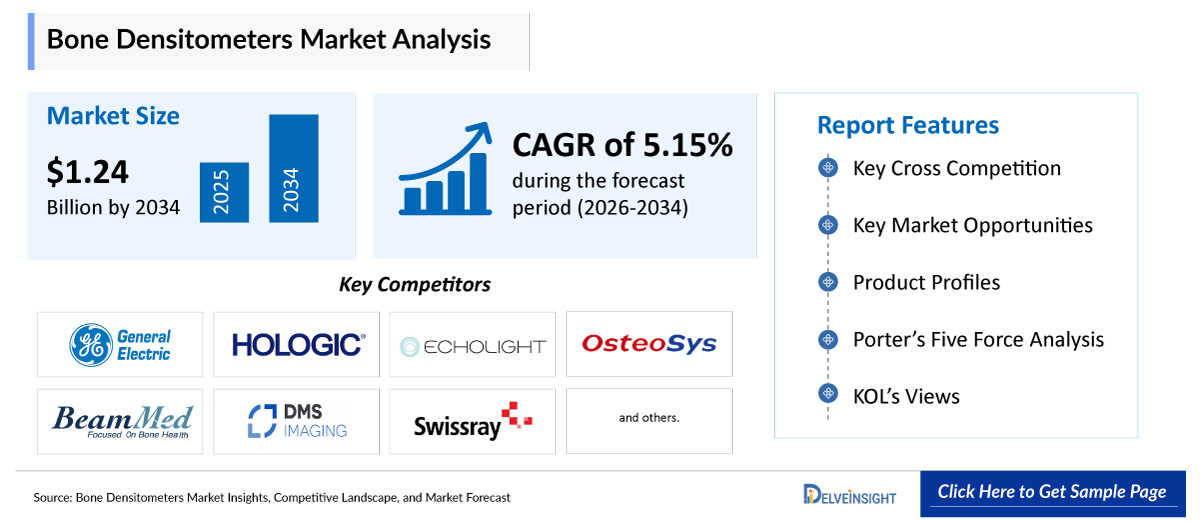
- The global bone densitometers market was valued at USD 790 million in 2025 and is projected to reach USD 1.24 billion by 2034.
- The market is expected to expand at a CAGR of 5.15% during the forecast period 2026-2034, supported by the rising prevalence of osteoporosis and osteopenia, the ageing of the global population, the growing burden of fragility fractures, the shift toward radiation-free assessment, and the integration of bone quality metrics and artificial intelligence into densitometry workflows.
- By technology, the axial (central) bone densitometry segment dominated the bone densitometers market with a 71% share in 2025, within which central dual-energy X-ray absorptiometry remains the reference modality.
- By application, the osteoporosis and osteopenia diagnosis segment dominated the bone densitometers market with a 74% share in 2025.
- By portability, the stationary and standalone systems segment dominated the bone densitometers market with a 63% share in 2025.
- By end-user, the hospitals segment dominated the bone densitometers market with a 52% share in 2025.
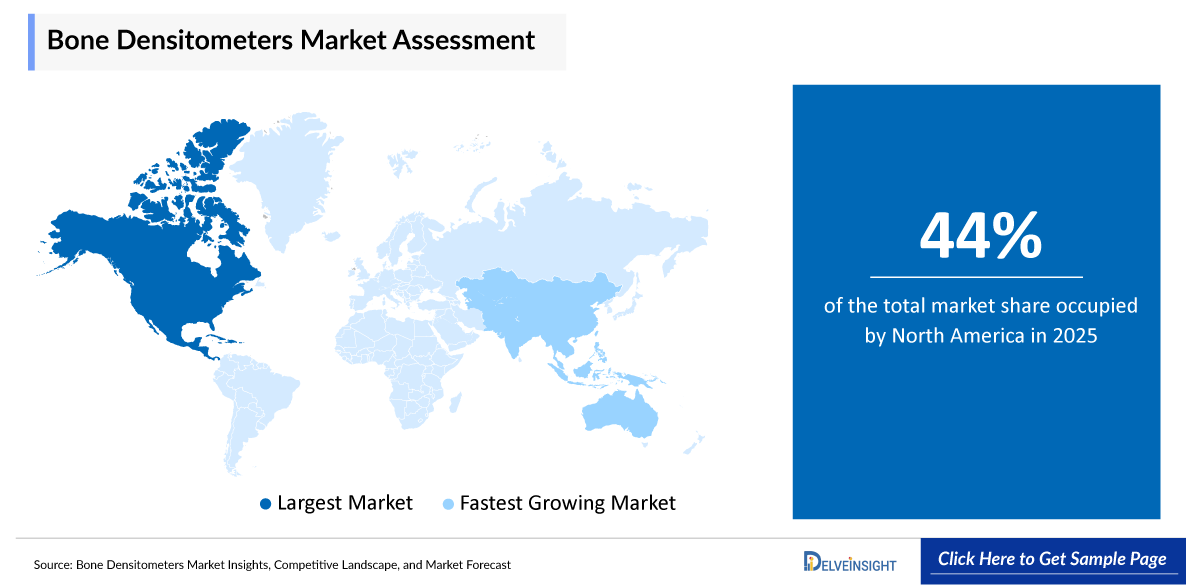
- North America accounted for the largest share of the bone densitometers market at 44% in 2025, while Asia-Pacific is anticipated to register the fastest growth through 2034.
A bone densitometer is a diagnostic device that measures bone mineral density and estimates fracture risk, most commonly to detect and monitor osteoporosis and osteopenia. The category is best understood through the clinical pathway that manufacturers themselves use to organize their portfolios. The reference modality is central dual-energy X-ray absorptiometry, in which two X-ray energies are passed through the lumbar spine and proximal femur to compute bone mineral density, generate T-scores and Z-scores, and, in advanced systems, derive the Trabecular Bone Score as a measure of bone quality. Central systems increasingly integrate vertebral fracture assessment, abdominal aortic calcification screening, and whole-body composition analysis of fat and lean mass on the same platform. Peripheral devices extend measurement to the forearm and calcaneus through peripheral dual-energy X-ray absorptiometry, peripheral quantitative computed tomography, and quantitative ultrasound, serving primary care, screening, and point-of-care settings where a compact or portable footprint is required. Central quantitative computed tomography provides volumetric bone density using standard computed tomography scanners with dedicated software. The most significant recent addition to the category is radiofrequency echographic multispectrometry, an axial ultrasound modality that assesses bone density and quality at the spine and hip without ionizing radiation, enabling repeat scanning in populations for whom radiation exposure is a concern. The contemporary market is defined by the transition from bone quantity alone toward combined bone quantity and quality assessment, the emergence of radiation-free axial modalities, the embedding of fracture-risk algorithms and artificial intelligence into reporting, and the extension of densitometry from tertiary radiology into primary care and wellness settings.
Bone Densitometers Market Key Growth Drivers
- Rising prevalence of osteoporosis and osteopenia, with the International Osteoporosis Foundation reporting that one in three women and one in five men over the age of 50 will experience an osteoporosis-related fracture over their remaining lifetimes.
- A large and growing fragility fracture burden, with the International Osteoporosis Foundation reporting up to 37 million fragility fractures each year in individuals over the age of 55, equivalent to 70 fractures every minute.
- Rapid ageing of the global population, with the United Nations reporting 727 million people aged 65 or over in 2020, a figure projected to exceed 1.5 billion by 2050.
- A rising hip fracture burden, with the number of hip fractures projected to rise sharply between 2018 and 2050, and the majority of Asian hip fractures expected to occur in China.
- Technological advancement in product design, including the integration of the Trabecular Bone Score, fracture-risk algorithms, and artificial intelligence into densitometry reporting.
- Emergence of radiation-free axial assessment through radiofrequency echographic multispectrometry, validated by Current Procedural Terminology reimbursement effective from January 2024 and adoption by NASA for bone health monitoring.
- Extension of bone density testing from tertiary radiology into primary care, wellness, and point-of-care settings through compact, portable, and ultrasound-based systems.
Key Companies in Bone Densitometers Market
The competitive landscape is led by the following active players:
- GE HealthCare Technologies Inc.
- Hologic, Inc.
- Echolight S.p.A.
- OsteoSys Co., Ltd.
- BeamMed Ltd.
- Diagnostic Medical Systems (DMS) Group
- Swissray International, Inc.
- Trivitron Healthcare Pvt. Ltd.
- Furuno Electric Co., Ltd.
- Xingaoyi Medical Equipment Co., Ltd.
For illustrative purposes, only the top 10 companies are listed in the Table of Contents. The report may include analysis and references to additional companies relevant to the market assessment.
Bone Densitometers Market Size
The following table summarizes the headline market metrics for the global bone densitometers market across the base year and the forecast horizon.
|
Report Metrics |
Details |
|
2025 Market Size |
USD 790 million |
|
2034 Projected Market Size |
USD 1.24 billion |
|
Growth Rate (2026-2034) |
5.15% CAGR |
|
Largest Market |
North America (44% share in 2025) |
|
Fastest Growing Market |
Asia-Pacific |
|
Market Structure |
Moderately Fragmented |
All market values are expressed in USD and represent DelveInsight estimates synthesized from primary and secondary research.
Factors Contributing to the Growth of the Bone Densitometers Market
Market Drivers
Rising Prevalence of Osteoporosis and Osteopenia
The foundational driver of the bone densitometers market is the rising prevalence of osteoporosis and osteopenia, which generates the diagnostic and monitoring volume on which the entire category depends. Osteoporosis progresses silently, weakening bone until a fracture occurs, and the International Osteoporosis Foundation reports that one in three women and one in five men over the age of 50 will experience an osteoporosis-related fracture over their remaining lifetimes, a risk that in women exceeds that of breast cancer and in men exceeds that of prostate cancer. Because the World Health Organization defines osteoporosis by a bone mineral density T-score at or below minus 2.5, and because that threshold can be established only by densitometry, each patient at risk represents a probable scan and, for those on treatment, a series of monitoring scans over subsequent years. Postmenopausal women constitute the primary screening population, driven by the marked decline in bone mineral density that accompanies estrogen loss, while secondary osteoporosis arising from glucocorticoid therapy, endocrine disorders, rheumatoid arthritis, and malignancy widens the eligible pool further. As clinical guidelines increasingly recommend bone density testing for women aged 65 and older and for younger patients with risk factors, the screening-eligible population continues to expand across both developed and emerging markets, sustaining demand for central and peripheral densitometry systems.
Growing Burden of Fragility Fractures
The escalating burden of fragility fractures is a distinctive and powerful driver because it converts asymptomatic bone loss into visible clinical and economic consequences that health systems act to prevent. The International Osteoporosis Foundation reports up to 37 million fragility fractures each year in individuals over the age of 55, equivalent to 70 fractures every minute, and the World Health Organization has documented 178 million new fractures globally in 2019, with 455 million prevalent cases. Fragility fractures carry profound consequences, with loss of independence common after hip fracture and a substantial share of survivors requiring assistance or institutional care in the year that follows. These outcomes have made secondary fracture prevention and early detection a policy priority, embodied in fracture liaison services and screening programs that route at-risk patients to densitometry. Because a prior fracture sharply raises the risk of a subsequent one, each fragility fracture generates downstream demand not only for the diagnostic scan that identifies underlying bone weakness but for repeat monitoring during pharmacological treatment, and the enormous and rising health economic cost of fractures reinforces the case for the densitometry that anchors prevention.
Ageing of the Global Population
The rapid ageing of the global population is a critical contributing factor because age is among the strongest determinants of low bone mineral density and fracture, and it expands the population that will require densitometry. The United Nations reports 727 million people aged 65 or over in 2020, a figure projected to more than double to exceed 1.5 billion by 2050. Bone mineral density declines with advancing age in both sexes, and the peak burden of hip fracture falls in the eighth decade of life, so demographic ageing translates directly into a larger screening and monitoring population. The number of hip fractures is projected to rise sharply between 2018 and 2050, and by 2050 more than half of the world's osteoporotic fractures are expected to occur in Asia, where population ageing is proceeding rapidly and where China alone is projected to see hip fracture incidence rise from several hundred thousand toward more than one million annually. This demographic trajectory sustains long-term demand for bone densitometry across every region and underpins the extension of testing into primary care to reach an ageing population at scale.
Technological Advancement and Bone Quality Assessment
Increasing technological advancement in product design is boosting the market by moving densitometry beyond bone quantity toward combined quantity and quality assessment, enhancing the clinical value of each scan. The Trabecular Bone Score, computed from the texture of the dual-energy X-ray absorptiometry image and correlated with bone microarchitecture, has been incorporated into International Society for Clinical Densitometry guidelines and improves fracture-risk prediction independently of bone mineral density; manufacturers have embedded it alongside fracture-risk algorithms, adjusted risk scores, and automated guideline-based reporting into their central platforms. Central systems now integrate vertebral fracture assessment, abdominal aortic calcification screening, and whole-body composition on a single device, raising the diagnostic yield of each acquisition and supporting applications in metabolic health and sports performance. Faster acquisition, higher-resolution detectors, lower radiation dose, and unified bone and body composition workflows further improve throughput and patient experience. Because the installed base of densitometers turns over slowly, growth comes disproportionately from raising the clinical value and application breadth of each system, which makes continuous software and application advancement the principal commercial lever available to manufacturers.
Emergence of Radiation-Free Axial Modalities
The emergence of radiofrequency echographic multispectrometry as a distinct radiation-free axial modality is among the most consequential recent developments in the field and a significant driver of category expansion. Traditional dual-energy X-ray absorptiometry, though the reference standard, uses ionizing radiation, requires a shielded room, and can be limited by artifacts and positioning, whereas radiofrequency echographic multispectrometry assesses bone mineral density and quality at the lumbar spine and femoral neck through a simple ultrasound scan, without radiation and without a lead-lined room. This profile enables repeated scanning for treatment monitoring and extends bone assessment to populations for whom radiation is a particular concern, including pregnant, oncology, and pediatric patients. The commercial validation of the modality has advanced quickly, with a Current Procedural Terminology reimbursement code applicable from January 2024, adoption by NASA for bone health monitoring in bedrest studies, publication of proposed practice parameters standardizing its use, and a growing body of peer-reviewed evidence comparing it with dual-energy X-ray absorptiometry. Because the modality reaches settings and patients that fixed X-ray systems cannot, it is additive to the installed base rather than purely substitutive, expanding the total addressable market for bone density assessment.
Market Restraints
The bone densitometers market faces significant restraints and challenges, primarily related to reimbursement, awareness, and access. Reimbursement for bone density testing has historically been constrained in several health systems, and inadequate or declining payment can discourage providers from investing in equipment and can limit the frequency of monitoring scans, which slows both the installation of new systems and the replacement of ageing ones. A persistent lack of awareness among patients and, in some settings, among primary care providers means that the majority of people with osteoporosis remain undiagnosed until a fracture occurs, so a large share of the eligible population is never scanned despite the availability of technology. The high cost of central dual-energy X-ray absorptiometry systems, the requirement for a shielded room and trained technologists, and the need for periodic quality-control phantom calibration further limit access, particularly in developing countries and rural settings where a substantial share of the population lacks access to a densitometer at all. Evolving regulation adds to the burden, as the European Union Medical Device Regulation has imposed extensive clinical evidence and documentation requirements that raise the compliance cost of maintaining product availability and favor manufacturers with regulatory scale, a dynamic reflected in the multi-product recertification efforts of established suppliers. Competitive intensity is high in the peripheral and ultrasound segments, where numerous regional manufacturers supply lower-cost systems, compressing pricing, while cross-calibration differences between systems from different manufacturers complicate longitudinal monitoring when patients change devices. Trade policy and supply chain pressures on electronics, detectors, and X-ray components add a further constraint on manufacturing cost and lead times.
Bone Densitometers Market Segment Analysis
The global bone densitometers market is segmented by technology (axial (central) bone densitometry, peripheral bone densitometry, and radiofrequency echographic multi spectrometry), by application (osteoporosis and osteopenia diagnosis, fracture risk assessment, body composition analysis, and others), by portability (stationary and standalone systems and portable and tabletop systems), by end-user (hospitals, diagnostic imaging centers, ambulatory and specialty clinics, and others), and by geography (North America, Europe, Asia-Pacific, and the Rest of the World).
By Technology
Dominant Subsegment: Axial (Central) Bone Densitometry.
The axial (central) bone densitometry category is expected to dominate the market.
Dominant: Axial (Central) Bone Densitometry ~ 71%
The axial (central) bone densitometry segment accounted for a 71% share of the bone densitometers market in 2025. Axial systems dominate the technology structure because central dual-energy X-ray absorptiometry is the reference standard for diagnosing osteoporosis and the modality on which clinical guidelines, treatment thresholds, and monitoring protocols are built, and because the highest-value systems in the market are central platforms. Within this segment, central dual-energy X-ray absorptiometry is the overwhelming majority modality, measuring bone mineral density at the lumbar spine and proximal femur with high precision and low radiation dose, and it is the technology that generates T-scores against the World Health Organization diagnostic threshold. Manufacturers have concentrated their premium engineering here, with GE HealthCare Lunar iDXA and Prodigy systems and Hologic Horizon systems integrating the Trabecular Bone Score, vertebral fracture assessment, abdominal aortic calcification screening, and whole-body composition on a single platform. Central quantitative computed tomography forms a smaller part of the axial segment, providing volumetric density using standard computed tomography scanners with dedicated software. Peripheral bone densitometry, encompassing peripheral dual-energy X-ray absorptiometry, peripheral quantitative computed tomography, and quantitative ultrasound of the forearm and calcaneus, serves screening and point-of-care settings at lower cost, and radiofrequency echographic multispectrometry forms the fastest-growing technology as a radiation-free axial alternative. Axial central densitometry is expected to retain its dominant position throughout the forecast period, although radiation-free modalities are projected to capture a rising share of scan volume.
By Application
Dominant Subsegment: Osteoporosis and Osteopenia Diagnosis.
The osteoporosis and osteopenia diagnosis category is expected to dominate the market.
Dominant: Osteoporosis and Osteopenia Diagnosis ~ 74%
The osteoporosis and osteopenia diagnosis segment accounted for a 74% share of the bone densitometers market in 2025. Diagnosis of low bone mass dominates the application structure because it is the clinical purpose for which densitometry was created and remains the overwhelming majority of scan activity worldwide. The segment encompasses initial diagnostic testing against the World Health Organization T-score threshold, case-finding in postmenopausal women and older men, and evaluation of secondary osteoporosis arising from glucocorticoid use, endocrine disease, and other conditions, and its scale follows directly from the epidemiology of a disease that affects a large share of the population over 50. Fracture risk assessment forms the second application and a fast-growing one, as densitometry increasingly incorporates the Trabecular Bone Score and fracture-risk algorithms that combine bone mineral density with clinical risk factors to estimate the probability of future fracture, extending the clinical value of each scan beyond a single diagnostic threshold. Body composition analysis represents a distinct and expanding application, with central dual-energy X-ray absorptiometry systems used to quantify fat mass, lean mass, and visceral fat for metabolic health, weight management, sarcopenia assessment, and sports performance, a use case that manufacturers actively market as a separate revenue stream. Others encompass pediatric bone assessment and treatment monitoring. Osteoporosis and osteopenia diagnosis is expected to retain its dominant position throughout the forecast period, although body composition and fracture-risk applications are projected to grow faster.
By Portability
Dominant Subsegment: Stationary and Standalone Systems.
The stationary and standalone systems category is expected to dominate the market.
Dominant: Stationary and Standalone Systems ~ 63%
The stationary and standalone systems segment accounted for a 63% share of the bone densitometers market in 2025. Stationary systems dominate the portability structure because the reference-standard central dual-energy X-ray absorptiometry platforms are floor-mounted table systems installed in radiology departments and imaging centers, and because these high-value systems account for the largest share of market revenue. Stationary central systems from GE HealthCare and Hologic deliver the precision, application breadth, and throughput required for diagnostic and monitoring work at scale, and their installed base turns over slowly, generating recurring demand for software upgrades, service, and eventual replacement. Portable and tabletop systems constitute the faster-growing segment, encompassing compact peripheral dual-energy X-ray absorptiometry units, quantitative ultrasound devices, and portable radiofrequency echographic multispectrometry systems that bring bone assessment to primary care, pharmacies, mobile clinics, remote settings, and wellness centers. Manufacturers including BeamMed, OsteoSys, and Echolight have built portfolios specifically for portability, with wireless and handheld ultrasound densitometers and radiation-free ultrasound platforms that require no shielded room. Stationary and standalone systems are expected to retain their dominant position throughout the forecast period, while portable systems expand access and capture a rising share of unit volume.
By End-User
Dominant Subsegment: Hospitals.
The hospitals category is expected to dominate the market.
Dominant: Hospitals ~ 52%
The hospitals segment accounted for a 52% share of the bone densitometers market in 2025. Hospitals dominate end-user demand by serving as the primary centers for bone health diagnosis and management, where the majority of central dual-energy X-ray absorptiometry systems are installed and where densitometry is integrated with endocrinology, rheumatology, orthopedics, and fracture liaison services. Equipped with radiology departments, shielded rooms, and trained technologists, hospitals drive high scan volumes and are typically the first adopters of advanced platforms incorporating the Trabecular Bone Score, vertebral fracture assessment, and body composition, supported by established reimbursement and referral pathways. Diagnostic imaging centers form the second-largest end-user, providing dedicated densitometry and imaging services on a high-throughput basis, often with the newest central systems. Ambulatory and specialty clinics constitute the fastest-growing end-user, as compact, portable, and radiation-free systems extend bone assessment into primary care, endocrinology, gynecology, and wellness practices that previously referred patients elsewhere, a shift enabled specifically by quantitative ultrasound and radiofrequency echographic multispectrometry. Others encompass research institutions and mobile screening providers. Hospitals are expected to retain their dominant position throughout the forecast period.
Bone Densitometers Market Region Analysis
Dominant Region: North America
Dominant: North America ~ 44% (Largest)
North America accounted for a 44% share of the global bone densitometers market in 2025. The region leads the global market, driven by the high prevalence of osteoporosis, advanced healthcare infrastructure, strong adoption of bone density screening, and the presence of the two leading central dual-energy X-ray absorptiometry manufacturers, GE HealthCare and Hologic. The United States Centers for Disease Control and Prevention has reported a substantial age-adjusted prevalence of osteoporosis at the lumbar spine or femoral neck among adults aged 50 and over, with prevalence markedly higher in women than in men, sustaining a large screening and monitoring population. Adoption is supported by established reimbursement for bone densitometry, clinical guidelines recommending screening for women aged 65 and older, and a dense installed base of central systems in hospitals and imaging centers. The region is also the reference market for regulatory clearance and reimbursement innovation, having established a Current Procedural Terminology code for radiofrequency echographic multispectrometry effective from January 2024 and hosting early clinical and research adoption of radiation-free assessment, including its use by NASA. Continuous product innovation in bone quality metrics, body composition, and artificial intelligence, together with the extension of testing into primary care and wellness settings, positions North America as the dominant hub for bone densitometry.
Fastest Growing Region: Asia-Pacific
Asia-Pacific is projected to register the fastest compound annual growth rate in the bone densitometers market through 2034. The region is emerging as a major growth driver due to its very large and rapidly ageing population, the rising prevalence of osteoporosis and fragility fractures, and expanding healthcare investment and infrastructure. By 2050, more than half of the world's osteoporotic fractures are expected to occur in Asia, and China alone is projected to see hip fracture incidence rise substantially over the coming decades, creating enormous latent demand for bone density screening and monitoring. Growing awareness, expanding insurance coverage, and government initiatives for the early diagnosis and management of osteoporosis are accelerating adoption, while a mature base of cost-effective regional manufacturers, particularly in South Korea, China, and Japan, is expanding access to affordable central and peripheral systems. South Korean manufacturers including OsteoSys supply competitively priced dual-energy X-ray absorptiometry and quantitative ultrasound systems across the region and beyond, Japanese manufacturers contribute quantitative ultrasound technology, and Chinese manufacturers supply high volumes to domestic and emerging markets. Regional growth is expected to exceed the global average across every technology segment, driven by the extension of testing from tertiary hospitals into primary care to reach an ageing population at scale.
Regional Commentary
North America
North America leads on value, installed base, and reimbursement precedence, holding a 44% share in 2025. The United States hosts the two leading central dual-energy X-ray absorptiometry manufacturers and established a Current Procedural Terminology code for radiofrequency echographic multispectrometry effective from January 2024. The Centers for Disease Control and Prevention has documented substantial osteoporosis prevalence among adults aged 50 and over, particularly in women. Adoption is supported by established reimbursement, guideline-based screening for women aged 65 and older, and a dense hospital and imaging-center installed base. Near-term dynamics are shaped by bone quality metrics, body composition applications, radiation-free assessment, and the extension of testing into primary care and wellness.
Europe
Europe is a mature and substantial market driven by a large ageing population, a high fragility fracture burden, and a strong emphasis on secondary fracture prevention through fracture liaison services. The health economic cost of fragility fractures in Europe is enormous and rising, reinforcing the policy case for screening and the densitometry that anchors it. The European Union Medical Device Regulation has imposed extensive evidentiary and documentation requirements that have reshaped product availability and favored manufacturers with regulatory scale, reflected in multi-product recertification efforts. Radiofrequency echographic multi spectrometry originated in Italy and has achieved notable European clinical adoption, while national screening programs and guideline recommendations gate utilization.
Asia-Pacific
Asia-Pacific is the fastest-growing region, propelled by a very large and rapidly ageing population, rising osteoporosis and fracture prevalence, and expanding healthcare investment. By 2050, more than half of global osteoporotic fractures are expected to occur in Asia, with China facing a sharp projected rise in hip fractures. Government initiatives, expanding insurance coverage, and a mature base of cost-effective manufacturers in South Korea, China, and Japan are accelerating adoption, and the region is extending testing from tertiary hospitals into primary care. South Korean and Chinese manufacturers supply affordable central and peripheral systems domestically and for export, while Japanese manufacturers contribute quantitative ultrasound technology.
Rest of World
The Rest of the World comprises the Middle East, Africa, and South America, where access is highly stratified. The Gulf Cooperation Council states and the larger South American markets, particularly Brazil, have invested in imaging capacity and increasingly perform contemporary bone densitometry, representing growing markets, while much of Africa lacks the densitometry infrastructure, trained workforce, and financing required, so a substantial share of osteoporosis is never diagnosed. High system and procedure costs limit access in developing countries and are often not covered by reimbursement. Regional growth will be driven by investment in diagnostic capacity, government health initiatives, awareness programs, and lower-cost portable and ultrasound-based systems from Asian and European manufacturers.
Bone Densitometers Market Competitive Landscape
The global bone densitometers market is classified as Moderately Fragmented. The competitive landscape is shaped by a small group of global leaders in central dual-energy X-ray absorptiometry alongside a large number of regional and specialist manufacturers in peripheral, ultrasound, and radiation-free modalities. GE HealthCare and Hologic hold leading positions in the high-value central segment, supported by decades of installed base, clinical evidence, and integrated bone quality and body composition applications, while numerous manufacturers across South Korea, China, Japan, Italy, France, and elsewhere compete in peripheral and ultrasound systems on price, portability, and access. Competition is intensifying in bone quality assessment, radiation-free axial modalities, and the extension of testing into primary care. The competitive landscape is evaluated across the following dimensions:
- Market concentration: Moderately fragmented, with a small group of leaders holding the high-value central dual-energy X-ray absorptiometry segment and a long tail of regional and specialist manufacturers competing across peripheral, ultrasound, and radiation-free modalities.
- Leading players: GE HealthCare Technologies Inc. and Hologic, Inc. lead in central dual-energy X-ray absorptiometry; Echolight S.p.A. leads in radiofrequency echographic multispectrometry; OsteoSys Co., Ltd. and BeamMed Ltd. lead in accessible peripheral and quantitative ultrasound systems.
- Geographic reach: The leading central manufacturers operate global commercial and service organizations built on hospital and imaging-center relationships, while regional manufacturers in South Korea, China, Japan, and Europe leverage cost and portability advantages to penetrate primary care and emerging markets.
- Product portfolio strength: Competitive advantage rests on combining bone mineral density with bone quality and body composition on a single platform, with portfolio breadth across central, peripheral, ultrasound, and radiation-free modalities determining position across care settings.
- Pipeline and innovation focus: Development is concentrated in bone quality metrics such as the Trabecular Bone Score, artificial-intelligence-enabled reporting and fracture-risk prediction, radiation-free axial assessment, and portable point-of-care systems.
- Regulatory standing: United States Food and Drug Administration clearance and European Union Medical Device Regulation certification have become decisive competitive credentials, with the evidentiary burden favoring manufacturers of scale, reflected in multi-product recertification efforts.
- Strategic activity: Collaboration and validation are the defining dynamics, spanning reimbursement establishment, guideline inclusion, clinical validation studies, research and space-agency partnerships, and distribution agreements that extend reach into new geographies and care settings.
Bone Densitometers Market Recent Developmental Activities
In November 2025, Echolight S.p.A. demonstrated its radiation-free radiofrequency echographic multispectrometry bone density scanning at the Radiological Society of North America 2025 Congress in Chicago, presenting two new validation studies, including the application of the modality to assess bone changes during pregnancy and following total hip replacement. Strategic significance: presenting radiation-free axial assessment at the field's largest imaging congress, supported by fresh peer-reviewed validation in populations for whom radiation is a concern, advances the clinical adoption of a modality that extends bone assessment beyond the reach of fixed X-ray systems.
In February 2026, MRIguidance advanced BoneMRI, a radiation-free bone imaging solution, strengthening its commercial leadership to accelerate the deployment of quantitative magnetic-resonance-based bone density assessment. Strategic significance: the emergence of magnetic-resonance-based bone density represents a further radiation-free challenge to X-ray dual-energy absorptiometry, signaling that the technology frontier of the category is shifting toward modalities that avoid ionizing radiation while adding structural information.
In October 2024, Echolight S.p.A. announced that NASA had adopted its radiofrequency echographic multispectrometry technology to monitor bone changes in a human bedrest study and to assess the effects of unloading on bone mass. Strategic significance: adoption by a leading research agency to monitor bone loss in a controlled unloading model validates the precision and repeatability of radiation-free axial assessment and demonstrates a monitoring use case that repeated X-ray scanning cannot serve.
In August 2024, OsteoSys Co., Ltd. obtained CE marking under the European Union Medical Device Regulation 2017/745 for its full dual-energy X-ray absorptiometry portfolio, including the PRIMUS, EXCELLUS, DEXXUM T QUANTUM, DEXXUM T, and EXA-3000 systems. Strategic significance: multi-product recertification under the more demanding European framework secures continued market access for an affordability-focused Asian manufacturer and illustrates how the evidentiary burden of the regulation favors suppliers with the scale to recertify entire portfolios.
In 2025, an international expert panel published proposed practice parameters for the performance of radiofrequency echographic multispectrometry evaluations, establishing standardized clinical protocols for the modality. Strategic significance: consensus practice parameters provide the procedural standardization that clinical societies and payers require before broad adoption, reinforcing radiation-free axial assessment as a reproducible and reimbursable option rather than an investigational technique.
In 2023, the American Medical Association and the Centers for Medicare and Medicaid Services assigned a Current Procedural Terminology code for the reimbursement of radiofrequency echographic multispectrometry bone assessment, applicable from January 2024. Strategic significance: a dedicated reimbursement pathway in the largest healthcare market removes the principal commercial barrier to a new modality, enabling clinics to bill for radiation-free bone assessment and accelerating its diffusion into primary care and specialty practice.
In 2024, GE HealthCare released the enCORE version 18 software platform for its Lunar dual-energy X-ray absorptiometry systems, introducing a Bone Resilience Index that combines the bone mineral density T-score with the Trabecular Bone Score, alongside Trabecular-Bone-Score-adjusted fracture-risk assessment, automated guideline-based conclusions, and the DXAVision workflow enabling scans up to 40% faster. Strategic significance: consolidating bone quantity, bone quality, and fracture-risk decision tools into a unified reporting platform illustrates the shift of competitive value from hardware toward integrated software and defends the leadership position of an installed base built over decades.
In 2024, Hologic, Inc. continued to advance its Horizon dual-energy X-ray absorptiometry system, integrating the TBS Osteo Trabecular Bone Score into International Society for Clinical Densitometry guideline-aligned workflows to improve fracture-risk prediction, and expanding body composition capabilities anchored in reference data from the Centers for Disease Control and Prevention National Health and Nutrition Examination Survey. Strategic significance: embedding validated bone quality and body composition into a flagship central platform broadens its clinical value across osteoporosis, metabolic health, and sports performance, reinforcing the strategy of selling an integrated diagnostic solution rather than a single measurement.
In 2024, the International Osteoporosis Foundation marked World Osteoporosis Day by reporting up to 37 million fragility fractures each year in individuals over the age of 55 and highlighting the World Health Organization Fragility Fractures fact sheet documenting 178 million new fractures globally in 2019. Strategic significance: authoritative epidemiological framing from the leading professional bodies expands the recognized screening-eligible population and strengthens the policy case for the early detection that bone densitometry provides.
In 2024, OsteoSys Co., Ltd. expanded its accessible bone assessment portfolio spanning the DEXXUM T QUANTUM central fan-beam dual-energy X-ray absorptiometry system, the EXA-3000 peripheral system, and the SONOST and BeeTLe quantitative ultrasound lines, including a portable wireless ultrasound densitometer. Strategic significance: building a portfolio that spans central, peripheral, and portable ultrasound modalities positions an Asian manufacturer to serve every care setting from tertiary hospital to primary care, capturing the fast-growing point-of-care and emerging-market segments on price and portability.
In 2025, Echolight S.p.A. continued to expand EchoS and EchoStation commercialization across more than 30 countries and advanced the inclusion of radiofrequency echographic multispectrometry in national clinical guidelines. Strategic significance: guideline inclusion and broadening international distribution convert a novel modality into a recognized clinical option, building the reimbursement and referral pathways on which sustained adoption of radiation-free assessment depends.
In 2024, BeamMed Ltd. continued to market its portable, radiation-free quantitative ultrasound systems, including the MiniOmni and Sunlight platforms, for bone assessment in primary care, pediatric, and remote settings. Strategic significance: portable ultrasound densitometry extends screening to settings without radiology infrastructure, supporting the extension of bone assessment from tertiary radiology into primary care that underpins volume growth in the category.
Bone Densitometers Market Segmentation
Bone Densitometers Market Assessment by Technology
- Axial (Central) Bone Densitometry
- Central Dual-Energy X-Ray Absorptiometry (DXA)
- Quantitative Computed Tomography (QCT)
- Peripheral Bone Densitometry
- Peripheral Dual-Energy X-Ray Absorptiometry (pDXA)
- Peripheral Quantitative Computed Tomography (pQCT)
- Quantitative Ultrasound (QUS)
- Radiofrequency Echographic Multi Spectrometry (REMS)
Bone Densitometers Market Assessment by Application
- Osteoporosis and Osteopenia Diagnosis
- Fracture Risk Assessment
- Body Composition Analysis
- Others
Bone Densitometers Market Assessment by Portability
- Stationary and Standalone Systems
- Portable and Tabletop Systems
Bone Densitometers Market Assessment by End-User
- Hospitals
- Diagnostic Imaging Centers
- Ambulatory and Specialty Clinics
- Others
Bone Densitometers Market Assessment by Geography
- North America
- United States Bone Densitometers Market Size in USD million (2023-2034)
- Canada Bone Densitometers Market Size in USD million (2023-2034)
- Mexico Bone Densitometers Market Size in USD million (2023-2034)
- Europe
- France Bone Densitometers Market Size in USD million (2023-2034)
- Germany Bone Densitometers Market Size in USD million (2023-2034)
- United Kingdom Bone Densitometers Market Size in USD million (2023-2034)
- Italy Bone Densitometers Market Size in USD million (2023-2034)
- Spain Bone Densitometers Market Size in USD million (2023-2034)
- Russia Bone Densitometers Market Size in USD million (2023-2034)
- Rest of Europe Bone Densitometers Market Size in USD million (2023-2034)
- Asia-Pacific
- China Bone Densitometers Market Size in USD million (2023-2034)
- Japan Bone Densitometers Market Size in USD million (2023-2034)
- India Bone Densitometers Market Size in USD million (2023-2034)
- Australia Bone Densitometers Market Size in USD million (2023-2034)
- South Korea Bone Densitometers Market Size in USD million (2023-2034)
- Rest of Asia-Pacific Bone Densitometers Market Size in USD million (2023-2034)
- Rest of the World
- Middle East Bone Densitometers Market Size in USD million (2023-2034)
- Africa Bone Densitometers Market Size in USD million (2023-2034)
- South America Bone Densitometers Market Size in USD million (2023-2034)
Bone Densitometers Market Recent Industry Trends and Milestones (2023-2026)
|
Category |
Key Developments |
|
Bone Densitometers Market Product Approval and Reimbursement |
The 2023 to 2026 period was defined by the regulatory and reimbursement establishment of radiation-free axial assessment alongside continued central-system certification. A Current Procedural Terminology code for radiofrequency echographic multispectrometry was assigned in 2023 and became applicable from January 2024, and an international expert panel published proposed practice parameters standardizing the modality in 2025. OsteoSys secured CE marking under the European Union Medical Device Regulation for its full dual-energy X-ray absorptiometry portfolio in August 2024. Echolight advanced the inclusion of radiofrequency echographic multispectrometry in national clinical guidelines and expanded commercialization across more than 30 countries. |
|
Bone Densitometers Market Product Expansion |
Product expansion advanced along three axes. The first is bone quality, with GE HealthCare introducing a Bone Resilience Index combining the bone mineral density T-score with the Trabecular Bone Score in its enCORE version 18 platform, and Hologic embedding TBS Osteo into guideline-aligned workflows. The second is radiation-free assessment, with Echolight expanding its EchoS and EchoStation radiofrequency echographic multispectrometry systems and demonstrating pregnancy and post-surgical applications. The third is portability and access, with OsteoSys and BeamMed expanding compact, portable, and wireless quantitative ultrasound systems that extend testing into primary care and remote settings. |
|
Bone Densitometers Market Investment |
Investment concentrated on radiation-free and quality-focused technologies rather than on the mature central dual-energy X-ray absorptiometry hardware category. Capital and research effort flowed toward radiofrequency echographic multispectrometry, validated by a reimbursement code, NASA adoption for bedrest studies, and a growing body of peer-reviewed evidence, and toward emerging magnetic-resonance-based bone imaging advanced by developers such as MRIguidance. Established manufacturers invested in software, artificial-intelligence-enabled reporting, and workflow acceleration, while regional manufacturers invested in affordable portable systems for primary care and emerging markets. |
|
Company Strategy |
GE HealthCare is consolidating bone quantity, bone quality, and fracture-risk decision tools into a unified reporting platform and accelerating workflow to defend a central installed base built over decades. Hologic is embedding validated bone quality and body composition into its Horizon platform to serve osteoporosis, metabolic health, and sports performance. Echolight is building the reimbursement, guideline, and distribution pathways for radiation-free axial assessment and pursuing research and space-agency partnerships. OsteoSys and BeamMed are competing on affordability and portability to capture point-of-care and emerging-market demand, while regional manufacturers pursue regulatory certification to secure market access. |
|
Emerging Technologies |
The defining emerging technologies are radiofrequency echographic multispectrometry, which assesses bone mineral density and quality at the spine and hip through ultrasound without ionizing radiation and enables repeat scanning in pregnant, oncology, and pediatric patients; the Trabecular Bone Score and derived resilience indices, which add bone quality to bone quantity; and artificial intelligence applied to automated reporting, fracture-risk prediction, and body composition analysis. Magnetic-resonance-based bone imaging represents a further radiation-free frontier, and the integration of densitometry with fracture liaison services and primary-care point-of-care testing represents the principal delivery-model innovation. |
Bone Densitometers Market Startup Funding and Investment Trends
Investment in the bone densitometers field has moved away from mature central dual-energy X-ray absorptiometry hardware, where the category is consolidated and slow to turn over, and toward radiation-free modalities and bone quality assessment that create new clinical value and reach new care settings. The dominant thesis is radiation-free axial assessment, validated by reimbursement establishment, research-agency adoption, and a growing evidence base, alongside magnetic-resonance-based bone imaging and artificial-intelligence-enabled analysis. The table below summarizes representative companies advancing the next generation of bone assessment technologies.
|
Company |
Total Funding |
Funding Stage |
Main Offering |
Core Technology |
|
Echolight S.p.A. |
Privately held |
Growth |
EchoS and EchoStation REMS bone densitometers |
Radiofrequency echographic multispectroscopy |
|
MRIguidance |
Venture-backed |
Growth venture |
BoneMRI radiation-free bone imaging |
Quantitative magnetic resonance imaging |
|
Request for unlocking the report of the @ Bone Densitometers Market | ||||
Capital formation in this field is shaped by the difficulty of competing against incumbents whose installed base, clinical evidence, and integrated platforms create high switching costs in the central segment, so investors have favored companies creating new modalities and new care settings rather than contesting established central hardware. Radiofrequency echographic multispectroscopy is the archetype, having secured a reimbursement code, research-agency adoption, and guideline traction while extending assessment to patients and settings that fixed X-ray systems cannot serve. The same pattern is visible in magnetic-resonance-based bone imaging and in artificial-intelligence-enabled reporting that raises the clinical value of each scan. The principal risks are the evidentiary burden of Food and Drug Administration clearance and European Union Medical Device Regulation certification, the entrenched position of the dual-energy X-ray absorptiometry reference standard, and the reimbursement dependence of any new modality. Source: company disclosures; regulatory authorities.
Key Takeaways from the Bone Densitometers Market Report Study
- Market size analysis for the current bone densitometers market size (2025), and market forecast for 9 years (2026 to 2034).
- Top key product, technology, and reimbursement developments, partnerships, and validations that happened over the last 3 years.
- Key companies dominating the global bone densitometers market.
- Various opportunities available for competitors in the bone densitometers market space.
- What are the top-performing segments in 2025? How will these segments perform in 2034?
- Which are the top-performing regions and countries in the current bone densitometers market scenario?
- Which are the regions and countries where companies should concentrate their opportunities for bone densitometers market growth in the future?
Target Audience Who Can Benefit From This Bone Densitometers Market Report Study
- Bone densitometers product providers
- Research organizations and consulting companies
- Bone densitometers-related organizations, associations, forums, and other alliances
- Government and corporate offices
- Start-up companies, venture capitalists, and private equity firms
- Distributors and traders dealing in bone densitometers
- Various end-users who want to know more about the bone densitometers market and the latest technological developments in the bone densitometers market.