Cancer Therapy Market Summary
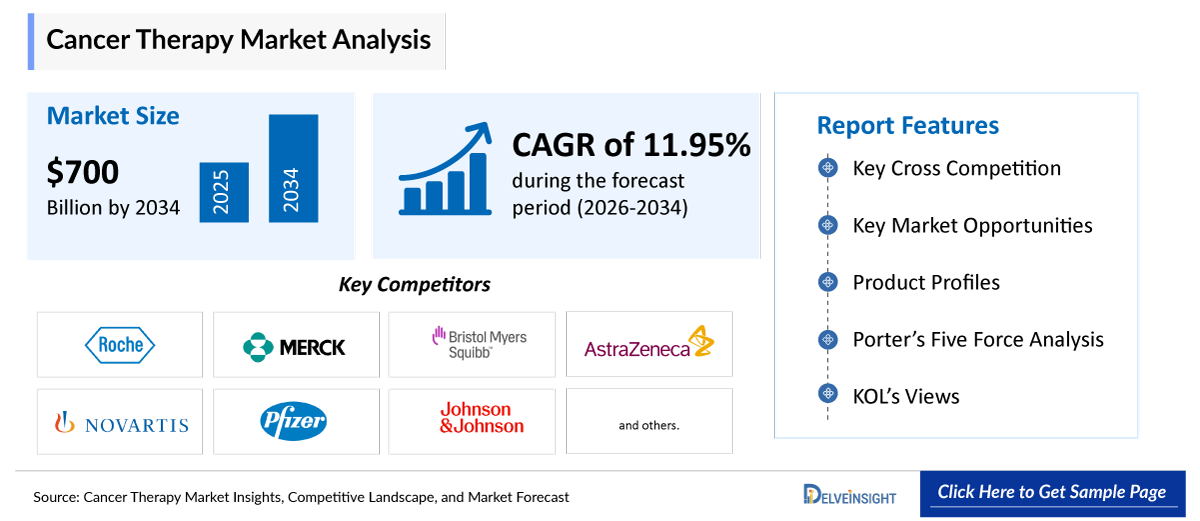
- The global cancer therapy market was valued at USD 253.48 billion in 2025 and is projected to reach USD 700.09 billion by 2034, driven by the escalating global cancer burden, transformative advances in immunotherapy and targeted therapy platforms, expanding FDA-accelerated approval pathways enabling faster regulatory access, and the rising integration of precision oncology and biomarker-guided treatment selection.
- The global cancer therapy market is growing at a CAGR of 11.95% during the forecast period from 2026 to 2034.
- The escalating global cancer burden with the World Health Organization (WHO) reporting over 20 million new cancer cases and nearly 10 million cancer deaths in 2023 representing the most significant global non-communicable disease burden, rising adoption of immune checkpoint inhibitors as first-line therapy across multiple tumor types driven by landmark clinical trials demonstrating superior overall survival versus chemotherapy, rapid expansion of CAR-T cell therapy and bispecific antibody approvals opening new treatment categories for hematologic malignancies and solid tumors, and the increasing integration of biomarker-driven precision oncology enabling identification of patient subpopulations most likely to respond to specific targeted and immunotherapy agents are collectively driving exceptional and sustained growth in the cancer therapy market throughout the forecast period from 2026 to 2034.
- The leading companies operating in the cancer therapy market include F. Hoffmann-La Roche Ltd. (Genentech, Inc.), Merck & Co., Inc., Bristol-Myers Squibb Company, AstraZeneca plc, Novartis AG, Pfizer Inc., Johnson & Johnson (Janssen Oncology), Eli Lilly and Company, Amgen Inc., AbbVie Inc., Gilead Sciences, Inc., Sanofi S.A., Bayer AG, BeiGene Ltd., and Regeneron Pharmaceuticals, Inc.
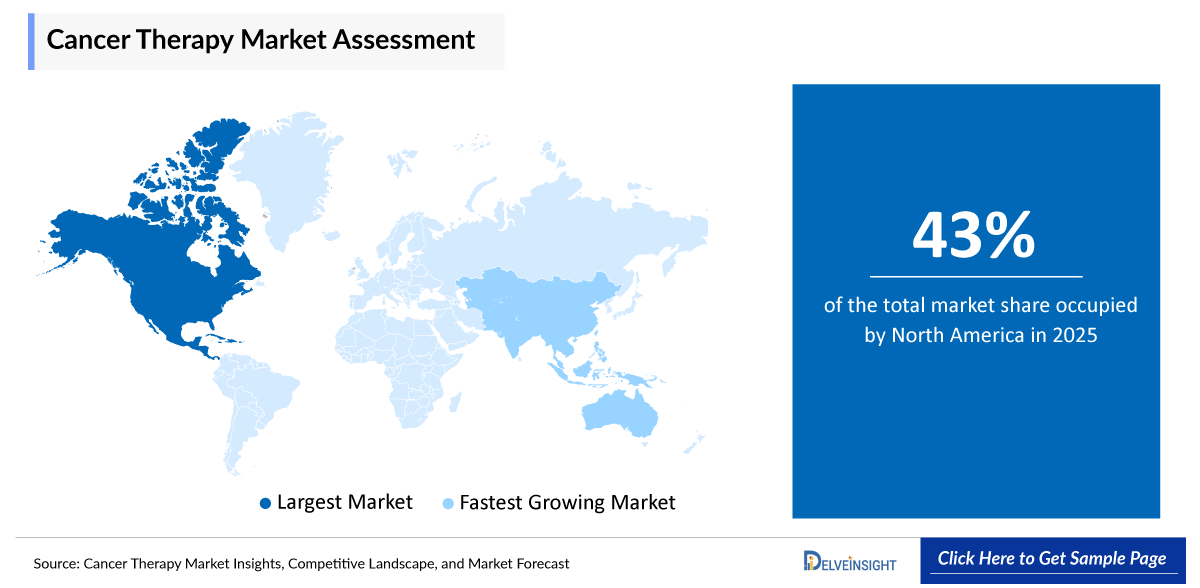
- North America is expected to dominate the cancer therapy market with 43% of global market revenue in 2025, driven by the CDC's documentation of 1,851,238 new cancer cases in the United States in 2022, the most extensive oncology drug pipeline globally generating continuous FDA approvals of novel cancer therapies, highly favorable FDA Accelerated Approval, Breakthrough Therapy Designation, and Fast Track programs enabling rapid access to innovative treatments, the highest per-capita oncology research and development spending globally, and the presence of global cancer therapy market leaders Merck, Bristol-Myers Squibb, Pfizer, Amgen, Gilead Sciences, AbbVie, and Regeneron headquartered in the United States.
- In the therapy type segment of the cancer therapy market, the targeted therapy category accounted for the dominant revenue share in 2025, driven by the precision of molecularly targeted agents in attacking specific oncogenic drivers while sparing normal cells, their superior efficacy versus conventional chemotherapy in biomarker-selected patient populations, and the expanding range of actionable oncogenic targets validated across multiple tumor types including HER2, EGFR, ALK, BRAF, KRAS, and CDK4/6.
Request for unlocking the report of the @ Cancer Therapy Market
Cancer Therapy Market Size and Forecasts
|
Report Metrics |
Details |
|
2025 Market Size |
USD 253.48 billion |
|
2034 Projected Market Size |
USD 700.09 billion |
|
Growth Rate (2026-2034) |
11.95% CAGR |
|
Largest Market |
North America |
|
Fastest Growing Market |
Asia-Pacific |
|
Market Structure |
Moderately Concentrated |
Factors Contributing to the Growth of the Cancer Therapy Market
- Escalating global cancer burden creating expanding non-discretionary treatment demand: The rapidly escalating global cancer burden represents the foundational structural driver for the cancer therapy market. According to the World Health Organization (WHO, 2023), over 20 million new cancer cases and nearly 10 million cancer deaths were reported globally in 2023, establishing cancer as the world's second leading cause of death after cardiovascular disease. The Centers for Disease Control and Prevention (CDC) documented 1,851,238 new cancer cases in the United States in 2022, reinforcing the scale of the patient population requiring treatment. The WHO projects that cancer cases will reach 35 million annually by 2050, reflecting a 77% increase from 2022, driven by aging populations, tobacco use, obesity, and lifestyle changes globally. The National Cancer Institute (NIH, NCI) reports that approximately 40.5% of Americans will receive a cancer diagnosis at some point during their lifetime, confirming the scale of the long-term treatment market.
- Transformative advances in immunotherapy enabling durable responses across multiple tumor types: The rapid advancement and clinical validation of immune checkpoint inhibitors, CAR-T cell therapies, bispecific antibodies, and antibody-drug conjugates are transforming cancer outcomes and driving market expansion. The success of Merck's pembrolizumab (Keytruda), the world's best-selling oncology drug, across 30+ tumor type indications demonstrates the breadth of the immunotherapy market opportunity. The FDA has approved over 100 oncology drugs in the past five years, with immunotherapy and targeted agents comprising the majority. According to the National Cancer Institute (NIH, NCI), immune checkpoint inhibitors have achieved durable long-term remission in 20-35% of advanced melanoma and NSCLC patients who previously had extremely poor prognoses on conventional chemotherapy. CAR-T cell therapies have achieved complete remission rates of 70-90% in certain relapsed/refractory hematologic malignancies, establishing a new treatment paradigm for previously incurable blood cancers per clinical trial data published in peer-reviewed literature.
- Expanding precision oncology and biomarker-driven treatment selection, improving outcomes and patient access: The integration of precision oncology principles into cancer therapy - through companion diagnostic biomarker testing, next-generation sequencing of tumor molecular profiles, and regulatory requirements for biomarker-selected prescribing - is expanding the cancer therapy market by identifying specific patient subpopulations with the highest response probability for targeted and immunotherapy agents. The FDA's Accelerated Approval pathway, Breakthrough Therapy Designation, and Fast Track programs have collectively enabled rapid regulatory access for innovative cancer therapies, with the FDA approving 75% of new oncology indications through accelerated pathways in 2023 per NCI data. The National Institutes of Health (NIH) invested USD 6.9 billion in cancer research funding in fiscal year 2024, supporting the clinical infrastructure required for biomarker-driven therapy development and validation. Companion diagnostic approval alongside targeted therapy approvals - such as the co-approval of pembrolizumab with PD-L1 IHC testing and KRAS mutation testing with KRAS inhibitors - is creating a precision oncology ecosystem that expands eligible patient populations as diagnostic coverage grows.
Cancer Therapy Market Report Segmentation
This cancer therapy market report offers a comprehensive overview of the global market, highlighting key trends, growth drivers, challenges, and opportunities. It covers detailed market segmentation by Therapy Type (Targeted Therapy, Immunotherapy [Immune Checkpoint Inhibitors, CAR-T Cell Therapy, Cancer Vaccines, Monoclonal Antibodies, and Others], Chemotherapy, Hormonal Therapy, and Others [Radiation Therapy, Stem Cell Transplant]), Drug Class (Biologics/Biologic-based Therapies and Small Molecule Drugs), Cancer Type (Lung Cancer, Breast Cancer, Colorectal Cancer, Hematologic Malignancies [Leukemia, Lymphoma, and Myeloma], Melanoma, Prostate Cancer, Ovarian Cancer, and Others), Route of Administration (Parenteral and Oral), End-User (Hospitals and Clinics, Cancer Research Centers, and Others), and Geography. The report provides valuable insights into the competitive landscape, regulatory environment, and market dynamics across major markets, including North America, Europe, and Asia-Pacific.
Cancer therapy encompasses the full spectrum of medical interventions designed to treat malignant neoplasms by eliminating cancer cells, controlling tumor growth, preventing metastasis, or managing cancer-related symptoms to improve patient quality of life and survival outcomes. The therapeutic armamentarium of modern oncology spans five major modalities: chemotherapy (cytotoxic drugs that kill rapidly dividing cells through DNA damage, antimetabolite interference, or mitotic inhibition), targeted therapy (agents designed to specifically inhibit defined molecular targets including kinases, growth factor receptors, and cell cycle regulators identified as oncogenic drivers in individual tumors), immunotherapy (treatments that harness the patient's own immune system to recognize and destroy cancer cells, including immune checkpoint inhibitors blocking PD-1/PD-L1/CTLA-4 pathways, chimeric antigen receptor T-cell therapies, bispecific antibodies, and cancer vaccines), hormonal therapy (endocrine manipulation for hormone receptor-positive breast and prostate cancers), and surgical and radiation therapies (physical tumor removal and ionizing radiation). Modern oncology increasingly employs rational combination regimens integrating multiple therapeutic modalities to overcome resistance mechanisms and achieve deeper, more durable clinical responses.
The cancer therapy market operates across the full pharmaceutical value chain from preclinical drug discovery through Phase 1-3 clinical development to regulatory approval, commercial manufacturing, and hospital and specialty pharmacy distribution. The market encompasses branded and biosimilar biological therapies, small molecule targeted agents, cellular therapies, and combination regimens, serving patients across all cancer type indications and stages from early adjuvant treatment through late-stage metastatic disease. The shift toward precision oncology - matching specific therapies to patients based on the molecular profile of their tumor - is the defining commercial and clinical paradigm of 21st-century cancer therapy, creating both higher-value therapeutic niches and expanding the total addressable patient population as biomarker testing identifies previously unrecognized therapy-eligible subgroups.
The cancer therapy market growth is collectively driven by the WHO-documented escalating global cancer burden exceeding 20 million new cases annually, the transformative clinical success of immunotherapy and precision oncology platforms demonstrating durable responses in previously incurable cancers, and the continuous expansion of FDA Accelerated Approval and Breakthrough Therapy pathways enabling rapid translation of clinical innovation into commercial cancer therapy. These forces ensure that the cancer therapy market demand grows in direct proportion to the expanding global cancer patient population, while innovation-driven replacement cycles generate additional revenue momentum as more effective next-generation therapies capture share from earlier standards of care.
Get More Insights into the Report @ Cancer Therapy Market
What are the Latest Cancer Therapy Market Dynamics and Trends?
The escalating global cancer burden, exceeding 20 million new cases annually, transformative advances in immunotherapy and precision oncology establishing durable clinical benefit across multiple tumor types, FDA Accelerated Approval and Breakthrough Therapy pathways enabling rapid regulatory access to innovative treatments, and strategic M&A consolidation among global pharmaceutical leaders expanding oncology pipeline depth are collectively driving exceptional and sustained growth in the global cancer therapy market.
According to the World Health Organization (WHO, 2023), over 20 million new cancer cases and nearly 10 million cancer deaths were reported globally in 2023. The WHO projects global cancer incidence to reach 35 million new cases annually by 2050, representing a 77% increase from 2022, reflecting population growth, aging demographics, increasing tobacco and alcohol use in developing nations, and rising obesity rates. The CDC reported 1,851,238 new cancer cases in the United States in 2022. The National Cancer Institute (NIH, NCI) reports that approximately 40.5% of Americans will receive a cancer diagnosis in their lifetime. This expanding patient population represents the fundamental demand driver for cancer therapy market growth that is demographic in nature and largely independent of therapeutic innovation cycles, though innovation determines which therapies capture available revenue.
The transformative commercial and clinical success of immune checkpoint inhibitor therapy has permanently reshaped the cancer therapy market. Merck's pembrolizumab (Keytruda) has received FDA approval across more than 30 tumor type indications, generating USD 25 billion in annual sales in 2024, demonstrating the commercial scale achievable by broadly applicable immunotherapy platforms. Bristol-Myers Squibb's nivolumab (Opdivo) and ipilimumab (Yervoy) combination therapy has demonstrated 5-year overall survival rates of 35-44% in advanced melanoma - a historically fatal malignancy with a median survival under 12 months on prior chemotherapy standards per NCI clinical trial data. In November 2025, the FDA approved durvalumab (Imfinzi, AstraZeneca) in combination with FLOT chemotherapy for resectable gastric and gastroesophageal junction adenocarcinoma, expanding checkpoint inhibitor indications into gastrointestinal surgery. In August 2025, Bristol-Myers Squibb received FDA approval for its CAR-T cell therapy targeting relapsed multiple myeloma. In March 2025, BMS announced positive Phase III results for nivolumab plus relatlimab (anti-LAG-3) in advanced melanoma, demonstrating improved progression-free survival over nivolumab monotherapy and expanding the dual checkpoint blockade strategy.
The antibody-drug conjugate (ADC) and bispecific antibody technology platforms are creating the next frontier of cancer therapy market growth beyond conventional checkpoint inhibitors. ADCs deliver cytotoxic payloads directly to tumor cells expressing specific surface antigens, achieving tumor-targeted chemotherapy that dramatically reduces systemic toxicity relative to conventional cytotoxic chemotherapy while maintaining or exceeding anti-tumor efficacy. AstraZeneca's acquisition of EsoBiotec in May 2025, targeting in vivo CAR-T delivery platforms, reflects the strategic investment in next-generation cell therapy manufacturing innovation. In January 2025, AbbVie and Simcere Zaiming announced a partnership to develop a novel trispecific antibody for multiple myeloma, reflecting the expanding bispecific and multispecific antibody engineering frontier. In May 2024, Amgen received FDA approval for IMDELLTRA (tarlatamab-dlle), the first T-cell engager therapy for extensive-stage small cell lung cancer, achieving a 40% response rate in patients with extremely limited treatment options. In July 2024, Novartis launched a multi-center trial for its next-generation CAR-T therapy targeting HER2+ solid tumors using an allogeneic platform. In September 2024, BioNTech initiated Phase II trials for its mRNA-based personalized cancer vaccine in colorectal and pancreatic cancer. In November 2024, AstraZeneca received expanded FDA approval for Imfinzi in biliary tract cancers. In January 2025, Gilead Sciences and Arcus Biosciences reported clinical success for their anti-TIGIT antibody, expanding checkpoint blockade strategies beyond PD-1.
However, the cancer therapy market faces several significant growth constraints. The extremely high cost of novel cancer therapies creates access barriers, with CAR-T cell therapies priced between USD 375,000 and USD 475,000 per treatment course and checkpoint inhibitor combinations often exceeding USD 150,000 per annual treatment, placing a substantial financial burden on patients, payers, and healthcare systems, particularly in lower- and middle-income countries. Drug resistance represents a persistent clinical and commercial challenge, as cancer cells adapt to therapeutic pressure through multiple resistance mechanisms that limit the durability of response even to otherwise effective agents, driving the need for continuous innovation and combination regimen development. The lengthy and costly drug development timeline - averaging 10-15 years from discovery to approval and requiring USD 2.6 billion per approved drug per Tufts Center for the Study of Drug Development - creates commercial risk and constrains pipeline productivity. Adverse effects and immune-related toxicities from immunotherapy - including immune-related adverse events from checkpoint inhibitors and cytokine release syndrome from CAR-T therapies - require specialized oncology care infrastructure, limiting therapy delivery to specialized cancer centers.
Cancer Therapy Market Segment Analysis
Cancer Therapy Market by Therapy Type (Targeted Therapy, Immunotherapy, Chemotherapy, Hormonal Therapy, and Others), Drug Class (Biologics and Small Molecule Drugs), Cancer Type (Lung Cancer, Breast Cancer, Colorectal Cancer, Hematologic Malignancies, Melanoma, Prostate Cancer, Ovarian Cancer, and Others), Route of Administration (Parenteral and Oral), End-User (Hospitals and Clinics, Cancer Research Centers, and Others), and Geography (North America, Europe, Asia-Pacific, and Rest of the World).
By Therapy Type: The Targeted Therapy category is expected to dominate the market with the largest revenue share.
In the therapy type segment of the cancer therapy market, targeted therapy accounted for the dominant revenue share in 2025, reflecting the established commercial scale of kinase inhibitors, growth factor receptor antagonists, CDK4/6 inhibitors, PARP inhibitors, and other precision molecular agents deployed across the largest number of tumor type indications with biomarker-guided patient selection. Targeted therapies achieve superior efficacy in biomarker-positive populations relative to chemotherapy - demonstrated by the 60-70% objective response rates of EGFR inhibitors in EGFR-mutant NSCLC versus 20-30% for chemotherapy, and the 90%+ progression-free survival improvements from CDK4/6 inhibitor combinations in hormone receptor-positive breast cancer - creating compelling clinical utility across multiple high-incidence tumor types.
The targeted therapy segment encompasses tyrosine kinase inhibitors (TKIs) targeting EGFR, ALK, ROS1, KRAS, and other oncogenic kinases in solid tumors; CDK4/6 inhibitors (palbociclib, ribociclib, abemaciclib) in HR+ HER2- breast cancer; PARP inhibitors (olaparib, niraparib, rucaparib) in BRCA-mutated ovarian, breast, and prostate cancers; BCL-2 inhibitors (venetoclax) in hematologic malignancies; and HER2-targeted agents (trastuzumab, pertuzumab, trastuzumab emtansine, trastuzumab deruxtecan) across HER2+ breast, gastric, and other solid tumors. The recent breakthrough approval of the KRAS G12C inhibitor sotorasib (Lumakras, Amgen) and adagrasib (Krazati, Mirati Therapeutics/Bristol-Myers Squibb) has opened a previously undruggable major oncogenic target, representing a paradigm-shifting advancement in lung cancer treatment. In July 2025, Pfizer expanded its pipeline by launching a Phase 3 trial for a novel KRAS inhibitor, reflecting continued investment in this rapidly developing class.
Immunotherapy represents the fastest-growing therapy type segment, driven by the continuous FDA approval of new checkpoint inhibitor indications, CAR-T approvals, and the entry of novel immunotherapy modalities, including bispecific antibodies and mRNA cancer vaccines. The immuno-oncology checkpoint inhibitor segment dominated with 28% of the 2025 therapy type market revenue share. Chemotherapy retains substantial market share across early-line treatment regimens, neoadjuvant settings, and combination backbones with immunotherapy agents, but is declining as a proportion of total cancer therapy revenue as targeted and immune-based agents capture first-line treatment positions.
By Drug Class: The Biologics category dominates with the largest market share.
In the drug class segment of the cancer therapy market, biologics - including monoclonal antibodies, bispecific antibodies, antibody-drug conjugates, CAR-T cell therapies, and biologic-derived checkpoint inhibitors - accounted for the dominant revenue share, with the monoclonal antibodies product category holding 58% of total cancer immunotherapy and biologic oncology segment revenue in 2025. The dominance of biologics reflects the clinical superiority of precision immunotherapy agents over small-molecule chemotherapy in targeted indications, the high per-unit pricing of biologic cancer therapies enabled by their dramatic clinical efficacy improvements, and the expanding range of biologic modalities entering clinical practice, including ADCs, bispecific antibodies, and CAR-T therapies.
Monoclonal antibodies represent the largest revenue-generating biologic drug class in oncology, encompassing both naked antibodies targeting tumor surface antigens and immune checkpoint inhibitors blocking PD-1, PD-L1, and CTLA-4 pathways. Pembrolizumab (Merck's Keytruda), nivolumab (BMS's Opdivo), atezolizumab (Roche's Tecentriq), and durvalumab (AstraZeneca's Imfinzi) collectively represent the dominant commercial checkpoint inhibitor platforms. Antibody-drug conjugates have emerged as one of the fastest-growing drug classes in oncology, with trastuzumab deruxtecan (Enhertu, AstraZeneca/Daiichi Sankyo) achieving extraordinary clinical results across multiple HER2-expressing tumor types at low HER2 expression levels previously considered untreatable with HER2-targeted agents. Parenteral administration accounted for 68% of the route of administration segment revenue in 2025, reflecting the predominantly intravenous and subcutaneous delivery of biologic cancer therapies. Small molecule targeted agents retain a significant oral therapy market share, providing patient convenience advantages for chronic oral administration in oncology maintenance settings.
By Cancer Type: Lung Cancer is the dominant cancer type application segment.
In the cancer type segment of the cancer therapy market, lung cancer accounted for 18.11% of total market revenue in 2025, establishing it as the single largest cancer type application. Lung cancer's dominant market position reflects its status as the world's most common cause of cancer mortality per WHO data, the major commercial success of immune checkpoint inhibitors in both non-small cell and small cell lung cancer across all PD-L1 expression levels, and the breadth of FDA-approved targeted therapies across oncogenic driver mutations (EGFR exon 19/21 deletions, ALK rearrangements, ROS1 fusions, KRAS G12C mutations, MET exon 14 skipping, NTRK fusions, RET rearrangements). The commercial scale of the lung cancer therapy market is illustrated by Merck's pembrolizumab generating over USD 25 billion in annual revenue across indications predominantly driven by lung cancer.
Breast cancer represents the second major cancer type application, with Eli Lilly's CDK4/6 inhibitor abemaciclib, Pfizer's palbociclib, and Novartis's ribociclib driving large commercial revenues in HR+ HER2- breast cancer, while trastuzumab deruxtecan (Enhertu) has revolutionized HER2+ and HER2-low disease management. Hematologic malignancies represent a critical application category for CAR-T cell therapies, bispecific antibodies, and CD20-targeted monoclonal antibodies. In August 2025, Bristol-Myers Squibb received FDA approval for a CAR-T cell therapy targeting relapsed multiple myeloma, reflecting the continued expansion of cellular immunotherapy into hematology. Melanoma, while smaller in patient volume, remains historically important as the cancer type in which checkpoint inhibitor durable clinical benefit was first demonstrated, establishing the scientific validation basis for the entire PD-1 inhibitor drug class.
By End-User: The Hospitals and Clinics segment is expected to dominate with the largest revenue share.
In the end-user segment of the cancer therapy market, hospitals and clinics accounted for 67% of total global market revenue in 2025. Hospitals and cancer centers dominate the cancer therapy end-user segment for multiple interconnected reasons: the administrative complexity and toxicity management requirements of novel oncology therapies require specialized oncology physician oversight and infusion nursing infrastructure available only in structured clinical settings; CAR-T cell therapy and bispecific antibody administration require Risk Evaluation and Mitigation Strategy (REMS) program compliance and specialized toxicity management capabilities mandating inpatient or specialty cancer center administration; and hospital pharmacy distribution of oncology biologics provides the cold-chain management, sterility maintenance, and dose preparation infrastructure required for complex parenteral biologic therapies.
Cancer Therapy Market Regional Analysis
North America Cancer Therapy Market Trends
North America accounted for 43% of the global cancer therapy market revenue in 2025, representing the highest regional market share globally. The United States is the dominant national cancer therapy market, driven by the CDC's documentation of 1,851,238 new U.S. cancer cases in 2022, the NCI's projection of 1.96 million new cases in 2023, and the NIH's commitment of USD 6.9 billion in cancer research funding in fiscal year 2024, supporting the world's most extensive oncology drug development pipeline. The U.S. benefits from the FDA's Accelerated Approval, Breakthrough Therapy Designation, and Fast Track programs that have enabled rapid regulatory access to innovative cancer therapies - with 75% of new oncology indications approved through accelerated pathways in 2023 per NCI data.
North America's market leadership is reinforced by the commercial presence of all major global cancer therapy companies, the most active oncology clinical trial ecosystem globally with over 6,000 oncology trials ongoing at U.S. institutions per clinicaltrials.gov, favorable payer frameworks for oncology drug coverage under Medicare Part B and commercial insurance, and the highest oncology drug pricing globally reflecting the premium placed on innovative therapies. In August 2025, Bristol-Myers Squibb received FDA approval for a CAR-T cell therapy for relapsed multiple myeloma. In May 2024, Amgen received FDA approval for IMDELLTRA (tarlatamab) for extensive-stage small cell lung cancer. These recent approvals demonstrate the continuous FDA innovation pipeline driving North American market leadership through novel therapy access before European and Asian regulatory authorizations follow.
Europe Cancer Therapy Market Trends
Europe accounted for 25% of the global cancer therapy market revenue in 2025, representing the second-largest regional market. Europe benefits from comprehensive public healthcare systems in Germany, France, the United Kingdom, and the Nordic countries that provide broad patient access to approved cancer therapies through national reimbursement frameworks, supporting high therapy utilization rates across large patient populations. The European Medicines Agency (EMA) provides a centralized regulatory pathway enabling simultaneous EU-wide marketing authorization, with conditional approval and PRIME (PRIority MEdicines) designation programs accelerating access to innovative cancer therapies for unmet medical needs.
In June 2025, AstraZeneca expanded access to its PARP inhibitor for ovarian cancer treatment through partnerships with EU healthcare providers. In July 2025, Roche introduced a new targeted therapy for HER2-positive breast cancer across European markets. In November 2025, AstraZeneca's durvalumab received FDA and EMA approval for the expansion of gastric cancer. In May 2025, Novartis launched real-world data studies in Europe evaluating long-term outcomes of precision oncology therapies. European cancer therapy market growth is supported by the European Cancer Inequalities Registry and the Europe's Beating Cancer Plan commitment of EUR 4 billion in cancer research and care investment through 2027, creating both institutional demand and innovation support for the European market.
Asia-Pacific Cancer Therapy Market Trends
Asia-Pacific is the fastest-growing regional cancer therapy market, expected to register the highest CAGR through 2034, driven by the world's largest absolute cancer burden with China and Japan among the highest-volume cancer patient populations globally, rapidly expanding healthcare infrastructure and specialty oncology care capacity, growing government investment in cancer care programs, expanding public health insurance coverage for oncology treatments in China and India, and increasing adoption of international oncology treatment guidelines aligned with FDA and EMA-approved cancer therapy standards. China is the world's second-largest national oncology market and one of the most rapidly growing, driven by the National Medical Products Administration (NMPA) reforms accelerating international drug approval in China alongside or shortly after FDA authorization.
BeiGene Ltd., headquartered in Beijing, has emerged as one of the world's leading oncology companies through its BTK inhibitor zanubrutinib (Brukinsa) and expanding oncology pipeline, reflecting Asia-Pacific's growing capability to produce globally competitive cancer therapy innovators. In May 2025, Astellas Pharma partnered with local cancer centers in the Asia-Pacific to deploy AI-powered cancer diagnostics integrated with therapeutic decision-making tools. The region's fastest-growing cancer therapy market reflects both the enormous patient population base and the rapid rate of oncology healthcare modernization across China, Japan, South Korea, India, and Southeast Asia.
Rest of World Cancer Therapy Market Trends
The Rest of World region, encompassing the Middle East, Africa, and South America, accounted for 10% of global cancer therapy market revenue in 2025 and represents a growing long-term opportunity as healthcare infrastructure develops, oncology care capacity expands, and international programs improve cancer therapy access in lower-income countries. Brazil is the largest Latin American cancer therapy market, with the National Cancer Institute of Brazil (INCA) reporting over 704,000 new cancer cases annually and the government's SUS (Sistema Unico de Saude) program providing public access to certain cancer therapies. The Middle East's expanding private oncology center infrastructure, particularly in Saudi Arabia and the UAE under Vision 2030 healthcare modernization programs, is creating new demand for advanced cancer therapy. Africa represents a longer-term development market where the WHO and international pharmaceutical programs are beginning to address the growing cancer burden in a region with historically limited oncology care infrastructure.
Who are the Major Players in the Cancer Therapy Market?
The following are the leading companies in the cancer therapy market. These companies collectively hold the largest market share and dictate industry trends.
- F. Hoffmann-La Roche Ltd. (Genentech, Inc.)
- Merck & Co., Inc.
- Bristol-Myers Squibb Company
- AstraZeneca plc
- Novartis AG
- Pfizer Inc.
- Johnson & Johnson (Janssen Oncology)
- Eli Lilly and Company
- Amgen Inc.
- AbbVie Inc.
- Gilead Sciences, Inc.
- Sanofi S.A.
- Bayer AG
- BeiGene Ltd.
- Regeneron Pharmaceuticals, Inc.
- Others
How is the Competitive Landscape Shaping the Cancer Therapy Market?
The competitive landscape of the cancer therapy market is Moderately Concentrated, with Roche (through Genentech), Merck & Co., Bristol-Myers Squibb, and AstraZeneca collectively representing the largest revenue generators in global oncology drug sales. F. Hoffmann-La Roche Ltd. has historically held the largest oncology market share through its flagship drugs Avastin (bevacizumab), Herceptin (trastuzumab), Perjeta (pertuzumab), Tecentriq (atezolizumab), and the transformative antibody-drug conjugate Enhertu (trastuzumab deruxtecan, co-developed with Daiichi Sankyo), which has redefined treatment across HER2-expressing tumors. Merck & Co. has achieved commercial market leadership in immunotherapy through Keytruda (pembrolizumab), the world's best-selling oncology drug, generating over USD 25 billion in annual sales, with approvals across 30+ tumor indications, establishing Merck as the dominant commercial immunotherapy franchise.
Bristol-Myers Squibb maintains a dual immuno-oncology franchise through Opdivo (nivolumab) and Yervoy (ipilimumab), with the Opdivo+Yervoy combination representing the standard of care across melanoma, renal cell carcinoma, and several other tumor types. In March 2025, BMS announced positive Phase III results for nivolumab plus relatlimab (Opdualag) in advanced melanoma, extending its dual checkpoint blockade strategy. In August 2025, BMS received FDA approval for a CAR-T cell therapy for relapsed multiple myeloma, reinforcing its competitive positioning in cellular therapy. AstraZeneca has built one of oncology's most aggressive growth pipelines through Tagrisso (osimertinib) in EGFR-mutant NSCLC, Imfinzi (durvalumab) across multiple tumor types, Lynparza (olaparib) in PARP inhibitor indications, and the Enhertu partnership with Daiichi Sankyo, generating transformative HER2 ADC clinical results. In May 2025, AstraZeneca acquired EsoBiotec to expand its in-vivo CAR-T delivery capabilities.
Geographic reach, pipeline breadth, and manufacturing capability for complex biologics and cellular therapies represent the primary competitive differentiators in the cancer therapy market. Companies that have invested in end-to-end capabilities from biomarker-directed drug development through companion diagnostic partnerships and commercial specialty pharmacy distribution networks maintain sustainable competitive advantages in the rapidly evolving precision oncology landscape. Pipeline strength - measured by clinical stage assets, Phase 3 trial success rates, and regulatory approval timelines - is increasingly important as first-generation checkpoint inhibitors face biosimilar competition and companies race to establish next-generation checkpoint combinations, CAR-T platforms, ADC franchises, and bispecific antibody portfolios as new commercial pillars. BeiGene's emergence as a globally competitive oncology company through zanubrutinib and its broad ADC and checkpoint inhibitor pipeline illustrates the competitive threat from Chinese pharmaceutical innovators challenging established Western market leaders across hematology and solid tumor indications.
Recent Developmental Activities in the Cancer Therapy Market
- In November 2025, the U.S. FDA approved durvalumab (Imfinzi, AstraZeneca) in combination with FLOT chemotherapy as neoadjuvant and adjuvant treatment for adults with resectable gastric or gastroesophageal junction adenocarcinoma, marking the first immune checkpoint inhibitor approval in combination with FLOT in perioperative gastric cancer. Strategic significance: Expands durvalumab into perioperative GI oncology, opening a new high-value treatment setting and representing AstraZeneca's continued broadening of Imfinzi indications across multiple tumor types.
- In August 2025, Bristol-Myers Squibb received FDA approval for its CAR-T cell therapy targeting relapsed or refractory multiple myeloma, marking another milestone in the company's personalized cellular oncology portfolio. Strategic significance: Reinforces BMS's leading position in the rapidly growing CAR-T cell therapy market and broadens access to life-saving cellular immunotherapy for patients with heavily pre-treated multiple myeloma who have exhausted conventional treatment options.
- In July 2025, Pfizer expanded its oncology pipeline by initiating a Phase 3 clinical trial for a novel KRAS inhibitor targeting hard-to-treat solid tumors, including KRAS-mutated lung and colorectal cancers that represent among the most common and lethal malignancies globally. Strategic significance: Positions Pfizer as a competitive player in the rapidly developing KRAS inhibitor drug class, where sotorasib and adagrasib have demonstrated first proof-of-concept that KRAS G12C is a druggable target in solid tumor oncology.
- In July 2025, Roche introduced a new targeted therapy for HER2-positive breast cancer across European markets, improving survival outcomes for patients with advanced-stage disease. Strategic significance: Extends Roche's HER2-targeted therapy franchise in a major global market and reinforces the company's leadership in the HER2 oncology ecosystem that spans trastuzumab, pertuzumab, trastuzumab emtansine, and trastuzumab deruxtecan (Enhertu, in partnership with Daiichi Sankyo).
- In June 2025, AstraZeneca expanded access to its PARP inhibitor olaparib (Lynparza) for ovarian cancer treatment through new partnerships with EU healthcare providers, broadening patient access across European markets with established BRCA-mutated ovarian cancer patient populations. Strategic significance: Demonstrates AstraZeneca's strategy of systematically expanding PARP inhibitor market penetration through healthcare provider partnerships alongside drug approvals, improving access for eligible patients across European public health systems.
- In June 2025, Gilead Sciences partnered with U.S. research institutes to advance next-generation immunotherapy development focused on checkpoint inhibitors and bispecific antibodies, expanding Gilead's oncology research capabilities beyond its established cell therapy portfolio. Strategic significance: Expands Gilead's oncology pipeline into checkpoint inhibitor and bispecific antibody technologies that complement the Kite Pharma CAR-T cell therapy platform, positioning Gilead as a multi-modality cancer immunotherapy company.
- In May 2025, AstraZeneca acquired EsoBiotec, a strategic M&A targeting in-vivo CAR-T delivery platforms through the Engineered NanoBody Lentiviral (ENaBL) technology, reducing per-patient cost barriers and enabling broader patient access to next-generation cellular immunotherapy. Strategic significance: Positions AstraZeneca at the forefront of the next CAR-T manufacturing revolution, from complex ex vivo engineering to simpler in vivo delivery, potentially transforming CAR-T from a highly specialized hospital procedure to a more accessible outpatient treatment.
- In March 2025, Bristol-Myers Squibb announced positive Phase III clinical trial results for nivolumab plus relatlimab (Opdualag, anti-LAG-3) combination in advanced melanoma, demonstrating improved progression-free survival versus nivolumab monotherapy and expanding the dual checkpoint blockade immunotherapy strategy. Strategic significance: Validates anti-LAG-3 checkpoint inhibition as a clinically meaningful add-on to PD-1 blockade and reinforces BMS's next-generation checkpoint inhibitor portfolio differentiation against the competitive nivolumab versus pembrolizumab landscape.
- In January 2025, AbbVie and Simcere Zaiming announced a partnership to develop a novel trispecific antibody candidate targeting multiple myeloma, leveraging AbbVie's oncology and biologics expertise with Simcere's innovative multispecific antibody engineering capabilities. Strategic significance: Illustrates the rapidly evolving bispecific and trispecific antibody engineering frontier in hematologic malignancy treatment and positions AbbVie's multiple myeloma franchise for next-generation differentiation beyond its established venetoclax and daratumumab combination platform.
- In January 2025, Gilead Sciences and Arcus Biosciences reported positive clinical results for their anti-TIGIT antibody program, expanding checkpoint blockade strategies beyond PD-1/CTLA-4 to the TIGIT immune checkpoint pathway. Strategic significance: Demonstrates the potential of novel checkpoint targets beyond the established PD-1/PD-L1/CTLA-4 axis, with TIGIT representing one of the most clinically advanced next-generation checkpoint inhibitor targets with potential for synergistic combination with existing PD-1 inhibitors.
- In November 2024, AstraZeneca received expanded FDA approval for Imfinzi (durvalumab) in combination with chemotherapy for biliary tract cancers, marking the drug's first approved use in gastrointestinal oncology indications. Strategic significance: Opens a new tumor type application for durvalumab in biliary tract cancers - a historically chemotherapy-resistant malignancy with poor prognosis - establishing checkpoint inhibitor immunotherapy as a new standard of care in this underserved indication.
- In May 2024, Amgen received FDA approval for IMDELLTRA (tarlatamab-dlle), the first T-cell engager therapy for extensive-stage small cell lung cancer, achieving a 40% objective response rate and 14.3-month median overall survival in patients who had progressed on prior chemotherapy. Strategic significance: Establishes bispecific T-cell engager (BiTE) technology as a new approved treatment modality in SCLC - a cancer type with extremely limited post-chemotherapy treatment options - and validates the BiTE mechanism of action in solid tumor oncology.
|
Report Metrics |
Details |
|
Study Period |
2023 to 2034 |
|
Base Year |
2025 |
|
Forecast Period |
2026 to 2034 |
|
Cancer Therapy Market CAGR |
11.95% |
|
Key Companies |
F. Hoffmann-La Roche Ltd. (Genentech, Inc.), Merck & Co., Inc., Bristol-Myers Squibb Company, AstraZeneca plc, Novartis AG, Pfizer Inc., Johnson & Johnson (Janssen Oncology), Eli Lilly and Company, Amgen Inc., AbbVie Inc., Gilead Sciences, Inc., Sanofi S.A., Bayer AG, BeiGene Ltd., Regeneron Pharmaceuticals, Inc., and others. |
|
Market Segments |
By Therapy Type, By Drug Class, By Cancer Type, By Route of Administration, By End-User, and By Geography |
|
Regional Scope |
North America, Europe, Asia Pacific, the Middle East, Africa, and South America |
|
Country Scope |
U.S., Canada, Mexico, Germany, United Kingdom, France, Italy, Spain, China, Japan, India, Australia, South Korea, and key countries |
Cancer Therapy Market Segmentation
Cancer Therapy Market by Therapy Type
- Targeted Therapy
- Immunotherapy
- Immune Checkpoint Inhibitors
- CAR-T Cell Therapy
- Cancer Vaccines
- Monoclonal Antibodies
- Others
- Chemotherapy
- Hormonal Therapy
- Others
Cancer Therapy Market by Drug Class
- Biologics/Biologic-based Therapies
- Small Molecule Drugs
Cancer Therapy Market by Cancer Type
- Lung Cancer
- Breast Cancer
- Colorectal Cancer
- Hematologic Malignancies
- Leukemia
- Lymphoma
- Myeloma
- Melanoma
- Prostate Cancer
- Ovarian Cancer
- Others
Cancer Therapy Market by Route of Administration
- Parenteral
- Oral
Cancer Therapy Market by End-User
- Hospitals and Clinics
- Cancer Research Centers
- Others
Cancer Therapy Market by Geography
- North America Cancer Therapy Market
- United States Cancer Therapy Market Size in USD million (2023-2034)
- Canada Cancer Therapy Market Size in USD million (2023-2034)
- Mexico Cancer Therapy Market Size in USD million (2023-2034)
- Europe Cancer Therapy Market
- Germany Cancer Therapy Market Size in USD million (2023-2034)
- United Kingdom Cancer Therapy Market Size in USD million (2023-2034)
- France Cancer Therapy Market Size in USD million (2023-2034)
- Italy Cancer Therapy Market Size in USD million (2023-2034)
- Spain Cancer Therapy Market Size in USD million (2023-2034)
- Rest of Europe Cancer Therapy Market Size in USD million (2023-2034)
- Asia-Pacific Cancer Therapy Market
- China Cancer Therapy Market Size in USD million (2023-2034)
- Japan Cancer Therapy Market Size in USD million (2023-2034)
- India Cancer Therapy Market Size in USD million (2023-2034)
- Australia Cancer Therapy Market Size in USD million (2023-2034)
- South Korea Cancer Therapy Market Size in USD million (2023-2034)
- Rest of Asia-Pacific Cancer Therapy Market Size in USD million (2023-2034)
- Rest of the World (RoW) Cancer Therapy Market
- Middle East Cancer Therapy Market Size in USD million (2023-2034)
- Africa Cancer Therapy Market Size in USD million (2023-2034)
- South America Cancer Therapy Market Size in USD million (2023-2034)
Cancer Therapy Market Recent Industry Trends and Milestones (2023-2026)
|
Category |
Key Developments |
|
Cancer Therapy Market Product Approval |
FDA approved durvalumab (Imfinzi) with FLOT for resectable gastric/GEJ adenocarcinoma (November 2025); Bristol-Myers Squibb FDA approval for CAR-T cell therapy in relapsed/refractory multiple myeloma (August 2025); FDA approved IMDELLTRA (tarlatamab, Amgen) for extensive-stage small cell lung cancer - first T-cell engager in SCLC (May 2024); AstraZeneca Imfinzi expanded FDA approval for biliary tract cancers (November 2024); BMS Opdualag (nivolumab + relatlimab) positive Phase III data in advanced melanoma (March 2025) |
|
Cancer Therapy Market Product Expansion |
AstraZeneca PARP inhibitor Lynparza EU access expansion for ovarian cancer (June 2025); Roche new HER2+ breast cancer targeted therapy EU launch (July 2025); BMS nivolumab + relatlimab expanded clinical program; Gilead anti-TIGIT antibody Phase II program expansion with Arcus (January 2025); AbbVie trispecific antibody multiple myeloma partnership with Simcere Zaiming (January 2025) |
|
Cancer Therapy Market Product Investment |
AstraZeneca acquired EsoBiotec for an in-vivo CAR-T ENaBL platform (May 2025) for next-generation cellular therapy access; NIH USD 6.9 billion cancer research funding (FY2024); Novartis USD 3.1 billion acquisition of Anthos Therapeutics, including cancer-associated thrombosis assets (February 2025); Pfizer Phase 3 KRAS inhibitor trial launch for hard-to-treat solid tumors (July 2025); BioNTech mRNA personalized cancer vaccine Phase II in colorectal/pancreatic cancer initiated (September 2024) |
|
Company Strategy |
Merck & Co.: Keytruda pembrolizumab franchise expansion across 30+ tumor type indications, generating USD 25B annual revenue. AstraZeneca: Multi-platform strategy (Tagrisso, Imfinzi, Lynparza, Enhertu, EsoBiotec in-vivo CAR-T) across targeted, immunotherapy, and ADC modalities. BMS: Dual checkpoint blockade (nivolumab+ipilimumab/relatlimab) plus CAR-T expansion strategy. Roche/Genentech: HER2 franchise (trastuzumab, pertuzumab, T-DM1, Enhertu) plus Tecentriq immunotherapy across multiple tumor types. Novartis: Kymriah CAR-T leadership plus ADC and precision oncology expansion. |
|
Emerging Technologies |
mRNA-based personalized neoantigen cancer vaccines (BioNTech Phase II initiated September 2024); in-vivo CAR-T delivery platforms (AstraZeneca-EsoBiotec ENaBL, May 2025); bispecific and trispecific antibody engineering for multi-target immunotherapy (AbbVie-Simcere, January 2025); anti-TIGIT and anti-LAG-3 next-generation checkpoint inhibitors (Gilead-Arcus, BMS relatlimab); AI-powered drug design and biomarker identification for precision oncology (FDA SCORPIO AI tool announced February 2025); antibody-drug conjugate next-generation platform expansion across HER2-expressing solid tumors |
Key Takeaways from the Cancer Therapy Market Report Study
- Market size analysis for the current cancer therapy market size (2025), and market forecast for 9 years (2026 to 2034).
- Top key product/technology developments, mergers, acquisitions, partnerships, and joint ventures that happened over the last 3 years.
- Key companies dominating the global cancer therapy market.
- Various opportunities available for competitors in the cancer therapy market space.
- What are the top-performing segments in 2025? How will these segments perform in 2034?
- Which are the top-performing regions and countries in the current cancer therapy market scenario?
- Which are the regions and countries where companies should concentrate their opportunities for cancer therapy market growth in the future?
Startup Funding & Investment Trends
|
Company Name |
Total Funding |
Funding Stage |
Main Product |
Core Technology |
|
BioNTech SE (Germany, NASDAQ: BNTX) |
Publicly listed (USD 2B+ in prior financing rounds) |
Commercial Stage (Post-IPO) |
mRNA-based personalized cancer vaccine (BNT111, BNT122/autogene cevumeran) in Phase II trials for colorectal and pancreatic cancer; initiated September 2024 |
Proprietary mRNA vaccine technology encoding patient-specific neoantigens identified through tumor next-generation sequencing, producing individualized therapeutic cancer vaccines targeting unique tumor mutational profiles for each patient |
|
Arcus Biosciences, Inc. (Nasdaq: RCUS) |
USD 800 million (partnership with Gilead, 2020-2025) |
Clinical Stage (Nasdaq listed, Gilead partnership) |
Anti-TIGIT antibody (domvanalimab) and anti-PD-1/anti-TIGIT combination for solid tumor immunotherapy; Phase III clinical program |
Next-generation immune checkpoint inhibition targeting the TIGIT immune checkpoint pathway as a synergistic combination with PD-1 blockade; positive January 2025 clinical data reported with Gilead partnership supporting expanded development |
|
EsoBiotec (Belgium, acquired by AstraZeneca in May 2025) |
Acquired for an undisclosed sum |
Acquired (Strategic Exit) |
ENaBL in-vivo CAR-T delivery platform delivering CAR-T cell manufacturing directly inside the patient's body without complex ex vivo cell engineering. |
Engineered NanoBody Lentiviral (ENaBL) in-vivo lentiviral vector platform for direct in-vivo gene delivery to T-cells, enabling CAR-T cell generation within the patient's body at dramatically reduced manufacturing complexity and cost versus conventional ex vivo CAR-T production |
|
Merus N.V. (Nasdaq: MRUS) |
USD 200 million (Series E equivalent) |
Clinical/Commercial Stage |
Petosemtamab (MCLA-158), a bispecific antibody targeting EGFR and LGR5 for head and neck and colorectal cancer |
Biclonics bispecific antibody technology platform generates full-length bispecific IgG antibodies with natural-format drug-like properties; EGFR/LGR5 bispecific targeting tumor cells expressing both markers for enhanced selectivity over EGFR-only targeting. |
Frequently Asked Questions for the Cancer Therapy Market
What is the growth rate of the cancer therapy market?
- The cancer therapy market is estimated to grow at a CAGR of 11.95% during the forecast period from 2026 to 2034.
What is the market size of the cancer therapy market?
- The global cancer therapy market was valued at USD 253.48 billion in 2025 and is projected to reach USD 700.09 billion by 2034.
Which region dominates the cancer therapy market?
- North America accounted for 43% of the global cancer therapy market revenue in 2025, the highest regional share globally. The United States anchors North American leadership through CDC-documented 1.85 million+ annual new cancer cases, NIH investment of USD 6.9 billion in cancer research funding (FY2024), the FDA's continuous novel cancer therapy approval pipeline through Accelerated Approval pathways, and the commercial presence of global market leaders Merck, BMS, Amgen, AbbVie, Gilead, and Regeneron.
What are the key drivers for the cancer therapy market?
- The WHO (2023) documents over 20 million new cancer cases and 10 million cancer deaths annually, projected to reach 35 million new cases by 2050. The CDC documents 1.85 million+ U.S. annual new cancer cases. NCI data confirms checkpoint inhibitor durable remission of 20-35% in advanced melanoma and NSCLC. NIH invested USD 6.9 billion in cancer research funding in FY2024. The FDA approved 75% of oncology indications through accelerated pathways in 2023. CAR-T cell therapies achieve 70-90% complete remission in certain hematologic malignancies per clinical trial data. These forces collectively create the world's fastest-growing major pharmaceutical market category.
Who are the major players in the cancer therapy market?
- Key market players in the cancer therapy market include F. Hoffmann-La Roche Ltd. (Genentech, Inc.), Merck & Co., Inc. (Keytruda/pembrolizumab global market leader), Bristol-Myers Squibb Company (Opdivo/nivolumab, Yervoy/ipilimumab, Breyanzi CAR-T), AstraZeneca plc (Tagrisso, Imfinzi, Lynparza, Enhertu), Novartis AG (Kymriah CAR-T, Kisqali, Lutathera), Pfizer Inc., Johnson & Johnson (Janssen Oncology), Eli Lilly and Company, Amgen Inc. (Blincyto, IMDELLTRA, Vectibix), AbbVie Inc., Gilead Sciences, Inc. (Kite Pharma CAR-T), Sanofi S.A., Bayer AG, BeiGene Ltd., Regeneron Pharmaceuticals, Inc., and others.