-market.png&w=256&q=75)
CAR T-Cell Therapy for NHL Market Summary
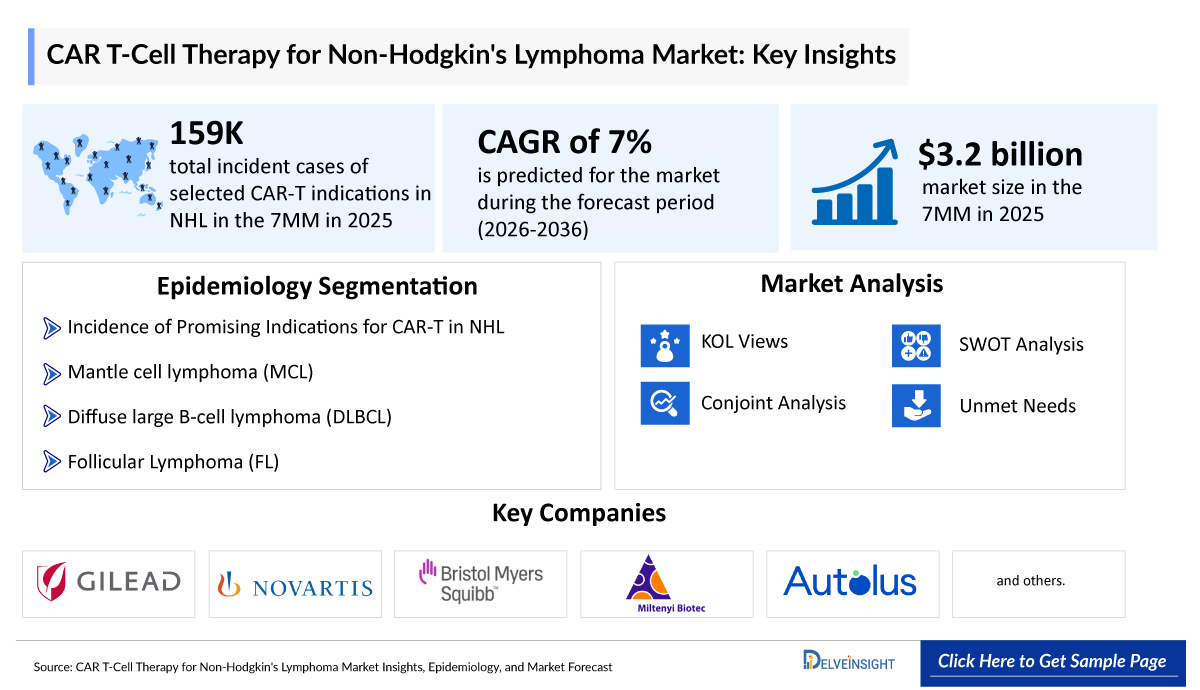
- According to DelveInsight’s analysis, the CAR T-Cell Therapy for NHL Market Size was found to be ~USD 3,200 million in the leading markets (the United States, the EU4 (Germany, France, Italy, and Spain), the United Kingdom, and Japan) in 2025.
- The leading CAR T-Cell Therapy for NHL Companies include Gilead Sciences (Kite Pharma), Novartis, Bristol Myers Squibb, Miltenyi Biomedicine, Autolus Therapeutics, 2seventy bio, Imugene, CRISPR Therapeutics, Tessa Therapeutics, PeproMene Bio, Johnson & Johnson Pharmaceutical Research and Development, Adicet Bio, Juno Therapeutics, Takeda and others.
CAR T-Cell Therapy for NHL Market and Epidemiology Analysis
- CAR-T cells provide a long-term benefit with a one-time treatment, avoiding the toxicity of salvage chemotherapy and autologous transplant for patients with high-risk illnesses. The approvals have altered the standard of care for high-risk patients who are either primary refractory or have early recurrence following front-line therapy.
- Therapeutic management of CAR T-cell Therapy in NHL is primarily focused on achieving deep and durable remission, particularly in relapsed or refractory settings, by targeting specific tumor antigens such as CD19, with treatment strategies tailored based on disease subtype, stage, and prior lines of therapy.
- The current CAR T-cell therapy landscape in NHL is evolving rapidly, with increasing adoption across multiple indications including Mantle Cell Lymphoma (MCL), Diffuse Large B-Cell Lymphoma (DLBCL), Follicular Lymphoma (FL), Primary Mediastinal Large B-cell Lymphoma (PMBCL), Marginal Zone Lymphoma (MZL), and Chronic Lymphocytic Leukemia (CLL)/small lymphocytic lymphoma (SLL), driven by high unmet need in relapsed/refractory populations, expansion into earlier lines of therapy (2L+ and select 1L settings), and improved patient stratification based on transplant eligibility and disease stage.
- The CAR T-Cell Therapy for NHL Market comprises several approved and emerging therapies across different lines of treatment, including TECARTUS, BREYANZI, KYMRIAH, and YESCARTA, alongside investigational therapies such as CTX110, Zamtocabtagene autoleucel, Cemacabtagene Ansegedleucel, Rapcabtagene autoleucel, and MB-106, reflecting strong innovation and competitive dynamics.
- Despite notable progress, the CAR T-Cell Therapy for NHL Pipeline remains moderately sized, with ongoing efforts focused on expanding into indications such as MCL, DLBCL, FL, PMBCL, MZL, and CLL/SLL, while also enhancing safety, accessibility, and durability through next-generation and allogeneic approaches.
CAR T-Cell Therapy for NHL Market Size and Forecast in the 7MM
| 2025 CAR T- Cell in NHL Market Size | ~USD 3,200 million |
| 2036 Projected CAR T- Cell in NHL Market Size | ~USD XX million |
| CAR T- Cell in NHL Growth Rate (2026–2036) | 7% CAGR |
Key Factors Driving the CAR T-Cell Therapy for NHL Market Growth
-
Rising NHL Incidence Cases
The rising incidence of NHL, especially aggressive subtypes like DLBCL, is fueling greater adoption and market growth for CAR T-cell therapy. In the US, 2025 saw approximately 68,000 new cases of NHL indications suitable for CAR-T, a figure projected to expand at a significant CAGR through 2036.
-
Rising Opportunities in CAR T-Cell Therapies in NHL
Emerging clinical evidence demonstrating the strong efficacy and durable responses of CAR T-cell therapy across relapsed and refractory NHL highlights a growing opportunity for drug developers to focus on next-generation and allogeneic CAR T-cell approaches, aiming to improve accessibility, safety, and long-term outcomes.
DelveInsight's ‘CAR T-Cell Therapy for NHL Market Insights, Epidemiology and Market Forecast – 2036’ report delivers an in-depth understanding of the CAR T-Cell Therapy for NHL, historical and forecasted epidemiology, as well as CAR T-Cell Therapy for NHL market trends in the United States, EU4 (Germany, Spain, Italy, and France) and the United Kingdom, and Japan.
The CAR T-Cell Therapy for NHL Treatment Market report delivers a comprehensive analysis of the current treatment landscape, including standards of care, clinical practices, and evolving therapeutic algorithms. It evaluates CAR T-Cell Therapy for NHL patient burden trends, revenue & market share dynamics, peak patient share & therapy uptake analysis, and provides an in-depth market size assessment, and growth rate projections (Historical & Forecast 2022–2036) across global regions. The report highlights key unmet medical needs in CAR T-Cell Therapy for NHL and maps the competitive and clinical landscape to uncover high‑value opportunities, providing a clear outlook on future market growth potential.
Scope of the CAR T-Cell Therapy for NHL Therapeutics Market Report | |
|
Study Period |
2022–2036 |
|
Historical Year |
2022–2025 |
|
Forecast Period |
2026–2036 |
|
Base Year |
2026 |
|
Geographies Covered |
|
|
CAR T- cell in NHL Market CAGR (Forecast period) | |
|
CAR T- cell in NHL Epidemiology Segmentation Analysis |
Patient Burden Assessment
|
|
CAR T- cell in NHL Companies |
|
|
CAR T- cell in NHL Therapies |
|
|
CAR T-Cell Therapy for NHL Market |
Segmented by
|
|
Analysis |
|
CAR T-Cell Therapy for NHL Understanding
CAR T-Cell Therapy for NHL Overview
CAR T-cell therapy is a personalized immunotherapy in which a patient’s T cells are modified to target cancer cells, most often CD19-positive B-cell NHL. After reinfusion, these engineered cells identify and destroy malignant cells. It is especially used for relapsed or refractory aggressive lymphomas such as DLBCL. While it has improved outcomes for patients with few other options, careful patient selection is important because the treatment can cause significant toxicities.
CAR T-Cell Therapy for NHL Diagnosis
In general, the diagnosis of NHL relies on biopsy as the gold standard to confirm the disease and determine its subtype. This is supported by physical examination, imaging tests such as CT, MRI, and PET-CT to assess disease spread, and bone marrow evaluation. Additionally, biomarker and molecular testing (including NGS, flow cytometry, and immunohistochemistry) help identify specific tumor characteristics and guide advanced treatments like CAR T-cell Therapy.
Further details are provided in the report.
CAR T-Cell Therapy for NHL Treatment
The primary goals of treatment with CAR T-cell Therapy in NHL are to achieve rapid and durable remission, eliminate malignant B cells, prevent disease progression or relapse, and improve overall survival and quality of life, particularly in relapsed or refractory settings. Management is highly specialized and involves lymphodepleting chemotherapy followed by CAR T-cell infusion, with close monitoring for treatment-related toxicities such as cytokine release syndrome and neurotoxicity.
CAR T-cell therapies—including TECARTUS, BREYANZI, KYMRIAH, and YESCARTA target CD19-positive B cells and are primarily used in later lines of therapy, with expanding use into earlier treatment settings.
Further details related to country-based variations are provided in the report.
CAR T-Cell Therapy for NHL Unmet Needs
The section “unmet needs of CAR T-Cell Therapy for NHL” outlines the critical gaps between the current state of patient care, diagnosis, and the ideal & effective management of the disease. It highlights the obstacles experienced by patients, clinicians, and researchers and identifies potential solutions for future progress.
- CAR-T cell-associated toxicities
- Optimizing CAR-T cells' therapeutic window
- Ready to use off-the-shelf CAR-T cell therapy
- Slow prior authorization process and others…..
Comprehensive unmet needs insights in CAR T-Cell Therapy for NHL and their strategic implications are provided in the full report.
CAR T-Cell Therapy for NHL Epidemiology
Key Findings from CAR T-Cell Therapy for NHL Epidemiological Analysis and Forecast
- According to DelveInsight estimates, the total incident cases of selected CAR-T indications in NHL across the 7MM were approximately 159,000 in 2025 and are expected to rise throughout the forecast period from 2026 to 2036.
- Across the 7MM, CAR T-cell therapy demonstrates promising potential in multiple NHL indications, including MCL, DLBCL (with the highest number of incident cases around 78,000), FL, PMBCL, MZL, and CLL/SLL.
- The United States had the highest incidence of selected CAR-T indications in NHL, with approximately 68,000 cases in 2025.
CAR T-Cell Therapy for NHL Epidemiology Segmentation in the 7MM
- Incidence of Promising Indications for CAR-T in NHL
- Mantle cell lymphoma
- Diffuse large B-cell lymphoma
- Follicular Lymphoma
- Primary mediastinal large B-cell lymphoma
- Marginal Zone Lymphoma
- Chronic lymphocytic leukemia/small-cell lymphocytic lymphoma
CAR T-Cell Therapy for NHL Market Recent Breakthroughs and Developments
- In April 2026, the US FDA granted full approval to TECARTUS for adult patients with relapsed or refractory MCL, supported by efficacy, safety, and pharmacokinetic data from the ZUMA-2 study, including patients who are BTKi-naïve after one or more prior lines of therapy.
- In February 2026, Gilead Sciences (Kite) announced that the US FDA approved an update to YESCARTA labeling, removing the prior limitation of use in patients with relapsed or refractory primary CNS lymphoma (PCNSL), reinforcing its safety profile and making it the only CAR T-cell therapy with this restriction removed for large B-cell lymphoma.
- In December 2025, the US FDA approved BREYANZI as the first CAR T-cell therapy in the US for adults with MZL who have relapsed or failed after two or more prior lines of therapy, where it works by engineering a patient’s T cells to target and destroy cancer cells.
CAR T-Cell Therapy for NHL Drug Analysis & Competitive Analysis
The CAR T-Cell Therapy for NHL drug chapter provides a detailed, market-focused review of approved therapies and the Emerging CAR T-Cell Therapy for NHL Pipeline across Phase I–III CAR T-Cell Therapy for NHL Clinical Trials. It covers the CAR T-Cell Therapy for NHL mechanism of action, clinical trial data, regulatory approvals, patents, collaborations, and strategic partnerships for each therapy, along with their advantages, limitations, and recent developments.
This section offers critical insights into the CAR T-Cell Therapy for NHL treatment landscape, supporting market assessment, competitive analysis, and growth forecasting for the CAR T-Cell Therapy for NHL therapeutics market.
CAR T-Cell Therapy for NHL Approved Therapies
-
YESCARTA (axicabtagene ciloleucel): Gilead Sciences (Kite Pharma)
YESCARTA, developed by Gilead Sciences (Kite Pharma), is an autologous CD19-directed CAR T-cell therapy administered via intravenous infusion (cell suspension). It was approved by the US FDA in October 2017 for adults with relapsed or refractory large B-cell lymphomas, including diffuse large B-cell lymphoma. It works by genetically modifying a patient’s T cells to express a CAR targeting CD19, leading to T-cell activation, proliferation, and targeted killing of malignant B cells.
-
KYMRIAH (tisagenlecleucel): Novartis
KYMRIAH, developed by Novartis, is a CD19-directed autologous CAR T-cell therapy administered via intravenous infusion. It was first approved by the US FDA in August 2017 and later expanded for adult patients with relapsed or refractory large B-cell lymphoma. It works by genetically modifying a patient’s T cells to express a chimeric antigen receptor (CAR) that recognizes CD19 on malignant B cells, leading to T-cell activation, proliferation, and targeted elimination of cancer cells.
CAR T- cell in NHL Marketed/Approved Therapies | ||||||
|
Drug/Therapy |
Company |
Indication |
Molecule Type |
RoA |
MoA |
Marketed Region |
|
YESCARTA |
Gilead Sciences (Kite Pharma) |
DLBCL, PMBCL, HGBCL, FL |
Autologous CAR-T-cell therapy |
IV |
CD19-directed genetically modified autologous T-cell immunotherapy |
US: 2017, 2021, 2022; EU: 2018, 2022; JP: 2021 |
|
KYMRIAH |
Novartis |
DLBCL, HGBCL, FL |
Autologous CAR-T-cell therapy |
IV |
CD19-targeted CART- cell immunotherapy |
US; 2018, 2022; EU: 2018, 2022; JP: 2019, 2022 |
|
BREYANZI |
BMS |
DLBCL, HGBCL, PMBCL, FL Grade 3B |
Autologous CAR-T-cell therapy |
IV |
CD19-directed genetically modified autologous T-cell immunotherapy |
US: 2021, 2022; EU: 2022; JP: 2021 |
Note: Detailed marketed therapies assessment of therapies will be provided in the final report.
CAR T-Cell Therapy for NHL Pipeline Analysis
-
Cemacabtagene ansegedleucel: Allogene Therapeutics
Cemacabtagene ansegedleucel (ALLO-501A), a next-generation anti-CD19 AlloCAR-T, is engineered without the rituximab recognition domains included in ALLO-501, which could allow for use in a broader patient population, including NHL patients with recent rituximab exposure; cemacabtagene ansegedleucel uses the Cellectis TALEN technology.
-
Rapcabtagene autoleucel: Novartis
Rapcabtagene autoleucel, an investigational, autologous CD19-directed CAR-T-cell therapy developed using the T-charge platform, showed promising results in the DLBCL arm of a first-in-human, multicenter, Phase I dose-escalation study.
Comparison of CAR T-Cell Therapy for NHL Emerging Drugs Under Development | |||||||
|
Drug Name |
Company |
Highest Phase |
Indication |
RoA |
MoA |
Molecule Type |
Anticipated Launch in the US |
|
Zamtocabtagene autoleucel |
Miltenyi Biomedicine |
II |
R/R DLBCL |
IV |
CD20-CD19 directed CAR-T cell therapy |
Autologous CAR-T cell therapy |
Information is available in the full report |
|
Rapcabtagene autoleucel |
Novartis |
I/II |
R/R CLL, DLBCL, HR LBCL |
IV |
CD19-directed CAR-T cell therapy |
Autologous CAR-T cell therapy |
Information is available in the full report |
|
WU-CART-007 |
Wugen |
I/II |
R/R T-LBL, AITL, EATL, PTCL, ALCL |
IV |
Allogeneic CAR-T cell therapy |
Information is available in the full report | |
|
Note: Launch insights are provisional and may change with future report updates or the occurrence of major key catalysts. | |||||||
Note: A detailed emerging therapies assessment will be provided in the final report
CAR T-Cell Therapy for NHL Companies
- Gilead Sciences (Kite Pharma)
- Novartis
- BMS
- Bristol Myers Squibb
- Miltenyi Biomedicine
- Wugen
- Autolus Therapeutics
- 2seventy bio
- Imugene
- MustangBio
- CRISPR Therapeutics
- Tessa Therapeutics
- PeproMene Bio
- Johnson & Johnson Pharmaceutical Research and Development
- Adicet Bio
- Juno Therapeutics
- Takeda, and others
CAR T-Cell Therapy for NHL Market Outlook
The CAR T-cell Therapy market in NHL is undergoing a significant transformation following years of reliance on chemo-immunotherapy and stem cell transplantation. The approvals and expanding use of CAR T-cell therapies such as TECARTUS, BREYANZI, KYMRIAH, and YESCARTA mark a shift toward highly targeted, cell-based immunotherapy, enabling durable responses in relapsed or refractory patients. These advances validate antigen-specific approaches, reinforce regulatory and clinical confidence in cellular therapies, and are reshaping the competitive landscape by expanding treatment options and accelerating innovation across the NHL pipeline.
With continued advancements in next-generation and allogeneic CAR T-cell therapies, the NHL treatment landscape is evolving similarly to other oncology areas, where early approvals drive broader therapeutic expansion into earlier lines of therapy and additional indications. The United States remains the largest market, supported by higher diagnosis rates, strong adoption of advanced therapies, and faster uptake of innovation compared to the EU4, the United Kingdom, and Japan.
Overall, the introduction of first-in-class CAR T-cell therapies, improvements in patient identification, and increasing awareness of advanced treatment options are expected to drive steady growth in the 7MM NHL market over the forecast period, with significant commercial potential for both approved products and emerging pipeline candidates.
Key Findings from CAR T-Cell Therapy for NHL Market Forecast Report
- According to the estimates, the United States accounted for the largest CAR T-Cell Therapy for NHL Treatment Market Size, valued at approximately USD 1,900 million in 2025, and is expected to grow at a significant CAGR.
- The CAR T-cell therapy market in NHL is rapidly evolving as treatment approaches shift from conventional chemo-immunotherapy to highly targeted, cell-based therapies, with increasing adoption driven by strong efficacy in relapsed/refractory settings, expansion into earlier lines of therapy (2L, 3L+), and advancements in next-generation and allogeneic CAR T platforms.
- Regional CAR T-Cell Therapy for NHL Market Dynamics indicate that the United States leads in revenue and adoption due to early approvals and robust healthcare infrastructure, while Japan and EU markets are witnessing steady growth, supported by rising disease incidence, improving access to advanced therapies, and increasing uptake of novel CAR T-cell treatments.
- In the EU4 and the UK, Germany held the largest CAR T-Cell Therapy for NHL Market Share, followed by Italy, while Spain had the smallest CAR T-Cell Therapy for NHL Market Size.
- In 2036, among all the therapies for CAR T- cell in NHL, the highest revenue is estimated to be generated by DLBCL in the United States.
- The entry of emerging and late-stage CAR T-cell therapies is expected to intensify competition in the CAR T-cell therapy landscape for NHL during the forecast period, with key indications such as MCL and FL representing leading areas of focus and growth.
Further details will be provided in the report….
CAR T-Cell Therapy for NHL Drug Class/Insights into Leading Emerging and Marketed Therapies (2022–2036 Forecast)
The CAR T-Cell Therapy for NHL Therapeutics Market comprises autologous CAR T-cell therapies, next-generation/advanced CAR T constructs, emerging allogeneic (“off-the-shelf”) therapies, and conventional chemo-immunotherapy, each targeting distinct biological mechanisms underlying B-cell malignancies and immune evasion.
CAR T-cell therapy treats cancer by genetically engineering T cells to express chimeric antigen receptors (CARs) that specifically recognize tumor-associated antigens (e.g., CD19) on malignant B cells, enabling direct targeting, activation, and destruction of cancer cells along with sustained immune surveillance.
- Autologous CAR T-cell therapies: Products such as YESCARTA and KYMRIAH are CD19-directed therapies that genetically modify a patient’s own T cells to recognize and eliminate malignant B cells. These therapies provide durable responses in relapsed or refractory NHL, establishing personalized, mechanism-driven immunotherapy as a transformative treatment approach.
- Next-generation/advanced CAR T-cell therapies: Therapies such as BREYANZI and TECARTUS incorporate optimized manufacturing processes, controlled cell composition, and improved safety profiles. These advancements enhance efficacy and tolerability, enabling broader application across NHL subtypes, including diffuse large B-cell lymphoma (DLBCL) and mantle cell lymphoma (MCL).
- Allogeneic CAR T-cell therapies (emerging): Off-the-shelf CAR T products derived from healthy donors are being developed to overcome manufacturing delays and scalability limitations of autologous approaches. These therapies aim to provide rapid treatment access and consistent product quality, representing a key future direction in CAR T innovation.
Further details will be provided in the report….
CAR T-Cell Therapy for NHL Drug Uptake
This section focuses on the uptake rate of potential CAR T-Cell Therapy for NHL drugs expected to be launched in the market during the forecast period (2026–2036). The analysis covers the CAR T-Cell Therapy for NHL market's uptake by drugs, patient uptake by therapy, and sales of each drug.
The uptake of CAR T-Cell Therapy for NHL Therapies is expected to vary across approved autologous products, next-generation CAR T-cell therapies, and emerging allogeneic platforms. Established therapies such as BREYANZI, KYMRIAH, and YESCARTA demonstrate strong and growing uptake, supported by robust efficacy in relapsed or refractory settings, expanding label indications, and increasing physician confidence in managing treatment-related toxicities. Their adoption is further driven by the limitations of conventional chemo-immunotherapy in achieving durable remission and the high unmet need in aggressive B-cell lymphomas.
In comparison, next-generation and investigational therapies such as CTX110 and Cemacabtagene Ansegedleucel are expected to show gradual but steady uptake as clinical evidence matures, manufacturing challenges are addressed, and these off-the-shelf approaches are increasingly integrated into treatment paradigms across diverse NHL subtypes.
Further detailed analysis of emerging therapies' drug uptake in the report…
CTX110 Market Access and Reimbursement
-
EU4 and the UK
|
Table 1: Summary of Recommendations in EU4 and The UK |
|
|
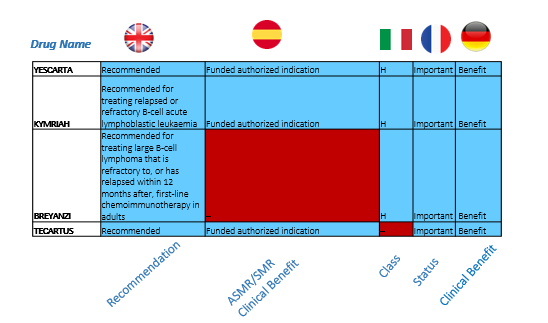
Reimbursement is a crucial factor that affects the drug’s access to the market. Often, the decision to reimburse comes down to the price of the drug relative to the benefit it produces in treated patients. To reduce the healthcare burden of these high-cost therapies, many payment models are being considered by payers and other industry insiders.
Further details are provided in the final report….
CAR T-Cell Therapy for NHL Therapies Price Scenario & Trends
Pricing and analogue assessment of CAR T- Cell in NHL therapies highlights evolving price dynamics structures. This section summarizes the cost of approved treatments, the closest and most appropriate analogue selection for emerging therapies, and the understanding of how pricing influences market access, adherence, and long-term uptake.
-
Pricing of CAR T-Cell Therapy for NHL Approved Drugs
For BREYANZI in the treatment of follicular lymphoma, the recommended dosage ranges from 90 to 110 × 10⁶ CAR-positive viable T cells, with an approximate price of USD 410,300 per treatment.
Further details are provided in the final report….
CAR T-Cell Therapy for NHL Industry Experts and Physician Views
To keep up with CAR T-Cell Therapy for NHL Therapeutics Market Trends, we take Key Opinion Leaders (KOLs) and Subject Matter Experts (SMEs) opinions working in the domain through primary research to fill the data gaps and validate our secondary research. Industry experts were contacted for insights on CAR T-Cell Therapy for NHL Emerging Therapies, evolving treatment landscape, patient adherence to conventional therapies, therapy switching trends, drug adoption and uptake, accessibility challenges, and epidemiology and real-world prescription patterns in CAR T- cell in NHL, including MD, PhD, Instructor, Postdoctoral Researcher, Professor, Researcher, and others.
DelveInsight’s analysts connected with 10+ KOLs to gather insights; however, interviews were conducted with 6+ KOLs in the 7MM. Centers such as the National Cancer Center Hospital, University of Pennsylvania, NCI’s Center for Cancer Research, and Sarah Cannon Research Institute, etc. were contacted. Their opinion helps understand and validate current and emerging CAR T-cell therapies in NHL therapies, highlight unmet medical needs, provide epidemiological context, and support strategic decisions for market access, therapy adoption, and pipeline prioritization in CAR T- cell in NHL.
Region |
Key Opinion Leaders (KOLs) and Subject Matter Experts (SMEs) |
|
United States |
Indolent non-Hodgkin lymphoma is a slow-developing chronic disease in which patients frequently relapse, which leads to the need for new treatment strategies. It is encouraging to see that axi-cel provided a continued benefit over two years and may provide a lasting treatment for these patients. |
|
Germany |
CAR T cells are currently reshaping the treatment landscape of r/r lymphoid diseases and are expected to become available for other hematologic entities and even solid tumors. As CAR T cell use expands, recognition of risk factors for associated toxicities is critical for patient safety. With growing clinical experience, management of CAR T-cell-associated toxicities is an evolving field. Current management strategies for minimizing adverse effects of CAR T-cell therapy emphasize continuous monitoring, rapid detection, and accurate intervention with supportive care, anti-cytokine, or corticosteroid therapy. |
CAR T-Cell Therapy for NHL Report Qualitative Analysis: SWOT and Conjoint Analysis
We perform qualitative and CAR T-Cell Therapy for NHL Therapeutics Market Intelligence analysis using various approaches, such as SWOT analysis and conjoint analysis. In the SWOT analysis of CAR T-Cell Therapy for NHL, strengths, weaknesses, opportunities, and threats in terms of disease diagnosis, patient awareness, patient burden, competitive landscape, cost-effectiveness, and geographical accessibility of therapies are provided.
Conjoint analysis analyzes CAR T-Cell Therapy for NHL emerging therapies based on relevant attributes such as safety, efficacy, frequency of administration, route of administration, and order of entry. Scoring is given based on these parameters to analyze the effectiveness of therapy.
The team of analysts analyzes promising emerging therapies based on relevant attributes such as safety, efficacy, frequency of administration, route of administration, and order of entry. In efficacy, the trial’s primary and secondary outcome measures are evaluated, whereas the therapies’ safety is evaluated, wherein the acceptability, tolerability, and adverse events are mainly observed.
In addition, the scoring is also based on the route of administration, order of entry, probability of success, and the addressable patient pool for each therapy. According to these parameters, the final weightage score and the ranking of the emerging therapies are decided.
Scope of the CAR T-Cell Therapy for NHL Market Report
- The CAR T-Cell Therapy for NHL Therapeutics Market report covers a segment of key events, an executive summary, a descriptive overview of CAR T-cells in NHL, explaining its causes, signs and symptoms, pathogenesis, and currently available treatments.
- Comprehensive insight has been provided into the epidemiology segments and forecasts, the future growth potential of the diagnosis rate, and disease progression along treatment guidelines.
- Additionally, an all-inclusive account of both the current and emerging treatments, along with the elaborative profiles of late-stage and prominent therapies, will have an impact on the current CAR T-Cell Therapy for NHL treatment landscape.
- A detailed review of the CAR T-Cell Therapy for NHL market, historical and forecasted market size, market share by therapies, detailed assumptions, and rationale behind our approach is included in the report, covering the 7MM drug outreach.
- The CAR T-Cell Therapy for NHL Therapeutics Market Report provides an edge while developing business strategies by understanding trends through SWOT analysis and expert insights/KOL views, patient journey, and treatment preferences that help in shaping and driving the 7MM CAR T-Cell Therapy for NHL Drugs Market.
CAR T-Cell Therapy for NHL Market Report Insights
- CAR T-Cell Therapy for NHL Patient Population Forecast
- CAR T-Cell Therapy for NHL Therapeutics Market Size
- CAR T-Cell Therapy for NHL Pipeline Analysis Lymphoma
- CAR T-Cell Therapy for NHL Market Size and Trends
- CAR T-Cell Therapy for NHL Market Opportunity (Current and forecasted)
CAR T-Cell Therapy for NHL Market Report Key Strengths
- Epidemiology‑based (Epi‑based) Bottom‑up Forecasting
- Artificial Intelligence (AI)-enabled Market Research Report
- 11-year forecast
- CAR T-Cell Therapy for NHL Market Outlook (North America, Europe, Asia-Pacific)
- Patient Burden Trends (by geography)
- CAR T-Cell Therapy for NHL Treatment Addressable Market (TAM)
- CAR T-Cell Therapy for NHL Competitive Landscape
- CAR T-Cell Therapy for NHL Major Companies Insights
- CAR T-Cell Therapy for NHL Price Trends and Analogue Assessment
- CAR T-Cell Therapy for NHL Therapies Drug Adoption/Uptake
- CAR T-Cell Therapy for NHL Therapies Peak Patient Share Analysis
CAR T-Cell Therapy for NHL Market Report Assessment
- CAR T-Cell Therapy for NHL Current Treatment Practices
- CAR T-Cell Therapy for NHL Unmet Needs
- CAR T-Cell Therapy for NHL Clinical Development Analysis
- CAR T-Cell Therapy for NHL Emerging Drugs Product Profiles
- CAR T-Cell Therapy for NHL Market Attractiveness
- CAR T-Cell Therapy for NHL Qualitative Analysis (SWOT and Conjoint Analysis)
Key Questions Answered in the CAR T-Cell Therapy for NHL Therapeutics Market Report
CAR T-Cell Therapy for NHL Treatment Market Insights
- What was the CAR T-Cell Therapy for NHL market size, the market size by therapies, market share (%) distribution in 2025, and what would it look like by 2036? What are the contributing factors for this growth?
- What are the anticipated pricing variations among different geographies for the emerging therapies in the future?
- What can be the future treatment paradigm of CAR T-Cell Therapy for NHL?
- What are the disease risks, burdens, and unmet needs of CAR T-Cell Therapy for NHL?
- What will be the growth opportunities across the 7MM concerning the patient population with CAR T-Cell Therapy for NHL?
- Who is the major future competitor in the market, and how will the competitors affect their market share?
- What are the current options for the treatment of CAR T-Cell Therapy for NHL?
- What are the current guidelines for treating CAR T-Cell Therapy for NHL in the US, Europe, and Japan?
Reasons to Buy the CAR T-Cell Therapy for NHL Therapeutics Market Report
- The CAR T-Cell Therapy for NHL Therapeutics Market Report will help in developing business strategies by understanding the latest trends and changing treatment dynamics driving the CAR T-Cell Therapy for NHL Drugs Market.
- Bottom-up forecasting builds from the affected population to product forecasts, delivering a robust, data-driven approach ideal for new therapies and novel classes.
- Insights on patient burden/disease CAR T-Cell Therapy for NHL Incidence, evolution in diagnosis, and factors contributing to the change in the epidemiology of the disease during the forecast years.
- Understand the existing market opportunities in varying geographies and the growth potential over the coming years.
- Identifying strong upcoming players in the CAR T-Cell Therapy for NHL Drugs Market will help devise strategies to help get ahead of competitors.
- Detailed analysis and ranking of class-wise potential current and emerging therapies under the conjoint analysis section to provide visibility around leading classes.
- To understand KOLs’ perspectives on the accessibility, acceptability, and compliance-related challenges of existing treatment to overcome barriers in the future.
- Detailed insights into the unmet needs of the existing CAR T-Cell Therapy for NHL Drugs Market so that the upcoming players can strengthen their development and launch strategy.
- This Artificial Intelligence (AI)- enabled report summarize and simplify complex datasets within the report into clear, actionable insights for stakeholders, investors, and healthcare providers, enabling faster, data-driven decisions.
Stay updated with us for Recent Articles @ New DelveInsight Blogs
-thumbnail.jpg&w=48&q=75)


-thumbnail.jpg&w=3840&q=75)
