
Diabetic Neuropathy Market Summary
- The Diabetic Neuropathy market size is anticipated to grow with a significant CAGR during the study period (2022-2036).
- The leading Diabetic Neuropathy companies developing therapies in the treatment market include - Grünenthal, Averitas Pharma, Vertex Pharmaceuticals, Lexicon Pharmaceuticals, and others.
Diabetic Neuropathy Market & Epidemiology Insights
- A significant proportion of Diabetic Neuropathy burden is associated with comorbid conditions such as Type 2 Diabetes Mellitus, Chronic Kidney Disease, Cardiovascular Disease, and Obesity, with long-standing diabetes contributing the largest share, highlighting the need for integrated disease management, early screening, and targeted treatment approaches to prevent progression and improve patient outcomes.
- According to secondary sources, the T1D Exchange Clinic Registry study (2020) reported a diabetic peripheral neuropathy prevalence of 11% among more than 6,000 adults with type 1 diabetes in the United States.
- According to secondary sources, it was found that in the United States, females account for approximately 60% of diabetic neuropathy cases, while males represent about 40%.
- There is no curative treatment for diabetic neuropathy, as nerve damage is largely irreversible. Management focuses on glycemic control and symptom relief, with approved therapies such as QUTENZA (capsaicin) targeting neuropathy pain.
- A few emerging therapies, including pilavapadin (Lexicon Pharmaceuticals), suzetrigine (JOURNAVX; Vertex Pharmaceuticals), and other candidates, are currently under clinical development.
Diabetic Neuropathy Market Size and Forecast in the 7MM
- 2025 Diabetic Neuropathy Market Size: USD XXXX million
- 2036 Projected Diabetic Neuropathy Market Size: USD XXXX million
- Diabetic Neuropathy Growth Rate (2026–2036): XX% CAGR
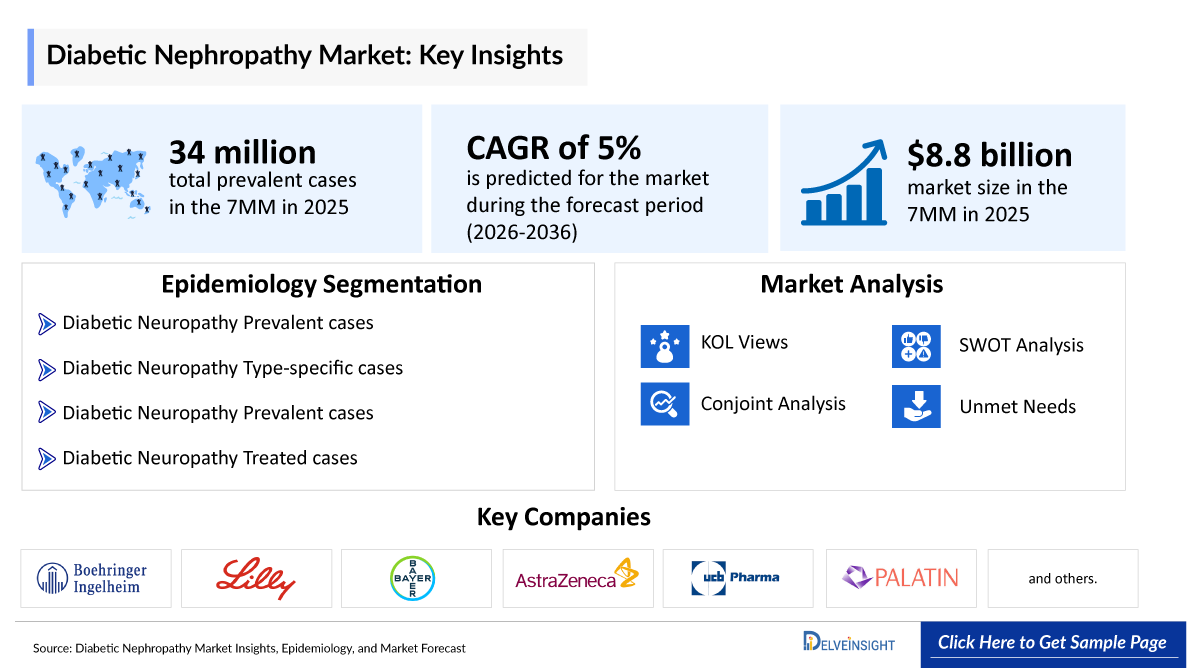
Request for unlocking the sample page of the "Diabetic Neuropathy Market Forecast"
Key Factors Driving the Diabetic Neuropathy Market
- Rising Diabetic Neuropathy Prevalence: The increasing Prevalence of Diabetic Neuropathy, particularly among females, is a primary driver of Diabetic Neuropathy market expansion. In the US, in 2025, there were XXXX prevalent cases of Diabetic Neuropathy.
- Rising Opportunities in Targeted Non-Opioid and Mechanism-Based Therapies: Targeted non-opioid therapies offering effective pain relief, improved safety, and reduced CNS-related side effects are gaining traction in Diabetic Neuropathy. Emerging clinical evidence supporting novel mechanisms such as Nav1.8 sodium channel inhibition, AAK1 inhibition, and TRPV1-targeted therapies highlights a growing opportunity for drug developers to focus on peripheral pain pathways, enabling more precise, durable, and well-tolerated treatment approaches.
- Emerging Diabetic Neuropathy Competitive Landscape: Although the pipeline remains relatively limited, emerging therapies such as Suzetrigine (JOURNAVX), Pilavapadin (LX9211), and others are expected to act as key market drivers, offering novel mechanisms of action and the potential to address unmet needs beyond symptomatic management.
DelveInsight's "S Market Insights, Epidemiology and Market Forecast – 2036" report delivers an in-depth understanding of the Diabetic Neuropathy, historical and forecasted epidemiology, as well as the Diabetic Neuropathy therapeutics market trends in the United States, EU4 (Germany, Spain, Italy, and France) and the United Kingdom, and Japan.
The Diabetic Neuropathy market report delivers a comprehensive analysis of the current treatment landscape, including standards of care, clinical practices, and evolving therapeutic algorithms. It evaluates Diabetic Neuropathy patient burden trends, revenue & market share dynamics, peak patient share & therapy uptake analysis, and provides an in-depth market size assessment, and growth rate projections (Historical & Forecast 2022–2036) across global regions. The report highlights key unmet medical needs in Diabetic Neuropathy and maps the competitive and clinical landscape to uncover high‑value opportunities, providing a clear outlook on future market growth potential.
Scope of the Diabetic Neuropathy Market Report
| |
|
Study Period |
2022–2036 |
|
Historical Year |
2022–2025 |
|
Forecast Period |
2026–2036 |
|
Base Year |
2026 |
|
Geographies Covered |
ü North America: The US; ü Europe: Germany, France, Italy, Spain, and the UK; ü Asia-Pacific: Japan |
|
Diabetic Neuropathy Market CAGR (Study period/Forecast period) |
XX% (2026–2036) |
|
Diabetic Neuropathy Epidemiology Segmentation Analysis |
Patient Burden Assessment · Total Diagnosed Prevalent Cases of Diabetes Mellitus · Total Diagnosed Prevalent Cases of Diabetic Neuropathy · Gender-specific Diagnosed Prevalent Cases of Diabetic Neuropathy · Total Treated Cases of Diabetic Neuropathy |
|
Diabetic Neuropathy Companies |
· Grünenthal · Averitas Pharma · Vertex Pharmaceuticals · Lexicon Pharmaceuticals, and others |
|
Diabetic Neuropathy Therapies |
· Capsaicin (QUTENZA) · Suzetrigine (JOURNAVX) · Pilavapadin (LX9211), and others |
|
Diabetic Neuropathy Market |
Segmented by · Region/Geographies · Drugs/Therapies |
|
Analysis |
· KOL Views · SWOT Analysis · Reimbursement · Conjoint Analysis · Unmet Need · Market Drivers and Barriers · Epidem Patient Burden |
Diabetic Neuropathy Disease Understanding
Diabetic Neuropathy Overview
Diabetic Neuropathy is a common microvascular complication of diabetes, occurring when prolonged hyperglycemia leads to nerve damage and impaired nerve signaling. It can range from mild to severe, with symptoms such as numbness, tingling, pain, and loss of sensation, particularly in the extremities, and may progress to significant functional impairment in advanced stages. The condition is primarily caused by chronic poor glycemic control, metabolic dysfunction, and vascular damage affecting nerve supply.
Diabetic Neuropathy Diagnosis
Diabetic Neuropathy is diagnosed through clinical evaluation and neurological assessment, often identified during routine diabetes checkups. A detailed medical history and physical examination focusing on symptoms such as numbness, tingling, and pain are essential. Diagnostic tests include nerve conduction studies and electromyography to assess nerve function, along with quantitative sensory testing. Additional evaluations, such as monofilament testing, vibration perception, and autonomic function tests, help confirm the diagnosis and assess severity, while blood tests are performed to rule out other potential causes of neuropathy.
Further details are provided in the report...
Diabetic Neuropathy Treatment
The primary goals of Diabetic Neuropathy treatment are to alleviate neuropathic pain, improve nerve function and quality of life, slow disease progression through optimal glycemic control, and prevent complications such as foot ulcers and infections. Management is largely symptomatic and follows a step-wise pharmacologic approach, with first-line therapies including anticonvulsants (e.g., pregabalin, gabapentin) and antidepressants (e.g., duloxetine) due to their proven efficacy in pain modulation. In patients with inadequate response or intolerance, alternative options such as tricyclic antidepressants or combination therapies may be considered. Topical treatments, including high-concentration capsaicin patches and lidocaine, are increasingly used for localized pain with fewer systemic side effects. In refractory cases, opioids may be used cautiously, though their use is limited due to safety concerns. Supportive strategies, including strict glycemic control, lifestyle modifications, and regular foot care, are critical to prevent disease progression and reduce the risk of long-term complications.
Further details related to country-based variations are provided in the report...
Diabetic Neuropathy Unmet Needs
The section “unmet needs of Diabetic Neuropathy” outlines the critical gaps between the current state of patient care, diagnosis, and the ideal & effective management of the disease. It highlights the obstacles experienced by patients, clinicians, and researchers and identifies potential solutions for future progress.
- Diabetic Neuropathy has challenges in early and accurate diagnosis.
- Significant negative impact on quality of life (QoL).
- Existing treatments are mainly symptomatic with limited efficacy, and others…..
Comprehensive unmet needs insights in Diabetic Neuropathy and their strategic implications are provided in the full report.
Diabetic Neuropathy Epidemiology
The Diabetic Neuropathy epidemiology section provides insights about the historical and current Diabetic Neuropathy patient pool and forecasted trends for individual seven major countries. It helps to recognize the causes of current and forecasted trends by exploring numerous studies and views of key opinion leaders. This part of the Diabetic Neuropathy market report also provides the diagnosed patient pool and their trends along with assumptions undertaken.
Key Findings from Diabetic Neuropathy Epidemiological Analysis and Forecast
- According to DelveInsight’s estimates, the US accounts for the highest prevalent cases in 2025 and is expected to increase at a significant CAGR by 2036.
- According to the International Diabetes Federation (IDF), more than 43 million adults in the United States are affected by diabetes, highlighting the substantial national disease burden and associated risk of long-term complications.
- According to secondary sources, diabetic neuropathy, a common complication of diabetes, affects more than 30% of individuals with the disease, as reported by the Survey Research Group of the Japan Physicians Association.
- The observed female predominance and earlier onset of Diabetic Neuropathy highlight the importance of sex-specific screening, early diagnosis, and timely intervention to prevent disease progression and long-term complications.
- According to secondary sources, approximately 32% of individuals with diabetes in Italy were reported to have diabetic neuropathy, highlighting a substantial burden of neurological complications.
Diabetic Neuropathy Epidemiology Segmentation
- Total Diagnosed Prevalent Cases of Diabetes Mellitus
- Total Diagnosed Prevalent Cases of Diabetic Neuropathy
- Gender-specific Diagnosed Prevalent Cases of Diabetic Neuropathy
- Total Treated Cases of Diabetic Neuropathy
Recent Developments in the Diabetic Neuropathy Treatment Landscape:
- In January 2026, Lexicon Pharmaceuticals completed its End-of-Phase 2 meeting with the US FDA for pilavapadin in Diabetic Peripheral Neuropathic Pain, with no objections to Phase III, which will involve two 12-week placebo-controlled studies of a 10 mg dose, with a change in average daily pain score as the primary endpoint.
- In November 2025, Lexicon Pharmaceuticals revealed that discussions for potential partnerships were actively underway, signaling progress in both regulatory planning and strategic collaborations for its pipeline programs.
- In January 2025, the US FDA approved JOURNAVX (suzetrigine), developed by Vertex Pharmaceuticals, an oral, non-opioid NaV1.8 inhibitor for moderate-to-severe acute pain, demonstrating effective, well-tolerated, and non-addictive pain management.
Diabetic Neuropathy Drug Chapters & Competitive Analysis
The Diabetic Neuropathy drug chapter provides a detailed, market-focused review of approved therapies and the emerging pipeline across Phase I–III Diabetic Neuropathy clinical trials. It covers the mechanism of action, clinical trial data, regulatory approvals, patents, collaborations, and strategic partnerships for each therapy, along with their advantages, limitations, and recent developments. This section offers critical insights into the Diabetic Neuropathy treatment landscape, supporting market assessment, competitive analysis, and growth forecasting for the Diabetic Neuropathy therapeutics market.
Approved Therapies for Diabetic Neuropathy
Capsaicin (QUTENZA): Grünenthal (Averitas Pharma)
QUTENZA, developed by Grünenthal (through its US subsidiary Averitas Pharma), is a high-concentration (8%) topical capsaicin patch designed for the treatment of neuropathic pain, including pain associated with Diabetic Neuropathy. Capsaicin, the active component derived from chili peppers, acts as a TRPV1 receptor agonist, leading to de-functionalization of nociceptive nerve fibers and long-lasting pain relief following a single localized application.
In July 2020, Grünenthal’s US subsidiary Averitas Pharma received US FDA approval for a QUTENZA 8% patch for treating neuropathic pain associated with diabetic peripheral neuropathy of the feet in adults. QUTENZA is also approved in the European Union and is marketed by Astellas Pharma Europe Ltd. (Astellas), the European affiliate of Tokyo-based Astellas Pharma Inc. In Europe, QUTENZA is approved for peripheral neuropathic pain in non-diabetic adults.
Diabetic Neuropathy Marketed/Approved Therapies | ||||||
|
Drug/Therapy |
Company |
Indication |
Molecule Type |
RoA |
MoA |
Marketed Region |
|
Capsaicin (QUTENZA) |
Grünenthal (Averitas Pharma) |
Neuropathic pain associated with Diabetic Peripheral Neuropathy (feet, adults) |
Small molecule |
Topical (dermal patch) |
TRPV1 receptor agonist |
US: 2020 EU: 2015 |
Note: Detailed marketed therapies assessment of therapies will be provided in the final report...
Diabetic Neuropathy Pipeline Analysis
Suzetrigine (JOURNAVX): Vertex Pharmaceuticals
Suzetrigine, developed by Vertex Pharmaceuticals, is an oral, highly selective NaV1.8 inhibitor, targeting the voltage-gated sodium channel predominantly expressed in peripheral nociceptive neurons, reducing the initiation and transmission of pain signals without affecting central nervous system pathways. This targeted peripheral action aims to provide effective analgesia while minimizing CNS-related side effects commonly seen with traditional pain therapies.
Pilavapadin (LX9211): Lexicon Pharmaceuticals
LX9211, developed by Lexicon, is an orally administered small molecule being developed for the treatment of diabetic peripheral neuropathy. Preclinical studies demonstrated that LX9211 effectively penetrates the central nervous system and reduces pain behavior in neuropathic models without affecting opioid pathways. Discovered in a drug discovery alliance between Lexicon Pharmaceuticals and Bristol-Myers Squibb, Lexicon holds exclusive rights to its development and commercialization.
Comparison of Diabetic Neuropathy Emerging Drugs Under Development | |||||||
|
Drug Name |
Company |
Highest Phase |
Indication |
RoA |
MoA |
Molecule Type |
Anticipated Launch in the US |
|
Suzetrigine (JOURNAVX) |
Vertex Pharmaceuticals |
III |
Neuropathic pain associated with Diabetic Neuropathy |
Oral |
Selective NaV1.8 voltage-gated sodium channel inhibitor |
Small molecule |
Information is available in the full report |
|
Pilavapadin (LX9211) |
Lexicon Pharmaceuticals |
II |
Diabetic Peripheral Neuropathic Pain |
Oral |
AAK1 (Adaptor-Associated Kinase 1) inhibitor |
Small molecule |
Information is available in the full report |
|
Note: Launch insights are provisional and may change with future report updates or the occurrence of major key catalysts. | |||||||
Note: A detailed emerging therapies assessment will be provided in the final report...
Diabetic Neuropathy Key Players, Market Leaders, and Emerging Companies
- Grünenthal
- Averitas Pharma
- Vertex Pharmaceuticals
- Lexicon Pharmaceuticals, and others
Diabetic Neuropathy Market Outlook
The Diabetic Neuropathy market is undergoing a gradual transformation, shifting beyond traditional symptomatic management with generic analgesics and antidepressants toward more targeted, mechanism-based therapies. The emergence of novel agents such as selective sodium channel inhibitors (e.g., Nav1.8 inhibitors) and kinase inhibitors highlights a growing focus on addressing underlying pain signaling pathways rather than broad CNS modulation. Additionally, non-systemic approaches like high-concentration capsaicin patches reflect a trend toward localized treatment with improved safety and reduced systemic side effects, enhancing patient adherence and tolerability. These innovations validate a shift toward precision-driven pain management and are reshaping the competitive landscape.
With the continued advancement of late-stage pipeline candidates, including non-opioid pain therapies and first-in-class mechanisms, the diabetic neuropathy treatment landscape is evolving in line with other chronic, high-burden pain conditions where unmet need remains substantial. The United States represents the largest market, driven by high diabetes prevalence, improved diagnosis rates, strong access to advanced therapies, and increasing emphasis on opioid-sparing treatment strategies, followed by Europe and Japan.
Overall, the introduction of differentiated, non-opioid therapies, expansion of pipeline assets with novel mechanisms, improving diagnosis rates, and growing awareness of diabetes-related complications are expected to drive steady growth in the 7MM diabetic neuropathy market from 2022 to 2036, creating significant commercial opportunities for both marketed therapies and emerging pipeline candidates.
According to the estimates, the largest market size of Diabetic Neuropathy was captured by the United States, i.e., ~USD XXXX million in 2025.
The Diabetic Neuropathy market is evolving as treatment focus shifts from conventional symptomatic therapies (e.g., antidepressants such as duloxetine and anticonvulsants like pregabalin) toward more targeted and better-tolerated options, with novel agents such as selective Nav1.8 inhibitors (e.g., suzetrigine) and non-systemic approaches like high-concentration capsaicin patches (QUTENZA) driving adoption due to improved efficacy, safety, and reduced systemic side effects.
Regional market dynamics show the United States leading in revenue, while Europe and Japan demonstrate steady growth, reflecting increasing diabetes prevalence, improved diagnosis of neuropathic complications, and rising adoption of non-opioid and mechanism-based therapies.
Further details will be provided in the report...
Drug Class/Insights into Leading Emerging and Marketed Therapies in Diabetic Neuropathy (2022–2036 Forecast)
The Diabetic Neuropathy market comprises conventional oral pharmacotherapies, topical therapies, emerging non-opioid agents, and supportive/non-drug approaches, each addressing different aspects of neuropathic pain management, symptom control, and patient quality of life.
- Systemic neuromodulators (oral agents): Agents such as pregabalin, gabapentin, duloxetine, and tricyclic antidepressants remain first-line treatments, providing symptomatic pain relief but often limited by central nervous system side effects, variable efficacy, and tolerability concerns.
- Localized topical analgesics: Treatments such as capsaicin patches and lidocaine formulations offer localized pain relief with minimal systemic exposure, supporting improved safety profiles and adherence, particularly in patients intolerant to systemic therapies.
- Emerging non-opioid agents: Novel therapies, including selective sodium channel inhibitors (e.g., suzetrigine/JOURNAVX) and kinase inhibitors (e.g., pilavapadin/LX9211), represent next-generation approaches targeting peripheral pain pathways, reflecting a shift toward mechanism-driven, opioid-sparing treatment strategies with improved efficacy and safety.
- Supportive and non-drug approaches: Lifestyle modifications, glycemic control, nutritional support, and physical therapy play a critical role in disease management, particularly in slowing progression and improving functional outcomes.
Emerging non-opioid therapies and targeted mechanisms define the core innovation landscape in diabetic neuropathy, with conventional oral agents well established, while novel pipeline therapies and localized treatments are expected to drive next-generation market growth.
Further details will be provided in the report...
Diabetic Neuropathy Drug Uptake
This section focuses on the uptake rate of potential Diabetic Neuropathy drugs expected to be launched in the market during the forecast period (2026–2036). The analysis covers the Diabetic Neuropathy market's uptake by drugs, patient uptake by therapy, and sales of each drug.
The uptake of therapies in Diabetic Neuropathy is expected to vary across conventional oral systemic treatments, topical therapies, and emerging novel agents. Widely used therapies such as anticonvulsants and antidepressants (e.g., pregabalin, duloxetine) demonstrate moderate uptake, while newer non-opioid and targeted therapies, including high-concentration capsaicin patches and selective sodium channel inhibitors (e.g., suzetrigine/JOURNAVX), are anticipated to show progressive uptake driven by improved efficacy, favorable safety profiles, and reduced risk of systemic side effects.
Their adoption is likely to be fueled by the limitations of conventional treatments, including incomplete pain relief, central nervous system-related adverse effects, and concerns around long-term tolerability and dependence. In comparison, next-generation therapies with novel mechanisms of action and peripheral selectivity are expected to witness gradual but steady uptake as clinical evidence strengthens and these agents are increasingly incorporated into treatment guidelines for diverse diabetic neuropathy patient populations.
Further detailed analysis of emerging therapies' drug uptake in the report...
Diabetic Neuropathy Market Access and Reimbursement Scenario
US
The US Reimbursement for Diabetic Neuropathy Therapies | |
|
Drug |
Access Program |
|
Capsaicin (QUTENZA) |
· Centers for Medicare & Medicaid Services, or CMS · Patient Assistance Program (PAP) |
Further details are provided in the final report...
Diabetic Neuropathy Therapies Price Scenario & Trends
Pricing and analogue assessment of Diabetic Neuropathy therapies highlights evolving price dynamics structures. This section summarizes the cost of approved treatments, the closest and most appropriate analogue selection for emerging therapies, and the understanding of how pricing influences market access, adherence, and long-term uptake.
Further details are provided in the final report...
Industry Experts and Physician Views for Diabetic Neuropathy
To keep up with Diabetic Neuropathy market trends, we take Key Opinion Leaders (KOLs) and Subject Matter Experts (SMEs) opinions working in the domain through primary research to fill the data gaps and validate our secondary research. Industry experts were contacted for insights on the Diabetic Neuropathy emerging therapies, evolving treatment landscape, patient adherence to conventional therapies, therapy switching trends, drug adoption and uptake, accessibility challenges, and epidemiology and real-world prescription patterns in Diabetic Neuropathy, including MD, PhD, Instructor, Postdoctoral Researcher, Professor, Researcher, and others.
DelveInsight’s analysts connected with 10+ KOLs to gather insights; however, interviews were conducted with 6+ KOLs in the 7MM. Centers such as the Harvard Medical School, University of Nottingham, and Japanese Red Cross Central Blood Institute, etc. were contacted. Their opinion helps understand and validate current and emerging Diabetic Neuropathy therapies, highlight unmet medical needs, provide epidemiological context, and support strategic decisions for market access, therapy adoption, and pipeline prioritization in Diabetic Neuropathy.
|
Region |
Key Opinion Leaders (KOLs) and Subject Matter Experts (SMEs) |
|
United States |
“Despite multiple approved therapies, diabetic neuropathy remains inadequately managed, as current treatments address pain only and fail to halt nerve degeneration or restore neurological function, leaving long-term disability unaddressed.” |
|
“The absence of therapies targeting underlying pathophysiology highlights a critical unmet need for treatments that promote nerve repair, slow progression, and deliver durable clinical benefit beyond symptomatic pain relief.” |
Diabetic Neuropathy Report Qualitative Analysis: SWOT and Conjoint Analysis
We perform qualitative and market Intelligence analysis using various approaches, such as SWOT analysis and conjoint analysis.
In the SWOT analysis of Diabetic Neuropathy, strengths, weaknesses, opportunities, and threats in terms of disease diagnosis, patient awareness, patient burden, competitive landscape, cost-effectiveness, and geographical accessibility of therapies are provided.
Conjoint analysis analyzes emerging therapies based on relevant attributes such as safety, efficacy, frequency of administration, route of administration, and order of entry. Scoring is given based on these parameters to analyze the effectiveness of therapy.
The team of analysts analyzes promising emerging therapies based on relevant attributes such as safety, efficacy, frequency of administration, route of administration, and order of entry. In efficacy, the trial’s primary and secondary outcome measures are evaluated, whereas the therapies’ safety is evaluated, wherein the acceptability, tolerability, and adverse events are mainly observed. In addition, the scoring is also based on the route of administration, order of entry, probability of success, and the addressable patient pool for each therapy. According to these parameters, the final weightage score and the ranking of the emerging therapies are decided.
Scope of the Diabetic Neuropathy Market Report
- The report covers a segment of key events, an executive summary, a descriptive overview of Diabetic Neuropathy, explaining its causes, signs and symptoms, pathogenesis, and currently available treatments.
- Comprehensive insight has been provided into the epidemiology segments and forecasts, the future growth potential of the diagnosis rate, and disease progression along treatment guidelines.
- Additionally, an all-inclusive account of both the current and emerging treatments, along with the elaborative profiles of late-stage and prominent therapies, will have an impact on the current treatment landscape.
- A detailed review of the Diabetic Neuropathy market, historical and forecasted market size, market share by therapies, detailed assumptions, and rationale behind our approach is included in the report, covering the 7MM drug outreach.
- The report provides an edge while developing business strategies by understanding trends through SWOT analysis and expert insights/KOL views, patient journey, and treatment preferences that help in shaping and driving the 7MM Diabetic Neuropathy market.
Diabetic Neuropathy Market Report Insights
- Diabetic Neuropathy Patient Population Forecast
- Diabetic Neuropathy Therapeutics Market Size
- Diabetic Neuropathy Pipeline Analysis
- Diabetic Neuropathy Market Size and Trends
- Diabetic Neuropathy Market Opportunity (Current and Forecasted)
Diabetic Neuropathy Market Report Key Strengths
- Diabetic Neuropathy Epidemiology‑based (Epi‑based) Bottom‑up Forecasting
- Artificial Intelligence (AI)-enabled Market Research Report
- 11-year Forecast
- Diabetic Neuropathy Market Outlook (North America, Europe, Asia-Pacific)
- Diabetic Neuropathy Patient Burden Trends (by geography)
- Diabetic Neuropathy Treatment Addressable Market (TAM)
- Diabetic Neuropathy Competitive Landscape
- Diabetic Neuropathy Major Companies Insights
- Diabetic Neuropathy Price Trends and Analogue Assessment
- Diabetic Neuropathy Therapies Drug Adoption/Uptake
- Diabetic Neuropathy Therapies Peak Patient Share analysis
Diabetic Neuropathy Market Report Assessment
- Diabetic Neuropathy Current Treatment Practices
- Diabetic Neuropathy Unmet Needs
- Diabetic Neuropathy Clinical Development Analysis
- Diabetic Neuropathy Emerging Drugs Product Profiles
- Diabetic Neuropathy Market Attractiveness
- Diabetic Neuropathy Qualitative Analysis (SWOT and Conjoint Analysis)
- Diabetic Neuropathy Market Drivers
- Diabetic Neuropathy Market Barriers
FAQs Answered In The Diabetic Neuropathy Market Report:
Diabetic Neuropathy Market Insights
- What was the Diabetic Neuropathy market size, the market size by therapies, market share (%) distribution in 2025, and what would it look like by 2036? What are the contributing factors for this growth?
- What are the anticipated pricing variations among different geographies for the emerging therapies in the future?
- What can be the future treatment paradigm of Diabetic Neuropathy?
- What are the disease risks, burdens, and unmet needs of Diabetic Neuropathy? What will be the growth opportunities across the 7MM concerning the Diabetic Neuropathy patient population?
- Who is the major future competitor in the market, and how will the competitors affect their market share?
- What are the current options for the treatment of Diabetic Neuropathy? What are the current guidelines for treating Diabetic Neuropathy in the US, Europe, and Japan?
Reasons to Buy Diabetic Neuropathy Market Forecast Report
- The report will help in developing business strategies by understanding the latest trends and changing treatment dynamics driving the Diabetic Neuropathy market.
- Bottom up forecasting builds from the affected population to product forecasts, delivering a robust, data driven approach ideal for new therapies and novel classes.
- Insights on patient burden/disease incidence, evolution in diagnosis, and factors contributing to the change in the epidemiology of the disease during the forecast years.
- Understand the existing market opportunities in varying geographies and the growth potential over the coming years.
- Identifying strong upcoming players in the market will help devise strategies to help get ahead of competitors.
- Detailed analysis and ranking of class-wise potential current and emerging therapies under the conjoint analysis section to provide visibility around leading classes.
- To understand KOLs’ perspectives on the accessibility, acceptability, and compliance-related challenges of existing treatment to overcome barriers in the future.
- Detailed insights into the unmet needs of the existing market so that the upcoming players can strengthen their development and launch strategy.
- This Artificial Intelligence (AI) enabled report summarize and simplify complex datasets within the report into clear, actionable insights for stakeholders, investors, and healthcare providers, enabling faster, data driven decision