Chronic Pain Associated with Painful Diabetic Neuropathy Market Summary
- The Chronic Pain associated with Painful Diabetic Neuropathy Therapeutics Market is moving toward highly selective and targeted therapies, with growing industry focus on sodium channel modulation, kinase inhibition, and other innovative pain-signaling pathways. These approaches have the potential to provide more durable pain control while reducing the systemic adverse effects commonly associated with current standard-of-care treatments.
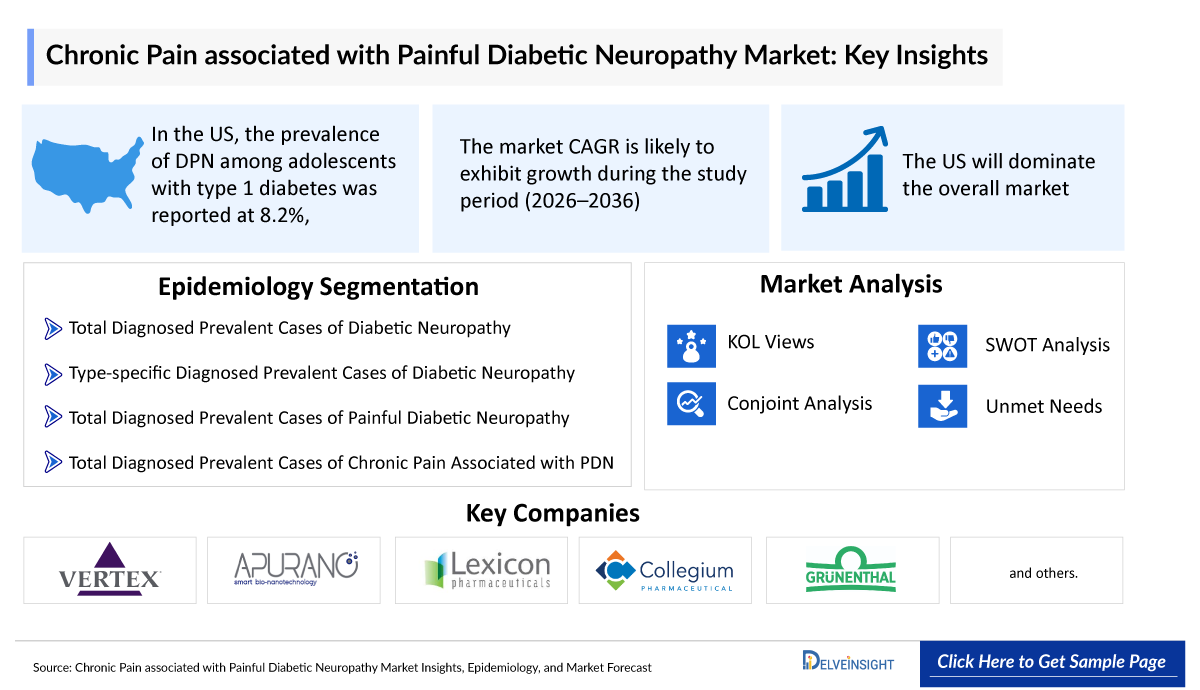
- The leading Chronic Pain associated with Painful Diabetic Neuropathy Companies include Vertex Pharmaceuticals, Apurano Pharmaceuticals, Lexicon Pharmaceuticals, Collegium Pharmaceuticals, Grunenthal, and others.
Chronic Pain Associated with Painful Diabetic Neuropathy Market and Epidemiology Analysis
- Chronic pain associated with PDN remains one of the most prevalent and debilitating complications of diabetes, characterized by persistent neuropathic pain that significantly impacts physical functioning, sleep quality, emotional well-being, and overall quality of life. The growing global diabetes burden continues to expand the addressable patient population, creating sustained demand for effective pain management strategies.
- The Chronic Pain associated with Painful Diabetic Neuropathy Treatment landscape is largely dominated by symptomatic therapies, including Pregabalin, Gabapentin, Duloxetine, Amitriptyline, Tapentadol ER (NUCYNTA), and Capsaicin 8% patch (QUTENZA). While these agents provide clinically meaningful pain relief in a subset of patients, their utility is frequently limited by incomplete efficacy, dose-limiting adverse events, tolerability concerns, and the inability to modify the underlying disease process.
- NUCYNTA has established a notable position in the Painful Diabetic Neuropathy Treatment landscape due to its dual mechanism of action targeting both neuropathic and nociceptive pain pathways. However, concerns regarding long-term opioid use and safety considerations continue to influence prescribing patterns and treatment sequencing.
- The emerging Chronic Pain associated with Painful Diabetic Neuropathy Pipeline reflects a strategic shift toward mechanism-based, non-opioid approaches designed to improve efficacy and tolerability. Prominent late and clinical-stage candidates, including Suzetrigine (JOURNAVX) by Vertex Pharma, Adezunap (AP707) by Apurano Pharma, and Pilavapadin by Lexicon Pharma, are expected to reshape the competitive landscape by targeting novel pain pathways and addressing key gaps left by existing therapies.
- Despite a robust Chronic Pain associated with Painful Diabetic Neuropathy Pipeline, several challenges continue to constrain market growth, including the heterogeneous nature of neuropathic pain, variability in treatment response, underdiagnosis of PDN, limited access to specialist care, and reimbursement pressures. Additionally, the absence of disease-modifying therapies remains a major unmet need, as currently available treatments primarily focus on symptom management rather than nerve repair or regeneration.
- Looking ahead, the Chronic Pain associated with Painful Diabetic Neuropathy treatment landscape is expected to undergo a significant transformation as novel non-opioid therapies enter the market. Successful commercialization of emerging agents with superior efficacy, improved safety profiles, and differentiated mechanisms of action is likely to drive greater treatment adoption, intensify market competition, and improve long-term outcomes for patients living with chronic painful diabetic neuropathy.
Chronic Pain Associated with Painful Diabetic Neuropathy Market Size and Forecast in the 7MM
| 2025 Chronic Pain Associated with PDN Market Size |
~USD XX million |
| Projected 2036 Chronic Pain Associated with PDN Market Size | ~USD XX million |
|
Chronic Pain Associated with PDN Growth Rate (2026–2036) | ~XX% CAGR |
Key Factors Driving the Chronic Pain Associated with Painful Diabetic Neuropathy Market
-
Rising Prevalence of Diabetes and Diabetic Neuropathy
The rising prevalence of type 1 diabetes and type 2 diabetes is a key driver of the PDN market. Increasing rates of diabetes—among aging and obese populations—are leading to more cases of diabetic peripheral neuropathy and chronic neuropathic pain, thereby expanding the addressable patient population.
-
Growing Focus on Non-Opioid Pain Management
Concerns about opioid dependence and adverse effects are driving a shift toward alternative pain management approaches. Clinicians and healthcare systems are increasingly adopting non-opioid pharmacologic therapies, topical treatments, neuromodulation devices, and multimodal strategies.
-
Improved Access to Healthcare and Diabetes Management Programs
Expansion of healthcare infrastructure, reimbursement coverage, and chronic disease management programs in both developed and emerging markets has enhanced patient access to diagnosis and treatment, supporting market growth.
DelveInsight's ‘Chronic Pain Associated with Painful Diabetic Neuropathy Market Insights, Epidemiology and Market Forecast – 2036’ report delivers an in-depth understanding of the chronic pain associated with PDN, historical and forecasted epidemiology, as well as the chronic pain associated with PDN market trends in the United States, EU4 (Germany, Spain, Italy, and France) and the United Kingdom, and Japan.
The Chronic Pain Associated with PDN Treatment Market Report delivers a comprehensive analysis of the current treatment landscape, including standards of care, clinical practices, and evolving therapeutic algorithms. It evaluates Chronic Pain associated with PND patient burden trends, revenue & market share dynamics, peak patient share & therapy uptake analysis, and provides an in-depth market size assessment, and growth rate projections (Historical & Forecast 2022–2036) across global regions. The report highlights key unmet medical needs in Chronic Pain associated with PND and maps the competitive and clinical landscape to uncover high‑value opportunities, providing a clear outlook on future market growth potential.
Scope of the Chronic Pain Associated with Painful Diabetic Neuropathy Market Report | |
|
Study Period |
2022–2036 |
|
Historical Year |
2022–2025 |
|
Forecast Period |
2026–2036 |
|
Base Year |
2026 |
|
Geographies Covered |
|
|
Chronic Pain Associated with PDN Market CAGR (Forecast period) |
~XX% (2026–2036) |
|
Chronic Pain Associated with PDN Epidemiology Segmentation Analysis |
Patient Burden Assessment
|
|
Chronic Pain Associated with PDN Companies |
|
|
Chronic Pain Associated with PDN Therapies |
|
|
Chronic Pain Associated with PDN Market |
Segmented by
|
|
Analysis |
|
Chronic Pain Associated with Painful Diabetic Neuropathy Understanding and Treatment Algorithm
Chronic Pain Associated with PDN Overview
Chronic pain associated with Painful Diabetic Neuropathy is a common complication of diabetes mellitus caused by peripheral nerve damage from prolonged hyperglycemia and metabolic dysfunction. It typically presents as persistent neuropathic pain in a symmetrical “stocking” distribution affecting the feet and lower legs, with sensations described as burning, tingling, stabbing, electric shocks, or increased sensitivity to touch.
Painful Diabetic Neuropathy significantly impairs sleep, physical functioning, quality of life, and mental health. Around 20–30% of patients with diabetic peripheral neuropathy develop chronic painful symptoms, making it one of the most burdensome diabetes-related complications.
Chronic Pain Associated with PDN Diagnosis
Chronic Pain associated with PDN is mainly diagnosed clinically based on a history of chronic neuropathic pain in patients with diabetes, supported by neurological examination findings such as sensory loss and reduced reflexes. Screening tools like DN4 or pain DETECT can aid diagnosis, while nerve conduction studies and laboratory investigations are typically reserved for atypical presentations or to rule out other causes of neuropathy.
Further details are provided in the report.
Chronic Pain Associated with Painful Diabetic Neuropathy Treatment
Management of chronic pain associated with PDN requires a multidisciplinary approach focused on pain control, functional improvement, and optimal diabetes management. Tight glycemic control may help slow disease progression, but typically does not reverse established neuropathic pain. First-line pharmacologic options include anticonvulsants such as Pregabalin and Gabapentin, as well as SNRIs like Duloxetine. Tricyclic antidepressants such as Amitriptyline may be used in selected patients. Topical therapies, including capsaicin patches and lidocaine preparations, can provide localized relief.
In refractory cases, combination therapy, neuromodulation techniques, or referral to a pain specialist may be considered. Non-pharmacological strategies—such as regular exercise, physical therapy, psychological support, sleep optimization, and patient education—are also essential for improving overall outcomes and quality of life.
Further details related to country-based variations are provided in the report.
Chronic Pain Associated with Painful Diabetic Neuropathy Unmet Needs
The section “unmet needs of chronic pain associated with PDN” outlines the critical gaps between the current state of patient care, diagnosis, and the ideal & effective management of the disease. It highlights the obstacles experienced by patients, clinicians, and researchers and identifies potential solutions for future progress.
- Limited pain relief with current treatments
- Lack of disease-modifying and limited options for refractory patients
- Under diagnosis and delayed intervention, and others…..
Chronic Pain Associated with Painful Diabetic Neuropathy Epidemiology
Key Findings from Chronic Pain Associated with Painful Diabetic Neuropathy Epidemiological Analysis and Forecast
- Diabetes-related peripheral neuropathy (DPN) is often associated with pain, resulting in painful diabetic peripheral neuropathy (PDPN), a common complication of diabetes. It affects approximately 2.3 million people in the US and around 30% of the global diabetes population.
- In the US, the prevalence of DPN among adolescents with type 1 diabetes was reported at 8.2%, indicating that neuropathic complications can emerge early in the disease course, even within a relatively young population.
- Nearly half of individuals with diabetes are expected to develop DPN during their lifetime. Global estimates indicate that the prevalence of DPN among adults with diabetes ranges widely from approximately 6% to 51%.
- In Europe, about 6–34% of people with diabetes mellitus experience PDPN, depending on the diagnostic method used.
- DPN is a common complication of diabetes mellitus, with an estimated prevalence of about 28% in the United States, 6–34% in Europe, and 28–37% in Japan.
- The overall prevalence of DPN was 40.3%, and it was slightly higher among males (43%) than among females (37%). The prevalence of DPN was 29.1% among patients with type 1 diabetes (T1D) and 42.2% among patients with type 2 diabetes (T2D) in Germany.
Chronic Pain Associated with Painful Diabetic Neuropathy Epidemiology Segmentation
- Total Diabetic Neuropathy Diagnosed Prevalent Cases
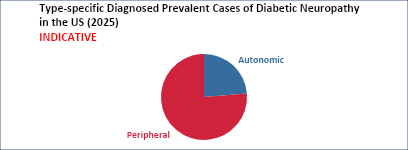
- Diabetic Neuropathy Type-specific Diagnosed Prevalent Cases
- Total Chronic Pain associated with Painful Diabetic Neuropathy Diagnosed Prevalent Cases
Chronic Pain Associated with Painful Diabetic Neuropathy Market Recent Breakthroughs and Developments
- In February 2026, Hikma Pharmaceuticals announced that it had launched an authorized generic version of NUCYNTA (tapentadol) for US patients.
- As per the January 2026 JP Morgan presentation, Suzetrigine is expected to complete enrollment for both Phase III DPN by year-end 2026.
- In January 2026, Lexicon Pharmaceuticals announced the successful completion of the End-of-Phase II Meeting with the FDA for pilavapadin in DPNP. During the meeting, the FDA raised no objections to the advancement of pilavapadin into Phase III development, which would include two placebo-controlled, 12-week studies comparing the 10 mg daily dose to placebo.
Chronic Pain Associated with Painful Diabetic Neuropathy Drug Analysis & Competitive Analysis
The Chronic Pain associated with PDN drug chapter provides a detailed, market-focused review of approved and emerging Chronic Pain Associated with Painful Diabetic Neuropathy Pipeline across Phase I–III clinical trials. It covers the mechanism of action, clinical trial data, regulatory approvals, patents, collaborations, and strategic partnerships for each therapy, along with their advantages, limitations, and recent developments. This section offers critical insights into the Chronic Pain associated with PDN treatment landscape, supporting market assessment, competitive analysis, and growth forecasting for the Chronic Pain associated with PDN therapeutics market.
Chronic Pain Associated with Painful Diabetic Neuropathy Approved Therapies
-
Tapentadol ER (NUCYNTA): Collegium Pharmaceutical
NUCYNTA is a centrally acting synthetic analgesic approved for managing severe, chronic pain requiring long-term opioid therapy when other treatments are inadequate. Although its exact mechanism is not fully understood, preclinical studies indicate that it functions as both a mu-opioid receptor (MOR) agonist and a norepinephrine reuptake inhibitor (NRI).
-
- In August 2023, Collegium Pharmaceutical reported that the US FDA granted New Patient Population exclusivity for NUCYNTA, extending NUCYNTA’s US market exclusivity till July 3, 2026.
- In June 2024, the company announced that the FDA deemed these data to be responsive to its Written Request, granting pediatric exclusivity to the entire NUCYNTA franchise for an additional six months, to December 27, 2025, for NUCYNTA ER and January 3, 2027, for NUCYNTA IR.
- In April 2015, Janssen Pharmaceuticals handed over the US rights to its NUCYNTA pain medications, including the immediate-release, extended-release, and oral solution forms, to Collegium Pharmaceutical, in a deal worth USD 1.05 billion.
-
QUTENZA (capsaicin 8%): Grunenthal
QUTENZA, developed by Grunenthal, is a high-concentration capsaicin 8% patch, a transient receptor potential vanilloid 1 (TRPV1) receptor agonist approved for the treatment of neuropathic pain associated with diabetic peripheral neuropathy of the feet in adults. In Europe, it is approved for the treatment of peripheral neuropathic pain. In the US (2020), it had also received approval for the treatment of neuropathic pain associated with DPN of the feet in adults.
Note: Detailed marketed therapies assessment of therapies will be provided in the final report.
Chronic Pain Associated with Painful Diabetic Neuropathy Pipeline Analysis
-
JOURNAVX (Suzetrigine): Vertex Pharmaceuticals
Suzetrigine (VX-548) is an oral, non-opioid medication developed for the treatment of pain, including painful diabetic neuropathy. Its mechanism of action is the selective inhibition of the voltage-gated sodium channel NaV1.8, which plays a key role in pain signal transmission in peripheral nerves.
Vertex Pharmaceuticals advanced its pipeline by initiating three pivotal Phase III trials (NCT07231419, NCT06696443, and NCT06628908) for suzetrigine, targeting the treatment of PDPN, marking a significant milestone in the therapeutic development of novel analgesics for neuropathic pain.
-
Pilavapadin: Lexicon Pharmaceuticals
Pilavapadin has promising clinical outcomes that have been reported in diabetic neuropathic pain, with a notably favorable safety profile. A non-opioid small-molecule AAK1 inhibitor represents a novel therapeutic approach for neuropathic pain, designed to inhibit the reuptake and recycling of neurotransmitters involved in pain signaling without affecting opioid pathways, with painful DPN as a Phase III-ready lead indication and additional indications prepared for Phase II development.
- In January 2026, Lexicon Pharmaceuticals announced the successful completion of the End-of-Phase II Meeting with the FDA for pilavapadin in DPNP. During the meeting, the FDA raised no objections to the advancement of pilavapadin into Phase III development, which would include two placebo-controlled, 12-week studies comparing the 10 mg daily dose to placebo.
- The company plans to expand internationally through strategic partnerships, supported by ongoing collaborations with Viatris and Novo Nordisk, along with the establishment of a new partner for pilavapadin to further strengthen global development and commercialization efforts.
|
Comparison of Emerging Drugs Under Development | |||||||
|
Drug Name |
Company |
Highest Phase |
Indication |
RoA |
MoA |
Molecule Type |
Anticipated Launch in the US |
|
JOURNAVX (Suzetrigine) |
Vertex Pharmaceuticals |
III |
PDPN |
Oral |
NaV1.8 inhibitor |
Small-molecule |
Information is available in the full report |
|
Adezunap (AP707) |
Apurano Pharmaceuticals |
III |
Chronic DPN |
Sublingual spray |
Cannabinoid CB1 receptor agonist |
Small-molecule |
Information is available in the full report |
|
Pasireotide (SIGNIFOR) |
Recordati Group |
II |
Painful DPN |
Oral |
AAK1 inhibitor |
Small-molecule |
Information is available in the full report |
|
Note: Launch insights are provisional and may change with future report updates or the occurrence of major key catalysts. | |||||||
Chronic Pain Associated with Painful Diabetic Neuropathy Companies
- Vertex Pharmaceuticals
- Apurano Pharmaceuticals
- Lexicon Pharmaceuticals
- Collegium Pharmaceutical
- Grunenthal, and others
Chronic Pain Associated with Painful Diabetic Neuropathy Market Outlook
The Chronic Pain Associated with PDN Treatment Landscape is evolving, combining pharmacological and non-pharmacological strategies. First-line medications include anticonvulsants, SNRIs, and tricyclic antidepressants, while opioids like tapentadol are reserved for severe cases. Non-drug approaches such as physical therapy, transcutaneous electrical nerve stimulation, and cognitive-behavioral therapy complement medical treatment.
Despite available options, many patients experience inadequate relief, driving ongoing research into novel therapies targeting specific pain pathways to improve efficacy, safety, and long-term outcomes in PDN management. Pharmacological management of Chronic Pain associated with PDN involves a multimodal approach targeting both peripheral and central pain mechanisms.
First-line therapies typically include anticonvulsants such as pregabalin and gabapentin, which modulate calcium channels to reduce neuronal excitability. SNRIs like duloxetine and venlafaxine are also commonly prescribed for their dual action on mood and pain modulation. Tricyclic antidepressants (e.g., amitriptyline) may be effective but are often limited by side effects, especially in older adults.
Opioid analgesics, including NUCYNTA, are reserved for refractory cases due to concerns over dependency and long-term safety. Topical agents such as capsaicin cream and lidocaine patches offer localized relief with minimal systemic effects. Optimal treatment often requires individualized regimens based on pain severity, comorbidities, and patient tolerance.
Non-pharmacological approaches to managing chronic pain in PDN focus on improving function, reducing pain perception, and enhancing quality of life. Key strategies include physical therapy to improve mobility and reduce discomfort, and TENS, which may modulate pain signals. Cognitive-behavioral therapy (CBT) helps patients develop coping mechanisms for chronic pain.
Further details will be provided in the report….
Chronic Pain Associated with PDN Drug Class/Insights into Leading Emerging and Marketed Therapies (2022–2036 Forecast)
The Chronic Pain Associated with PDN treatment landscape includes established symptomatic therapies such as anticonvulsants, antidepressants, topical agents, and non-pharmacological interventions, alongside a growing pipeline of targeted therapies designed to address the underlying mechanisms of neuropathic pain.
Among emerging pharmacological approaches, selective voltage-gated sodium channel inhibitors, cannabinoid receptor agonists, and AAK1 inhibitors have gained significant attention due to their potential to provide effective, non-opioid pain relief with improved tolerability profiles.
- Selective Inhibition of the Voltage-Gated Sodium Channel NaV1.8: This therapeutic approach selectively blocks the NaV1.8 sodium channel expressed predominantly in peripheral nociceptive neurons, reducing abnormal pain signal transmission associated with diabetic neuropathy. By targeting a key mediator of neuropathic pain while sparing other sodium channels, these agents may offer effective analgesia with fewer central nervous system adverse effects. E.g., Suzetrigine (VX-548) by Vertex Pharmaceuticals.
- Cannabinoid CB1 Receptor Agonists: These agents modulate pain signaling pathways through activation of cannabinoid receptors involved in nociceptive processing. By reducing neuronal excitability and altering pain perception, CB1 receptor agonists may help alleviate chronic neuropathic pain symptoms and improve patients' quality of life. This mechanism represents a novel non-opioid strategy for managing PDN and other chronic pain conditions. E.g., VSN16R (also known as ELPA001) by Invex Therapeutics.
Further details will be provided in the report….
Chronic Pain Associated with Painful Diabetic Neuropathy Drug Uptake
This section focuses on the uptake rate of potential Chronic Pain Associated with PDN drugs expected to be launched in the market during the forecast period (2026–2036). The analysis covers the Chronic Pain associated with the PDN market's uptake by drugs, patient uptake by therapy, and sales of each drug.
Currently, the treatment of Chronic Pain associated with PDN is primarily driven by established therapies such as Pregabalin, Gabapentin, and Duloxetine. However, their use is often limited by suboptimal efficacy, tolerability concerns, and persistent residual pain.
Over the coming years, uptake of Chronic Pain Associated with PDN Emerging Therapies is expected to increase, led by Suzetrigine due to its promising profile and potential to address unmet needs in neuropathic pain management. This is expected to be followed by investigational agents such as VSN16R and LX9211, supported by advancing clinical evidence and growing demand for novel non-opioid treatment options.
Further detailed analysis of emerging therapies' drug uptake in the report…
Chronic Pain Associated with Painful Diabetic Neuropathy Market Access and Reimbursement
Reimbursement is a crucial factor that affects the drug’s access to the market. Often, the decision to reimburse comes down to the price of the drug relative to the benefit it produces in treated patients. To reduce the healthcare burden of these high-cost therapies, many payment models are being considered by payers and other industry insiders.
Further details are provided in the final report….
Chronic Pain Associated with Painful Diabetic Neuropathy Therapies Price Scenario & Trends
Pricing and analogue assessment of chronic pain associated with PDN therapies highlights evolving price dynamics structures. This section summarizes the cost of approved treatments, the closest and most appropriate analogue selection for emerging therapies, and the understanding of how pricing influences market access, adherence, and long-term uptake.
Further details are provided in the final report….
Industry Experts and Physician Views for Chronic Pain Associated with Painful Diabetic Neuropathy
To keep up with Chronic Pain associated with PDN market trends, we take Key Opinion Leaders (KOLs) and Subject Matter Experts (SMEs) opinions working in the domain through primary research to fill the data gaps and validate our secondary research. Industry experts were contacted for insights on the Chronic Pain associated with PDN emerging therapies, evolving treatment landscape, patient adherence to conventional therapies, therapy switching trends, drug adoption and uptake, accessibility challenges, and epidemiology and real-world prescription patterns in Chronic Pain associated with PDN, including MD, PhD, Instructor, Postdoctoral Researcher, Professor, Researcher, and others.
DelveInsight’s analysts connected with 10+ KOLs to gather insights; however, interviews were conducted with 6+ KOLs in the 7MM. Centers such as Stanford University, University College London, Joslin Diabetes Center, and Hospital Clínic de Barcelona, etc. were contacted. Their opinion helps understand and validate current and emerging Chronic Pain associated with PDN therapies, highlight unmet medical needs, provide epidemiological context, and support strategic decisions for market access, therapy adoption, and pipeline prioritization in Chronic Pain associated with PDN.
|
Region |
Key Opinion Leaders (KOLs) and Subject Matter Experts (SMEs) |
|
United States |
“DPN is defined by symptoms or signs of peripheral nerve dysfunction in individuals with diabetes, once other potential causes are ruled out. In some cases, symptoms may precede detectable clinical abnormalities. Among all therapeutic strategies, maintaining tight and consistent glycemic control remains the most critical factor in slowing neuropathy progression.” |
|
Spain |
“The most frequent painful diabetic neuropathies are acute sensory and chronic sensorimotor types. Acute sensory neuropathy has a sudden onset with intense sensory symptoms and minimal signs, often linked to hyperglycemia or rapid glucose control. Chronic sensorimotor neuropathy, the most prevalent form, involves persistent pain and clear clinical signs.” |
Chronic Pain Associated with Painful Diabetic Neuropathy Qualitative Analysis Report: SWOT and Conjoint Analysis
We perform qualitative and market Intelligence analysis using various approaches, such as SWOT analysis and conjoint analysis. In the SWOT analysis of Chronic Pain associated with PDN, strengths, weaknesses, opportunities, and threats in terms of disease diagnosis, patient awareness, patient burden, competitive landscape, cost-effectiveness, and geographical accessibility of therapies are provided.
Conjoint analysis analyzes Chronic Pain Associated with Painful Diabetic Neuropathy Emerging Therapies based on relevant attributes such as safety, efficacy, frequency of administration, route of administration, and order of entry. Scoring is given based on these parameters to analyze the effectiveness of therapy.
The team of analysts analyzes promising Chronic Pain Associated with Painful Diabetic Neuropathy Emerging Therapies based on relevant attributes such as safety, efficacy, frequency of administration, route of administration, and order of entry. In efficacy, the trial’s primary and secondary outcome measures are evaluated, whereas the therapies’ safety is evaluated, wherein the acceptability, tolerability, and adverse events are mainly observed.
In addition, the scoring is also based on the route of administration, order of entry, probability of success, and the addressable patient pool for each therapy. According to these parameters, the final weightage score and the ranking of the emerging therapies are decided.
Scope of the Chronic Pain Associated with Painful Diabetic Neuropathy Market Report
- The Chronic Pain Associated with Painful Diabetic Neuropathy Therapeutics Market Report covers a segment of key events, an executive summary, a descriptive overview, explaining its causes, signs and symptoms, pathogenesis, and currently available treatments.
- Comprehensive insight has been provided into the epidemiology segments and forecasts, the future growth potential of the diagnosis rate, and disease progression along treatment guidelines.
- Additionally, an all-inclusive account of both the current and emerging treatments, along with the elaborative profiles of late-stage and prominent therapies, will have an impact on the current treatment landscape.
- A detailed review of the Chronic Pain associated with PDN Therapeutics Market, historical and forecasted market size, and Chronic Pain Associated with Painful Diabetic Neuropathy Drugs Market Share by therapies, detailed assumptions, and rationale behind our approach is included in the report, covering the 7MM drug outreach.
- The Chronic Pain Associated with Painful Diabetic Neuropathy Therapeutics Market Report provides an edge while developing business strategies by understanding trends through SWOT analysis and expert insights/KOL views, patient journey, and treatment preferences that help in shaping and driving the 7MM Chronic Pain associated with PDN Drugs Market.
Chronic Pain Associated with Painful Diabetic Neuropathy Market Report Insights
- Chronic Pain Associated with PDN Patient Population Forecast
- Chronic Pain Associated with PDN Therapeutics Market Size
- Chronic Pain Associated with PDN Pipeline Analysis
- Chronic Pain Associated with PDN Market Size and Trends
- Chronic Pain Associated with PDN Market Opportunity (Current and forecasted)
Chronic Pain Associated with Painful Diabetic Neuropathy Market Report Key Strengths
- Epidemiology‑based (Epi‑based) Bottom‑up Forecasting
- Artificial Intelligence (AI)-enabled Market Research Report
- 11-year Forecast
- Chronic Pain Associated with PDN Market Outlook (North America, Europe, Asia-Pacific)
- Patient Burden Trends (by geography)
- Chronic Pain Associated with PDN Treatment Addressable Market (TAM)
- Chronic Pain Associated with PDN Competitive Landscape
- Chronic Pain Associated with PDN Major Companies Insights
- Chronic Pain Associated with PDN Price Trends and Analogue Assessment
- Chronic Pain Associated with PDN Therapies Drug Adoption/Uptake
- Chronic Pain Associated with PDN Therapies Peak Patient Share Analysis
Chronic Pain Associated with Painful Diabetic Neuropathy Market Report Assessment
- Chronic Pain Associated with PDN Current Treatment Practices
- Chronic Pain Associated with PDN Unmet Needs
- Chronic Pain Associated with PDN Clinical Development Analysis
- Chronic Pain Associated with PDN Emerging Drugs Product Profiles
- Chronic Pain Associated with PDN Market Attractiveness
- Chronic Pain Associated with PDN Qualitative Analysis (SWOT and Conjoint Analysis)
Key Questions Answered in the Chronic Pain Associated with Painful Diabetic Neuropathy Therapeutics Market
Chronic Pain Associated with Painful Diabetic Neuropathy Treatment Market Insights
- What was the Chronic Pain associated with PDN Treatment Market Size, the market size by therapies, Chronic Pain Associated with Painful Diabetic Neuropathy Drugs Market Share (%) distribution in 2025, and what would it look like by 2036? What are the contributing factors for this growth?
- What are the anticipated pricing variations among different geographies for the emerging therapies in the future?
- What can be the future treatment paradigm of Chronic Pain associated with PDN?
- What are the disease risks, burdens, and unmet needs of Chronic Pain associated with PDN? What will be the growth opportunities across the 7MM concerning the patient population with Chronic Pain associated with PDN?
- Who is the major future competitor in the market, and how will the competitors affect their market share?
- What are the current options for the treatment of Chronic Pain associated with PDN? What are the current guidelines for treating Chronic Pain associated with PDN in the US, Europe, and Japan?
Reasons to Buy the Chronic Pain Associated with Painful Diabetic Neuropathy Market Report
- The Chronic Pain Associated with Painful Diabetic Neuropathy Therapeutics Market Report will help in developing business strategies by understanding the latest trends and changing treatment dynamics driving the Chronic Pain associated with PDN Drugs Market.
- Bottom-up forecasting builds from the affected population to product forecasts, delivering a robust, data-driven approach ideal for new therapies and novel classes.
- Insights on patient burden/disease: Chronic Pain Associated with Painful Diabetic Neuropathy Incidence, evolution in diagnosis, and factors contributing to the change in the epidemiology of the disease during the forecast years.
- Understand the existing Chronic Pain Associated with Painful Diabetic Neuropathy Drugs Market opportunities in varying geographies and the growth potential over the coming years.
- Identifying strong upcoming players in the Chronic Pain Associated with Painful Diabetic Neuropathy Drugs Market will help devise strategies to help get ahead of competitors.
- Detailed analysis and ranking of class-wise potential current and emerging therapies under the conjoint analysis section to provide visibility around leading classes.
- To understand KOLs’ perspectives on the accessibility, acceptability, and compliance-related challenges of existing treatment to overcome barriers in the future.
- Detailed insights into the unmet needs of the existing Chronic Pain Associated with Painful Diabetic Neuropathy Drugs Market so that the upcoming players can strengthen their development and launch strategy.
- This Artificial Intelligence (AI) - enabled report summarizes and simplifies complex datasets within the report into clear, actionable insights for stakeholders, investors, and healthcare providers, enabling faster, data-driven decisions.
Stay updated with us for Recent Articles