
Familial Adenomatous Polyposis Market Summary
- The Familial Adenomatous Polyposis Market Dynamics are expected to evolve significantly during the forecast period, driven by increasing genetic screening, improved identification of APC gene mutations, greater surveillance of at-risk individuals, and the development of novel chemopreventive therapies aimed at delaying disease progression and reducing polyp burden.
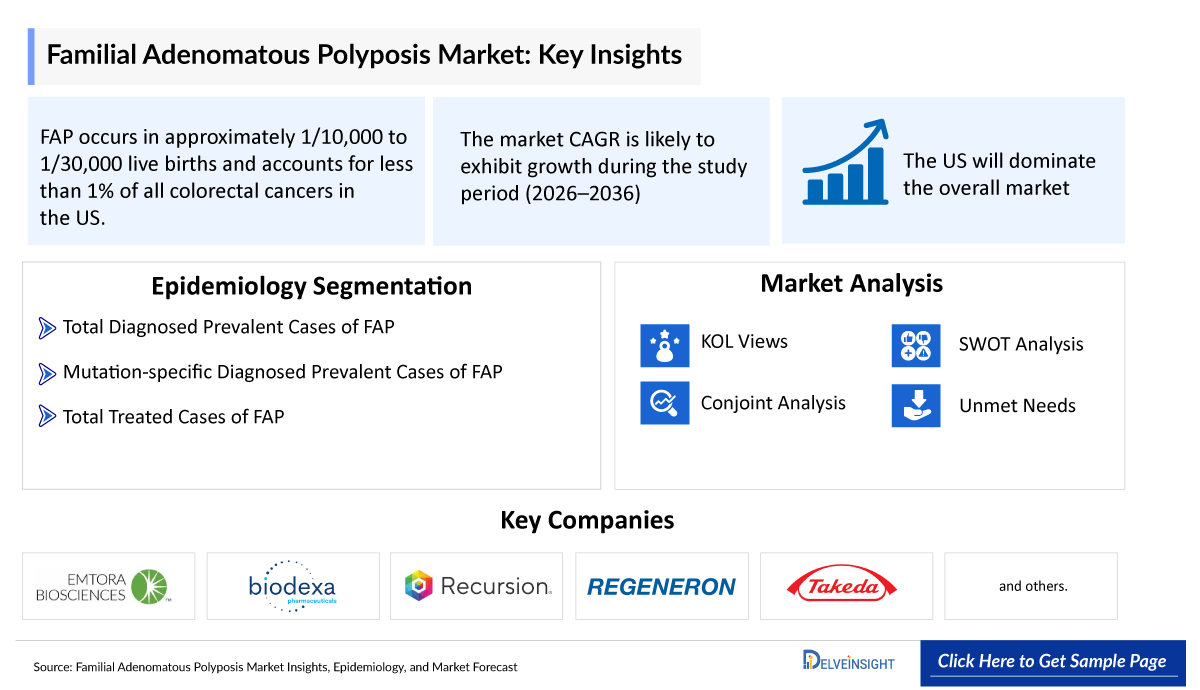
- The leading Familial Adenomatous Polyposis Companies include Emtora Biosciences, Biodexa, Recursion, Regeneron Pharmaceuticals, Takeda Pharmaceutical Company, Allakos, and others.
Familial Adenomatous Polyposis Market and Epidemiology Analysis
- FAP is a rare inherited colorectal cancer predisposition syndrome characterized by the development of hundreds to thousands of adenomatous polyps in the colon and rectum and a near-certain risk of colorectal cancer if left untreated.
- Current management of FAP relies heavily on intensive endoscopic surveillance, prophylactic colectomy, and supportive monitoring for extracolonic manifestations, including duodenal polyps, desmoid tumors, thyroid cancer, and other associated neoplasms.
- Despite advances in surgical management, colectomy remains associated with substantial long-term morbidity, including altered bowel function, quality-of-life impairment, and the continued need for lifelong surveillance, highlighting the need for effective disease-modifying therapies.
- Currently, there are no approved pharmacological therapies for FAP. However, off-label use of nonsteroidal anti-inflammatory drugs (NSAIDs), such as Sulindac and Celecoxib, may help reduce polyp burden and delay disease progression.
- Familial Adenomatous Polyposis Emerging Therapies are advancing across mid- to late-stage development, offering mechanistically diverse and potentially disease-modifying options. These include eRAPA, an oral rapamycin formulation developed by Emtora Biosciences and Biodexa Pharmaceuticals, a small-molecule mTOR inhibitor in a Phase III trial, and Recursion’s REC-4881, an oral allosteric MEK1/2 inhibitor currently in a Phase I/II (TUPELO) study.
- Precision medicine approaches are gaining momentum in FAP, with growing focus on genotype–phenotype correlations, biomarker-driven patient stratification, and individualized risk assessment to optimize treatment and surveillance strategies.
- Advances in genetic testing, cascade family screening, and hereditary cancer counseling are enabling earlier diagnosis and proactive management of FAP before malignant transformation.
- Persistent risks of colorectal cancer, duodenal cancer, desmoid disease, and other extracolonic complications continue to create a substantial clinical burden, even after surgical intervention, underscoring the need for comprehensive long-term disease management.
- Several investigational Familial Adenomatous Polyposis Therapies are being evaluated for their ability to reduce adenoma burden, delay surgical intervention, and provide sustained disease control, potentially transforming the standard treatment paradigm for FAP.
- The Familial Adenomatous Polyposis Treatment paradigm is gradually shifting from a surgery-centric approach toward integrated management combining surveillance, chemoprevention, targeted therapies, and precision medicine strategies aimed at reducing cancer risk and improving quality of life.
Familial Adenomatous Polyposis Market Size and Forecast in the 7MM
| 2025 Familial Adenomatous Polyposis Market Size | ~USD XXXX |
| 2036 Projected Familial Adenomatous Polyposis Market Size | ~USD XXXX |
| Familial Adenomatous Polyposis Growth Rate (2026–2036) | XX% CAGR |
Key Factors Driving the Familial Adenomatous Polyposis Market Growth
-
Increasing Recognition of FAP and Hereditary Cancer Syndromes
Growing awareness of hereditary colorectal cancer syndromes, expanded use of genetic testing, and increasing identification of APC gene mutations are driving earlier diagnosis of FAP. Enhanced surveillance programs and family screening initiatives are improving detection rates and expanding the addressable patient population.
-
Significant Unmet Need beyond Surgery
Although prophylactic colectomy remains the standard of care for preventing colorectal cancer in FAP patients, surgery does not eliminate the risk of duodenal polyps, desmoid tumors, or residual adenoma formation. The lack of approved disease-modifying pharmacologic therapies continues to create substantial demand for effective non-surgical treatment options.
-
Growing Opportunities for Targeted FAP Therapies
Advances in the understanding of Wnt/β-catenin signaling, APC mutation biology, EGFR pathways, and inflammatory mechanisms involved in polyp development are creating opportunities for targeted therapies. Emerging agents are being developed to reduce adenoma burden, delay surgical intervention, and improve long-term disease management.
-
Competitive Landscape Continues to Evolve
Despite the rarity of FAP, increasing investment in rare gastrointestinal and hereditary cancer disorders is expanding the competitive landscape. Emerging therapies targeting distinct biological pathways are expected to intensify competition and create new growth opportunities within the FAP market over the forecast period.
-
FAP Clinical Trials and Competitive Landscape
The FAP clinical development landscape is gaining momentum, with increasing focus on targeted and chemopreventive therapies aimed at reducing polyp burden, delaying surgery, and lowering colorectal cancer risk. Key companies in the space include Recursion Pharmaceuticals, Emtora Biosciences, Biodexa Pharmaceuticals, Regeneron Pharmaceuticals, Takeda Pharmaceutical Company, and Allakos. The competitive landscape is expected to evolve as emerging therapies such as REC-4881 and other precision medicine approaches progress through clinical development, addressing significant unmet needs in FAP management.
DelveInsight's ‘Familial Adenomatous Polyposis– Market Insights, Epidemiology and Market Forecast – 2036’ report delivers an in-depth understanding of the FAP, historical and forecasted epidemiology, as well as FAP market trends in the United States, EU4 (Germany, Spain, Italy, and France) and the United Kingdom, and Japan.
The Familial Adenomatous Polyposis market report delivers a comprehensive analysis of the current treatment landscape, including standards of care, clinical practices, and evolving therapeutic algorithms. It evaluates FAP patient burden trends, revenue & market share dynamics, peak patient share & therapy uptake analysis, and provides an in-depth market size assessment and growth rate projections (Historical & Forecast 2022–2036) across global regions. The report highlights key unmet medical needs in FAP and maps the competitive and clinical landscape to uncover high‑value opportunities, providing a clear outlook on future market growth potential.
Scope of the Familial Adenomatous Polyposis Market Report | |
|
Study Period |
2022–2036 |
|
Historical Year |
2022–2025 |
|
Forecast Period |
2026–2036 |
|
Base Year |
2026 |
|
Geographies Covered |
|
|
Familial Adenomatous Polyposis Market CAGR (Forecast period) |
XX% (2026 ̶ 2036) |
|
Familial Adenomatous Polyposis Epidemiology Segmentation Analysis |
Patient Burden Assessment
|
|
Familial Adenomatous Polyposis Companies |
|
|
Familial Adenomatous Polyposis Therapies |
|
|
Familial Adenomatous Polyposis Market |
Segmented by
|
|
Analysis |
|
Familial Adenomatous Polyposis Understanding and Treatment Algorithm
Familial Adenomatous Polyposis Overview
FAP is a rare, inherited autosomal dominant colorectal cancer predisposition syndrome caused primarily by pathogenic mutations in the APC (adenomatous polyposis coli) gene. The condition is characterized by the development of hundreds to thousands of adenomatous polyps throughout the colon and rectum, typically beginning during adolescence or early adulthood. If left untreated, individuals with classic FAP face an almost 100% lifetime risk of developing colorectal cancer, often before the age of 40–50 years.
In addition to colorectal manifestations, patients may develop extracolonic features, including duodenal and gastric polyps, desmoid tumors, osteomas, congenital hypertrophy of the retinal pigment epithelium (CHRPE), thyroid cancer, hepatoblastoma, and other benign or malignant tumors. The disease imposes a substantial lifelong clinical burden, requiring intensive surveillance, preventive interventions, and multidisciplinary management.
Familial Adenomatous Polyposis Diagnosis
Familial Adenomatous Polyposis diagnosis relies on a combination of clinical evaluation, family history assessment, endoscopic findings, and genetic testing. Colonoscopy remains the cornerstone of diagnosis and typically reveals numerous adenomatous polyps in the colon and rectum. Confirmation is generally achieved through identification of a pathogenic APC gene mutation using molecular genetic testing.
Additional diagnostic evaluations may include upper gastrointestinal endoscopy to assess duodenal and gastric polyps, imaging studies for desmoid tumors, and screening for extracolonic manifestations. Early diagnosis is critical because timely surveillance and prophylactic surgical interventions can substantially reduce colorectal cancer risk and improve long-term outcomes for affected individuals and at-risk family members.
Familial Adenomatous Polyposis Treatment
Management of FAP is primarily aimed at preventing colorectal cancer, controlling polyp burden, and monitoring extracolonic manifestations. Strategies include regular endoscopic surveillance, pharmacologic therapy, prophylactic surgery, and long-term follow-up. Treatment selection is guided by polyp burden, age at diagnosis, genetic profile, cancer risk, and extracolonic involvement. Given the near-universal lifetime risk of colorectal cancer without intervention, early management is essential.
For most patients, prophylactic colectomy or proctocolectomy remains the standard of care to reduce colorectal cancer risk, often followed by ongoing endoscopic surveillance of the remaining gastrointestinal tract. Pharmacologic options, including NSAIDs such as sulindac and selective COX-2 inhibitors like Celecoxib, have been explored for reducing polyp burden but are not curative. Despite advances in surveillance and surgical management, significant unmet needs persist due to risks of duodenal polyps, desmoid tumors, and extracolonic malignancies.
As a result, the treatment landscape is shifting toward targeted and disease-modifying therapies aimed at delaying progression, reducing surgical interventions, and improving long-term outcomes in FAP.
Familial Adenomatous Polyposis Unmet Needs
The section “unmet needs of FAP” outlines the critical gaps between the current state of patient care, diagnosis, and the ideal & effective management of the disease. It highlights the obstacles experienced by patients, clinicians, and researchers and identifies potential solutions for future progress.
- Lack of approved disease-modifying therapies capable of preventing adenoma formation, reducing long-term polyp burden, and delaying disease progression beyond current surgical and surveillance approaches.
- Prophylactic colectomy or proctocolectomy remains the standard of care, but is associated with significant lifelong impacts on bowel function, quality of life, and overall healthcare burden.
- Limited pharmacological treatment options, as currently available chemopreventive agents such as NSAIDs and COX-2 inhibitors, can reduce polyp burden but do not eliminate cancer risk or replace the need for surgery.
- Need for therapies that can safely provide long-term disease control and reduce the frequency of invasive procedures and endoscopic surveillance.
- Delayed diagnosis in some patients due to under-recognition of hereditary cancer syndromes, limited genetic testing uptake, and variable disease presentation among affected members.
Comprehensive unmet needs insights in FAP and their strategic implications are provided in the full report.
Familial Adenomatous Polyposis Epidemiology
Key Findings from Familial Adenomatous Polyposis Epidemiological Analysis and Forecast
- As per Kindie et al. (2024), FAP occurs in approximately 1/10,000 to 1/30,000 live births and accounts for less than 1% of all colorectal cancers in the US.
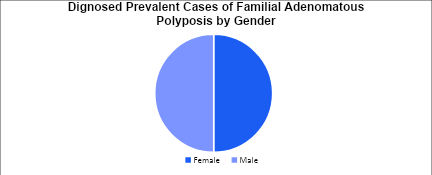
- According to Chung et al. (2024), FAP has an estimated Familial Adenomatous Polyposis Prevalence of 1 in 8000 to 1 in 18,000 and accounts for less than 1 percent of all colorectal cancers in the US. It affects males and females equally and has a worldwide distribution.
- According to Menon and Kasi (2024), approximately 20% to 30% of individuals diagnosed with FAP lack a documented family history and instead display de novo Adenomatous Polyposis Coli (APC) gene mutations.
- In a Japanese cohort study of FAP by Yamaguchi et al. (2016), 265 cases were identified as classical FAP (≥100 adenomas) and 38 cases were classified as AFAP (<100 adenomas) out of a total of 303 patients.
- The estimated prevalence of Familial Adenomatous Polyposis is around 3 people per 100,000 in England, as per NICE (2020).
- As per Sasaki et al. (2024), Familial Adenomatous Polyposis Prevalence ranges between 1:20,000 and 1:10,000 in Western countries and 1:17,400 in Japan.
- As per the National Organization for Rare Disorders (NORD) (2014), FAP affects males and females in equal numbers. It occurs in approximately one in 5,000 to 10,000 individuals in the US and accounts for about 0.5% of all cases of colorectal cancer.
Familial Adenomatous Polyposis Market Recent Breakthroughs and Developments
- In March 2025, Biodexa Pharmaceuticals and Emtora Biosciences continued the advancement of eRAPA in the pivotal SERENADE Phase III trial for FAP. The program is evaluating mTOR pathway inhibition as a chemopreventive strategy to reduce adenoma burden and potentially delay the need for prophylactic colorectal surgery.
- In recent clinical updates, Recursion Pharmaceuticals continued development of REC-4881 in the TUPELO study for FAP. REC-4881, a selective MEK1/2 inhibitor, received FDA Fast Track Designation and is being investigated for its potential to reduce polyp burden and address the underlying molecular pathways associated with APC-mutated FAP.
Familial Adenomatous Polyposis Drug Analysis & Competitive Analysis
The Familial Adenomatous Polyposis drug chapter provides a detailed, market-focused review of the emerging Familial Adenomatous Polyposis Pipeline across Phase I–III clinical trials. It covers the Familial Adenomatous Polyposis Mechanism of Action, clinical trial data, regulatory approvals, patents, collaborations, and strategic partnerships for each therapy, along with their advantages, limitations, and recent developments. This section offers critical insights into the Familial Adenomatous Polyposis treatment market landscape, supporting market assessment, competitive analysis, and growth forecasting for the Familial Adenomatous Polyposis Therapeutics Market.
Familial Adenomatous Polyposis Pipeline Analysis
-
eRAPA: Emtora Biosciences and Biodexa Pharmaceuticals
eRAPA is a proprietary oral capsule formulation of rapamycin (sirolimus), an mTOR inhibitor. In April 2024, Biodexa Pharmaceuticals entered into a strategic partnership with Emtora Biosciences to develop, manufacture, and commercialize eRAPA and advance its clinical potential. The program is currently being evaluated in a Phase I/II trial for FAP.
-
- In March 2025, Biodexa Pharmaceuticals announced the results of its Type C meeting with the US FDA regarding the protocol for the planned registrational Phase III study of eRAPA in FAP. The Phase III study is supported by a USD 17 million grant from the Cancer Prevention Research Institute of Texas (CPRIT) and a Company match of USD 8.5 million.
- In February 2025, the US FDA granted FTD to eRAPA for the treatment of Familial Adenomatous Polyposis.
-
REC-4881: Recursion
REC-4881 is an orally bioavailable, non-ATP-competitive, allosteric small molecule inhibitor of MEK1 and MEK2, being developed to reduce polyp burden and progression to adenocarcinoma in people living with FAP. Currently, it is getting evaluated in the Phase I/II for FAP.
-
- According to the corporate presentation of June 2025, Recursion anticipates giving an update for the Phase I/II TUPELO study in the second half of 2025.
- In May 2025, Recursion announced preliminary safety and efficacy results from its ongoing Phase Ib/II TUPELO trial of REC-4881 for FAP. These data were presented in a late-breaking oral presentation at DDW 2025.
|
Comparison of Familial Adenomatous Polyposis Emerging Drugs Under Development | |||||||
|
Drug Name |
Company |
Highest Phase |
Indication |
RoA |
MoA |
Molecule Type |
Anticipated Launch in the US |
|
eRAPA |
Emtora Biosciences/ Biodexa Pharma |
III |
FAP |
Oral |
mTOR inhibitor |
Small Molecule |
2029 |
|
REC-4881 |
Recursion Pharmaceuticals |
II/III |
FAP |
Oral |
MEK1/2 inhibitor |
Small Molecule |
Information is available in the full report |
|
Note: Launch insights are provisional and may change with future report updates or the occurrence of major key catalysts. | |||||||
Familial Adenomatous Polyposis Companies
- Emtora Biosciences
- Biodexa
- Recursion
- Regeneron Pharmaceuticals
- Takeda Pharmaceutical Company
- Allakos and others…
Familial Adenomatous Polyposis Market Outlook
The Familial Adenomatous Polyposis Therapeutics Market is expected to experience steady growth over the forecast period, driven by rising awareness of hereditary colorectal cancer syndromes, wider adoption of genetic testing, improvements in surveillance programs, and increasing emphasis on early intervention.
Enhanced cascade screening of at-risk families and advances in molecular diagnostics are anticipated to support earlier diagnosis and expand the identifiable patient pool. The United States, EU4, the United Kingdom, and Japan are expected to remain the key markets, supported by strong genetic testing infrastructure, specialized care centers, and broader access to advanced therapies.
The current Familial Adenomatous Polyposis Treatment landscape remains largely dependent on endoscopic surveillance, prophylactic colectomy, and chemopreventive agents such as NSAIDs and COX-2 inhibitors. While these strategies have significantly reduced colorectal cancer risk, they do not adequately address disease progression, extracolonic manifestations, or the lifelong burden of surgery and intensive monitoring.
As a result, the Familial Adenomatous Polyposis Therapeutics Market is gradually shifting toward targeted and disease-modifying therapies aimed at reducing adenoma burden, delaying surgical intervention, and improving long-term outcomes. Emerging therapies such as eRAPA (Emtora Biosciences / Biodexa Pharmaceuticals) and REC-4881 (Recursion Pharmaceuticals) are expected to play a central role in reshaping future treatment paradigms.
Despite ongoing progress, significant unmet needs persist, including the absence of approved disease-modifying therapies, continued reliance on prophylactic surgery, limited options for managing extracolonic manifestations, and a lack of interventions capable of preventing adenoma formation at the molecular level. Consequently, companies developing therapies that target the underlying biology of FAP and reduce long-term disease burden are expected to gain a strong competitive advantage in this evolving market landscape.
Key Findings from Familial Adenomatous Polyposis Market Forecast Report
- According to estimates, the United States accounted for the largest Familial Adenomatous Polyposis Therapeutics Market among the 7MM in 2025.
- Regional Familial Adenomatous Polyposis Market Dynamics show the United States leading in revenue, while Japan and Europe demonstrate steady growth, driven by rising Familial Adenomatous Polyposis Prevalence, improved diagnostics, and increasing adoption of advanced therapies.
Familial Adenomatous Polyposis Drug Class/Insights into Leading Emerging Therapies (2022–2036 Forecast)
The Familial Adenomatous Polyposis Therapeutics Market comprises mTOR inhibitors and chemopreventive therapies, MAPK/MEK pathway inhibitors, NSAIDs and COX-2 inhibitors, surgical and endoscopic management approaches, and emerging precision medicine therapies, with multiple treatment strategies aimed at reducing adenoma burden, delaying colorectal cancer progression, minimizing surgical intervention, and addressing the underlying molecular pathways associated with APC mutations.
- mTOR inhibitors: These therapies are designed to suppress abnormal cellular proliferation and adenoma growth by inhibiting the mTOR signaling pathway. Representative therapies include eRAPA (encapsulated rapamycin) being developed by Emtora Biosciences and Biodexa Pharmaceuticals.
- MAPK/MEK pathway inhibitors: These targeted therapies aim to reduce polyp development and disease progression by modulating signaling pathways involved in APC-mutated tumorigenesis. A key emerging therapy in this class is REC-4881, being developed by Recursion Pharmaceuticals.
Conventional surgical management and endoscopic surveillance currently dominate the Familial Adenomatous Polyposis Treatment landscape, while emerging targeted therapies such as eRAPA and REC-4881 are driving future innovation by focusing on disease modification, reduction of adenoma burden, delay of surgical intervention, and improved long-term outcomes for patients with Familial Adenomatous Polyposis.
Further details will be provided in the report….
Familial Adenomatous Polyposis Drug Uptake
This section focuses on the uptake rate of potential Familial Adenomatous Polyposis drugs expected to be launched in the market during the forecast period (2026–2036). The analysis covers the FAP market's uptake by drugs, patient uptake by therapy, and sales of each drug.
The uptake of therapies in Familial Adenomatous Polyposis is expected to vary across surgical interventions, endoscopic surveillance strategies, chemopreventive agents, and emerging targeted therapies during the forecast period. Prophylactic colectomy and regular endoscopic monitoring are expected to remain the cornerstone of disease management due to their proven ability to reduce colorectal cancer risk.
Conventional chemopreventive agents such as sulindac and celecoxib are anticipated to maintain moderate utilization, particularly in patients seeking to delay surgery or reduce adenoma burden, however, their uptake may remain limited by incomplete efficacy and the inability to eliminate cancer risk.
A major shift in treatment uptake is expected to occur with the introduction of disease-modifying therapies targeting the molecular drivers of FAP. Emerging therapies such as eRAPA and REC-4881 are expected to gain significant clinical interest due to their potential to reduce polyp burden, delay disease progression, and lessen dependence on surgical interventions.
Overall, the Familial Adenomatous Polyposis Treatment Market is expected to transition toward precision medicine and disease-modifying strategies. Therapies capable of reducing adenoma formation, delaying prophylactic surgery, lowering colorectal cancer risk, and improving long-term patient outcomes are expected to drive future uptake and reshape the Familial Adenomatous Polyposis Treatment Market Landscape between 2022 and 2036.
Further detailed analysis of emerging therapies' drug uptake in the report…
Familial Adenomatous Polyposis Market Access and Reimbursement
Reimbursement is a crucial factor that affects the drug’s access to the market. Often, the decision to reimburse comes down to the price of the drug relative to the benefit it produces in treated patients. To reduce the healthcare burden of these high-cost therapies, many payment models are being considered by payers and other industry insiders.
Further details are provided in the final report….
Familial Adenomatous Polyposis Therapies Price Scenario & Trends
Pricing and analogue assessment of FAP therapies highlights evolving price dynamics structures. This section summarizes the cost of approved treatments, the closest and most appropriate analogue selection for emerging therapies, and the understanding of how pricing influences market access, adherence, and long-term uptake.
Further details are provided in the final report….
Familial Adenomatous Polyposis Industry Experts and Physician Views
To keep up with FAP market trends, we take Key Opinion Leaders (KOLs) and Subject Matter Experts (SMEs) opinions working in the domain through primary research to fill the data gaps and validate our secondary research. Industry experts were contacted for insights on the FAP emerging therapies, evolving treatment landscape, patient adherence to conventional therapies, therapy switching trends, drug adoption and uptake, accessibility challenges, and epidemiology and real-world prescription patterns in FAP, including MD, PhD, Instructor, Postdoctoral Researcher, Professor, Researcher, and others.
DelveInsight’s analysts connected with 10+ KOLs to gather insights; however, interviews were conducted with 6+ KOLs in the 7MM. Centers such as the University of Texas MD Anderson Cancer Center, University of Chicago Medicine Comprehensive Cancer Center, etc., were contacted. Their opinion helps understand and validate current and emerging FAP therapies, highlight unmet medical needs, provide epidemiological context, and support strategic decisions for market access, therapy adoption, and pipeline prioritization in FAP.
Region |
Key Opinion Leaders (KOLs) and Subject Matter Experts (SMEs) |
|
United States |
“Familial Adenomatous Polyposis remains a high-risk hereditary cancer syndrome where prophylactic surgery is still the cornerstone of management. The emergence of targeted therapies capable of reducing polyp burden and delaying surgical intervention could significantly transform the treatment paradigm and improve long-term patient outcomes.” |
|
Germany |
“Despite advances in genetic testing and surveillance, patients with FAP continue to face a lifelong burden of repeated endoscopic procedures and cancer risk. There is growing interest in disease-modifying therapies that target the molecular pathways underlying adenoma formation rather than relying solely on surgical management.” |
Familial Adenomatous Polyposis Report Qualitative Analysis: SWOT and Conjoint Analysis
We perform qualitative and Familial Adenomatous Polyposis Therapeutics Market Intelligence analysis using various approaches, such as SWOT analysis and conjoint analysis. In the SWOT analysis of FAP, strengths, weaknesses, opportunities, and threats in terms of disease diagnosis, patient awareness, patient burden, competitive landscape, cost-effectiveness, and geographical accessibility of therapies are provided.
Conjoint analysis analyzes Familial Adenomatous Polyposis Emerging Therapies based on relevant attributes such as safety, efficacy, frequency of administration, route of administration, and order of entry. Scoring is given based on these parameters to analyze the effectiveness of therapy.
The team of analysts analyzes promising emerging therapies based on relevant attributes such as safety, efficacy, frequency of administration, route of administration, and order of entry. In efficacy, the trial’s primary and secondary outcome measures are evaluated, whereas the therapies’ safety is evaluated, wherein the acceptability, tolerability, and adverse events are mainly observed.
In addition, the scoring is also based on the route of administration, order of entry, probability of success, and the addressable patient pool for each therapy. According to these parameters, the final weightage score and the ranking of the emerging therapies are decided.
Scope of the Familial Adenomatous Polyposis Market Report
- The Familial Adenomatous Polyposis Therapeutics Market Report covers a segment of key events, an executive summary, a descriptive overview, explaining its causes, signs and symptoms, pathogenesis, and currently available treatments.
- Comprehensive insight has been provided into the Familial Adenomatous Polyposis epidemiology segments and forecasts, the future growth potential of the diagnosis rate, and disease progression along Familial Adenomatous Polyposis Treatment guidelines.
- Additionally, an all-inclusive account of both the current and emerging treatments, along with the elaborate profiles of late-stage and prominent therapies, will have an impact on the current Familial Adenomatous Polyposis Treatment landscape.
- A detailed review of the Familial Adenomatous Polyposis Therapeutics Market, historical and forecasted market size, Familial Adenomatous Polyposis Drugs Market Share by therapies, detailed assumptions, and rationale behind our approach is included in the report, covering the 7MM drug outreach.
- The Familial Adenomatous Polyposis Therapeutics Market Report provides an edge while developing business strategies by understanding trends through SWOT analysis and expert insights/KOL views, patient journey, and treatment preferences that help in shaping and driving the 7MM Familial Adenomatous Polyposis Drugs Market.
Familial Adenomatous Polyposis Market Report Insights
- Familial Adenomatous Polyposis Patient Population Forecast
- Familial Adenomatous Polyposis Therapeutics Market Size
- Familial Adenomatous Polyposis Pipeline Analysis
- Familial Adenomatous Polyposis Market Size and Trends
- Familial Adenomatous Polyposis Market Opportunity (Current and forecasted)
Familial Adenomatous Polyposis Market Report Key Strengths
- Epidemiology‑based (Epi‑based) Bottom‑up Forecasting
- Artificial Intelligence (AI)-enabled Market Research Report
- 11-year forecast
- Familial Adenomatous Polyposis Market Outlook (North America, Europe, Asia-Pacific)
- Patient Burden Trends (by geography)
- Familial Adenomatous Polyposis Treatment Addressable Market (TAM)
- Familial Adenomatous Polyposis Competitive Landscape
- Familial Adenomatous Polyposis Major Companies Insights
- Familial Adenomatous Polyposis Price Trends and Analogue Assessment
- Familial Adenomatous Polyposis Therapies Drug Adoption/Uptake
- Familial Adenomatous Polyposis Therapies Peak Patient Share Analysis
Familial Adenomatous Polyposis Market Report Assessment
- Current Familial Adenomatous Polyposis Treatment Practices
- Familial Adenomatous Polyposis Unmet Needs
- Familial Adenomatous Polyposis Clinical Development Analysis
- Familial Adenomatous Polyposis Emerging Drugs Product Profiles
- Familial Adenomatous Polyposis Market Attractiveness
- Familial Adenomatous Polyposis Qualitative Analysis (SWOT and Conjoint Analysis)
Key Questions Answered in the Familial Adenomatous Polyposis Market Report
Familial Adenomatous Polyposis Market Insights
- What was the Familial Adenomatous Polyposis Treatment Market Size, the market size by therapies, Familial Adenomatous Polyposis Drugs Market Share (%) distribution in 2025, and what would it look like by 2036?
- What are the contributing factors for this growth?
- What are the anticipated pricing variations among different geographies for the emerging therapies in the future?
- What can be the future treatment paradigm of Familial Adenomatous Polyposis?
- What are the disease risks, burdens, and unmet needs of Familial Adenomatous Polyposis?
- What will be the growth opportunities across the 7MM concerning the patient population with Familial Adenomatous Polyposis?
- Who is the major future competitor in the market, and how will the competitors affect their market share?
- What are the current options for the treatment of Familial Adenomatous Polyposis?
- What are the current guidelines for treating FAP in the US, Europe, and Japan?
Reasons to Buy the Familial Adenomatous Polyposis Market Report
- The Familial Adenomatous Polyposis Therapeutics Market Report will help in developing business strategies by understanding the latest trends and changing treatment dynamics driving the Familial Adenomatous Polyposis Drugs Market.
- Bottom-up forecasting builds from the affected population to product forecasts, delivering a robust, data-driven approach ideal for new therapies and novel classes.
- Insights on patient burden/disease Familial Adenomatous Polyposis Incidence, evolution in diagnosis, and factors contributing to the change in the epidemiology of the disease during the forecast years.
- Understand the existing Familial Adenomatous Polyposis Drugs Market opportunities in varying geographies and the growth potential over the coming years.
- Identifying strong upcoming players in the Familial Adenomatous Polyposis Drugs Market will help devise strategies to help get ahead of competitors.
- Detailed analysis and ranking of class-wise potential current and emerging therapies under the conjoint analysis section to provide visibility around leading classes.
- To understand KOLs’ perspectives on the accessibility, acceptability, and compliance-related challenges of existing treatment to overcome barriers in the future.
- Detailed insights into the unmet needs of the existing Familial Adenomatous Polyposis Drugs Market so that the upcoming players can strengthen their development and launch strategy.
- This Artificial Intelligence (AI)-enabled report summarizes and simplifies complex datasets within the report into clear, actionable insights for stakeholders, investors, and healthcare providers, enabling faster, data-driven decisions.
Stay updated with us for Recent Articles