
Fusion Biopsy Market Summary
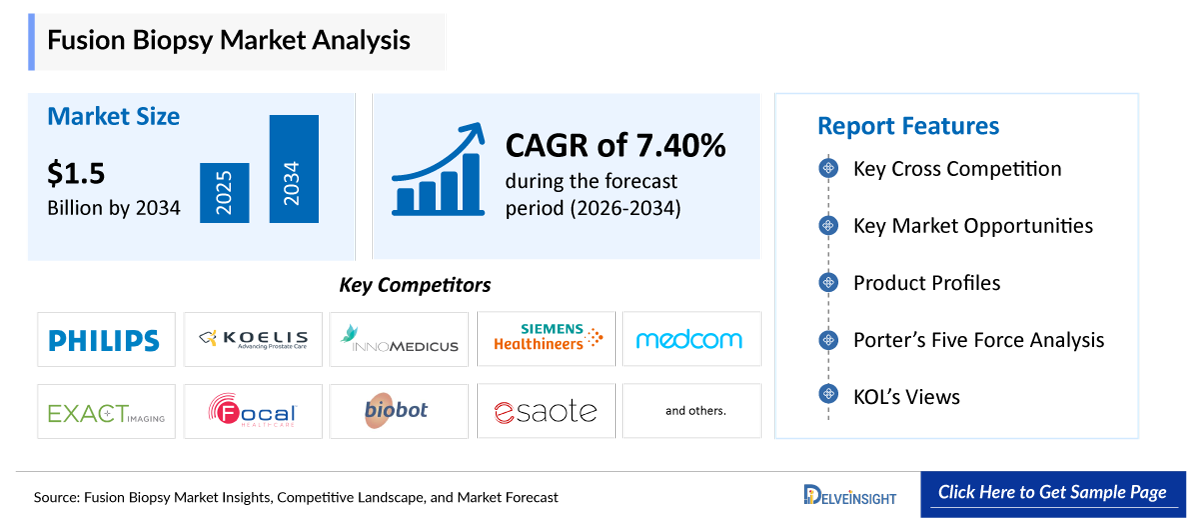
- The Global Fusion Biopsy Market is expected to increase from USD 798.36 million in 2025 to USD 1,512.32 million by 2034, reflecting strong and sustained growth.
- The Global Fusion Biopsy Market is growing at a CAGR of 7.40% during the forecast period from 2026 to 2034.
Fusion Biopsy Market Trends & Insights
- The Fusion Biopsy Market is being significantly driven by the combined impact of rising cases of Prostate Cancer, increasing demand for accurate and early diagnosis, and continuous advancements in imaging technologies such as Magnetic Resonance Imaging (MRI) and ultrasound imaging, along with growing awareness and screening programs. As Prostate Cancer Incidence increases, there is a greater need for precise diagnostic solutions that can detect clinically significant tumors at an early stage.
- At the same time, awareness initiatives and widespread screening (including PSA testing and MRI-based evaluation) are leading to higher patient inflow for confirmatory diagnostics. Fusion Biopsy addresses these needs by combining advanced imaging with targeted sampling, thereby improving diagnostic accuracy and reducing unnecessary procedures. Collectively, these factors are accelerating the adoption of Fusion Biopsy systems across healthcare settings and boosting overall market growth.
- The leading Fusion Biopsy Companies include Koninklijke Philips N.V., KOELIS S.A., innoMedicus Ltd., Siemens Healthineers AG, MedCom GmbH, Exact Imaging Inc., Focal Healthcare Inc., Biobot Surgical Pte. Ltd., Esaote S.p.A., GE HealthCare Technologies Inc., Hitachi Medical Systems (Hitachi, Ltd.), Canon Medical Systems Corporation, BK Medical Holding Company, Inc., Eigen, Inc., UroMedTech GmbH, D&K Technologies Pvt. Ltd., and others.
- North America is expected to dominate the Fusion Biopsy Market due to its advanced healthcare infrastructure, high adoption of innovative imaging technologies such as Magnetic Resonance Imaging (MRI) and Ultrasound Imaging, and the rising prevalence of Prostate Cancer. Additionally, the presence of leading market players, strong reimbursement frameworks, and increasing awareness regarding early and accurate cancer diagnosis are further driving the widespread adoption of Fusion Biopsy systems across the region.
- In the product segment of the Fusion Biopsy market, the accessories category is estimated to account for the largest market share in 2025.
Request to unlock the report of the @ Fusion Biopsy Market
Fusion Biopsy Market Size and Forecast
|
Report Metrics |
Details |
|
2025 Market Size | |
|
2034 Projected Market Size | |
|
Growth Rate (2026-2034) | |
|
Largest Market |
North America |
|
Fastest Growing Market |
Asia-Pacific |
|
Market Structure |
Moderately Concentrated |
Factors Contributing to the Growth of the Fusion Biopsy Market
-
Rising prevalence of prostate cancer leading to a surge in Fusion Biopsy
One of the primary drivers is the increasing incidence of prostate cancer globally. Aging populations, lifestyle changes, and improved screening programs have led to higher diagnosis rates. Fusion Biopsy plays a crucial role in accurately detecting clinically significant tumors, thereby driving its adoption among urologists and healthcare providers.
-
Growing demand for accurate and early diagnosis
Traditional biopsy methods often miss significant lesions due to random sampling. Fusion Biopsy, which integrates MRI with ultrasound, significantly improves targeted detection. The demand for precision diagnostics and reducing false negatives is accelerating the shift toward fusion-guided techniques.
-
Advancements in imaging technologies
Rapid advancements in Magnetic Resonance Imaging (MRI) and ultrasound imaging have enabled high-resolution imaging and better lesion visualization. Integration of these technologies through software platforms has enhanced biopsy accuracy, boosting market growth.
Fusion Biopsy Market Report Segmentation
This Fusion Biopsy Market Report offers a comprehensive overview of the global Fusion Biopsy market, highlighting key trends, growth drivers, challenges, and opportunities. It covers detailed market segmentation by Products (Equipment and Consumables & Accessories), Route of Biopsy (Transrectal and Transperineal), End-Users (Hospitals, Diagnostic Imaging Centers, and Others), and geography.
The Fusion Biopsy Market Report provides valuable insights into the competitive landscape, regulatory environment, and market dynamics across major markets, including North America, Europe, and Asia-Pacific. Featuring in-depth profiles of leading industry players and recent product innovations, this report equips businesses with essential data to identify market potential, develop strategic plans, and capitalize on emerging opportunities in the rapidly growing Fusion Biopsy market.
A Fusion Biopsy is an advanced diagnostic procedure that combines imaging techniques such as Magnetic Resonance Imaging (MRI) and Ultrasound Imaging to precisely locate and sample suspicious tissue, most commonly for detecting Prostate Cancer. By overlaying pre-recorded MRI images with real-time ultrasound during the procedure, it enables targeted biopsy of specific lesions, improving accuracy compared to traditional random biopsies and increasing the likelihood of detecting clinically significant cancers.
The Fusion Biopsy Market is being significantly driven by the combined impact of rising cases of Prostate Cancer, increasing demand for accurate and early diagnosis, and continuous advancements in imaging technologies such as Magnetic Resonance Imaging (MRI) and Ultrasound Imaging, along with growing awareness and screening programs. As the incidence of prostate cancer continues to rise globally, particularly among the aging population, there is an urgent need for precise diagnostic solutions that can identify clinically significant tumors at an early and treatable stage.
Traditional biopsy methods often lead to underdiagnosis or overdiagnosis due to random sampling, which has increased the preference for more targeted approaches like Fusion Biopsy. At the same time, expanding awareness initiatives, government-led screening programs, and the widespread use of PSA testing and MRI-based evaluations are contributing to a higher volume of patients undergoing diagnostic procedures. This growing patient pool is directly increasing the demand for advanced biopsy techniques that can provide higher accuracy and reliability.
Fusion Biopsy effectively addresses these challenges by integrating high-resolution imaging with real-time guidance, enabling clinicians to precisely target suspicious lesions, improve cancer detection rates, and minimize unnecessary or repeat biopsies.
Furthermore, ongoing technological advancements, including the integration of software platforms, 3D imaging, and AI-assisted targeting, are enhancing procedural efficiency and clinical outcomes. These innovations not only improve physician confidence but also support better patient management and treatment planning. Collectively, these factors are accelerating the adoption of Fusion Biopsy systems across hospitals and diagnostic centers, thereby significantly boosting overall market growth.
Get More Insights into the Report @ Fusion Biopsy Market
What are the latest Fusion Biopsy Market Dynamics and Trends?
The rising burden of prostate cancer worldwide is significantly boosting the overall market of Fusion Biopsy.
According to the data provided by the International Agency for Research on Cancer (2026), the estimated global new cases of prostate cancer would reach up to 18,29,988 by 2030. With the growing use of PSA (prostate-specific antigen) screening, a large number of suspected cases are being identified; however, traditional random biopsy methods often fail to accurately detect clinically significant tumors or may lead to overdiagnosis of indolent cancers. This limitation has created a strong demand for more precise and reliable diagnostic techniques.
Fusion Biopsy, which combines Magnetic Resonance Imaging (MRI) with Ultrasound Imaging, enables targeted sampling of suspicious lesions identified on MRI, thereby significantly improving detection rates of aggressive cancers while reducing unnecessary biopsies.
Additionally, the increasing awareness programs and early screening initiatives are playing a crucial role in boosting the Fusion Biopsy Market by driving higher patient participation in cancer detection pathways and improving diagnostic accuracy. Campaigns focused on Prostate Cancer awareness, such as the American Cancer Society and the National Cancer Institute, encourage men, especially those at higher risk, to undergo regular PSA testing and clinical evaluations.
Additionally, the increasing product development activities and government initiatives are further boosting the overall market of Fusion Biopsy.
For instance, in July 2024, Avenda Health, an AI healthcare company creating the future of personalized prostate cancer care, announced that the American Medical Association (AMA) introduced Category III Current Procedural Terminology (CPT) code 0898T to facilitate reimbursement for advanced AI-assisted prostate cancer mapping. Thus, the factors mentioned above are expected to boost the overall market of Fusion Biopsy during the forecast period.
However, the competition from alternative diagnostic techniques is acting as a limiting factor for the Fusion Biopsy market by offering less invasive, faster, and sometimes more cost-effective options for cancer detection. Emerging approaches such as Liquid Biopsy and advanced imaging-only diagnostics using Magnetic Resonance Imaging (MRI) are gaining traction as they reduce the need for invasive tissue sampling.
These methods can detect cancer biomarkers through blood samples or provide high-resolution imaging insights, thereby minimizing patient discomfort and procedural risks. As healthcare systems increasingly focus on patient-friendly and cost-efficient diagnostics, the growing adoption of such alternatives may reduce the reliance on Fusion Biopsy procedures, ultimately restraining market growth.
Fusion Biopsy Market Segment Analysis
Fusion Biopsy Market by Products (Equipment and Consumables & Accessories), Route of Biopsy (Transrectal and Transperineal), End-Users (Hospitals, Diagnostic Imaging Centers, and Others), and Geography (North America, Europe, Asia-Pacific, and Rest of the World)
-
Fusion Biopsy Market Segmentation By Product
Equipment in Fusion Biopsy is expected to dominate the market with the largest revenue share. In the product segment of the Fusion Biopsy market, the equipment category is contributing to 68.67% of total market revenue in 2025, due to its central importance in enabling accurate, image-guided diagnostic procedures. Fusion Biopsy relies heavily on advanced equipment that integrates Magnetic Resonance Imaging (MRI) with Ultrasound Imaging, along with navigation systems, tracking devices, and real-time visualization platforms.
The increasing adoption of these sophisticated systems in hospitals and diagnostic centers is significantly boosting demand, as healthcare providers aim to improve diagnostic precision and clinical outcomes, particularly in detecting Prostate Cancer. Continuous technological advancements such as 3D imaging, electromagnetic and robotic tracking, and AI-enabled targeting are further enhancing the capabilities of Fusion Biopsy equipment, making procedures more efficient, accurate, and user-friendly. Additionally, the shift toward minimally invasive and targeted diagnostics has encouraged healthcare facilities to invest in high-end equipment to stay competitive and meet patient expectations.
Equipment also represents a high-value segment compared to consumables and accessories, contributing a larger share of revenue within the market. Moreover, increasing healthcare expenditure, expansion of advanced diagnostic infrastructure, and the growing trend of upgrading legacy imaging systems are further fueling the demand for Fusion Biopsy equipment.
Additionally, increasing product development activities are further driving growth in the overall Fusion Biopsy Market.
For instance, in March 2025, the University of Oxford introduced a novel MRI-ultrasound Fusion Biopsy technique, aimed at reducing unnecessary biopsies and improving the detection of clinically significant prostate cancers. As a result, the equipment segment not only supports the adoption of Fusion Biopsy procedures but also acts as a key revenue generator, thereby significantly boosting the overall growth of the Fusion Biopsy market.
-
Fusion Biopsy Market Segmentation By Route of Biopsy
The transrectal category dominates the market.
Within the route of biopsy segment of the Fusion Biopsy market, the transrectal category is anticipated to dominate, accounting for around 75.73% of the market share in 2025, due to its long-standing clinical adoption, procedural convenience, and widespread familiarity among urologists. Transrectal Fusiqeffon Biopsy, which combines Magnetic Resonance Imaging (MRI) with Ultrasound Imaging, has been the traditional method for prostate tissue sampling and is deeply integrated into routine urological practice, particularly for diagnosing Prostate Cancer.
One of the key factors driving its dominance is the relatively shorter procedure time and ease of execution, as it can often be performed in an outpatient setting with local anesthesia, making it more convenient for both patients and healthcare providers. Additionally, a large installed base of ultrasound systems and fusion platforms is already optimized for the transrectal route, reducing the need for additional capital investment or infrastructure upgrades. The approach also benefits from extensive clinical data, established guidelines, and physician training programs, which further reinforce its continued use.
While alternative routes such as transperineal biopsy are gaining traction due to lower infection risks, the transrectal method remains more widely adopted globally because of its cost-effectiveness, accessibility, and high procedural volume. As a result, despite emerging alternatives, the transrectal segment continues to hold a significant share and is expected to dominate the Fusion Biopsy market in the near term.
-
Fusion Biopsy Market Segmentation By End-Users
Hospitals Category Dominates the Market
In the end-users segment of the Fusion Biopsy market, the hospitals category dominates due to the availability of advanced diagnostic infrastructure and skilled healthcare professionals. Hospitals are typically equipped with high-end technologies such as Magnetic Resonance Imaging (MRI) and Ultrasound Imaging, which are essential for performing Fusion Biopsy procedures, particularly for diagnosing prostate cancer. Additionally, hospitals handle a higher patient volume, including complex and referral cases, and offer integrated care pathways from diagnosis to treatment, making them the preferred setting for such advanced procedures.
Fusion Biopsy Market Regional Analysis
-
North America Fusion Biopsy Market Trends
North America is expected to account for the highest proportion of 42.67% of the Fusion Biopsy market in 2025, out of all regions. North America is expected to dominate the Fusion Biopsy market due to its advanced healthcare infrastructure, high adoption of innovative imaging technologies such as Magnetic Resonance Imaging (MRI) and Ultrasound Imaging, and the rising prevalence of prostate cancer.
Additionally, the presence of leading market players, strong reimbursement frameworks, and increasing awareness regarding early and accurate cancer diagnosis are further driving the widespread adoption of Fusion Biopsy systems across the region. According to the data provided by the Zero Prostate Cancer Organization (2026), approximately 333,830 new cases of prostate cancer are expected to be diagnosed in 2026. Additionally, as per the same source, there are more than 3.5 million prostate cancer survivors in the U.S.
Fusion Biopsy, which combines Magnetic Resonance Imaging (MRI) with Ultrasound Imaging, enables targeted sampling of suspicious lesions identified on MRI, thereby significantly improving detection rates of aggressive cancers while reducing unnecessary biopsies. Additionally, the increasing number of patients with prior negative biopsy results but persistently elevated PSA levels is further driving the adoption of Fusion Biopsy in North America, as it helps identify lesions that were previously missed.
The shift toward personalized and precision medicine in oncology is also encouraging clinicians to adopt advanced diagnostic tools like Fusion Biopsy for better risk stratification and treatment planning. However, the increase in product development activities among the key market players is further boosting the overall market. For instance, in July, 2025, Koninklijke Philips N.V. received FDA 510(k) clearance for the latest version of its UroNav Fusion Biopsy/navigation system, enhancing image-guided prostate cancer diagnosis with improved annotation workflows and precision targeting.
Collectively, these factors are expected to significantly drive the growth of the Fusion Biopsy market in the U.S. throughout the forecast period of 2026 to 2034.
-
Europe Fusion Biopsy Market Trends
The Fusion Biopsy market in Europe is witnessing strong and sustained growth due to the rising burden of Prostate Cancer, increasing adoption of advanced diagnostic technologies, and the strong presence of leading medical device manufacturers in the region. Countries such as Germany, the U.K., and France are investing heavily in precision diagnostics and imaging infrastructure, which is accelerating the adoption of Fusion Biopsy systems that integrate Magnetic Resonance Imaging (MRI) with Ultrasound Imaging for targeted cancer detection.
Additionally, supportive clinical guidelines from European urology associations and growing awareness regarding early diagnosis are further contributing to market expansion. Recent product innovations and launches in the region are also strengthening market growth.
For instance, in March, 2025, KOELIS showcased advanced enhancements to its Trinity® Fusion Biopsy platform at the European Association of Urology (EAU) Congress, focusing on improved workflow and targeted biopsy precision.
Furthermore, in September, 2024, the company launched a new compact 3D transducer designed to enhance transperineal Fusion Biopsy procedures in Europe, while in April, 2026, it introduced AI-powered ProMap® Smart software to streamline MRI–ultrasound fusion workflows and improve clinical efficiency. Such continuous innovations, along with increasing clinical adoption and technological advancements, are collectively driving the robust growth of the Fusion Biopsy market across Europe.
-
Asia-Pacific Fusion Biopsy Market Trends
The Asia Pacific (APAC) region is emerging as a major growth driver for the Fusion Biopsy market due to the rapid expansion of healthcare infrastructure, increasing awareness of early cancer detection, and the rising prevalence of prostate cancer across countries such as China, India, and Japan.
The region is witnessing significant investments in advanced diagnostic technologies, particularly systems integrating Magnetic Resonance Imaging (MRI) and Ultrasound Imaging, which are essential for Fusion Biopsy procedures. Additionally, growing government initiatives, improving access to healthcare services, and the rising adoption of minimally invasive diagnostics are contributing to higher demand for precision diagnostic tools.
The increasing aging population in countries like Japan and South Korea further supports market growth, as prostate cancer risk rises with age. Collectively, the combination of improving healthcare infrastructure, technological advancements, rising disease burden, and ongoing product innovations is accelerating the adoption of Fusion Biopsy systems in the Asia Pacific, making it one of the fastest-growing regions in the global market.
Who are the major players in the Fusion Biopsy Market?
The following are the leading Fusion Biopsy Companies in the market. These Fusion Biopsy companies collectively hold the largest market share and dictate industry trends.
- Koninklijke Philips N.V.
- KOELIS S.A.
- innoMedicus Ltd.
- Siemens Healthineers AG
- MedCom GmbH
- Exact Imaging Inc.
- Focal Healthcare Inc.
- Biobot Surgical Pte. Ltd.
- Esaote S.p.A.
- GE HealthCare Technologies Inc.
- Hitachi Medical Systems (Hitachi, Ltd.)
- Canon Medical Systems Corporation
- BK Medical Holding Company, Inc.,
- igen, Inc.
- UroMedTech GmbH
- D&K Technologies Pvt. Ltd.
- Others
How is the competitive landscape shaping the Fusion Biopsy Market?
The competitive landscape of the Fusion Biopsy Market is moderately consolidated yet highly dynamic, with a mix of global imaging giants and specialized urology-focused companies shaping industry growth. Leading players such as Koninklijke Philips N.V., GE HealthCare, and KOELIS hold a significant market share due to their strong portfolios in advanced imaging and Fusion Biopsy systems, while emerging players focus on niche innovations and regional expansion.
Competition is primarily driven by continuous technological innovation, including AI integration, robotic-assisted biopsy, and improved MRI ultrasound fusion platforms, as companies strive to enhance diagnostic accuracy and workflow efficiency. At the same time, firms are actively engaging in strategic initiatives such as product launches, partnerships, mergers, and collaborations to strengthen their global presence and expand into emerging markets.
Additionally, the presence of both established players and new entrants is intensifying competition, as startups introduce cost-effective and advanced solutions, while larger companies leverage their distribution networks and brand strength. This balance creates a competitive environment that fosters innovation and accelerates market growth. Overall, the evolving competitive landscape characterized by technological advancements, strategic expansion, and increasing participation of new players is significantly shaping the development and adoption of Fusion Biopsy technologies worldwide.
Fusion Biopsy Market Recent Breakthroughs and Developments
- In April 2026, KOELIS introduced AI-powered ProMap® Smart software to streamline MRI-ultrasound fusion workflows and improve clinical efficiency.
- In July, 2025, Koninklijke Philips N.V. received FDA 510(k) clearance for the latest version of its UroNav Fusion Biopsy/navigation system, enhancing image-guided prostate cancer diagnosis with improved annotation workflows and precision targeting.
- In March 2025, the University of Oxford introduced a novel MRI-ultrasound Fusion Biopsy technique, aimed at reducing unnecessary biopsies and improving the detection of clinically significant prostate cancers.
- In March, 2025, KOELIS showcased advanced enhancements to its Trinity® Fusion Biopsy platform at the European Association of Urology (EAU) Congress, focusing on improved workflow and targeted biopsy precision.
- In September, 2024, KOELIS launched a new compact 3D transducer designed to enhance transperineal Fusion Biopsy procedures in Europe.
- In July 2024, Avenda Health, an AI healthcare company creating the future of personalized prostate cancer care, announced that the American Medical Association (AMA) introduced Category III Current Procedural Terminology (CPT) code 0898T to facilitate reimbursement for advanced AI-assisted prostate cancer mapping.
|
Report Metrics |
Details |
|
Study Period |
2023 to 2034 |
|
Base Year |
2025 |
|
Forecast Period |
2026 to 2034 |
|
Fusion Biopsy Market CAGR | |
|
Fusion Biopsy Companies |
Koninklijke Philips N.V., KOELIS S.A., innoMedicus Ltd., Siemens Healthineers AG, MedCom GmbH, Exact Imaging Inc., Focal Healthcare Inc., Biobot Surgical Pte. Ltd., Esaote S.p.A., GE HealthCare Technologies Inc., Hitachi Medical Systems (Hitachi, Ltd.), Canon Medical Systems Corporation, BK Medical Holding Company, Inc., Eigen, Inc., UroMedTech GmbH, D&K Technologies Pvt. Ltd., and others. |
|
Fusion Biopsy Market Segments |
by Product, by Route of Biopsy, by End-Users, and by Geography |
|
Fusion Biopsy Regional Scope |
North America, Europe, Asia Pacific, Middle East, Africa, and South America |
|
Fusion Biopsy Country Scope |
U.S., Canada, Mexico, Germany, United Kingdom, France, Italy, Spain, China, Japan, India, Australia, South Korea, and key Countries |
Fusion Biopsy Market Segmentation
- Fusion Biopsy by Product Exposure
- Equipment
- Consumables & Accessories
- Fusion Biopsy Route of Biopsy Exposure
- Transrectal
- Transperineal
- Fusion Biopsy End-Users Exposure
- Hospitals
- Diagnostic Imaging Centres
- Others
- Fusion Biopsy Geography Exposure
- North America Fusion Biopsy Market
- United States Fusion Biopsy Market
- Canada Fusion Biopsy Market
- Mexico Fusion Biopsy Market
- Europe Fusion Biopsy Market
- United Kingdom Fusion Biopsy Market
- Germany Fusion Biopsy Market
- France Fusion Biopsy Market
- Italy Fusion Biopsy Market
- Spain Fusion Biopsy Market
- Rest of Europe Fusion Biopsy Market
- Asia-Pacific Fusion Biopsy Market
- China Fusion Biopsy Market
- Japan Fusion Biopsy Market
- India Fusion Biopsy Market
- Australia Fusion Biopsy Market
- South Korea Fusion Biopsy Market
- Rest of Asia-Pacific Fusion Biopsy Market
- Rest of the World Fusion Biopsy Market
- South America Fusion Biopsy Market
- Middle East Fusion Biopsy Market
- Africa Fusion Biopsy Market
- North America Fusion Biopsy Market
Fusion Biopsy Market Recent Industry Trends and Milestones (2023-2026)
|
Category |
Key Developments |
|
Fusion Biopsy Product Launch | University of Oxford introduced a novel MRI-ultrasound Fusion Biopsy technique, and KOELIS showcased advanced enhancements to its Trinity® Fusion Biopsy platform. |
|
Fusion Biopsy Product Approval |
Koninklijke Philips N.V.: UroNav Fusion Biopsy/navigation system (FDA Approval) |
|
Company Strategy |
Koninklijke Philips N.V.
KOELIS
|
|
Emerging Technology |
AI-Powered Image Analysis, Robotic-Assisted Biopsy Systems, 3D Imaging and Prostate Mapping, Real-Time MRI–Ultrasound Fusion, Electromagnetic Tracking Systems, and others |
Impact Analysis
AI-Powered Innovations and Applications
AI-powered innovations are playing a transformative role in the evolution of Fusion Biopsy by significantly enhancing accuracy, efficiency, and clinical decision-making. Advanced artificial intelligence algorithms are increasingly being integrated with imaging modalities such as Magnetic Resonance Imaging (MRI) and Ultrasound Imaging to automatically detect, segment, and classify suspicious lesions, particularly in cases of Prostate Cancer. These systems assist radiologists by reducing interpretation variability and highlighting clinically significant regions that require targeted biopsy.
AI is also being used for real-time image fusion optimization, ensuring precise alignment between MRI and ultrasound images during procedures, which improves needle targeting accuracy. Additionally, AI-driven predictive analytics and risk stratification tools analyze patient data, imaging findings, and historical outcomes to assess cancer aggressiveness and guide personalized treatment planning. Automation powered by AI further streamlines workflow by reducing procedure time, minimizing human error, and improving reproducibility across operators.
As a result, AI-powered applications are not only enhancing diagnostic confidence but also accelerating the adoption of Fusion Biopsy systems by enabling more precise, efficient, and patient-centric cancer care.
U.S. Tariff Impact Analysis on Fusion Biopsy Market
The U.S. tariff impact on the Fusion Biopsy market, which relies heavily on advanced medical devices and imaging systems, is largely negative and acts as a significant economic constraint. Fusion Biopsy systems depend on high-value equipment such as Magnetic Resonance Imaging (MRI) and Ultrasound Imaging, many of which are manufactured or sourced globally. Recent U.S. tariff policies, including the April 2025 tariff expansion introducing baseline duties of around 10% and higher country-specific tariffs, have increased the cost of imported medical devices and components. As a result, healthcare providers face higher procurement costs, which can delay capital investments in expensive Fusion Biopsy systems. Additionally, since nearly 70% of medical devices used in the U.S. are manufactured overseas, tariffs significantly impact pricing and availability.
Furthermore, tariffs are disrupting global supply chains and creating uncertainty in equipment sourcing, leading hospitals to reconsider or postpone purchases of advanced diagnostic technologies. Increased costs may also be passed on to patients, reducing accessibility to advanced procedures like Fusion Biopsy. In response, manufacturers are being forced to adjust strategies, such as reshoring production or diversifying supply chains, which can increase operational complexity and slow innovation. Overall, U.S. tariffs are creating cost pressures, supply chain disruptions, and investment delays, thereby acting as a restraining factor for the growth and adoption of Fusion Biopsy technologies in the market.
How This Analysis Helps Clients
- Cost Management: By understanding the tariff landscape, clients can anticipate cost increases and adjust pricing strategies accordingly, ensuring profitability.
- Supply Chain Optimization: Clients can identify alternative sourcing options and diversify their supply chains to reduce dependency on high-tariff regions, enhancing resilience.
- Regulatory Navigation: Expert guidance on navigating the evolving regulatory environment helps clients maintain compliance and avoid potential legal challenges.
- Strategic Planning: Insights into tariff impacts enable clients to make informed decisions about manufacturing locations, partnerships, and market entry strategies.
Key takeaways from the Fusion Biopsy market report study
- Fusion Biopsy Market size analysis for the current Fusion Biopsy market size (2025), and market forecast for 8 years (2026 to 2034)
- Top key product/technology developments, mergers, acquisitions, partnerships, and joint ventures happened over the last 3 years.
- Key Fusion Biopsy companies dominating the Fusion Biopsy market.
- Various opportunities available for the other competitors in the Fusion Biopsy market space.
- What are the top-performing segments in 2025? How these segments will perform in 2034?
- Which are the top-performing regions and countries in the current Fusion Biopsy market scenario?
- Which are the regions and countries where companies should have concentrated on opportunities for the Fusion Biopsy market growth in the future.
Startup Funding & Investment Trends
|
Company Name |
Total Funding |
Stage of Development |
Main Product |
Core Technology |
|
Biobot Surgical |
~$10 million |
Series C |
Mona Lisa Robotic System |
Robotic-assisted MRI–ultrasound Fusion Biopsy (transperineal) |
Stay updated with us for Recent Articles @ New DelveInsight Blogs