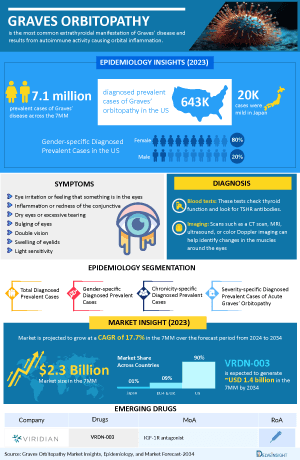
Graves' Disease Market
- The total market size of Graves’ disease in the 7MM in 2025 was approximately USD 5 billion; this is anticipated to grow by 2036, driven by extensive market penetration of approved therapies due to label expansions and the entry of new, emerging therapies.
- Among the 7MM, the US had the most prevalent cases of Graves’ disease, compared to EU4, the UK, and Japan.
- Current treatment trends for Graves’ disease are favoring antithyroid drug (ATDs) for both initial and relapsed cases of Graves’ disease, which have strong evidence supporting their long-term safety and effectiveness for certain patient groups. In Europe and Japan, ATD has been the preferred first-line therapy for Graves’ disease.
- There is a significant need for targeted therapies for Graves' disease, especially for patients who are resistant to standard treatments or continue to experience symptoms despite ATD use.
- TEPEZZA is the only approved treatment for thyroid eye disease (TED), representing a major advancement in managing Graves' disease-related eye issues. With only one drug currently approved in this area, there is a significant opportunity for companies to enter the Graves' disease market.
- Children and adolescents with Graves' hyperthyroidism can be treated with ATDs, radioactive iodine, or thyroidectomy, with therapy choice based on individual risk-benefit assessment. Lifelong monitoring is required for all.
- The pipeline for Graves’ disease is growing with companies such as Immunovant, Viridian Therapeutics, Argenx, Tourmaline Bio, Hoffmann-La Roche, and Sling Therapeutics, at the forefront of developing targeted therapies for thyroid disorders. Viridian Therapeutics stands out as the only company developing treatments for both moderate to severe active TED and chronic TED. Meanwhile, Kriya Therapeutics, Septerna, and Crinetics Pharmaceuticals are progressing with earlier-stage products in this area.
- Few of the potential emerging candidates include veligrotug (VRDN-001), VRDN-003, batoclimab, Efgartigimod PH20 SC, ENSPRYNG (satralizumab, RG6168), LASN01, linsitinib, AP-PA02, and Lonigutamab (anti-IGF-1R), among others.
- The Graves’ disease treatment market is anticipated to increase, driven by increasing disease awareness, better diagnostic tools, and the expansion of targeted biologic therapies.
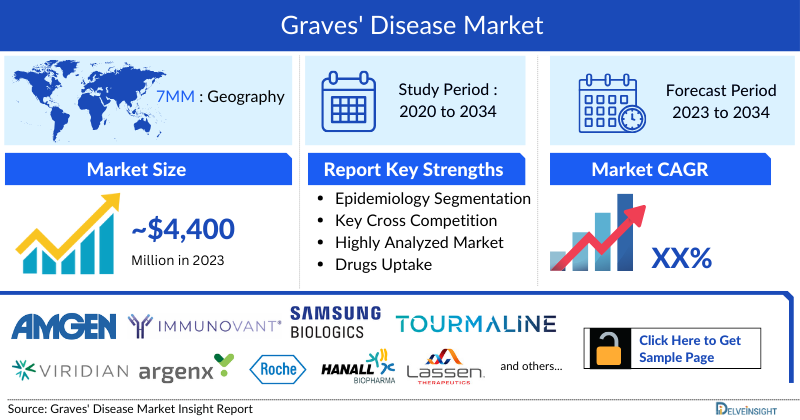
Key Factors Driving Graves' Disease Market
Graves’ Disease: Rising Prevalence and Patient Pool
Graves’ disease is a common autoimmune disorder affecting the thyroid. In 2025, there were approximately 7.198 million prevalent cases of Graves’ disease across the 7 Major Markets (7MM). Among the 7MM, the United States accounted for the highest number of prevalent cases (with approximately 1.844 million diagnosed prevalent cases in 2025), whereas Japan's prevalence is significantly lower than that of Europe and the US. The market size and patient population are expected to be driven by a high prevalence, improvements in diagnosis rates, a lack of approved targeted therapies (unmet medical needs), and ongoing research into new treatments. Additionally, advances in genetic testing and biomarkers for Graves’ disease are expected to improve long-term outcomes and allow for more personalized treatment strategies.
Expanding Treatment Landscape and Market Drivers
There are three main established treatments for Graves’ disease: Anti-thyroid medications (thionamides), radioactive iodine therapy, and thyroidectomy. Current treatment trends favor anti-thyroid medications for both initial and relapsed cases of Graves’ disease due to strong evidence supporting their long-term safety and effectiveness for certain patient groups. In Europe and Japan, anti-thyroid medications (such as methimazole) are the preferred first-line therapy. TEPEZZA (teprotumumab) is the only approved therapy specifically indicated for the treatment of active Thyroid Eye Disease (TED) / active Graves’ orbitopathy, representing a major advancement but also highlighting a significant unmet need and market opportunity for competitors. There is a strong demand for targeted therapies, especially for patients who are resistant to traditional treatments or who continue to experience symptoms despite anti-thyroid medication use. Emerging therapies with diverse mechanisms of action, including IGF-1R inhibitors, neonatal FcRn inhibitors, and IL-6 inhibitors—aim to address these critical gaps. Companies actively advancing treatments in this space include Viridian Therapeutics (developing veligrotug [VRDN-001] and VRDN-003), Immunovant (developing batoclimab [IMVT-1401] and IMVT-1402), Hoffmann-La Roche (developing ENSPRYNG [satralizumab]), ACELYRIN (developing lonigutamab), Tourmaline Bio (developing pacibekitug [TOUR006]), Lassen Therapeutics (developing LASN01), and Biohaven (developing BHV-1300). Additionally, companies like Kriya Therapeutics and Crinetics Pharmaceuticals are progressing with earlier-stage products. Notably, Viridian Therapeutics stands out as the only company developing treatments for both moderate-to-severe active TED and chronic TED.
Clinical Trials and Competitive Landscape
Several companies are actively developing therapies for TED, including Viridian Therapeutics (veligrotug [VRDN-001]), Immunovant (batoclimab [IMVT-1401] and IMVT-1402), Roche (ENSPRYNG [satralizumab]), ACELYRIN (lonigutamab), Tourmaline Bio (pacibekitug [TOUR006]), Lassen Therapeutics (LASN01), Biohaven (BHV-1300), Ollin Biosciences (OLN102), and others. Additionally, companies like Kriya Therapeutics and Crinetics Pharmaceuticals are advancing earlier-stage products in this space. Viridian Therapeutics stands out as the only company developing treatments for both moderate-to-severe active TED and chronic TED.
DelveInsight’s " Graves' Disease Market Insight, Epidemiology, and Market Forecast – 2036" report delivers an in-depth understanding of Graves' disease, historical and forecasted epidemiology as well as the Graves' disease market trends in the United States, EU4 (Germany, France, Italy, and Spain) and the United Kingdom, and Japan.
The Graves' disease market report provides current treatment practices, emerging drugs, Graves' disease market share of individual therapies, and current and forecasted Graves' disease market size from 2022 to 2036, segmented by seven major markets. The report also covers current Graves' disease treatment practices/algorithms and unmet medical needs to curate the best of the opportunities and assess the underlying potential of the market.
Graves' Disease Treatment Market
Graves' Disease Overview
Graves’ disease is a disease affecting the thyroid and often the skin and eyes. Graves’ disease is characterized by abnormal enlargement of the thyroid (goiter) and increased secretion of thyroid hormone (hyperthyroidism). Thyroid hormones are involved with many different systems of the body, and consequently, the specific symptoms and signs of Graves’ disease can vary widely from one person to another.
Graves’ disease is further categorized into three distinct subtypes, each characterized by specific clinical features and variations in pathophysiology:
- Graves’ Dermopathy
- Graves’ Orbitopathy
- Graves' Acropachy
Graves’ Disease Diagnosis
A diagnosis of Graves’ disease is made based upon a detailed patient and family history, a thorough clinical evaluation, identification of characteristic findings, and specialized tests such as blood tests that measure the levels of thyroid hormone and thyroid-stimulating hormone. Blood tests to detect the presence of specific antibodies that cause Graves’ disease can be performed to confirm a diagnosis but are usually not necessary.
Computed tomography or Magnetic Resonance Imaging (MRI) of orbits can be performed to diagnose Graves’ orbitopathy in patients who present with orbitopathy without hyperthyroidism. Patients with hyperthyroidism can have microcytic anemia, thrombocytopenia, bilirubinemia, high transaminases, hypercalcemia, high alkaline phosphatase, Low-density Lipoprotein (LDL) and High-density Lipoprotein (HDL) cholesterol.
Further details related to diagnosis will be provided in the report…
Graves’ Disease Treatment
Treatment of Graves’ disease usually involves one of three methods: antithyroid drugs (thionamides), use of radioactive iodine, or surgery. The specific form of treatment recommended may be based on the age of an affected individual and the degree of the illness. Furthermore, treatment for Graves’ disease depends on its presentation. Treatment consists of rapid symptom control and reduction of thyroid hormone secretion.
A beta-adrenergic blocker should be started for symptomatic patients, specifically for patients with heart rates more than 90 beats/min, patients with a history of cardiovascular disease, and elderly patients. Atenolol 25–50 mg orally once daily may be considered the preferred beta blocker due to its convenience of daily dosing, and it is cardioselective (beta-1 selective). Some prescribers recommend Propranolol 10–40 mg orally every 6–8 h, due to its potential effect to block peripheral conversion of T4 to T3 if a beta blocker after that, calcium channel blockers like diltiazem and verapamil can be used to control heart rate.
In January 2020, the US FDA approved TEPEZZA for the treatment of TED after an accelerated Priority Review. TEPEZZA is the only approved treatment for thyroid eye disease (TED), representing a major advancement in managing Graves’ disease-related eye issues
Further details related to treatment will be provided in the report…
Graves’ Disease Epidemiology
The Graves’ disease epidemiology chapter in the report provides historical as well as forecasted epidemiology segmented by the Total Prevalent Cases of Graves’ Disease, Total Diagnosed Prevalent Cases of Graves’ Disease, Gender-specific Cases of Graves’ Disease, and Graves’ Disease Cases by Manifestations in the 7MM covering the United States, EU4 (Germany, France, Italy, and Spain) and the United Kingdom, and Japan from 2022 to 2036.
- Among the 7MM, the US had the most prevalent cases of Graves’ disease, compared to EU4, the UK, and Japan.
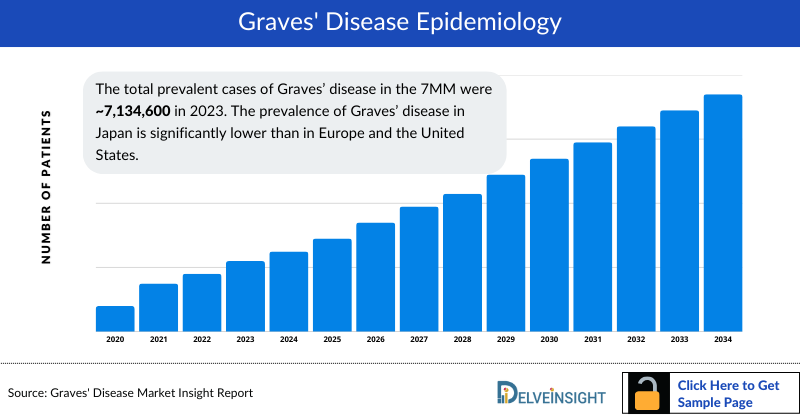
- In 2025, there were 7,198,000 cases of Graves’ disease in the 7MM. The prevalence of Graves’ disease in Japan is significantly lower than in Europe and the US.
- In 2025, the manifestation of Graves' disease in the US showed that Graves' Ophthalmopathy captured the highest number of cases, i.e., approximately 608,500 cases.
- Among the EU4 and the UK, the highest number of diagnosed prevalent cases of Graves’ Disease in 2025 was found in Germany. While Spain accounted for the lowest number of diagnosed prevalent cases of Graves’ Disease.
Graves’ Disease Drug Chapters
Marketed Graves’ disease Drugs
TEPEZZA (Teprotumumab-Trbw): Amgen (Horizon Therapeutics)
Teprotumumab, an insulin-like Growth Factor-1 receptor (IGF-1R) inhibitor, is a fully human IgG1 monoclonal antibody produced in Chinese hamster ovary (CHO-DG44) cells with a molecular weight of approximately 148 KD.
In January 2020, the US FDA approved TEPEZZA for the treatment of TED after an accelerated Priority Review. And recently, in September 2024, the drug was approved by Japan’s Ministry of Health, Labour, and Welfare (MHLW) for the treatment of active Graves’ orbitopathy. Additionally, in April 2024, Amgen announced its plans to submit a Marketing Authorization Application (MAA) for teprotumumab to the European Medicines Agency (EMA) in the near future.
TEPEZZA is currently under investigation in Phase III clinical trials for patients with moderate-to-severe active Graves’ orbitopathy as well as those with chronic TED characterized by a low Clinical Activity Score (CAS). Additionally, Amgen is exploring its potential for subcutaneous administration. To be continued in the report….
Emerging Graves’ disease Drugs
IMVT-1401 (batoclimab, RVT-1401): Immunovant, Samsung Biologics, HanAll Biopharma, and Roivant Sciences
Immunovant’s first investigational product, batoclimab (IMVT-1401), is a novel, fully human monoclonal antibody targeting the neonatal FcRn. In nonclinical studies and clinical trials, batoclimab has been observed to reduce IgG antibody levels. High levels of pathogenic IgG antibodies drive a variety of autoimmune diseases, and, as a result, this product candidate has the potential to address a variety of IgG-mediated autoimmune diseases as a self-administered SC injection.
Currently, batoclimab is being developed as a low-volume SC injection for the treatment of a variety of IgG-mediated autoimmune disorders, including myasthenia gravis, TED, chronic inflammatory demyelinating polyneuropathy, and Graves’ disease. The drug is currently in Phase III developmental stage.
VRDN-001 (veligrotug): Viridian Therapeutics
Viridian’s lead product candidate, VRDN-001, is a differentiated monoclonal antibody targeting Insulin-like Growth Factor-1 Receptor (IGF-1R), a clinically and commercially validated target for the treatment of Graves’ ophthalmopathy. In preclinical studies, VRDN-001 had shown to be a full antagonist of IGF-1R, with complete receptor blockade than other anti-IGF-1R antibodies, including the only approved Graves’ Ophthalmopathy therapy.
The drug is being evaluated in various Phase III trials for the treatment of Graves’ ophthalmopathy. According to a corporate presentation, its BLA was accepted in December 2025 and the potential PDUFA date of Veligrotug is June 30, 2026.
|
Company |
Highest Phase |
Indication |
RoA |
MoA |
|
Immunovant, Samsung Biologics, HanAll Biopharma and Roivant Sciences |
III and II (graves; disease) |
Active Thyroid Eye Disease and Graves’ disease who have failed to achieve euthyroidism on ATDs |
SC |
Neonatal FcRn inhibitor |
|
Immunovant, Samsung Biologics, HanAll Biopharma and Roivant Sciences |
Planning to start Phase III |
Graves’ disease |
SC |
Neonatal FcRn inhibitor |
|
Viridian Therapeutics |
III |
Moderate to severe active TED and Patient with Chronic TED |
IV infusion |
IGF-1R Inhibitor |
|
Viridian Therapeutics |
III |
Moderate to severe active TED and Patient with Chronic TED |
SC |
IGF-1R Inhibitor |
|
Argenx |
III |
Active, moderate-to-severe TED |
SC |
Neonatal FcRn inhibitor |
|
Hoffmann-La Roche |
III |
Patients with Moderate-to-Severe TED |
SC |
Interleukin-6 receptor blocker |
|
Sling Therapeutics |
II/III |
First-line treatment option for TED patients |
Oral |
IGF-1R Inhibitor |
|
Tourmaline Bio |
II |
TED patients who are in the active inflammatory phase of the disease./First-line TED |
SC |
Interleukin-6 (IL-6) inhibition |
|
Lassen Therapeutics |
II |
Patients with TED with no prior anti-IGF-1R treatment or patients with TED who have previously received teprotumumab treatment |
IV |
Anti-interleukin-11 receptor (IL-11R) |
|
ACELYRIN |
I/II |
TED |
SC |
IGF-1R Inhibitor |
Graves’ disease Drug Class Insight
The use of IGF-1R inhibitors such as teprotumumab and linsitinib, represents an innovative therapeutic strategy for the management of Graves' disease and its associated ocular manifestations. These inhibitors work by selectively targeting and modulating key signaling pathways that are central to the progression of the disease. In doing so, they not only help alleviate the symptoms of the disorder but also address the underlying pathophysiological mechanisms that contribute to the damaging effects on ocular and orbital tissues. This dual action offers a promising approach for more effective disease management, potentially reducing both the clinical manifestations and the long-term consequences of Graves' disease.
Neonatal FcRn inhibitor
Neonatal FcRn inhibitors, such as batoclimab, represent a novel therapeutic strategy for Graves' disease by specifically targeting the autoimmune mechanisms that drive the condition. These inhibitors work by blocking the neonatal Fc receptor, which plays a key role in prolonging the half-life of pathogenic antibodies, including thyroid-stimulating immunoglobulins (TRAb). By inhibiting this receptor, batoclimab can rapidly normalize thyroid hormone levels and reduce TRAb concentrations, offering significant therapeutic benefits. This makes it a promising treatment option, particularly for patients who do not respond to conventional therapies, providing a new avenue for managing this challenging autoimmune disorder.
Further detailed analysis will be provided in the report….
Graves’ Disease Market Outlook
There are three main treatments for Graves’ disease: ATD medications, thyroidectomy, and radioactive iodine therapy. ATD medications prevent the biosynthesis of the thyroid hormone by blocking iodide, the salted or reduced form of iodine, from interacting with thyroglobulin, thus diminishing the amount of hormone produced. Methimazole is the most widely used ATD medication, with a long half-life and low side effects. Another is carbimazole has been approved in European countries but is not approved in the United States. It is an inactive drug that is metabolized in the blood into the active methimazole thus it is less potent. And the last is propylthiouracil, which is the least potent of the available antithyroid medications. Approved in the United States and Europe, propylthiouracil is the initial treatment choice during the first trimester of pregnancy because of the low placental transfer. Propylthiouracil was, for many years, the first-choice ATD in both the USA and South America. But now the American Thyroid Association (ATA) recommends Methimazole over Propylthiouracil. Methimazole is used in most European countries and Japan, whereas carbimazole is mainly used in the UK.
Currently, TEPEZZA is the only approved therapy specifically indicated for the treatment of active Graves’ orbitopathy, underscoring a significant unmet need in the market. While various pharmacological agents, including glucocorticoids, rituximab, and tocilizumab, are utilized off-label, their efficacy remains inconsistent, and none have achieved regulatory approval for this indication. The limited options highlight a critical gap in targeted, effective, and approved therapies for managing the disease, particularly in severe or refractory cases.
This scarcity leads to gaps in understanding the current treatment scenario. However, certain studies help extrapolate the current scenario, where teprotumumab and glucocorticoids remain the mainstay.
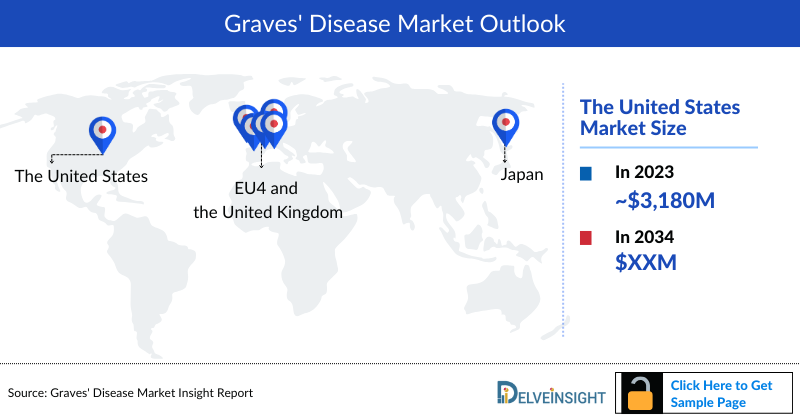
The emerging treatments, while targeting different mechanisms or molecular pathways, provide promising alternatives to current therapies by offering novel approaches to managing autoimmune diseases like thyroid eye disease. Their development reflects a growing focus on more precise, targeted treatments for these complex conditions.
- The total market size of Graves’ disease in the 7MM in 2025 was approximately USD 5 billion; this is anticipated to grow by 2036, driven by extensive market penetration of approved therapies due to label expansions and the entry of new, emerging therapies.
- The US accounts for the largest market size of Graves’ Disease in 2025, i.e., nearly 70% in comparison to EU4 (Germany, Italy, France, and Spain) and the UK and Japan.
- The pipeline for Graves’ disease consists of neonatal FcRn inhibitors, IGF-1R inhibitors, IL-6 receptor blockers, anti- IL-11R, and others.
- By 2036, among all the emerging therapies, the highest revenue is expected to be generated by TEPEZZA in the US.
Further details will be provided in the report….
Recent Developments in Graves’ disease Clinical Trials Landscape
- In January 2026, Viridian Therapeutics confirmed that the US Food and Drug Administration (FDA) accepted the Biologics License Application (BLA) for veligrotug for the treatment of TED, formally assigning a highly anticipated PDUFA target action date of June 30, 2026.
- In December 2025, in an abrupt market exit, Argenx SE announced the complete discontinuation of its late-stage clinical programs, shutting down the Phase III UplighTED clinical studies that were actively evaluating its subcutaneous candidate efgartigimod alfa + hyaluronidase-qvfc in adult patients with active, moderate-to-severe Thyroid Eye Disease.
- In September 2025, Immunovant delivered highly anticipated six-month off-treatment follow-up data from its clinical study evaluating uncontrolled Graves’ disease patients treated with batoclimab for a duration of 24 weeks, presenting the clinical readouts at the 2025 Annual Meeting of the American Thyroid Association (ATA).
To be continued in the report….
Graves’ Disease Drugs Uptake
This section focuses on the uptake rate of potential Graves’ disease drugs expected to be launched in the market during 2022–2036. The landscape of Graves’ disease treatment has experienced a profound transformation with the uptake of novel drugs. These innovative therapies are redefining standards of care. Furthermore, the increased uptake of these transformative drugs is a testament to the unwavering dedication of physicians, oncology professionals, and the entire healthcare community in their tireless pursuit of advancing cancer care. This momentous shift in treatment paradigms is a testament to the power of research, collaboration, and human resilience.
Pacibekitug has the potential to emerge as an ideal first-line therapy and market leader in TED, offering patient-friendly subcutaneous injections with a convenient dosing schedule of once every eight weeks, significantly reducing the treatment burden.
Further detailed analysis of emerging therapies drug uptake in the report…
Graves’ Disease Pipeline Development Activities
The Graves’ disease treatment market report provides insights into different therapeutic candidates in Phase III, Phase II/III, Phase II, and Phase I/II. It also analyzes key players involved in developing targeted therapeutics.
Pipeline Development Activities
The Graves’ disease drugs market report covers detailed information on collaborations, acquisitions and mergers, licensing, and patent details for Graves’ disease emerging therapies.
KOL- Views
To keep up with current market trends, we take KOLs and SMEs' opinions working in the domain through primary research to fill the data gaps and validate our secondary research. Some of the leaders like MD, PhD, Research Project Manager, Director, and others. Their opinion helps to understand and validate current and emerging therapies and treatment patterns or Graves’ disease market trends. This will support the clients in potential upcoming novel treatments by identifying the overall scenario of the market and the unmet needs.
Delveinsight’s analysts connected with 20+ KOLs to gather insights; however, interviews were conducted with 10+ KOLs in the 7MM. Centers such as the University of Michigan Kellogg Eye Center, Cedars-Sinai Medical Center, Laboratory of Endocrinology and Receptor Biology at NIDDK, University of Amsterdam, Cedars-Sinai Medical Center, Temple University School of Podiatric Medicine, Basedowian Ophthalmopathy Center, etc., were contacted. Their opinion helps understand and validate Graves’ disease epidemiology and Graves’ disease medication market trends.
Qualitative Analysis
We perform Qualitative and market Intelligence analysis using various approaches, such as SWOT and conjoint analysis. In the SWOT analysis, strengths, weaknesses, opportunities, and threats in terms of disease diagnosis, patient awareness, patient burden, competitive landscape, cost-effectiveness, and geographical accessibility of therapies are provided. These pointers are based on the Analyst’s discretion and assessment of the patient burden, cost analysis, and existing and evolving treatment landscape.
The analyst analyzes multiple emerging Graves’ disease therapies based on relevant attributes such as safety, efficacy, frequency of administration, route of administration, and order of entry.
In efficacy, the trial’s primary and secondary outcome measures are evaluated.
Further, the therapies’ safety is evaluated wherein the acceptability, tolerability, and adverse events are majorly observed, and it sets a clear understanding of the side effects posed by the drug in the trials.
Graves’ disease Market Access and Reimbursement
The United States
Horizon Commercial Copay Program
Horizon is committed to ensuring that patients pay the lowest possible amount for their medications. Eligible patients may qualify for a USD 0 copay, covering both the medication and intravenous infusion costs.
To be eligible for the Horizon Commercial Copay Program, patients must meet the following criteria:
The prescription cannot be covered, in part or in full, by any government-funded program, including but not limited to Medicare, Medicare Part D, Medicaid, Medigap, VA, CHAMPUS, Department of Defense (DoD), TRICARE, or any state, patient foundation, or other pharmaceutical assistance program.
- The patient must be prescribed a Horizon rare disease medication for an FDA-approved indication, as specified in the prescribing information.
- The patient must reside in the US.
- The patient must have commercial insurance and be financially responsible for a portion of the medication and/or infusion costs, if applicable.
The United Kingdom
Currently, the guidelines for the use of TEPEZZA in the United Kingdom are under development. NICE anticipates that these guidelines will be finalized and published by August 2025, providing much-needed clarity on the drug's recommended use in clinical practice.
Further detailed analysis will be provided in the report…
Scope of the Graves’ disease Market Report
- The Graves’ disease treatment report covers a descriptive overview of Graves’ disease, explaining its causes, signs and symptoms, pathogenesis, and currently available therapies.
- Comprehensive insight has been provided into Graves’ disease epidemiology and treatment.
- Additionally, an all-inclusive account of both the current and emerging therapies for Graves’ disease is provided, along with the assessment of new therapies, which will have an impact on the current treatment landscape.
- A detailed review of the Graves’ disease market; historical and forecasted is included in the report, covering the 7MM drug outreach.
- The report provides an edge while developing business strategies, by understanding trends shaping and driving the 7MM Graves’ disease market.
Graves’ disease Market Report Insights
- Graves’ disease Patient Population
- Graves’ disease Therapeutic Approaches
- Graves’ disease Pipeline Analysis
- Graves’ disease Market Size
- Graves’ disease Market Trends
- Graves’ disease Market Opportunities
- Impact of Upcoming Graves’ disease Therapies
Graves’ disease Market Report Key Strengths
- Eleven Years Forecast
- 7MM Coverage
- Graves’ disease Epidemiology Segmentation
- Key Cross Competition
- Highly Analyzed Graves’ disease Market
- Graves’ disease Drugs Uptake
Graves’ disease Market Report Assessment
- Current Graves’ disease Treatment Practices
- Graves’ disease Unmet Needs
- Graves’ disease Pipeline Product Profiles
- Graves’ disease Market Attractiveness
- Qualitative Analysis (SWOT and Conjoint Analysis)
FAQs
- What was the Graves’ disease market share (%) distribution in 2022 and what it would look like in 2036?
- What would be the Graves’ disease market size as well as market size by therapies across the 7MM during the study period (2022–2036)?
- Which country will have the largest Graves’ disease market size during the study period (2022–2036)?
- What are the disease risks, burdens, and unmet needs of Graves’ disease?
- What is the historical Graves’ disease patient pool in the United States, EU4 (Germany, France, Italy, and Spain), and the UK, and Japan?
- What will be the growth opportunities across the 7MM concerning the patient population of Graves’ disease?
- How many emerging Graves’ disease therapies are in the mid-stage and late stage of development for the treatment of Graves’ disease?
- What are the key collaborations (Industry–Industry, Industry-Academia), Mergers and acquisitions, and licensing activities related to Graves’ disease therapies?
- What are the recent novel therapies, targets, mechanisms of action, and technologies developed to overcome the limitations of existing therapies?
- What are the clinical studies going on for Graves’ disease and their status?
- What are the key designations that have been granted for the emerging therapies for Graves’ disease?
Reasons to buy
- The Graves’ disease market report will help in developing business strategies by understanding trends shaping and driving Graves’ disease.
- To understand the future market competition in the Graves’ disease market and Insightful review of the SWOT analysis of Graves’ disease.
- Organize sales and marketing efforts by identifying the best opportunities for Graves’ disease in the US, EU4 (Germany, France, Italy, and Spain), the United Kingdom, and Japan.
- Identification of strong upcoming Graves’ disease companies in the market will help in devising strategies that will help in getting ahead of competitors.