Myasthenia Gravis Market Summary
- The Myasthenia Gravis Market Size is anticipated to grow with a significant CAGR during the study period (2020-2034).
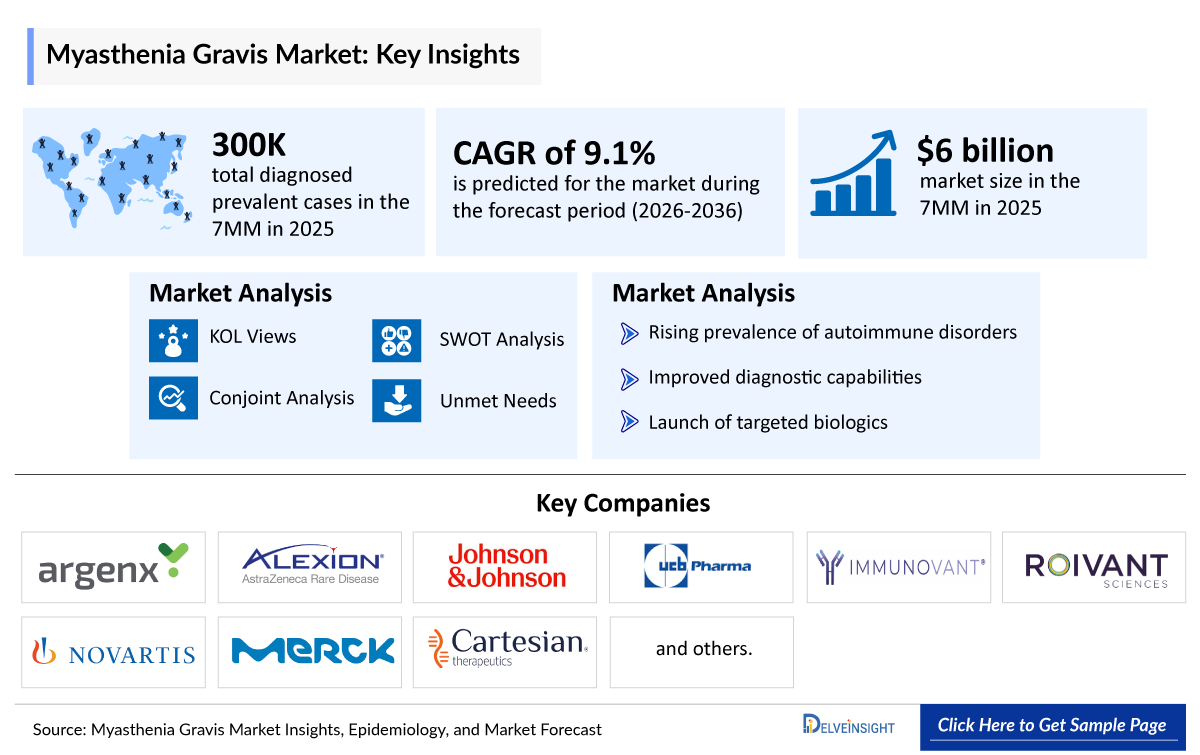
- The Myasthenia Gravis Market Companies developing therapies include - Argenx, Alexion Pharmaceuticals, AstraZeneca, UCB S.A., Novartis AG, Johnson & Johnson, Pfizer, Roche, Regeneron Pharmaceuticals, Immunovant, Cartesian Therapeutics,and others.
Myasthenia Gravis Market and Epidemiology Analysis
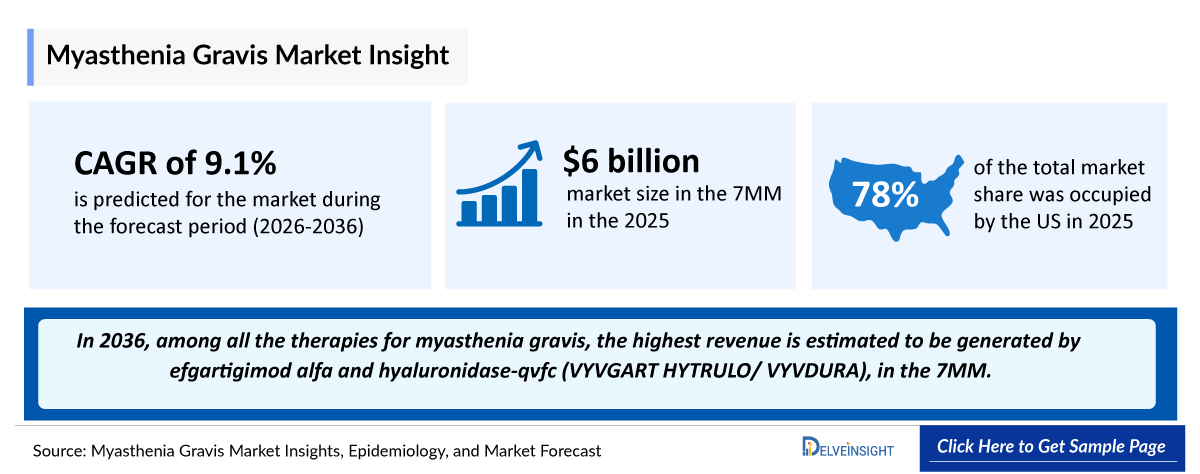
- According to DelveInsight’s analysis, myasthenia gravis market size was found to be USD 6 billion in the leading markets (the United States, the EU4 (Germany, France, Italy, and Spain), the United Kingdom, and Japan) in 2025.
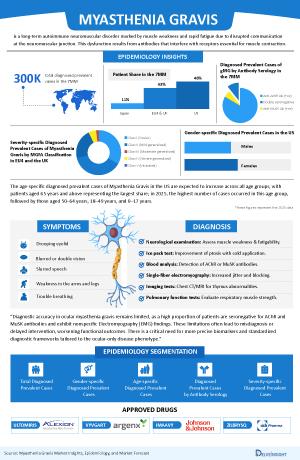
- Myasthenia Gravis reported approximately 140,000 diagnosed prevalent cases in the US. The rising prevalence of myasthenia gravis is likely driven by advancements in diagnostic techniques, an expanding elderly population, possible environmental influences, hereditary risk factors, and evolving lifestyle patterns.
- Myasthenia gravis management focuses on symptomatic relief and immunosuppression, with pyridostigmine for symptoms, immunosuppressants, IVIg/plasma exchange for crises, and thymectomy in select patients.
- The treatment landscape has expanded to include targeted biologics, offering more precise modulation of disease mechanisms. FDA- and EMA-approved agents like nipocalimab-aahu (IMAAVY), rozanolixizumab (RYSTIGGO), zilucoplan (ZILBRYSQ), efgartigimod alfa-fcab (VYVGART) and ravulizumab (ULTOMIRIS) represent a shift toward complement inhibition and FcRn blockade, addressing disease pathology at its source rather than through broad immunosuppression.
- In the US, severity-specific diagnosed prevalent cases of myasthenia gravis, classified according to the MGFA system, indicate that mild generalized disease accounts for the largest share. In 2025, this category represented approximately 43% of all diagnosed myasthenia gravis cases.
- The current myasthenia gravis market is largely led by argenx and UCB, which dominate due to their strong product portfolios and expanding presence in targeted immunotherapy treatments.
- The myasthenia gravis therapeutics market is poised for expansion, driven by novel entrants such as IMVT-1402, Descartes-08, and remibrutinib, each targeting distinct immune pathways including FcRn blockade, CAR-T cell therapy, and BTK inhibition.
- Many myasthenia gravis patients in the chronic phase experience disease fluctuations despite ongoing treatment. Sustained, symptom-free remission remains elusive for a significant subset. Current therapies often require long-term immunosuppression with variable outcomes, highlighting the need for treatments that provide stable, long-lasting control without cumulative toxicity.
- In February 2026, the European Commission approved UPLIZNA (inebilizumab), developed by Amgen, for the treatment of adults with generalized myasthenia gravis, expanding therapeutic options and reinforcing the role of B-cell–targeted therapies in disease management across Europe.
Factors Affecting the Myasthenia Gravis Market Growth
Rising Prevalence and Improved Diagnosis
The growing number of Myasthenia Gravis (MG) cases worldwide, along with advancements in diagnostic techniques such as antibody testing and electrodiagnostic tools, is driving early and accurate disease identification, thereby expanding the treatment market.
Launch of Novel Targeted Therapies
The introduction of innovative therapies, including FcRn inhibitors and complement inhibitors such as Vyvgart, Rystiggo, Soliris, and Ultomiris, has significantly improved treatment outcomes and accelerated market growth.
Strong Pipeline and Increasing R&D Investments
Pharmaceutical companies are heavily investing in research and development to advance biologics, precision immunotherapies, and next-generation MG treatments, resulting in a robust clinical pipeline and continuous innovation.
Growing Awareness and Favorable Reimbursement Support
Rising awareness through patient advocacy initiatives and improved reimbursement policies for rare disease therapies are encouraging higher treatment adoption and improving patient access to advanced medications.
Expansion in Emerging Markets
Improving healthcare infrastructure, increasing awareness, and better access to specialty care in emerging economies such as India and China are creating substantial growth opportunities for the MG market.
Shift Toward Personalized and Advanced Immunotherapies
The market is increasingly moving toward personalized medicine and targeted biologic therapies that offer improved efficacy, fewer side effects, and convenient administration options, supporting long-term market expansion.
Request a sample to unlock the CAGR for "Myasthenia Gravis Market Forecast"
DelveInsight's ‘Myasthenia Gravis Market Insights, Epidemiology and Market Forecast – 2036’ report delivers an in-depth understanding of myasthenia gravis, historical and forecasted epidemiology, as well as the myasthenia gravis market trends in the United States, EU4 (Germany, Spain, Italy, and France), the United Kingdom, and Japan.
The myasthenia gravis market report delivers a comprehensive analysis of the current treatment landscape, including standards of care, clinical practices, and evolving therapeutic algorithms. It evaluates, myasthenia gravis patient burden trends, revenue & market share dynamics, peak patient share & therapy uptake analysis, and provides an in-depth market size assessment, and growth rate projections (Historical & Forecast 2022–2036) across the 7MM regions. The report highlights key unmet medical needs in myasthenia gravis and maps the competitive and clinical landscape to uncover high‑value opportunities, providing a clear outlook on future market growth potential.
Scope of the Myasthenia Gravis Market Report | |
|
Study Period |
2022 to 2036 |
|
Forecast Period |
2026-2036 |
|
Geographies Covered |
|
|
Myasthenia GravisMarket |
|
|
Myasthenia Gravis Market Size |
~XX Million in 2022 |
|
Myasthenia Gravis Companies |
Argenx, Alexion Pharmaceuticals, AstraZeneca, UCB S.A., Novartis AG, Johnson & Johnson, Pfizer, Roche, Regeneron Pharmaceuticals, Immunovant, Cartesian Therapeutics,and others. |
|
Myasthenia Gravis Market Unmet Need | Despite recent therapeutic advancements, the Myasthenia Gravis market still faces significant unmet needs, including delayed diagnosis, limited long-term treatment efficacy, high therapy costs, treatment-related side effects, and inadequate options for refractory patients. There is also a growing demand for targeted, safer, and more durable therapies that improve patient quality of life. |
Myasthenia Gravis Disease Understanding
Myasthenia Gravis Overview
Myasthenia Gravis is a rare chronic autoimmune neuromuscular disorder characterized by weakness and rapid fatigue of voluntary muscles. The condition occurs when the immune system mistakenly attacks communication points between nerves and muscles, particularly targeting acetylcholine receptors (AChR) or related proteins. Common symptoms include drooping eyelids, double vision, difficulty speaking, swallowing problems, and muscle weakness that worsens with activity and improves with rest.
Myasthenia Gravis Diagnosis
The diagnosis of Myasthenia Gravis involves a combination of clinical evaluation, laboratory testing, and neurological assessments. Physicians commonly use antibody blood tests to detect AChR or MuSK antibodies, while electromyography (EMG) and repetitive nerve stimulation tests help assess nerve-muscle communication. Imaging studies such as CT or MRI scans may also be performed to evaluate thymus gland abnormalities associated with MG.
Myasthenia Gravis Treatment
Treatment for Myasthenia Gravis focuses on improving muscle function, reducing immune system activity, and managing symptoms. Common therapies include acetylcholinesterase inhibitors, corticosteroids, and immunosuppressants. Advanced treatment options such as FcRn inhibitors, complement inhibitors, intravenous immunoglobulin (IVIG), and plasmapheresis are increasingly being adopted for patients with moderate-to-severe disease. In some cases, thymectomy surgery may also help improve long-term disease control.
Further details related to country-based variations are provided in the report.
Myasthenia Gravis Epidemiology
Myasthenia Gravis Epidemiology is a rare chronic autoimmune neuromuscular disorder characterized by weakness and rapid fatigue of voluntary muscles. The condition occurs when the immune system mistakenly attacks communication points between nerves and muscles, leading to impaired muscle contraction and fluctuating muscle weakness. Common symptoms include drooping eyelids, double vision, difficulty speaking, swallowing problems, and weakness in the arms, legs, or respiratory muscles. Advances in diagnosis, targeted biologic therapies, and ongoing research into novel treatment approaches are significantly improving disease management and patient outcomes, while increasing awareness continues to support early detection and therapeutic innovation in the Myasthenia Gravis landscape.
Key Findings from Myasthenia Gravis Epidemiological Analyses and Forecast
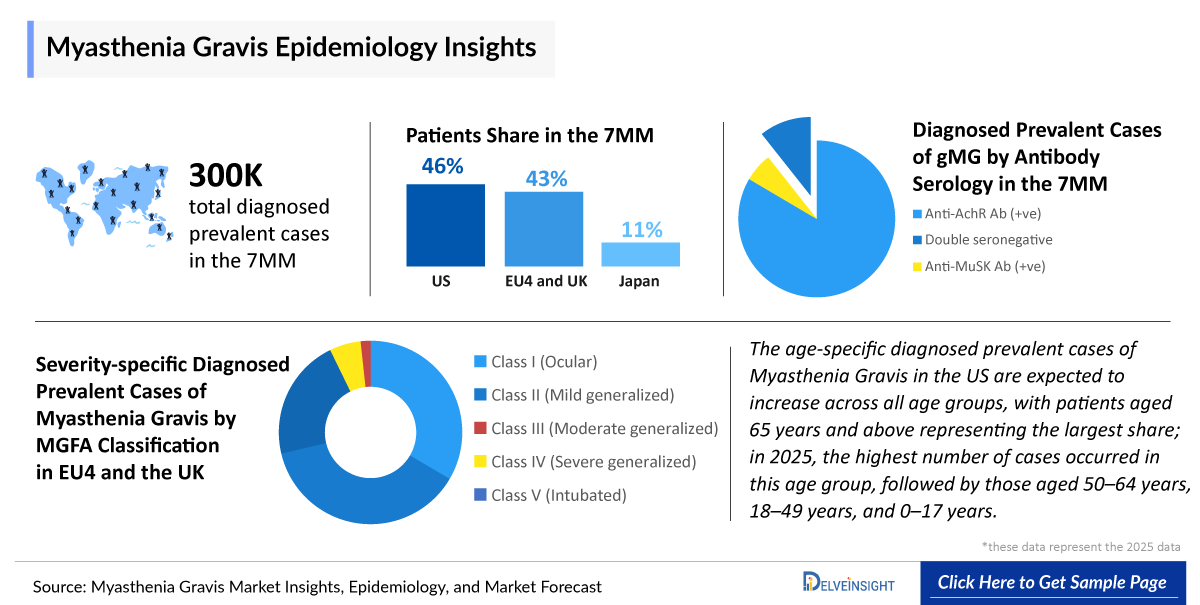
- The total number of diagnosed prevalent cases of myasthenia gravis in the 7MM is around ~300,000 in 2025.
- In the US, the anti-AchR Ab (+ve) category recorded the highest number of gMG cases at 76,500 in 2025. This was followed by anti-MuSK Ab (+ve) group with 4,500 cases, while the double seronegative group (including anti-LRP4-ab, anti-Argin-ab, and others), totaling 9,000 cases.
- According to DelveInsight’s estimates, in the US, females accounted for approximately 81,000 cases and males for 54,000 cases of myasthenia gravis in 2025.
- In 2025, myasthenia gravis diagnoses across Spain showed a gender disparity, with 54% of cases occurring in females and 46% in males, highlighting a greater susceptibility among women.
- In 2025, Japan recorded the highest number of diagnosed prevalent myasthenia gravis cases under the MGFA classification in Class II, with 16,000 cases, followed by Class I with 13,000 cases.
Myasthenia Gravis Market Recent Developments and Breakthroughs
- In March 2026, UCB reported that the Committee for Medicinal Products for Human Use (CHMP) issued a positive opinion for the pre-filled pen version of zilucoplan (ZILBRYSQ), supporting its use in adults with generalized myasthenia gravis across the European Union, pending final regulatory approval from the European Commission.
- In June 2025, RemeGen reported that the EMA granted orphan drug designation (ODD) to its recombinant BLyS/APRIL dual-target fusion protein, Telitacicept, for the treatment of myasthenia gravis, making it the first dual-target biologic for MG to receive ODD from both the FDA and EMA.
- In January 2026, Regeneron Pharmaceuticals stated in its corporate presentation that its ongoing Phase III study remains on track, with topline data expected in Q4 2026 or Q1 2027.
Myasthenia Gravis Drug Analysis
The myasthenia gravis drug chapter provides a detailed, market-focused review of approved therapies and the emerging pipeline across Phase I-III clinical trials. It covers mechanism of action, clinical trial data, regulatory approvals, patents, collaborations, strategic partnerships upcoming Key catalyst for each therapy, along with their advantages, limitations, and recent developments. This section offers critical insights into the myasthenia gravis treatment landscape, supporting market assessment, competitive analysis, and growth forecasting for the myasthenia gravis therapeutics market.
Myasthenia Gravis Marketed Drugs
Rozanolixizumab (RYSTIGGO): UCB
Rozanolixizumab is a subcutaneous (SC) humanized monoclonal IgG4 antibody designed to bind with high affinity to the neonatal Fc receptor (FcRn). By blocking the interaction between FcRn and IgG, it enhances IgG degradation, thereby reducing circulating pathogenic IgG autoantibodies—key contributors to autoimmune diseases such as gMG. The therapy is FDA-approved for adult patients with gMG who are positive for anti-AChR or anti-MuSK antibodies, the two most prevalent gMG subtypes.
In January 2026, KORU Medical Systems received FDA 510(k) clearance for delivering RYSTIGGO (rozanolixizumab-noli) via the FreedomEDGE infusion system, expanding its label. This advancement enhances subcutaneous delivery options, improves treatment convenience, and supports broader adoption of FcRn-targeted therapies in myasthenia gravis management.
|
Myasthenia Gravis Marketed Drugs | ||||||
|
Drug/Therapy |
Company |
Indication |
Molecule Type |
MoA |
RoA |
Marketed Region |
|
Rozanolixizumab (RYSTIGGO) |
UCB |
gMG |
mAb |
FcRn antagonist |
SC Infusion |
US: 2023 EU: 2024 JP: 2023 |
|
Zilucoplan (ZILBRYSQ) |
UCB |
gMG |
Macrocyclic peptide |
Complement C5 inhibitor |
SC injection |
US: 2023 EU: 2023 JP: 2023 |
Myasthenia Gravis Emerging Drugs
IMVT-1402: Immunovant/Roivant Sciences
IMVT-1402 is a next-generation, SC administered anti-FcRn mAb developed by Immunovant for the treatment of IgG-mediated autoimmune diseases. It effectively lowers pathogenic IgG while preserving normal albumin and cholesterol levels, mitigating safety issues seen with previous FcRn inhibitors. As per the company’s 2025 report, top-line results from the IMVT-1402 study are anticipated to be reported in 2027, marking a key milestone in the clinical development timeline for this investigational therapy.
|
Myasthenia Gravis Emerging Drugs | ||||||
|
Drug Name |
Company |
Highest Phase |
Indication |
RoA |
MoA |
Anticipated Launch in the US |
|
IMVT-1402 |
Immunovant/ Roivant Sciences |
III |
gMG |
SC |
FcRn antagonist |
2029 |
|
Descartes-08 |
Cartesian Therapeutics |
III |
gMG |
IV Infusion |
RNA CAR T-cell therapy | Information is available in the full report |
|
Remibrutinib |
Novartis |
III |
gMG |
Oral |
BTK inhibitor |
Information is available in the full report |
|
Iptacopan (FABHALTA) |
Novartis |
III |
gMG |
Oral |
CFB inhibitor |
Information is available in the full report |
|
Note: Launch insights are provisional and may change with future report updates or the occurrence of major key catalysts. | ||||||
Further details will be provided in the report….
Myasthenia Gravis Drug Class Analysis
The myasthenia gravis market comprises of four primary therapies symptomatic treatment, chronic immunotherapies, rapid but short-acting immunomodulating treatments, surgical treatment (thymectomy).
- Anticholinesterase medications: Medications to treat myasthenia gravis include anticholinesterase agents such as mestinon or pyridostigmine, which slow the breakdown of acetylcholine at the neuromuscular junction and improve neuromuscular transmission and increase muscle strength.
- Corticosteroids and immunosuppressants: A group of drugs that improve muscle strength by suppressing the production of abnormal antibodies, such as prednisone, azathioprine, mycophenolate mofetil, and tacrolimus. The drugs can cause significant side effects and must be carefully monitored by a physician. Corticosteroid treatment was the first widely used IS therapy introduced in myasthenia gravis.
- Biological therapies: These medications are made from a biological source. They modulate immune system activity and can also be referred to as “immunomodulators.” Immunoglobulins, monoclonal antibodies (rituximab, efgartigimod, ravulizumab, zilucoplan, etc.), and stem cells all fall into this category.
- Thymectomy: This surgery consists of removing the thymus in order to eradicate the cells that take part in the autoimmune response. Offered to those with anti-AChR autoantibodies, it is essential in cases of thymoma. A NINDS-funded study of 126 people with myasthenia gravis with thymoma and those with no visible thymoma found that the surgery reduced muscle weakness and the need for IS drugs.
Myasthenia Gravis Market Outlook
The therapeutic market size of myasthenia gravis is mainly accounted for by symptomatic treatments, including ACh inhibitors (mestinon). It is challenging to reach clinical remission on symptomatic therapy alone; therefore, the addition of an immunosuppressive drug is often required. First-line immunotherapy is represented by oral prednisone and prednisolone, which have a rapid effect, especially when given at high doses, since a higher dosage corresponds to a more rapid response, usually within 2–4 weeks. Nonsteroidal Immunosuppressants (NSISTs) are employed as steroid-sparing agents to improve clinical stability, as there is great variability in steroid-monotherapy response.
Myasthenia Gravis Competitive Landscape
The Myasthenia Gravis competitive landscape is rapidly evolving with the emergence of targeted biologics, FcRn inhibitors, complement inhibitors, and advanced immunotherapies. The market is highly competitive, driven by increasing regulatory approvals, strong late-stage pipelines, and continuous innovation focused on improving efficacy, safety, and patient convenience.
Key Myasthenia Gravis Market Companies
The Myasthenia Gravis Market Companies developing therapies include -
- Argenx,
- Alexion Pharmaceuticals,
- AstraZeneca,
- UCB S.A.,
- Novartis AG,
- Johnson & Johnson,
- Pfizer,
- Roche,
- Regeneron Pharmaceuticals,
- Immunovant,
- Cartesian Therapeutics,and others.
Myasthenia Gravis Drugs Uptake
This section focuses on the uptake rate of potential Myasthenia Gravis (MG) therapies expected to be launched in the market during 2024–2036. The adoption of emerging treatments will depend on the evolving Myasthenia Gravis competitive landscape, clinical efficacy and safety outcomes, pricing strategies, reimbursement support, and order of market entry. Key Myasthenia Gravis companies developing novel therapies through pivotal and confirmatory clinical trials must strategically select comparators and endpoints to improve regulatory success, accelerate approvals, and support rapid commercial uptake across the 7MM.
Myasthenia Gravis Clinical Trial Activities
The Myasthenia Gravis pipeline report provides comprehensive insights into ongoing and completed clinical trials across Phase III, Phase II, and early-stage development. The report highlights key Myasthenia Gravis companies actively involved in advancing targeted biologics, FcRn inhibitors, complement inhibitors, CAR-T therapies, and other innovative immunotherapies aimed at improving disease management and long-term patient outcomes.
Myasthenia Gravis Pipeline Development Activities
The Myasthenia Gravis clinical trial analysis report covers detailed information regarding strategic collaborations, mergers and acquisitions, licensing agreements, partnerships, regulatory designations, and patent activities associated with emerging MG therapies. The report also evaluates recent advancements and pipeline expansion strategies adopted by leading pharmaceutical and biotechnology companies operating in the MG treatment landscape.
Latest KOL Views on Myasthenia Gravis
To understand the real-world treatment scenario and emerging market trends, insights are gathered from Key Opinion Leaders (KOLs) and industry experts through primary research. These expert opinions help validate secondary research findings and provide a deeper understanding of current treatment practices, patient reliance on conventional immunosuppressive therapies, therapy-switching trends, accessibility challenges, and the expected uptake of novel Myasthenia Gravis treatments.
DelveInsight’s analysts interacted with multiple KOLs and subject matter experts across the 7MM to obtain insights into the evolving Myasthenia Gravis treatment landscape. Their perspectives support the identification of unmet needs, future treatment opportunities, and the potential impact of upcoming therapies on the overall market dynamics.
Myasthenia Gravis Drugs Market Qualitative Analysis
The report performs qualitative and Myasthenia Gravis market intelligence analysis using various analytical frameworks, including SWOT analysis and Conjoint Analysis. SWOT analysis evaluates strengths, weaknesses, opportunities, and threats associated with disease diagnosis, patient awareness, physician acceptance, treatment accessibility, cost-effectiveness, and the overall Myasthenia Gravis competitive landscape.
Conjoint Analysis assesses approved and emerging therapies based on key attributes such as efficacy, safety profile, dosing frequency, route of administration, convenience, and expected order of entry. Therapies are scored across these parameters to evaluate their overall clinical and commercial potential.
Additionally, therapy safety and tolerability are carefully evaluated based on adverse events, long-term acceptability, and patient compliance observed during clinical trials. The analysis also incorporates probability of success and addressable patient population to determine the overall ranking and weightage of emerging therapies within the Myasthenia Gravis market.
Myasthenia Gravis Therapeutics Market Access and Reimbursement
- The Myasthenia Gravis therapeutics market report further provides detailed insights into country-wise market accessibility, reimbursement frameworks, and cost-effectiveness of currently available therapies.
- The Myasthenia Gravis Market report also highlights patient support programs, insurance coverage under government and private healthcare systems, reimbursement barriers, and initiatives aimed at improving patient access and affordability for advanced Myasthenia Gravis treatments across the major markets.
NOTE: Further Details are provided in the final report….
Scope of the Myasthenia Gravis Market Report
- The Myasthenia Gravis Market report covers a segment of key events, an executive summary, a descriptive overview of myasthenia gravis, explaining their causes, signs and symptoms, pathogenesis, and currently available treatments.
- Comprehensive insight has been provided into the epidemiology segments and forecasts, the future growth potential of the diagnosis rate, and disease progression along treatment guidelines.
- Additionally, an all-inclusive account of both the current and emerging treatments, along with the elaborative profiles of late-stage and prominent therapies, will have an impact on the current treatment landscape.
- A detailed review of the myasthenia gravis market, historical and forecasted market size, market share by therapies, detailed assumptions, and rationale behind our approach is included in the report, covering the 7MM drug outreach.
- The Myasthenia Gravis Market report provides an edge while developing business strategies by understanding trends through SWOT analysis and expert insights/KOL views, patient journey, and treatment preferences that help in shaping and driving the 7MM myasthenia gravis market.
Myasthenia Gravis Market Report Insights
- Myasthenia Gravis Patient Population Forecast
- Myasthenia Gravis Therapeutics Market Size
- Myasthenia Gravis Pipeline Analysis
- Myasthenia Gravis Market Size and Trends
- Myasthenia Gravis Market Opportunity (Current and Forecasted)
Myasthenia Gravis Market Report Key Strengths
- Epidemiology‑based (Epi‑based) bottom‑up forecasting
- Artificial Intelligence (AI)-enabled market research report
- 11-year forecast
- Myasthenia Gravis Market Outlook (North America, Europe, Asia-Pacific)
- Patient Burden Trends (by geography)
- Myasthenia Gravis Treatment Addressable Market (TAM)
- Myasthenia Gravis Competitive Landscape
- Myasthenia Gravis Major Companies Insights
- Myasthenia Gravis Price Trends and Analogue Assessment
- Myasthenia Gravis Therapies Drug Adoption/Uptake
- Myasthenia Gravis Therapies Peak Patient Share analysis
Myasthenia Gravis Market Report Assessment
- Myasthenia Gravis Current Treatment Practices
- Myasthenia Gravis Unmet Needs
- Myasthenia Gravis Clinical Development Analysis
- Myasthenia Gravis Emerging Drugs Product Profiles
- Myasthenia Gravis Market Attractiveness
- Myasthenia Gravis Qualitative Analysis (SWOT and conjoint analysis)
FAQs
Myasthenia Gravis Market Insights
- What was the myasthenia gravis market size, the market size by therapies, market share (%) distribution in 2025, and what would it look like by 2036? What are the contributing factors for this growth?
- What are the anticipated pricing variations among different geographies for the emerging therapies in the future?
- What can be the future treatment paradigm of myasthenia gravis?
- What are the disease risks, burdens, and unmet needs of myasthenia gravis? What will be the growth opportunities across the 7MM concerning the patient population with myasthenia gravis?
- Who is the major future competitor in the market, and how will the competitors affect their market share?
- What are the current options for the treatment of myasthenia gravis? What are the current guidelines for treating myasthenia gravis in the US, Europe, and Japan?
Reasons to Buy the Myasthenia Gravis Market Forecast Report
- The Myasthenia Gravis Market report will help in developing business strategies by understanding the latest trends and changing treatment dynamics driving the myasthenia gravis market.
- Bottom up forecasting builds from the affected population to product forecasts, delivering a robust, data driven approach ideal for new therapies and novel classes.
- Insights on patient burden/disease incidence, evolution in diagnosis, and factors contributing to the change in the epidemiology of the disease during the forecast years.
- Understand the existing market opportunities in varying geographies and the growth potential over the coming years.
- Identifying strong upcoming players in the market will help devise strategies to help get ahead of competitors.
- Detailed analysis and ranking of class-wise potential current and emerging therapies under the conjoint analysis section to provide visibility around leading classes.
- To understand KOLs’ perspectives on the accessibility, acceptability, and compliance-related challenges of existing treatment to overcome barriers in the future.
- Detailed insights on the unmet needs of the existing market so that the upcoming players can strengthen their development and launch strategy.
- This Artificial Intelligence (AI) enabled Myasthenia Gravis Market report summarize and simplify complex datasets within the report into clear, actionable insights for stakeholders, investors, and healthcare providers, enabling faster, data driven decisions.