Hashimoto’s Thyroiditis Market Summary
Hashimoto's Thyroiditis Insights and Trends
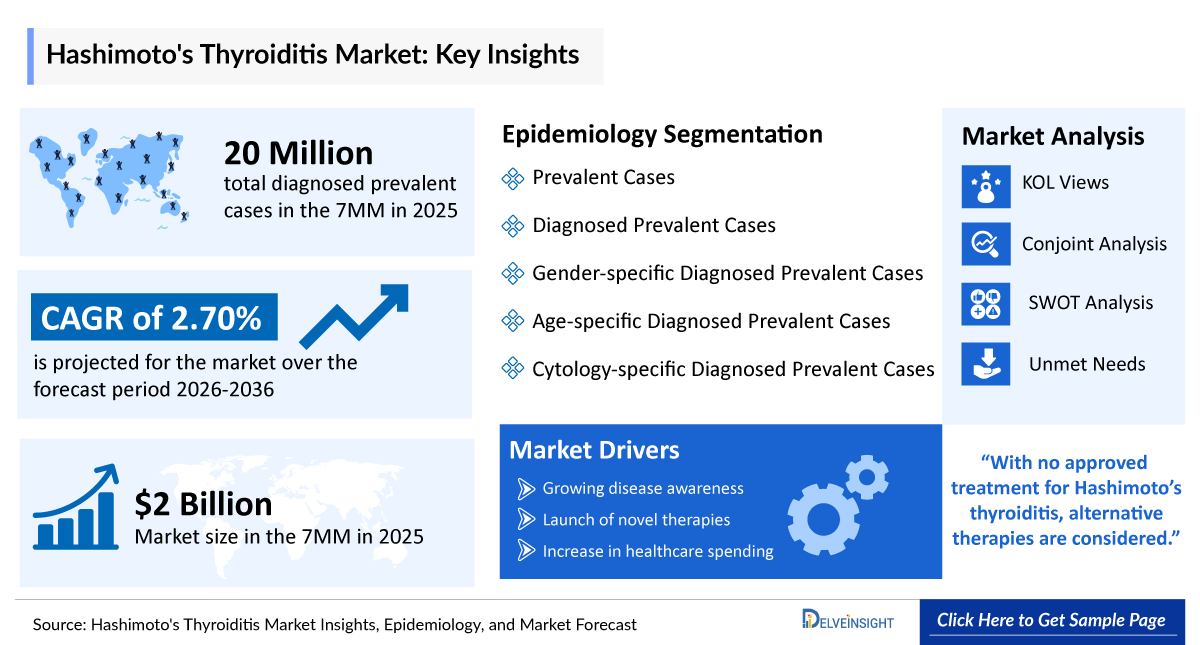
- According to DelveInsight’s analysis, Hashimoto's thyroiditis market size was more than USD 2 billion in the leading markets (the United States, the EU4 (Germany, France, Italy, and Spain), the United Kingdom, and Japan) in 2025.
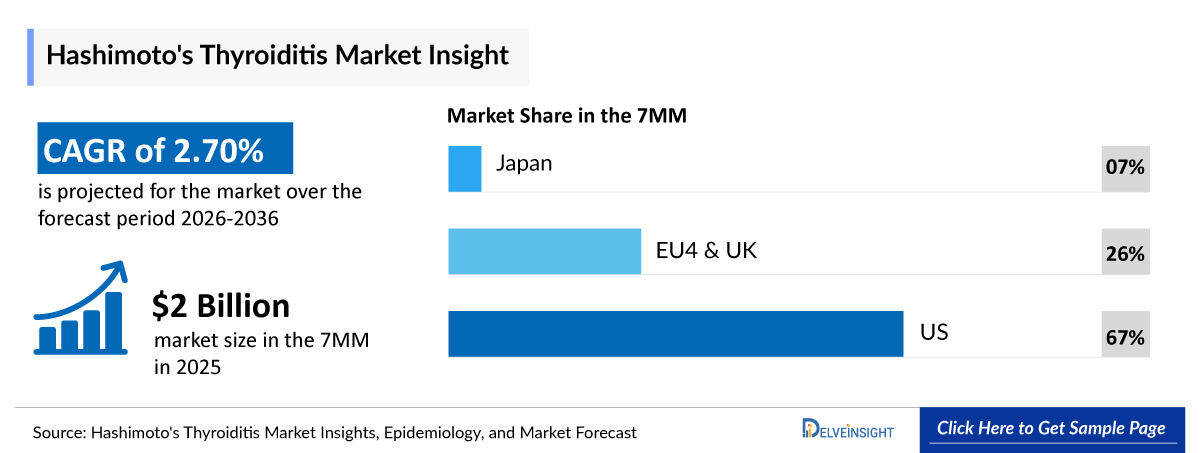
- Across the 7MM, the United States represents the largest Hashimoto's thyroiditis market with more than USD 1 billion, accounting for the majority of Hashimoto's thyroiditis cases in 2025 and expected to maintain its leading position through 2036.
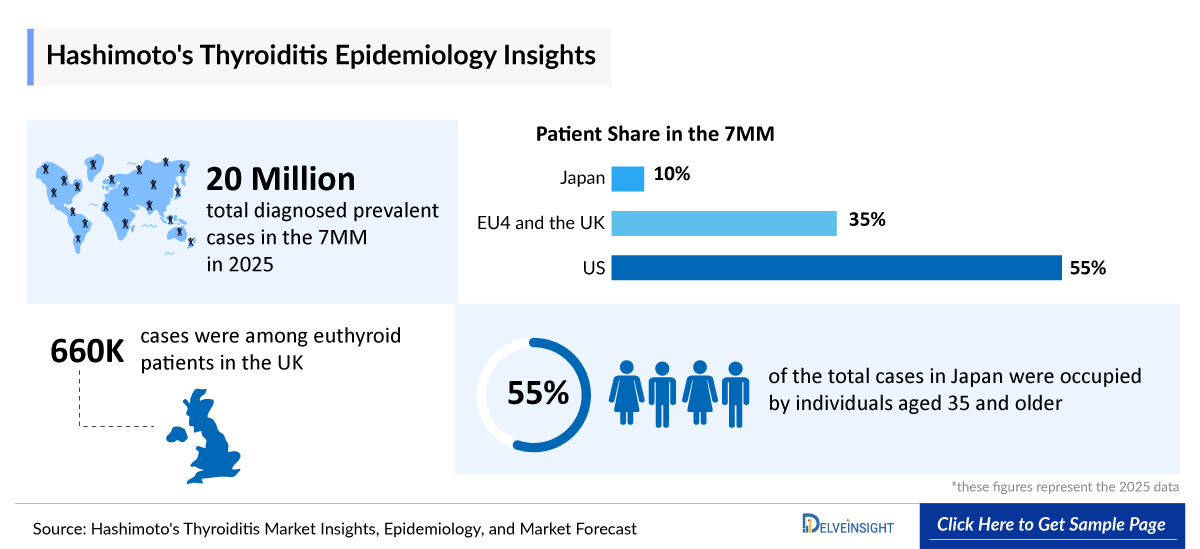
- In 2025, the US accounted for 55% of diagnosed prevalent cases of Hashimoto’s thyroiditis among the 7MM. According to DelveInsight estimates, there were more than 11 million Hashimoto’s thyroiditis diagnosed prevalent cases in 2025.
- Diagnosis of Hashimoto’s thyroiditis relies on a comprehensive evaluation that integrates clinical findings with serological and imaging studies. Elevated anti-thyroid peroxidase antibodies serve as a key marker of the disease. Ultrasound imaging typically reveals a heterogeneous, hypoechoic thyroid with characteristic micronodules, aiding in disease monitoring and differentiation from other thyroid pathologies.
- With no approved treatment for Hashimoto’s thyroiditis, alternative therapies are explored. Levothyroxine (LT4) is the gold standard, while liothyronine is used for persistent symptoms. Desiccated thyroid extract, though containing both thyroxine (T4) and triiodothyronine (T3), is less common due to variability. Combination therapy (T4 + T3) may benefit selected patients.
- Isomyosamine (MYMD-1) is currently the only pipeline drug in development, highlighting a major treatment gap. If its clinical potential is confirmed, it could drive market expansion and mark a paradigm shift in autoimmune thyroid disorder management by directly targeting disease mechanisms and improving patient outcomes.
- The treatment landscape for Hashimoto’s thyroiditis remains significantly constrained due to the lack of approved disease-modifying therapies targeting its underlying autoimmune pathology. Levothyroxine stands as the gold standard treatment for Hashimoto’s thyroiditis. This evidence-based therapy effectively normalizes thyroid hormone levels, relieves debilitating symptoms, and provides reliable long-term disease management.
- The absence of immunomodulatory treatments underscores a critical unmet need for novel therapeutic strategies capable of halting autoimmune-mediated thyroid damage, reducing disease burden, and improving long-term clinical outcomes.
Hashimoto's Thyroiditis Market size and forecast
- 2025 Hashimoto's Thyroiditis Market Size in the 7MM: ~USD 2 billion
- Hashimoto's Thyroiditis Growth Rate (2026–2036): 2.7% CAGR
DelveInsight's ‘Hashimoto's Thyroiditis – Market Insights, Epidemiology and Market Forecast – 2036’ report delivers an in-depth understanding of Hashimoto's thyroiditis, historical and forecasted epidemiology, as well as the Hashimoto's thyroiditis market trends in the United States, EU4 (Germany, Spain, Italy, and France), the United Kingdom, and Japan.
The Hashimoto's thyroiditis market report delivers a comprehensive analysis of the current treatment landscape, including standards of care, clinical practices, and evolving therapeutic algorithms. It evaluates, Hashimoto's thyroiditis patient burden trends, revenue & market share dynamics, peak patient share & therapy uptake analysis, and provides an in-depth market size assessment, and growth rate projections (Historical & Forecast 2022–2036) across the 7MM regions. The report highlights key unmet medical needs in Hashimoto's thyroiditis and maps the competitive and clinical landscape to uncover high‑value opportunities, providing a clear outlook on future market growth potential.
Scope of the Hashimoto's Thyroiditis Market Report | |
|
Study Period |
2022–2036 |
|
Historical Year |
2022–2025 |
|
Forecast Period |
2026–2036 |
|
Base Year |
2025 |
|
Geographies Covered |
|
|
Hashimoto's Thyroiditis Market CAGR (Forecast period) |
2.7% (2026-2036) |
|
Hashimoto's Thyroiditis Epidemiology Segmentation Analysis |
Patient Burden Assessment
|
|
Hashimoto's Thyroiditis Companies |
|
|
Hashimoto's Thyroiditis Emerging Therapies |
|
|
Hashimoto's Thyroiditis Market |
Segmented by
|
|
Analysis |
|
Hashimoto's Thyroiditis - Understanding and Treatment Algorithm
Hashimoto’s thyroiditis Overview and Diagnosis
Hashimoto’s thyroiditis, also called chronic lymphocytic or autoimmune thyroiditis, is an autoimmune disorder marked by thyroid gland enlargement, lymphocyte infiltration, and autoantibodies targeting thyroid antigens. It belongs to the group of autoimmune thyroid disorders along with Graves’ disease, and its prevalence has been increasing in recent years. As the leading cause of hypothyroidism, Hashimoto’s thyroiditis has also been linked to a higher risk of cardiovascular diseases and certain malignancies. Initially termed ‘struma lymphomatosa’ due to lymphocytic infiltration and glandular enlargement, it was later identified as a distinct condition.
The diagnosis of Hashimoto’s thyroiditis is established through a combination of clinical symptoms, serological markers, and imaging studies. In specific cases, histopathological and cytological evaluations may be performed to confirm the condition and rule out malignancy.
Further details are provided in the report.
Current Hashimoto's Thyroiditis Treatment Landscape
The primary goal of Hashimoto’s thyroiditis treatment is to manage hypothyroidism, primarily through lifelong thyroid hormone replacement. The standard therapy involves the oral administration of LT4 at a weight-based dosage of 1.6–1.8 µg/kg per day, ensuring the normalization of thyroid-stimulating hormone (TSH) levels. In the Hashimoto’s thyroiditis market, various thyroid hormone replacement therapies (HRT) are available to manage hypothyroidism. Apart from the LT4, Liothyronine is occasionally prescribed for individuals who have persistent symptoms despite T4 therapy. Desiccated thyroid extract, derived from animal sources, provides both Liothyronine and LT4 but is less commonly used due to variability in hormone concentrations. Additionally, combination therapy (T4 + T3) is considered for select patients who may benefit from a more balanced thyroid hormone replacement approach.
Further details related to country-based variations are provided in the report.
Hashimoto's Thyroiditis Unmet Needs
The section “unmet needs of Hashimoto’s thyroiditis” outlines the critical gaps between the current state of patient care, diagnosis, and the ideal & effective management of the disease. It highlights the obstacles experienced by patients, clinicians, and researchers and identifies potential solutions for future progress.
- Absence of disease-modifying therapies
- Need for improved early detection
- Lack of a robust drug development pipeline
- Patient compliance and adherence to standard therapy, and others…..
Note: Comprehensive unmet needs insights in Hashimoto’s thyroiditis and their strategic implications are provided in the full report.
Hashimoto's Thyroiditis Epidemiology
Key Findings from Hashimoto’s Thyroiditis Epidemiological Analysis and Forecast
- In 2025, the total number of diagnosed prevalent cases of Hashimoto’s thyroiditis across the 7MM was approximately 20 million and it is projected to rise in the coming years.
- In the US, female patients recorded the highest number of Hashimoto’s thyroiditis cases in 2025. Approximately 9 million cases were observed in females and around 2 million cases in the male population. Female dominance in Hashimoto’s thyroiditis is largely driven by the immunomodulatory effects of estrogen and X-linked genetic factors, which amplify immune reactivity and predispose women to autoimmune thyroid conditions.
- In 2025, the EU and the UK recorded that the highest number of Hashimoto’s thyroiditis cases occurred in individuals aged 35 and older with around 4 million cases, compared to approximately 2 million cases among those aged 18–34, indicating a significantly greater burden in the older age group.
- In 2025, Japan recorded approximately 950,000 cases of Hashimoto’s thyroiditis in the euthyroid (asymptomatic) category, followed by approximately 930,000 cases in the clinically hypothyroid (symptomatic) group and nearly 180,000 cases in the subclinical hypothyroid (asymptomatic) segment.
Hashimoto's Thyroiditis Drug Analysis & Competitive Landscape
The Hashimoto's Thyroiditis drug chapter provides a detailed, market-focused review of the emerging pipeline across Phase I-II clinical trials. It covers mechanism of action, clinical trial data, regulatory approvals, patents, collaborations, strategic partnerships upcoming key catalyst for each therapy, along with their advantages, limitations, and recent developments. This section offers critical insights into the Hashimoto's thyroiditis treatment landscape, supporting market assessment, competitive analysis, and growth forecasting for the Hashimoto's thyroiditis therapeutics market.
Hashimoto's Thyroiditis Pipeline Analysis
Isomyosamine (MYMD-1): TNF Pharmaceuticals
Isomyosamine (MYMD-1) is an oral selective inhibitor of Tumor Necrosis Factor-alpha (TNF-α), a key driver of chronic inflammation implicated in autoimmune diseases. Unlike conventional TNF-α inhibitors that broadly suppress immune activity, MYMD-1 selectively inhibits TNF-α when it becomes overactivated in conditions such as autoimmune thyroiditis and cytokine storms while preserving its essential role in responding to moderate infections. Preclinical and clinical studies have demonstrated its efficacy in regulating immune responses, particularly through the suppression of Th1-mediated inflammation and TNF-α release.
- In August 2024, TNF Pharmaceuticals announced that it has an active IND application for Phase II clinical trial of MYMD-1 in Hashimoto’s thyroiditis.
Competitive Landscape of Pipeline Drugs | ||||||
|
Drug Name |
Company |
Highest Phase |
Indication |
RoA |
MoA |
Anticipated Launch in the US |
|
Isomyosamine (MYMD-1) |
TNF Pharmaceuticals |
I |
Hashimoto’s thyroiditis |
Oral |
TNF-α inhibitors |
2031 |
|
Note: Launch insights are provisional and may change with future report updates or the occurrence of major key catalysts. | ||||||
Note: Detailed emerging therapies assessment will be provided in the final report.
Hashimoto’s thyroiditis Key Players, Market Leaders and Emerging Companies
- TNF Pharmaceuticals and others
Hashimoto’s thyroiditis Drug Updates
- As of early 2026, TNF Pharmaceuticals still has an active Investigational New Drug (IND) for MYMD-1 in Hashimoto’s thyroiditis, but there is no clear public confirmation that a Phase II trial has begun, suggesting the program remains in development.
Hashimoto's Thyroiditis Market Outlook
Currently, there is no approved treatment available for Hashimoto's thyroiditis. Management involves assessing disease severity, as treatment approaches vary between subclinical and overt hypothyroidism. LT4 remains the SoC for overt hypothyroidism, particularly in symptomatic individuals, and serves as a potential intervention for subclinical cases. LT4 supplementation restores thyroid hormone levels, which regulate metabolism, energy balance, and neurological function, alleviating systemic and cognitive symptoms.
- According to DelveInsight’s analysis in 2025, the Hashimoto's thyroiditis market across the 7MM was approximately USD 2 billion.
- The total market size of the United States accounted for a comprehensive market valuation of more than USD 1 billion in 2025.
- The market size for Hashimoto’s thyroiditis was nearly USD 600 million in EU4 and the UK. The market is expected to expand with the anticipated launch of the emerging therapies.
- In 2025, the Hashimoto’s thyroiditis market size in Japan was more than USD 100 million.
Further details will be provided in the report.
Drug Class/Insights into Leading Emerging Therapies in Hashimoto's Thyroiditis (2022–2036 Forecast)
Small Molecule: Small-molecule therapies are emerging as a promising approach in the management of Hashimoto’s thyroiditis. Unlike traditional treatments that mainly focus on hormone replacement, small molecules aim to modulate underlying immune pathways by targeting specific cytokines, signaling cascades, or immune cell activity. These orally available agents offer advantages such as better patient compliance, selective immune regulation, and the potential to reduce systemic immunosuppression.
An example is Isomyosamine (MYMD-1), it possesses anti-fibrotic and anti-proliferative properties, expanding its therapeutic potential beyond autoimmune disorders to conditions involving tissue fibrosis and abnormal cell proliferation. Its oral dosing provides a significant advantage over existing TNF-α inhibitors, which are exclusively administered via injection or infusion.
Hashimoto's Thyroiditis Drug Uptake
This section focuses on the uptake rate of potential drugs expected to be launched in the market during the forecast period (2026–2036). The analysis covers the Hashimoto’s thyroiditis drug’s uptake, performance at peak, factors affecting performance during prime years of growth, patient uptake by therapy, and anticipated sales generated by each drug.
Developed by TNF Pharmaceuticals, Isomyosamine (MYMD-1) is an orally administered small molecule targeting TNF-α, IL-6, and IL-17A, key cytokines in autoimmune inflammation. It received the US FDA clearance for a Phase II IND in August 2024, though clinical trials have yet to begin. Preclinical studies suggest its potential to reduce thyroid damage by modulating inflammatory pathways. If successful, MYMD-1 could redefine treatment beyond standard HRT, improving disease control and patient outcomes.
Detailed insights of emerging therapies' drug uptake is included in the report.
Market Access and Reimbursement of therapies in Hashimoto's Thyroiditis
The report further provides detailed insights on the country-wise accessibility and reimbursement scenarios, cost-effectiveness scenario of therapies, programs making accessibility easier and out-of-pocket costs more affordable, insights on patients insured under federal or state government prescription drug programs, etc.
Reimbursement is a crucial factor that affects the drug’s access to the market. Often, the decision to reimburse comes down to the price of the drug relative to the benefit it produces in treated patients. To reduce the healthcare burden of these high-cost therapies, many payment models are being considered by payers and other industry insiders.
NOTE: Further Details are provided in the final report.
Hashimoto's Thyroiditis Standard of Care
Management of Hashimoto’s thyroiditis primarily focuses on correcting hypothyroidism, most commonly through lifelong levothyroxine (LT4) therapy at weight-based doses to normalize TSH levels, while some stable patients may only require monitoring. Immunosuppressive treatments like glucocorticoids are generally avoided due to side effects, except in specific cases such as Immunoglobulin G4 (IgG4)-related disease where short-term use may help. Dietary factors remain debated—excess iodine can worsen autoimmunity and is usually discouraged (except during pregnancy), while selenium supplementation may reduce antibody levels in deficient individuals but shows inconsistent clinical benefits. Vitamin D deficiency is frequently associated with the disease, and supplementation is considered beneficial due to its safety and potential role in immune regulation. Surgical intervention is reserved for severe cases involving compressive symptoms or suspected malignancy, though it carries a higher complication risk in these patients.
Industry Experts and Physician Views for Hashimoto's Thyroiditis
To keep up with Hashimoto’s thyroiditis market trends, we take Key Opinion Leaders (KOLs) and Subject Matter Experts (SMEs) opinions working in the domain through primary research to fill the data gaps and validate our secondary research. Industry Experts were contacted for insights on the Hashimoto's thyroiditis emerging therapies, evolving treatment landscape, patient adherence to conventional therapies, therapy switching trends, drug adoption and uptake, accessibility challenges, and epidemiology and real-world prescription patterns in Hashimoto’s thyroiditis, including MD, PhD, Instructor, Postdoctoral Researcher, Professor, Researcher, and others.
DelveInsight’s analysts connected with 10+ KOLs to gather insights at country level. Centers such as the National Institutes of Health, Berkshire Medical Center, University of Duesseldorf, Institute of Cell Biology and Neurobiology etc. were contacted.
Their opinion helps understand and validate current and emerging Hashimoto’s thyroiditis therapies, highlight unmet medical needs, provide epidemiological context, and support strategic decisions for market access, therapy adoption, and pipeline prioritization in Hashimoto’s thyroiditis.
|
Region |
Key Opinion Leaders (KOLs) and Subject Matter Experts (SMEs) |
|
United States |
“Genetic predisposition is the primary driver of Hashimoto’s thyroiditis, but environmental triggers like radiation, iodine intake, and toxicants can accelerate disease onset. Recognizing these influences is crucial for refining diagnosis, risk mitigation, and early intervention strategies.” |
|
Germany |
“Hashimoto's thyroiditis is marked by a breakdown in immune tolerance, resulting in a targeted attack against thyroid antigens such as thyroid peroxidase and thyroglobulin. This destructive autoimmune response not only leads to hypothyroidism but may also establish an inflammatory environment that increases the risk for thyroid malignancies.” |
Qualitative Analysis: SWOT and Attribute Analysis
We perform qualitative and market Intelligence analysis using various approaches, such as SWOT analysis and attribute analysis.
In the SWOT analysis of Hashimoto’s thyroiditis, strengths, weaknesses, opportunities, and threats in terms of disease diagnosis, patient awareness, patient burden, competitive landscape, cost-effectiveness, and geographical accessibility of therapies are provided. Attribute analysis analyzes emerging therapies based on relevant attributes such as safety, efficacy, frequency of administration, route of administration, and order of entry. Scoring is given based on these parameters to analyze the effectiveness of therapy.
The team of analysts analyzes promising emerging therapies based on relevant attributes such as safety, efficacy, frequency of administration, route of administration, and order of entry. In efficacy, the trial’s primary and secondary outcome measures are evaluated, whereas the therapies’ safety is evaluated, wherein the acceptability, tolerability, and adverse events are majorly observed. In addition, the scoring is also based on the route of administration, order of entry, probability of success, and the addressable patient pool for each therapy. According to these parameters, the final weightage score and the ranking of the emerging therapies are decided.
Scope of the Hashimoto's Thyroiditis Market Report
- The report covers a segment of key events, an executive summary, a descriptive overview of Hashimoto's thyroiditis, explaining their causes, signs and symptoms, pathogenesis, and currently available treatments.
- Comprehensive insight has been provided into the epidemiology segments and forecasts, the future growth potential of the diagnosis rate, and disease progression along treatment guidelines.
- Additionally, an all-inclusive account of both the current and emerging treatments, along with the elaborative profiles of late-stage and prominent therapies, will have an impact on the current treatment landscape.
- A detailed review of the Hashimoto's thyroiditis market, historical and forecasted market size, market share by therapies, detailed assumptions, and rationale behind our approach is included in the report, covering the 7MM drug outreach.
- The report provides an edge while developing business strategies by understanding trends through SWOT analysis and expert insights/KOL views, patient journey, and treatment preferences that help in shaping and driving the 7MM Hashimoto's thyroiditis market.
Hashimoto's Thyroiditis Market Report Insights
- Hashimoto's Thyroiditis Patient Population Forecast
- Hashimoto's Thyroiditis Therapeutics Market Size
- Hashimoto's Thyroiditis Pipeline Analysis
- Hashimoto's Thyroiditis Market Size and Trends
- Hashimoto's Thyroiditis Market Opportunity (Current and Forecasted)
Hashimoto's Thyroiditis Market Report Key Strengths
- Epidemiology‑Based (Epi‑based) Bottom‑up Forecasting
- Artificial Intelligence (AI) - enabled Market Research Report
- 11-year forecast
- Hashimoto's Thyroiditis Market Outlook (North America, Europe, Asia-Pacific)
- Patient Burden Trends (by geography)
- Hashimoto's Thyroiditis Treatment Addressable Market (TAM)
- Hashimoto's Thyroiditis Competitive Landscape
- Hashimoto's Thyroiditis Major Companies Insights
- Hashimoto's Thyroiditis Price Trends and Analogue Assessment
- Hashimoto's Thyroiditis Therapies Drug Adoption/Uptake
- Hashimoto's Thyroiditis Therapies Peak Patient Share analysis
Hashimoto's Thyroiditis Market Report Assessment
- Hashimoto's Thyroiditis Current Treatment Practices
- Hashimoto's Thyroiditis Unmet Needs
- Hashimoto's Thyroiditis Clinical Development Analysis
- Hashimoto's Thyroiditis Emerging Drugs Product Profiles
- Hashimoto's Thyroiditis Market Attractiveness
- Hashimoto's Thyroiditis Qualitative Analysis (SWOT and Attribute analysis)
Key Questions Answered in the Hashimoto's Thyroiditis Market Report
Market Insights
- What was the Hashimoto's thyroiditis market size, the market size by therapies, market share (%) distribution in 2025, and what would it look like by 2036? What are the contributing factors for this growth?
- What are the anticipated pricing variations among different geographies for the emerging therapies in the future?
- What can be the future treatment paradigm of Hashimoto's thyroiditis?
- What are the disease risks, burdens, and unmet needs of Hashimoto's thyroiditis? What will be the growth opportunities across the 7MM concerning the patient population with Hashimoto's thyroiditis?
- Who is the major future competitor in the market, and how will the competitors affect their market share?
- What are the current options for the treatment of Hashimoto's thyroiditis? What are the current guidelines for treating Hashimoto's thyroiditis in the US, Europe, and Japan?
Reasons to Buy Hashimoto's Thyroiditis Market Report
- The report will help in developing business strategies by understanding the latest trends and changing treatment dynamics driving the Hashimoto's thyroiditis market.
- Bottom‑up forecasting builds from the affected population to product forecasts, delivering a robust, data‑driven approach ideal for new therapies and novel classes.
- Insights on patient burden/disease prevalence, evolution in diagnosis, and factors contributing to the change in the epidemiology of the disease during the forecast years.
- Understand the existing market opportunities in varying geographies and the growth potential over the coming years.
- Identifying strong upcoming players in the market will help devise strategies to help get ahead of competitors.
- Detailed analysis and ranking of class-wise potential current and emerging therapies under the attribute analysis section to provide visibility around leading classes.
- To understand KOLs’ perspectives on the accessibility, acceptability, and compliance-related challenges of existing treatment to overcome barriers in the future.
- Detailed insights on the unmet needs of the existing market so that the upcoming players can strengthen their development and launch strategy.
- This Artificial Intelligence (AI) ‑ enabled report summarize and simplify complex datasets within the report into clear, actionable insights for stakeholders, investors, and healthcare providers, enabling faster, data‑driven decisions.




