Hemophilia B Market Summary
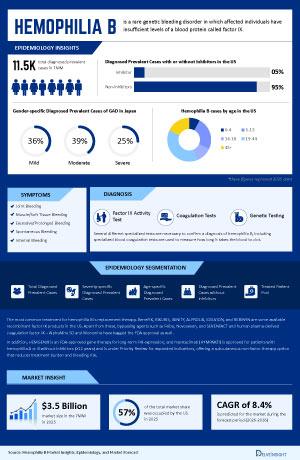
- The Hemophilia B market size was valued at approximately USD 3,500 million in 2025 and is projected to reach around USD 4,000 million by 2036, growing at a CAGR of 8.4% during the forecast period from 2026 to 2036.
- The leading Hemophilia B companies developing therapies in the treatment market include - Centessa Pharmaceuticals, Sanofi (Genzyme), Alnylam Pharmaceuticals, Pfizer , Spark Therapeutics, Be Biopharma, Equilibra Bioscience, Regeneron Pharmaceuticals, Intellia Therapeutics, Novo Nordisk, and others.
Key Hemophilia B Market & Epidemiology Insights
- Hemophilia B is associated with bleeding episodes, but the initial bleeding episodes in the mild and moderate are not very intense, so the patient ignores the early diagnosis, and patients are also undiagnosed in the early stages of Hemophilia B due to lack of diagnosis facilities.
- The most common treatment for Hemophilia B is replacement therapy. BeneFIX, RIXUBIS, IXINITY, ALPROLIX, IDELVION, and REBINYN are the some available recombinant factor IX products in the US. Apart from these, bypassing agents such as Feiba, Novoseven, and SEVENFACT and human plasma-derived coagulation factor IX – AlphaNine SD and Mononine have bagged the FDA approval as well.
- In addition, HEMGENIX is an FDA-approved gene therapy for long-term FIX expression, and marstacimab (HYMPAVZI) is approved for patients with Hemophilia B A or B without inhibitors (≥12 years) and is under Priority Review for expanded indications, offering a subcutaneous non-factor therapy option that reduces treatment burden and bleeding risk.
- The most recent development in Hemophilia B is the addition of Sanofi’s QFITLIA, approved in March 2025 for the treatment of Hemophilia B.
- Hemophilia B market has diverse pipeline such as extended half-life therapies, siRNA, antibodies and gene therapy. These therapies are expected to provide the patient convenient route of administration and longer treatment duration.
- Key players such as Centessa Pharmaceuticals, Sanofi (Genzyme), Alnylam Pharmaceuticals, Pfizer, Spark Therapeutics, Novo Nordisk, and others are in the race for the developing potential therapies for treating Hemophilia B.
- Expected launch of potential therapies, FITUSIRAN (Sanofi), Marstacimab (Pfizer), SerpinPC (Centessa Pharmaceuticals) and others may increase the market size in the coming years, assisted by an increase in the prevalent population of Hemophilia B. In addition to this, gaining popularity of gene therapies and increased focus on prophylactic treatment will boast the market 7MM during the forecast period (2026─2036).
Hemophilia B Market Size and Forecast in the 7MM
- 2025 Hemophilia B Market Size: ~USD 3,500 million
- 2036 Projected Hemophilia B Market Size: ~USD 4000 million
- Hemophilia B Growth Rate (2026–2036): 8.4% CAGR
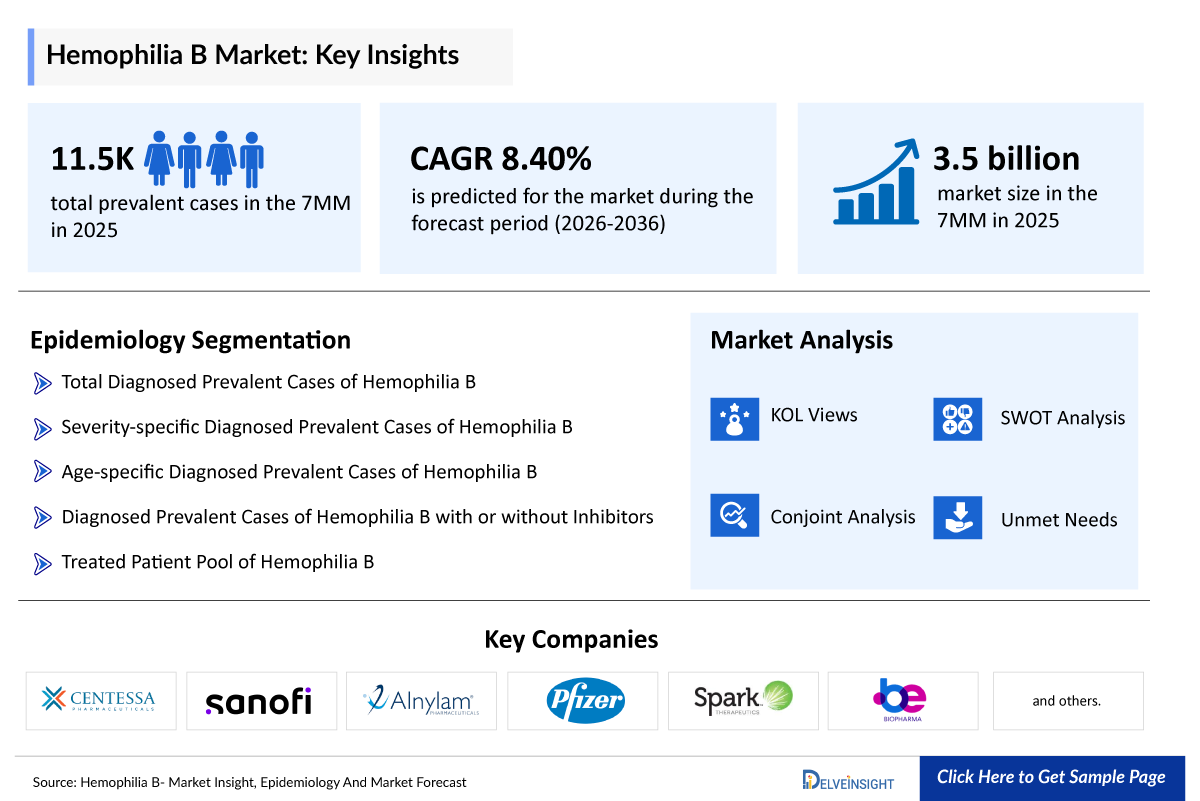
DelveInsight's ‘Hemophilia B Market Insights, Epidemiology and Market Forecast – 2036’ report delivers an in-depth understanding of the Hemophilia B, historical and forecasted epidemiology, as well as the Hemophilia B therapeutics market trends in the United States, EU4 (Germany, Spain, Italy, and France) and the United Kingdom, and Japan.
The Hemophilia B market report delivers a comprehensive analysis of the current treatment landscape, including standards of care, clinical practices, and evolving therapeutic algorithms. It evaluates Hemophilia B patient burden trends, revenue & market share dynamics, peak patient share & therapy uptake analysis, and provides an in-depth market size assessment, and growth rate projections (Historical & Forecast 2022–2036) across global regions. The report highlights key unmet medical needs in Hemophilia B and maps the competitive and clinical landscape to uncover high value opportunities, providing a clear outlook on future market growth potential.
Key Factors Driving the Hemophilia B Market
- Advancements in Hemophilia B Diagnosis: Although Hemophilia B is a rare genetic bleeding disorder, improvements in diagnostic capabilities and increasing awareness are leading to earlier and more accurate identification of patients. The adoption of advanced coagulation assays, genetic testing, and neonatal screening programs has enhanced detection rates, particularly in developed markets. This improved diagnosis expands the identified patient pool, supports timely initiation of prophylactic therapy, and contributes to overall market growth.
- Rising Opportunities in Hemophilia B: The Hemophilia B treatment landscape is evolving rapidly with the development of extended half-life factor IX therapies, non-factor replacement treatments, and gene therapies offering the potential for long-term disease control. Significant unmet need in inhibitor patients and the demand for reduced treatment burden create strong opportunities for innovative therapies to gain market share. Additionally, supportive regulatory pathways, increasing investment in rare disease research, and improved access to specialized care centers are expected to drive treatment uptake and market expansion over the forecast period.
- Emerging Hemophilia B Competitive Landscape: Some of the Hemophilia B drugs in clinical trials include BE-101, SR604, REGV131-LNP1265, PF-06741086 (Marstacimab) and others.
Scope of the Hemophilia B Market Report | |
|
Study Period |
2022–2036 |
|
Historical Year |
2022–2025 |
|
Forecast Period |
2026–2036 |
|
Base Year |
2026 |
|
Geographies Covered |
ü North America: The US; ü Europe: Germany, France, Italy, Spain and the UK; ü Asia-Pacific: Japan |
|
Hemophilia B Market CAGR (Study period/Forecast period) |
8.4% (2025 ̶ 2036) |
|
Hemophilia B Epidemiology Segmentation Analysis |
Patient Burden Assessment
|
|
Hemophilia B Companies |
|
|
Hemophilia B Therapies |
|
|
Hemophilia B Market |
Segmented by
|
|
Analysis |
|
Hemophilia B Disease Understanding
Hemophilia B Overview and Diagnosis
Hemophilia B, also called Christmas disease, is a rare genetic bleeding disorder in which affected individual have insufficient levels of a blood protein called factor IX. Factor IX is a clotting factor and clotting factors are specialized proteins needed for blood clotting, the process by which blood Hemophilia B a wound to stop bleeding and promote healing. The severity of Hemophilia B that a person has is determined by the amount of factor IX (FIX) in the blood. Although there is currently no cure for Hemophilia B, treatment focuses on managing symptoms and improving quality of life. Research efforts continue to explore potential therapies and better understand the disease.
Hemophilia B Diagnosis
Diagnosis of Hemophilia B is made by investigating the patient’s personal history of bleeding, the patient’s family history of bleeding and inheritance, and laboratory testing. Several different specialized tests are necessary to confirm a diagnosis of Hemophilia B, including specialized blood coagulation tests are used to measure how long it takes the blood to clot. The initial test is the activated partial thromboplastin time (aPTT). If the results of the aPTT test are abnormal, more specific blood tests must be used to determine if the cause of the abnormal aPTT is due to a deficiency of factor IX/Hemophilia B, factor VIII/Hemophilia B A or another clotting factor. A specific factor assay Hemophilia B determines the severity level of the factor deficiency.
Further details are provided in the report...
Hemophilia B Treatment
Treatment for Hemophilia B aims to manage symptoms, improve quality of life, and slow disease progression. The most common treatment for Hemophilia B is called Replacement therapy. Concentrates of clotting factor IX are the foundation of this treatment and are administered as an infusion. BeneFIX, RIXUBIS, IXINITY, ALPROLIX, IDELVION, and REBINYN are the some available recombinant factor IX products in the US. Plasma-Derived Factor IX Concentrates and Fresh Frozen Plasma is also used for the treatment. While there is currently no cure for Hemophilia B-B, a multidisciplinary approach involving healthcare professionals, caregivers, and support networks is essential in providing comprehensive care and support to individuals B living with the disease. While Anti TFPI, Activated protein C Inhibitor, gene therapies and others offer hope for a reduced burden of treatment and improved quality of life, the gene therapy clinical trial results reported to date suggest that people with Hemophilia B are closer to achieving a durable, functional cure, a treatment that may relieve them from the need for ongoing prophylaxis.
Further details related to country-based variations are provided in the report...
Hemophilia B Unmet Needs
The section “unmet needs of Hemophilia B” outlines the critical gaps between the current state of patient care, diagnosis, and the ideal & effective management of the disease. It highlights the obstacles experienced by patients, clinicians, and researchers and identifies potential solutions for future progress.
1. Need for novel therapies
2. Access to experienced sarcoma pathologists
3. Early diagnosis and treatment
4. Relapse and survival
5. Treatment toxicity and side effects
6. Need for biomarkers and others…..
Comprehensive unmet needs insights in Hemophilia B and their strategic implications are provided in the full report...
Hemophilia B Epidemiology
The Hemophilia B epidemiology section provides insights about the historical and current Hemophilia B patient pool and forecasted trends for individual seven major countries. It helps to recognize the causes of current and forecasted trends by exploring numerous studies and views of key opinion leaders. This part of the Hemophilia B market report also provides the diagnosed patient pool and their trends along with assumptions undertaken.
Key Findings from Hemophilia B Epidemiological Analysis and Forecast
- According to DelveInsight’s estimates, the total prevalent cases of Hemophilia B in the 7MM were approximately 11,500 in 2025.
- Among EU4 and the UK, France had highest diagnosed prevalent cases of Hemophilia B with approximately ~1,700 cases, followed by the UK and Italy. On the other hand, Spain had the lowest diagnosed prevalent cases of Hemophilia B, in 2025.
- Among the Hemophilia B patients, i.e., with or without/ Non-Inhibitors, the latter one accounts for a higher number of Hemophilia B cases. In the US, around ~250 cases accounts for inhibitor and around ~4,500 cases for non-inhibitor in 2025.
- In 2025, there were around ~1,600, ~1,700, and ~1,100 cases of mild, moderate and severe cases of Hemophilia B respectively in the US.
Hemophilia B Drug Chapters & Competitive Analysis
The drug chapter segment of the Hemophilia B report encloses a detailed analysis of the marketed and late-stage (Phase III) pipeline drug. The marketed drugs segment encloses drugs such as RIXUBIS (Takeda Pharmaceutical/Baxter International), HEMGENIX (CSL Behring/uniQure), fitusiran (Sanofi), and others. Furthermore, the current key players for emerging drugs and their respective drug candidates include Marstacimab (Pfizer), Concizumab (Novo Nordisk) and others. The drug chapter also helps understand the Hemophilia B clinical trial details, expressive pharmacological action, agreements and collaborations, approval and patent details, and the latest news and press releases.
Hemophilia B Marketed drugs Analysis
HEMGENIX (etranacogene dezaparvovec-drlb): CSL Behring/uniQure
HEMGENIX by CSL Behring and uniQure is an AAV5-based gene therapy. AAV5 gene therapies has experienced any confirmed cytotoxic T-cell-mediated immune response to the capsid. Additionally, pre-clinical and clinical data show that AAV5-based gene therapies may be viable treatments in patients with pre-existing antibodies to AAV5, thereby potentially increasing patient eligibility for treatment compared to other gene therapy product candidates. This therapy was approved in November 2022 to treat adults with Hemophilia B (congenital Factor IX deficiency) who currently use Factor IX prophylaxis therapy or have a current or historical life-threatening hemorrhage or have repeated, serious spontaneous bleeding episodes. HEMGENIX also has been granted conditional marketing authorization by the European Commission (EC) for the European Union and European Economic Area, and the United Kingdom's Medicines and Healthcare products Regulatory Agency (MHRA).
Comparison of Emerging Hemophilia B Drugs Under Development | |||||
|
Drug Name |
Company |
RoA |
MoA |
Molecule Type |
Approval Year in the US |
|
Fitusiran (QFITLIA) |
Sanofi |
SC |
antithrombin-lowering therapy |
monoclonal antibody |
2025 |
|
Concizumab (ALHEMO) |
Novo Nordisk |
SC |
Inhibits tissue factor pathway inhibitor (TFPI) |
monoclonal antibody |
2024 |
Note: A detailed marketed therapies assessment will be provided in the final report...
Hemophilia B Pipeline Analysis
BE-101: Be Biopharma
BE-101 is an innovative gene therapy under development by Be Biopharma for the treatment of Hemophilia B. Unlike conventional factor replacement therapies, BE-101 is a first-in-class engineered B Cell Medicine (BCM) that utilizes autologous B cells patient-derived immune cells as therapeutic agents. These B cells are genetically edited using CRISPR/Cas9 technology to insert the human factor IX (FIX) gene, enabling them to produce and secrete therapeutic levels of FIX continuously.
- In July 2025, The first patient has been dosed in the first-in-human Phase I/II clinical trial called BeCoMe-9 (NCT06611436) in the US This multi-center, open-label dose-escalation trial is designed to test the safety and preliminary efficacy of BE-101 in adults with moderately severe to severe Hemophilia B.
- In June 2024, FDA Grants Orphan Drug Designation for BE-101, a novel engineered B cell medicine, for the treatment of Hemophilia B.
Comparison of Hemophilia B Emerging Drugs Under Development | |||||||
|
Drug Name |
Company |
Highest Phase |
Indication |
RoA |
MoA |
Molecule Type |
Anticipated Launch in the US |
|
SR604 |
Equilibra Bioscience |
I |
Hemophilia A or Hemophilia B |
SC |
selectively blocks FVa/FVIIIa degradation by inhibition of APC anticoagulant function |
monoclonal antibody |
2028 |
|
Note: Launch insights are provisional and may change with future report updates or the occurrence of major key catalysts. | |||||||
Note: A detailed emerging therapies assessment will be provided in the final report..
Hemophilia B Key Players and Emerging Companies
- Centessa Pharmaceuticals
- Sanofi (Genzyme)/Alnylam Pharmaceuticals
- Pfizer
- Spark Therapeutics
- Be Biopharma
- Equilibra Bioscience
- Regeneron Pharmaceuticals
- Intellia Therapeutics
- Novo Nordisk, and others
Recent Developments in the Hemophilia B Drug Market
- In March 2025, Sanofi announced that The US Food and Drug Administration (FDA) has approved QFITLIA (fitusiran), the first antithrombin-lowering (AT) therapy for routine prophylaxis to prevent or reduce the frequency of bleeding episodes in adult and pediatric patients (aged 12 or older) with Hemophilia B A or B with or without factor VIII or IX inhibitors. The approval is based on data from the ATLAS phase 3 studies that demonstrated clinically meaningful bleed protection as measured by annualized bleeding rates (ABR) across Hemophilia B patients with or without inhibitors.
- In December 2025, CSL Behring reported long-term follow-up data for HEMGENIX demonstrating sustained factor IX expression and durable bleed control for over 4–5 years, reinforcing its transformative potential as a one-time gene therapy for Hemophilia B.
Hemophilia B Market Outlook
Currently, there is no cure for Hemophilia B and no effective treatment to halt or reverse the progression of the disease. Scarcely any drugs have been approved by the FDA that can slow the course of the disease but cannot cure it completely. Therefore, the management of Hemophilia B remains supportive and symptom-based. In recent years, research on new treatment strategies has increased, taking heed of gene therapy, cellular therapy, and immune tolerance induction agents. There are limited approved drugs that slow disease progression by prolonging autonomy and increasing survival. Moreover, approved by the US FDA to treat Hemophilia B, including IDELVION, IXINITY, REBINYN, ALPROLIX, and others.
There have been many advancements in Hemophilia B treatment over the last 20 years that have encouraged patients to take better control of their illness. However, the development of inhibitors is the primary challenge in treating Hemophilia B, making it difficult to control bleeding episodes and very difficult to perform surgical procedures. There is a lack of a curative treatment option owing to which the patient’s quality of life and daily activities get hampered severely. Gene therapy holds the promise of a lasting cure with a single drug administration instead of other diverse treatments for the X-linked bleeding condition Hemophilia B that are currently in clinical progress. HEMGENIX and QFITLIA are currently FDA approved gene therapies for treating Hemophilia B.
The pipeline holds multiple promising therapies in various stages of development. Therapies like SR604, Marstacimab, SerpinPC, and various other drugs are in ongoing clinical trial holds great potential as it contains disease-modifying agents, symptomatic treatments, and therapies targeting specific pathways, which could help in fulfilling the unmet treatment needs of Hemophilia B patients.
Key Findings
- The total market size in the US for Hemophilia B was estimated to be approximately USD 2 billion in 2025, which is expected to grow during the forecast period (2026–2036).
- In 2025, in the US, among all the therapies, recombinant FIX - Extended Half-Life (EHL) captured the highest market share.
- Most of the treatment therapies are associated with IV administration, which is difficult due to set-up and administration time, and pain associated with poking the vein. Moreover, the frequent injections are not convenient for patients with Hemophilia B.
Further details will be provided in the report...
Drug Class/Insights into Leading Emerging and Marketed Therapies in Hemophilia B (2022–2036 Forecast)
- The Hemophilia B treatment landscape is undergoing a significant transformation from traditional factor replacement therapies toward long-acting recombinant factors, gene therapies, and rebalancing agents. While factor IX (FIX) replacement remains the backbone of treatment, emerging therapies are focused on durable expression, reduced dosing frequency, and improved bleed protection, addressing key challenges such as treatment burden, adherence, and inhibitor development.
- Factor IX replacement therapies (standard of care): Recombinant and plasma-derived FIX products remain the mainstay of treatment, used for both on-demand and prophylactic management. Long-acting extended half-life (EHL) therapies such as Alprolix (by Sanofi) and Idelvion (by CSL Behring) have improved dosing convenience by reducing infusion frequency. Despite effectiveness, these therapies require lifelong intravenous administration and are associated with high treatment burden.
- Gene therapies (potentially curative approach): Gene therapy has emerged as a breakthrough modality aiming for one-time treatment with sustained FIX expression. HEMGENIX (by CSL Behring) is the first approved gene therapy for Hemophilia B, demonstrating long-term FIX activity and significant reduction in bleeding rates. Other gene therapy candidates remain in development, focusing on improving durability, safety, and patient eligibility.
- Next-generation gene therapies (pipeline advancements): Emerging gene therapies are being designed with improved vectors and expression control. Candidates from companies such as Pfizer and Spark Therapeutics are in clinical or late-stage evaluation, although some programs have faced regulatory or strategic delays. The focus remains on enhancing long-term efficacy and minimizing variability in expression levels.
- Non-factor replacement therapies (rebalancing agents): Novel approaches aim to restore hemostatic balance independent of FIX replacement. RNA interference therapies such as Fitusiran (by Sanofi) reduce antithrombin levels to enhance thrombin generation and are in late-stage development for Hemophilia B A and B. These therapies offer subcutaneous administration and less frequent dosing, representing a major shift from traditional infusions.
- Monoclonal antibody-based therapies: While more established in Hemophilia B A, bispecific antibodies are being explored for Hemophilia B as well. Agents targeting natural anticoagulants or coagulation pathways are under investigation, aiming to provide prophylaxis without factor replacement, though development is still earlier compared to Hemophilia B A.
Further details will be provided in the report...
Hemophilia B Drug Uptake
This section focuses on the uptake rate of potential Hemophilia B drugs expected to be launched in the market during the forecast period (2026–2036). The analysis covers the Hemophilia B market's uptake by drugs, patient uptake by therapy, and sales of each drug.
The landscape of Hemophilia B treatment has experienced a transformation with the uptake of novel drugs. These innovative therapies are redefining standards of care. While HEMGENIX has already made its debut in the market, the recent launch of QFITLIA has raised hopes that it could be a game-changer for Hemophilia B. The competition between these two therapies is not only about efficacy but also about accessibility, affordability, and safety. It remains to be seen which of these gene therapies will emerge as the preferred option for patients and healthcare providers.
Further detailed analysis of emerging therapies' drug uptake in the report…
Market Access and Reimbursement of Hemophilia B
The United StatesThe US Reimbursement for Hemophilia B Therapies
|
| |
|
Drug |
Access Program |
|
Fitusiran (QFITLIA) |
· HemAssist Patient Support Program · HemAssist Copay Assistance Program |
|
Etranacogene dezaparvovec (HEMGENIX) |
· HEMGENIX Connect Patient Support Program · HEMGENIX Copay Assistance Program · Medicare Part D |
Reimbursement is a crucial factor that affects the drug’s access to the market. Often, the decision to reimburse comes down to the price of the drug relative to the benefit it produces in treated patients. To reduce the healthcare burden of these high-cost therapies, many payment models are being considered by payers and other industry insiders.
Further details are provided in the final report….
Hemophilia B Therapies Price Scenario & Trends
Pricing and analogue assessment of Hemophilia B therapies highlights evolving price dynamics structures. This section summarizes the cost of approved treatments, closest and most appropriate analogue selection for emerging therapies, and understanding of how pricing influences market access, adherence, and long-term uptake.
Pricing of Hemophilia B Approved Drugs
The wholesale acquisition cost (WAC) of HEMGENIX, a one-time gene therapy approved for Hemophilia B, is approximately USD 3.5 million per infusion, making it the most expensive drug globally.
Further details are provided in the final report...
Industry Experts and Physician Views for Hemophilia B
To keep up with Hemophilia B market trends, we take Key Opinion Leaders (KOLs) and Subject Matter Experts (SMEs) opinions working in the domain through primary research to fill the data gaps and validate our secondary research. Industry experts were contacted for insights on the Hemophilia B emerging therapies, evolving treatment landscape, patient adherence to conventional therapies, therapy switching trends, drug adoption and uptake, accessibility challenges, and epidemiology and real-world prescription patterns in Hemophilia B, including MD, PhD, Instructor, Postdoctoral Researcher, Professor, Researcher, and others.
DelveInsight’s analysts connected with 10+ KOLs to gather insights; however, interviews were conducted with 6+ KOLs in the 7MM. Centers such as the University of North Carolina at Chapel Hill, Berlin Institute of Health at Charité, and the University of Nottingham, etc. were contacted. Their opinion helps understand and validate current and emerging Hemophilia B therapies, highlight unmet medical needs, provide epidemiological context, and support strategic decisions for market access, therapy adoption, and pipeline prioritization in Hemophilia B.
| Region | Key Opinion Leaders (KOLs) and Subject Matter Experts (SMEs) |
|
United States |
“The BENEGENE-2 data demonstrate the promise of this gene therapy candidate as a potential one-time option for people living with hemophilia B as a means of reducing the clinical and treatment burden over the long term.” |
|
United Kingdom |
“We describe a well-treated hemophilia population with the majority of patients on prophylaxis but, despite this, impaired [quality of life] is reported with a high frequency of pain, mobility problems and anxiety/depression.” |
Hemophilia B Report Qualitative Analysis: SWOT and Conjoint Analysis
We perform qualitative and market Intelligence analysis using various approaches, such as SWOT analysis and conjoint analysis.
In the SWOT analysis of Hemophilia B, strengths, weaknesses, opportunities, and threats in terms of disease diagnosis, patient awareness, patient burden, competitive landscape, cost-effectiveness, and geographical accessibility of therapies are provided.
Conjoint analysis analyzes emerging therapies based on relevant attributes such as safety, efficacy, frequency of administration, route of administration, and order of entry. Scoring is given based on these parameters to analyze the effectiveness of therapy.
The team of analysts analyzes promising emerging therapies based on relevant attributes such as safety, efficacy, frequency of administration, route of administration, and order of entry. In efficacy, the trial’s primary and secondary outcome measures are evaluated, whereas the therapies’ safety is evaluated, wherein the acceptability, tolerability, and adverse events are majorly observed. In addition, the scoring is also based on the route of administration, order of entry, probability of success, and the addressable patient pool for each therapy. According to these parameters, the final weightage score and the ranking of the emerging therapies are decided.
Scope of the Hemophilia B Market Report
- The report covers a segment of key events, an executive summary, a descriptive overview of Hemophilia B, explaining its causes, signs and symptoms, pathogenesis, and currently available treatments.
- Comprehensive insight has been provided into the epidemiology segments and forecasts, the future growth potential of the diagnosis rate, and disease progression along treatment guidelines.
- Additionally, an all-inclusive account of both the current and emerging treatments, along with the elaborative profiles of late-stage and prominent therapies, will have an impact on the current treatment landscape.
- A detailed review of the Hemophilia B market, historical and forecasted market size, market share by therapies, detailed assumptions, and rationale behind our approach is included in the report, covering the 7MM drug outreach.
- The report provides an edge while developing business strategies by understanding trends through SWOT analysis and expert insights/KOL views, patient journey, and treatment preferences that help in shaping and driving the 7MM Hemophilia B market.
Hemophilia B Market Report Insights
- Hemophilia B Patient Population Forecast
- Hemophilia B Therapeutics Market Size
- Hemophilia B Pipeline Analysis
- Hemophilia B Market Size and Trends
- Hemophilia B Market Opportunity (Current and forecasted)
Hemophilia B Market Report Key Strengths
- Epidemiology based (Epi based) Bottom up Forecasting
- Artificial Intelligence (AI)-enabled Market Research Report
- 11-year forecast
- Hemophilia B Market Outlook (North America, Europe, Asia-Pacific)
- Patient Burden Trends (by geography)
- Hemophilia B Treatment Addressable Market (TAM)
- Hemophilia B Competitive Landscape
- Hemophilia B Major Companies Insights
- Hemophilia B Price Trends and Analogue Assessment
- Hemophilia B Therapies Drug Adoption/Uptake
- Hemophilia B Therapies Peak Patient Share analysis
Hemophilia B Makret Report Assessment
- Hemophilia B Current Treatment Practices
- Hemophilia B Unmet Needs
- Hemophilia B Clinical Development Analysis
- Hemophilia B Emerging Drugs Product Profiles
- Hemophilia B Market Attractiveness
- Hemophilia B Qualitative Analysis (SWOT and Conjoint Analysis)
- Hemophilia B Market Drivers
- Hemophilia B Market Barriers
FAQs Realted to Hemophilia B Market Report:
Hemophilia B Market Insights
- What was the Hemophilia B market size, the market size by therapies, market share (%) distribution in 2025, and what would it look like by 2036? What are the contributing factors for this growth?
- What are the anticipated pricing variations among different geographies for the emerging therapies in the future?
- What can be the future treatment paradigm of Hemophilia B?
- What are the disease risks, burdens, and unmet needs of Hemophilia B? What will be the growth opportunities across the 7MM concerning the patient population with Hemophilia B?
- Who is the major future competitor in the market, and how will the competitors affect their market share?
- What are the current options for the treatment of Hemophilia B? What are the current guidelines for treating Hemophilia B in the US, Europe, and Japan?
Reasons to Buy Hemophilia B Market Forecast Report
- The report will help in developing business strategies by understanding the latest trends and changing treatment dynamics driving the Hemophilia B market.
- Bottom up forecasting builds from the affected population to product forecasts, delivering a robust, data driven approach ideal for new therapies and novel classes.
- Insights on patient burden/disease incidence, evolution in diagnosis, and factors contributing to the change in the epidemiology of the disease during the forecast years.
- Understand the existing market opportunities in varying geographies and the growth potential over the coming years.
- Identifying strong upcoming players in the market will help devise strategies to help get ahead of competitors.
- Detailed analysis and ranking of class-wise potential current and emerging therapies under the conjoint analysis section to provide visibility around leading classes.
- To understand KOLs’ perspectives on the accessibility, acceptability, and compliance-related challenges of existing treatment to overcome barriers in the future.
- Detailed insights on the unmet needs of the existing market so that the upcoming players can strengthen their development and launch strategy.
- This Artificial Intelligence (AI) enabled report summarize and simplify complex datasets within the report into clear, actionable insights for stakeholders, investors, and healthcare providers, enabling faster, data driven decisions.