Hereditary Angioedema Market Summary
- The approved therapies Hereditary Angioedema Therapeutics Market consist of Sebetralstat (EKTERLY) (KalVista Pharmaceuticals), Garadacimab (ANDEMBRY) (CSL Behring), Berotralstat (ORLADEYO), (BioCryst Pharmaceuticals), Donidalorsen (DAWNZERA) (Ionis Pharmaceuticals and Otsuka Pharmaceutical), lanadelumab (TAKHZYRO) (Takeda), HAEGARDA (CSL Behring), and others.
- The leading Hereditary Angioedema Companies include Shire, Takeda Pharma, CSL Behring, Pharming Group, BioCryst Pharmaceuticals, Ionis Pharmaceuticals, KalVista Pharmaceuticals, and others.
Hereditary Angioedema Market and Epidemiology Analysis
- A major health inequity for the rare disease community is the lengthy diagnostic journey, which varies by disease. While the average time for a rare disease diagnosis is 4–5 years, for conditions like HAE, 50% of patients wait over a decade for an accurate diagnosis.
- HAE is a variable and burdensome disease where the patients’ disease activity, frequency and severity of attacks, the impact of the disease on their daily lives, and their quality of life, along with the control of their condition, should be assessed at every visit.
- Based on gender, Hereditary Angioedema is more prevalent in females (~60%) than men.
- Among EU4 and the Uk, Germany (~20) had the highest number of Hereditary Angioedema Diagnosed Prevalent Cases followed by France, and Italy had the lowest number of cases.
- Potential drug targets include inhibiting factor XII (e.g., with a blocking antibody), plasma kallikrein inhibitor, inhibiting the cleavage of prekallikrein, and blocking the bradykinin-B2-receptor. Along with this, few gene therapies are being developed for treating HAE; this will help treat the newly identified mutations such as FXII and PLG HAE.
- In 2025, progress in HAE was defined by multiple first-in-class approvals and late-stage candidates with potential to further reshape treatment, led by Ionis’s donidalorsen as the first RNA-targeting prophylactic, alongside KalVista’s sebetralstat as the first oral on-demand therapy and CSL’s garadacimab as the first prophylactic factor XIIa inhibitor.
- Lanadelumab continues to represent a major standard of care in prophylactic HAE management, supported by robust efficacy data, long-term safety experience, and broad physician familiarity.
- The emerging Hereditary Angioedema Pipeline is being advanced by several biotechnology companies, including Intellia Therapeutics (Lonvoguran ziclumeran), ADARx Pharmaceuticals (ADX-324/Onvuzosiran), Astria Therapeutics (Navenibart/STAR-0215), Pharvaris (Deucrictibant/PHA022121/PHA-121), and Attune Pharmaceuticals (ATN-249), among others, reflecting continued innovation across gene-editing, RNA-based, monoclonal antibody, and oral therapeutic approaches.
- Deucrictibant is being evaluated as an oral bradykinin B2 receptor antagonist and has the potential to provide both on-demand and prophylactic treatment flexibility, depending on clinical outcomes.
- Lonvoguran ziclumeran represents one of the most innovative pipeline assets, utilizing in vivo CRISPR gene-editing technology to potentially provide long-term disease control following a single administration.
- Despite the availability of multiple effective prophylactic and on-demand treatments, there is currently no cure for HAE. Existing therapies primarily focus on preventing attacks or managing acute episodes rather than addressing the underlying genetic cause of the disease, resulting in a lifelong treatment burden for patients.
Hereditary Angioedema Market Size and Forecast in the 7MM
| 2025 Hereditary Angioedema Market Size | XX Million |
| 2036 Projected Hereditary Angioedema Market Size | XX Million |
| Hereditary Angioedema Growth Rate (2026-2036) | XX% CAGR |
Key Factors Driving the Hereditary Angioedema Market Growth
-
Advancements in Targeted Therapies
Continued development of therapies targeting the kallikrein-kinin pathway, including plasma kallikrein inhibitors, factor XIIa inhibitors, RNA-based therapies, and gene-editing approaches, is expanding treatment options and improving patient outcomes.
-
Shift Toward Convenient Treatment Options
The introduction of oral therapies and long-acting prophylactic agents is reducing treatment burden and enhancing patient adherence, supporting broader treatment uptake. Historically, HAE management relied heavily on injectable or intravenous therapies, which could be associated with administration challenges and reduced convenience.
-
Supportive Regulatory and Reimbursement Environment
Regulatory incentives for rare diseases and favorable reimbursement for high-value therapies continue to encourage innovation and commercial growth within the HAE market.
DelveInsight's ‘Hereditary Angioedema Market Insights, Epidemiology and Market Forecast – 2036’ report delivers an in-depth understanding of the HAE, historical and forecasted epidemiology, as well as the HAE market trends in the United States, EU4 (Germany, Spain, Italy, and France), the United Kingdom, and Japan.
The Hereditary Angioedema Treatment Market Report delivers a comprehensive analysis of the current treatment landscape, including standards of care, clinical practices, and evolving therapeutic algorithms. It evaluates HAE patient burden trends, revenue & market share dynamics, peak patient share & therapy uptake analysis, and provides an in-depth market size assessment, and growth rate projections (Historical & Forecast 2022–2036) across global regions. The report highlights key unmet medical needs in HAE and maps the competitive and clinical landscape to uncover high‑value opportunities, providing a clear outlook on future market growth potential.
Scope of the Hereditary Angioedema Therapeutics Market | |
|
Study Period |
2022–2036 |
|
Historical Year |
2022–2025 |
|
Forecast Period |
2026–2036 |
|
Base Year |
2026 |
|
Geographies Covered |
|
|
Hereditary Angioedema Market CAGR (Forecast period) |
XX% (2026–2036) |
|
Hereditary Angioedema Epidemiology Segmentation Analysis |
Patient Burden Assessment
|
|
Hereditary Angioedema Companies |
|
|
Hereditary Angioedema Therapies |
|
|
Hereditary Angioedema Market |
Segmented by
|
|
Analysis |
|
Hereditary Angioedema Understanding and Treatment Algorithm
Hereditary Angioedema Overview and Diagnosis
HAE is a rare genetic disorder characterized by recurrent episodes of swelling affecting the skin, gastrointestinal tract, and upper airway. Most cases result from mutations in the SERPING1 gene, leading to deficiency or dysfunction of C1 esterase inhibitor (C1-INH). This causes excessive production of bradykinin, which increases vascular permeability and triggers swelling attacks. Symptoms may occur spontaneously or be precipitated by factors such as stress, trauma, infections, or hormonal changes. While attack frequency varies among patients, laryngeal attacks can be life-threatening due to the risk of airway obstruction.
Hereditary Angioedema Diagnosis is based on clinical history, family history, and laboratory testing. Hereditary Angioedema Patients typically present with recurrent swelling episodes without urticaria and may experience severe abdominal pain due to gastrointestinal involvement. Because symptoms often resemble allergic reactions or gastrointestinal disorders, diagnosis is frequently delayed. Confirmation is achieved through measurement of C4 levels and C1-INH antigenic and functional levels, while genetic testing may be used in selected cases to support diagnosis or family screening.
Further details are provided in the report.
Current Hereditary Angioedema Treatment Landscape
HAE management includes both on-demand treatment of acute attacks and long-term prophylaxis to prevent future episodes. Acute attacks are treated with therapies targeting the bradykinin pathway, such as C1-INH replacement products, bradykinin receptor antagonists, or plasma kallikrein inhibitors. Long-term prophylaxis may involve monoclonal antibodies, oral kallikrein inhibitors, C1-INH replacement therapies, or emerging RNA-targeted treatments. The primary goals of therapy are to reduce attack frequency, prevent severe complications, and improve patients' quality of life.
Further details related to country-based variations are provided in the report.
Hereditary Angioedema Unmet Needs
The section “unmet needs of HAE” outlines the critical gaps between the current state of patient care, diagnosis, and the ideal & effective management of the disease. It highlights the obstacles experienced by patients, clinicians, and researchers and identifies potential solutions for future progress.
- Underdiagnosed and misdiagnosed because its symptoms resemble those of allergic and gastrointestinal conditions
- Incomplete attack prevention
- Quality-of-life burden
- Treatment for pediatric patients, and others…..
Note: Comprehensive unmet needs insights in HAE and their strategic implications are provided in the full report.
Hereditary Angioedema Epidemiology
Key Findings from Hereditary Angioedema Epidemiological Analysis and Forecast
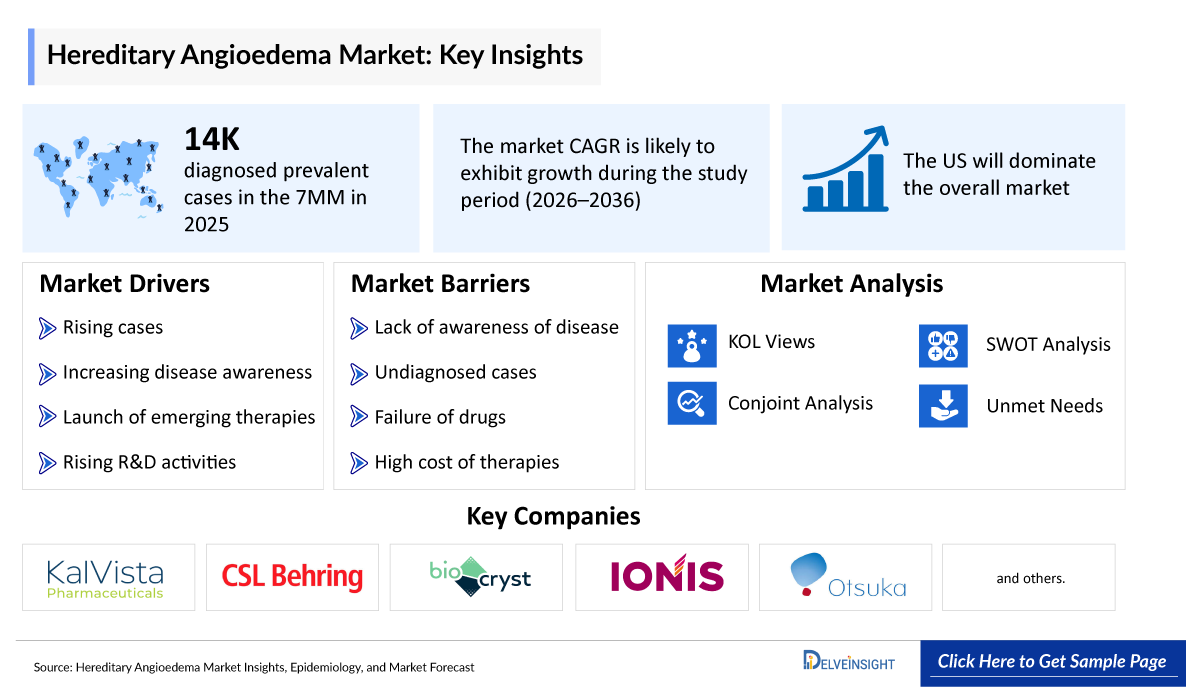
- As per DelveInsight’s assessment, the total Hereditary Angioedema Diagnosed Prevalent Cases in the 7MM in 2025 was ~14,000, which is expected to increase by 2036.
- Among the 7MM, the US accounted for the highest prevalent cases of HAE in 2025 while Japan accounted for the least number of prevalent cases.
- A higher percentage of diagnosed prevalent cases were observed in the age group 17–65 years in the US, i.e., ~5,500 in 2025.
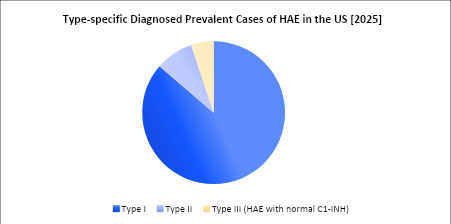
- Based on type-specific diagnosed prevalent cases of HAE, Type I (~80) had the highest number of type-specific cases followed by Type II (~10) cases.
Hereditary Angioedema Epidemiology Segmentation in the 7MM
- Total Hereditary Angioedema Diagnosed Prevalent Cases
- Hereditary Angioedema Type-specific Diagnosed Prevalent Cases
- Hereditary Angioedema Gender-specific Diagnosed Prevalent Cases
- Hereditary Angioedema Age-specific Diagnosed Prevalent Cases
- Total Hereditary Angioedema Treated Cases
Hereditary Angioedema Market Recent Breakthroughs and Developments
- In June 2026, Pharvaris presented data supporting differentiated profile of deucrictibant in HAE at European Academy of Allergy and Clinical Immunology (EAACI) Annual Congress 2026.
- In June 2026, Intellia Therapeutics presented additional positive results from the global Phase III HAELO clinical trial of lonvo-z for HAE in a late-breaking oral presentation at the EAACI Annual Congress 2026. Results from the trial were simultaneously published in the New England Journal of Medicine.
- In June 2026, ADARx Pharmaceuticals announced that Phase I/II clinical data for onvuzosiran, was presented at the 2026 Annual Meeting of the EAACI. The presentation included the design of the ongoing Phase III STOP-HAE clinical trial.
- In May 2026, Pharvaris announced submission of New Drug Application (NDA) of deucrictibant immediate release (IR) capsule for the on-demand treatment of HAE attacks remains on-track for 1H of 2026.
- In May 2026, Pharvaris announced topline data from CHAPTER-3, a pivotal Phase III study of deucrictibant extended-release (XR) for the prophylaxis of HAE attacks, expected in 3Q of 2026.
- In May 2026, BioCryst Pharmaceuticals announced that it entered into a license agreement granting an Irish affiliate of Neopharmed Gentili exclusive rights to commercialize navenibart for HAE in Europe. In exchange, BioCryst will receive USD 70 million upfront and will be eligible to receive up to USD 275 million in future regulatory and sales milestone payments. BioCryst will also receive tiered royalties on net sales ranging from 18% to 30%.
- In May 2026, BioCryst Pharmaceuticals announced that the company presented seven abstracts from its HAE portfolio at the Annual Meeting of the EAACI. One of the absrtracts was featuring clinical trial outcomes with navenibart.
- Intellia Therapeutics in its May 2026 corporate presentation, anticipated efforts for planned US commercial launch in H1 of 2027.
- Astria Therapeutics, in its Q1 2026 presentation, anticipated IP through 2042.
- In April 2026, Pharvaris presented data evaluating safety margins of administration of deucrictibant immediate-release (IR) capsule(s) in combination with deucrictibant XR tablet at the Consortium of Independent Immunology Clinics (CIIC) Spring 2026 Conference.
- In April 2026, Intellia Therapeutics announced that it has initiated a rolling submission of a biologics license application (BLA) to the US FDA seeking approval of lonvo-z for HAE.
- In March 2026, KalVista Pharmaceuticals announced new interim results from its KONFIDENT-KID clinical trial evaluating sebetralstat for the on-demand treatment of HAE attacks in children ages 2-11 presented at the 2026 Global Angioedema Leadership Conference.
- In February 2026, ADARx Pharmaceuticals announced that it will present Phase I/II clinical data and Phase III design for its onvuzosiran program for the treatment of HAE. The poster presentation was given at the 2026 Annual Meeting of the American Academy of Allergy, Asthma & Immunology (AAAAI).
- In Janurary 2026, BioCryst Pharmaceuticals announced that it has completed its acquisition of Astria Therapeutics. The transaction strengthens BioCryst’s position as a leader in HAE and enhances the company’s long-term growth trajectory.
- In Janurary 2026, Ionis Pharmaceuticals and Otsuka Pharmaceutical announced that the EC has approved donidalorsen in the EU for the routine prevention of recurrent attacks of HAE in adults and adolescents aged 12 years and older. The approval follows the positive opinion of the Committee for Medicinal Products for Human Use.
Hereditary Angioedema Drug Analysis & Competitive Landscape
The HAE drug chapter provides a detailed, market-focused review of the emerging Hereditary Angioedema Pipeline across Phase III clinical trials and preclinical trials. It covers the mechanism of action, clinical trial data, regulatory approvals, patents, collaborations, and strategic partnerships for each therapy, along with their advantages, limitations, and recent developments. This section offers critical insights into the Hereditary Angioedema treatment landscape, supporting market assessment, competitive analysis, and growth forecasting for the Hereditary Angioedema Therapeutics Market.
Hereditary Angioedema Approved Therapies
-
Sebetralstat (EKTERLY): KalVista Pharmaceuticals
First and only oral on-demand therapy approved by the US FDA for the treatment of acute attacks of HAE in people 12 years of age and older. EKTERLY is approved in 7 key markets. KalVista in its March 2026, corporate overview stated the net sales of EKTERLY were USD ~49 million in 2025. The organization planned the expansion of sebetralstat to ages 2-11 in 2027. The efficacy and safety of EKTERLY was established by the results from KalVista’s phase III KONFIDENT clinical trial, which was the largest clinical trial program ever conducted in HAE.
-
Garadacimab (ANDEMBRY): CSL Behring
Garadacimab is an anti-FXIIa that has completed the Phase III pivotal study as a new type of once-monthly subcutaneous prophylactic treatment for attacks related to HAE. It is CSL's first homegrown recombinant monoclonal antibody to gain FDA approval. Garadacimab uniquely inhibits the plasma protein, FXIIa. It inhibits this cascade at the top as compared to other HAE therapies that target downstream mediators. In April 2025, CSL Behring launched SC Injection 200 mg pen of garadacimab in Japan.
|
Competitive Landscape of Marketed/Approved Therapies | ||||||
|
Drug/Therapy |
Company |
Indication |
Molecule Type |
MoA |
RoA |
Marketed Region |
|
Sebetralstat (EKTERLY) |
KalVista Pharmaceuticals |
HAE |
Small molecule |
Plasma kallikrein inhibitor |
Oral |
US: 2025 |
|
Garadacimab (ANDEMBRY) |
CSL Behring |
HAE |
Monoclonal antibody |
Inhibiting factor XIIa (anti-FXIIa mAb) |
SC |
US: 2025 |
|
Berotralstat (ORLADEYO) |
BioCryst Pharmaceuticals |
HAE |
Small molecule |
Plasma kallikrein inhibitor |
Oral |
US: 2025 |
|
Donidalorsen (DAWNZERA) |
Ionis Pharmaceuticals and Otsuka Pharmaceutical |
HAE |
Antisense oligonucleotide (ASO) |
PKK inhibitor |
SC |
US: 2025 |
|
Lanadelumab (TAKHZYRO) |
Takeda |
HAE |
Monoclonal antibody |
Plasma kallikrein inhibitor |
SC |
US: 2018 |
|
HAEGARDA |
CSL Behring |
HAE |
Biologic |
C1-INH |
SC |
US: 2017 |
Note: Detailed marketed therapies assessment will be provided in the final report.
Hereditary Angioedema Pipeline Analysis
-
Lonvoguran ziclumeran (lonvo-z; formerly NTLA-2002): Intellia Therapeutics
Lonvo-z is being developed as a one-time IV infusion administered in an outpatient setting. It is an in vivo CRISPR gene editing candidate that is intended to inactivate the kallikrein B1 (KLKB1) gene to permanently lower kallikrein and bradykinin levels. First and only investigational therapy that targets the KLKB1 gene. Lonvo-z has the potential to become the first one-time treatment for HAE.
HAELO met its primary endpoint with an 87% reduction. Favorable safety and tolerability data were observed for lonvo-z. this study is the largest cohort of patients receiving proposed label dose. Lonvo-z has received five notable regulatory designations: ODD and RMAT Designation by the US FDA, the Innovation Passport by the UK Medicines and Healthcare products Regulatory Agency (MHRA), Priority Medicines (PRIME) Designation by the EMA, as well as ODD by the European Commission.
-
ADX-324 (Onvuzosiran): ADARx Pharmaceuticals
Onvuzosiran is an investigational siRNA therapy designed to inhibit Prekallikrein (PKK) generation at the mRNA level and reduce the production of plasma PKK. Onvuzosiran is currently being evaluated in the Phase III STOP-HAE clinical trial and has received Orphan Drug Designation (ODD) for the treatment of patients with Hereditary Angioedema from the US FDA.
|
Competitive Landscape of Emerging Drugs | ||||||
|
Drug Name |
Company |
Highest Phase |
Indication |
RoA |
MoA |
Anticipated Launch in the US |
|
Lonvoguran ziclumeran (lonvo-z; formerly NTLA-2002) |
Intellia Therapeutics |
III |
HAE |
IV infusion |
KLKB1 gene inhibitor |
Information is available in the full report |
|
ADX-324 (Onvuzosiran) |
ADARx Pharmaceuticals |
III |
HAE |
SC |
PKK inhibitor |
Information is available in the full report |
|
Navenibart (STAR-0215) |
Astria Therapeutics |
III |
HAE |
SC |
Kallikrein inhibitor |
Information is available in the full report |
|
Deucrictibant (PHA022121 / PHA-121) |
Pharvaris |
III |
HAE |
Oral |
Bradykinin B2-receptor antagonist |
Information is available in the full report |
|
ATN-249 |
Attune Pharmaceuticals |
I |
HAE |
Oral |
Plasma kallikrein inhibitor |
Information is available in the full report |
|
Note: Launch insights are provisional and may change with future report updates or the occurrence of major key catalysts. | ||||||
Note: Detailed emerging therapies assessment will be provided in the final report.
Hereditary Angioedema Companies, Market Leaders and Emerging Companies
- KalVista Pharmaceuticals
- CSL Behring
- BioCryst Pharmaceuticals
- Ionis Pharmaceuticals
- Otsuka Pharmaceutical
- Takeda
- CSL Behring
- Intellia Therapeutics
- ADARx Pharmaceuticals
- Astria Therapeutics
- Pharvaris
- Attune Pharmaceuticals, and others
Hereditary Angioedema Market Outlook
The Hereditary Angioedema Treatment Market landscape is undergoing a significant transformation, driven by the introduction of novel prophylactic and on-demand therapies that aim to improve disease control, reduce treatment burden, and enhance patient quality of life.
Among the most notable developments, sebetralstat represents a major milestone as the first orally administered on-demand treatment approved for HAE attacks. Prior to sebetralstat approval, all approved on-demand therapies in the US required IV or SC administration, creating a substantial treatment burden for patients. By offering rapid oral administration during attacks, sebetralstat provides patients and physicians with an important and welcome advance in HAE treatment options and has the potential to become a foundational therapy in acute HAE management.
The prophylactic treatment segment continues to expand with recently approved and emerging agents targeting key components of the kallikrein-kinin pathway. Garadacimab, introduces a novel mechanism of action and offers extended dosing intervals, while Berotralstat remains the only widely available oral prophylactic therapy, providing a convenient alternative to injectable treatments. Donidalorsen is expected to further strengthen the prophylaxis market by offering sustained attack prevention with infrequent dosing.
Next-generation Hereditary Angioedema Pipeline candidates have the potential to reshape the competitive landscape. Lonvoguran ziclumeran, in vivo CRISPR-based gene-editing therapy, aims to provide long-term reduction of disease activity following a single administration. Similarly, RNA interference therapies such as Onvuzosiran are being developed to deliver prolonged suppression of kallikrein production and reduce treatment frequency. Navenibart has demonstrated the potential for extended-duration prophylaxis with infrequent dosing schedules, addressing a key unmet need for durable disease control.
The Hereditary Angioedema Treatment Market is expected to be driven by increasing adoption of convenient oral therapies, longer-acting prophylactic agents, and innovative genetic medicines that may offer sustained or potentially functional cures.
Further details will be provided in the report….
Hereditary Angioedema Drug Class/Insights into Leading Emerging and Marketed Therapies (2022–2036 Forecast)
The HAE market (2022–2036 forecast) is transitioning from a treatment paradigm dominated by injectable acute and prophylactic therapies toward a more diverse landscape featuring oral agents, monoclonal antibodies, RNA-targeted therapeutics, and gene-editing approaches. These innovations aim to improve convenience, provide longer-lasting disease control, and potentially deliver functional cures.
- Plasma Kallikrein Inhibitors: Sebetralstat and berotralstat belong to the oral kallikrein inhibitor class. By inhibiting plasma kallikrein, these agents reduce bradykinin production, the primary mediator of swelling attacks in HAE.
- Monoclonal Antibody Therapies: Garadacimab targets activated coagulation Factor XIIa, preventing initiation of the kallikrein-kinin cascade upstream, while navenibart inhibits plasma kallikrein directly. These therapies offer prolonged suppression of disease activity and have the potential to reduce dosing frequency while maintaining durable attack prevention.
- RNA-Targeted Therapeutics: Donidalorsen is an ASO designed to reduce hepatic production of prekallikrein, whereas onvuzosiran utilizes RNA interference (RNAi) technology to suppress kallikrein synthesis. By targeting disease biology at the messenger RNA level, these therapies may provide sustained prophylactic efficacy with infrequent dosing schedules.
HAE innovation is being driven by convenient oral therapies, long-acting biologics, RNA-targeted medicines, and potentially curative gene-editing technologies. This diversification is expected to improve patient adherence, reduce treatment burden, minimize attack frequency, and support continued growth of the HAE market throughout the forecast period. As these therapies advance through clinical development and commercialization, they are likely to redefine standards of care and intensify competition across both acute and prophylactic treatment segments.
Hereditary Angioedema Drug Uptake
This section focuses on the uptake rate of potential Hereditary Angioedema drugs expected to be launched in the market during the forecast period (2026–2036). The analysis covers the HAE drug’s uptake, performance at peak, factors affecting performance during prime years of growth, patient uptake by therapy, and anticipated sales generated by each drug.
The uptake is expected to be driven by oral treatment options, extended-duration prophylactic agents, and potentially disease-modifying genetic therapies. Competition will increasingly focus on achieving complete attack prevention while minimizing dosing frequency and treatment burden, supporting a shift toward more personalized HAE management..
Detailed insights of emerging therapies' drug uptake is included in the report
Hereditary Angioedema Market Access and Reimbursement of Approved Therapies
Reimbursement is a crucial factor that affects the drug’s access to the market. Often, the decision to reimburse comes down to the price of the drug relative to the benefit it produces in treated patients. To reduce the healthcare burden of these high-cost therapies, many payment models are being considered by payers and other industry insiders.
The United States
|
US Reimbursement of Therapies Approved for Hereditary Angioedema | |
|
Drug/Therapy |
Access Program |
|
Sebetralstat (EKTERLY) |
KalVista Cares |
|
Lanadelumab (TAKHZYRO) |
Takeda Patient Support Co-Pay Program |
The report further provides detailed insights on the country-wise accessibility and reimbursement scenarios, cost-effectiveness scenario of approved therapies, programs making accessibility easier and out-of-pocket costs more affordable, insights on patients insured under federal or state government prescription drug programs, etc.
NOTE: Further Details are provided in the final report….
Hereditary Angioedema Therapies Price Scenario & Trends
Pricing and analogue assessment of HAE therapies highlights evolving price dynamics structures. This section summarizes the cost of approved treatments, closest and most appropriate analogue selection for emerging therapies, and understanding of how pricing influences market access, adherence, and long-term uptake.
Industry Experts and Physician Views for Hereditary Angioedema
To keep up with HAE market trends, we take Key Opinion Leaders (KOLs) and Subject Matter Experts (SMEs) opinions working in the domain through primary research to fill the data gaps and validate our secondary research. Industry experts were contacted for insights on the HAE emerging therapies, evolving treatment landscape, patient adherence to conventional therapies, therapy switching trends, drug adoption and uptake, accessibility challenges, and epidemiology and real-world prescription patterns in HAE, including MD, PhD, Instructor, Postdoctoral Researcher, Professor, Researcher, and others.
DelveInsight’s analysts connected with 15+ KOLs to gather insights at the country level. Centers such as University of Cincinnati, University Hospital Ulm, and University Medical Center Mainz etc. were contacted. Their opinion helps understand and validate current and emerging HAE therapies, highlight unmet medical needs, provide epidemiological context, and support strategic decisions for market access, therapy adoption, and pipeline prioritization in HAE.
Region |
Key Opinion Leaders (KOLs) and Subject Matter Experts (SMEs) |
|
United States |
“Despite frequent misdiagnosis and delayed diagnosis of HAE, recent epidemiologic research supports a prevalence of HAE which ranges from 1 in 60,000 to 1 in 100,000 individuals. Maximizing QoL, along with limiting morbidity and preventing mortality, is the general therapy aim for HAE.” |
|
Germany |
“There is a significant unmet need in diagnosing HAE with normal C1 inhibitors. While type 1 and type 2 HAE have reliable diagnostic tests, patients with normal C1 inhibitors face a longer journey, relying on clinical observation and treatment response over time. Both diagnostic and therapeutic gaps remain for these patients.” |
Hereditary Angioedema Qualitative Analysis Report: SWOT and Conjoint Analysis
We perform qualitative and Hereditary Angioedema Therapeutics Market Intelligence analysis using various approaches, such as SWOT analysis and conjoint analysis. In the SWOT analysis of HAE, strengths, weaknesses, opportunities, and threats in terms of disease diagnosis, patient awareness, patient burden, competitive landscape, cost-effectiveness, and geographical accessibility of therapies are provided.
Conjoint analysis analyzes emerging therapies based on relevant attributes such as safety, efficacy, frequency of administration, route of administration, and order of entry. Scoring is given based on these parameters to analyze the effectiveness of therapy.
The team of analysts analyzes promising emerging therapies based on relevant attributes such as safety, efficacy, frequency of administration, route of administration, and order of entry. In efficacy, the trial’s primary and secondary outcome measures are evaluated, whereas the therapies’ safety is evaluated, wherein the acceptability, tolerability, and adverse events are majorly observed.
In addition, the scoring is also based on the route of administration, order of entry, probability of success, and the addressable patient pool for each therapy. According to these parameters, the final weightage score and the ranking of the emerging therapies are decided.
Scope of the Hereditary Angioedema Market Report
- The Hereditary Angioedema Therapeutics Market Report covers a segment of key events, an executive summary, a descriptive overview, explaining their causes, signs and symptoms, pathogenesis, and currently available treatments.
- Comprehensive insight has been provided into the epidemiology segments and forecasts, the future growth potential of the diagnosis rate, and disease progression along treatment guidelines.
- Additionally, an all-inclusive account of both the current and emerging treatments, along with the elaborative profiles of late-stage and prominent therapies, will have an impact on the current treatment landscape.
- A detailed review of the HAE market, historical and forecasted market size, market share by therapies, detailed assumptions, and rationale behind our approach is included in the report, covering the 7MM drug outreach.
- The report provides an edge while developing business strategies by understanding trends through SWOT analysis and expert insights/KOL views, patient journey, and treatment preferences that help in shaping and driving the 7MM HAE market.
Hereditary Angioedema Market Report Insights
- Hereditary Angioedema Patient Population Forecast
- Hereditary Angioedema Therapeutics Market Size
- Hereditary Angioedema Pipeline Analysis
- Hereditary Angioedema Market Size and Trends
- Hereditary Angioedema Market Opportunity (Current and Forecasted)
Hereditary Angioedema Market Report Key Strengths
- Epidemiology‑based (Epi‑based) Bottom‑up Forecasting
- Artificial Intelligence (AI)-Enabled Market Research Report
- 11-Year Forecast
- Hereditary Angioedema Market Outlook (North America, Europe, Asia-Pacific)
- Patient Burden Trends (By Geography)
- Hereditary Angioedema Treatment Addressable Market (TAM)
- Hereditary Angioedema Competitve Landscape
- Hereditary Angioedema) Major Companies Insights
- Hereditary Angioedema Price Trends and Analogue Assessment
- Hereditary Angioedema Therapies Drug Adoption/Uptake
- Hereditary Angioedema Therapies Peak Patient Share Analysis
Hereditary Angioedema Market Report Assessment
- Current Hereditary Angioedema Treatment Practices
- Hereditary Angioedema Unmet Needs
- Hereditary Angioedema Clinical Development Analysis
- Hereditary Angioedema Emerging Drugs Product Profiles
- Hereditary Angioedema Market Attractiveness
- Hereditary Angioedema Qualitative Analysis (SWOT and Conjoint Analysis)
Key Questions Answered in the Hereditary Angioedema Market Report
Hereditary Angioedema Treatment Market Insights
- What was the Hereditary Angioedema Treatment Market Size, the market size by therapies, Hereditary Angioedema Drugs Market Share (%) distribution in 2025, and what would it look like by 2036? What are the contributing factors for this growth?
- What are the anticipated pricing variations among different geographies for the emerging therapies in the future?
- What can be the future treatment paradigm of HAE?
- What are the disease risks, burdens, and unmet needs of Hereditary Angioedema? What will be the growth opportunities across the 7MM concerning the patient population with Hereditary Angioedema?
- Who is the major future competitor in the market, and how will the competitors affect their market share?
- What are the current options for the treatment of HAE? What are the current guidelines for treating HAE in the US, Europe, and Japan?
Reasons to Buy the Hereditary Angioedema Therapeutics Market Report
- The Hereditary Angioedema Therapeutics Market Report will help in developing business strategies by understanding the latest trends and changing treatment dynamics driving the Hereditary Angioedema Drugs Market.
- Bottom-up forecasting builds from the affected population to product forecasts, delivering a robust, data-driven approach ideal for new therapies and novel classes.
- Insights on patient burden/disease Hereditary Angioedema Incidence, evolution in diagnosis, and factors contributing to the change in the epidemiology of the disease during the forecast years.
- Understand the existing Hereditary Angioedema Drugs Market opportunities in varying geographies and the growth potential over the coming years.
- Identifying strong upcoming players in the Hereditary Angioedema Drugs Market will help devise strategies to help get ahead of competitors.
- Detailed analysis and ranking of class-wise potential emerging therapies under the conjoint analysis section to provide visibility around leading classes.
- To understand KOLs’ perspectives on the accessibility, acceptability, and compliance-related challenges of existing Hereditary Angioedema Treatment to overcome barriers in the future.
- Detailed insights on the unmet needs of the existing Hereditary Angioedema Drugs Market so that the upcoming players can strengthen their development and launch strategy.
- This Artificial Intelligence (AI)-enabled report summarize and simplify complex datasets with in the report into clear, actionable insights for stakeholders, investors, and healthcare providers, enabling faster, data-driven decisions.
Stay updated with us for Recent Articles