
Hypoxic Ischemic Encephalopathy Market
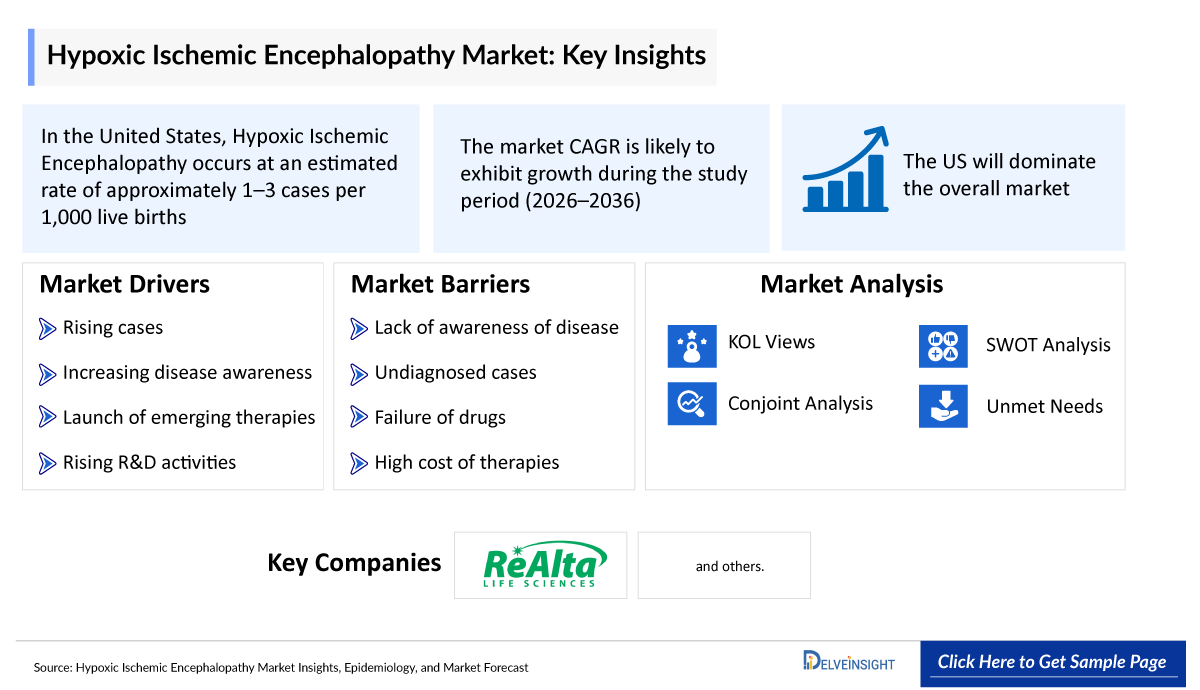
- The Hypoxic ischemic encephalopathy Market is expected to experience significant growth during the forecast period (2024–2034). Ongoing advancements in neonatal intensive care and perinatal medicine may lead to improved survival rates among preterm infants or those with birth complications, increasing the pool of infants at risk of hypoxic-ischemic encephalopathy. Thus, a combination of medical, technological, demographic, and societal factors may contribute to an increased market for hypoxic-ischemic encephalopathy in the coming years.
- The hypoxic-ischemic encephalopathy market dynamics for treatments are promising, driven by factors such as increasing occurence, rising awareness, expanding treatment options, and a competitive landscape. However, challenges such as regulatory hurdles and the need for continued innovation remain key considerations for stakeholders in this market.
- Despite advancements in neonatal care, hypoxic-ischemic encephalopathy remains a leading cause of long-term neurological disabilities in infants worldwide, highlighting the importance of preventive measures and early intervention strategies. Research is crucial to elucidate the complex mechanisms underlying the condition, allowing for the development of targeted therapies and accurate prognostic markers to improve outcomes for affected infants
- To propel the market in the coming years, several Hypoxic Ischemic Encephalopathy Companies like ReAlta Life Science, Pharmazz, etc. are developing their assets like RLS-0071 and Sovateltide, among others. Due to the anticipated approval of some of the emerging therapies that are under development in the coming years, the overall hypoxic ischemic encephalopathy therapeutics market is expected to grow at a significant CAGR over the forecast period (2024–2034).
Request for unlocking the CAGR of the "Hypoxic Ischemic Encephalopathy Treatment Market"
DelveInsight’s comprehensive report titled “Hypoxic Ischemic Encephalopathy Market Insights, Epidemiology, and Market Forecast – 2034” offers a detailed analysis of hypoxic ischemic encephalopathy. The Hypoxic Ischemic Encephalopathy Drugs Market report presents historical and projected epidemiological data covering total incident cases of hypoxic ischemic encephalopathy, total incident cases of hypoxic ischemic encephalopathy segmented by severity, and total treated cases of hypoxic ischemic encephalopathy. In addition to epidemiology, the Hypoxic Ischemic Encephalopathy Therapeutics Market report encompasses various aspects related to the patient population. These aspects include the diagnosis process, prescription patterns, physician perspectives, market accessibility, treatment options, and prospective developments in the market across seven major markets: the United States, EU4 (Germany, France, Italy, and Spain), the United Kingdom, and Japan, spanning from 2020 to 2034.
The Hypoxic Ischemic Encephalopathy Treatment Market Report analyzes the existing treatment practices and unmet medical requirements in hypoxic ischemic encephalopathy. It evaluates the Hypoxic Ischemic Encephalopathy Drugs Market potential and identifies potential business prospects for enhancing therapies or interventions. This valuable information enables stakeholders to make well-informed decisions regarding product development and strategic planning for the Hypoxic Ischemic Encephalopathy Therapeutics Market.
|
Study Period |
2020–2034 |
|
Forecast Period |
2024–2034 |
|
Geographies Covered |
|
|
Hypoxic Ischemic Encephalopathy Epidemiology |
|
|
Hypoxic Ischemic Encephalopathy Treatment Market |
|
|
Hypoxic Ischemic Encephalopathy Drugs Market Analysis |
|
|
Hypoxic Ischemic Encephalopathy Companies |
And others… |
|
Hypoxic Ischemic Encephalopathy Market Growth Barrier |
A significant barrier to market growth of hypoxic ischemic encephalopathy is the limited availability of effective treatments, challenges like logistics, contraindications, and limited access to specialized neonatal intensive care units. Additionally, the absence of consensus on optimal adjunctive therapies further constrains clinicians' ability to manage hypoxic ischemic encephalopathy effectively. |
Hypoxic Ischemic Encephalopathy Treatment Market
Hypoxic ischemic encephalopathy is a serious neurological condition that occurs when there is a lack of oxygen and blood flow to the brain, leading to brain injury in newborn infants. This condition typically arises during the perinatal period, around the time of birth, and can result from various factors such as prolonged labor, placental abnormalities, umbilical cord complications, maternal hypotension, or fetal distress. Hypoxic ischemic encephalopathy can cause significant neurological deficits, including cognitive impairment, motor disabilities, seizures, and even death. Prompt recognition and intervention are crucial for minimizing brain damage and improving long-term outcomes in affected infants.
Hypoxic Ischemic Encephalopathy Diagnosis and Treatment Algorithm
Diagnosing hypoxic ischemic encephalopathy typically involves a comprehensive assessment combining clinical evaluation, medical history review, and diagnostic tests. The examination focuses on evaluating the newborn's reflexes, muscle tone, responsiveness, and any signs of neurological dysfunction, with abnormal findings suggesting the presence of hypoxic ischemic encephalopathy. Additionally, imaging studies like cranial ultrasound, MRI, or CT scans are utilized to assess brain structure and detect signs of injury. Furthermore, blood tests may be conducted to assess metabolic parameters, and organ function, and rule out other potential causes of neurological symptoms. EEG may also be performed to evaluate brain electrical activity and detect abnormalities indicative of brain injury. The Apgar score, administered at one and five minutes after birth, provides further insight into the newborn's condition, with a low score indicating possible perinatal distress warranting additional evaluation.
The treatment and management of hypoxic ischemic encephalopathy typically involve a multi-modal approach aimed at mitigating brain injury, managing complications, and supporting neurological recovery in affected infants. The cornerstone of treatment is therapeutic hypothermia, where the infant's body temperature is lowered to around 33-34°C for 72 hours. This approach helps reduce metabolic demand, attenuate secondary injury cascades, and improve neurological outcomes. Additionally, supportive care measures such as seizure management, optimizing oxygenation and ventilation, and providing neuroprotective agents like erythropoietin may be employed to enhance treatment efficacy. Long-term follow-up and early intervention services are essential for addressing neurodevelopmental outcomes and providing support for affected infants and their families beyond the acute phase of hypoxic ischemic encephalopathy.
Hypoxic Ischemic Encephalopathy Epidemiology
The epidemiology section of the hypoxic ischemic encephalopathy drugs market report offers information on the patient populations, including historical and projected trends for each of the seven major markets. Examining key opinion leader views from physicians or clinical experts can assist in identifying the reasons behind historical and projected trends. The diagnosed patient pool, their trends, and the underlying assumptions are all included in this section of the report.
This section also presents the data with relevant tables and graphs, offering a clear and concise view of the occurence of hypoxic ischemic encephalopathy. Additionally, the report discloses the assumptions made during the analysis, ensuring data interpretation and presentation transparency. This epidemiological data is valuable for understanding the disease burden and its impact on the patient population across various regions.
Key Findings
- As per the World Health Organization (WHO), hypoxic ischemic encephalopathy is the fifth leading cause of death worldwide in children under 5 years of age.
- As per our estimates, it has been observed that neonatal hypoxic ischemic encephalopathy is estimated to occur in about 1.5 per 1,000 live births.
- Among infants with moderate hypoxic ischemic encephalopathy, nearly 10-20% develop minor neurological conditions, and approximately 30-50% develop more serious complications as reported by the hypoxic ischemic encephalopathy help center.
- Our estimates suggest males are considered a risk factor for neonatal hypoxic-ischemic encephalopathy, this sex difference in outcome following neonatal hypoxic ischemic encephalopathy may be influenced by the presence of sex-specific hormones like testosterone, sex differences in preferred mechanisms of apoptosis, and the protective effect of certain factors more abundant in female brains.
- The Hypoxic Ischemic Encephalopathy epidemiology is expected to change during the forecast period (2024-2034) driven by various factors including advancements in medical technology and practices, changes in perinatal care protocols, improvements in maternal health, and changes in socio-economic factors affecting prenatal and neonatal care access.
Unlock comprehensive insights! Click Here to Purchase the Full Epidemiology Report @ Hypoxic Ischemic Encephalopathy Prevalence
Hypoxic Ischemic Encephalopathy Market Outlook
The hypoxic-ischemic encephalopathy market is witnessing growth in diagnostic tools and neuroprotective therapies aimed at minimizing brain injury and optimizing long-term outcomes for affected individuals. Collaboration among stakeholders and investment in healthcare infrastructure further contribute to the positive market outlook for disease management. Thus, the hypoxic ischemic encephalopathy therapeutics market is further expected to increase by the major drivers, such as the rising disease population, technological advancements, and upcoming therapies by 2034.
"According to DelveInsight, the hypoxic ischemic encephalopathy Treatment Market Sizein the 7MM is expected to change significantly during the study period 2020–2034"
Emerging Hypoxic Ischemic Encephalopathy Drugs
The hypoxic ischemic encephalopathy treatment market is expected to experience gradual changes, mainly due to the limited availability of emerging therapies in this area. Key Hypoxic Ischemic Encephalopathy Companies, including ReAlta Life Sciences, Pharmazz, JCR Pharma, and others have demonstrated a keen interest in this condition and are actively pursuing the development of potential treatments.
- RLS-0071: ReAlta Life Sciences
RLS-0071 is a 15 amino acid peptide that inhibits humoral inflammation by blocking classical pathway complement activation and cellular inflammation by blocking the neutrophil effectors myeloperoxidase (MPO) and neutrophil extracellular traps (NETs). In an animal model, RLS-0071 has shown a dramatic decrease in brain infarction and an increase in brain function. It can be disease-modifying, as evidenced by histology, neuroimaging (i.e., MRI), and neurocognitive outcomes data.
Currently, the drug candidate is being investigated in a Phase II (STAR) clinical trial.
- Sovateltide: Pharmazz
Sovateltide is a highly selective endothelin-B receptor agonist. Endothelin-B receptors are present within the CNS and are essential to neurodevelopment. The Hypoxic Ischemic Encephalopathy Company has demonstrated the over-expression of endothelin-B receptors in a postnatal animal brain and their decreased expression with the maturity of the brain. Extensive preclinical research has been conducted, which demonstrates that sovateltide promotes neuroprotection and neuroregeneration.
According to the Hypoxic Ischemic Encephalopathy Companies Pipeline, given the encouraging outcomes thus far, additional investigation to evaluate the safety and effectiveness of sovateltide in hypoxic ischemic encephalopathy is scheduled to encompass Phase I trials involving neonates in the US.
- TEMCELL (JR-031HIE): JCR Pharma
TEMCELL, a cell therapy for treating neonatal hypoxic ischemic encephalopathy, was previously approved for the indication of acute graft-versus-host disease in 2015. It is a regenerative medical product for expanded indication. Currently, JCR Pharma is conducting a Phase I/II clinical trial of TEMCELL HS Inj. for the indication of neonatal hypoxic ischemic encephalopathy (development code: JR-031HIE).
Note: Detailed emerging therapies assessment will be provided in the final report.
Hypoxic Ischemic Encephalopathy Therapeutics Market Segmentation
DelveInsight’s ‘Hypoxic Ischemic Encephalopathy Market Insights, Epidemiology, and Market Forecast – 2034’ report provides a detailed outlook of the current and future hypoxic ischemic encephalopathy market, segmented within countries, by therapies, and by classes. Further, the market of each region is then segmented by each therapy to provide a detailed view of the current and future market share of all therapies.
Hypoxic Ischemic Encephalopathy Market Size by Countries
The hypoxic ischemic encephalopathy market size is assessed separately for various countries, including the United States, EU4 (Germany, France, Italy, and Spain), the UK, and Japan. In 2023, the United States held a significant share of the overall 7MM (Seven Major Markets) hypoxic ischemic encephalopathy market, primarily attributed to the country's higher incidence of the condition and the elevated cost of the available treatments. This dominance is projected to persist, especially with the potential early introduction of new products.
Hypoxic Ischemic Encephalopathy Market Size by Therapies
Hypoxic Ischemic Encephalopathy Market Size by Therapies is categorized into current and emerging markets for the study period 2020–2034.
Hypoxic Ischemic Encephalopathy Drugs Uptake
This section focuses on the sales uptake of potential hypoxic ischemic encephalopathy drugs that have recently been launched or are anticipated to be launched in the hypoxic ischemic encephalopathy therapeutics market between 2020 and 2034. It estimates the market penetration of hypoxic ischemic encephalopathy drugs for a given country, examining their impact within and across classes and segments. It also touches upon the financial and regulatory decisions contributing to the probability of success (PoS) of the drugs in the hypoxic ischemic encephalopathy market.
The emerging hypoxic ischemic encephalopathy therapies are analyzed based on various attributes such as safety and efficacy in randomized clinical trials, order of entry and other market dynamics, and the unmet need they fulfill in the hypoxic ischemic encephalopathy market.
Note: Detailed assessment of drug uptake and attribute analysis will be provided in the full report on hypoxic ischemic encephalopathy.
Hypoxic Ischemic Encephalopathy Drugs Market Access and Reimbursement
DelveInsight’s ‘Hypoxic Ischemic Encephalopathy Drugs Market Insights, Epidemiology, and Market Forecast – 2034’ report provides a descriptive overview of the market access and reimbursement scenario of hypoxic ischemic encephalopathy. This section includes a detailed analysis of the country-wise healthcare system for each therapy, enlightening the market access, reimbursement policies, and health technology assessments.
KOL Views
To keep up with current hypoxic ischemic encephalopathy market trends and fill gaps in secondary findings, we interview KOLs and SMEs’ working in the hypoxic ischemic encephalopathy domain. Their opinion helps understand and validate current and emerging therapies and treatment patterns or hypoxic ischemic encephalopathy market trends. This will support the clients in potential upcoming novel treatments by identifying the overall scenario of the market and the hypoxic ischemic encephalopathy unmet needs.
Hypoxic Ischemic Encephalopathy: KOL Insights
DelveInsight’s analysts connected with 50+ KOLs to gather insights; however, interviews were conducted with 15+ KOLs in the 7MM. These KOLs were from organizations, institutes, and hospitals, such as the University at Buffalo, Johns Hopkins University, Heinrich Heine University, Centre Hospitalier Gatien de Clocheville, Universitario de Burgos, and University of Nottingham, among others.
“Hypoxic ischemic encephalopathy in adults and children can be termed as global hypoxic-ischemic injury, which frequently results in life-altering neurological consequences. Adult patients may experience hypotension, cardiac arrest, and carbon monoxide poisoning. Treatment strategies such as hypothermia and administration of excitatory amino acid antagonists can be effective but only if given within 6 hours of injury.”
“Once cerebral palsy develops, there is no effective treatment in current medicine, so it is extremely important to prevent cerebral palsy in the neonatal period. For this, some Japanese hypoxic ischemic encephalopathy researchers are investigating the role of stem cells in treatment. The autologous cord blood stem cell treatment appears to be an optimistic hypoxic ischemic encephalopathy treatment for the future.”
Note: Detailed assessment of KOL Views will be provided in the full report on hypoxic ischemic encephalopathy.
Competitive Intelligence Analysis
We conduct a Competitive and Hypoxic Ischemic Encephalopathy Therapeutics Market Intelligence analysis of the hypoxic ischemic encephalopathy Market, utilizing various Competitive Intelligence tools such as SWOT analysis and Market entry strategies. The inclusion of these analyses is contingent upon data availability, ensuring a comprehensive and well-informed assessment of the market landscape and competitive dynamics.
Hypoxic Ischemic Encephalopathy Pipeline Development Activities
The Hypoxic Ischemic Encephalopathy Therapeutics Market report offers an analysis of therapeutic candidates in Phase II and III stages and examines Hypoxic Ischemic Encephalopathy Companies involved in developing targeted therapeutics for hypoxic ischemic encephalopathy. It provides valuable insights into the advancements and progress of potential treatments in clinical development for this condition.
Pipeline Development Activities
The Hypoxic Ischemic Encephalopathy Therapeutics Market report covers information on collaborations, acquisitions and mergers, licensing, patent details, and other information for emerging hypoxic ischemic encephalopathy therapies.
Take Your Research to the Next Level! Click Here to Get Access to the Full Pipeline Report @ Hypoxic Ischemic Encephalopathy Approved Drugs
Hypoxic Ischemic Encephalopathy Therapeutics Market Report Insights
- Patient-based Hypoxic Ischemic Encephalopathy Market Forecasting
- Therapeutic Approaches
- Hypoxic Ischemic Encephalopathy Pipeline Analysis
- Hypoxic Ischemic Encephalopathy Treatment Market Size
- hypoxic-ischemic encephalopathy Market Trends
- Hypoxic Ischemic Encephalopathy Therapeutics Market Opportunities
- Impact of Upcoming hypoxic-ischemic encephalopathy Therapies
Hypoxic Ischemic Encephalopathy Therapeutics Market Report Key Strengths
- 11 Years Hypoxic Ischemic Encephalopathy Market Forecast
- The 7MM Coverage
- Hypoxic Ischemic Encephalopathy Epidemiology Segmentation
- Key Cross Competition
- Highly Analyzed Hypoxic Ischemic Encephalopathy Therapeutics Market
- Hypoxic Ischemic Encephalopathy Drugs Uptake
Hypoxic Ischemic Encephalopathy Treatment Market Report Assessment
- Current Hypoxic Ischemic Encephalopathy Treatment Market Practices
- Hypoxic Ischemic Encephalopathy Unmet Needs
- Hypoxic Ischemic Encephalopathy Pipeline Product Profiles
- Hypoxic Ischemic Encephalopathy Drugs Market Attractiveness
Key Questions
- How common is hypoxic ischemic encephalopathy?
- What are the key findings of hypoxic ischemic encephalopathy epidemiology across the 7MM, and which country will have the highest number of patients during the study period (2020–2034)?
- What are the currently available for hypoxic ischemic encephalopathy treatment?
- What are the disease risk, burdens, and hypoxic ischemic encephalopathy unmet needs?
- At what CAGR is the hypoxic ischemic encephalopathy drugs market and its epidemiology is expected to grow in the 7MM during the forecast period (2024–2034)?
- How would the unmet needs impact the hypoxic ischemic encephalopathy market dynamics and subsequently influence the analysis of the related trends?
- What would be the forecasted patient pool of hypoxic ischemic encephalopathy in the 7MM covering the United States, EU4 (Germany, France, Italy, and Spain), the UK, and Japan?
- Among EU4 and the UK, which country will have the highest number of patients during the forecast period (2024–2034)?
- How many Hypoxic Ischemic Encephalopathy Companies are currently developing therapies for the hypoxic ischemic encephalopathy treatment?



