
Immune Thrombocytopenia Market Summary
- The Immune Thrombocytopenia Market Size in the 7MM in 2025 was approximately USD 4,000 million; this is anticipated to grow by 2036, driven by extensive market penetration of approved therapies in ITP due to label expansions and entry of new emerging therapies.
- The Immune Thrombocytopenia Treatment Market is anticipated to witness a substantial positive shift owing to better uptake of existing drugs, the expected market launch of one-time gene therapies, and raised awareness.
- The leading Immune Thrombocytopenia Companies include Rigel Pharmaceuticals/Kissei Pharmaceutical, Sobi (Dova Pharmaceuticals), Amgen, Argenx, and others.
Immune Thrombocytopenia Market & Epidemiology Analysis
- Immune Thrombocytopenia is an autoimmune disorder characterized by low platelet count, leading to bruising and bleeding. It presents as acute in children and chronic in adults. The main treatments include corticosteroids, IVIg, and rituximab.
- In 2025, the total cases of Immune Thrombocytopenia were approximately 187,800 cases in the 7MM, which is expected to increase by 2036.
- Primary Immune Thrombocytopenia, accounting for 80% of cases, has no secondary disease, while secondary Immune Thrombocytopenia is associated with conditions like SLE, drugs, infections, and autoimmune diseases, comprising about 20% of cases.
- Immune Thrombocytopenia affects both children and adults, primarily due to autoimmune responses, but can also be triggered by viral or bacterial infections like HIV, Hepatitis C, and Helicobacter pylori. In adults, Immune Thrombocytopenia often develops gradually without clear triggers and tends to be chronic. Conversely, in children, it often resolves spontaneously, with about two-thirds experiencing complete remission.
Request for unlocking the CAGR of the "Immune Thrombocytopenia Drugs Market"
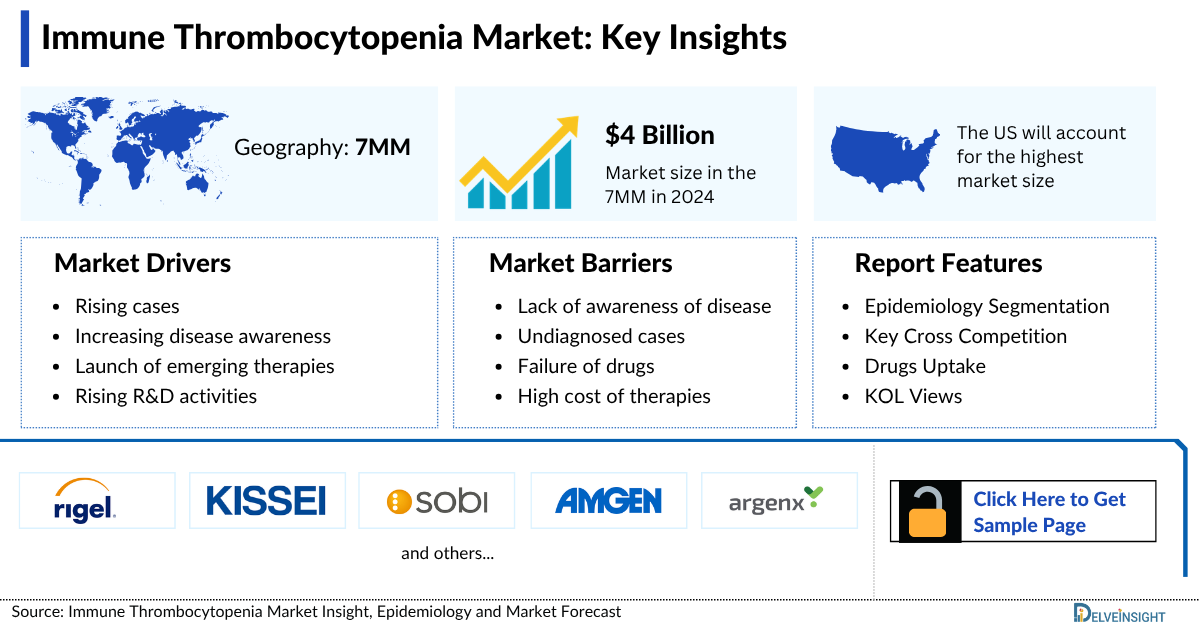
Key Factors Driving the Immune Thrombocytopenic Purpura Market Growth
-
Approval of Sanofi’s WAYRILZ
Sanofi’s WAYRILZ (rilzabrutinib) has achieved a significant regulatory milestone, becoming the first FDA-approved BTK inhibitor for immune thrombocytopenia. The approval is supported by results from the Phase III LUNA trial (NCT04562766), which showed a rapid and sustained platelet response along with improvements in other ITP symptoms.
-
Growing Immune Thrombocytopenic Purpura Diagnosed Patient Pool
The diagnosed patient pool for Immune Thrombocytopenia is expected to grow from 188K cases in the leading markets (the US, EU4, UK, and Japan) in 2025 due to improved disease awareness, better diagnostic techniques, and expanded access to healthcare. Rising adoption of advanced platelet count monitoring and differential diagnosis is leading to earlier and more accurate identification of cases.
-
Immune Thrombocytopenic Purpura Competitive Landscape
With WAYRILZ’s approval, competition to secure a strong foothold in the ITP market has intensified. Key Immune Thrombocytopenia Companies such as Novartis (Ianalumab), Takeda (Mezagitamab), Pfizer (PF-06835375), Genosco/Oscotec (Cevidoplenib), and others are actively working on their lead candidates.
-
Emergence of New Drug Classes in the Immune Thrombocytopenia Market
The introduction and clinical adoption of novel modalities, such as BAFF-R inhibitor (Novartis’ Ianalumab), CXCR5 antagonist (Pfizer’s PF-06835375), Anti-CD38 (Takeda’s Mezagitamab), and others, are also fueling the growth of the immune thrombocytopenic purpura market.
DelveInsight's “Immune Thrombocytopenia Market Insight, Epidemiology and Market Forecast – 2036” report delivers an in-depth understanding of Immune Thrombocytopenia, historical and forecasted epidemiology as well as the Immune Thrombocytopenia market trends in the United States, EU4 (Germany, France, Italy, and Spain) and the United Kingdom, and Japan.
The Immune Thrombocytopenia Treatment Market Report provides real-world prescription pattern analysis, emerging drugs, market share of individual therapies, and historical and forecasted 7MM Immune Thrombocytopenia market size from 2022 to 2036. The report also covers current Immune Thrombocytopenia treatment market practices/algorithms and unmet medical needs to curate the best opportunities and assess the market’s underlying potential.
Scope of the Immune Thrombocytopenia Market Report | |
|
Study Period |
2022–2036 |
|
Forecast Period |
2026–2036 |
|
Geographies Covered |
|
|
Immune Thrombocytopenia Epidemiology |
Segmented by:
|
|
Immune Thrombocytopenia Companies |
|
|
Immune Thrombocytopenia Drugs |
|
|
Immune Thrombocytopenia Market |
Segmented by:
|
|
Analysis |
|
Immune Thrombocytopenia Understanding
Thrombocytopenia is a condition in which the blood has an abnormal number of blood cell fragments called platelets. Platelets are made in the bone marrow along with other kinds of blood cells, and they travel through the blood vessels and stick together (clot) to stop any bleeding if a blood vessel is damaged. Platelets are also called thrombocytes because a clot is also called a thrombus. When a patient’s blood has few platelets, mild-to-serious bleeding can occur inside the body (internal bleeding), underneath the skin, or from the skin’s surface.
A presumptive diagnosis of Immune Thrombocytopenia can be made based on careful history, physical examination, CBC, and blood smear review. However, further investigation is needed to rule out secondary causes and aid in patient management. Incidentally, low platelet counts may require confirmation via blood smear examination. A normal CBC and absence of abnormalities in blood cells help exclude other conditions like leukemia. Immune Thrombocytopenia is favored in otherwise healthy patients without recent medication changes or a family history of thrombocytopenia. While no definitive test exists, a robust response to specific treatments supports the diagnosis.
Further details related to country-based variations in diagnosis are provided in the report
Immune Thrombocytopenia Treatment
Immune Thrombocytopenia treatment approaches for thrombocytopenia aim to address the underlying cause, such as discontinuing culprit drugs or treating infections. However, identifying the cause is often challenging. Platelet transfusion may be used in severe bleeding, but its efficacy can be limited if the cause is immune-related. Corticosteroids are commonly used to increase platelet count when the cause is unknown and there are no contraindications. Specific treatments vary based on the underlying etiology.
Immune Thrombocytopenia Epidemiology
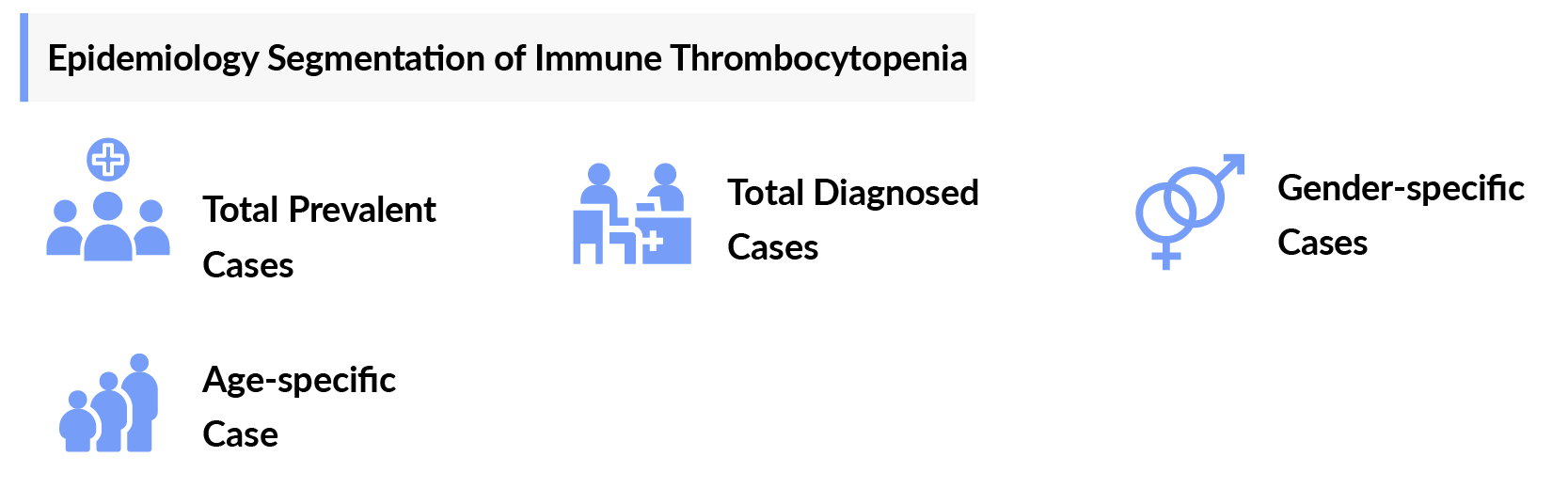
The Immune Thrombocytopenia epidemiology chapter in the report provides historical as well as forecasted in the 7MM covering the United States, EU4 (Germany, France, Italy, and Spain) and the the United Kingdom, and Japan from 2022 to 2036. The Immune Thrombocytopenia epidemiology is segmented with detailed insights into Total Prevalent Cases, Age-specific Cases, and Gender-specific Diagnosed Prevalent Cases of Immune Thrombocytopenia.
Key Findings from Immune Thrombocytopenia Epidemiological Analyses and Forecast
- In 2025, the total cases of ITP were approximately 187,800 cases in the 7MM, which is expected to increase by 2036.
- Among the 7MM, the US accounted for the most Immune Thrombocytopenia Prevalent Cases, compared to EU4 and the UK, and Japan.
- Among EU4 and the UK, the highest number of cases of ITP were found in the UK, i.e., around 28,000 cases in 2025, whereas Spain accounted for the least cases.
- In Japan, among gender-specific ITP cases, female accounted for approximately 14,000 cases, while male reported 8,200 cases, in 2025.
Immune Thrombocytopenia Epidemiology Segmentation
- Total Immune Thrombocytopenia Prevalent Cases
- Immune Thrombocytopenia Age-specific Diagnosed Prevalent Cases
- Immune Thrombocytopenia Gender-specific Diagnosed Prevalent Cases
Immune Thrombocytopenia Market Recent Breakthroughs and Developments
- In December 2025, Novartis presented positive results from VAYHIT2, a Phase III trial evaluating ianalumab plus eltrombopag in patients with primary ITP previously treated with corticosteroids, at the 67th American Society of Hematology Annual Meeting & Exposition (ASH).
- In December 2025, the European Commission has approved rilzabrutinib as a new treatment for ITP in adult patients who are refractory to other treatments. This follows the positive opinion by the European Medicines Agency's Committee for Medicinal Products for Human Use (CHMP).
- In August 2025, the FDA approved Wayrilz (rilzabrutinib) for adults with persistent or chronic immune thrombocytopenia (ITP) unresponsive to prior treatments, following positive results from the Phase 3 LUNA 3 study demonstrating improved platelet counts and symptom relief.
- In February 2025, Novartis' Ianalumab, for the treatment of primary immune thrombocytopenia, was granted FDA orphan designation, according to a post on the agency’s website.
Immune Thrombocytopenia Drugs Analysis
The drug chapter segment of the Immune Thrombocytopenia therapeutics market report encloses a detailed analysis of Immune Thrombocytopenia-marketed drugs and late-stage (Phase III and Phase II) Immune Thrombocytopenia Pipeline Drugs. It also deep dives into the pivotal Immune Thrombocytopenia clinical trial details, recent and expected market approvals, patent details, the latest Immune Thrombocytopenia news, and recent deals and collaborations.
Marketed Immune Thrombocytopenia Drugs
-
TAVALISSE (fostamatinib): Rigel Pharmaceuticals/Kissei Pharmaceutical
Fostamatinib disodium (also known as TAVALISSE; R-985788) is an orally bioavailable investigational agent developed by Rigel Pharmaceuticals and approved for treating patients suffering from persistent/chronic adult idiopathic thrombocytopenic purpura. It inhibits FcR-triggered, SYK-dependent cytoskeletal rearrangement during phagocytosis. As stated by Rigel Pharmaceuticals, fostamatinib has a unique mechanism of action, blocking IgG receptor signaling in both macrophages and B cells via SYK kinase. It was approved by the US FDA in April 2018.
-
DOPTELET (avatrombopag): Sobi (Dova Pharmaceuticals)
DOPTELET is a thrombopoietin receptor agonist indicated for the treatment of thrombocytopenia in adult patients with chronic Immune Thrombocytopenia who have had an insufficient response to previous treatment. In June 2019, the US FDA approved Dova Pharmaceuticals’ supplemental New Drug Application (sNDA) for expanding DOPTELET use. The drug is indicated for the treatment of thrombocytopenia in adults with chronic Immune Thrombocytopenia who have had an insufficient response to a previous treatment.
|
Product |
Company |
Mechanism of Action |
ROA |
Molecule Type |
US Approval |
|
TAVALISSE (Fostamatinib) |
Rigel Pharmaceuticals/Kissei Pharmaceutical |
Kinase inhibitor |
Oral |
Small molecule |
2018 |
|
DOPTELET (avatrombopag) |
Sobi (Dova Pharmaceuticals) |
Thrombopoietin receptor agonist |
Intravenous infusion |
Small molecule |
2018 |
|
NPLATE (romiplostim, AMG-531) |
Amgen |
Thrombopoietin receptor agonist |
Subcutaneous |
Peptide molecule |
2008 |
Note: Detailed current therapies assessment will be provided in the full report of Immune Thrombocytopenia
Emerging Immune Thrombocytopenia Drugs
-
Ianalumab (VAY736): Novartis
Ianalumab is a novel, fully human immunoglobulin G1 monoclonal antibody that targets the BAFF receptor and has a unique dual mechanism of action. Currently, ianalumab is in Phase III of the clinical trial for 1st and 2nd line treatment of ITP. As of December 2025, Novartis intends to submit the VAYHIT2 data from the Phase III study together with upcoming results from the ongoing first-line ITP trial (VAYHIT1) for regulatory review in 2027.
-
Mezagitamab: Millennium Pharmaceuticals/Takeda
Mezagitamab, also known as TAK-079, is a subcutaneously administered human monoclonal antibody (human IgG1 lambda) that binds to the CD38 transmembrane glycoprotein expressed on the surface of cells and can deplete those cells by distinct mechanisms. Currently the drug is being evaluated in Phase III for the treatment of Immune Thrombocytopenia. The drug received Breakthrough Therapy Designation from FDA for chronic ITP. As per the Takeda’s Janauary 2026 presentation, regulatory filing for mezagitamab in immune thrombocytopenia is anticipated between FY2027 and FY2029.
Know more about the Anti-CD38 mAb Therapies @ Anti-CD38 mAb Therapies
|
Therapy Name |
Company Name |
ROA |
MOA |
Phases |
Any Special Status |
|
Rilzabrutinib (PRN-1008) |
Sanofi/ Principia Biopharma |
Oral |
Bruton Tyrosine Kinase (BTK) inhibitor |
III |
FDA Orphan Drug Designation and Fast Track Designation. |
|
Mezagitamab |
Millennium Pharmaceuticals/Takeda |
SC |
Antibody-dependent cell cytotoxicity |
II |
N/A |
|
PF-06835375 |
Pfizer |
SC |
CXCR5 inhibitor |
II |
N/A |
Note: Detailed emerging therapies assessment will be provided in the final report.
Immune Thrombocytopenia Market Outlook
The need to avoid the less effective immune suppressants has led to the development of new more targeted treatments for Immune Thrombocytopenia, starting with the second-generation TPO-RAs and now including SYK inhibition with other classes of treatment in clinical development. The introduction of these novel therapies has allowed to use of less immune suppression in Immune Thrombocytopenia management. Over the last decade, there has been a shift away from immune suppression for the treatment of Immune Thrombocytopenia.
Key Immune Thrombocytopenia companies, such as Sanofi, Takeda, Pfizer, GlaxoSmithKline, and others are evaluating their lead candidates in different stages of clinical development, respectively. They aim to investigate their products for the treatment of Immune Thrombocytopenia.
Key Findings from Immune Thrombocytopenia Market Forecast Report
- The Immune Thrombocytopenia Therapeutics Market Size in the 7MM in 2025 was approximately USD 4,000 million; this is anticipated to grow by 2036, driven by extensive market penetration of approved therapies in ITP due to label expansions and entry of new emerging therapies.
- The US accounts for the largest Immune Thrombocytopenia Therapeutics Market Size in 2025, i.e., nearly 66% in comparison to EU4 (Germany, Italy, France, and Spain) and the UK and Japan.
- Among EU4 and the UK, the UK accounted for the largest ITP market size in 2025, followed by Germany, while Spain represented the least market share during the same year.
- The total market size of ITP in Japan was nearly USD 200 million in 2025, which is expected to increase by 2036.
Immune Thrombocytopenia Drugs Uptake
This section focuses on the uptake rate of potential Immune Thrombocytopenia drugs expected to be launched in the market during 2026–2036, which depends on the competitive landscape, safety, and efficacy data along with order of entry. It is important to understand that the key players evaluating their novel therapies in the pivotal and confirmatory trials should remain vigilant when selecting appropriate comparators to stand the greatest chance of a positive opinion from regulatory bodies, leading to approval, smooth launch, and rapid uptake.
Further detailed analysis of emerging therapies drug uptake in the report…
Immune Thrombocytopenia Clinical Trials Activities
The Immune Thrombocytopenia Therapeutics Market report provides insights into different therapeutic candidates in Phase III and Phase II stages. It also analyzes key Immune Thrombocytopenia Companies involved in developing targeted therapeutics.
Immune Thrombocytopenia Pipeline Development Activities
The Immune Thrombocytopenia Therapeutics Market Report covers information on collaborations, acquisitions and mergers, licensing, and patent details for Immune Thrombocytopenia emerging therapies.
Latest KOL Views on Immune Thrombocytopenia
To keep up with the real-world scenario in current and emerging market trends, we take opinions from Key Industry leaders working in the domain through primary research to fill the data gaps and validate our secondary research. Industry Experts were contacted for insights on the evolving treatment landscape, patient reliance on conventional therapies, patient therapy switching acceptability, and drug uptake along with challenges related to accessibility.
DelveInsight’s analysts connected with 30+ KOLs to gather insights; however, interviews were conducted with 20+ KOLs in the 7MM. Centers such as Queen Mary University of London, Massachusetts General Hospital, Harvard Medical School, Graduate School in Hospital Pharmacy, etc., were contacted. Their opinion helps understand and validate current and emerging treatment patterns of Immune Thrombocytopenia. This will support the clients in potential upcoming novel treatments by identifying the overall scenario of the market and the unmet needs.
|
Region |
KOL Views |
|
United States |
“Rilzabrutinib is an oral, reversible, covalent inhibitor of BTK targeting underlying disease mechanisms of platelet destruction. BTK inhibition targets both adaptive and innate drivers of immune-mediated disease prevents antibody production in B cells, blocks phagocytosis in macrophages, and has additional effects on basophils and neutrophils Furthermore, there is no effect on T cells.” |
|
Italy |
“Immune Thrombocytopenia diagnosis is currently based on exclusion, there are no clinical or laboratory prognostic criteria, and we still need more solid data on the hazards associated with newborn thrombocytopenia. Because rituximab, thrombopoietin-receptor agonists, and fostamatinib may be hazardous in pregnancy, corticosteroids and IVIG remain the backbone of treatment. The quality of life and toxicity of treatments in young girls, adults, and the elderly remain unstudied areas.” |
|
United Kingdom |
“Thrombopoietin receptor agonists are the most appropriate treatment option for Immune Thrombocytopenia and have substantially changed the Immune Thrombocytopenia therapeutic landscape. Other novel compounds, such as Fc receptor blockers, BTK inhibitors, complement inhibitors, and others, are unlikely to have the same likelihood of success as TPO-RAs, but they will have a chance in the treatment of Immune Thrombocytopenia patients.” |
Immune Thrombocytopenia Report Qualitative Analysis
We perform Qualitative and Immune Thrombocytopenia Therapeutics Market Intelligence analysis using various approaches, such as SWOT analysis and Conjoint Analysis. In the SWOT analysis, strengths, weaknesses, opportunities, and threats in terms of gaps in disease diagnosis, patient awareness, physician acceptability, competitive landscape, cost-effectiveness, and geographical accessibility of therapies are provided.
Conjoint Analysis analyzes multiple approved and emerging therapies based on relevant attributes such as safety, efficacy, frequency of administration, route of administration, and order of entry. Scoring is given based on these parameters to analyze the effectiveness of therapy.
Further, the therapies’ safety is evaluated wherein the acceptability, tolerability, and adverse events are majorly observed, and it sets a clear understanding of the side effects posed by the drug in the trials. In addition, the scoring is also based on the probability of success, and the addressable patient pool for each therapy. According to these parameters, the final weightage score and the ranking of the emerging therapies are decided.
Immune Thrombocytopenia Therapeutics Market Access and Reimbursement
The Immune Thrombocytopenia treatment market report further provides detailed insights on the country-wise accessibility and reimbursement scenarios, cost-effectiveness scenario of currently used therapies, programs making accessibility easier and out-of-pocket costs more affordable, insights on patients insured under federal or state government prescription drug programs, etc.
Immune Thrombocytopenia Therapeutics Market Report Scope
- The Immune Thrombocytopenia therapeutics market report covers a segment of key events, an executive summary, descriptive overview of Immune Thrombocytopenia, explaining its causes, signs and symptoms, pathogenesis, and currently available therapies.
- Comprehensive insight has been provided into the epidemiology segments and forecasts, the future growth potential of diagnosis rate, and disease progression along with country-specific treatment guidelines.
- Additionally, an all-inclusive account of both the current and emerging therapies, along with the elaborative profiles of late-stage and prominent therapies, will have an impact on the current Immune Thrombocytopenia Treatment Landscape.
- A detailed review of the Immune Thrombocytopenia therapeutics market, historical and forecasted market size, market share by therapies, detailed assumptions, and rationale behind our approach is included in the report, covering the 7MM drug outreach.
- The Immune Thrombocytopenia Therapeutics market report provides an edge while developing business strategies, by understanding trends, through SWOT analysis and expert insights/KOL views, patient journey, and treatment preferences that help in shaping and driving the 7MM Immune Thrombocytopenia drugs market.
Immune Thrombocytopenia Therapeutics Market Report Insights
- Immune Thrombocytopenia Patient Population
- Immune Thrombocytopenia Therapeutic Approaches
- Immune Thrombocytopenia Pipeline Drugs Analysis
- Immune Thrombocytopenia Market Size
- Immune Thrombocytopenia Market Trends
- Existing and future Immune Thrombocytopenia Drugs Market Opportunity
Immune Thrombocytopenia Therapeutics Market Report Key Strengths
- 11 Years Immune Thrombocytopenia Market Forecast
- 7MM Coverage
- Immune Thrombocytopenia Epidemiology Segmentation
- Inclusion of Country specific treatment guidelines
- KOL’s feedback on approved and emerging therapies
- Key Cross Competition
- Conjoint analysis
- Immune Thrombocytopenia Drugs Uptake
- Key Immune Thrombocytopenia Market Forecast Assumptions
Immune Thrombocytopenia Therapeutics Market Report Assessment
- Current Immune Thrombocytopenia Treatment Market Practices
- Immune Thrombocytopenia Unmet Needs
- Immune Thrombocytopenia Pipeline Drugs Analysis Profiles
- Immune Thrombocytopenia Drugs Market Attractiveness
- Qualitative Analysis (SWOT and Conjoint Analysis)
Key Questions Answered in the Immune Thrombocytopenia Market Report
Immune Thrombocytopenia Treatment Market Insights
- What is the growth rate of the 7MM Immune Thrombocytopenia treatment market?
- What was the Immune Thrombocytopenia treatment market size, the market size by therapies, market share (%) distribution in 2022, and what would it look like in 2036? What are the contributing factors/key catalysts for this growth?
- Is there any unexplored patient setting that can open the window for growth in the future?
- What are the pricing variations among different geographies for approved and off-label therapies?
- How would the market drivers, barriers, and future opportunities affect the market dynamics and subsequent analysis of the associated trends? Although multiple expert guidelines recommend testing for targetable mutations before therapy initiation, why do barriers to testing remain high?
- What are the current and emerging options for the treatment of Immune Thrombocytopenia?
- How many companies are developing therapies for the treatment of Immune Thrombocytopenia?
- What are the recent novel therapies, targets, Immune Thrombocytopenia mechanisms of action, and technologies developed to overcome the limitations of existing therapies?
- Patient/physician acceptability in terms of preferred treatment options as per real-world scenarios?
- What are the country-specific accessibility issues of expensive, recently approved Immune Thrombocytopenia therapies?
Reasons to Buy the Immune Thrombocytopenia Market Report
- The Immune Thrombocytopenia therapeutics market report will help in developing business strategies by understanding the latest trends and changing treatment dynamics driving the Immune Thrombocytopenia Market.
- Insights on patient burden/disease Immune Thrombocytopenia Prevalence, evolution in diagnosis, and factors contributing to the change in the epidemiology of the disease during the forecast years
- Understand the existing Immune Thrombocytopenia Drugs Market opportunities in varying geographies and the growth potential over the coming years.
- Distribution of historical and current patient share based on real-world prescription data along with reported sales of approved products in the US, EU4 (Germany, France, Italy, and Spain), the United Kingdom, and Japan.
- Identifying strong upcoming players in the Immune Thrombocytopenia Drugs Market will help devise strategies to help get ahead of competitors.
- Detailed analysis and ranking of class-wise potential current and emerging therapies under the conjoint analysis section to provide visibility around leading classes.
- Highlights of access and reimbursement policies of approved therapies, barriers to accessibility of expensive off-label therapies, and patient assistance programs.
- To understand Key Opinion Leaders’ perspectives around the accessibility, acceptability, and compliance-related challenges of existing treatment to overcome barriers in the future.
- Detailed insights on the unmet needs of the existing Immune Thrombocytopenia Drugs Market so that the upcoming Immune Thrombocytopenia companies can strengthen their development and launch strategy.
Access Exclusive Data Now! Click here to Read More about the Related Articles:-

-pipeline.png&w=256&q=75)