Molecular Diagnostics Market Summary
Overview
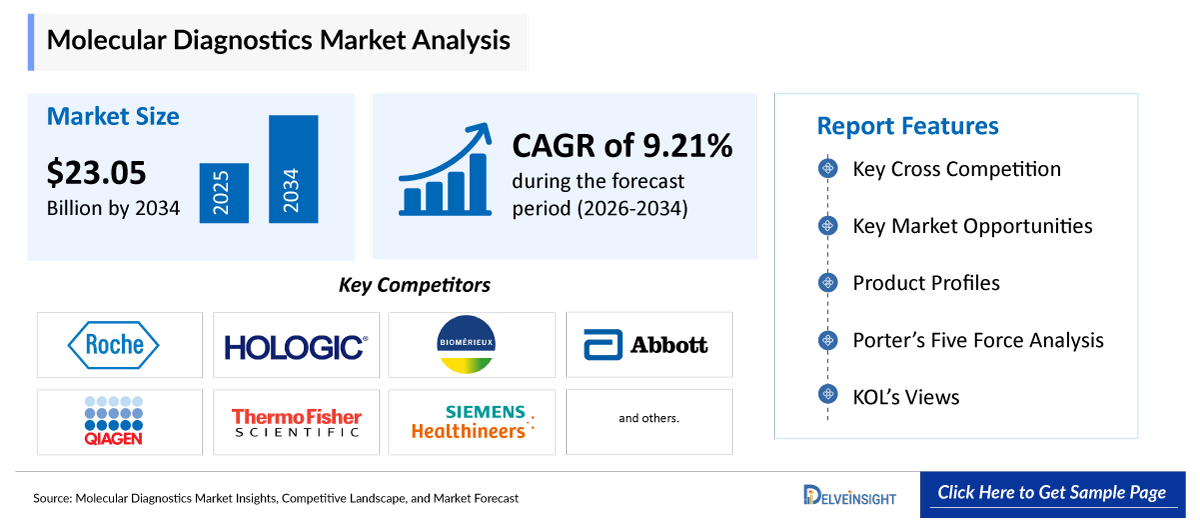
• The global molecular diagnostics market was valued at USD 10.44 billion in 2025 and is projected to reach USD 23.05 billion by 2034.
• The market is expected to expand at a CAGR of 9.21% during the forecast period 2026-2034, supported by the increasing burden of infectious diseases and chronic disorders, rising product developmental activities, and the expansion of syndromic and near-patient molecular testing.
• By product type, the reagents segment dominated the molecular diagnostics market with a 58% share in 2025.
• By technology, the polymerase chain reaction (PCR) segment dominated the molecular diagnostics market with a 45% share in 2025.
• By application, the infectious disease diagnosis segment dominated the molecular diagnostics market with a 52% share in 2025.
• By end-user, the hospitals segment dominated the molecular diagnostics market with a 46% share in 2025.
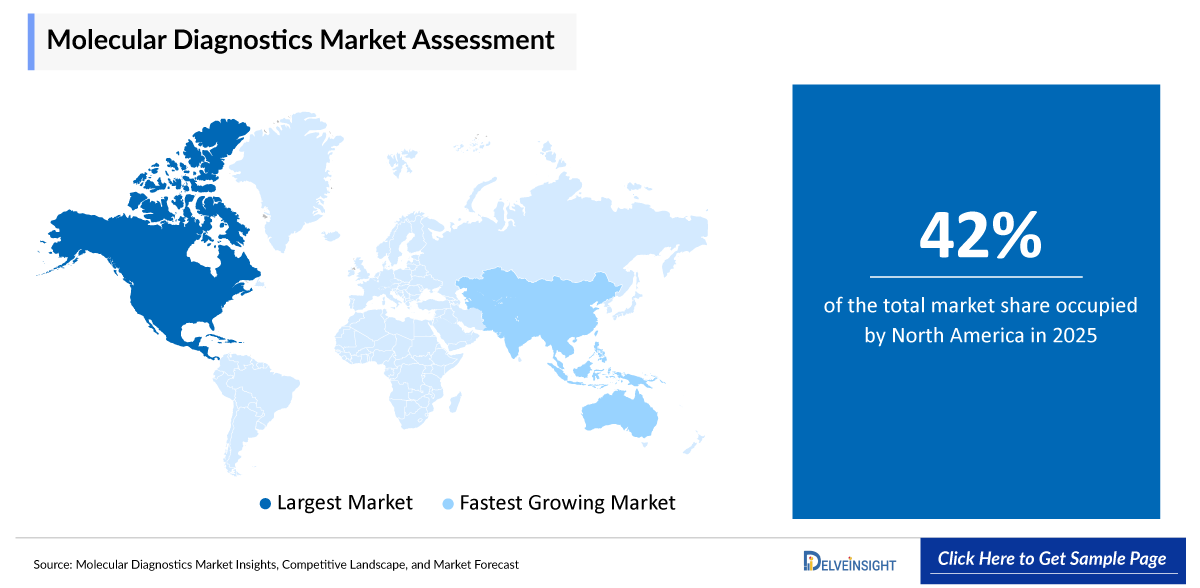
• North America accounted for the largest share of the molecular diagnostics market at 42% in 2025, while Asia-Pacific is anticipated to register the fastest growth through 2034.
Molecular diagnostics comprises highly sensitive and specific laboratory methods that detect and identify biomarkers at the nucleic acid level, analyzing DNA and RNA to support medical diagnosis, prognosis, disease monitoring, and the selection of optimal treatment. The category is built on a set of core technologies, foremost among them the polymerase chain reaction, which amplifies specific DNA or RNA sequences and enables the detection of minute quantities of genetic material, together with sequencing, in situ hybridization, and microarray analysis. The commercial market comprises the instruments that automate nucleic acid extraction, amplification, and detection; the reagents, assays, and consumable cartridges consumed with every test performed; and the software and services that support result interpretation. Clinically, molecular diagnostics is applied across three principal domains: infectious disease diagnosis, where it identifies pathogens such as human immunodeficiency virus, hepatitis B and C, influenza, human papillomavirus, tuberculosis, and respiratory and gastrointestinal organisms, and quantifies viral load and drug resistance; oncology testing, where it detects gene mutations and translocations, supports companion diagnostics, and enables liquid biopsy; and genetic testing for inherited disorders, prenatal assessment, and hereditary risk. The contemporary market is defined by the migration of testing from centralized reference laboratories toward near-patient and point-of-care settings, the rapid expansion of multiplex syndromic panels that identify multiple pathogens from a single sample within an hour, and the growing integration of automation and data interpretation tools that reduce manual handling and shorten turnaround time.
Molecular Diagnostics Market Key Growth Drivers
• Increasing cases of infectious diseases, with the World Health Organization reporting 39 million people living with human immunodeficiency virus infection in 2022 worldwide.
• A very large global hepatitis burden, with the World Health Organization reporting 304 million people infected by hepatitis B and C in 2022, comprising 254 million hepatitis B and 50 million hepatitis C cases.
• Rising cancer incidence, with the Global Cancer Observatory estimating 3.83 million new cancer cases annually in North America by 2045, driving oncology and companion diagnostic testing.
• Rising product developmental activities, including a sustained wave of regulatory clearances for syndromic panels and near-patient molecular assays.
• Rapid expansion of multiplex syndromic testing that identifies multiple respiratory or gastrointestinal pathogens from a single sample within an hour.
• Decentralization of molecular testing toward point-of-care and waived settings, supported by clearances that permit use outside the central laboratory.
• Integration of artificial intelligence and machine learning for enhanced data interpretation and laboratory automation.
Key Companies in Molecular Diagnostics Market
The competitive field is led by diversified diagnostics companies with integrated instrument and assay franchises, supported by specialized molecular and genomic testing developers. The leading participants in the molecular diagnostics market include the following:
• F. Hoffmann-La Roche Ltd
• Hologic Inc.
• bioMerieux SA
• Abbott Laboratories
• QIAGEN N.V.
• Becton, Dickinson and Company
• Thermo Fisher Scientific Inc.
• Siemens Healthineers AG
• Danaher Corporation
• Myriad Genetics Inc.
Factors Contributing to the Growth of the Molecular Diagnostics Market
Market Drivers
Increasing Burden of Infectious Diseases
The foundational driver of the molecular diagnostics market is the sustained global burden of infectious disease, which constitutes the largest application of nucleic acid testing. The World Health Organization reported that 39 million people were living with human immunodeficiency virus infection worldwide in 2022, of whom 37.5 million were adults aged fifteen and above and 1.5 million were children under fifteen. Molecular diagnostics is essential across the human immunodeficiency virus care pathway, enabling early detection, quantification of viral load to assess treatment efficacy, and identification of drug resistance mutations that guide therapy decisions, functions that no other diagnostic modality performs with comparable sensitivity. The same World Health Organization data reported that 304 million people were infected with hepatitis B and C in 2022, comprising 254 million hepatitis B cases and 50 million hepatitis C cases. In hepatitis, polymerase chain reaction methods detect viral DNA or RNA in blood, confirming active infection, monitoring viral load, and assessing treatment response, which is central to the global elimination agenda. Influenza, human papillomavirus, tuberculosis, and respiratory and gastrointestinal pathogens add substantial further volume. Because these infections are chronic or recurrent and require repeated testing across screening, diagnosis, monitoring, and resistance assessment, each affected individual generates a stream of molecular tests rather than a single assay, providing a durable and expanding volume foundation for the market.
Rising Cancer Incidence and Oncology Testing
The growing global cancer burden is a powerful driver of the oncology segment of molecular diagnostics, which is the fastest-expanding application by value. The Global Cancer Observatory estimated that 3.83 million new cancer cases will be diagnosed annually in the North American region by 2045, and comparable increases are projected across every major geography as populations age. Molecular diagnostics has become indispensable to modern oncology because treatment selection increasingly depends on the genetic characterization of the tumor rather than on its anatomical site alone. Molecular methods detect the gene mutations, translocations, amplifications, and fusions that define therapeutic eligibility, and companion diagnostics formally link a specific molecular finding to a specific targeted therapy, making the test a prerequisite for treatment. Liquid biopsy extends these capabilities to a simple blood draw, enabling comprehensive genomic profiling without tissue, real-time monitoring of treatment response, and detection of molecular residual disease that signals recurrence before it becomes clinically apparent. Polymerase chain reaction methods identify specific mutations with high sensitivity, while sequencing enables broad multi-gene profiling. Because precision oncology continues to deepen, with an expanding number of approved targeted therapies each requiring molecular selection, oncology testing commands premium pricing and grows faster than the overall market, progressively shifting the value mix of molecular diagnostics toward higher-complexity assays.
Market Restraints
Despite a strong and durable demand base, the molecular diagnostics market faces material constraints that temper the pace and evenness of adoption. The most significant is the availability of alternative diagnostic methods. Culture, antigen testing, serology, microscopy, and conventional immunoassays remain widely used, are substantially cheaper, and are entrenched in laboratory workflows and clinical algorithms, so molecular tests must justify their premium through demonstrable clinical or economic benefit rather than technical superiority alone. In many settings, particularly for common infections where empiric treatment is inexpensive and effective, the incremental value of molecular confirmation is difficult to establish, which limits substitution. The second constraint is the high cost associated with molecular diagnostic procedures. Instruments require substantial capital investment, cartridges and reagents carry high per-test costs, and syndromic panels in particular are expensive relative to the single-target tests they replace, which draws payer scrutiny and prompts restrictive utilization policies, prior authorization requirements, and stewardship programs that limit panel use to defined indications. Reimbursement is uneven across payers and geographies and frequently lags the introduction of new assays, so that a cleared test may wait years for coverage adequate to support commercial scale. The third constraint is operational: molecular testing requires infrastructure, quality systems, and trained personnel that are unevenly available, and the shortage of skilled laboratory staff limits capacity even where demand exists. The fourth is regulatory complexity, as clearance pathways and evolving in vitro diagnostic regulations in major markets impose substantial evidentiary and documentation burdens that raise the cost of menu expansion and can destabilize test availability. Finally, access remains highly stratified, as the cost and infrastructure requirements of molecular testing confine much of its use to well-resourced health systems while the largest infectious disease burdens fall on lower-income settings, constraining the addressable market even as clinical need rises. Source: peer-reviewed literature; national health authorities.
Molecular Diagnostics Market Segment Analysis
The global molecular diagnostics market is segmented by product type into instruments, reagents, and others; by technology into polymerase chain reaction (PCR), next generation sequencing, in situ hybridization, microarray analysis, and others; by application into infectious disease diagnosis, oncology testing, genetic testing, and others; by end-user into hospitals, pathology labs, and others; and by geography into North America, Europe, Asia-Pacific, and the Rest of the World.
By Product Type
Dominant Subsegment: Reagents.
The reagents category is expected to dominate the market.
Dominant: Reagents ~ 58%
The reagents segment accounted for a 58% share of the molecular diagnostics market in 2025. Reagents dominate the product structure because molecular diagnostics operates on a consumable-driven business model in which every test performed consumes assay reagents, cartridges, primers, probes, enzymes, and extraction kits, generating recurring revenue that accumulates across the installed instrument base. The economics of the category are built on this relationship: instrument vendors place analyzers into laboratories, often at modest margin or under reagent rental and placement arrangements, and derive the substantial majority of lifetime value from the assays consumed thereafter. Because a single instrument may run thousands of tests each year over a service life of many years, the cumulative reagent revenue from one placement greatly exceeds the instrument price, and the recurring, annuity-like character of that revenue makes the segment both the largest and the most attractive. The dominance of reagents is reinforced by the closed-system architecture prevalent in molecular diagnostics, in which cartridges and assays are proprietary to the platform, insulating the reagent stream from substitution. Menu expansion compounds the effect, because each newly cleared assay adds consumption to instruments already installed without requiring new capital equipment. The instruments segment is essential as the enabling platform and drives the placement cycle on which reagent revenue depends, growing with automation and decentralization, while others encompass software, services, and ancillary products. Over the forecast period, reagents are expected to retain and modestly extend their leading share as the installed base grows and as menu expansion deepens consumption per instrument.
By Technology
Dominant Subsegment: Polymerase Chain Reaction (PCR).
The polymerase chain reaction category is expected to dominate the market.
Dominant: Polymerase Chain Reaction (PCR) ~ 45%
The polymerase chain reaction segment accounted for a 45% share of the molecular diagnostics market in 2025. Polymerase chain reaction is the cornerstone of molecular diagnostics and dominates the technology structure owing to its precision, sensitivity, and versatility. The method amplifies specific DNA or RNA sequences, producing millions of copies of a target in a short time and thereby enabling detection of minute quantities of genetic material. Its accuracy stems from specificity, as primers are designed to bind only to particular sequences, which reduces false positives, while its sensitivity permits detection at very low levels of pathogen or mutation. Real-time or quantitative polymerase chain reaction extends these benefits by providing quantitative data, enabling not only detection but measurement of viral or bacterial load, which is central to monitoring human immunodeficiency virus, hepatitis B, and hepatitis C. The technology is widely used in virology, including for human immunodeficiency virus, hepatitis, and respiratory infection; in oncology for identifying gene mutations and translocations; and in genetic testing for inherited disease, with further application in prenatal testing, food safety, and forensic analysis. Its speed, established regulatory precedent, and adaptability to cartridge-based point-of-care and multiplex syndromic formats have made it the workhorse of the field and the basis of the decentralization and syndromic testing trends reshaping the market. Next Generation Sequencing is the fastest-growing technology, driven by comprehensive genomic profiling in oncology, while in situ hybridization and microarray analysis serve established specialized applications. Polymerase chain reaction is expected to retain its leading position throughout the forecast period.
Molecular Diagnostics Market Region Analysis
Dominant Region: North America
Dominant: North America ~ 42% (Largest)
North America accounted for a 42% share of the global molecular diagnostics market in 2025. The region combines a growing burden of cancer and infectious disease with advanced laboratory infrastructure, high healthcare expenditure, and the presence of the key molecular diagnostics manufacturers, making it the principal market for both testing volume and product innovation. The Global Cancer Observatory estimated that 3.83 million new cancer cases will be diagnosed annually in the North American region by 2045, sustaining demand for the molecular methods used to detect genetic mutations, guide personalized treatment, and monitor disease progression through liquid biopsy and companion diagnostics. Infectious disease testing contributes substantial volume, and the Public Health Agency of Canada reported 1,971 active tuberculosis cases in Canada in 2022, an indication where molecular diagnostics enables rapid identification of Mycobacterium tuberculosis and detection of drug resistance, improving timely diagnosis and treatment. The region has shifted decisively toward syndromic testing algorithms for respiratory and gastrointestinal infection and toward near-patient and waived molecular testing, supported by a regulatory environment that has cleared an expanding menu of panels and point-of-care assays. Rising product developmental activity is concentrated here, with major clearances secured by Roche, QIAGEN, Cepheid, Abbott, and bioMerieux across respiratory, gastrointestinal, sexual health, and oncology domains. The presence of leading manufacturers and national clinical laboratories, together with strong demand for technologically advanced point-of-care platforms, reinforces regional leadership. North America is expected to retain its dominant position throughout the forecast period even as Asia-Pacific grows more rapidly.
Fastest Growing Region: Asia-Pacific
Asia-Pacific is projected to register the fastest compound annual growth rate in the molecular diagnostics market through 2034. The region carries a disproportionate share of the global infectious disease burden, including hepatitis B, tuberculosis, and human immunodeficiency virus, precisely the indications in which molecular diagnostics delivers the greatest clinical value, and it combines this with very large populations, rising cancer incidence, and rapidly expanding healthcare infrastructure. China is the principal engine, supported by government investment in diagnostic capacity, a substantial domestic manufacturing base, and policies that favor local development of molecular testing platforms, while its large hepatitis B and cancer burdens sustain testing volume. Japan combines an aging population, high cancer incidence, and a precision-medicine orientation with rapid adoption of advanced diagnostic technologies. India represents the largest long-term volume opportunity, with a very high tuberculosis burden and a growing domestic molecular diagnostics industry producing cost-effective, decentralized platforms suited to resource-constrained settings, an approach that is extending molecular testing well beyond tertiary hospitals. South Korea hosts globally significant molecular diagnostics developers and manufacturing capacity, and Australia contributes a high-value, guideline-driven market. Expanding health coverage, rising healthcare expenditure, and government programs targeting tuberculosis, hepatitis, and cervical cancer elimination through molecular screening reinforce the trajectory. Regional growth is expected to exceed the global average across every technology and application segment throughout the forecast period.
Regional Commentary
North America
North America leads on value, laboratory infrastructure, and product development. The United States is the reference market for regulatory clearance of syndromic panels and near-patient molecular assays, and it hosts the leading manufacturers and national clinical laboratories. Demand is driven by the cancer burden, infectious disease testing, and the shift toward syndromic algorithms and decentralized testing, with clearances permitting use in waived settings opening urgent care and retail channels. Canada contributes through public health laboratory networks and tuberculosis and infectious disease programs, while Mexico is an expanding but access-constrained market. Near-term dynamics are shaped by menu expansion, automation, and payer scrutiny of high-cost panels.
Europe
Europe represents the second-largest regional market, with France, Germany, the United Kingdom, Italy, and Spain accounting for the majority of regional value. The region combines well-established laboratory networks and national screening programs with centralized procurement and health technology assessment that gate the adoption of higher-cost molecular assays. The in vitro diagnostic regulation has imposed substantial evidentiary and documentation requirements that have reshaped menu availability and favored vendors with scale and regulatory depth, while syndromic testing continues to expand through certifications and partnerships. European public health programs targeting hepatitis and cervical cancer elimination sustain molecular screening volume.
Asia-Pacific
Asia-Pacific is the fastest-growing region, propelled by a large infectious disease burden, demographic scale, rising cancer incidence, and expanding healthcare infrastructure. China leads incremental volume with government investment and a substantial domestic manufacturing base; Japan combines an aging population with precision-medicine adoption; India offers the largest long-term opportunity, with a high tuberculosis burden and a domestic industry producing cost-effective decentralized platforms; and South Korea hosts globally significant developers and manufacturing capacity. Government elimination programs for tuberculosis, hepatitis, and cervical cancer reinforce molecular screening demand, and growth exceeds the global average across every segment.
Rest of World
The Rest of the World comprises the Middle East, Africa, and South America. Access is highly stratified. The Gulf Cooperation Council states and the larger South American markets, particularly Brazil, are investing in laboratory infrastructure and molecular testing capacity and represent growing markets, while much of Africa carries an exceptionally high burden of human immunodeficiency virus, tuberculosis, and hepatitis alongside severe constraints on laboratory infrastructure, cold chain, and trained personnel. Regional growth will be driven by donor-funded programs, government elimination initiatives, and the availability of decentralized, cartridge-based platforms and lower-cost systems from Asian manufacturers, which offer the most credible pathway to extending molecular diagnosis in resource-constrained health systems.
Molecular Diagnostics Market Competitive Landscape
The global molecular diagnostics market is classified as Consolidated. A small group of diversified diagnostics companies with integrated instrument and assay franchises accounts for the substantial majority of global revenue, and barriers to entry are high, reflecting the capital required for platform development, the evidentiary burden of regulatory clearance for each assay, the closed-system architecture that ties reagents to instruments, and the installed base that incumbents have accumulated across hospital and reference laboratories. The competitive landscape is evaluated across the following dimensions:
• Market concentration: Highly concentrated, with a small group of diversified diagnostics companies holding integrated instrument and assay franchises that account for the majority of global revenue.
• Leading players: F. Hoffmann-La Roche Ltd, Danaher Corporation through Cepheid, Abbott Laboratories, Hologic Inc., bioMerieux SA, and QIAGEN N.V. lead in infectious disease molecular testing, with Thermo Fisher Scientific Inc., Illumina Inc., and Myriad Genetics Inc. strong in sequencing and genomic testing.
• Geographic reach: The leading participants operate global commercial and service organizations, while regional developers including Seegene, Amoy Diagnostics, and Molbio Diagnostics are converting domestic franchises into international presence.
• Product portfolio strength: Competitive advantage rests on the breadth of the cleared assay menu on an installed platform, since each additional test generates reagent revenue from instruments already placed, and on coverage spanning high-throughput central laboratory and near-patient formats.
• Pipeline strength: Development is concentrated in higher-plex syndromic panels, point-of-care and waived assays, next-generation high-throughput systems, and the expansion of oncology and companion diagnostic menus.
• Strategic partnerships: Collaboration and asset acquisition are active, exemplified by the Seegene and Werfen manufacturing partnership in June 2025 and by the integration of Day Zero Diagnostics assets by bioMerieux in June 2025.
• M&A activity: Consolidation continues as diversified diagnostics groups acquire specialized molecular and genomic capabilities, with Cepheid within Danaher illustrating the strategic value of a decentralized platform inside a larger portfolio.
• Manufacturing capabilities: All leading participants operate large-scale cartridge, reagent, and instrument manufacturing, and cartridge and enzyme cost volatility during demand spikes is a recognized operational risk.
• Innovation focus: Innovation is shifting from single-target assays toward focused higher-plex syndromic panels, decentralized cartridge-based testing, laboratory automation, and integrated data interpretation.
Molecular Diagnostics Market Recent Developmental Activities
In July 2026, 10x Genomics partnered with Lausanne University Hospital in Switzerland to advance diagnostic research using single-cell and spatial biology technologies. The multi-year study will evaluate tumor specimens from hundreds of patients with advanced solid tumors, including lung, breast, bladder, and melanoma cancers. Utilizing platforms like Flex Apex and Xenium, researchers aim to identify actionable biomarkers, understand drug resistance mechanisms for targeted therapies, and integrate high-resolution single-cell insights into routine clinical decision-making and precision oncology workflows.
In July 2026, Roche secured FDA 510(k) clearance for its cobas BV/CV assay, a single-swab molecular diagnostic test designed to detect Bacterial Vaginosis and Candida Vaginitis. The assay provides accurate differential diagnoses to replace less precise traditional testing methods like microscopy and pH evaluation. By reducing misdiagnosis rates that exceed 50%, the test enables faster targeted interventions, improves clinical outcomes, and expands Roche’s portfolio in women's health and diagnostics.
In January 2026, Cepheid, a Danaher company, received U.S. Food and Drug Administration clearance for the Xpert GI Panel, a rapid molecular test that detects common gastrointestinal pathogens in under an hour and distinguishes the most clinically actionable organisms causing acute community-acquired diarrhea. As the first highly multiplexed test from the company to obtain United States clearance, it entered the rapid syndromic molecular diagnostics market alongside established platforms. Strategic significance: the clearance advanced the company strategy of moving into higher-plex markets where focused syndromic panels, rather than large untargeted panels, deliver actionable results for infection control, and it extended a menu of twenty cleared single-plex and smaller multiplex tests.
In early 2026, F. Hoffmann-La Roche Ltd launched its next-generation cobas 6800 and 8800 systems 2.0 globally, renewing the high-throughput central laboratory platforms that anchor its molecular testing portfolio. Strategic significance: the refresh of the flagship high-throughput systems reinforced the company position in centralized laboratory molecular testing at a time when capacity, automation, and turnaround time are the principal purchasing criteria, and it protected the installed base that drives recurring reagent consumption across its assay menu.
Molecular Diagnostics Market Segmentation
Molecular Diagnostics Market Assessment by Product Type
• Instruments
• Reagents
• Others
Molecular Diagnostics Market Assessment by Technology
• Polymerase Chain Reaction (PCR)
• Next Generation Sequencing
• In Situ Hybridization
• Microarray Analysis
• Others
Molecular Diagnostics Market Assessment by Application
• Infectious Disease Diagnosis
• Oncology Testing
• Genetic Testing
• Others
Molecular Diagnostics Market Assessment by End-User
• Hospitals
• Pathology Labs
• Others
Molecular Diagnostics Market Assessment by Geography
• North America
▪ United States Molecular Diagnostics Market Size in USD million (2023-2034)
▪ Canada Molecular Diagnostics Market Size in USD million (2023-2034)
▪ Mexico Molecular Diagnostics Market Size in USD million (2023-2034)
• Europe
▪ France Molecular Diagnostics Market Size in USD million (2023-2034)
▪ Germany Molecular Diagnostics Market Size in USD million (2023-2034)
▪ United Kingdom Molecular Diagnostics Market Size in USD million (2023-2034)
▪ Italy Molecular Diagnostics Market Size in USD million (2023-2034)
▪ Spain Molecular Diagnostics Market Size in USD million (2023-2034)
▪ Rest of Europe Molecular Diagnostics Market Size in USD million (2023-2034)
• Asia-Pacific
▪ China Molecular Diagnostics Market Size in USD million (2023-2034)
▪ Japan Molecular Diagnostics Market Size in USD million (2023-2034)
▪ India Molecular Diagnostics Market Size in USD million (2023-2034)
▪ Australia Molecular Diagnostics Market Size in USD million (2023-2034)
▪ South Korea Molecular Diagnostics Market Size in USD million (2023-2034)
▪ Rest of Asia-Pacific Molecular Diagnostics Market Size in USD million (2023-2034)
• Rest of the World
▪ Middle East Molecular Diagnostics Market Size in USD million (2023-2034)
▪ Africa Molecular Diagnostics Market Size in USD million (2023-2034)
▪ South America Molecular Diagnostics Market Size in USD million (2023-2034)
Key Takeaways from the Molecular Diagnostics Market Report Study
• Market size analysis for the current molecular diagnostics market size (2025), and market forecast for 9 years (2026 to 2034).
• Top key product/technology developments, mergers, acquisitions, partnerships, and joint ventures that happened over the last 3 years.
• Key companies dominating the global molecular diagnostics market.
• Various opportunities available for competitors in the molecular diagnostics market space.
• What are the top-performing segments in 2025? How will these segments perform in 2034?
• Which are the top-performing regions and countries in the current molecular diagnostics market scenario?
• Which are the regions and countries where companies should concentrate their opportunities for molecular diagnostics market growth in the future?
Target audience who can benefit from this molecular diagnostics market report study
• Molecular Diagnostics product providers
• Research organizations and consulting companies
• Molecular Diagnostics-related organizations, associations, forums, and other alliances
• Government and corporate offices
• Start-up companies, venture capitalists, and private equity firms
• Distributors and traders dealing in molecular diagnostics
• Various end-users who want to know more about the molecular diagnostics market and the latest technological developments in the molecular diagnostics market.