Next-Generation Sequencing Market Summary
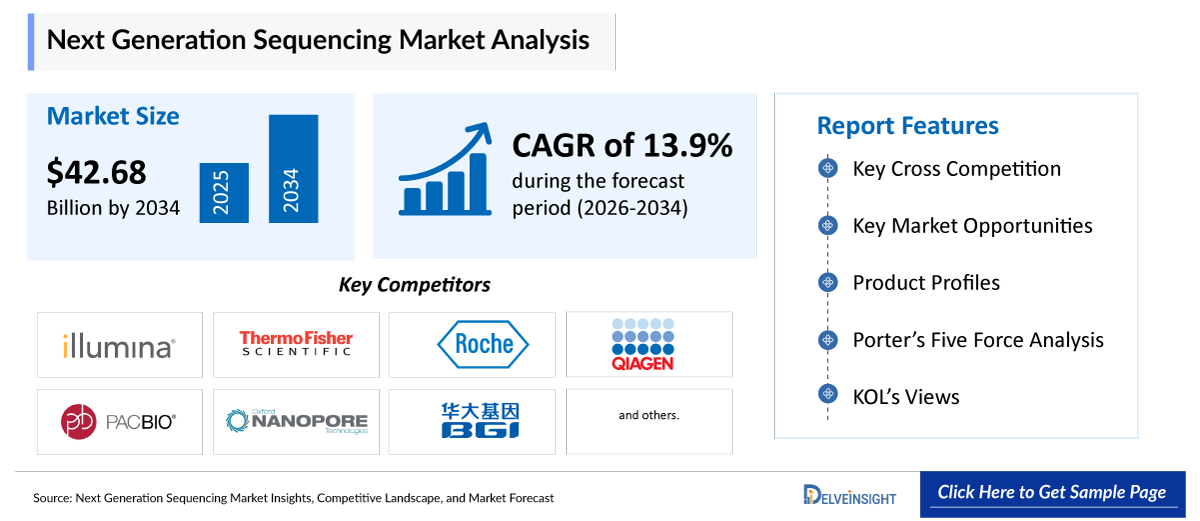
- The Next Generation Sequencing market size is estimated at USD 13.24 billion in 2025 and is projected to reach USD 42.68 billion by 2034. Growth is anchored in the collapsing cost of sequencing, the rising global burden of cancer and inherited disorders, and the migration of comprehensive genomic profiling into routine, reimbursed clinical pathways.
- The global Next Generation Sequencing market is growing at a CAGR of 13.9% during the forecast period from 2026 to 2034.
- By offering, the consumables segment dominated the Next Generation Sequencing market with a 51% share in 2025.
- By technology, the sequencing by synthesis segment dominated the Next Generation Sequencing market with a share of 62% in 2025.
- By application, the oncology segment dominated the Next Generation Sequencing market with a share of 41% in 2025.
- By end-user, the academic and research institutes segment dominated the Next Generation Sequencing market with a share of 36% in 2025.
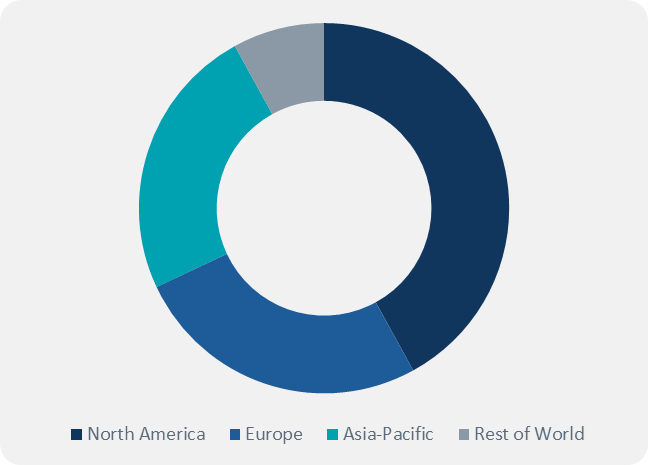
- North America dominated the global Next Generation Sequencing market revenue with a share of 42% in 2025, representing the highest regional market share globally.
- Next Generation Sequencing (NGS), also known as high-throughput or massively parallel sequencing, refers to a family of technologies that read millions of DNA or RNA fragments in parallel, producing whole-genome, whole-exome, or targeted sequence data in hours rather than years. The category spans short-read platforms based on sequencing by synthesis and semiconductor sequencing, alongside long-read single-molecule and nanopore systems, all supported by a workflow of library preparation consumables, instruments, bioinformatics software, and outsourced sequencing services. Over the past decade, NGS has moved from a research instrument into a clinical infrastructure used across oncology, reproductive health, rare disease diagnosis, infectious disease surveillance, and pharmacogenomics.
Next Generation Sequencing Market Key Growth Drivers
- The cost of sequencing a human genome has declined dramatically, from approximately USD 95 million in 2001 to USD 525 million in 2022, and further to around USD 200 at high-throughput sequencing centers in 2023, significantly improving affordability and accessibility.
- The increasing global cancer burden is driving demand for NGS-based diagnostics, with 20 million new cancer cases reported in 2022 and projections indicating 35 million cases by 2050.
- Growing adoption of NGS for tumor profiling, precision oncology, and companion diagnostics is supporting market growth.
- Expanding clinical applications in reproductive health screening, rare disease diagnosis, and infectious disease surveillance are increasing the utilization of NGS technologies.
- Technological advancements, including the development of long-read sequencing platforms and AI-enabled bioinformatics solutions, are enhancing sequencing accuracy, efficiency, and data interpretation.
- Continued government and public-sector investments in genomics research through national genome initiatives and precision medicine programs are accelerating market adoption.
- The convergence of declining sequencing costs, expanding clinical applications, technological innovation, and supportive funding is expected to sustain strong double-digit growth in the global NGS market through 2034.
Key Companies in Next Generation Sequencing Market
The competitive landscape is led by the following active manufacturers and service providers:
- Illumina, Inc.
- Thermo Fisher Scientific Inc.
- F. Hoffmann-La Roche Ltd
- QIAGEN N.V.
- Pacific Biosciences of California, Inc.
- Oxford Nanopore Technologies plc
- BGI Genomics Co., Ltd.
- Agilent Technologies, Inc.
- Bio-Rad Laboratories, Inc.
- Revvity, Inc.
For illustrative purposes, only the top 10 companies are listed in the Table of Contents. The report may include analysis and references to additional companies where relevant to the market assessment.
Next Generation Sequencing Market Size
The following snapshot summarizes the principal report metrics for the Next Generation Sequencing market.
|
Report Metrics |
Details |
|
2025 Market Size |
USD 13.24 billion |
|
2034 Projected Market Size |
USD 42.68 billion |
|
Growth Rate (2026-2034) |
13.9% CAGR |
|
Largest Market |
North America |
|
Fastest Growing Market |
Asia-Pacific |
|
Market Structure |
Consolidated |
All market values are expressed in USD at the manufacturer and service-provider revenue level and represent DelveInsight estimates synthesized from primary and secondary research.
Factors Contributing to the Growth of the Next-Generation Sequencing Market
Next-Generation Sequencing Market Drivers
- Rapid Decline in Sequencing Costs Driving Widespread Adoption: The cost of sequencing a human genome has fallen dramatically from approximately USD 95 million in 2001 to USD 525 million in 2022, with leading high-throughput centers achieving the USD 200 genome in 2023. This significant reduction has transformed NGS from a research-focused technology into a cost-effective clinical and population health tool, enabling broader adoption across oncology, rare disease diagnostics, reproductive health, and large-scale screening programs.
- Increasing Global Cancer Burden Accelerating Demand for Genomic Profiling: The growing incidence of cancer continues to be a major catalyst for NGS adoption. According to the International Agency for Research on Cancer (IARC), approximately 20 million new cancer cases were diagnosed in 2022, with cases projected to reach 35 million by 2050. As precision oncology and targeted therapies become standard of care, comprehensive genomic profiling and companion diagnostics are increasingly required for treatment selection, driving demand for NGS-based testing and related consumables.
- Expanding Clinical Applications beyond Oncology: NGS is witnessing growing utilization across multiple clinical disciplines, including non-invasive prenatal testing (NIPT), carrier screening, rare and inherited disease diagnosis, pharmacogenomics, and infectious disease surveillance. The integration of sequencing into routine clinical workflows is broadening the addressable market and reducing reliance on oncology as the sole growth driver.
- Advancements in Long-Read Sequencing and AI-Enabled Bioinformatics: Continuous technological innovation is enhancing the accuracy, speed, and clinical utility of NGS. The maturation of long-read sequencing technologies enables improved detection of structural variants and complex genomic regions, while AI-driven bioinformatics platforms facilitate faster and more accurate data interpretation. These developments are expanding the range of applications suitable for sequencing-based analysis.
- Growing Reimbursement Support and Clinical Acceptance: Increasing reimbursement coverage for genomic testing is supporting routine clinical adoption. The expansion of payer support for comprehensive genomic profiling and precision medicine initiatives is improving accessibility and encouraging healthcare providers to incorporate NGS into standard diagnostic pathways.
- Strong Government and Public-Sector Investments in Genomics: National genome initiatives, precision medicine programs, and public health surveillance efforts are driving investment in sequencing infrastructure and genomic research. These initiatives are accelerating the integration of NGS into healthcare systems and supporting long-term market growth.
- Foundation Technology for Precision Medicine and Drug Development: NGS has become a critical platform technology within the healthcare and life sciences ecosystem, enabling biomarker discovery, patient stratification, companion diagnostic development, and genomic surveillance. Its growing role in precision medicine, pharmaceutical R&D, and clinical decision-making continues to reinforce sustained market expansion through 2034.
Next-Generation Sequencing Market Restraints
Despite strong momentum, the Next Generation Sequencing market faces material constraints. Regulatory complexity remains significant, as NGS-based in vitro diagnostics must navigate evolving FDA, European IVDR, and national clinical-laboratory frameworks, lengthening time to market for new assays. High capital costs for instruments and the dominance of consumables expenditure keep the true per-genome cost above headline figures, limiting adoption among smaller laboratories. Manufacturing and supply-chain limitations, including reliance on a concentrated set of reagent and flow-cell suppliers, expose laboratories to availability risk. Reimbursement remains uneven across geographies and indications, with coverage well established for oncology and prenatal testing but inconsistent for broader applications. Finally, a shortage of skilled bioinformaticians and the burden of data storage, interpretation, and clinical reporting, sometimes described as the USD 100,000 analysis behind the USD 1,000 genome, constrain throughput and slow adoption in resource-limited settings.
Next Generation Sequencing Market Segment Analysis
The Next Generation Sequencing Market by Offering (Consumables, Instruments and Platforms, Services), Technology (Sequencing by Synthesis, Ion Semiconductor Sequencing, Single-Molecule Real-Time Sequencing, Nanopore Sequencing, Others), Application (Oncology, Reproductive Health, Clinical Investigation and Diagnostics, Drug Discovery and Personalized Medicine, Agrigenomics and Forensics, Consumer Genomics, Others), End-Users (Academic and Research Institutes, Hospitals and Clinics, Pharmaceutical and Biotechnology Companies, Clinical and Diagnostic Laboratories, Others), and Geography (North America, Europe, Asia-Pacific, Rest of World).
By Offering
Dominant Subsegment: Consumables. The consumables category is expected to dominate the market.
The consumables segment accounted for 51% of the Next Generation Sequencing market in 2025. Consumables, comprising library preparation kits, reagents, flow cells, barcodes, and target enrichment panels, are consumed on every sequencing run, producing recurring revenue that scales directly with testing volume. The structural decline in sequencing cost has expanded run volumes across oncology, reproductive health, and infectious disease testing, deepening consumables demand. Manufacturers reinforce this dynamic through bundled contracts that pair instruments with proprietary reagents, locking laboratories into recurring purchases. Recent launches illustrate continued innovation in this tier: QIAGEN introduced its QIAseq xHYB Long Read Panels in July 2025 to extend target enrichment to long-read platforms, and Illumina launched Illumina Protein Prep in September 2025 to bring proteomics into the sequencing consumables portfolio. The combination of recurring economics, expanding clinical volumes, and a steady cadence of new kit chemistries supports the segment's continued leadership across the forecast period, while the instruments and platforms tier underpins the installed base, and the services tier captures outsourced demand from laboratories that prefer not to run sequencing in-house.
By Technology
Dominant Subsegment: Sequencing by Synthesis. The sequencing by synthesis category is expected to dominate the market.
The sequencing by synthesis segment accounted for 62% of the Next Generation Sequencing market in 2025. Sequencing by synthesis is the most widely deployed NGS chemistry, valued for its high accuracy, scalability, and the lowest cost per gigabase among current platforms, which has made it the default choice for high-throughput clinical and research laboratories. Its dominance is reinforced by the breadth of validated assays, established bioinformatics pipelines, and a large global installed base of short-read instruments. Continued platform innovation sustains the segment, including ongoing throughput and cost improvements across high-capacity systems and the pursuit of the sub-USD 200 genome. Adjacent technologies are advancing rapidly: long-read single-molecule real-time and nanopore platforms are gaining share in structural variant detection and de novo assembly, and Roche introduced its sequencing-by-expansion chemistry in February 2025 as a new high-throughput approach. While these alternatives expand the technology landscape and grow quickly from smaller bases, sequencing by synthesis retains leadership through its accuracy, cost efficiency, and entrenched clinical validation across the forecast period.
By Application
Dominant Subsegment: Oncology. The oncology category is expected to dominate the market.
The oncology segment accounted for 41% of the Next Generation Sequencing market in 2025. Oncology is the leading application because comprehensive genomic profiling has become central to cancer diagnosis, prognosis, and therapy selection. The International Agency for Research on Cancer recorded 20 million new cancer cases in 2022 and projects 35 million by 2050, expanding the population requiring molecular profiling. NGS identifies actionable mutations, gene fusions, tumor mutational burden, and microsatellite instability that match patients to targeted therapies, immunotherapies, and biomarker-driven trials. Reimbursement is consolidating clinical adoption, exemplified by the Centers for Medicare and Medicaid Services' reimbursement of USD 2,989.55 per test for TruSight Oncology Comprehensive, effective January 2026, and earlier coverage decisions for large oncology panels. Liquid biopsy, which detects circulating tumor DNA from a blood draw, is broadening oncology use into screening and minimal residual disease monitoring, supported by sustained startup investment in cell-free DNA assays. The combination of rising incidence, expanding actionable targets, and strengthening reimbursement secures oncology's leadership, while reproductive health and infectious disease applications grow steadily alongside it.
By End-User
Dominant Subsegment: Academic and Research Institutes. The academic and research institutes category is expected to dominate the market.
The academic and research institutes segment accounted for 36% of the Next Generation Sequencing market in 2025. Academic and research institutes remain the largest end user because they conduct the foundational genomics, oncology, and population-scale studies that consume large volumes of sequencing capacity and consumables. National genomics programs and university medical centers operate high-throughput core facilities and sustain demand through grant-funded research, supported by ongoing public investment from agencies such as the National Institutes of Health and the National Human Genome Research Institute. These institutions are early adopters of new platforms and chemistries, driving instrument placements and consumables uptake. At the same time, the migration of NGS into routine care is enlarging the hospitals and clinics and clinical and diagnostic laboratories segments, which are growing quickly as comprehensive genomic profiling, prenatal screening, and infectious disease testing move into reimbursed clinical pathways. Pharmaceutical and biotechnology companies also contribute substantial demand through biomarker discovery and companion diagnostic development. While the clinical end users are the fastest-expanding cohort over the forecast period, academic and research institutes retain leadership in 2025 on the strength of research volume and public funding.
Next Generation Sequencing Market Region Analysis
Dominant Region: North America
North America accounted for 42% of the global Next Generation Sequencing market revenue in 2025, representing the highest regional market share globally. The region's dominance reflects the concentration of sequencing manufacturers, academic medical centers, and clinical laboratories in the United States, together with the most developed reimbursement environment for genomic testing. Market-size influence is amplified by high per-capita testing volumes in oncology and reproductive health and by early adoption of long-read sequencing. Healthcare infrastructure is mature, with comprehensive cancer centers and accredited molecular laboratories supporting routine genomic profiling. The regulatory environment is supportive: the FDA provides established pathways for NGS-based in vitro diagnostics, and the Centers for Medicare and Medicaid Services granted reimbursement of USD 2,989.55 per test for TruSight Oncology Comprehensive, effective January 2026. Disease burden is substantial, with about 2 million new cancer cases diagnosed annually in the United States, and the investment landscape is strong, sustained by National Institutes of Health and National Human Genome Research Institute funding alongside private capital concentrated in California and the Northeast.
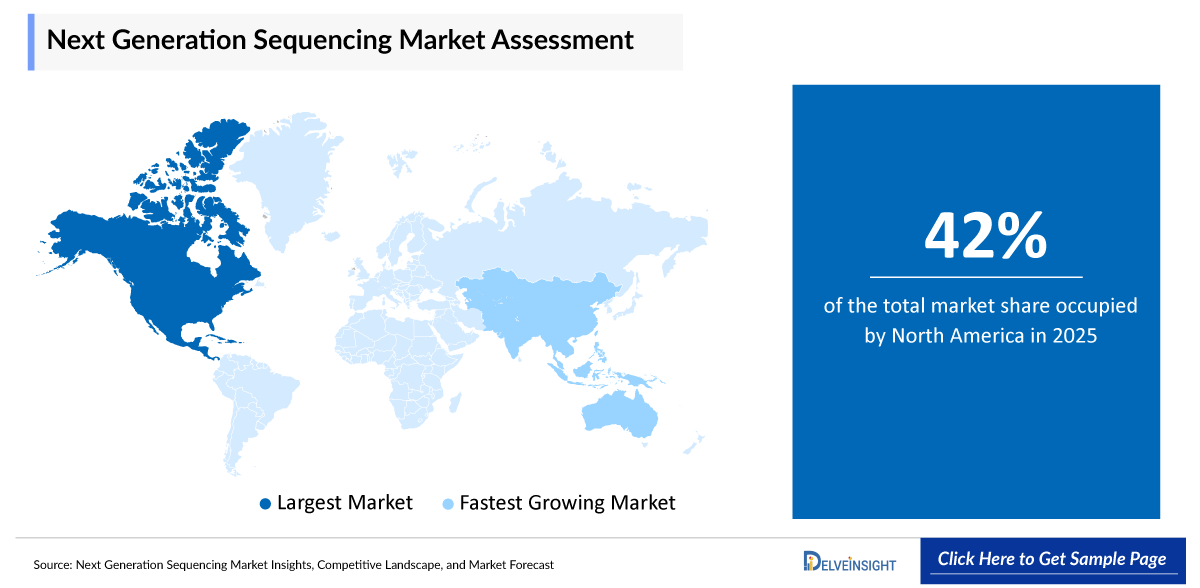
Dominant: North America ~ 42% (Largest)
Fastest Growing Region: Asia-Pacific
Asia-Pacific is the fastest-growing region in the Next Generation Sequencing market. The region's elevated CAGR is driven by rising healthcare investment, expanding genomic research capacity, and growing clinical adoption across China, Japan, India, South Korea, and Australia. Government initiatives, including national genomics and precision-medicine programs, are funding sequencing infrastructure and population-scale projects. Manufacturing expansion is notable, with domestic platform developers scaling production and lowering local costs. Emerging opportunities span agricultural genomics, infectious disease surveillance, and direct-to-consumer testing, supported by a large patient population and increasing collaborations between local and international companies, such as the April 2025 partnership between Gene Solutions and Element Biosciences to deliver cost-effective prenatal and oncology assays across Southeast Asia.
Regional Commentary
North America
North America accounted for 42% of the global Next Generation Sequencing market revenue in 2025. The United States dominates the region on the strength of its manufacturing base, clinical laboratory network, and reimbursement leadership, while Canada contributes through provincial genomics programs and Mexico advances population genomics initiatives such as large-scale national sequencing projects.
Europe
Europe represents the second-largest regional market, led by Germany, the United Kingdom, and France. Growth is supported by national genomics initiatives, public research funding, and the transition to the European In Vitro Diagnostic Regulation, which is raising the bar for clinical NGS assays. Oxford Nanopore's GridION Dx received CE and UKCA markings in early 2026, marking the first IVD-registered nanopore device for the region.
Asia-Pacific
Asia-Pacific is the fastest-growing region, propelled by healthcare investment, expanding research activity, and government precision-medicine programs across China, Japan, India, South Korea, and Australia. Domestic manufacturers are scaling capacity and broadening access to cost-effective sequencing, while agricultural genomics and infectious disease applications add demand beyond clinical diagnostics.
Rest of World
The Rest of World region, spanning the Middle East, Africa, and South America, is an emerging growth frontier. Rising healthcare investment, improving laboratory infrastructure, and international collaborations are expanding access. Illumina renewed its partnership with the Africa Centres for Disease Control and Prevention in March 2025 to equip national laboratories with sequencing tools, strengthening genomic surveillance capacity across the continent.
Next Generation Sequencing Market Competitive Landscape
The Next Generation Sequencing market is classified as Consolidated. A small group of global platform providers controls the majority of instrument and consumables revenue, with Illumina holding the leading position in short-read sequencing platforms, followed by Thermo Fisher Scientific in semiconductor sequencing and a long-read duopoly formed by Oxford Nanopore Technologies and Pacific Biosciences. A broader field of reagents, panels, bioinformatics, and service providers competes in the surrounding value chain.
The competitive landscape can be evaluated across the following dimensions:
- Market concentration: Consolidated, with platform revenue concentrated among a few leaders and high barriers to entry from proprietary chemistry and installed-base lock-in.
- Leading players: Illumina, Thermo Fisher Scientific, Roche, QIAGEN, Pacific Biosciences, and Oxford Nanopore Technologies anchor the top tier.
- Geographic reach: Leaders operate global commercial and support networks, with expansion programs targeting Africa, Southeast Asia, and Latin America.
- Product portfolio strength: Top players offer integrated portfolios spanning instruments, consumables, library preparation, and bioinformatics.
- Pipeline strength: Active pipelines in long-read accuracy, higher throughput, new chemistries such as sequencing by expansion, and clinical IVD assays.
- Strategic partnerships: Collaborations with diagnostics firms, cloud and GPU providers, and public health agencies extend reach and capability.
- M&A activity: Consolidation continues across companion diagnostics, bioinformatics, and liquid biopsy assets.
- Manufacturing capabilities: Scale manufacturing of flow cells and reagents is a key competitive moat and a supply-chain risk.
- Innovation focus: Cost reduction toward the sub-USD 200 genome, long-read clinical validation, and AI-assisted interpretation.
Next Generation Sequencing Market Recent Developmental Activities
- In January 2026, Illumina, Inc. (with the Centers for Medicare and Medicaid Services), CMS granted national reimbursement for the FDA-approved TruSight Oncology Comprehensive genomic profiling test at USD 2,989.55 per test, effective January 1, 2026. Strategic significance: Establishes durable payer support for large-panel comprehensive genomic profiling, pulling NGS oncology testing into routine reimbursed clinical practice.
- In January 2026, Oxford Nanopore Technologies plc Announced that GridION Dx received CE and UKCA markings, the vendor's first in vitro diagnostic device registered in the United Kingdom and Europe, with an initial application in infectious disease characterization through a collaboration with bioMérieux to run the AmPore-TB assay for multidrug-resistant tuberculosis. Strategic significance: Positions nanopore sequencing for regulated clinical diagnostics and validates long-read platforms for infectious disease testing.
- In January 2026, Pacific Biosciences of California, Inc., announced plans to collaborate with the nonprofit organizations n-Lorem Foundation and EspeRare to support development of individualized antisense oligonucleotide therapies for ultra-rare genetic disorders. Strategic significance: Extends long-read sequencing into individualized rare-disease therapeutic development, opening a differentiated clinical-research channel.
- In January 2026, Daisy Genomics, Inc. (formerly Armonica Technologies) secured USD 2.5 million in seed funding led by Cottonwood Technology Fund and Tramway Venture Partners to advance a spectroscopy-based DNA and RNA sequencing platform toward commercialization. Strategic significance: Signals continued investor appetite for alternative sequencing chemistries that could broaden platform competition.
- In September 2025, Illumina, Inc. launched Illumina Protein Prep, an assay enabling NGS-based proteomics that integrates protein analysis into large-scale genomics studies across cancer, cardiometabolic, and immunologic research. Strategic significance: Expands the addressable market beyond nucleic acids and deepens the consumables portfolio across multi-omics.
- In July 2025, QIAGEN N.V. launched QIAseq xHYB Long Read Panels, target enrichment tools optimized for native long-read platforms such as PacBio to improve the detection of complex genomic variations. Strategic significance: Bridges short-read enrichment expertise into the growing long-read segment, broadening consumables relevance.
- In May 2025, SeqOne Genomics raised USD 23.2 million to expand its AI-driven genomic interpretation platform. Strategic significance: Reinforces the shift of investment toward bioinformatics and clinical interpretation, the principal bottleneck in clinical NGS.
- In April 2025, Gene Solutions (with Element Biosciences, Inc.) Partnered to bring cost-effective non-invasive prenatal testing and oncology assays to Singapore and Vietnam. Strategic significance: Accelerates clinical NGS adoption in high-growth Southeast Asian markets through localized, lower-cost offerings.
- In March 2025, Illumina, Inc. renewed its partnership with the Africa Centres for Disease Control and Prevention to equip national laboratories with sequencing tools. Strategic significance: Strengthens genomic surveillance infrastructure across Africa and expands the installed base in an emerging region.
- In February 2025, F. Hoffmann-La Roche Ltd Launched its sequencing-by-expansion technology, a proprietary NGS method paired with a sensor module designed for rapid, scalable sequencing across applications. Strategic significance: Reintroduces Roche as a platform competitor and intensifies innovation in high-throughput sequencing chemistry.
- In January 2025, Senseera secured USD 7.1 million to advance its liquid biopsy technology. Strategic significance: Supports the expansion of non-invasive, cell-free DNA testing in oncology screening and monitoring.
- In October 2024, Thermo Fisher Scientific Inc. received FDA approval for the Oncomine Dx Target Test, accelerating cartridge orders and clinical contracts. Strategic significance: Expands reimbursed companion-diagnostic use of semiconductor sequencing in precision oncology.
Next Generation Sequencing Market Segmentation
- Next Generation Sequencing Market by Offering
- Consumables
- Instruments and Platforms
- Services
- Next Generation Sequencing Market by Technology
- Sequencing by Synthesis
- Ion Semiconductor Sequencing
- Single-Molecule Real-Time (SMRT) Sequencing
- Nanopore Sequencing
- Others
- Next Generation Sequencing Market by Application
- Oncology
- Reproductive Health
- Clinical Investigation and Diagnostics
- Drug Discovery and Personalized Medicine
- Agrigenomics and Forensics
- Consumer Genomics
- Others
- Next Generation Sequencing Market by End-Users
- Academic and Research Institutes
- Hospitals and Clinics
- Pharmaceutical and Biotechnology Companies
- Clinical and Diagnostic Laboratories
- Others
Next Generation Sequencing Market by Geography
- North America Next Generation Sequencing Market
- United States Next Generation Sequencing Market Size in USD million (2023-2034)
- Canada Next Generation Sequencing Market Size in USD million (2023-2034)
- Mexico Next Generation Sequencing Market Size in USD million (2023-2034)
- Europe Next Generation Sequencing Market
- Germany Next Generation Sequencing Market Size in USD million (2023-2034)
- United Kingdom Next Generation Sequencing Market Size in USD million (2023-2034)
- France Next Generation Sequencing Market Size in USD million (2023-2034)
- Italy Next Generation Sequencing Market Size in USD million (2023-2034)
- Spain Next Generation Sequencing Market Size in USD million (2023-2034)
- Rest of Europe Next Generation Sequencing Market Size in USD million (2023-2034)
- Asia-Pacific Next Generation Sequencing Market
- China Next Generation Sequencing Market Size in USD million (2023-2034)
- Japan Next Generation Sequencing Market Size in USD million (2023-2034)
- India Next Generation Sequencing Market Size in USD million (2023-2034)
- Australia Next Generation Sequencing Market Size in USD million (2023-2034)
- South Korea Next Generation Sequencing Market Size in USD million (2023-2034)
- Rest of Asia-Pacific Next Generation Sequencing Market Size in USD million (2023-2034)
- Rest of the World (RoW) Next Generation Sequencing Market
- Middle East Next Generation Sequencing Market Size in USD million (2023-2034)
- Africa Next Generation Sequencing Market Size in USD million (2023-2034)
- South America Next Generation Sequencing Market Size in USD million (2023-2034)
Next Generation Sequencing Market Recent Industry Trends and Milestones (2023-2026):
|
Category |
Key Developments |
|
Next Generation Sequencing Market Product Approval |
Oxford Nanopore Technologies GridION Dx received CE and UKCA markings as its first registered in vitro diagnostic device, with an initial infectious disease application (January 2026); Centers for Medicare and Medicaid Services granted reimbursement of USD 2,989.55 per test for Illumina TruSight Oncology Comprehensive, effective January 1, 2026; F. Hoffmann-La Roche launched sequencing-by-expansion (SBX) technology with a paired sensor module (February 2025); Illumina TruSight Oncology Comprehensive received FDA approval and early Medicare coverage (August 2024); Thermo Fisher Scientific received FDA approval for the Oncomine Dx Target Test (October 2024). |
|
Next Generation Sequencing Market Product Expansion |
Illumina launched Illumina Protein Prep, extending NGS into proteomics across cancer, cardiometabolic, and immunologic research (September 2025); QIAGEN launched QIAseq xHYB Long Read Panels to bring target enrichment to long-read platforms such as PacBio (July 2025); Gene Solutions partnered with Element Biosciences to deliver cost-effective NIPT and oncology assays across Singapore and Vietnam (April 2025); Illumina collaborated with NVIDIA to offer GPU-accelerated cloud analysis; Oxford Nanopore consolidated its PromethION 2 platform on the integrated P2i system (2026). |
|
Next Generation Sequencing Market Product Investment |
Element Biosciences raised USD 277 million to scale its high-throughput AVITI sequencer (2024); Ultima Genomics raised USD 600 million and above to advance low-cost, high-throughput sequencing; SeqOne Genomics raised USD 23.2 million to expand its AI-driven interpretation platform (May 2025); Senseera secured USD 7.1 million for liquid biopsy technology (January 2025); Daisy Genomics (formerly Armonica Technologies) secured USD 2.5 million in seed funding for a spectroscopy-based sequencing platform (January 2026). |
|
Company Strategy |
Illumina, Inc.: Short-read platform leadership reinforced through bundled reagent, software, and maintenance contracts, plus a renewed Africa CDC partnership to equip national laboratories (March 2025). Thermo Fisher Scientific Inc.: Complete sequencing solutions strategy anchored by the Ion Torrent Genexus Dx platform for clinical diagnostics. Oxford Nanopore Technologies plc: Clinical IVD expansion via GridION Dx and a bioMérieux collaboration for multidrug-resistant tuberculosis detection. F. Hoffmann-La Roche Ltd: Re-entry into platform competition through proprietary sequencing-by-expansion chemistry. Pacific Biosciences of California, Inc.: Long-read clinical focus, including a collaboration with the n-Lorem Foundation and EspeRare on individualized antisense oligonucleotide therapies for ultra-rare disorders. |
|
Emerging Technologies |
Cost reduction toward the sub-USD 200 genome enabling population-scale and routine clinical sequencing; long-read single-molecule and nanopore platforms resolving structural variants, repeat expansions, and complex regions for de novo assembly; AI and GPU-accelerated bioinformatics shortening variant interpretation and clinical reporting; liquid biopsy and circulating tumor DNA analysis for non-invasive cancer screening and minimal residual disease monitoring; multi-omics integration combining genomics with proteomics in unified workflows; portable and real-time sequencing for infectious disease surveillance, antimicrobial resistance detection, and outbreak response. |
Next Generation Sequencing Market Startup Funding and Investment Trends
Investment in the Next Generation Sequencing ecosystem has concentrated on high-throughput instruments, non-invasive diagnostics, and AI-driven interpretation. The following startups illustrate recent funding activity and technology focus.
|
Company |
Total Funding |
Funding Stage |
Main Product |
Core Technology |
|
Element Biosciences, Inc. |
USD 277 million (latest round) |
Series D |
AVITI System |
High-throughput short-read sequencing |
|
Ultima Genomics, Inc. |
USD 600 million and above |
Late-stage venture |
UG 100 |
Low-cost high-throughput sequencing |
|
Request for unlocking the report of the @ Next Generation Sequencing Market Insights | ||||
Element Biosciences continues to scale its AVITI short-read platform as a direct challenger to incumbent sequencers, while Ultima Genomics targets ultra-low-cost, high-throughput sequencing. SeqOne Genomics reflects the migration of capital toward bioinformatics and clinical interpretation, Senseera advances non-invasive liquid biopsy, and Daisy Genomics pursues a differentiated spectroscopy-based chemistry. Collectively, these rounds signal investor conviction in lower-cost instruments, non-invasive diagnostics, and software as the next sources of competitive advantage.
Frequently Asked Questions
Q1. What is the growth rate of the Next Generation Sequencing market?
The Next Generation Sequencing market is projected to expand at a CAGR of 13.9% during the forecast period of 2026-2034.
Q2. What is the market size of the Next Generation Sequencing market?
The Next Generation Sequencing market size is estimated at USD 13.24 billion in 2025 and is projected to reach USD 42.68 billion by 2034.
Q3. Which region dominates the Next Generation Sequencing market?
North America dominated the Next Generation Sequencing market with a 42% share of global revenue in 2025, supported by a dense base of sequencing manufacturers and clinical laboratories, FDA pathways for NGS-based diagnostics, strong reimbursement, including CMS coverage of comprehensive genomic profiling, and sustained federal genomics funding. Asia-Pacific is the fastest-growing region over the forecast period.
Q4. What are the key drivers of the Next Generation Sequencing market?
The principal drivers are the collapsing cost of sequencing, with the cost per human genome falling from USD 95 million in 2001 to USD 525 by 2022 and to the USD 200 level in 2023 per the National Human Genome Research Institute; the rising global cancer burden, projected by the International Agency for Research on Cancer to increase from 20 million new cases in 2022 to 35 million by 2050; and the maturation of long-read sequencing and AI-assisted bioinformatics, reinforced by expanding clinical reimbursement.
Q5. Who are the major players in the Next Generation Sequencing market?
The major Next Generation Sequencing companies in the market include Illumina, Inc., Thermo Fisher Scientific Inc., F. Hoffmann-La Roche Ltd, QIAGEN N.V., Pacific Biosciences of California, Inc., Oxford Nanopore Technologies plc, BGI Genomics Co., Ltd., Agilent Technologies, Inc., Bio-Rad Laboratories, Inc., and Revvity, Inc., among other active manufacturers and service providers profiled in the Competitive Landscape section. Illumina leads short-read platforms, while Oxford Nanopore and Pacific Biosciences anchor the long-read segment.