Muscle Spasticity Market Summary
- The Muscle Spasticity Market Size is anticipated to increase with a notable CAGR during the forecast period (2024-2034).
- The leading Muscle Spasticity Companies such as Ipsen Pharma, Jazz Pharmaceuticals Plc, Mayne Pharma Group Ltd., Merz Pharma GmbH and Co. KGaA, Pfizer Inc., Allergan Plc, Alembic Pharmaceuticals Ltd., Amneal Pharmaceuticals Inc., Covis Pharma BV, Dr. Reddys Laboratories Ltd., Endo International Plc, F. Hoffmann La Roche Ltd., Hikma Pharmaceuticals Plc, Piramal Enterprises Ltd., Sun Pharmaceutical Industries Ltd., Unichem Laboratories Ltd., US WorldMeds, Cadila Healthcare Ltd., Medtronic Plc, JPN Pharma Pvt. Ltd., and others.
Muscle Spasticity Market Insights & Forecast
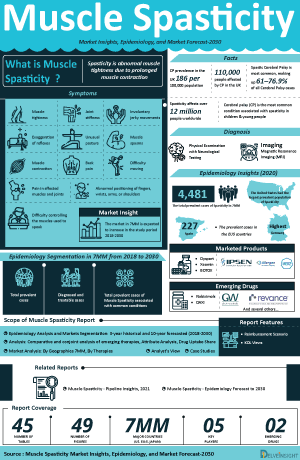
- Over 12 million people suffer from spasticity worldwide, including about 80% of those with cerebral palsy and 80% of those with multiple sclerosis.
Request for Unlocking the Sample Page of the "Muscle Spasticity Treatment Market"
Key Factors Driving the Growth of the Muscle Spasticity Market by DelveInsight
-
Rising Prevalence of Neurological Disorders
The increasing incidence of neurological conditions such as multiple sclerosis, cerebral palsy, stroke, traumatic brain injury, and spinal cord injuries is significantly contributing to the growth of the Muscle Spasticity market. Muscle spasticity is a common complication associated with these disorders, leading to growing demand for effective therapeutic interventions.
-
Growing Geriatric Population
The rapidly expanding aging population worldwide is further driving market growth, as older adults are more susceptible to neurological diseases and musculoskeletal complications that can result in muscle spasticity and impaired mobility.
-
Advancements in Treatment Approaches
Continuous advancements in pharmacological therapies, neurorehabilitation techniques, injectable biologics, and minimally invasive procedures are improving patient outcomes and supporting the expansion of the Muscle Spasticity treatment market.
-
Increasing Adoption of Botulinum Toxin Therapies
The growing use of botulinum toxin injections for focal spasticity management is playing a crucial role in market growth due to their proven efficacy, minimally invasive nature, and long-lasting symptom relief.
-
Rising Awareness and Early Diagnosis
Increasing awareness regarding neurological rehabilitation, improved access to healthcare services, and advancements in diagnostic technologies are contributing to earlier diagnosis and timely management of muscle spasticity.
-
Expanding Research and Clinical Development Activities
Ongoing clinical trials, rising investments in neuroscience research, and increasing focus on innovative neuromodulation therapies are accelerating the development of next-generation treatment options for muscle spasticity.
-
Growing Demand for Rehabilitation and Physical Therapy
The increasing emphasis on multidisciplinary rehabilitation programs, including physiotherapy, occupational therapy, and assistive technologies, is further supporting market growth by improving patient mobility and functional independence.
-
Technological Advancements in Neuromodulation Devices
Innovations in neuromodulation devices, intrathecal baclofen pumps, wearable rehabilitation systems, and robotic-assisted therapies are creating new growth opportunities within the Muscle Spasticity market.
DelveInsight's "Muscle Spasticity Market Insights, Epidemiology, and Market Forecast-2034" report delivers an in-depth understanding of the Muscle Spasticity, historical and forecasted epidemiology as well as the Muscle Spasticity market trends in the United States, EU4 (Germany, France, Italy, Spain), the United Kingdom and Japan.
The Muscle Spasticity Treatment Market Report provides current treatment practices, emerging drugs, Muscle Spasticity market share of the individual therapies, current and forecasted Muscle Spasticity market Size from 2020 to 2034, segmented by seven major markets. The Report also covers current Muscle Spasticity treatment practice/algorithm, market drivers, market barriers and unmet medical needs to curate the best of the opportunities and assess the underlying potential of the Muscle Spasticity market.
Scope of the Muscle Spasticity Market Report | |
|
Study Period |
2020 to 2034 |
|
Forecast Period |
2024 to 2034 |
|
Muscle Spasticity Market Size | |
|
Muscle Spasticity Companies |
Ipsen Pharma, Jazz Pharmaceuticals Plc, Mayne Pharma Group Ltd., Merz Pharma GmbH and Co. KGaA, Pfizer Inc., Allergan Plc, Alembic Pharmaceuticals Ltd., Amneal Pharmaceuticals Inc., Covis Pharma BV, Dr. Reddys Laboratories Ltd., Endo International Plc, F. Hoffmann La Roche Ltd., Hikma Pharmaceuticals Plc, Piramal Enterprises Ltd., Sun Pharmaceutical Industries Ltd., Unichem Laboratories Ltd., US WorldMeds, Cadila Healthcare Ltd., Medtronic Plc, JPN Pharma Pvt. Ltd., and Many Others. |
Muscle Spasticity Understanding
The DelveInsight’s Muscle Spasticity market report gives a thorough understanding of Muscle Spasticity by including details such as disease definition, symptoms, causes, pathophysiology, diagnosis, and treatment. Muscle spasticity is a condition characterized by an abnormal increase in muscle tone or stiffness, which can interfere with movement, speech, or gait. It usually results from damage to the brain or spinal cord pathways that control voluntary movement. Spasticity is not a disease but a symptom of various underlying conditions such as cerebral palsy, multiple sclerosis, traumatic brain injury, stroke, and spinal cord injuries.
A disorder known as muscle spasticity causes muscles to tighten, stiffen, or spasm uncontrollably. Stretching, walking, moving, and speaking become challenging due to the contracted muscles. Damage to the parts of the brain and spinal cord that regulate stretch reflexes and muscle control results in spasticity. This might be caused by an imbalance in the excitatory and inhibitory impulses that reach the muscles. There are several levels of spasticity that can be present in people who have suffered a stroke, multiple sclerosis, brain injury, or spinal cord injury.
Muscle Spasticity Diagnosis
The diagnosis of muscle spasticity involves a comprehensive clinical evaluation to determine the severity, underlying neurological condition, and impact on muscle function and mobility. Physicians generally begin with a detailed medical history assessment, neurological examination, and evaluation of muscle tone, reflexes, posture, coordination, and movement patterns. Muscle spasticity is commonly associated with neurological disorders such as multiple sclerosis, cerebral palsy, stroke, traumatic brain injury, spinal cord injury, and other central nervous system abnormalities.
Muscle Spasticity Treatment
The treatment landscape for muscle spasticity focuses on reducing muscle stiffness, improving mobility, minimizing pain, and enhancing overall quality of life. Treatment strategies generally depend on the severity of symptoms, affected muscle groups, and the underlying neurological disorder. Conservative management approaches include physical therapy, stretching exercises, occupational therapy, splinting, and rehabilitation programs aimed at improving muscle flexibility and functional independence. Pharmacological therapies commonly include oral muscle relaxants such as baclofen, tizanidine, diazepam, and dantrolene to reduce muscle hyperactivity and spasms.
Muscle Spasticity Epidemiology
The Muscle Spasticity epidemiology section provides insights about the historical and current Muscle Spasticity patient pool and forecasted trends for individual seven major countries. It helps to recognize the causes of current and forecasted trends by exploring numerous studies and views of key opinion leaders. This part of the Muscle Spasticity market report also provides the diagnosed patient pool and their trends along with assumptions undertaken.
Key findings from Muscle Spasticity Epidemiological Analysis and Forecast
The disease epidemiology covered in the report provides historical as well as forecasted Muscle Spasticity epidemiology scenario in the 7MM covering the United States, EU5 countries (Germany, Spain, Italy, France, and the United Kingdom), and Japan from 2020 to 2034.
Country-Wise- Muscle Spasticity Epidemiology
The epidemiology segment also provides the Muscle Spasticity Prevalence Data and findings across the United States, EU5 (Germany, France, Italy, Spain, and the United Kingdom), and Japan.
Muscle Spasticity Market Recent Breakthroughs and Developments
- In May 2026, Ipsen initiated a Phase I/II clinical study to evaluate the safety, efficacy, and pharmacodynamic (PD) profile of escalating doses of IPN10200 for the treatment of Adult Upper Limb (AUL) spasticity. The study also aims to identify the IPN10200 dose(s) that provide the optimal efficacy and safety profile in patients with AUL spasticity.
- In May 2026, Celgene conducted a Phase II clinical study to assess the efficacy, safety, and tolerability of BMS-986368 in participants with Multiple Sclerosis-associated spasticity.
- In May 2026, Merz Pharmaceuticals GmbH announced a clinical study to evaluate whether a single administration of 400 Units of NT 201 (botulinum toxin) demonstrates superiority over placebo in the treatment of lower limb spasticity caused by stroke or traumatic brain injury during the main study period. Participants are being randomized into treatment groups, and both participants and interacting research staff remain blinded to treatment allocation.
Muscle Spasticity Drug Analysis
The drug chapter segment of the Muscle Spasticity Therapeutics Market Report encloses the detailed analysis of Muscle Spasticity marketed drugs and late-stage (Phase-III and Phase-II) Muscle Spasticity Pipeline Drugs. It also helps to understand the Muscle Spasticity clinical trial details, expressive pharmacological action, agreements and collaborations, approval and patent details, advantages and disadvantages of each included drug and the latest news and press releases.
Muscle Spasticity Marketed Drugs
The Muscle Spasticity treatment market report provides the details of the marketed products/off-label treatments available for Muscle Spasticity treatment.
Muscle Spasticity Emerging Drugs
The Muscle Spasticity treatment market report provides the details of the emerging therapies under the late and mid-stage of development for Muscle Spasticity treatment.
Muscle Spasticity Market Outlook
The Muscle Spasticity market outlook of the report helps to build a detailed comprehension of the historic, current, and forecasted Muscle Spasticity market trends by analyzing the impact of current Muscle Spasticity therapies on the market, unmet needs, drivers and barriers, and demand for better technology.
This segment gives a thorough detail of Muscle Spasticity market trend of each marketed drug and late-stage pipeline therapy by evaluating their impact based on the annual cost of therapy, inclusion and exclusion criteria's, mechanism of action, compliance rate, growing need of the market, increasing patient pool, covered patient segment, expected launch year, competition with other therapies, brand value, their impact on the market and view of the key opinion leaders. The calculated Muscle Spasticity market data are presented with relevant tables and graphs to give a clear view of the market at first sight.
According to DelveInsight, the Muscle Spasticity Treatment Market in 7MM is expected to witness a major change in the study period 2020-2034.
Key Findings
This section includes a glimpse of the Muscle Spasticity market in 7MM.
The United States Muscle Spasticity Market Outlook
This section provides the total Muscle Spasticity market size and market size by therapies in the United States.
EU-5 Countries: Muscle Spasticity Market Outlook
The total Muscle Spasticity market size and market size by therapies in Germany, France, Italy, Spain, and the United Kingdom is provided in this section.
Japan: Muscle Spasticity Market Outlook
The total Muscle Spasticity market size and market size by therapies in Japan is also mentioned.
Muscle Spasticity Drugs Uptake
This section focuses on the rate of uptake of the potential Muscle Spasticity drugs recently launched in the Muscle Spasticity market or expected to get launched in the market during the study period 2020-2034. The analysis covers Muscle Spasticity market uptake by drugs; patient uptake by therapies; and sales of each drug. Muscle Spasticity Drugs Uptake helps in understanding the drugs with the most rapid uptake, reasons behind the maximal use of new drugs, and allow the comparison of the drugs on the basis of Muscle Spasticity market share and size which again will be useful in investigating factors important in market uptake and in making financial and regulatory decisions.
Muscle Spasticity Clinical Trials Activities
The Muscle Spasticity Therapeutics Market Report provides insights into Muscle Spasticity Clinical Trials within Phase II, and Phase III stage. It also analyses the Muscle Spasticity Companies involved in developing targeted therapeutics.
Muscle Spasticity Pipeline Development Activities
The Muscle Spasticity Therapeutics Market Report covers the detailed information of collaborations, acquisition, and merger, licensing, patent details, and other information for Muscle Spasticity emerging therapies.
Muscle Spasticity Reimbursement Scenario
Approaching reimbursement proactively can have a positive impact both during the late stages of product development and well after product launch. In a report, we take reimbursement into consideration to identify economically attractive indications and market opportunities. When working with finite resources, the ability to select the markets with the fewest reimbursement barriers can be a critical business and price strategy.
Latest KOL- Views on Muscle Spasticity
To keep up with current Muscle Spasticity market trends, we take KOLs and SMEs ' opinion working in the Muscle Spasticity domain through primary research to fill the data gaps and validate our secondary research. Their opinion helps to understand and validate current and emerging therapies treatment patterns or Muscle Spasticity market trends. This will support the clients in potential upcoming novel treatment by identifying the overall scenario of the market and the unmet needs.
Muscle Spasticity Competitive Intelligence Analysis
We perform Competitive and Muscle Spasticity Drugs Market Intelligence analysis of the Muscle Spasticity Market by using various Competitive Intelligence tools that include - SWOT analysis, PESTLE analysis, Porter's five forces, BCG Matrix, Market entry strategies etc. The inclusion of the analysis entirely depends upon the data availability.
Major Muscle Spasticity Companies
Ipsen Pharma, Jazz Pharmaceuticals Plc, Mayne Pharma Group Ltd., Merz Pharma GmbH and Co. KGaA, Pfizer Inc., Allergan Plc, Alembic Pharmaceuticals Ltd., Amneal Pharmaceuticals Inc., Covis Pharma BV, Dr. Reddys Laboratories Ltd., Endo International Plc, F. Hoffmann La Roche Ltd., Hikma Pharmaceuticals Plc, Piramal Enterprises Ltd., Sun Pharmaceutical Industries Ltd., Unichem Laboratories Ltd., US WorldMeds, Cadila Healthcare Ltd., Medtronic Plc, JPN Pharma Pvt. Ltd., and others.
Muscle Spasticity Therapeutics Market Report Scope
- The Muscle Spasticity Therapeutics Market Report covers a descriptive overview, explaining its causes, signs and symptoms, pathophysiology, diagnosis and currently available therapies
- Comprehensive insight has been provided into the Muscle Spasticity epidemiology and treatment in the 7MM
- Additionally, an all-inclusive account of both the current and emerging Muscle Spasticity Therapies is provided, along with the assessment of new therapies, which will have an impact on the current treatment landscape
- A detailed review of the Muscle Spasticity Treatment Market, historical and forecasted, is included in the report, covering drug outreach in the 7MM
- The Muscle Spasticity Therapeutics Market Report provides an edge while developing business strategies, by understanding trends shaping and driving the global Muscle Spasticity market
Muscle Spasticity Therapeutics Market Report Highlights
- In the coming years, the Muscle Spasticity market is set to change due to the rising awareness of the disease, and incremental healthcare spending across the world; which would expand the size of the market to enable the drug Muscle Spasticity manufacturers to penetrate more into the market
- The Muscle Spasticity Companies and academics are working to assess challenges and seek opportunities that could influence Muscle Spasticity R&D. The therapies under development are focused on novel approaches to treat/improve the disease condition
- Major Muscle Spasticity Companies are involved in developing therapies for Muscle Spasticity. The launch of emerging therapies will significantly impact the Muscle Spasticity market
- A better understanding of disease pathogenesis will also contribute to the development of novel therapeutics for Muscle Spasticity
- Our in-depth analysis of the Muscle Spasticity Pipeline assets across different stages of development (Phase III and Phase II), different emerging trends and comparative analysis of pipeline products with detailed clinical profiles, key cross-competition, launch date along with product development activities will support the clients in the decision-making process regarding their therapeutic portfolio by identifying the overall scenario of the research and development activities
Muscle Spasticity Therapeutics Market Report Insights
- Patient-based Muscle Spasticity Market Forecasting
- Muscle Spasticity Therapeutic Approaches
- Muscle Spasticity Pipeline Drugs Analysis
- Muscle Spasticity Market Size and Trends
- Muscle Spasticity Drugs Market Opportunities
- Impact of Upcoming Muscle Spasticity Therapies
Muscle Spasticity Treatment Market Report Key Strengths
- 10 Years Muscle Spasticity Market Forecast
- 7MM Coverage
- Muscle Spasticity Epidemiology Segmentation
- Key Cross Competition
- Highly Analyzed Market
- Muscle Spasticity Drugs Uptake
Muscle Spasticity Therapeutics Market Report Assessment
- Current Muscle Spasticity Treatment Practices
- Muscle Spasticity Unmet Needs
- Muscle Spasticity Pipeline Drugs Profiles
- Muscle Spasticity Market Attractiveness
- Muscle Spasticity Market Drivers
- Muscle Spasticity Market Barriers
Key Questions Answered in the Muscle Spasticity Market Report
Muscle Spasticity Therapeutics Market Insights:
- What was the Muscle Spasticity drugs market share (%) distribution in 2020 and how it would look like in 2034?
- What would be the Muscle Spasticity market size as well as market size by therapies across the 7MM during the forecast period (2024-2034)?
- What are the key findings pertaining to the market across 7MM and which country will have the largest Muscle Spasticity market size during the forecast period (2024-2034)?
- At what CAGR, the Muscle Spasticity market is expected to grow by 7MM during the forecast period (2024-2034)?
- What would be the Muscle Spasticity market outlook across the 7MM during the forecast period (2024-2034)?
- What would be the Muscle Spasticity market growth till 2034, and what will be the resultant market Size in the year 2034?
- How would the unmet needs affect the market dynamics and subsequent analysis of the associated trends?
Muscle Spasticity Epidemiology Insights:
- What are the disease risk, burden, and regional/ethnic differences of the Muscle Spasticity?
- What are the key factors driving the epidemiology trend for seven major markets covering the United States, EU5 (Germany, Spain, France, Italy, UK), and Japan?
- What is the historical Muscle Spasticity patient pool in seven major markets covering the United States, EU5 (Germany, Spain, France, Italy, UK), and Japan?
- What would be the forecasted patient pool of Muscle Spasticity in seven major markets covering the United States, EU5 (Germany, Spain, France, Italy, UK), and Japan?
- Where will be the growth opportunities in the 7MM with respect to the patient population pertaining to Muscle Spasticity?
- Out of all 7MM countries, which country would have the highest prevalent population of Muscle Spasticity during the forecast period (2024-2034)?
- At what CAGR the patient population is expected to grow in 7MM during the forecast period (2024-2034)?
Current Muscle Spasticity Treatment Scenario, Marketed Drugs and Emerging Therapies:
- What are the current options for the treatment of muscle spasticity in addition to the approved therapies?
- What are the current treatment guidelines for the treatment of Muscle Spasticity in the USA, Europe, and Japan?
- What are the Muscle Spasticity marketed drugs and their respective Muscle Spasticity MOA, regulatory milestones, product development activities, advantages, disadvantages, safety and efficacy, etc.?
- How many companies are developing therapies for the treatment of Muscle Spasticity?
- How many therapies are in-development by each company for Muscle Spasticity treatment?
- How many are emerging therapies in mid-stage, and late stage of development for Muscle Spasticity treatment?
- What are the key collaborations (Industry - Industry, Industry - Academia), Mergers and acquisitions, licensing activities related to the Muscle Spasticity therapies?
- What are the recent novel therapies, targets, Muscle Spasticity mechanisms of action and technologies being developed to overcome the limitation of existing therapies?
- What are the clinical studies going on for Muscle Spasticity and their status?
- What are the current challenges faced in drug development?
- What are the key designations that have been granted for the Muscle Spasticity Emerging Therapies?
- What are the global historical and Muscle Spasticity Market Forecasted?
Reasons to Buy the Muscle Spasticity Market Report
- The Muscle Spasticity Therapeutics Market Report will help in developing business strategies by understanding trends shaping and driving the Muscle Spasticity market
- To understand the future market competition in the Muscle Spasticity market, and Insightful review of the key market drivers and barriers
- Organize sales and marketing efforts by identifying the best opportunities for Muscle Spasticity in the US, Europe (Germany, Spain, Italy, France, and the United Kingdom) and Japan
- Identification of strong upcoming players in the market will help in devising strategies that will help in getting ahead of competitors
- Organize sales and marketing efforts by identifying the best opportunities for the Muscle Spasticity Drugs Market
- To understand the future market competition in the Muscle Spasticity Drugs Market
Stay updated with us for Recent Articles