Nanomedicine Market Summary
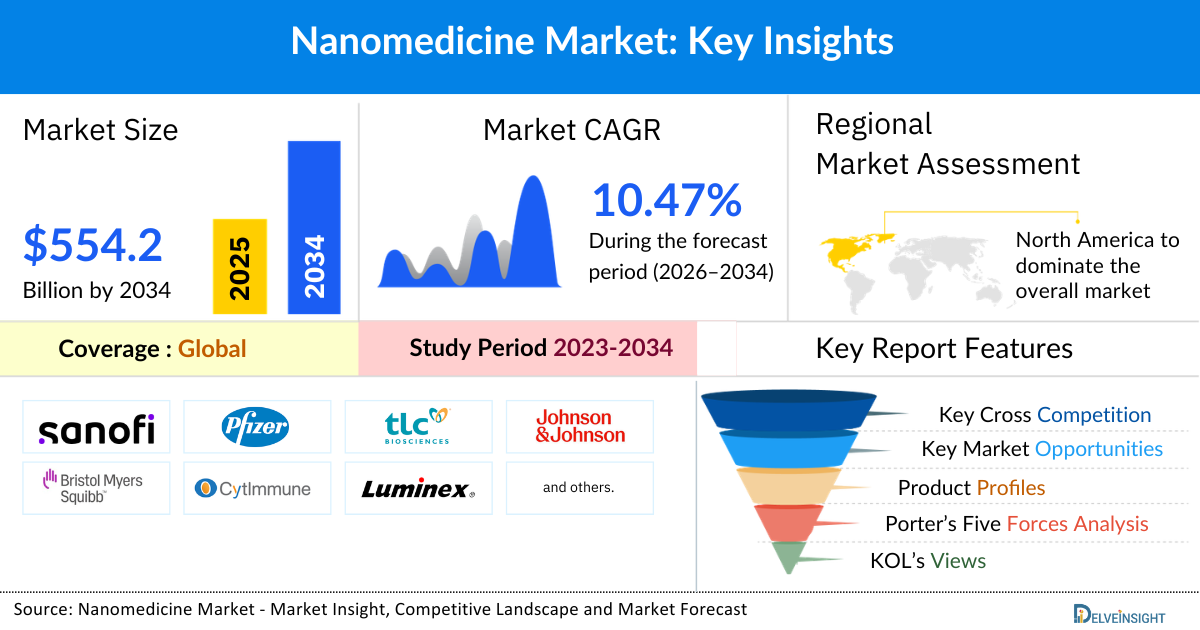
- The global nanomedicines market size is expected to increase from USD 227.19 billion in 2025 to USD 554.22 billion by 2034, reflecting strong and sustained growth.
- The global nanomedicines market is growing at a CAGR of 10.47% during the forecast period from 2026 to 2034.
- The market of nanomedicines is being primarily driven by the growing need for targeted and more effective therapies, particularly in the treatment of cancer, cardiovascular diseases, and chronic disorders, where conventional drugs often face limitations related to toxicity, poor bioavailability, and lack of precision. Nanomedicines enable targeted drug delivery at the cellular and molecular levels, improving therapeutic efficacy while reducing side effects, which is significantly boosting their adoption among healthcare providers. In addition, the rising global burden of cancer, increasing prevalence of infectious and neurological diseases, and the expanding elderly population are accelerating demand for advanced treatment options. Strong research and development investments, rapid advancements in nanotechnology, and increasing regulatory approvals of nanoparticle-based drugs and vaccines are further supporting market growth. Moreover, the success of nanoparticle-enabled vaccines and diagnostics, improved imaging capabilities, and growing collaborations between pharmaceutical companies, biotechnology firms, and research institutions are collectively strengthening the commercialization and uptake of nanomedicines worldwide.
- The leading companies operating in the nanomedicines market include Pfizer Inc., Moderna, Inc., Johnson & Johnson Services, Inc., Jazz Pharmaceuticals plc., Gilead Sciences, Inc., Leadiant Biosciences, Merck & Co., Inc., Bristol Myers Squibb, Alnylam Pharmaceuticals, Sanofi S.A., Nanospectra Biosciences, Inc., Bind Biosciences, CytImmune Sciences, Inc., Pacira BioSciences Inc., AMAG Pharmaceuticals, Taiwan Liposome Company, Ltd., Luminex Corporation, Starpharma Holdings Limited, Precision NanoSystem, Nanobiotix, Spago Nanomedical AB, and others.
- North America is expected to dominate the overall nanomedicines market. This domination is due to the increasing application of nanomedicine in early disease diagnosis, preventive intervention, and prophylaxis of chronic and acute disorders; the well-defined regulatory framework for the approval and commercialization of medicinal products, among others, will propel the market of nanomedicine in North America.
- In the molecule type segment of the nanomedicines market, the nanoparticles category is estimated to account for the largest market share in 2025.
Request for unlocking the report of the @ Nanomedicines Market Insights
Nanomedicines Market Size and Forecasts
|
Report Metrics |
Details |
|
2025 Market Size |
USD 227.19 billion |
|
2034 Projected Market Size |
USD 554.22 billion |
|
Growth Rate (2026-2034) |
10.47% CAGR |
|
Largest Market |
North America |
|
Fastest Growing Market |
Asia-Pacific |
|
Market Structure |
Moderately Concentrated |
Factors Contributing to the Growth of the Nanomedicines Market
Growing burden of chronic diseases such as cancers, cardiovascular disorders, genetic disorders, and others disorders leading to a surge in nanomedicines: The rising burden of chronic diseases such as cancer, cardiovascular disorders, and genetic conditions is accelerating the demand for nanomedicines, as these diseases require targeted and effective long-term treatments. Nanomedicines improve drug precision, enhance bioavailability, and reduce side effects compared to conventional therapies, making them well-suited for complex chronic conditions. As disease prevalence continues to increase globally, the adoption of nanotechnology-based therapeutics is growing, driving the expansion of the nanomedicines market.
Increasing advancements in nanoscale technologies for diagnostic procedures esclating the market of nanomedicines: Increasing advancements in nanoscale technologies for diagnostic procedures are significantly escalating the nanomedicines market by enabling earlier, more accurate, and less invasive disease detection. Nano-enabled imaging agents, biosensors, and contrast materials enhance sensitivity and specificity at the molecular level, allowing clinicians to identify diseases such as cancer and cardiovascular disorders at early stages. This improved diagnostic precision supports personalized treatment planning and boosts the adoption of nanomedicine-based therapeutics, thereby driving overall market growth.
Growing preference for personalized medicines: The growing preference for personalized medicine is driving the nanomedicines market, as nanotechnology enables tailored drug delivery based on a patient’s genetic and molecular profile. Nanomedicines improve targeting accuracy, optimize dosing, and reduce adverse effects, making treatments more effective and patient-specific. This shift toward precision healthcare is accelerating the adoption of nanomedicine-based therapies across multiple disease areas.
Nanomedicines Market Report Segmentation
This nanomedicines market report offers a comprehensive overview of the global nanomedicines market, highlighting key trends, growth drivers, challenges, and opportunities. It covers detailed market segmentation by Molecule Type (Nanoparticle, Nanocapsule, Nanotubes, and Nanodevices), Application (Drug Delivery, Implants, Diagnostic Imaging, Therapy, and Others), Indication (Cardiovascular, Oncology, Neurology, Orthopaedic, Infectious, and Others), and geography. The report provides valuable insights into the competitive landscape, regulatory environment, and market dynamics across major markets, including North America, Europe, and Asia-Pacific. Featuring in-depth profiles of leading industry players and recent product innovations, this report equips businesses with essential data to identify market potential, develop strategic plans, and capitalize on emerging opportunities in the rapidly growing nanomedicines market.
Nanomedicines are medical applications of nanotechnology that use materials at the nanoscale to diagnose, treat, and prevent diseases more effectively. They enable targeted drug delivery, improved bioavailability, enhanced imaging, and reduced side effects compared to conventional therapies, making them especially valuable in treating complex and chronic conditions such as cancer and genetic disorders.
The market of nanomedicines is being primarily driven by the growing need for targeted and more effective therapies, particularly in the treatment of cancer, cardiovascular diseases, and chronic disorders, where conventional drugs often face limitations related to toxicity, poor bioavailability, and lack of precision. Nanomedicines enable targeted drug delivery at the cellular and molecular levels, improving therapeutic efficacy while reducing side effects, which is significantly boosting their adoption among healthcare providers. In addition, the rising global burden of cancer, increasing prevalence of infectious and neurological diseases, and the expanding elderly population are accelerating demand for advanced treatment options. Strong research and development investments, rapid advancements in nanotechnology, and increasing regulatory approvals of nanoparticle-based drugs and vaccines are further supporting market growth. Moreover, the success of nanoparticle-enabled vaccines and diagnostics, improved imaging capabilities, and growing collaborations between pharmaceutical companies, biotechnology firms, and research institutions are collectively strengthening the commercialization and uptake of nanomedicines worldwide.
Get More Insights into the Report @ Nanomedicines Market Trends
What are the latest nanomedicines market dynamics and trends?
The global market for nanomedicines has witnessed significant growth in recent years, largely driven by the rising prevalence of cancer, cardiovascular diseases, and chronic disorders. Additionally, strong research and development investments, rapid advancements in nanotechnology, and increasing regulatory approvals of nanoparticle-based drugs and vaccines are further supporting market growth.
According to the data provided by the International Agency for Research on Cancer (2025), in 2025, the estimated new cases of cancer were 21.3 million, and the projection further estimates that these new cases would rise to 32.1 million by 2045. Nanomedicines enable the precise delivery of anticancer drugs directly to tumor cells, improving therapeutic efficacy while minimizing damage to healthy tissues and reducing side effects. The rising global incidence of cancer, along with the growing adoption of nanoparticle-based chemotherapies, nano-enabled imaging agents, and cancer vaccines, is accelerating clinical acceptance of nanomedicines.
According to the World Heart Federation (2024), approximately 60 million population was affected by atrial fibrillation, which is one of the most common types of irregular heartbeat, or arrhythmia. Nanomedicines enable targeted delivery to cardiac tissues, enhance drug bioavailability, and reduce systemic side effects, which is particularly important for long-term AF management. In addition, nano-based imaging agents and biosensors improve early detection and monitoring of atrial remodeling and clot formation, supporting personalized treatment strategies, thereby escalating the overall market of nanomedicines.
Furthermore, the advancements in nanoscale technologies for diagnostic procedures are rapidly escalating the nanomedicines market by enabling earlier, more accurate, and highly sensitive detection of diseases at the molecular level. Nanoparticle-based imaging agents enhance diagnostic sensitivity in MRI Devices, CT Scan Devices, and PET scans, with key examples including iron oxide nanoparticles (Ferumoxytol, Ferucarbotran) for liver/lymph imaging, gold nanoparticles for photoacoustic imaging, and liposomes. These agents, often coated with PEG or dextran to improve stability, enable targeted tumor visualization and molecular imaging. These innovations not only enhance the effectiveness of disease diagnosis but also support personalized treatment planning, which further drives the adoption of nanomedicine solutions across healthcare systems. Research into novel nanodiagnostic platforms such as quantum biosensing microarrays and nanopillar photonic crystal biosensors capable of detecting ultra-low concentrations of biomarkers illustrates the clinical potential of these technologies and underscores ongoing investment in translating them toward practical use. Together, these advancements are broadening the role of nanotechnology in diagnostics and fueling growth in the overall nanomedicines market.
Furthermore, the increase in product development activites are further boosting the overall market of nanomedicines. For instance, in April 2025, MEPSGEN US Inc. launched NanoCalibur, a scalable nanoparticle (NP) production system in the U.S. designed for precise, controllable synthesis of LNPs and liposomes.
Thus, the factors mentioned above are expected to boost the overall market of nanomedicines during the forecast period from 202 to 2034.
However, complex manufacturing and scalability challenges act as a limiting factor because producing nanomedicines requires highly controlled processes to maintain particle size, stability, and reproducibility, which increases production costs and limits large-scale commercialization. Regulatory uncertainty is another critical challenge, since many regulatory agencies do not have nanomedicine-specific approval pathways, leading to longer review timelines, unclear safety requirements, and variability in global regulatory standards.
Nanomedicines Market Segment Analysis
Nanomedicines Market by Molecule Type (Nanoparticle, Nanocapsule, Nanotubes, and Nanodevices), Application (Drug Delivery, Implants, Diagnostic Imaging, Therapy, and Others), Indication (Cardiovascular, Oncology, Neurology, Orthopaedic, Infectious, and Others), and Geography (North America, Europe, Asia-Pacific, and Rest of the World)
By Molecule Type: Nanoparticles Category Dominates the Market
In the nanomedicines market, within the molecule type segment, the nanoparticles category is projected to hold the largest market share, accounting for approximately 74% in 2025. Nanoparticles are fundamentally transforming the nanomedicines market by redefining how drugs and diagnostics are designed, delivered, and commercialized, resulting in higher precision, improved efficacy, and better clinical outcomes compared to conventional therapies. At the core of this growth is their ability, through platforms like lipid nanoparticles, polymeric nanocarriers, and metal or inorganic nanoparticles, to enable targeted drug delivery, controlled release, and enhanced bioavailability, which significantly improves therapeutic response while minimizing systemic toxicity. These advantages are particularly evident in oncology, where nanoparticle-based systems such as Abraxane® (albumin-bound paclitaxel) can deliver chemotherapeutic agents directly to tumor cells, reducing adverse effects while improving antitumor efficacy. Abraxane, for instance, is approved for metastatic breast cancer, advanced non-small cell lung cancer (with carboplatin), and pancreatic adenocarcinoma (with gemcitabine), exemplifying the clinical impact of nanoparticle-enabled delivery. Similarly, lipid nanoparticle platforms have not only driven the success of mRNA vaccines but are now being explored for targeted cancer therapies, while nanoparticles are also enabling the delivery of therapeutics across challenging biological barriers, such as the blood-brain barrier for neurological and cachexia-related treatments, as demonstrated by recent research at Oregon State University.
In addition to therapeutic applications, nanoparticles are revolutionizing diagnostics and early disease detection. Nano-enabled biosensors and imaging agents can identify molecular changes at earlier stages than conventional techniques, facilitating timely intervention and personalized treatment planning. These innovations are central to theranostics, where therapy and diagnostics are combined in a single platform, allowing clinicians to both locate and treat disease simultaneously, improving clinical efficiency and patient outcomes. Beyond oncology, nanoparticle technologies are being developed for cardiovascular, infectious, and neurological diseases, expanding the scope of nanomedicine applications. As the global prevalence of chronic and complex diseases rises, the integration of nanoparticle platforms into diagnostics and therapeutics is driving robust growth in the nanomedicines market, making them a cornerstone of next-generation precision healthcare.
By Application: Drug Delivery Category Dominates the Market
Within the application segment of the nanomedicine market, the drug delivery segment is expected to account for the largest share, capturing approximately 24% of the market in 2025. The drug delivery application is one of the primary drivers boosting the overall nanomedicines market, as it addresses critical challenges in conventional therapies such as poor bioavailability, non-specific distribution, systemic toxicity, and frequent dosing requirements. Nanomedicine platforms, including lipid nanoparticles, liposomes, polymeric nanoparticles, dendrimers, and inorganic nanoparticles, allow drugs to be delivered directly to target tissues or cells, enhancing therapeutic efficacy while minimizing side effects. This targeted delivery is particularly important in oncology, where chemotherapeutic agents can be highly toxic; nanoparticle-based drugs like Abraxane® (albumin-bound paclitaxel) and Doxil® (liposomal doxorubicin) exemplify how nanocarriers can improve drug solubility, extend circulation time, and concentrate treatment at tumor sites, thereby increasing response rates and patient safety. Beyond cancer, nanoparticle drug delivery is expanding into cardiovascular, neurological, infectious, and genetic disorders, allowing therapeutics such as siRNA, mRNA, and gene-editing agents to reach specific organs or cells that were previously difficult to target. For instance, lipid nanoparticle (LNP) technology, used in mRNA vaccines like Pfizer’s Comirnaty® and Moderna’s Spikevax®, has proven the clinical feasibility of nanoparticle delivery for rapid, precise, and scalable therapies.
Additionally, nanocarriers enable controlled and sustained release, reducing dosing frequency and improving patient adherence, which is particularly valuable for chronic diseases. The integration of nanotechnology with smart drug delivery systems, including stimuli-responsive nanoparticles and theranostic platforms, further enhances personalized treatment strategies by allowing simultaneous imaging and therapy. As pharmaceutical companies and research institutions continue to invest in advanced nanocarriers, optimize formulations, and expand their applications to previously inaccessible tissues, the drug delivery segment remains a critical engine for the growth of the global nanomedicines market, driving innovation, clinical adoption, and commercial expansion.
By Indication: Oncology Category Dominates the Market
The oncology segment is boosting the overall nanomedicines market by driving demand for highly targeted, effective, and safer cancer therapies that overcome the limitations of conventional chemotherapy. Nanomedicines such as liposomal drugs, polymeric nanoparticles, antibody drug conjugates, and nano-enabled immunotherapies enable precise delivery of anticancer agents directly to tumor cells, improving drug bioavailability while reducing systemic toxicity and side effects. The rising global burden of cancer, increasing adoption of personalized and precision oncology, and the need to treat hard-to-reach tumors (including brain, pancreatic, and metastatic cancers) have accelerated R&D investment and clinical translation of nano-based therapies. In addition, nanotechnology enhances combination therapies, supports controlled and sustained drug release, and improves the stability of biologics and RNA-based treatments. Strong regulatory approvals of nano-oncology drugs, expanding oncology pipelines from pharma and biotech companies, and growing use of nanomedicine platforms in diagnostics and theranostics further reinforce oncology as the largest revenue-generating and fastest-growing application segment within the global nanomedicines market.
Nanomedicines Market Regional Analysis
North America Nanomedicines Market Trends
North America is expected to account for the highest proportion of 43% of the nanomedicines market in 2025, out of all regions. This domination is due to the increasing application of nanomedicine in early disease diagnosis, preventive intervention, and prophylaxis of chronic and acute disorders; the well-defined regulatory framework for the approval and commercialization of medicinal products, among others, will propel the market of nanomedicine in North America.
According to the recent data provided by Centre for Disease Control and Prevention (2024), in 2022, approximately 4.8% of adults were diagnosed with coronary heart disease.
Additionally, according to the data provided by the International Agency for Research on Cancer (2025), in 2025, in North America, the estimated new cases of cancer were 2.85 million, and the projection further estimates that these new cases would rise to 3.83 million by 2045. In cancer, nanomedicines such as liposomal formulations, polymeric nanoparticles, antibody drug conjugates, and nano-enabled immunotherapies enable precise tumor targeting, improved drug bioavailability, and reduced systemic toxicity, supporting the shift toward precision and personalized oncology. In coronary heart disease, nanotechnology is increasingly used to enhance drug delivery for anti-thrombotic, anti-inflammatory, and lipid-lowering therapies, improve imaging and diagnostics of atherosclerotic plaques, and support regenerative approaches such as nano-based stents and targeted vascular repair. The growing global burden of both diseases, coupled with limitations of conventional therapies, has driven pharmaceutical companies to invest heavily in nanomedicine R&D, clinical trials, and commercialization of nanomedicines.
Additionally, academic research, such as a 2023 National Institutes of Health (NIH)–funded clinical study, used nanoparticle contrast agents to enhance MRI detection of early-stage pancreatic tumors, illustrating how nano-enabled diagnostics are improving early cancer detection and treatment planning. In cardiology, US-based research has explored nanoparticle carriers for targeted delivery of anti-inflammatory drugs to atherosclerotic plaques, aiming to reduce restenosis after stent placement and improve outcomes in patients with coronary artery disease.
Thus, all the above-mentioned factors are anticipated to propel the market for nanomedicines in the United States during the forecast period.
Europe Nanomedicines Market Trends
In Europe, the growth of the nanomedicines market is being strongly driven by the strong regulatory support, increasing clinical adoption of nano-enabled therapies, and collaborative research initiatives that accelerate innovation across oncology, infectious disease, and cardiovascular care. For example, the European Medicines Agency (EMA) has approved several nanotechnology-based anticancer treatments, such as nanoparticle albumin-bound paclitaxel (Abraxane®) and liposomal irinotecan (Onivyde®), which have shown improved therapeutic profiles and quality-of-life benefits compared with traditional chemotherapies, encouraging wider use among European oncology centers. Europe has also invested heavily in academic and public-private partnerships; a notable initiative is the NanoMedicine Translation Hub, which supports clinical translation of nanoscale drug delivery systems for conditions like inflammatory bowel disease and cardiovascular disorders.
Additionally, the region’s response to infectious disease challenges, where nano-formulated vaccines and adjuvants were explored during the COVID-19 pandemic, has increased confidence in nanomedicine platforms. Supported by strong funding from the Horizon Europe program and an expanding ecosystem of biotech companies and research institutions, these examples illustrate how Europe’s regulatory environment, clinical evidence, and collaborative research efforts are boosting the overall nanomedicines market.
Asia-Pacific Nanomedicines Market Trends
The Asia Pacific region is emerging as a significant growth driver for the nanomedicines market due to a combination of rising healthcare demand, expanding biotech and pharmaceutical R&D, supportive regulatory reforms, and increasing investment in advanced therapeutic technologies. Rapidly growing burdens of cancer, cardiovascular diseases, and infectious diseases have pushed governments and private sectors to adopt innovative treatment modalities, including nano-enabled drug delivery systems, targeted therapies, and diagnostic tools.
For example, recent developments in China’s nanomedicine sector include the approval and clinical adoption of liposomal anticancer formulations and nano-based COVID-19 vaccine platforms, which demonstrated improved safety and immune response profiles during the pandemic response. In India, collaborative efforts between academia and industry have advanced nanoparticle-mediated drug delivery research, such as polymeric nanoparticles for targeted chemotherapy and lipid nanocarriers for anti-TB therapeutics, supported by initiatives like the Department of Biotechnology’s Nano Mission. South Korea and Japan have also seen significant private investment and commercialization, with companies advancing siRNA and immune-modulating nanotherapeutics into late-stage clinical trials for cancers and rare diseases. Furthermore, increasing partnerships between Asia Pacific biotech firms and global pharmaceutical companies have accelerated technology transfers and clinical validation of nanomedicines in larger patient populations. Coupled with improving healthcare infrastructure and rising disposable incomes, these developments have made the Asia Pacific one of the fastest-growing regional markets for nanomedicine innovation and adoption.
Who are the major players in the nanomedicines market?
The following are the leading companies in the nanomedicines market. These companies collectively hold the largest market share and dictate industry trends.
- Pfizer Inc.
- Moderna, Inc.
- Johnson & Johnson Services, Inc.
- Jazz Pharmaceuticals plc.
- Gilead Sciences, Inc.
- Leadiant Biosciences
- Merck & Co., Inc.
- Bristol Myers Squibb
- Alnylam Pharmaceuticals, Sanofi S.A.
- Nanospectra Biosciences, Inc.
- Bind Biosciences
- CytImmune Sciences, Inc.
- Pacira BioSciences Inc.
- AMAG Pharmaceuticals
- Taiwan Liposome Company, Ltd.
- Luminex Corporation
- Starpharma Holdings Limited
- Precision NanoSystem
- Nanobiotix
- Spago Nanomedical AB, and others
How is the competitive landscape shaping the Nanomedicines market?
The competitive landscape of the nanomedicines market is characterized by a mix of established pharmaceutical companies, specialized biotech firms, and emerging startups, resulting in a moderately concentrated yet increasingly dynamic market. Large multinational players such as Pfizer, Merck & Co., Novartis, and Roche maintain strong positions due to their broad pipelines, regulatory expertise, and global commercialization capabilities, especially for nanoparticle-based oncology drugs like liposomal formulations and antibody-drug conjugates. At the same time, specialized companies and niche innovators such as BIND Therapeutics, Selecta Biosciences, and Arrowhead Pharmaceuticals are advancing next-generation nanotechnologies, including targeted delivery systems, RNA-based nanotherapeutics, and immune-modulating nanoparticles, often through strategic partnerships or acquisitions with larger firms. The competitive dynamics have also been shaped by collaborative research alliances, where academic institutions and contract development organizations (CDMOs) co-develop novel nano platforms, accelerating translation from bench to clinic. As regulatory pathways for nanomedicines have become clearer in key regions like the U.S., Europe, and Asia Pacific, more entrants have joined, increasing innovation pressure and driving competition on differentiation, especially in cancer, cardiovascular, and infectious disease segments. While a few large companies command significant market share in approved products, the emergence of new technology platforms, licensing deals, and M&A activity is reducing barriers to entry and preventing extreme concentration. This evolving landscape suggests a transition from a concentrated oligopoly toward a more competitive and diversified market, where both incumbents and innovators contribute to growth and value creation.
Recent Developmental Activities in the Nanomedicines Market
- In February 2026, scientists at Newark developed a first-of-its-kind RNA-based nanotechnology that assembles itself inside living human cells and can be programmed to stop the propagation of harmful cells. The findings, recently published in Nature Communications, represent a breakthrough in biomedical research.
- In September 2025, NanoMedicine Revolution raised a $870 million Series D funding round, reaching a $13.1 billion valuation. The funding was specifically aimed at accelerating the development of nanotechnology-based medical treatments.
- In September 2025, NSF invested $30M in EPSCoR jurisdictions for research and workforce development in energy, semiconductors, nanotechnology, and biotechnology.
- In March 2023, Moderna collaborated with Generation Bio to use its proprietary cell-targeted lipid nanoparticle delivery system for the development of non-viral genetic medicines to treat immune system and liver-related disorders.
Nanomedicines Market Segmentation
Nanomedicines by Molecule Type Exposure
- Nanoparticle
- Nanocapsules
- Nanotubes
- Nanodevices
Nanomedicines Application Exposure
- Drug Delivery
- Implants
- Diagnostic Imaging
- Therapy
- Others
Nanomedicines Indication Exposure
- Cardiovascular
- Oncology
- Neurology
- Orthopaedic
- Infectious, and others
Nanomedicines Geography Exposure
- North America Nanomedicines Market
- United States Nanomedicines Market
- Canada Nanomedicines Market
- Mexico Nanomedicines Market
- Europe Nanomedicines Market
- United Kingdom Nanomedicines Market
- Germany Nanomedicines Market
- France Nanomedicines Market
- Italy Nanomedicines Market
- Spain Nanomedicines Market
- Rest of Europe Nanomedicines Market
- Asia-Pacific Nanomedicines Market
- China Nanomedicines Market
- Japan Nanomedicines Market
- India Nanomedicines Market
- Australia Nanomedicines Market
- South Korea Nanomedicines Market
- Rest of Asia-Pacific Nanomedicines Market
- Rest of the World Nanomedicines Market
- South America Nanomedicines Market
- Middle East Nanomedicines Market
- Africa Nanomedicines Market
Nanomedicines Market Recent Industry Trends and Milestones (2022-2026):
|
Category |
Key Developments |
|
Company Strategy |
Pfizer focuses on lipid nanoparticle (LNP) platforms to enhance delivery of mRNA and nucleic-acid–based therapies, leveraging experience gained from mRNA vaccines to expand applications in oncology, rare diseases, and immunology through internal R&D and strategic collaborations, Roche emphasizes antibody–drug conjugates (ADCs) and nanoparticle-enabled oncology therapies, using targeted nanocarriers to improve tumor specificity and reduce systemic toxicity, supported by acquisitions and partnerships with biotech innovators to strengthen its oncology pipeline. |
|
Emerging Technology |
Lipid Nanoparticles (LNPs), Polymeric Nanocarriers, Targeted Nanoparticles & Active Targeting, Nanoparticle-Based Gene and RNA Delivery, Theranostic Nanoplatforms, and others. |
Impact Analysis
AI-Powered Innovations and Applications:
AI-powered innovations are increasingly transforming nanomedicine by accelerating discovery, improving precision, and enabling more personalized treatments. Artificial intelligence and machine learning algorithms are being used to design and optimize nanoparticle formulations by predicting size, surface chemistry, stability, drug-loading efficiency, and toxicity profiles, significantly reducing trial-and-error in development. In drug delivery, AI helps identify optimal targeting ligands and predicts how nanocarriers will interact with biological systems, improving tissue specificity and therapeutic efficacy. AI-driven image analysis enhances nano-enabled diagnostics by interpreting complex imaging data from theranostic nanoparticles, allowing earlier and more accurate disease detection. In clinical research, AI models integrate real-world data, genomics, and patient response data to guide patient stratification, dose optimization, and treatment personalization using nanomedicines. Together, these AI-powered applications are shortening development timelines, lowering costs, and expanding the clinical potential of nanomedicine across oncology, cardiovascular disease, and neurological disorders.
U.S. Tariff Impact Analysis on the Nanomedicines Market:
The U.S. tariff impact on the nanomedicines market has become an important factor shaping supply chains, pricing, and competitive dynamics in this high-technology sector. Tariffs on imported raw materials, specialized reagents, and nano-enabled components, many of which originate from major manufacturing hubs in Asia and Europe, can increase production costs for U.S. biotech and pharmaceutical companies, potentially slowing down domestic manufacturing expansion. Higher input costs may be passed on through elevated pricing for nanoformulated drugs and diagnostics, which could dampen adoption in cost-sensitive healthcare segments and complicate reimbursement negotiations. At the same time, tariff pressures are prompting some manufacturers to diversify supply chains and invest in reshoring or nearshoring critical nano-production capabilities to reduce dependence on tariff-affected imports. Policy responses, such as tariff exemptions for research-grade nanomaterials or negotiated trade agreements, have helped mitigate cost impacts for research institutions and early-stage developers. Additionally, U.S. nanoparticle drug producers with strong domestic supply infrastructure have gained a competitive edge relative to firms heavily reliant on imported components. Overall, while tariffs create headwinds by increasing input costs and supply chain complexity, they are also incentivizing strategic shifts toward domestic manufacturing and supply resilience, reshaping the competitive landscape of the nanomedicines market in the United States.
How This Analysis Helps Clients
- Cost Management: By understanding the tariff landscape, clients can anticipate cost increases and adjust pricing strategies accordingly, ensuring profitability.
- Supply Chain Optimization: Clients can identify alternative sourcing options and diversify their supply chains to reduce dependency on high-tariff regions, enhancing resilience.
- Regulatory Navigation: Expert guidance on navigating the evolving regulatory environment helps clients maintain compliance and avoid potential legal challenges.
- Strategic Planning: Insights into tariff impacts enable clients to make informed decisions about manufacturing locations, partnerships, and market entry strategies.
Startup Funding & Investment Trends
|
Company Name |
Total Funding |
Main Products |
Stage of Development |
Core Technology |
|
NanoMedicine Revolution |
$870 million |
Advanced nanotechnology-based medical treatments |
Series D |
Nanotechnology-based medical treatments using programmable nanorobots for targeted drug delivery, cancer treatment, and cellular repair. |
Key takeaways from the Nanomedicines market report study
- Market size analysis for the current nanomedicines market size (2025), and market forecast for 8 years (2026 to 2034)
- Top key product/technology developments, mergers, acquisitions, partnerships, and joint ventures happened over the last 3 years.
- Key companies dominating the nanomedicines market.
- Various opportunities available for the other competitors in the nanomedicines market space.
- What are the top-performing segments in 2025? How these segments will perform in 2034?
- Which are the top-performing regions and countries in the current nanomedicines market scenario?
- Which are the regions and countries where companies should have concentrated on opportunities for the nanomedicines market growth in the future?
Frequently Asked Questions for the Nanomedicines Market
What is the growth rate of the nanomedicines market?
The nanomedicines market is estimated to grow at a CAGR of 10.47% during the forecast period from 2026 to 2034.
What is the market for nanomedicines?
The global nanomedicines market size is expected to increase from USD 227.19 billion in 2025 to USD 554.22 billion by 2034.
Which region has the highest share in the nanomedicines market?
North America is expected to dominate the overall nanomedicines market. This domination is due to the increasing application of nanomedicine in early disease diagnosis, preventive intervention, and prophylaxis of chronic and acute disorders; the well-defined regulatory framework for the approval and commercialization of medicinal products, among others, will propel the market of nanomedicine in North America.
What are the drivers for the Nanomedicines market?
The market of nanomedicines is being primarily driven by the growing need for targeted and more effective therapies, particularly in the treatment of cancer, cardiovascular diseases, and chronic disorders, where conventional drugs often face limitations related to toxicity, poor bioavailability, and lack of precision. Nanomedicines enable targeted drug delivery at the cellular and molecular levels, improving therapeutic efficacy while reducing side effects, which is significantly boosting their adoption among healthcare providers. In addition, the rising global burden of cancer, increasing prevalence of infectious and neurological diseases, and the expanding elderly population are accelerating demand for advanced treatment options. Strong research and development investments, rapid advancements in nanotechnology, and increasing regulatory approvals of nanoparticle-based drugs and vaccines are further supporting market growth. Moreover, the success of nanoparticle-enabled vaccines and diagnostics, improved imaging capabilities, and growing collaborations between pharmaceutical companies, biotechnology firms, and research institutions are collectively strengthening the commercialization and uptake of nanomedicines worldwide.
Who are the key players operating in the nanomedicines market?
Some of the key market players operating in the nanomedicines market include Pfizer Inc., Moderna, Inc., Johnson & Johnson Services, Inc., Jazz Pharmaceuticals plc., Gilead Sciences, Inc., Leadiant Biosciences, Merck & Co., Inc., Bristol Myers Squibb, Alnylam Pharmaceuticals, Sanofi S.A., Nanospectra Biosciences, Inc., Bind Biosciences, CytImmune Sciences, Inc., Pacira BioSciences Inc., AMAG Pharmaceuticals, Taiwan Liposome Company, Ltd., Luminex Corporation, Starpharma Holdings Limited, Precision NanoSystem, Nanobiotix, Spago Nanomedical AB, and others.

