Neuromyelitis Optica Spectrum Disorder Market Summary
- The Neuromyelitis Optica Spectrum Disorder Market Size in the 7MM is expected to grow significantly from 2022 to 2036
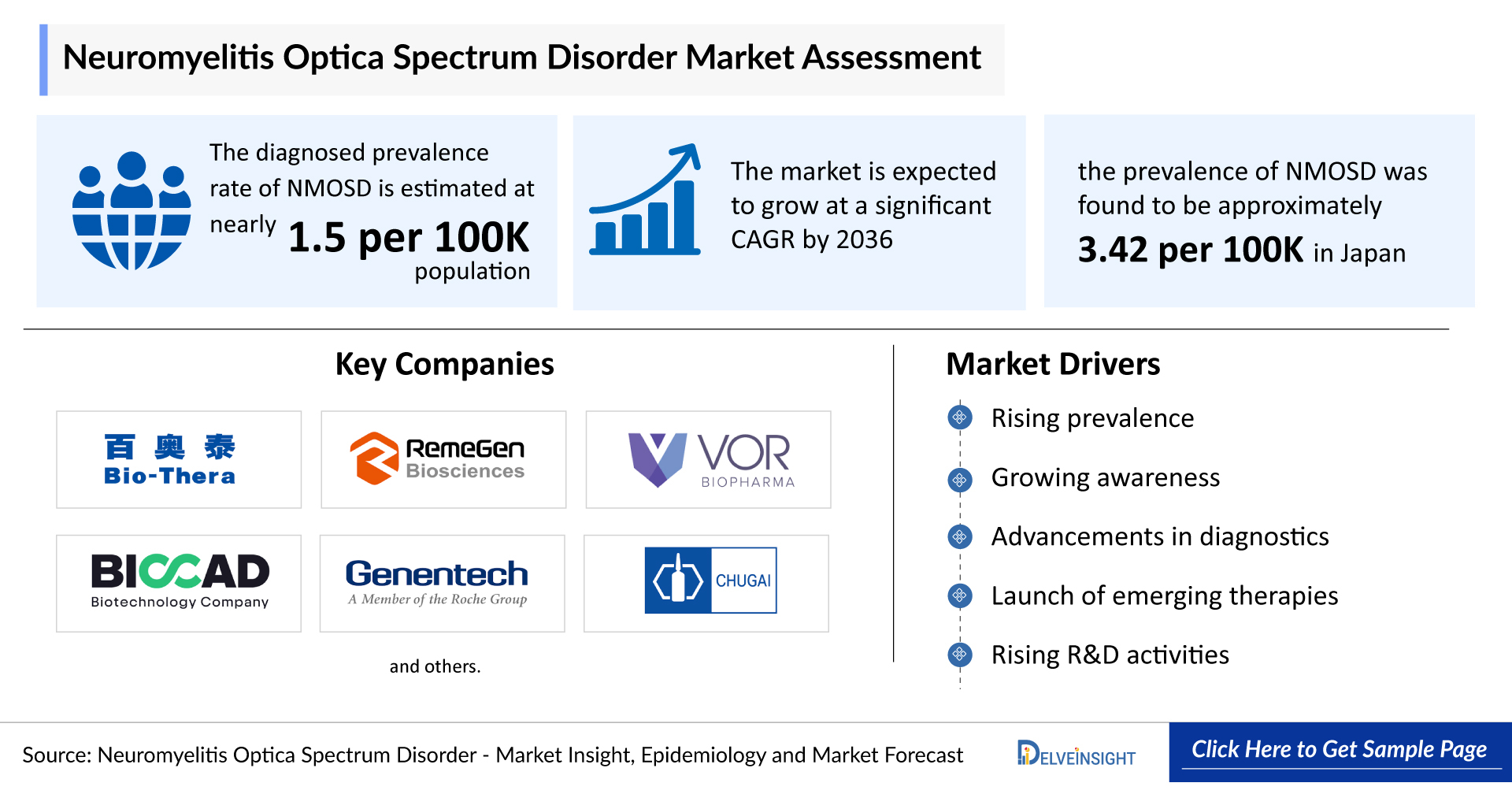
- The Neuromyelitis Optica Spectrum Disorder Market in the 7MM is projected to grow with a significant CAGR over the forecast period from 2026 to 2036 in leading countries like the US, EU4, UK, and Japan.
Neuromyelitis Optica Spectrum Disorder Market and Epidemiology Analysis
- NMOSD is a rare but serious autoimmune condition that causes inflammation and demyelination within the Central Nervous System. It predominantly affects the optic nerves, spinal cord, and brainstem, making diagnosis and treatment complex due to its varied presentation and potential for severe neurological impairment.
- The US-based study determined the Neuromyelitis Optica Spectrum Disorder Prevalence to be 6.88 per 100,000 individuals, highlighting its classification as a rare neurological condition. This figure provides valuable epidemiological insight, reinforcing the need for targeted diagnostic strategies and specialized care to address the unique challenges posed by rare disorders.
- Based on secondary analysis, cases of myelin oligodendrocyte glycoprotein antibody-associated disease (MOGAD) in Europe have been documented in the UK, with a reported prevalence of 2 per 100,000 population.
- The rise in NMOSD Cases is largely due to improved awareness, better diagnostic tools, and increased testing for aquaporin-4 immunoglobulin G (AQP4-IgG) antibodies. Enhanced recognition of atypical presentations and broader access to specialized care have led to more accurate diagnoses. Additionally, epidemiological efforts are uncovering previously underreported cases, contributing to higher prevalence figures.
- The NMOSD Treatment Market Landscape includes drugs like ENSPRYNG (satralizumab-mwge) by Roche, UPLIZNA (inebilizumab-cdon) by Amgen, and ULTOMIRIS (ravulizumab) by AstraZeneca, offering effective relapse prevention. These NMOSD Therapies focus on immune modulation and complement inhibition, improving long-term outcomes and reducing disability in patients with this rare autoimmune disorder.
- The Neuromyelitis Optica Spectrum Disorder Treatment Pipeline remains limited, highlighting a substantial unmet need for new therapeutic options. Despite recent advances, many patients still face inadequate disease control and long-term disability. Expanding drug development efforts is essential to address evolving clinical challenges and improve outcomes in this underserved and complex autoimmune disorder.
- According to the Roche investors’ 2025 presentation, ENSPRYNG (satralizumab-mwge) in undergoing Phase III of clinical trial for MOGAD whose regulatory submission is anticipated in 2026.
Request for Unlocking the Sample Page of the "NMOSD Treatment Market"
Key Factors Impacting the Neuromyelitis Optica Spectrum Disorder Market Growth
-
Improved Diagnostic Capabilities
Advances in diagnostic tools, especially biomarker testing like AQP4-IgG and MOG-IgG assays, have significantly increased diagnostic accuracy and reduced delays in identifying NMOSD cases.
-
Expansion of Targeted Therapeutic Options
The launch and approval of novel biologic therapies, such as monoclonal antibodies and complement inhibitors, that specifically target immune pathways in NMOSD have transformed treatment approaches, driving higher adoption and market demand.
-
Launch of Emerging NMOSD Drugs
The NMOSD Market Dynamics are expected to change in the coming years due to the launch of emerging therapies such as BAT4406F (Bio-Thera Solutions), Telitacicept (RC18) (RemeGen/Vor Bio), Divozilimab (BCD-132) (Biocad), and others.
DelveInsight’s comprehensive report titled “Neuromyelitis Optica Spectrum Disorder Market Insights, Epidemiology, and Market Forecast – 2036” offers a detailed analysis of NMOSD. The report presents historical and projected epidemiological data covering total diagnosed prevalent cases of NMOSD, gender-specific diagnosed prevalent cases of NMOSD, and type-specific diagnosed prevalent cases of NMOSD.
In addition to epidemiology, the Neuromyelitis Optica Spectrum Disorder Treatment Market Report encompasses various aspects related to the patient population. These aspects include the diagnosis process, prescription patterns, physician perspectives, market accessibility, treatment options, and prospective developments in the market across 7MM: the United States, EU4 (Germany, France, Italy, and Spain), the United Kingdom, and Japan, spanning from 2022 to 2036.
The Neuromyelitis Optica Spectrum Disorder Therapeutics Market Report analyzes the existing treatment practices and unmet medical requirements in NMOSD. It evaluates the market potential and identifies potential business prospects for enhancing therapies or interventions. This valuable information enables stakeholders to make well-informed decisions regarding product development and strategic planning for the market.
Scope of the Neuromyelitis Optica Spectrum Disorder Market Report | |
|
Study Period |
2022–2036 |
|
Forecast Period |
2026–2036 |
|
Geographies Covered |
US, EU4 (Germany, France, Italy, and Spain), the UK, and Japan |
|
NMOSD Epidemiology |
|
|
NMOSD Market |
|
|
Market Analysis |
|
|
NMOSD Key Companies |
|
|
Future Opportunity |
The future opportunity in NMOSD lies less in novel drug discovery and more in broadening access, optimizing delivery, and improving long-term management of approved biologics. Subcutaneous and extended-interval formulations of existing therapies can reduce treatment burden, while comparative effectiveness studies may guide tailored use across AQP4-IgG+ and MOG-IgG+ subgroups. Expanded diagnostic testing and global awareness campaigns will likely increase patient identification, particularly in regions with underdiagnosis. Collectively, these developments will enhance sustained relapse prevention and improve quality of life in NMOSD patients. |
Neuromyelitis Optica Spectrum Disorder Understanding
NMOSD, also known as Devic’s disease, is a chronic condition affecting the brain and spinal cord, primarily characterized by inflammation of the optic nerve (optic neuritis) and spinal cord (myelitis). Initially considered a monophasic illness—marked by a single episode involving one or both optic nerves and the spinal cord—it was believed not to recur. However, it is now understood that most individuals meeting current diagnostic criteria for NMOSD experience multiple relapses, with symptom-free intervals ranging from weeks to years. In its early stages, NMOSD can closely resemble multiple sclerosis, making accurate diagnosis particularly challenging.
Neuromyelitis Optica Spectrum Disorder Diagnosis and Treatment
NMOSD Diagnosis involves a detailed medical history, clinical evaluation, and specialized tests such as Magnetic Resonance Imaging (MRI), Computed Tomography (CT) scans, Cerebrospinal Fluid (CSF) analysis, and blood tests. The AQP4-IgG antibody test is highly specific for NMOSD and often positive at the onset of symptoms, aiding early detection. For patients negative for AQP4-IgG, the MOG-IgG antibody may indicate a related condition. Differentiating NMOSD from multiple sclerosis is crucial, as multiple sclerosis treatments may be ineffective or harmful.
Acute NMOSD attacks are typically treated with high-dose intravenous (IV) corticosteroids like methylprednisolone. If unresponsive, plasma exchange may be used. Long-term management includes immunosuppressive therapies such as corticosteroids, azathioprine, mycophenolate mofetil, and rituximab. Rituximab is especially beneficial for patients not responding to first-line treatments. Symptom control may involve carbamazepine for sudden spasms and antispasticity agents for chronic motor issues. Early and accurate diagnosis is key to effective treatment and improved outcomes.
Further details related to disease understanding are provided in the report…
Neuromyelitis Optica Spectrum Disorder Epidemiology
The epidemiology section of the NMOSD market report offers information on the patient populations, including historical and projected trends for each of the 7MM. Examining Key Opinion Leader (KOL) views from physicians or clinical experts can assist in identifying the reasons behind historical and projected trends. The diagnosed patient pool, their trends, and the underlying assumptions are all included in this section of the report.
This section also presents the data with relevant tables and graphs, offering a clear and concise view of the prevalence of NMOSD. Additionally, the report discloses the assumptions made during the analysis, ensuring data interpretation and presentation transparency. This epidemiological data is valuable for understanding the disease burden and its impact on the patient population across various regions.
Key Findings from Neuromyelitis Optica Spectrum Disorder Epidemiological Analyses and Forecast
- As per the study conducted in the US, the prevalence of NMOSD was found to be 6.88 per 100,000 people in 2022. The prevalence among females was 9.48 per 100,000, while among males it was 3.52 per 100,000. The study observed a female-to-male ratio of approximately 3.5:1 for NMOSD.
- According to the NICE UK, the NMOSD Diagnosed Prevalence rate is estimated at nearly 1.5 per 100,000 population. Between 70–80% of NMOSD patients will have anti-AQP4 antibodies.
- During secondary research, the prevalence of NMOSD in Italy was found to be 0.91 per 100,000 individuals. The prevalence was higher in women than in men, at 1.2 per 100,000 and 0.65 per 100,000 individuals, respectively.
- During the analysis, the crude prevalence of NMOSD in Japan was found to be 4.1 per 100,000 in 2016, with a significantly higher number of female patients compared to male patients (female to male ratio of 12:2). The positivity rate for the anti-aquaporin-4 antibody was 78.6%, and the mean age at onset was 45.2 years.
- During a nationwide epidemiological study of neuromyelitis optica, the prevalence of NMOSD was found to be approximately 3.42 per 100, 000 in Japan.
Neuromyelitis Optica Spectrum Disorder Market Recent Breakthroughs and Developments
- In May 2026, Shanghai Jiaolian Drug Research and Development Co., Ltd initiated a Phase II/III Clinical Study to Evaluate the Efficacy and Safety of B001 Injection in Aquaporin-4 Antibody Positive Patients With Neuromyelitis Optica Spectrum Disorder.
- In May 2026- Hoffmann-La Roche conducted a phase III study will primarily evaluate the pharmacokinetics of satralizumab in pediatric patients aged 2-11 years with anti-aquaporin-4 (AQP4) antibody seropositive neuromyelitis optica spectrum disorder (NMOSD). Efficacy, safety, tolerability, and pharmacodynamics will be evaluated in a descriptive manner, given the small number of patients who will be enrolled in this study.
Neuromyelitis Optica Spectrum Disorder Market Outlook
The NMOSD Therapeutics Market is further expected to increase by the major drivers, such as the rising prevalent population, technological advancements, and upcoming therapies in the forecast period (2025–2034). The treatment landscape has evolved significantly, shifting from broad immunosuppression to targeted biologics. Acute attacks are typically managed with high-dose IV corticosteroids and plasma exchange.
For long-term prevention, three monoclonal antibodies have received regulatory approval: ULTOMIRIS (Ravulizumab), a complement inhibitor; UPLIZNA (inebilizumab), anti-CD19 B-cell depleting agent; and ENSPRYNG (satralizumab), an IL-6 receptor blocker. These therapies have demonstrated efficacy in reducing relapse rates and improving patient outcomes. Additional off-label treatments include rituximab and azathioprine, though they lack formal approval for NMOSD.
The emergence of these targeted therapies marks a paradigm shift toward precision medicine, offering safer and more effective options. Ongoing research into biomarkers and novel mechanisms continues to expand therapeutic possibilities, with the goal of achieving sustained remission and improved quality of life for NMOSD patients.
With ongoing research and continued dedication, the future holds hope for even more effective treatments and, ultimately, a cure for this challenging condition. According to DelveInsight, the NMOSD market in the 7MM is expected to change significantly during the forecast period (2026–2036).
Neuromyelitis Optica Spectrum Disorder Drug Analysis
Neuromyelitis Optica Spectrum Disorder Marketed Drugs
-
ENSPRYNG (satralizumab-mwge): Roche
Satralizumab, developed by Genentech, a subsidiary of the Roche group is a humanized mAb engineered to inhibit interleukin-6 (IL-6) receptor activity. IL-6, a pro-inflammatory cytokine, is thought to play a central role in the pathogenesis of NMOSD by initiating inflammatory responses that result in tissue damage and neurological impairment. Utilizing innovative recycling antibody technology, ENSPRYNG offers extended antibody longevity and enables convenient subcutaneous (SC) administration once every four weeks, distinguishing it from traditional approaches.
- In June 2021, Roche reported that the European Commission (EC) had granted approval for ENSPRYNG (satralizumab) to treat NMOSD in adults and adolescents aged 12 and older who are seropositive for anti-AQP4-IgG.
- In August 2020, Roche reported that the US Food and Drug Administration (FDA) has granted approval for ENSPRYNG (satralizumab-mwge), marking it as the first and only SC therapy available for adults diagnosed with NMOSD who test positive for anti- AQP4 antibodies. Additionally, it is also approved in Japan.
-
UPLIZNA (inebilizumab-cdon): Amgen
Inebilizumab-cdon is a humanized, afucosylated IgG1 mAb that targets CD19. While its exact mechanism of action in treating NMOSD remains unclear, it is believed to work by binding to CD19, a surface antigen found on pre-B and mature B lymphocytes. This interaction leads to the destruction of these cells through antibody-dependent cellular cytolysis.
- In April 2022, the European Medicines Agency (EMA) approved the marketing of UPLIZNA (inebilizumab-cdon) for treating NMOSD in patients who test positive for anti-AQP4 antibodies. Additionally, the drug was approved in Japan in 2021 for NMOSD.
- In June 2020, the US FDA approved UPLIZNA (inebilizumab-cdon) as a treatment option for adults diagnosed with NMOSD who test positive for anti-AQP4 antibodies.
-
ULTOMIRIS (ravulizumab): AstraZeneca
Ravulizumab stands out as the first and only long-acting inhibitor of the C5 Complement protein, offering rapid, thorough, and lasting suppression of complement activity. It targets the C5 protein within the terminal complement pathway, a key component of the immune system. When this pathway becomes excessively activated, it can mistakenly attack healthy cells. Ravulizumab helps prevent this by blocking C5, and is administered via intravenous infusion every eight weeks in adults, following an initial loading dose. ULTOMIRIS is also approved for certain adults with NMOSD in Japan and the European Union (EU).
-
- In March 2024, ULTOMIRIS (ravulizumab) received approval in the US as the first and only long-acting C5 complement inhibitor indicated for the treatment of adult patients diagnosed with NMOSD who are positive for anti-AQP4 antibodies.
- The approval by the US FDA was based on positive results from the CHAMPION-NMOSD Phase III trial, which were published in the Annals of Neurology.
-
SOLIRIS: AstraZeneca
SOLIRIS (eculizumab) is a first-in-class complement inhibitor that works by inhibiting the C5 protein in the terminal part of the complement cascade, a part of the immune system. he terminal complement cascade, when activated in an uncontrolled manner, plays a role in severe rare and ultra-rare disorders. SOLIRIS is approved in the US, EU, and Japan for the treatment of NMOSD.
|
Drug |
MoA |
RoA |
Company |
Logo |
|
ENSPRYNG (satralizumab-mwge) |
IL-6 receptor Inhibitor |
SC |
Roche |
|
|
UPLIZNA (inebilizumab-cdon) |
Antibody-dependent Cell Cytotoxicity |
IV Infusion |
Amgen |
|
|
ULTOMIRIS (ravulizumab) |
C5 complement inhibitor |
IV |
AstraZeneca |
|
|
XX |
XX |
X |
XXX |


Note: Detailed marketed therapies assessment will be provided in the final report.
Neuromyelitis Optica Spectrum Disorder Emerging Drugs
-
BAT4406F: Bio-Thera Solutions
BAT4406F, developed by Bio-Thera Solutions, is an investigational Phase II glyco-engineered monoclonal antibody (mAb) in China designed to enhance antibody-dependent cellular cytotoxicity. It is a type I anti-CD20 antibody that induces B-cell depletion through complement-dependent cytotoxicity while strengthening antibody-dependent cellular cytotoxicity (ADCC), and is being evaluated for autoimmune indications, including NMOSD.
In July 2025, the BAT4406F NMOSD clinical trial in China was terminated early following an Independent Data Monitoring Committee (IDMC) review, after the study met pre-defined superiority criteria versus the control arm, indicating meaningful efficacy. Earlier, Phase I results published in January 2025 showed BAT4406F to be well tolerated, with clear pharmacodynamic activity reflected by sustained depletion of CD19-positive B cells.
Although current clinical development is concentrated in China and limited autoimmune trials are ongoing in the US and European markets, Bio-Thera’s prior experience with regulatory interactions outside China suggests that expansion into other geographies may be considered as development progresses.
-
Telitacicept (RC18): RemeGen/Vor Bio
Telitacicept (RC18) is a proprietary novel fusion protein designed to treat autoimmune diseases. It is constructed using the extracellular domain of the human transmembrane activator and calcium modulator and cyclophilin ligand interactor (TACI) receptor, combined with the fragment crystallizable (Fc) domain of human immunoglobulin G (IgG). Telitacicept targets two key signaling molecules involved in B-lymphocyte development: B-cell lymphocyte stimulator (BLyS) and a proliferation-inducing ligand (APRIL).
In June 2025, VOR BIO entered into an exclusive global licensing agreement with REMEGEN for telitacicept. Under the terms of the agreement, VOR BIO obtained rights to develop and commercialize telitacicept outside Greater China.
REMEGEN received an initial consideration of USD 125 million, comprising an upfront payment of USD 45 million and USD 80 million in warrants, and is eligible to receive additional regulatory and commercial milestone payments exceeding USD 4 billion, along with tiered royalties on net sales.
Neuromyelitis Optica Spectrum Disorder Market Segmentation
DelveInsight’s ‘Neuromyelitis Optica Spectrum Disorder (NMOSD) Market Insights, Epidemiology, and Market Forecast – 2036’ report provides a detailed outlook of the current and future NMOSD market, segmented within countries, by therapies, and by classes. Further, the market of each region is then segmented by each therapy to provide a detailed view of the current and future market share of all therapies.
Neuromyelitis Optica Spectrum Disorder Market Size by Countries
The NMOSD Market Size is assessed separately for various countries, including the United States, EU4 (Germany, France, Italy, and Spain), the United Kingdom, and Japan. In 2024, the United States held a significant share of the overall 7MM NMOSD market, primarily attributed to the country’s higher prevalence of the condition and the elevated cost of the available treatments. This dominance is projected to persist, especially with the potential early introduction of new products.
Neuromyelitis Optica Spectrum Disorder Market Size by Therapies
NMOSD Market Size by Therapies is categorized into current and emerging markets for the study period 2022–2036.
Note: Detailed market segment assessment will be provided in the final report.
Neuromyelitis Optica Spectrum Disorder Drugs Uptake
This section focuses on the sales uptake of potential NMOSD drugs that have recently been launched or are anticipated to be launched in the NMOSD market between 2022 and 2036. It estimates the market penetration of NMOSD drugs for a given country, examining their impact within and across classes and segments. It also touches upon the financial and regulatory decisions contributing to the probability of success (PoS) of the drugs in the NMOSD market.
The emerging NMOSD therapies are analyzed based on various attributes such as safety and efficacy in randomized clinical trials, order of entry and other market dynamics, and the unmet need they fulfill in the NMOSD market.
Note: Detailed assessment of drug uptake and attribute analysis will be provided in the full report on NMOSD.
Neuromyelitis Optica Spectrum Disorder Market Access and Reimbursement
DelveInsight’s ‘Neuromyelitis Optica Spectrum Disorder (NMOSD) – Market Insights, Epidemiology, and Market Forecast – 2036’ report provides a descriptive overview of the market access and reimbursement scenario of NMOSD. This section includes a detailed analysis of the country-wise healthcare system for each therapy, enlightening the market access, reimbursement policies, and health technology assessments.
Latest KOL Views on Neuromyelitis Optica Spectrum Disorder
To keep up with current NMOSD market trends and fill gaps in secondary findings, we interview KOLs and SMEs’ working in the NMOSD domain. Their opinion helps understand and validate current and emerging therapies and treatment patterns or NMOSD market trends. This will support the clients in potential upcoming novel treatments by identifying the overall scenario of the market and the NMOSD unmet needs.
Neuromyelitis Optica Spectrum Disorder KOL Insights
DelveInsight’s analysts connected with 20+ KOLs to gather insights; however, interviews were conducted with 10+ KOLs in the 7MM. These KOLs were from organizations, institutes, and hospitals, such as, University of California San Francisco, US, University of Bonn, Bonn, Germany; University Claude Bernard, Lyon, France; Careggi Hospital, Florence, Italy; Hospital Clinic de Barcelona, Barcelona, Spain; University of London, London, UK; and Fukushima Medical University School of Medicine, Japan, among others.
As per KOL from the US, “NMOSD can profoundly affect patient well-being, particularly through serious and lasting eye complications. These arise from optic neuritis, an inflammation of the optic nerve—that may cause sudden vision loss. Symptoms range from mild blurring to complete blindness, making early diagnosis and intervention critical to preserving visual function and quality of life.”
As per KOL from the UK, “Ophthalmologists should remain vigilant for optic neuritis as a potential early indicator of NMOSD, particularly when it involves both eyes or recurs. Cases marked by severe, treatment-resistant vision loss, painful eye movements, or accompanying neurological signs—such as motor deficits, sensory disturbances, or a history of myelitis—warrant urgent referral to neurology for comprehensive assessment.”
As per KOL from Japan, “A major unmet need in NMOSD is timely diagnosis and access to targeted therapies. Delayed recognition, especially in atypical or recurrent optic neuritis cases, can lead to irreversible disability. Improved awareness among clinicians, broader availability of diagnostic tools, and equitable access to immunotherapy remain critical for better patient outcomes.”
Note: Detailed assessment of KOL Views will be provided in the full report on NMOSD.
Neuromyelitis Optica Spectrum Disorder Competitive Intelligence Analysis
We conduct a competitive and market intelligence analysis of the NMOSD. Market, utilizing various competitive intelligence tools such as SWOT analysis and Market entry strategies. The inclusion of these analyses is contingent upon data availability, ensuring a comprehensive and well-informed assessment of the market landscape and competitive dynamics.
Key Neuromyelitis Optica Spectrum Disorder Companies
Roche, Genentech, Amgen, AstraZeneca, and others.
Neuromyelitis Optica Spectrum Disorder Clinical Trials Activities
The Neuromyelitis Optica Spectrum Disorder Therapeutics Market Report offers an analysis of therapeutic candidates in early stages and examines companies involved in developing targeted therapeutics for NMOSD. It provides valuable insights into the advancements and progress of potential treatments in clinical development for this condition.
Neuromyelitis Optica Spectrum Disorder Pipeline Development Activities
The Neuromyelitis Optica Spectrum Disorder Therapeutics Market Report covers information on collaborations, acquisition and merger, licensing, patent details, and other information for emerging NMOSD therapies.
Neuromyelitis Optica Spectrum Disorder Market Report Insights
- NMOSD Patient Population
- NMOSD Therapeutic Approaches
- NMOSD Pipeline Analysis
- NMOSD Market Size and Trends
- NMOSD Market Opportunities
- Impact of Upcoming Therapies
Neuromyelitis Optica Spectrum Disorder Market Report Key Strengths
- 11 Years Neuromyelitis Optica Spectrum Disorder Market Forecast
- The 7MM Coverage
- NMOSD Epidemiology Segmentation
- Key Cross Competition
- NMOSD Drugs Uptake
Neuromyelitis Optica Spectrum Disorder Market Report Assessment
- Current NMOSD Treatment Practices
- Neuromyelitis Optica Spectrum Disorder Unmet Needs
- NMOSD Product Profiles
- NMOSD Market Attractiveness
Key Questions Answered in the Neuromyelitis Optica Spectrum Disorder Market Report
Neuromyelitis Optica Spectrum Disorder Therapeutics Market Report
- How common is NMOSD?
- What are the key findings of NMOSD epidemiology across the 7MM, and which country will have the highest number of patients during the study period (2022–2036)?
- What are the currently available treatments for NMOSD?
- What are the disease risk, burden, and unmet needs of NMOSD?
- At what CAGR is the NMOSD market and its epidemiology is expected to grow in the 7MM during the forecast period (2026–2036)?
- How would the unmet needs impact the NMOSD market dynamics and subsequently influence the analysis of the related trends?
- What would be the forecasted patient pool of NMOSD in the 7MM covering the United States, EU4 (Germany, France, Italy, and Spain), the United Kingdom, and Japan?
- Among EU4 and the UK, which country will have the highest number of patients during the forecast period (2026–2036)?
- How many companies are currently developing therapies for the treatment of NMOSD?
Reasons to Buy the Neuromyelitis Optica Spectrum Disorder Market Report
- The NMOSD Therapeutics Market Report will help in developing business strategies by understanding the latest trends and changing treatment dynamics driving the NMOSD Drugs Market.
- Insights on patient burden/disease NMOSD Prevalence, evolution in diagnosis, and factors contributing to the change in the epidemiology of the disease during the forecast years.
- To understand the existing NMOSD Market opportunity in varying geographies and the growth potential over the coming years.
- Distribution of historical and current patient share based on real-world prescription data along with reported sales of current treatment in the US, EU4 (Germany, France, Italy, and Spain), the UK, and Japan.
- Identification of strong upcoming players in the NMOSD Drugs Market will help in devising strategies that will help in getting ahead of competitors.
- Detailed analysis and ranking of class-wise potential current and emerging therapies under the attribute analysis section to provide visibility around leading classes.
- Highlights of market access and reimbursement policies of approved therapies, barriers to accessibility of off-label expensive therapies, and patient assistance programs.
- To understand the perspective of KOL around the accessibility, acceptability, and compliance-related challenges of existing treatment to overcome barriers in the future.
- Detailed insights on the unmet needs of the existing NMOSD Drugs Market so that the upcoming players can strengthen their development and launch strategy.
Stay updated with us for Recent Articles