Non-Muscle Invasive Bladder Cancer Market
- The total market size of NMIBC in the 7MM in 2025 was approximately USD 3 billion. This is expected to grow in the coming years due to the increasing prevalence of NMIBC, the launch of high-priced therapies, and the rising number of active companies in this field.
- Among the 7MM, the US accounts for the largest market size of NMIBC in 2025, i.e., nearly 65%.
- The current treatment regimen for Non Muscle Invasive Bladder Cancer Therapeutics Market includes surgery, intravesical immunotherapy (BCG), and intravesical chemotherapy.
- There are only three drugs approved by the FDA for treating Non Muscle Invasive Bladder Cancer in the United States. KEYTRUDA (pembrolizumab) was approved in 2020, ADSTILADRIN MOA (nadofaragene firadenovec-vncg) in 2022, and the most recent, ANKTIVA (nogapendekin alfa inbakicept-pmln), was approved in 2024.
- Long before the COVID Pandemic fueled the supply chain crisis, there was a shortage of BCG. BCG has long been the go-to initial treatment for high-risk NMIBC. The continuing BCG shortage has forced doctors to rely on other treatments for their patients with high-risk NMIBC. Among the alternatives they have turned to is a combination of two chemotherapy drugs, gemcitabine and docetaxel.
- A recent collaboration between the Serum Institute of India and ImmunityBio, focusing on supplying traditional BCG and developing an enhanced recombinant BCG, strengthens efforts to address and alleviate the current BCG supply shortage for Non Muscle Invasive Bladder Cancer.
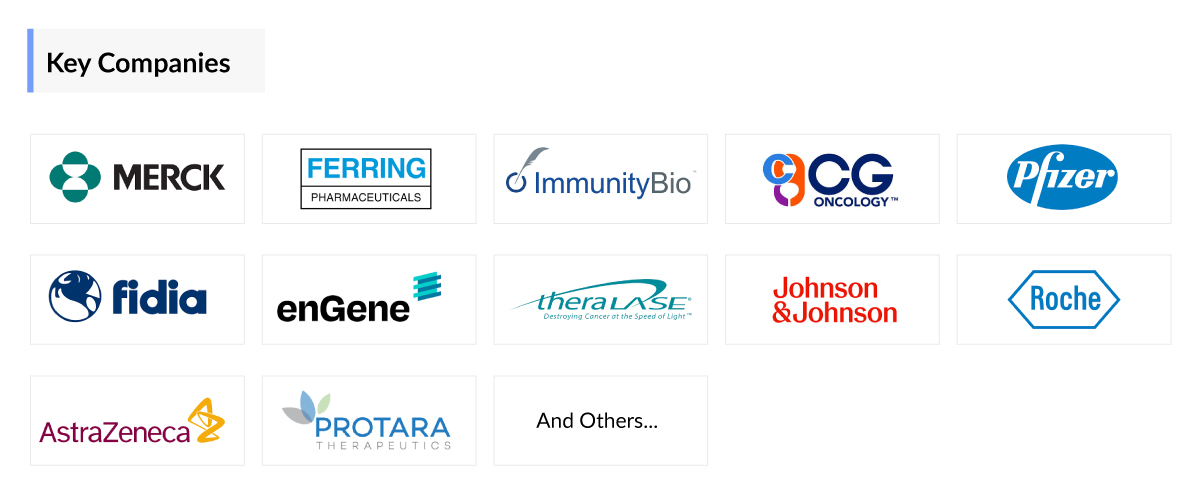
- The Non Muscle Invasive Bladder Cancer Pipeline is strong with promising therapies like CG0070 (CG Oncology), Sasanlimab (Pfizer), EG-70 (enGene), UGN-102 (Urogen), Ruvidar (Theralase), TAR-210 and TAR-200 (Johnson & Johnson) and others.
- Looking at the Non Muscle Invasive Bladder Cancer Pipeline, the companies are currently focusing on something other than the Low Risk Non Muscle Invasive Bladder Cancer segment. However, a large number of companies are preparing to enter the high and intermediate Risk Non Muscle Invasive Bladder Cancer.
- The growing array of novel therapeutic agents for individuals with Non Muscle Invasive Bladder Cancer presents challenges in determining the optimal treatment and sequence, given the diverse mechanisms of action and varying levels of efficacy. Customized treatment strategies are recommended, relying on a comprehensive understanding of disease characteristics, available treatments, and patient attributes and identifying and validating prognostic and predictive biomarkers.
- New medical devices and techniques are being employed to improve the delivery of intravesical agents. For example, TAR-200 and TAR-210 use hyperthermia or electromotive drug administration to enhance the uptake of gemcitabine and erdafitinib respectively.
Request for Unlocking the Sample Page of the "Non Muscle Invasive Bladder Cancer Treatment Market"
.jpg)
Key Factors Driving Non-Muscle Invasive Bladder Cancer (NMIBC) (Latest Version prepared in September) Market
Non Muscle Invasive Bladder Cancer Patient Pool and Rising Prevalence
The total market size of NMIBC in the 7MM in 2025 was approximately USD 3 billion. This is expected to grow in the coming years due to the increasing prevalence of NMIBC, the launch of high-priced therapies, and the rising number of active companies in this field.
Non-Muscle Invasive Bladder Cancer Burden and Treatment Landscape
Current treatment strategies for NMIBC include surgery, intravesical immunotherapy (BCG), and intravesical chemotherapy. Persistent BCG shortages have driven the use of alternative chemotherapy combinations such as gemcitabine and docetaxel. Recent collaborations, like that between the Serum Institute of India and ImmunityBio, are strengthening efforts to improve BCG availability and develop enhanced recombinant formulations.
Non-Muscle Invasive Bladder Cancer Emerging Therapies and Market Drivers
The NMIBC pipeline features promising therapies including CG0070 (CG Oncology), Sasanlimab (Pfizer), EG-70 (enGene), UGN-102 (UroGen), Ruvidar (Theralase), TAR-210, and TAR-200 (Johnson & Johnson). Innovations in drug delivery, such as hyperthermia or electromotive administration for TAR-200 and TAR-210, aim to enhance therapeutic efficacy. UGN-102, with its potential for minimally invasive treatment in low-grade, intermediate-risk NMIBC, may shift the standard of care from recurrent surgery to routine non-surgical alternatives.
Non Muscle Invasive Bladder Cancer Clinical Trials and Competitive Landscape
Recent regulatory developments include FDA approval of INLEXZO (gemcitabine intravesical system) by Johnson & Johnson for BCG-unresponsive NMIBC with CIS in September 2025. UroGen’s UGN-102 is under FDA review, with an ODAC meeting scheduled for May 2025, while ImmunityBio received a Refusal to File for ANKTIVA plus BCG. Leading companies in the NMIBC space include UroGen, ImmunityBio, Johnson & Johnson, Pfizer, CG Oncology, and Theralase, highlighting a competitive landscape focused on advancing patient outcomes and expanding therapeutic options.
DelveInsight’s "Non-muscle Invasive Bladder Cancer Market Insights, Epidemiology, and Market Forecast—2036" report delivers an in-depth understanding of Non-muscle invasive bladder cancer therapeutics market, its historical and forecasted epidemiology, and its market trends in the United States, EU4 (Germany, France, Italy, and Spain), the United Kingdom, and Japan.
The Non Muscle Invasive Bladder Cancer Treatment Market Report provides current treatment practices, emerging drugs, non muscle invasive bladder cancer therapeutics market share of the individual therapies, and current and forecasted non-muscle invasive bladder cancer market size from 2022 to 2036, segmented by seven major markets. The report also covers current non-muscle invasive bladder cancer treatment market practices/algorithms and unmet medical needs to curate the best of the opportunities and assess the underlying potential of the market.
|
Study Period |
2022 to 2036 |
|
Forecast Period |
2026-2036 |
|
Geographies Covered |
|
|
Non-Muscle Invasive Bladder Cancer Market |
|
|
Non-Muscle Invasive Bladder Cancers Market Size | |
|
Non-Muscle Invasive Bladder Cancer Companies |
|
|
NMIBC Epidemiology Segmentation |
|
Non-muscle Invasive Bladder Cancer Treatment Market
Non muscle invasive bladder cancer represents a category of bladder cancer where the tumor is confined to the innermost layer of the bladder lining without invading the muscle. This early-stage form accounts for a significant proportion of bladder cancer cases. Non Muscle Invasive Bladder Cancer is often characterized by superficial tumor growth and typically presents with papillary tumors or carcinoma in situ. Due to its propensity for recurrence and progression, Non Muscle Invasive Bladder Cancer requires vigilant management involving transurethral resection of the tumor (TURBT) and subsequent intravesical therapies like BCG immunotherapy or chemotherapy. Surveillance through regular cystoscopies and adherence to guidelines are essential to monitor and manage this condition effectively.
Non muscle Invasive Bladder Cancer Diagnosis
The Non Muscle Invasive Bladder Cancer diagnosis relies upon cystoscopy and tissue sampling. Initial cystoscopic evaluation is often performed in the office setting with or without biopsies of visualized tumors. Flexible cystoscopy in conjunction with topical intraurethral anesthetic lubricant decreases patient discomfort during the procedure, particularly in men. Most cases of Non Muscle Invasive Bladder Cancer are initially treated with transurethral resection, but careful cystoscopic examination of the entire urethra and bladder should precede resection. However, surgeons may proceed directly to TURBT should CT or MRI reveal a bladder lesion during the evaluation of Hematuria Treatment. During resection, tumors of significant size should be resected and labeled. The anatomic location of tumors with respect to the bladder neck and ureteral orifices, tumor configuration (papillary or sessile), as well as both the size and number of tumors should be documented in some consistent manner (e.g., diagram, text description) to inform future follow-up and evaluate treatment response.
Further details related to diagnosis will be provided in the report…
Non muscle Invasive Bladder Cancer Treatment
High-Risk NMIBC is a prevalent form of bladder cancer; although less severe than its muscle-invasive counterpart, it can display significant aggressiveness. Treatment options encompass careful observation with regular cystoscopies, intravesical immunotherapy involving the administration of BCG into the bladder, and, in more extreme cases, surgical removal of the bladder (cystectomy). Despite favorable recovery prospects, managing this cancer often involves intensive treatment and prolonged observation over several years. The primary interventions for cases confined to the bladder's inner lining include surgery, intravesical immunotherapy with BCG, and intravesical chemotherapy. Surgery, either as a standalone procedure or in combination with other modalities, is commonly employed. TURBT, a surgical approach, is frequently performed to remove visible cancer cells, ensuring comprehensive management.
.jpg)
Non muscle Invasive Bladder Cancer Epidemiology
The Non-muscle invasive bladder cancer epidemiology chapter in the report provides historical as well as forecasted epidemiology segmented by the total number of prevalent cases of Non Muscle Invasive Bladder Cancer, stage-specific cases of Non Muscle Invasive Bladder Cancer, grade-specific cases of Non Muscle Invasive Bladder Cancer, risk-specific cases of Non Muscle Invasive Bladder Cancer, and age-specific cases of Non Muscle Invasive Bladder Cancer therapeutics market in the 7MM covering the United States, EU4 (Germany, France, Italy, and Spain) and the United Kingdom, and Japan from 2022 to 2036.
Key Findings from Non-Muscle Invasive Bladder Cancer Epidemiological Analyses and Forecast
- Based on DelveInsight's assessment in 2025, the total prevalent cases of NMIBC in the 7MM were nearly 1.56 million. These cases are expected to increase by 2036.
- Among the 7MM, the US accounted for the highest number of cases in 2025, with around 640,000 prevalent cases.
- Among EU4 and the UK, the total prevalent cases of NMIBC were highest in Italy, while the lowest number of cases were in France in 2025.
- Among cases categorized by risk level, the highest number belonged to the intermediate-risk category.
- According to the estimates, in Japan, it is observed that NMIBC was most prevalent in the 70–89 age group, accounting for approximately 65% of total cases in 2025.
- In Japan, stage-specific cases of NMIBC were highest in the Ta stage, accounting for approximately 64% in 2025.
Recent Developments in Non-Muscle Invasive Bladder Cancer Clinical Trials Landscape
- In March 2026, the US FDA acknowledged receipt of its supplemental Biologics License Application (sBLA) in BCG-unresponsive NMIBC with papillary tumors.
- In March 2026, the 12-Month Phase II interim data reinforces advancement of NDV-01 into Phase III RESCUE registrational program in second line (2L) BCG-unresponsive and adjuvant intermediate-risk NMIBC in mid-2026.
- In February 2026, Pfizer withdrew its application for marketing authorization in the EU for high-risk NMIBC in early 2026, as regulatory advice suggested the current data was insufficient for approval.
- In November 2025, UroGen has made the strategic decision to discontinue development of UGN-301 (zalifrelimab) following completion of its Phase I dose escalation study. While the study confirmed proof of concept for RTGel as a viable platform for local delivery of complex immunotherapies, UGN-301’s overall clinical profile did not meet UroGen’s internal benchmarks for advancement to Phase II.
- In November 2025, the FDA agreed with the regulatory plan to submit an NDA based on the data from the single-arm Phase III UTOPIA trial to support potential approval of UGN-103. UroGen anticipates submitting an NDA for UGN-103 in the second half of 2026 with potential approval anticipated in 2027.
- In September 2025, Johnson & Johnson (NYSE: JNJ) announced FDA approval of INLEXZO™ (gemcitabine intravesical system) for BCG-unresponsive, non-muscle invasive bladder cancer (NMIBC) with carcinoma in situ (CIS), offering a new option for patients after failed BCG therapy or those ineligible for bladder removal surgery.
- In May 2025, the FDA’s Oncologic Drugs Advisory Committee (ODAC) narrowly voted 5-4 against approving UGN-102 (mitomycin intravesical solution) for treating recurrent, low-grade, intermediate-risk non–muscle-invasive bladder cancer (NMIBC).
- In May 2025, UroGen (Nasdaq: URGN) announced that the FDA has scheduled an Oncologic Drugs Advisory Committee (ODAC) meeting for May 21, 2025, to review the new drug application (NDA) for UGN-102 (mitomycin) intravesical solution, an investigational treatment for recurrent LG-IR-NMIBC.
- In May 2025, ImmunityBio, Inc. announced that it received a Refusal to File (RTF) letter from the FDA for its supplemental biologics license application (sBLA) for the use of ANKTIVA plus Bacillus Calmette-Guerin (BCG) in BCG-unresponsive non-muscle invasive bladder cancer (NMIBC) with papillary disease. This decision came despite unanimous guidance and encouragement from the FDA leadership in January 2025, which had supported the sBLA submission based on data from the single-arm trial.
- On November 12, 2024, Protara Therapeutics provided updates on its Q3 2024 clinical programs. The company remains on track to release interim data from the ADVANCED-2 trial of TARA-002 in Non Muscle Invasive Bladder Cancer patients in Q4 2024, with 12-month data anticipated by mid-2025. In the Phase II STARBORN-1 trial, TARA-002 showed promising results in pediatric LMs patients. Additionally, the company received FDA Fast Track designation for IV Choline Chloride, with the first patient dosing in the THRIVE-3 trial expected in Q1 2025.
- On October 15, 2024, UroGen Pharma announced the FDA acceptance of its New Drug Application (NDA) for UGN-102, aimed at treating low-grade intermediate-risk non-muscle invasive bladder cancer (LG-IR-Non Muscle Invasive Bladder Cancer), with a PDUFA goal date of June 13, 2025.
- In October 2, 2024, UroGen Pharma Ltd. announced the dosing of the first patient in a Phase 3 clinical trial for UGN-103 (mitomycin). This investigational drug, formulated as an intravesical solution, is being developed to treat low-grade intermediate-risk non-muscle invasive bladder cancer (LG-IR-Non Muscle Invasive Bladder Cancer). UGN-103 represents a next-generation mitomycin-based formulation aimed at improving treatment outcomes for this specific cancer type.
Non-muscle Invasive Bladder Cancer Drugs Market Chapters
The drug chapter segment of the non-muscle invasive bladder cancer drugs market report encloses a detailed analysis of the late mid-stage (Phase III and Phase II) Non Muscle Invasive Bladder Cancer pipeline drugs analysis. The current key Non Muscle Invasive Bladder Cancer Companies such as Ferring Pharmaceuticals/FKD Therapies Oy (ADSTILADRIN MOA), Merck Sharp & Dohme (KEYTRUDA), ImmunityBio (ANKTIVA), and others. The drug chapter also helps understand the details of the Non-muscle invasive bladder cancer clinical trials details, expressive pharmacological action, agreements and collaborations, approval, and patent details, and the latest Non Muscle Invasive Bladder Cancer news and press releases.
Non muscle Invasive Bladder Cancer Marketed Drugs
-
ADSTILADRIN (nadofaragene firadenovec): Ferring Pharmaceuticals/FKD Therapies Oy
ADSTILADRIN is a gene therapy developed as a treatment for adult patients with BCG-unresponsive Non Muscle Invasive Bladder Cancer. It is a non-replicating adenovirus vector-based gene therapy containing the gene interferon alfa-2b, administered by catheter into the bladder once every three months. The drug is classified as an Advanced Therapy Medicinal Product (ATMP) by the European Medicines Agency.
- In December 2022, Ferring Pharmaceuticals announced that the US FDA approved ADSTILADRIN MOA for the treatment of adult patients with high-risk, BCG unresponsive Non Muscle Invasive Bladder Cancer with carcinoma in situ (CIS) with or without papillary tumors.
- In April 2024, Ferring Pharmaceuticals and SK Pharmteco announced an agreement to scale up commercial manufacturing capacity for the drug substance of Ferring’s intravesical gene therapy ADSTILADRIN MOA to ensure long-term future supply.
-
ANKTIVA (nogapendekin alfa inbakicept-pmln): ImmunityBio
ANKTIVA is a novel IL-15 superagonist complex with an IL-15 mutant (IL-15N72D) bound to an IL-15 receptor a/IgG1 Fc fusion protein. In April 2024, the US FDA approved ANKTIVA plus BCG for the treatment of patients with BCG-unresponsive Non Muscle Invasive Bladder Cancer with CIS, with or without papillary tumors. The drug is currently being evaluated in adult patients in two clinical Non Muscle Invasive Bladder Cancer trials. QUILT-3.032 is studying N-803 in combination with BCG in patients with BCG-unresponsive Non Muscle Invasive Bladder Cancer CIS and Papillary Disease; QUILT-2.005 is investigating the use of N-803 in combination with BCG for patients with BCG-naïve Non Muscle Invasive Bladder Cancer. As per ImmunityBio corporate presentation 2024, the company has planned to explore ANKTIVA + iBCG (recombinant BCG) for BCG Replacement Non Muscle Invasive Bladder Cancer. This study will be in collaboration with the Serum Institute of India and ImmunityBio. The Ankitva cost is yet to be determined by the companies in the US.
|
Company |
Molecule Type |
MoA |
RoA |
|
Merck |
Monoclonal antibody |
Anti-PD-1 therapy |
IV infusion |
|
Ferring Pharmaceuticals/ FKD Therapies Oy |
AAV Gene therapy |
Deliver a copy of a gene encoding human IFNα2b |
Intravesical |
|
ImmunityBio |
Recombinant fusion protein |
Interleukin-15 receptor superagonist |
Intravesical |
Non muscle Invasive Bladder Cancer Emerging Drugs
-
CG0070 (cretostimogene grenadenorepvec): CG Oncology
CG0070 is a selectively replicative oncolytic immunotherapy based on a modified adenovirus type 5 backbone that contains a cancer-selective promoter and a GM-CSF transgene, destroys bladder tumor cells through their defective Rb pathway. Cretostimogene monotherapy is being evaluated for high-risk BCG-unresponsive non-muscle invasive bladder cancer (NMIBC) in Cohort C (BOND-003) targets patients with carcinoma in situ (CIS ± Ta/T1) and is currently in Phase III, indicating advanced-stage clinical development and Cohort P (BOND-003) is focused on a separate patient population and is currently in Phase II, reflecting ongoing mid-stage investigation.
CG Oncology has initiated multiple clinical trials for evaluating CG0070 in NMIBC. As per the latest presentation in February 2026, the upcoming milestones include: long-term data for BOND-003 Cohort C expected in 2026. PIVOT-006 topline data is expected in 1H’26. Updated results for CORE-008 Cohort A are expected in 2H’26. Data for CORE-008 Cohort B is expected in 2026, and CORE-008 Cohort CX data is expected in 1H’26.
-
EG-70 (detalimogene voraplasmid): enGene
enGene is developing a non-viral gene therapy platform to deliver plasmid DNA to mucosal tissues, such as bladder urothelium. EG-70 (detalimogene voraplasmid) is a nanoparticle formulation comprising a plasmid that expresses three genes that simultaneously activate the innate and adaptive immune responses within the bladder. This is current in Phase II trials. The US FDA has granted Regenerative Medicine Advanced Therapy (RMAT) to EG-70 for NMIBC.
Based on current projections, enGene expects to file a BLA for EG-70 in mid-2026, based on the results of the LEGEND study’s. Its commercial launch is projected to occur by 2027, based on current development and regulatory timelines.
|
Company |
Phase |
Patient segment |
ROA |
MOA |
|
Roche |
III |
High-Risk BCG-naïve |
IV infusion |
Anti-PD-L1 therapy |
|
Pfizer |
III |
High-Risk, BCG-Naïve Non Muscle Invasive Bladder Cancer |
SC |
Anti-PD-1 therapy |
|
AstraZeneca |
III |
High-risk BCG Naïve Non Muscle Invasive Bladder Cancer |
IV infusion |
Anti-PD-L1 therapy |
|
UroGen Pharma |
III |
Low-grade Intermediate-risk Non Muscle Invasive Bladder Cancer |
Intravesical |
DNA synthesis inhibitor |
|
UroGen Pharma |
III |
Low-grade Intermediate-risk Non Muscle Invasive Bladder Cancer |
Intravesical |
DNA synthesis inhibitor |
|
Johnson & Johnson |
III |
High-Risk, BCG-Naïve Non Muscle Invasive Bladder Cancer, High-Risk Non Muscle Invasive Bladder Cancer Unresponsive to BCG |
Intravesical |
Local delivery of Gemcitabine via In-Dwelling Device |
|
CG Oncology |
III |
High-Risk, BCG-Unresponsive Non Muscle Invasive Bladder Cancer with CIS, Intermediate-risk Non Muscle Invasive Bladder Cancer Following TURBT |
Intravesical |
GM-CSF agonists |
|
Johnson & Johnson |
III |
BCG and recurred with High Risk Non Muscle Invasive Bladder Cancer and FGFR Mutations or Fusions |
Intravesical |
Fibroblast growth factor receptor antagonists |
|
Fidia Farmaceutici |
III |
BCG-unresponsive carcinoma in situ of the bladder |
Intravesical |
Stabilizing microtubules leading to the death of rapidly proliferating cancer cells. Hyaluronic acid ability to bind to receptors on the cell surface and facilitate cellular uptake of Paclitaxel. |
|
Theralase Technologies |
II |
BCG-unresponsive Non Muscle Invasive Bladder Cancer CIS or Intolerant to BCG |
Intravesical |
Photosensitizer |
|
Protara Therapeutics |
I/II |
BCG naïve or unresponsive high-grade Non Muscle Invasive Bladder Cancer |
Intravesical |
Elicits Th1 type response |
|
enGene |
I/II |
BCG-unresponsive Non Muscle Invasive Bladder Cancer and High-risk Non Muscle Invasive Bladder Cancer BCG-Naïve or Incomplete BCG Treatment |
Intravesical |
Stimulation of adaptive and innate immune system via dual IL-12/RIG-I activation |
|
NanOlogy |
I/II |
High-risk Non Muscle Invasive Bladder Cancer |
Intramural injection and Intravesical instillation |
Mitosis inhibitor |
|
Istari Oncology |
I/II |
Recurrent Non Muscle Invasive Bladder Cancer |
Intravesical |
Immune activator |
|
Astellas Pharma |
I |
High-risk BCG-unresponsive Non Muscle Invasive Bladder Cancer |
Intravesical |
Nectin-4 directed ADC |
|
Vaxiion Therapeutics |
I |
Low-grade Non Muscle Invasive Bladder Cancer |
Intravesical |
Rapid permeabilization of target cell plasma membranes and simultaneous induction of apoptosis |
|
Aura Biosciences |
I |
Non Muscle Invasive Bladder Cancer |
Intratumorally and intramurally |
Selectively binds unique heparin sulphate proteoglycans |
|
UroGen Pharma |
I |
Recurrent Non Muscle Invasive Bladder Cancer |
Intravesical |
DNA synthesis inhibitor |
|
Prokarium |
I |
Recurrent intermediate- and high-risk Non Muscle Invasive Bladder Cancer. (BCG unresponsive) |
Intravesical |
Immunostimulant |
Non Muscle Invasive Bladder Cancer Drugs Market Insights
Currently, BCG is the leading standard of care in the Non Muscle Invasive Bladder Cancer setting. In the emerging pipeline, checkpoint inhibitors (KEYTRUDA), gene therapy (ADSTILADRIN MOA), cell therapy (TARA-002), oncolytic Immunotherapy (Lerapolturev, CG0070, and others), virus-like drug conjugate (belzupacap sarotalocan), photodynamic compound (Ruvidar), and others are different classes that are showing positive results in Non Muscle Invasive Bladder Cancer Patients. Checkpoint inhibitors and gene therapy are already approved in the BCG unresponsive Non Muscle Invasive Bladder Cancer patient pool.
- Immune checkpoint inhibitors (ICIs)
Immune checkpoint inhibitors (ICIs) are a powerful tool in cancer immunotherapy, designed to enhance the body's natural defenses against cancer cells. KEYTRUDA, approved in 2020 for BCG-unresponsive patients, has demonstrated significant efficacy in this population. The emerging pipeline includes several PD-(L)1 inhibitors in Phase III trials, such as TECENTRIQ, IMFINZI, and sasanlimab, all being evaluated in combination with BCG for BCG-naïve patients. However, results for these inhibitors in BCG-naïve patients are not yet available. It will be interesting to observe the efficacy and safety outcomes in this group and how their approval could alleviate the treatment burden for naïve patients, especially in the context of a BCG shortage. The lack of response in many cancer patients to immune checkpoint inhibitors highlights the significant clinical need to develop new therapies suitable for both immune checkpoint-naïve and -refractory patients.
- Interleukin-15 receptor superagonist
The most recent therapy approved by the FDA is ANKTIVA + BCG developed by ImmunityBio. Notably, in Non Muscle Invasive Bladder Cancer patients, the complete response rate (CRR) reached 62%, with a median duration of response not reached (0.0, 47.0+). Around 58% and 40% of patients reached a duration of response (DoR) of =12 and =24 months, respectively. In terms of safety, permanent discontinuation of ANKTIVA with BCG due to adverse reactions occurred in 7% of patients. The efficacy of ANKTIVA is better than other approved drugs, but in terms of safety it is not better than ADSTILADRIN MOA. ANKTIVA does not require any special freezers or equipment; it can be stored in standard refrigerators and freezers. Since ANKTIVA is administered as a mixture with BCG, it does not ’’necessitate any different equipment or processing from BCG administration. This means urology practices do not need to make any changes to order, store, or implement ANKTIVA. This ease of integration could lead to a rapid adoption of ANKTIVA in clinical settings.
- Oncolytic Immunotherapy
Currently, no oncolytic immunotherapy is approved for Non Muscle Invasive Bladder Cancer patients, but companies are exploring drugs for intermediate and high-risk Non Muscle Invasive Bladder Cancer patients. A key drug in this class is CG0070, which has a unique mechanism that may synergize with PD-1 inhibitors. Notably, 75.2% of patients evaluated for efficacy achieved a complete response at any time. The company is conducting another Phase II trial of CG0070 in combination with pembrolizumab. The CRR in the intent-to-treat (ITT) population at 24 months was 54%. Among patients who achieved a CRR at 12 months, 95% maintained this response for another 12 months, with the median DoR exceeding 21 months and still needs to be reached. This combination aims to enhance overall treatment efficacy by leveraging synergistic effects, potentially improving outcomes for BCG-unresponsive high-grade Non Muscle Invasive Bladder Cancer patients. After approval, CG0070 is expected to compete with ADSTILADRIN MOA and EG-70.
Non-muscle Invasive Bladder Cancer Market Outlook
Non Muscle Invasive Bladder Cancer remains a very challenging disease to treat, with high rates of recurrence and progression associated with current therapies. The high rates of progression and recurrence with current therapies for Non Muscle Invasive Bladder Cancer necessitate lifelong active surveillance, making bladder cancer the most expensive cancer to treat from diagnosis to death, as well as driving the need for the development of new therapies in patients with Non Muscle Invasive Bladder Cancer.
The current Non-muscle Invasive Bladder Cancer treatment regimen includes surgery, intravesical immunotherapy (BCG), and intravesical chemotherapy. Intermediate- or high-risk NMIBC is generally treated with TURBT, followed by adjuvant BCG immunotherapy, which is the gold standard treatment for reducing tumor recurrence rates and preventing subsequent stage progression. Stage 0 bladder cancer is most often treated with TURBT with fulguration followed by intravesical therapy within 24 h. Sometimes, no further treatment is needed. Cystoscopy is then done every 3–6 months to watch for signs that cancer has come back.
In addition, the FDA has approved only three drugs for the treatment of Non Muscle Invasive Bladder Cancer: KEYTRUDA and ADSTILADRIN, which were approved in 2020 and 2022, respectively, and the latest addition, ANKTIVA, which the FDA approved in April 2024. All three are approved in the US only.
The landscape of managing BCG-unresponsive Non Muscle Invasive Bladder Cancer patients in real-world clinical practice reveals significant trends. Approximately a quarter of physicians' Non Muscle Invasive Bladder Cancer caseload comprised BCG-unresponsive patients for whom BCG therapy was no longer a viable option. Furthermore, about a third of the Non Muscle Invasive Bladder Cancer patient caseload had not undergone BCG therapy, possibly due to pending treatment post-TURBT. The global scarcity of BCG has exacerbated these challenges, limiting adequate induction and maintenance therapies and resulting in higher recurrence and failure rates.
Non Muscle Invasive Bladder Cancer pipeline possesses potential Non-muscle Invasive Bladder Cancer Drugs in mid and late-stage developments for low and high-risk NMIBC to be launched in the near future. The major high-risk NMIBC Pipeline Drugs include CG0070 (CG Oncology), Sasanlimab (Pfizer), EG-70 (enGene), UGN-102, and UGN-103 (Urogen), Ruvidar (Theralase), TAR-210 and TAR-200 (Johnson & Johnson), and others. Also, these emerging therapies are expected to launch during the forecast period [2026–2036].
This evolving Non Muscle Invasive Bladder Cancer treatment market landscape showcases the challenges and shifting paradigms in managing BCG-unresponsive Non Muscle Invasive Bladder Cancer patients, emphasizing the need for further research, personalized treatment strategies, and broader adoption of biomarker-driven approaches for improved patient outcomes.
Detailed market assessment will be provided in the final report.
Key Findings
- The total market size of NMIBC in the 7MM in 2025 was approximately USD 3 billion. This is expected to grow in the coming years due to the increasing prevalence of NMIBC, the launch of high-priced therapies, and the rising number of active companies in this field.
- Among the 7MM, the US accounts for the largest market size of NMIBC in 2025, i.e., nearly 65%.
- In the 7MM, by 2036, among all the therapies, the highest revenue is expected to be generated by cretostimogene grenadenorepvec ± KEYTRUDA.
.jpg)
Non muscle Invasive Bladder Cancer Drugs Uptake
This section focuses on the uptake rate of potential Non-muscle Invasive Bladder Cancer drugs expected to be launched in the market during 2026–2036. The landscape of Non Muscle Invasive Bladder Cancer treatment has experienced a profound transformation with the uptake of novel drugs. These innovative therapies are redefining standards of care. Furthermore, the increased uptake of these transformative drugs is a testament to the unwavering dedication of physicians, oncology professionals, and the entire healthcare community in their tireless pursuit of advancing cancer care. This momentous shift in treatment paradigms is a testament to the power of research, collaboration, and human resilience.
CG0070, developed by CG Oncology, has demonstrated significantly better efficacy compared to approved drugs for BCG-unresponsive Non Muscle Invasive Bladder Cancer, achieving around a 75% CRR in these patients. Additionally, the drug has shown impressive results when used in combination with immunotherapy, with 95% of patients who achieved CRR at 12 months maintaining it for another 12 months. The median DoR has yet to be reached but exceeds 21 months. We have anticipated a launch by 2026; this drug could capture a billion-dollar market by 2036 following its approval.
Non muscle Invasive Bladder Cancer Pipeline Development Activities
The bladder cancer treatment drug market report provides insights into different non-muscle invasive bladder cancer clincial trials within Phase III, Phase II, and Phase I. It also analyzes key players involved in developing targeted therapeutics. Non Muscle Invasive Bladder Cancer Companies like Roche, Pfizer, AstraZeneca, UroGen Pharma, CG Oncology, Theralase Technologies, enGene, Protara Therapeutics, and others actively engage in mid and late-stage research and development efforts for non-muscle invasive bladder cancer. The pipeline of non-muscle invasive bladder cancer possesses few potential drugs. However, there is a positive outlook for the therapeutics market, with expectations of growth during the forecast period (2026–2036).
Development Activities
The Non-muscle Invasive Bladder Cancer clinical trials market report covers information on collaborations, acquisitions and mergers, licensing, and patent details for non-muscle invasive bladder cancer emerging therapy.
KOL- Views
To keep up with current Non Muscle Invasive Bladder Cancer Clinical Trials Market Trends, we take KOLs and SMEs’ opinions working in the domain through primary research to fill the data gaps and validate our secondary research. Industry Experts contacted for insights on the non-muscle invasive bladder cancer evolving Non Muscle Invasive Bladder Cancer Treatment Market Landscape, patient reliance on conventional therapies, patient therapy switching acceptability, and drug uptake, along with challenges related to accessibility, including oncologists, radiation oncologists, surgical oncologists, and others.
DelveInsight’s analysts connected with 30+ KOLs to gather insights; however, interviews were conducted with 15+ KOLs in the 7MM. Centers such as the Institute for Personalized Cancer Therapy, Urologist Cancer Center, University, etc., were contacted. Their opinion helps understand and validate current and emerging therapy treatment patterns or Non-muscle invasive bladder cancer therapeutics market trends. This will support the clients in potential upcoming novel treatments by identifying the overall scenario of the market and the unmet needs.
Non muscle Invasive Bladder Cancer Clinical Trials Market: Qualitative Analysis
We perform Qualitative and market Intelligence analysis using various approaches, such as SWOT analysis and Conjoint Analysis. In the SWOT analysis, strengths, weaknesses, opportunities, and threats in terms of gaps in disease diagnosis, patient awareness, physician acceptability, competitive landscape, cost-effectiveness, and geographical accessibility of therapies are provided.
Conjoint Analysis analyzes multiple approved and emerging Non Muscle Invasive Bladder Cancer therapies based on relevant attributes such as safety, efficacy, frequency of administration, route of administration, and order of entry. Scoring is given based on these parameters to analyze the effectiveness of therapy. In efficacy, the trial’s primary and secondary outcome measures are evaluated; for instance, in event-free survival, one of the most crucial primary outcome measures is event-free survival and overall survival.
Further, the therapies’ safety is evaluated, wherein the acceptability, tolerability, and adverse events are majorly observed, and this clearly explains the drug's side effects in the trials. In addition, the scoring is also based on the probability of success and the addressable patient pool for each therapy. According to these parameters, the final weightage score and the ranking of the emerging therapies are decided.
Non Muscle Invasive Bladder Cancer Clinical Trials Market Access and Reimbursement
Non Muscle Invasive Bladder Cancer is a costly disease to manage, with higher healthcare costs associated with an increased risk of disease progression. There is a high unmet need for safe and effective treatments that reduce the risk of disease progression and provide symptomatic relief and HRQoL improvements for patients. The Merck Access Program is designed to provide patients with reimbursement and insurance coverage-related information throughout their treatment process. The program helps with benefit investigations, billing and coding, copay assistance for eligible patients, prior authorizations and appeals, and referral to the Merck Patient Assistance Program for eligibility determination.
The representative medical expenses based on the Japanese health insurance system are as follows: one cystoscopy costs 9500 Japanese yen (equivalent to USD 67 as of July 2023), a single dose of BCG Tokyo 172 strain costs approximately 14,000 yen (USD 98), and one hospitalization for TURBT costs 400,000 yen (USD 2,821).
Non-Muscle Invasive Bladder Cancer Clinical Trials Market Report Scope
- The Non-muscle Invasive Bladder Cancer treatment drugs market report covers a segment of critical events, an executive summary, and a descriptive overview, explaining its causes, signs, symptoms, pathogenesis, and currently used therapies.
- Comprehensive insight into the epidemiology segments and forecasts, disease progression, and treatment guidelines has been provided.
- Additionally, an all-inclusive account of emerging therapies and elaborate profiles of late-stage and prominent therapies will impact the current treatment landscape.
- A detailed review of the Non-muscle invasive bladder cancer therapeutics market, historical and forecasted Non Muscle Invasive Bladder Cancer treatment market size, Non Muscle Invasive Bladder Cancer drugs market share by therapies, detailed assumptions, and rationale behind our approach is included in the report, covering the 7MM drug outreach.
- The Non Muscle Invasive Bladder Cancer treatment drugs market report provides an edge while developing business strategies by understanding trends through SWOT analysis and expert insights/KOL views, patient journey, and treatment preferences that help shape and drive non-muscle invasive bladder cancer.
Non muscle Invasive Bladder Cancer Clinical Trials Market Report Insights
- Patient-based Non Muscle Invasive Bladder Cancer Market Forecasting
- Non-muscle Invasive Bladder Cancer Therapeutic Approaches
- Non-muscle Invasive Bladder Cancer Pipeline Drugs Analysis
- Non-muscle Invasive Bladder Cancer Market Size
- Non Muscle Invasive Bladder Cancer Therapeutics Market Trends
- Existing and Future Non Muscle Invasive Bladder Cancer Diagnostics Market Opportunity
Non muscle Invasive Bladder Cancer Clinical Trials Market Report Key Strengths
- 11 Years Non Muscle Invasive Bladder Cancer Market Forecast
- The 7MM Coverage for Non Muscle Invasive Bladder Cancer Treatment Drugs Market
- Non-muscle Invasive Bladder Cancer Epidemiology Segmentation
- Key Cross Competition
- Non-muscle Invasive Bladder Cancer Drugs Uptake
- Key Non-muscle Invasive Bladder Cancer Market Forecast Assumptions
Non-muscle Invasive Bladder Cancer Clinical Trials Market Report Assessment
- Current Non-muscle Invasive Bladder Cancer Treatment Practices
- Non Muscle Invasive Bladder Cancer Unmet Needs
- Non-muscle Invasive Bladder Cancer Pipeline Drugs Profiles
- Non-muscle Invasive Bladder Cancer Treatment Drugs Market Attractiveness
- Qualitative Analysis (SWOT and Analyst Views)
- Non-muscle Invasive Bladder Cancer Market Drivers
- Non-muscle Invasive Bladder Cancer Market Barriers
FAQs
- What was the size of the Non-muscle invasive bladder cancer diagnostics market, the Non Muscle Invasive Bladder Cancer treatment market size by therapies, and the Non Muscle Invasive Bladder Cancer drugs market share (%) distribution in 2022, and what would it look like by 2036? What are the contributing factors for this growth?
- What can be the future treatment paradigm for non-muscle invasive bladder cancer?
- What are the disease risks, burdens, and Non Muscle Invasive Bladder Cancer Unmet Needs? What will be the growth opportunities across the 7MM concerning the patient population with non-muscle invasive bladder cancer?
- How much market share will PD-(L)1 capture by 2036?
- Which therapy is anticipated to take a significant share of the Non Muscle Invasive Bladder Cancer Diagnostics Market by 2036?
- What are the current options for the Non Muscle Invasive Bladder Cancer Treatment? What are the current guidelines for treating non-muscle invasive bladder cancer in the 7MM?
- What are the recent novel therapies, targets, Non Muscle Invasive Bladder Cancer mechanisms of action, and technologies being developed to overcome the limitations of existing therapies?
- What is the Non Muscle Invasive Bladder Cancer Therapeutics Market Size by low, intermediate and high risk?
- Which segment is most explored under high-risk NMIBC (Naïve, unresponsive, and recurrent)?
Reasons to Buy
- The muscle invasive bladder cancer diagnostics market report will help develop business strategies by understanding the latest trends and changing treatment dynamics driving non-muscle invasive bladder cancer.
- Insights on patient burden/disease Non Muscle Invasive Bladder Cancer Prevalence, evolution in diagnosis, and factors contributing to the change in the epidemiology of the disease during the forecast years.
- Understand the existing Non Muscle Invasive Bladder Cancer Diagnostics Market opportunities in varying geographies and the growth potential over the coming years.
- Identifying upcoming solid Non-muscle Invasive Bladder Cancer companies in the Non Muscle Invasive Bladder Cancer Diagnostics Market will help devise strategies to help get ahead of competitors.
- Detailed analysis ranking of class-wise potential current and emerging therapies under the analyst view section to provide visibility around leading classes.
- Highlights include access and reimbursement policies for current therapies, barriers to accessibility for expensive off-label therapies, and patient assistance programs.
- To understand Key Opinion Leaders’ perspectives around the accessibility, acceptability, and compliance-related challenges of existing treatment to overcome barriers in the future.
- Detailed insights on the unmet needs of the existing Non Muscle Invasive Bladder Cancer Diagnostics Market will help upcoming Non Muscle Invasive Bladder Cancer Companies strengthen their development and launch strategies.
Access Exclusive Insightful Articles, Videos and Informative Infographics to Stay Informed:-