
Immune Checkpoint Inhibitors Market Summary
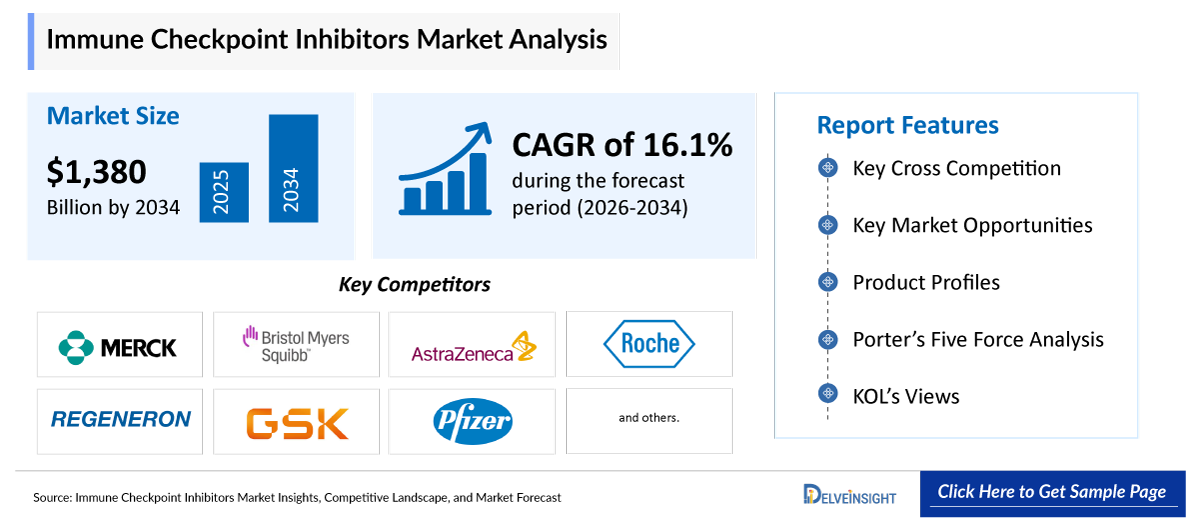
- The global immune checkpoint inhibitors market size was valued at USD 56.50 billion in 2025 and is projected to reach USD 128.40 billion by 2034.
- The market is expected to expand at a CAGR of 9.6% during the forecast period 2026-2034, supported by indication expansion, the migration of checkpoint blockade into earlier lines of therapy, and the commercial rollout of subcutaneous formulations.
- By type, the PD-1 inhibitors segment dominated the immune checkpoint inhibitors market with a 62% share in 2025.
- By indication, the lung cancer segment dominated the immune checkpoint inhibitors market with a 34% share in 2025.
- By route of administration, the intravenous segment dominated the immune checkpoint inhibitors market with a 91% share in 2025.
- By distribution channel, the hospital pharmacies segment dominated the immune checkpoint inhibitors market with a 58% share in 2025.
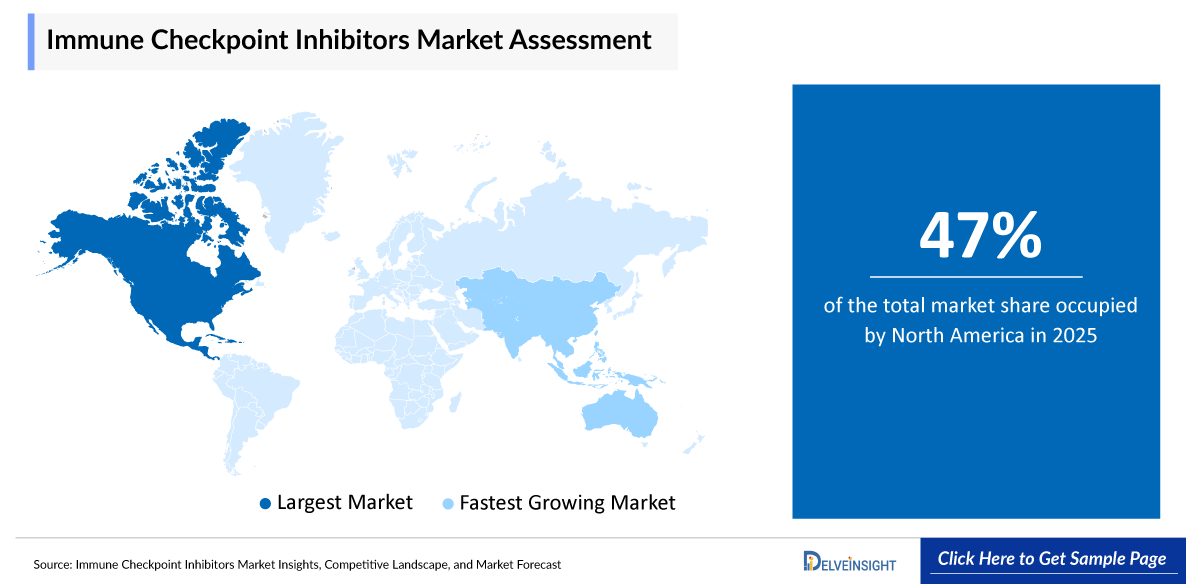
- North America accounted for the largest share of the immune checkpoint inhibitors market at 47% in 2025, while Asia-Pacific is anticipated to register the fastest growth through 2034.
Immune checkpoint inhibitors are monoclonal antibodies and engineered antibody constructs that block inhibitory signaling pathways used by tumors to suppress cytotoxic T-cell activity. By interrupting the programmed cell death protein 1 (PD-1) and programmed death-ligand 1 (PD-L1) axis, or the cytotoxic T-lymphocyte-associated protein 4 (CTLA-4) axis, these agents restore antigen-specific T-cell effector function and enable immune-mediated tumor clearance. Since the first regulatory authorizations in advanced melanoma, the class has expanded across the majority of common solid tumors and several hematological malignancies, and now serves as a therapeutic backbone in first-line, adjuvant, and perioperative treatment settings.
The commercial category encompasses PD-1 inhibitors such as pembrolizumab, nivolumab, cemiplimab, dostarlimab, tislelizumab, and toripalimab; PD-L1 inhibitors such as atezolizumab, durvalumab, avelumab, and cosibelimab; CTLA-4 inhibitors such as ipilimumab and tremelimumab; and newer classes directed at LAG-3, TIGIT Inhibitors, and TIM-3-Next Generation Immunotherapy. Contemporary practice is defined by combination regimens that pair checkpoint blockade with cytotoxic chemotherapy, anti-angiogenic agents, antibody-drug conjugates, or a second checkpoint target, and by biomarker-guided patient selection using PD-L1 expression, microsatellite instability status, and tumor mutational burden. The market is further shaped by lifecycle strategies including subcutaneous co-formulation with recombinant hyaluronidase, which shortens administration time and shifts delivery toward community and ambulatory settings.
Immune Checkpoint Inhibitors Market Key Growth Drivers
- Rising global cancer incidence, with the International Agency for Research on Cancer reporting 20 million new cases in 2022 and projecting 35 million annual cases by 2050.
- Continuous expansion of approved indications, with pembrolizumab alone authorized across 38 solid tumor indications in the United States.
- Migration of checkpoint blockade from metastatic settings into adjuvant, neoadjuvant, and perioperative treatment, enlarging the eligible patient pool.
- Approval and commercial launch of subcutaneous checkpoint inhibitor formulations that compress administration from a 30-minute infusion to a one-to-two-minute injection.
- Broader adoption of predictive biomarkers, including PD-L1 combined positive score, mismatch repair deficiency, and tumor mutational burden, which improves response rates and payer confidence.
- Growth of combination regimens pairing checkpoint inhibitors with chemotherapy, anti-angiogenics, antibody-drug conjugates, and dual checkpoint blockade.
- Expanding access across Asia-Pacific through domestic PD-1 approvals, national reimbursement listings, and rapid oncology capacity build-out.
Key Companies in Immune Checkpoint Inhibitors Market
The competitive field is anchored by a small group of originator biopharmaceutical companies that hold the anchor PD-1, PD-L1, and CTLA-4 assets, supported by regionally strong developers advancing differentiated antibodies and next-generation bispecific constructs. The leading participants in the immune checkpoint inhibitors market include the following:
- Merck & Co. Inc.
- Bristol Myers Squibb Company
- AstraZeneca plc
- F. Hoffmann-La Roche Ltd
- Regeneron Pharmaceuticals Inc.
- BeOne Medicines Ltd.
- GSK plc
- Merck KGaA
- Pfizer Inc.
- Shanghai Junshi Biosciences Co. Ltd., and others
For illustrative purposes, only the top 10 companies are listed in the Table of Contents. The report may include analysis and references to additional companies relevant to the market assessment.
Immune Checkpoint Inhibitors Market Size
The following table summarizes the headline market metrics for the global immune checkpoint inhibitors market across the base year and the forecast horizon.
|
Report Metrics |
Details |
|
2025 Market Size |
USD 56.50 billion |
|
2034 Projected Market Size |
USD 128.40 billion |
|
Growth Rate (2026-2034) |
9.6% CAGR |
|
Largest Market |
North America (47% share in 2025) |
|
Fastest Growing Market |
Asia-Pacific |
|
Market Structure |
Consolidated |
All market values are expressed in USD and represent DelveInsight estimates synthesized from primary and secondary research.
Factors Contributing to the Growth of the Immune Checkpoint Inhibitors Market
Immune Checkpoint Inhibitors Market Drivers
- Escalating Global Cancer Burden: The single largest structural driver of the immune checkpoint inhibitors market is the continued expansion of the global oncology patient pool. The International Agency for Research on Cancer estimated 20 million new cancer cases and 9.7 million cancer deaths worldwide in 2022, and projects that annual incidence will rise to 35 million cases by 2050 as populations age and cumulative exposure to modifiable risk factors accumulates. Lung, colorectal, liver, breast, and stomach cancers account for a disproportionate share of mortality, and each of these tumor types now has one or several approved checkpoint inhibitor regimens. Because checkpoint blockade is indication-agnostic in mechanism and depends on immunogenicity rather than a single driver mutation, incremental incidence in almost any solid tumor translates directly into incremental treated volume for the class. The demographic component is particularly important: cancer incidence rises steeply after the age of sixty, and the population above that threshold is expanding fastest in high-income and upper-middle-income countries that already reimburse checkpoint therapy. At the same time, improving survival extends time on therapy and increases the number of patients cycling through second-line and subsequent regimens, many of which now include a checkpoint agent. The combined effect of rising incidence, an ageing population, and longer treatment durations creates a durable volume tailwind that is largely independent of pricing or competitive dynamics.
- Rapid Expansion of the Approved Indication Footprint: The commercial trajectory of the class has been defined by relentless label expansion rather than by the launch of new molecular entities. Pembrolizumab is now authorized in the United States across 38 solid tumor indications, spanning melanoma, non-small cell lung cancer, head and neck squamous cell carcinoma, urothelial carcinoma, renal cell carcinoma, hepatocellular carcinoma, endometrial cancer, cervical cancer, triple-negative breast cancer, gastric and esophageal cancers, biliary tract tumors, and tissue-agnostic settings defined by mismatch repair deficiency. Nivolumab, durvalumab, atezolizumab, and cemiplimab have followed comparable expansion paths within their respective franchises. Each new indication adds a distinct, addressable patient cohort without requiring incremental manufacturing platforms, clinical infrastructure, or physician education, so the marginal economics of expansion are highly favourable. Regulatory pathways have reinforced this dynamic: accelerated approval, breakthrough therapy designation, and real-time oncology review have compressed the interval between pivotal readout and market authorization. Tissue-agnostic approvals based on biomarker status rather than anatomical site have further broadened eligibility. For payers and providers, the practical consequence is that checkpoint blockade has become a default consideration in the treatment algorithm for the majority of advanced solid tumors, cementing the class as a standing component of oncology formularies worldwide.
- Migration into Earlier Lines and Perioperative Settings: Checkpoint inhibitors were originally positioned as salvage therapy for patients who had exhausted cytotoxic options, but the therapeutic center of gravity has shifted decisively toward earlier disease. Regulatory decisions in 2024 and 2025 authorized perioperative durvalumab in muscle-invasive bladder cancer on the strength of the NIAGARA study, and perioperative pembrolizumab in resectable locally advanced head and neck squamous cell carcinoma on the strength of KEYNOTE-689. Adjuvant checkpoint therapy is now established in melanoma, renal cell carcinoma, non-small cell lung cancer, and esophageal cancer. This migration has three compounding commercial effects. First, the eligible population in early-stage disease is substantially larger than the metastatic population for the same tumor type, because most patients present with localised or locally advanced disease. Second, patients treated in the curative-intent setting are healthier, tolerate full treatment courses, and therefore complete a greater proportion of planned cycles. Third, treatment in the adjuvant setting is time-limited and protocol-defined, which improves revenue predictability relative to treat-to-progression metastatic use. Clinically, the rationale rests on a lower tumor burden, an intact immune repertoire, and the presence of resectable primary tumor antigen for neoadjuvant priming.
- Subcutaneous Formulations Transforming Care Delivery: The approval of subcutaneous checkpoint inhibitors represents the most consequential delivery innovation in the class since its inception. In September 2024, the U.S. Food and Drug Administration approved atezolizumab and hyaluronidase for subcutaneous injection, followed in December 2024 by subcutaneous nivolumab and in September 2025 by pembrolizumab co-formulated with berahyaluronidase alfa. The last of these can be administered by a healthcare professional in as little as one minute, against a 30-minute intravenous infusion, and is authorized across the solid tumor indications already cleared for the intravenous product. The operational implications are substantial. Infusion chair time is the binding capacity constraint in most oncology centers, and converting a high-volume backbone therapy to a brief injection releases chair capacity for combination regimens, antibody-drug conjugates, and cellular therapies that cannot be delivered any other way. Subcutaneous administration also makes it feasible to deliver checkpoint therapy in community clinics, physician offices, and rural sites that lack dedicated infusion infrastructure, extending geographic access. For originators facing loss of exclusivity on intravenous presentations, subcutaneous conversion offers a differentiated product with a distinct patent estate and a clinically meaningful convenience advantage.
- Biomarker-Guided Patient Selection: Predictive biomarkers have become the principal mechanism by which the class sustains clinical credibility and payer support. PD-L1 expression, measured as a tumor proportion score or combined positive score, is embedded in the labels of multiple agents and determines eligibility in non-small cell lung cancer, gastric cancer, and head and neck cancer. Mismatch repair deficiency and high microsatellite instability support tissue-agnostic use, while high tumor mutational burden identifies responders across histologies. Companion diagnostic co-approval has become routine, and immunohistochemistry-based scoring is now a standard component of the pathology workflow in comprehensive cancer centers. The commercial benefit operates in two directions. Enriched populations demonstrate higher objective response rates and longer progression-free survival in pivotal studies, which strengthens the case for reimbursement at premium price points and supports first-line positioning. Simultaneously, biomarker exclusion protects the class from the reputational damage of broad, low-yield use in populations unlikely to benefit, and reduces the financial exposure of payers to non-responders. Next-generation approaches under evaluation include multi-analyte immune signatures, circulating tumor DNA dynamics as an early response indicator, and computational pathology models that predict response from digitized histology slides.
- Proliferation of Combination Regimens: The clinical standard of care in most advanced solid tumors is no longer checkpoint monotherapy but a combination regimen built upon a checkpoint backbone. Chemotherapy-immunotherapy doublets are first-line standard in non-small cell lung cancer, gastric and gastro-esophageal junction adenocarcinoma, and triple-negative breast cancer. Dual checkpoint blockade combining a PD-1 inhibitor with a CTLA-4 inhibitor is established in melanoma, mesothelioma, and renal cell carcinoma, and in April 2025 the combination of ipilimumab and nivolumab received first-line authorization in unresectable or metastatic hepatocellular carcinoma. Anti-angiogenic combinations exploit the normalization of tumor vasculature to improve T-cell infiltration, and antibody-drug conjugate combinations pair immunogenic cell death with checkpoint release. Each combination strategy raises the revenue captured per treated patient, extends median duration of therapy, and creates defensible clinical positioning against single-agent competitors. Combinations also serve a strategic purpose for originators with a broad oncology portfolio, allowing a proprietary checkpoint asset to be bundled with a proprietary partner molecule and thereby insulating both from external substitution. The principal constraint is cumulative toxicity, which has focused development on rational pairings with non-overlapping adverse event profiles.
- Asia-Pacific Access Expansion: Asia-Pacific has become the fastest-expanding regional contributor to the class, propelled by an exceptionally large prevalent oncology population, the emergence of domestically developed checkpoint antibodies, and reimbursement policy that has prioritized oncology access. China alone accounts for a substantial proportion of global incidence in lung, liver, gastric, and esophageal cancers, all of which are checkpoint-responsive tumor types. Domestic PD-1 antibodies including tislelizumab, toripalimab, sintilimab, and camrelizumab have been approved locally, added to the national reimbursement drug list at price points far below Western levels, and subsequently pursued for regulatory authorization in the United States and Europe. Tislelizumab secured a first-line United States authorization in gastric and gastro-esophageal junction adenocarcinoma in December 2024. Japan, South Korea, and Australia combine universal coverage with mature oncology infrastructure and rapid guideline adoption, while India is expanding capacity through public cancer networks and domestic biologics manufacturing. Regional clinical trial enrolment has grown correspondingly, giving Asia-Pacific investigators an increasing share of pivotal study populations. The net effect is a regional growth rate that exceeds the global average across every tumor type and every checkpoint target.
Immune Checkpoint Inhibitors Market Restraints
Despite the structural strength of the demand outlook, the immune checkpoint inhibitors market faces material constraints that will shape the shape and slope of the forecast curve. The most immediate is cost. Annual per-patient treatment cost commonly exceeds USD 150,000 in the United States, and combination regimens compound that figure; in health systems operating under fixed oncology budgets, this creates explicit rationing pressure and drives restrictive prior authorization criteria. Statutory pricing intervention has intensified, with Medicare drug price negotiation under the Inflation Reduction Act extending to high-expenditure biologics and creating a durable ceiling on realized net price for the largest franchises. The second constraint is biological. Only a minority of unselected patients derive durable benefit from checkpoint blockade, and both primary resistance, driven by an absence of tumor-infiltrating lymphocytes or defective antigen presentation, and acquired resistance, driven by interferon signaling defects and adaptive immunosuppression, limit the ceiling on response. Immune-related adverse events including pneumonitis, colitis, hepatitis, endocrinopathy, and dermatological toxicity can be severe or fatal, occur in any organ system, and require specialized management infrastructure that is unevenly available. The third constraint is competitive and temporal. Pembrolizumab, which alone represents the majority of class revenue, faces loss of exclusivity toward the end of the decade, and a substantial biosimilar development pipeline is positioned to enter thereafter. Simultaneously, PD-1 and vascular endothelial growth factor bispecific antibodies have generated randomized evidence of superiority against established PD-1 monotherapy in non-small cell lung cancer, creating the prospect of displacement rather than simple price erosion. Finally, access remains highly uneven: in low-income and lower-middle-income settings, checkpoint therapy is largely unavailable outside clinical trials, and diagnostic infrastructure for biomarker testing is insufficient to support appropriate patient selection even where product supply exists. Together, these constraints argue for a forecast in which volume growth substantially outpaces value growth over the second half of the decade.
Immune Checkpoint Inhibitors Market Segment Analysis
The global immune checkpoint inhibitors market is segmented by type into PD-1 inhibitors, PD-L1 inhibitors, CTLA-4 inhibitors, and other checkpoint inhibitors; by indication into lung cancer, melanoma, renal cell carcinoma, head and neck cancer, urothelial carcinoma, gastric and esophageal cancer, and others; by route of administration into intravenous and subcutaneous; by distribution channel into hospital pharmacies, retail pharmacies, and online pharmacies; and by geography into North America, Europe, Asia-Pacific, and the Rest of the World.
By Type
Dominant Subsegment: PD-1 Inhibitors.
The PD-1 inhibitors category is expected to dominate the market.
Dominant: PD-1 Inhibitors ~ 62%
The PD-1 inhibitors segment accounted for a 62% share of the immune checkpoint inhibitors market in 2025. PD-1 inhibitors block the receptor on the surface of activated T cells rather than the ligand expressed on tumor and stromal cells, and this upstream position confers a broader mechanistic reach because a single antibody interrupts engagement with both PD-L1 and PD-L2. The segment is anchored by pembrolizumab, which carries the widest indication footprint of any oncology biologic and functions as the reference comparator in the large majority of first-line registration studies, and by nivolumab, which retains a strong position in melanoma, renal cell carcinoma, and gastro-esophageal cancers, particularly in combination with ipilimumab. Cemiplimab holds a defensible franchise in cutaneous squamous cell carcinoma and basal cell carcinoma, dostarlimab has established itself in mismatch repair deficient endometrial and rectal cancer, and tislelizumab and toripalimab have expanded the class into markets where price sensitivity favours regionally developed antibodies. The segment benefits from first-mover advantage across essentially every major tumor type, from an unusually deep body of long-term survival evidence including five-year and ten-year follow-up datasets, and from physician familiarity with the toxicity profile and its management. Subcutaneous conversion has been concentrated in this segment, with subcutaneous nivolumab and subcutaneous pembrolizumab both authorized in the United States, which reinforces the incumbency of PD-1 assets against later PD-L1 entrants. Over the forecast period, the segment share is expected to compress modestly as bispecific PD-1 constructs and biosimilar entrants reshape the competitive field, but PD-1 blockade will remain the therapeutic backbone of the class.
By Indication
Dominant Subsegment: Lung Cancer.
The lung cancer category is expected to dominate the market.
Dominant: Lung Cancer ~ 34%
The lung cancer segment accounted for a 34% share of the immune checkpoint inhibitors market in 2025. Lung cancer is the largest single contributor to global cancer mortality and the tumor type in which checkpoint blockade has achieved the deepest clinical penetration. In advanced non-small cell lung cancer without targetable driver alterations, a checkpoint inhibitor is now standard first-line therapy either as monotherapy in tumors with high PD-L1 expression or in combination with platinum doublet chemotherapy across all expression levels, and the class has additionally established roles in the adjuvant, neoadjuvant, and perioperative settings for resectable disease and in consolidation after chemoradiotherapy for unresectable stage III disease. Small cell lung cancer, historically resistant to therapeutic innovation, now has approved chemotherapy-immunotherapy regimens in the extensive-stage setting. The volume dynamics are powerful: lung cancer incidence remains high across North America, Europe, and East Asia, low-dose computed tomography screening programs are increasing the detection of resectable early-stage disease that qualifies for perioperative therapy, and the shift of treatment into curative-intent settings has widened the eligible cohort well beyond the metastatic population. The indication is also where competitive pressure is most acute, because the PD-1 and vascular endothelial growth factor bispecific antibodies advancing through late-stage development have selected non-small cell lung cancer as their primary battleground, generating randomized progression-free survival and overall survival data against established PD-1 comparators. Lung cancer will therefore remain the largest indication segment while simultaneously being the segment in which incumbent share is most contested.
By Route of Administration
Dominant Subsegment: Intravenous.
The intravenous category is expected to dominate the market.
Dominant: Intravenous ~ 91%
The intravenous segment accounted for a 91% share of the immune checkpoint inhibitors market in 2025. Intravenous infusion has been the exclusive delivery route for the class since its introduction and remains overwhelmingly dominant because the installed base of approved indications, clinical protocols, reimbursement codes, and treatment pathways was constructed entirely for infused administration. Every pivotal registration study supporting the class was conducted with an intravenous formulation, and payer coverage policies, buy-and-bill reimbursement mechanics, and site-of-care contracting reflect that history. Standard schedules deliver a fixed dose every three or six weeks over an infusion period typically lasting 30 minutes, administered in a hospital outpatient department or a dedicated infusion center under direct clinical supervision, with observation infrastructure available for infusion reactions and immune-mediated events. The subcutaneous alternative is growing rapidly from a small base following the authorization of subcutaneous atezolizumab in September 2024, subcutaneous nivolumab in December 2024, and subcutaneous pembrolizumab in September 2025, the last of which reduces administration to as little as one minute. Conversion economics favour rapid adoption because infusion chair time is the principal capacity constraint in oncology practice, and originators have strong lifecycle incentives to migrate patients toward a differentiated presentation with independent intellectual property. Nevertheless, transition is gated by payer policy, provider reimbursement neutrality, and the pace at which practices retool workflows, so intravenous administration will retain a decisive majority of treated volume throughout the forecast period even as subcutaneous share expands materially.
By Distribution Channel
Dominant Subsegment: Hospital Pharmacies.
The hospital pharmacies category is expected to dominate the market.
Dominant: Hospital Pharmacies ~ 58%
The hospital pharmacies segment accounted for a 58% share of the immune checkpoint inhibitors market in 2025. Hospital pharmacies dominate distribution because checkpoint inhibitors are parenteral biologics that require cold-chain integrity, aseptic dose preparation, weight-based or fixed-dose compounding, and administration under clinical supervision within a setting equipped to manage immune-mediated adverse events. In the United States, the buy-and-bill model channels the majority of oncology biologic volume through hospital outpatient departments and hospital-affiliated infusion centers, where the 340B drug pricing program creates additional economic incentives for institutional acquisition. In Europe and Japan, centralised hospital pharmacy procurement under national tender and reimbursement frameworks reinforces the same concentration. Hospital pharmacies also serve as the operational hub for pharmacovigilance, prior authorization processing, biomarker test coordination, and clinical trial supply, functions that specialty retail channels are not configured to perform. Retail and specialty pharmacies occupy a secondary role focused on ambulatory clinics, physician office dispensing, and the growing subcutaneous segment, where reduced administration complexity begins to loosen the tie between product supply and infusion infrastructure. Online pharmacies remain marginal for this class given handling requirements and the necessity of professional administration, although digital specialty pharmacy platforms increasingly manage benefits verification, patient support, and logistics coordination on behalf of institutional customers. The migration of subcutaneous formulations into community oncology practice is the principal force capable of eroding hospital pharmacy share over the forecast period.
Immune Checkpoint Inhibitors Market Region Analysis
Dominant Region: North America
Dominant: North America ~ 47% (Largest)
North America accounted for a 47% share of the global immune checkpoint inhibitors market in 2025. The region combines the highest per-capita oncology expenditure in the world with the earliest and broadest regulatory authorizations for every major checkpoint asset, and it is the launch market in which pricing, indication sequencing, and lifecycle strategy are established before global rollout. The United States alone contributes the substantial majority of regional value, reflecting a payer environment that reimburses innovative oncology biologics at premium net prices, a mature network of academic cancer centers and community oncology practices capable of managing immune-mediated toxicity, and near-universal availability of companion diagnostic testing for PD-L1 expression, mismatch repair status, and tumor mutational burden. The U.S. Food and Drug Administration has authorized checkpoint inhibitors across a wider range of indications and treatment settings than any other regulator, and its Oncology Center of Excellence has institutionalized expedited review pathways that compress the interval from pivotal readout to commercial availability. Regional dominance is reinforced by the location of originator research and commercial operations: Merck & Co., Bristol Myers Squibb, Regeneron, and Pfizer are headquartered in the United States, and AstraZeneca, Roche, and BeOne Medicines maintain substantial United States clinical and manufacturing footprints. Canada contributes through provincial reimbursement of first-line indications and a strong clinical trial network, while Mexico represents an expanding but access-constrained market. Countervailing forces are emerging: Medicare drug price negotiation under the Inflation Reduction Act applies downward pressure to net realized price on the highest-expenditure biologics, and the approaching loss of exclusivity on the leading PD-1 asset will compress regional value even as treated volume continues to expand. On balance, North America is expected to retain leadership throughout the forecast period while ceding incremental share to Asia-Pacific.
Fastest Growing Region: Asia-Pacific
Asia-Pacific is projected to register the fastest compound annual growth rate in the immune checkpoint inhibitors market through 2034. The region carries a disproportionate share of global incidence in lung, liver, gastric, and esophageal cancers, all of which are checkpoint-responsive tumor types with established or expanding regimens. China has become the principal engine, with domestically developed PD-1 antibodies including tislelizumab, toripalimab, sintilimab, and camrelizumab approved locally, listed on the national reimbursement drug list at price points that expand treated volume by an order of magnitude relative to Western pricing, and increasingly pursued for authorization in the United States and Europe. Chinese biotechnology companies also lead the development of PD-1 and vascular endothelial growth factor bispecific antibodies, positioning the region at the technological frontier rather than as a fast-follower market. Japan and South Korea combine universal health coverage with mature oncology infrastructure, rapid guideline incorporation, and strong domestic clinical trial participation. India is expanding capacity through public cancer networks and domestic biologics manufacturing, which will progressively convert a very large prevalent population into an addressable one. Australia contributes a high-value, guideline-driven market with early adoption of perioperative regimens. Regional trial enrolment now accounts for a growing proportion of pivotal study populations, ensuring that Asia-Pacific evidence increasingly shapes global labeling.
Immune Checkpoint Inhibitors Regional Commentary
North America
North America leads on value, reimbursement breadth, and regulatory precedence. The United States is the first market for essentially every new checkpoint indication and the setting in which subcutaneous conversion is proceeding fastest, supported by 340B economics and infusion capacity constraints. Canada follows with provincial coverage of first-line regimens and a strong academic trial base, while Mexico is expanding public oncology access through institutional procurement. The near-term regional outlook is shaped less by demand than by price policy: Medicare negotiation, biosimilar preparation for the leading PD-1 asset, and payer pressure on combination regimen economics will together moderate value growth relative to volume growth over the second half of the forecast period.
Europe
Europe represents the second-largest regional market, with Germany, the United Kingdom, France, Italy, and Spain accounting for the majority of regional value. The European Medicines Agency has largely mirrored United States authorizations for the leading assets, though national health technology assessment bodies impose an additional gate between approval and reimbursement, producing meaningful heterogeneity in access timelines across member states. Germany offers the most rapid post-approval access, while England channels adoption through the Cancer Drugs Fund and comparative cost-effectiveness appraisal. Tender-based hospital procurement and centralised price negotiation constrain net realized price, and the region is expected to be an early and aggressive adopter of checkpoint biosimilars once exclusivity lapses.
Asia-Pacific
Asia-Pacific is the fastest-growing region and the fastest-changing competitive environment. China contributes the largest incremental volume through national reimbursement listing of domestic PD-1 antibodies and hosts the most active development pipeline in bispecific checkpoint constructs. Japan and South Korea deliver high-value, guideline-adherent adoption under universal coverage, and Australia mirrors European practice patterns. India represents the principal long-term volume opportunity, gated by diagnostic infrastructure and out-of-pocket affordability rather than by product availability. Across the region, the combination of large prevalent populations, expanding oncology capacity, and locally competitive pricing supports growth rates above the global average in every tumor type.
Rest of World
The Rest of the World comprises the Middle East, Africa, and South America. Access is highly stratified. Gulf Cooperation Council states, Brazil, and parts of the Southern Cone reimburse checkpoint therapy through public and private schemes and have adopted major first-line indications, while sub-Saharan Africa and much of Central America remain largely outside the treated market owing to cost, cold-chain logistics, and the absence of biomarker testing capacity. Regional growth will be driven by tender-based procurement, managed entry agreements, and eventually by lower-cost biosimilar supply from Asian manufacturers, which offers the most credible pathway to broadening access in resource-constrained health systems.
Immune Checkpoint Inhibitors Market Competitive Landscape
The global immune checkpoint inhibitors market is classified as Consolidated. A single asset, pembrolizumab, accounts for the majority of class revenue, and the three leading originators together control the overwhelming share of global value. Barriers to entry are exceptionally high, reflecting the cost of confirmatory randomized evidence against an entrenched standard of care, the scale of biologics manufacturing required, and the breadth of indication coverage that incumbents have accumulated.
The competitive landscape is evaluated across the following dimensions:
- Market concentration: Highly concentrated, with the top three originators accounting for the decisive majority of global revenue and a single PD-1 asset representing over half of class value.
- Leading players: Merck & Co. Inc., Bristol Myers Squibb Company, and AstraZeneca plc lead on revenue, followed by F. Hoffmann-La Roche Ltd, Regeneron Pharmaceuticals Inc., and BeOne Medicines Ltd.
- Geographic reach: Leading originators maintain direct commercial operations across North America, Europe, Japan, and China, while regional developers such as Shanghai Junshi Biosciences and BeOne Medicines are converting domestic franchises into global registrations.
- Product portfolio strength: Incumbents combine anchor PD-1 or PD-L1 assets with proprietary CTLA-4, LAG-3, chemotherapy, and antibody-drug conjugate partners, enabling internally sourced combination regimens that resist external substitution.
- Pipeline strength: Late-stage activity is concentrated in PD-1 and vascular endothelial growth factor bispecific antibodies, next-generation Fc-engineered CTLA-4 antibodies, TIGIT and TIM-3 programs, and checkpoint plus antibody-drug conjugate doublets.
- Strategic partnerships: Cross-border licensing has become the dominant mechanism for accessing bispecific assets, exemplified by the Summit Therapeutics and Akeso collaboration on ivonescimab and by the Bristol Myers Squibb and BioNTech bispecific alliance.
- M&A activity: Transaction activity focuses on acquiring differentiated checkpoint assets and their commercial infrastructure, as seen in the acquisition of Checkpoint Therapeutics by Sun Pharmaceutical Industries for USD 355 million in 2025.
- Manufacturing capabilities: All leading participants operate large-scale mammalian cell culture capacity; BeOne Medicines commissioned a USD 800 million clinical research and biologics manufacturing campus in New Jersey to support global supply.
- Innovation focus: Innovation has shifted from novel single targets toward delivery optimization via subcutaneous co-formulation, rational combination design, bispecific engineering, and biomarker-enabled patient selection.
Immune Checkpoint Inhibitors Market Recent Developmental Activities
- In September 2025, Merck & Co. Inc. received U.S. Food and Drug Administration approval for KEYTRUDA QLEX, a fixed-dose subcutaneous co-formulation of pembrolizumab with berahyaluronidase alfa, for administration in adults across most of the solid tumor indications already authorized for intravenous pembrolizumab. The approval was supported by the randomized, open-label, multicenter Phase III MK-3475A-D77 study in treatment-naive metastatic non-small cell lung cancer, which enrolled 377 patients and demonstrated comparable pharmacokinetic exposure, an objective response rate of 45% against 42% for the intravenous comparator, and a median progression-free survival of 8.1 months against 7.8 months. The subcutaneous product can be administered by a healthcare professional in as little as one minute, against a 30-minute infusion for the intravenous presentation, and is authorized across 38 solid tumor indications. Strategic significance: subcutaneous conversion provides Merck with a differentiated presentation carrying an independent patent estate ahead of pembrolizumab loss of exclusivity, while relieving infusion chair capacity for oncology providers.
- In December 2024, Bristol Myers Squibb Company obtained U.S. Food and Drug Administration approval for Opdivo Qvantig, a subcutaneous formulation of nivolumab co-formulated with recombinant human hyaluronidase, across the majority of adult solid tumor indications previously authorized for intravenous nivolumab. The formulation permits administration in a fraction of the time required for infusion and is designed to be delivered in ambulatory and community oncology settings without dedicated infusion infrastructure. Strategic significance: the approval positioned Bristol Myers Squibb as the second originator with a subcutaneous PD-1 asset and reinforced the company strategy of defending the nivolumab franchise through delivery innovation and dual checkpoint combination rather than through single-agent competition on price.
- In September 2024, F. Hoffmann-La Roche Ltd secured U.S. Food and Drug Administration approval for Tecentriq Hybreza, a subcutaneous formulation of atezolizumab, making it the first checkpoint inhibitor of any class authorized for subcutaneous administration. The approval covered the adult indications previously cleared for intravenous atezolizumab and established the regulatory precedent for hyaluronidase-enabled subcutaneous delivery of immuno-oncology antibodies. Strategic significance: Roche established first-mover status in a delivery format that has since been adopted by both leading PD-1 originators, converting a defensive lifecycle initiative into a category-defining standard that reshaped competitive expectations for the entire class.
- In April 2025, Bristol Myers Squibb Company received U.S. Food and Drug Administration approval for the combination of ipilimumab and nivolumab as first-line treatment for adult patients with unresectable or metastatic hepatocellular carcinoma. The authorization extended dual checkpoint blockade into a tumor type historically dominated by tyrosine kinase inhibitors and by a single anti-PD-L1 plus anti-angiogenic regimen. Strategic significance: the approval demonstrated the durability of the CTLA-4 plus PD-1 combination platform in a high-incidence indication concentrated in Asia-Pacific, and secured a first-line position for the company in a market where competitive entrants are numerous.
- In June 2025, Merck & Co. Inc. obtained U.S. Food and Drug Administration approval for pembrolizumab in the perioperative treatment of patients with resectable, locally advanced head and neck squamous cell carcinoma whose tumors express PD-L1, based on the KEYNOTE-689 study. The regimen incorporates neoadjuvant pembrolizumab before surgery followed by adjuvant pembrolizumab with radiotherapy. Strategic significance: the approval advanced the strategic migration of checkpoint blockade from the metastatic setting into curative-intent perioperative therapy, expanding the eligible patient population in a tumor type where the majority of patients present with locally advanced rather than metastatic disease.
- In March 2025, AstraZeneca plc received U.S. Food and Drug Administration approval for durvalumab as perioperative therapy in muscle-invasive bladder cancer, administered with neoadjuvant chemotherapy before radical cystectomy and continued as adjuvant monotherapy thereafter, on the basis of the NIAGARA study. The regimen demonstrated improved event-free and overall survival against neoadjuvant chemotherapy alone. Strategic significance: the authorization established the first perioperative checkpoint regimen in bladder cancer, differentiating the durvalumab franchise from competitors positioned predominantly in metastatic and maintenance settings and consolidating AstraZeneca leadership in curative-intent immuno-oncology.
- In October 2025, Regeneron Pharmaceuticals Inc. received U.S. Food and Drug Administration approval for cemiplimab in adults with cutaneous squamous cell carcinoma at high risk of recurrence following surgery and radiation therapy. The adjuvant indication extended the Libtayo franchise beyond advanced and metastatic disease into the postoperative setting. Strategic significance: adjuvant authorization materially enlarges the treated population in a tumor type where Regeneron holds a defensible leadership position, and provides a template for indication expansion in dermatological malignancies where the company has concentrated its immuno-oncology development.
- In December 2024, BeOne Medicines Ltd. obtained U.S. Food and Drug Administration approval for tislelizumab in combination with platinum and fluoropyrimidine-based chemotherapy as first-line treatment for adults with unresectable or metastatic HER2-negative gastric or gastro-esophageal junction adenocarcinoma whose tumors express PD-L1. Strategic significance: the approval marked the successful conversion of a China-developed PD-1 antibody into a United States first-line authorization, validating the strategy of using a domestic franchise and low-cost clinical development to fund entry into Western markets and establishing a competitive precedent for other Asia-Pacific originators.
- In August 2024, GSK plc received U.S. Food and Drug Administration approval for dostarlimab in combination with carboplatin and paclitaxel followed by dostarlimab monotherapy for adult patients with primary advanced or recurrent endometrial cancer, broadening the indication beyond the mismatch repair deficient population. Strategic significance: the expansion established Jemperli as a therapeutic backbone across the full endometrial cancer population rather than a biomarker-restricted niche agent, and demonstrated that later entrants can secure defensible commercial positions in indications where the leading PD-1 assets have not established first-line dominance.
- In March 2025, Sun Pharmaceutical Industries Limited announced the acquisition of Checkpoint Therapeutics Inc. for a transaction value of USD 355 million, adding the U.S. Food and Drug Administration-approved anti-PD-L1 antibody cosibelimab, marketed as Unloxcyt for cutaneous squamous cell carcinoma, to its oncology portfolio. Strategic significance: the transaction illustrates the consolidation pathway for subscale checkpoint assets, in which an approved but commercially underleveraged antibody is acquired by a diversified pharmaceutical company seeking a defensible entry point into immuno-oncology without originator-scale development expenditure.
- In January 2025, BeOne Medicines Ltd. completed its corporate rebranding from BeiGene, adopting the ONC stock ticker and subsequently redomiciling its holding company to Basel, Switzerland in May 2025. The company had earlier commissioned a USD 800 million flagship clinical research and biologics manufacturing campus at the Princeton West Innovation Campus in New Jersey. Strategic significance: the restructuring signalled the transition from a China-focused developer to a globally domiciled oncology originator, aligning corporate structure with the geographic ambitions of the tislelizumab franchise and its broader solid tumor pipeline.
- In May 2026, Summit Therapeutics Inc. and Akeso Inc. presented overall survival results from the Phase III HARMONi-6 study at the American Society of Clinical Oncology annual meeting. The trial enrolled 532 patients with advanced squamous non-small cell lung cancer and compared the PD-1 and vascular endothelial growth factor bispecific antibody ivonescimab plus chemotherapy against tislelizumab plus chemotherapy, reporting a median progression-free survival of 11.14 months against 6.9 months and a statistically significant overall survival benefit. Strategic significance: randomized superiority against an approved PD-1 inhibitor established bispecific checkpoint constructs as a credible displacement threat to PD-1 monotherapy rather than an incremental combination partner, and reframed the competitive outlook for the entire class over the second half of the forecast period.
Immune Checkpoint Inhibitors Market Segmentation
- Immune Checkpoint Inhibitors Market Assessment by Type
- PD-1 Inhibitors
- PD-L1 Inhibitors
- CTLA-4 Inhibitors
- Other Checkpoint Inhibitors
- LAG-3 Inhibitors
- TIGIT Inhibitors
- TIM-3 Inhibitors
- Immune Checkpoint Inhibitors Market Assessment by Indication
- Lung Cancer
- Melanoma
- Renal Cell Carcinoma
- Head and Neck Cancer
- Urothelial Carcinoma
- Gastric and Esophageal Cancer
- Others
- Immune Checkpoint Inhibitors Market Assessment by Route of Administration
- Intravenous
- Subcutaneous
- Immune Checkpoint Inhibitors Market Assessment by Distribution Channel
- Hospital Pharmacies
- Retail Pharmacies
- Online Pharmacies
Immune Checkpoint Inhibitors Market Assessment by Geography
- North America Immune Checkpoint Inhibitors Market Assessment
- United States Immune Checkpoint Inhibitors Market Size in USD million (2023-2034)
- Canada Immune Checkpoint Inhibitors Market Size in USD million (2023-2034)
- Mexico Immune Checkpoint Inhibitors Market Size in USD million (2023-2034)
- Europe Immune Checkpoint Inhibitors Market Assessment
- Germany Immune Checkpoint Inhibitors Market Size in USD million (2023-2034)
- United Kingdom Immune Checkpoint Inhibitors Market Size in USD million (2023-2034)
- France Immune Checkpoint Inhibitors Market Size in USD million (2023-2034)
- Italy Immune Checkpoint Inhibitors Market Size in USD million (2023-2034)
- Spain Immune Checkpoint Inhibitors Market Size in USD million (2023-2034)
- Rest of Europe Immune Checkpoint Inhibitors Market Size in USD million (2023-2034)
- Asia-Pacific Immune Checkpoint Inhibitors Market Assessment
- China Immune Checkpoint Inhibitors Market Size in USD million (2023-2034)
- Japan Immune Checkpoint Inhibitors Market Size in USD million (2023-2034)
- India Immune Checkpoint Inhibitors Market Size in USD million (2023-2034)
- Australia Immune Checkpoint Inhibitors Market Size in USD million (2023-2034)
- South Korea Immune Checkpoint Inhibitors Market Size in USD million (2023-2034)
- Rest of Asia-Pacific Immune Checkpoint Inhibitors Market Size in USD million (2023-2034)
- Rest of the World Immune Checkpoint Inhibitors Market Assessment
- Middle East Immune Checkpoint Inhibitors Market Size in USD million (2023-2034)
- Africa Immune Checkpoint Inhibitors Market Size in USD million (2023-2034)
- South America Immune Checkpoint Inhibitors Market Size in USD million (2023-2034)
Immune Checkpoint Inhibitors Market Recent Industry Trends and Milestones (2023-2026):
|
Category |
Key Developments |
|
Immune Checkpoint Inhibitors Market Product Approval |
The 2024 to 2026 period was defined by an unusually dense sequence of regulatory authorizations. Roche secured the first subcutaneous checkpoint inhibitor approval for Tecentriq Hybreza in September 2024, followed by Bristol Myers Squibb with Opdivo Qvantig in December 2024 and Merck with KEYTRUDA QLEX in September 2025, the last covering 38 solid tumor indications. Indication expansion proceeded in parallel: BeOne Medicines obtained first-line United States authorization for tislelizumab in HER2-negative gastric and gastro-esophageal junction adenocarcinoma in December 2024; AstraZeneca secured perioperative durvalumab in muscle-invasive bladder cancer in March 2025; Bristol Myers Squibb obtained first-line ipilimumab plus nivolumab in unresectable hepatocellular carcinoma in April 2025; Merck received perioperative pembrolizumab in resectable locally advanced head and neck squamous cell carcinoma in June 2025; Regeneron obtained adjuvant cemiplimab in high-risk cutaneous squamous cell carcinoma in October 2025; and GSK expanded dostarlimab into the full primary advanced and recurrent endometrial cancer population in August 2024. |
|
Immune Checkpoint Inhibitors Market Product Expansion |
Product expansion has advanced along three axes. The first is treatment setting, with checkpoint blockade migrating from metastatic salvage into first-line, adjuvant, neoadjuvant, and perioperative use across bladder, head and neck, lung, esophageal, melanoma, and renal cell carcinoma. The second is delivery format, with subcutaneous presentations of atezolizumab, nivolumab, and pembrolizumab now commercially available in the United States and progressing through European review, enabling administration in community clinics and physician offices that lack infusion capacity. The third is geography, as regionally developed antibodies convert domestic franchises into global registrations; tislelizumab secured United States and European authorizations while toripalimab and sintilimab pursue parallel pathways. Indication breadth continues to widen through tissue-agnostic approvals defined by mismatch repair deficiency, high microsatellite instability, and high tumor mutational burden, which decouple eligibility from anatomical site and open access to rare and orphan tumor types. |
|
Immune Checkpoint Inhibitors Market Product Investment |
Capital deployment has concentrated on bispecific checkpoint constructs, manufacturing capacity, and portfolio consolidation. Summit Therapeutics licensed ivonescimab from Akeso for North American, European, Japanese, South American, Middle Eastern, and African territories and has funded a global Phase III program against pembrolizumab. Bristol Myers Squibb entered a large-scale alliance with BioNTech on a PD-L1 and vascular endothelial growth factor bispecific antibody. Sun Pharmaceutical Industries acquired Checkpoint Therapeutics for USD 355 million to obtain the approved anti-PD-L1 antibody cosibelimab. BeOne Medicines commissioned a USD 800 million clinical research and biologics manufacturing campus at the Princeton West Innovation Campus in New Jersey. Originators are simultaneously investing in hyaluronidase co-formulation licenses, with berahyaluronidase alfa developed and manufactured by Alteogen supporting the Merck subcutaneous program, and in companion diagnostic partnerships that secure biomarker-defined labeling. |
|
Company Strategy |
Merck & Co. is executing a lifecycle defense built on subcutaneous conversion, perioperative indication expansion, and combination with its internal antibody-drug conjugate portfolio ahead of pembrolizumab loss of exclusivity. Bristol Myers Squibb is defending nivolumab through dual checkpoint blockade with ipilimumab and relatlimab, subcutaneous delivery, and a bispecific alliance with BioNTech. AstraZeneca has differentiated durvalumab through curative-intent perioperative positioning rather than head-to-head metastatic competition. Roche established the subcutaneous precedent and continues to pair atezolizumab with proprietary anti-angiogenic and antibody-drug conjugate assets. Regeneron concentrates on dermatological malignancies where cemiplimab holds category leadership. BeOne Medicines and Shanghai Junshi Biosciences are converting low-cost domestic development into Western registrations. GSK targets biomarker-adjacent indications where the leading PD-1 assets lack first-line entrenchment. Summit Therapeutics and Akeso are pursuing outright displacement of PD-1 monotherapy through bispecific superiority. |
|
Emerging Technologies |
The most consequential emerging technology is the PD-1 and vascular endothelial growth factor bispecific antibody, exemplified by ivonescimab, which combines checkpoint blockade with anti-angiogenesis in a single tetravalent molecule exhibiting cooperative target binding. Randomized Phase III data in advanced squamous non-small cell lung cancer reported a median progression-free survival of 11.14 months against 6.9 months for an approved PD-1 comparator, with a statistically significant overall survival benefit. Adjacent innovation includes Fc-enhanced anti-CTLA-4 antibodies designed to deplete intratumoral regulatory T cells, LAG-3 blockade in combination with PD-1, TIGIT and TIM-3 programs, and interleukin-2 alpha-bias fusion proteins. Delivery innovation centers on recombinant hyaluronidase co-formulation for subcutaneous administration. On the diagnostic side, computational pathology models that predict checkpoint response from digitized histology, circulating tumor DNA dynamics as an early efficacy readout, and multi-analyte immune signatures are advancing toward clinical deployment. Checkpoint biosimilar development is accelerating in anticipation of exclusivity expiry. |
Immune Checkpoint Inhibitors Market Startup Funding and Investment Trends
Investment in the immune checkpoint inhibitor field has shifted decisively away from additional PD-1 and PD-L1 monoclonal antibodies, where the competitive field is saturated, and the regulatory bar is set by an entrenched standard of care, and toward differentiated constructs that promise superiority rather than parity. The dominant thesis is bispecific engineering, particularly molecules that couple checkpoint blockade with anti-angiogenesis or with a second immunomodulatory axis. Secondary theses include Fc-engineered CTLA-4 antibodies with improved therapeutic index and cytokine fusion proteins designed to expand tumor-reactive T-cell populations. The table below summarizes representative companies advancing the next generation of checkpoint-directed therapeutics.
|
Company |
Total Funding |
Funding Stage |
Main Product/Offering |
Core Technology |
|
Summit Therapeutics Inc. |
USD 500 million and above |
Public company financing |
Ivonescimab |
PD-1 and VEGF bispecific antibody |
|
Akeso Inc. |
USD 500 million and above |
Publicly listed biotech |
Ivonescimab and penpulimab |
Bispecific checkpoint engineering |
|
Request for unlocking the report of the @ Immune Checkpoint Inhibitors Market Insights | ||||
Capital formation in this field is now concentrated at the late clinical stage, where randomized comparative data against an approved checkpoint inhibitor is the principal value inflection point. Cross-border licensing has emerged as the defining transaction structure: Chinese originators retain domestic commercial rights while monetizing ex-China territories through upfront payments, milestone obligations, and royalty participation, an arrangement that has directed several billion dollars of Western capital into Asia-Pacific discovery pipelines since 2023. For established pharmaceutical companies, acquisition of subscale approved assets provides a lower-risk entry route than de novo development, as demonstrated by the Sun Pharmaceutical Industries transaction for Checkpoint Therapeutics. Investors continue to price optionality on the pembrolizumab loss of exclusivity event, which will simultaneously open a large biosimilar opportunity and create the commercial space in which superior bispecific constructs can capture displaced volume.
Key Takeaways from the Immune Checkpoint Inhibitors Market Report Study
- Market size analysis for the current immune checkpoint inhibitors market size (2025), and market forecast for 9 years (2026 to 2034).
- Top key product/technology developments, mergers, acquisitions, partnerships, and joint ventures that happened over the last 3 years.
- Key companies dominating the global immune checkpoint inhibitors market.
- Various opportunities available for competitors in the immune checkpoint inhibitors market space.
- What are the top-performing segments in 2025? How will these segments perform in 2034?
- Which are the top-performing regions and countries in the current immune checkpoint inhibitors market scenario?
- Which are the regions and countries where companies should concentrate their opportunities for immune checkpoint inhibitors market growth in the future?
Target audience who can benefit from this immune checkpoint inhibitors market report study
- Immune Checkpoint Inhibitors product providers
- Research organizations and consulting companies
- Immune Checkpoint Inhibitors-related organizations, associations, forums, and other alliances
- Government and corporate offices
- Start-up companies, venture capitalists, and private equity firms
- Distributors and traders dealing in immune checkpoint inhibitors
- Various end-users who want to know more about the immune checkpoint inhibitors market and the latest technological developments in the immune checkpoint inhibitors market.
Frequently Asked Questions
Q1. At what rate is the immune checkpoint inhibitors market expected to grow?
The global immune checkpoint inhibitors market is projected to grow at a compound annual growth rate of 9.6% during the forecast period from 2026 to 2034.
Q2. What is the current and projected size of the immune checkpoint inhibitors market?
The global immune checkpoint inhibitors market size was valued at USD 56.50 billion in 2025 and is projected to reach USD 128.40 billion by 2034.
Q3. Which region dominates the immune checkpoint inhibitors market?
North America dominated the immune checkpoint inhibitors market with a 47% share in 2025, driven by the highest per-capita oncology expenditure globally, the broadest set of regulatory authorizations, premium net pricing, and universal availability of companion diagnostic testing. Asia-Pacific is projected to record the fastest compound annual growth rate through 2034, propelled by a very large prevalent oncology population, national reimbursement listing of domestically developed PD-1 antibodies, and regional leadership in bispecific checkpoint development.
Q4. What are the key factors driving growth in the immune checkpoint inhibitors market?
The principal drivers are the escalating global cancer burden, with the International Agency for Research on Cancer projecting an increase from 20 million new cases in 2022 to 35 million by 2050; continuous expansion of the approved indication footprint; the migration of checkpoint blockade into earlier lines and curative-intent perioperative settings; the approval of subcutaneous formulations that compress administration from a 30-minute infusion to a one-to-two-minute injection; biomarker-guided patient selection; the proliferation of combination regimens; and accelerating access across Asia-Pacific.
Q5. Who are the major players in the immune checkpoint inhibitors market?
The leadinf Immune Checkpoint Inhibitors companies developing therapies in the market include - Merck & Co. Inc., Bristol Myers Squibb Company, AstraZeneca plc, F. Hoffmann-La Roche Ltd, Regeneron Pharmaceuticals Inc., BeOne Medicines Ltd., GSK plc, Merck KGaA, Pfizer Inc., and Shanghai Junshi Biosciences Co. Ltd. Additional participants including Sun Pharmaceutical Industries Limited, Innovent Biologics Inc., Akeso Inc., Summit Therapeutics Inc., and Agenus Inc. are advancing differentiated antibodies and bispecific constructs that are expected to reshape competitive positioning over the forecast period.