Post-Bariatric Hypoglycemia Market Summary
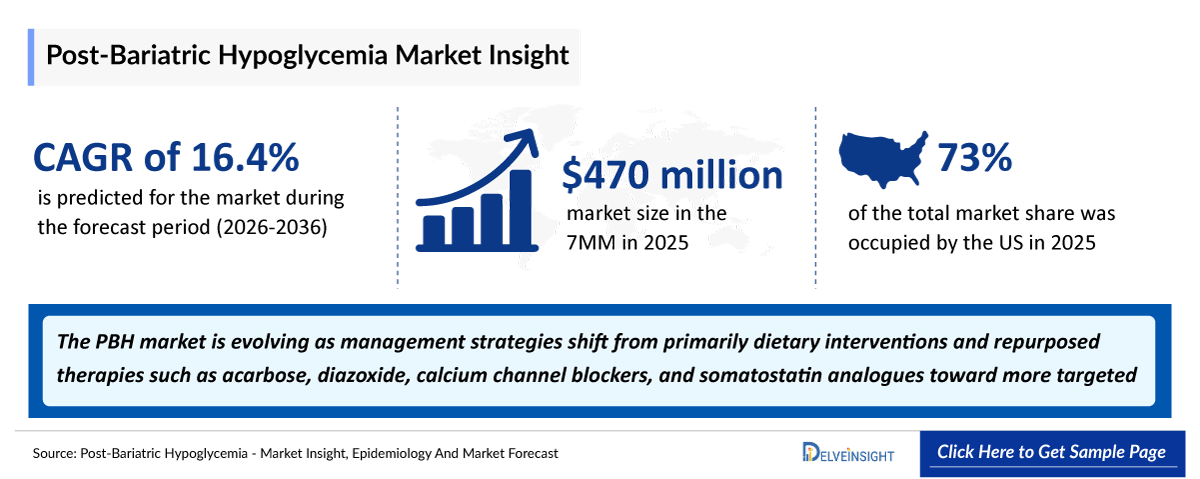
- The Post-Bariatric Hypoglycemia Therapeutics Market Size was valued at approximately USD 470 million in 2025 and is projected to reach nearly USD 2,260 million by 2036, expanding at a CAGR of 16.44% during the forecast period from 2026 to 2036.
- The leading Post-Bariatric Hypoglycemia Companies include Amylyx Pharmaceuticals, Vogenx, Recordati Group, MBX Biosciences, Confo Therapeutics, and others.
Post-Bariatric Hypoglycemia Market & Epidemiology Insights
- Post-Bariatric Hypoglycemia Diagnosis remains highly challenging due to the absence of universally accepted diagnostic criteria and the overlap of symptoms with dumping syndrome, anxiety disorders, insulinoma, and other metabolic conditions. Many patients remain underdiagnosed or misdiagnosed, leading to delays in treatment initiation and long-term disease management.
- Post-Bariatric Hypoglycemia Diagnosis is challenging due to the lack of standardized criteria and symptom overlap with other metabolic and gastrointestinal disorders. Continuous Glucose Monitoring (CGM), mixed-meal tolerance testing (MMTT), symptom assessment, and Whipple’s triad are commonly used, with CGM increasingly important for detecting asymptomatic hypoglycemia.
- The burden of PBH is expected to continue rising despite declining bariatric surgery volumes in some markets due to increased use of anti-Obesity Drugs. A growing population of post-surgical patients, ongoing procedures in regions such as Europe, and the accumulation of both existing and new cases are projected to steadily expand the overall Post-Bariatric Hypoglycemia Patient Pool over time.
- Despite the growing clinical burden of PBH, there are currently no FDA-approved therapies specifically indicated for the condition, resulting in heavy reliance on off-label agents such as acarbose, octreotide, and diazoxide. However, these therapies often demonstrate variable efficacy, inconsistent long-term symptom control, and poor tolerability due to gastrointestinal adverse events and systemic side effects, limiting their sustainability as effective long-term treatment options for refractory PBH patients.
- The Post-Bariatric Hypoglycemia Treatment landscape is undergoing a significant transformation with the emergence of targeted pipeline therapies aimed at addressing the underlying hyperinsulinemic mechanisms rather than providing symptomatic control alone. Emerging therapeutic classes include GLP-1 receptor antagonists, Sodium-glucose transporter 1 inhibitors, Corticotropin-releasing hormone inhibitors, and SSTR5 agonists, reflecting a growing focus on mechanism-based management approaches for PBH.
- GLP-1 receptor antagonists have emerged as one of the most promising therapeutic strategies in PBH, focusing on suppression of exaggerated GLP-1-driven insulin secretion. Key emerging therapies in this class include Avexitide and Imapextide (MBX 1416). The growing concentration of Post-Bariatric Hypoglycemia Pipeline activity around this mechanism highlights increasing industry confidence in GLP-1 modulation as a potentially disease-specific treatment approach for PBH.
- Avexitide, being developed by Amylyx Pharmaceuticals currently leading as the most advanced Phase III candidate and is potentially positioned to secure a first-mover advantage in a market with no approved therapies. Simultaneously, long-acting approaches such as imapextide (MBX 1416) are gaining attention due to their once-weekly dosing potential, which may improve patient adherence, reduce treatment burden, and provide more sustained protection against recurrent hypoglycemic episodes.
- The current Post-Bariatric Hypoglycemia Pipeline remains relatively early-stage and characterized by small clinical trial populations, highlighting an ongoing need for larger studies evaluating long-term efficacy durability, reproducibility of outcomes, and treatment performance across heterogeneous patient populations.
Request for unlocking the Sample Page of the Report @ "Post-Bariatric Hypoglycemia Treatment Market"
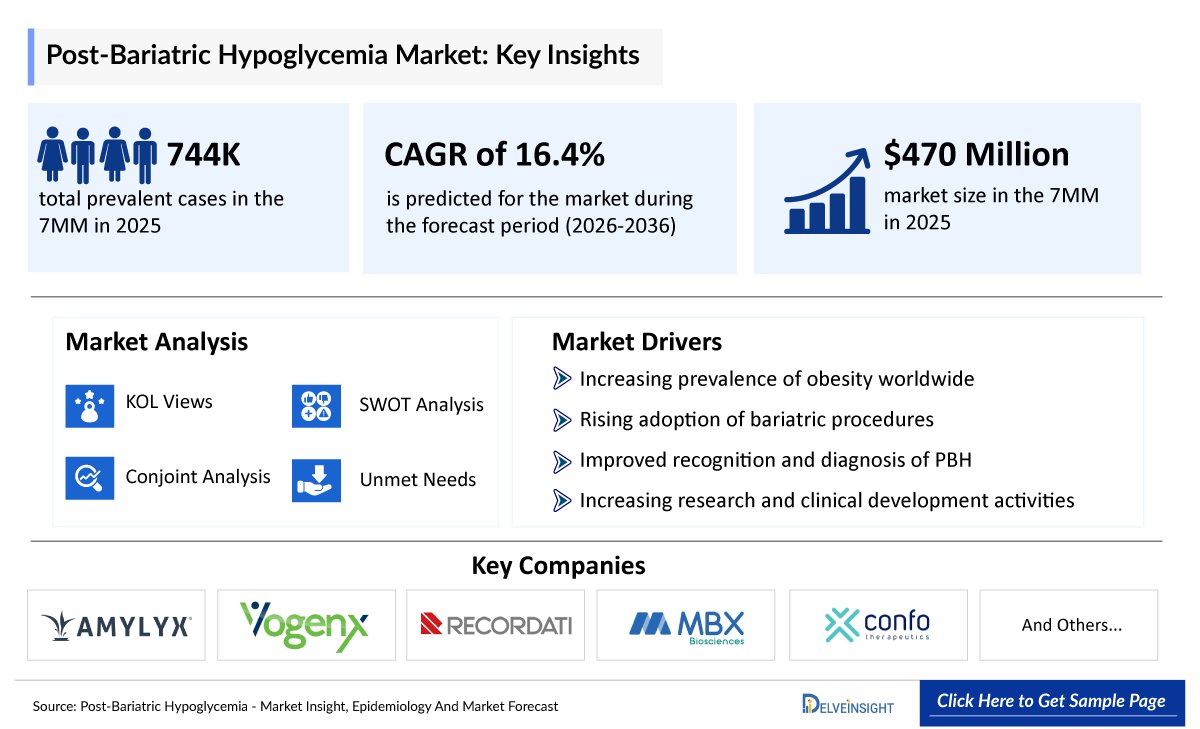
Post-Bariatric Hypoglycemia Market Size and Forecast in the 7MM
| 2025 Post-Bariatric Hypoglycemia Market Size | ~USD 470 million |
| Projected 2036 Post-Bariatric Hypoglycemia Market Size | ~USD 2,260 million |
| Post-Bariatric Hypoglycemia Growth Rate (2026–2036) | ~16.44% CAGR |
Key Factors Driving the Postbariatric Hypoglycemia Market
-
Rising Post-Bariatric Hypoglycemia Prevalence
The increasing prevalence of Post-Bariatric Hypoglycemia, particularly among females, is a primary driver of PBH market expansion. In the US, in 2025, there were ~428,500 prevalent cases of PBH.
-
Rising Opportunities in Targeted Therapies for Post-Bariatric Hypoglycemia
Increasing understanding of the mechanisms underlying PBH is driving the development of targeted therapies aimed at improving postprandial glucose regulation and reducing hyperinsulinemic hypoglycemia, addressing a significant unmet clinical need.
-
Emerging Post-Bariatric Hypoglycemia Competitive Landscape
The pipeline for Post-Bariatric Hypoglycemia remains limited, with no approved pharmacological therapies currently available. Emerging therapies in development include avexitide by Amylyx Pharmaceuticals, mizagliflozin by Vogenx, and pasireotide by Recordati Group, reflecting increasing focus on targeted approaches for managing postprandial hyperinsulinemic hypoglycemia in PBH.
DelveInsight's ‘Post-Bariatric Hypoglycemia Market Insights, Epidemiology and Market Forecast – 2036’ report delivers an in-depth understanding of the PBH, historical and forecasted epidemiology, as well as the PBH therapeutics market trends in the United States, EU4 (Germany, Spain, Italy, and France) and the United Kingdom, and Japan.
The Post-Bariatric Hypoglycemia Treatment Market Report delivers a comprehensive analysis of the current treatment landscape, including standards of care, clinical practices, and evolving therapeutic algorithms. It evaluates PBH patient burden trends, revenue & market share dynamics, peak patient share & therapy uptake analysis, and provides an in-depth market size assessment, and growth rate projections (Historical & Forecast 2022–2036) across global regions. The report highlights key unmet medical needs in Post-Bariatric Hypoglycemia and maps the competitive and clinical landscape to uncover high-value opportunities, providing a clear outlook on future market growth potential.
Scope of the Post-Bariatric Hypoglycemia Market Report | |
|
Study Period |
2022–2036 |
|
Historical Year |
2022–2025 |
|
Forecast Period |
2026–2036 |
|
Base Year |
2026 |
|
Geographies Covered |
|
|
Post-Bariatric Hypoglycemia Market CAGR (Study period/Forecast period) | |
|
Post-Bariatric Hypoglycemia Epidemiology Segmentation Analysis |
Patient Burden Assessment
|
|
Post-Bariatric Hypoglycemia Companies |
|
|
Post-Bariatric Hypoglycemia Therapies |
|
|
Post-Bariatric Hypoglycemia Market |
Segmented by
|
|
Analysis |
|
Postbariatric Hypoglycemia Disease Understanding
Postbariatric Hypoglycemia Overview
PBH is a complication that occurs after bariatric surgeries such as RYGB or sleeve gastrectomy. It is characterized by low blood glucose levels, typically 1–3 hours after meals. PBH results from rapid nutrient absorption and an exaggerated insulin response, largely driven by increased GLP-1 secretion. Patients may experience symptoms such as dizziness, sweating, and confusion, with severity ranging from mild to severe. Management mainly involves dietary changes, with medications or surgical intervention required in severe cases.
Post-Bariatric Hypoglycemia Diagnosis
PBH is diagnosed based on clinical symptoms and confirmation of Whipple’s triad, low blood glucose, associated symptoms, and symptom relief after glucose intake. A MMTT is the preferred method to assess postprandial hypoglycemia, while CGM helps detect recurrent episodes. Additional tests may be used to confirm hyperinsulinemia and exclude conditions such as insulinoma.
Post-Bariatric Hypoglycemia Treatment
The primary goals of Post-Bariatric Hypoglycemia Treatment are to reduce postprandial hypoglycemic episodes, stabilize glucose levels, relieve symptoms, and improve quality of life. Management is primarily supportive and step-wise, with dietary modification and low-glycemic frequent meals serving as first-line therapy. In refractory cases, off-label pharmacologic agents such as acarbose, diazoxide, calcium channel blockers, and somatostatin analogues may be used to reduce excessive insulin secretion and glucose fluctuations.
Post-Bariatric Hypoglycemia Emerging therapies, including avexitide, mizagliflozin, and pasireotide, are being investigated as targeted treatment options for PBH. Severe cases may require surgical revision or partial pancreatectomy, alongside CGM and multidisciplinary care to reduce recurrence and maintain metabolic stability.
Post-Bariatric Hypoglycemia Unmet Needs
The section “unmet needs of Post-Bariatric Hypoglycemia” outlines the critical gaps between the current state of patient care, diagnosis, and the ideal & effective management of the disease. It highlights the obstacles experienced by patients, clinicians, and researchers and identifies potential solutions for future progress.
- Expanding patient population and persistent disease burden
- Lack of standardized and effective treatment options
- Diagnostic and awareness gaps in PBH
- Limitations of dietary and lifestyle management, and others…..
- Comprehensive unmet needs insights in PBH and their strategic implications are provided in the full report.
Post-Bariatric Hypoglycemia Epidemiology
The Post-Bariatric Hypoglycemia epidemiology section provides insights about the historical and current Post-Bariatric Hypoglycemia patient pool and forecasted trends for individual seven major countries. It helps to recognize the causes of current and forecasted trends by exploring numerous studies and views of key opinion leaders. This part of the Post-Bariatric Hypoglycemia market report also provides the diagnosed patient pool and their trends along with assumptions undertaken.
Key Findings from Post-Bariatric Hypoglycemia Epidemiological Analysis and Forecast
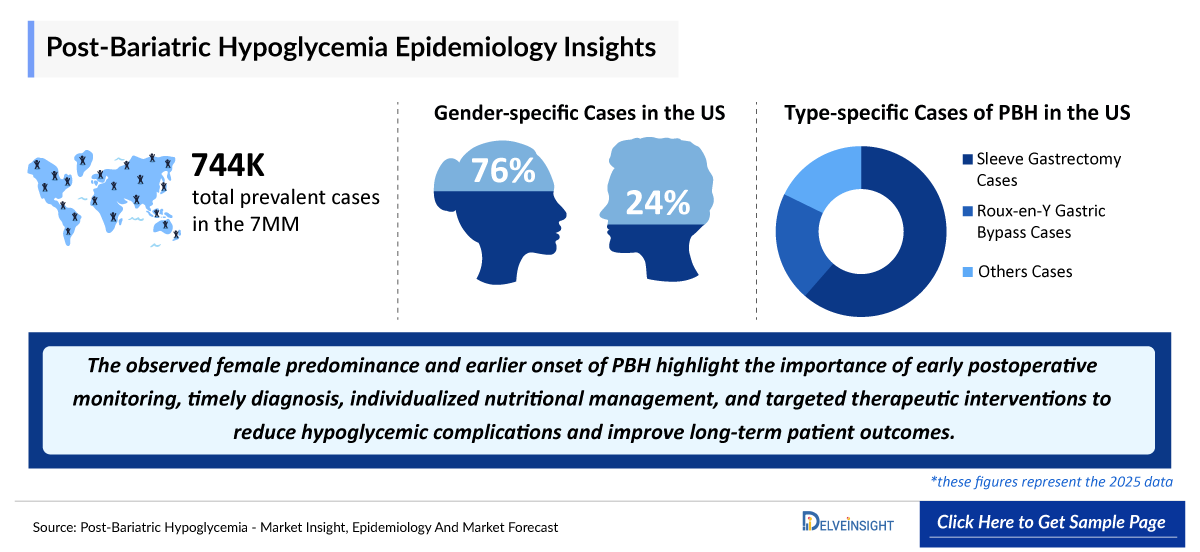
- According to DelveInsight’s estimates, the total Post-Bariatric Hypoglycemia Prevalent Cases in the 7MM were approximately 744,700 in 2025.
- Among the EU4, France accounted for the highest number of prevalent cases of Post-Bariatric Hypoglycemia, followed by Germany, whereas Italy accounted for the lowest number of cases in 2025.
- The observed female predominance and earlier onset of PBH highlight the importance of early postoperative monitoring, timely diagnosis, individualized nutritional management, and targeted therapeutic interventions to reduce hypoglycemic complications and improve long-term patient outcomes.
- In Japan, postprandial Post-Bariatric Hypoglycemia accounted for the highest proportion of total Post-Bariatric Hypoglycemia cases, contributing 38% of the disease burden in 2025, and is anticipated to remain the leading subtype during the forecast period. Nocturnal Post-Bariatric Hypoglycemia represented approximately 29% of cases, while mixed PBH contributed around 33% of the total Post-Bariatric Hypoglycemia Population in Japan.
Post-Bariatric Hypoglycemia Epidemiology Segmentation
- Total Post-Bariatric Hypoglycemia Prevalence Cases
- Total Post-Bariatric Hypoglycemia Prevalent Cases by Type of Bariatric Surgery
- Post-Bariatric Hypoglycemia Gender-specific Cases
- Post-Bariatric Hypoglycemia Type-specific Cases
- Total Post-Bariatric Hypoglycemia Treated Cases
Post-Bariatric Hypoglycemia Market Recent Breakthroughs and Developments
- In March 2026, Amylyx Pharmaceuticals announced that the topline results from the Phase III (LUCIDITY) evaluating avexitide in PBH are anticipated in Q3 2026, and if approved, the commercial launch is anticipated in 2027.
- In February 2026, Recordati announced that top-line results from the Phase II trial of pasireotide are expected in Q2 2026.
- In January 2026, Amylyx Pharmaceuticals selected AMX0318, a long-acting GLP-1 receptor antagonist, as a development candidate for PBH and other rare diseases. The candidate was identified through a collaboration with Gubra A/S.
Post-Bariatric Hypoglycemia Drug Analysis & Competitive Analysis
The Post-Bariatric Hypoglycemia Drug Chapter provides a detailed, market-focused review of the emerging Post-Bariatric Hypoglycemia Pipeline across Phase I–III clinical trials. It covers the Post-Bariatric Hypoglycemia Mechanism of Action, clinical trial data, regulatory approvals, patents, collaborations, and strategic partnerships for each therapy, along with their advantages, limitations, and recent developments. This section offers critical insights into the PBH treatment landscape, supporting market assessment, competitive analysis, and growth forecasting for the Post-Bariatric Hypoglycemia Therapeutics Market.
The current standard of care for Post-Bariatric Hypoglycemia
Clinical management of PBH is largely supportive and symptom-driven, focusing on dietary modification, frequent low-glycemic meals, and avoidance of rapid carbohydrate intake to reduce postprandial hypoglycemic episodes. Pharmacological interventions such as acarbose, diazoxide, calcium channel blockers, and somatostatin analogues are used off-label in refractory cases, while severe or persistent disease may require enteral feeding strategies, gastric revision procedures, or partial pancreatectomy.
However, there are currently no approved targeted therapies specifically for PBH, and existing management primarily depends on symptomatic and repurposed treatment approaches, highlighting a substantial unmet clinical need.
Post-Bariatric Hypoglycemia Pipeline Analysis
-
Avexitide: Amylyx Pharmaceuticals
Avexitide is a first-in-class glucagon-like peptide-1 (GLP-1) receptor antagonist designed for the treatment of Post-Bariatric Hypoglycemia. The therapy works by blocking excessive GLP-1 signalling, which is believed to drive hyperinsulinemia and recurrent postprandial hypoglycemia in PBH patients following bariatric surgery. The drug has received Breakthrough Therapy designation from the US FDA for PBH, highlighting its potential to address a major unmet medical need in a disease area where no approved therapies currently exist.
-
- In May 2026, Amylyx Pharmaceuticals announced the launch of a US Expanded Access Program (EAP) for up to 250 adults with PBH to provide treatment access to avexitide.
- In March 2026, Amylyx Pharmaceuticals announced that the topline results from the Phase III (LUCIDITY) evaluating avexitide in PBH are anticipated in Q3 2026, and if approved, the commercial launch is anticipated in 2027.
- As per the corporate presentation in March 2026, the company stated the strong IP position of avexitide with patent rights through 2037, potential for additional term through Patent Term Extensions.
-
Mizagliflozin: Vogenx
Mizagliflozin is an orally administered selective sodium-glucose cotransporter 1 (SGLT1) inhibitor being investigated for the treatment of PBH. By delaying intestinal glucose absorption and reducing rapid postprandial glucose excursions, mizagliflozin is designed to attenuate the exaggerated insulin response that contributes to hypoglycemic episodes following bariatric surgery.
- In April 2025, Vogenx announced that they presented Phase II clinical data from Study VGX-001-012 (NCT05721729) at the Endocrine Society (ENDO) 2025 Annual Conference, highlighting Mizagliflozin’s effect on hypoglycemic events and relevant pharmacodynamic indicators in patients diagnosed with PBH. Vogenx presented the data during an oral presentation at the ENDO 2025 Conference.
- In February 2022, Vogenx announced the closing of a USD 11 million Series A financing. Proceeds from the Series A preferred stock issuance will be used to advance the Company’s therapeutic product candidate, mizagliflozin, into Phase II clinical trials. Concurrent with the financing, Vogenx entered into an exclusive license agreement with Kissei Pharmaceuticals.
Comparison of Emerging Post-Bariatric Hypoglycemia Drugs Under Development | |||||||
|
Drug Name |
Company |
Highest Phase |
Indication |
RoA |
MoA |
Molecule Type |
Anticipated Launch in the US |
|
Avexitide |
Amylyx Pharmaceuticals |
III |
PBH |
SC |
GLP-1 receptor antagonist |
Peptide |
2027 |
|
Mizagliflozin |
Vogenx |
II |
PBH |
Oral |
SGLT1 inhibitor |
Small molecule |
Information is available in the full report |
|
Pasireotide (SIGNIFOR) |
Recordati Group |
II |
PBH |
SC |
Corticotropin-releasing hormone inhibitors |
Small molecule |
Information is available in the full report |
|
Note: Launch insights are provisional and may change with future report updates or the occurrence of major key catalysts. | |||||||
Post-Bariatric Hypoglycemia Companies
- Amylyx Pharmaceuticals
- Vogenx
- Recordati Group
- MBX Biosciences
- Confo Therapeutics, and others
Post-Bariatric Hypoglycemia Market Outlook
The Post-Bariatric Hypoglycemia Therapeutics Market is gradually evolving from a landscape dominated by dietary management and off-label symptomatic therapies toward one focused on targeted, mechanism-based pharmacological interventions. Increasing recognition of Post-Bariatric Hypoglycemia as a serious long-term complication of bariatric surgery, along with improvements in continuous glucose monitoring and diagnostic awareness, is driving demand for more effective and standardized treatment approaches.
Post-Bariatric Hypoglycemia Emerging therapies such as selective Avexitide and Mizagliflozin, among others, reflect a shift toward addressing the underlying pathophysiology of exaggerated postprandial insulin secretion, validating the growing interest in disease-specific therapeutic innovation and reshaping the competitive landscape of PBH management. With the continued expansion of bariatric surgical procedures globally and the growing prevalence of obesity-related metabolic disorders, the Post-Bariatric Hypoglycemia Treatment landscape is expected to witness increasing clinical and commercial attention over the coming years.
Ongoing pipeline development, advances in metabolic disease research, and rising physician awareness are expected to support the adoption of novel therapies with improved efficacy, safety, and patient convenience compared with currently used off-label options such as acarbose, diazoxide, and somatostatin analogues.
Overall, the anticipated introduction of targeted pharmacological therapies, increasing awareness among clinicians and patients, improvements in diagnosis through CGM technologies, and growing recognition of PBH as a significant post-surgical metabolic complication are expected to drive steady market growth across the 7MM during the forecast period. These trends are likely to create meaningful commercial opportunities for emerging pipeline candidates and companies developing differentiated therapies for this underserved condition.
Key Findings from Post-Bariatric Hypoglycemia Market Forecast Report
- According to the estimates, the largest Post-Bariatric Hypoglycemia Treatment Market Size was captured by the United States, i.e., ~USD 343 million in 2025.
- Among the EU4 and the UK, France is expected to account for the largest Post-Bariatric Hypoglycemia Drugs Market Share by 2036, whereas the UK is projected to contribute the smallest share.
- The Post-Bariatric Hypoglycemia Therapeutics Market is evolving as management strategies shift from primarily dietary interventions and repurposed therapies such as acarbose, diazoxide, calcium channel blockers, and somatostatin analogues toward more targeted and mechanism-based approaches, with emerging therapies including avexitide, mizagliflozin, and pasireotide (SIGNIFOR) gaining attention due to their potential to reduce PBH episodes, improve glycemic stability, and address the underlying pathophysiology of PBH.
- In Japan, the treatment opportunity for PBH remains relatively limited due to the lower prevalence of bariatric surgery compared with Western markets.
Post-Bariatric Hypoglycemia Drug Class/Insights into Leading Emerging and Marketed Therapies (2022–2036 Forecast)
The Post-Bariatric Hypoglycemia Treatment landscape comprises dietary and nutritional interventions, off-label pharmacological therapies, investigational metabolic approaches, surgical procedures, and supportive management strategies. Among emerging pharmacological approaches, GLP-1 receptor antagonists, SGLT1 inhibitors, somatostatin analogs, and other drug class which helps in stabilizing glycemic variability and reducing recurrent hypoglycemic episodes in PBH patients.
- GLP-1 Receptor Antagonists: This drug class blocks GLP-1 receptor signalling to reduce exaggerated insulin secretion after meals, helping control postprandial hypoglycemia in PBH. These agents directly target one of the key underlying mechanisms of PBH and are considered among the most promising targeted therapies under development. Example: Avexitide by Amylyx Pharmaceuticals.
- SGLT1 Inhibitors: These agents slow intestinal glucose absorption, reducing rapid glucose spikes and subsequent insulin surges that contribute to PBH symptoms. By moderating postprandial glycemic excursions, they may help improve glucose stability and reduce hypoglycemic episodes in bariatric patients. Example: Mizagliflozin by Vogenx.
- Somatostatin Analogs: This class suppresses insulin and incretin hormone secretion, helping stabilize glucose levels and reduce hypoglycemic episodes in PBH patients. They are particularly useful in severe or refractory PBH cases where dietary modifications alone are insufficient for symptom control. Example: Pasireotide (SIGNIFOR) by Recordati Group.
Post-Bariatric Hypoglycemia Drug Uptake
This section focuses on the uptake rate of potential post-bariatric hypoglycemia drugs expected to be launched in the market during the forecast period (2026–2036). The analysis covers the PBH market's uptake by drugs, patient uptake by therapy, and sales of each drug. Currently, dietary modifications, along with agents such as acarbose, diazoxide, and somatostatin analogs, continue to represent the standard management approach despite challenges related to tolerability, adherence, and variable efficacy.
Over the coming years, the uptake of emerging targeted therapies is expected to increase significantly. Among these, Avexitide is anticipated to witness prominent adoption owing to its first-mover advantage, targeted GLP-1 receptor antagonist mechanism, and potential approval in the near term. This is expected to be followed by the gradual uptake of other emerging therapies such as mizagliflozin and pasireotide (SIGNIFOR), supported by growing clinical evidence and increasing physician awareness.
Post-Bariatric Hypoglycemia Market Access and Reimbursement Scenario
Reimbursement is a crucial factor that affects the drug’s access to the market. Often, the decision to reimburse comes down to the price of the drug relative to the benefit it produces in treated patients. To reduce the healthcare burden of these high-cost therapies, many payment models are being considered by payers and other industry insiders.
Post-Bariatric Hypoglycemia Therapies Price Scenario & Trends
Pricing and analogue assessment of Post-Bariatric Hypoglycemia Therapies highlight evolving price dynamics structures. This section summarizes the cost of approved treatments, the closest and most appropriate analogue selection for emerging therapies, and the understanding of how pricing influences market access, adherence, and long-term uptake.
Currently, no therapies are specifically approved by the US FDA for PBH, and treatment primarily relies on off-label pharmacotherapy when dietary measures are insufficient. Commonly used agents include Acarbose, Octreotide, Liraglutide, and SGLT inhibitors. Based on reported regimens, the estimated average annual pharmacotherapy cost for PBH management is approximately USD 3,049.
Post-Bariatric Hypoglycemia Industry Experts and Physician Views
To keep up with Post-Bariatric Hypoglycemia Therapeutics Market Trends, we take Key Opinion Leaders (KOLs) and Subject Matter Experts (SMEs) opinions working in the domain through primary research to fill the data gaps and validate our secondary research. Industry experts were contacted for insights on the PBH emerging therapies, evolving treatment landscape, patient adherence to conventional therapies, therapy switching trends, drug adoption and uptake, accessibility challenges, and epidemiology and real-world prescription patterns in PBH, including MD, PhD, Instructor, Postdoctoral Researcher, Professor, Researcher, and others.
DelveInsight’s analysts connected with 10+ KOLs to gather insights; however, interviews were conducted with 6+ KOLs in the 7MM. Centers such as Stanford University, University College London, Joslin Diabetes Center, and Hospital Clínic de Barcelona, etc. were contacted. Their opinion helps understand and validate current and emerging PBH therapies, highlight unmet medical needs, provide epidemiological context, and support strategic decisions for market access, therapy adoption, and pipeline prioritization in PBH.
|
Region |
Key Opinion Leaders (KOLs) and Subject Matter Experts (SMEs) |
|
United States |
“Amylyx Pharmaceuticals’ avexitide has shown very encouraging clinical results; the Phase IIb data demonstrated around a 64% reduction in hypoglycemic events, with nearly half of patients achieving complete freedom from hypoglycemia, which is highly promising from a clinical perspective.” |
|
Spain |
“Current management of PBH is heavily reliant on dietary and lifestyle modifications, which may not be sufficient for all patients. Pharmacological interventions are largely used off-label, with inconsistent efficacy across individuals. There is a clear lack of approved, targeted therapies addressing the underlying mechanisms of PBH. Advancing drug development in this space is essential to improve treatment outcomes.” |
Post-Bariatric Hypoglycemia Report Qualitative Analysis: SWOT and Conjoint Analysis
We perform qualitative and Post-Bariatric Hypoglycemia Therapeutics Market Intelligence analysis using various approaches, such as SWOT analysis and conjoint analysis. In the SWOT analysis of Post-Bariatric Hypoglycemia, strengths, weaknesses, opportunities, and threats in terms of disease diagnosis, patient awareness, patient burden, competitive landscape, cost-effectiveness, and geographical accessibility of therapies are provided.
Conjoint analysis analyzes Post-Bariatric Hypoglycemia Emerging Therapies based on relevant attributes such as safety, efficacy, frequency of administration, route of administration, and order of entry. Scoring is given based on these parameters to analyze the effectiveness of therapy.
The team of analysts analyzes promising emerging therapies based on relevant attributes such as safety, efficacy, frequency of administration, route of administration, and order of entry. In efficacy, the trial’s primary and secondary outcome measures are evaluated, whereas the therapies’ safety is evaluated, wherein the acceptability, tolerability, and adverse events are mainly observed.
In addition, the scoring is also based on the route of administration, order of entry, probability of success, and the addressable patient pool for each therapy. According to these parameters, the final weightage score and the ranking of the emerging therapies are decided.
Scope of the Post-Bariatric Hypoglycemia Market Report
- The Post-Bariatric Hypoglycemia Therapeutics Market Report covers a segment of key events, an executive summary, a descriptive overview, explaining its causes, signs and symptoms, pathogenesis, and currently available treatments.
- Comprehensive insight has been provided into the epidemiology segments and forecasts, the future growth potential of the diagnosis rate, and disease progression along Post-Bariatric Hypoglycemia Treatment guidelines.
- Additionally, an all-inclusive account of both the current and emerging treatments, along with the elaborate profiles of late-stage and prominent therapies, will have an impact on the current Post-Bariatric Hypoglycemia Treatment landscape.
- A detailed review of the Post-Bariatric Hypoglycemia Therapeutics Market, historical and forecasted PBH Market Size, Post-Bariatric Hypoglycemia Drugs Market Share by therapies, detailed assumptions, and rationale behind our approach is included in the report, covering the 7MM drug outreach.
- The Post-Bariatric Hypoglycemia Therapeutics Market Report provides an edge while developing business strategies by understanding trends through SWOT analysis and expert insights/KOL views, patient journey, and treatment preferences that help in shaping and driving the 7MM Post-Bariatric Hypoglycemia Drugs Market.
Post-Bariatric Hypoglycemia Market Report Insights
- Post-Bariatric Hypoglycemia Patient Population Forecast
- Post-Bariatric Hypoglycemia Therapeutics Market Size
- Post-Bariatric Hypoglycemia Pipeline Drugs Analysis
- Post-Bariatric Hypoglycemia Treatment Market Size and Trends
- Post-Bariatric Hypoglycemia Market Opportunity (Current and Forecasted)
Post-Bariatric Hypoglycemia Market Report Key Strengths
- Post-Bariatric Hypoglycemia Epidemiology-based (Epi-based) Bottom-up Forecasting
- Artificial Intelligence (AI)-enabled Market Research Report
- 11-year Forecast
- Post-Bariatric Hypoglycemia Market Outlook (North America, Europe, Asia-Pacific)
- Post-Bariatric Hypoglycemia Patient Burden Trends (by geography)
- Post-Bariatric Hypoglycemia Treatment Addressable Market (TAM)
- Post-Bariatric Hypoglycemia Competitive Landscape
- Post-Bariatric Hypoglycemia Major Companies Insights
- Post-Bariatric Hypoglycemia Price Trends and Analogue Assessment
- Post-Bariatric Hypoglycemia Therapies Drug Adoption/Uptake
- Post-Bariatric Hypoglycemia Therapies Peak Patient Share analysis
Post-Bariatric Hypoglycemia Market Report Assessment
- Current Post-Bariatric Hypoglycemia Treatment Practices
- Post-Bariatric Hypoglycemia Unmet Needs
- Post-Bariatric Hypoglycemia Clinical Development Analysis
- Post-Bariatric Hypoglycemia Emerging Drugs Product Profiles
- Post-Bariatric Hypoglycemia Treatment Market Attractiveness
- Post-Bariatric Hypoglycemia Qualitative Analysis (SWOT and Conjoint Analysis)
- Post-Bariatric Hypoglycemia Market Drivers
- Post-Bariatric Hypoglycemia Market Barriers
Key Questions Answered in the Post-Bariatric Hypoglycemia Therapeutics Market Report
Post-Bariatric Hypoglycemia Treatment Market Insights
- What was the Post-Bariatric Hypoglycemia Market Size, the Post-Bariatric Hypoglycemia Treatment Market Size by therapies, Post-Bariatric Hypoglycemia Drugs Market Share (%) distribution in 2025, and what would it look like by 2036? What are the contributing factors for this growth?
- What are the anticipated pricing variations among different geographies for the emerging therapies in the future?
- What can be the future treatment paradigm of PBH?
- What are the disease risks, burdens, and unmet needs of Post-Bariatric Hypoglycemia? What will be the growth opportunities across the 7MM concerning the Post-Bariatric Hypoglycemia patient population?
- Who is the major future competitor in the Post-Bariatric Hypoglycemia Drugs Market, and how will the competitors affect their market share?
- What are the current options for the treatment of PBH? What are the current guidelines for treating PBH in the US, Europe, and Japan?
Reasons to Buy the Post-Bariatric Hypoglycemia Market Report
- The Post-Bariatric Hypoglycemia Therapeutics Market Report will help in developing business strategies by understanding the latest trends and changing treatment dynamics driving the Post-Bariatric Hypoglycemia Drugs Market.
- Bottom up forecasting builds from the affected population to product forecasts, delivering a robust, data driven approach ideal for new therapies and novel classes.
- Insights on patient burden/disease: Post-Bariatric Hypoglycemia Incidence, evolution in diagnosis, and factors contributing to the change in the epidemiology of the disease during the forecast years.
- Understand the existing Post-Bariatric Hypoglycemia Drugs Market opportunities in varying geographies and the growth potential over the coming years.
- Identifying strong upcoming players in the Post-Bariatric Hypoglycemia Drugs Market will help devise strategies to help get ahead of competitors.
- Detailed analysis and ranking of class-wise potential current and emerging therapies under the conjoint analysis section to provide visibility around leading classes.
- To understand KOLs’ perspectives on the accessibility, acceptability, and compliance-related challenges of existing treatment to overcome barriers in the future.
- Detailed insights into the unmet needs of the existing Post-Bariatric Hypoglycemia Drugs Market so that the upcoming players can strengthen their development and launch strategy.
- This Artificial Intelligence (AI) enabled report summarize and simplify complex datasets within the report into clear, actionable insights for stakeholders, investors, and healthcare providers, enabling faster, data driven decisions.
Stay updated with us for Recent Articles