GLP-1 Agonists Market Summary
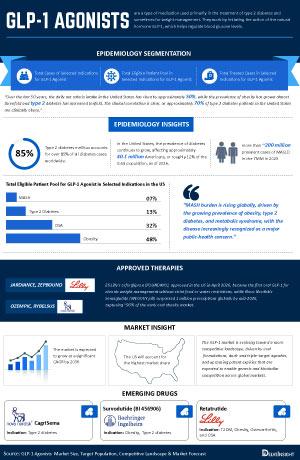
- The GLP-1 Agonists Market is rapidly expanding beyond Type 2 Diabetes mellitus (T2DM) into Obesity and broader metabolic and cardiovascular indications, with Eli Lilly and Novo Nordisk dominating the market and accounting for nearly 94% of market share as of mid-2024.
- The GLP-1 Agonists Market is evolving toward a more competitive landscape, driven by oral formulations, dual- and triple-target agonists, and upcoming patent expiries that are expected to enable generic and biosimilar competition across global markets.
GLP-1 Agonists Market Trends and Insights
- GLP-1 agonists are a type of medication used primarily in the treatment of type 2 diabetes and sometimes for weight management. They work by imitating the action of the natural hormone GLP-1, which helps regulate glucose levels in the blood.
- Eli Lilly’s Orforglipron (FOUNDAYO), approved in the US in April 2026, became the first oral GLP-1 for chronic weight management without strict food or water restrictions, while Novo Nordisk’s Semaglutide (WEGOVY pill) surpassed 1 million prescriptions globally by mid-2026, capturing ~90% of the early oral obesity market.
- In 2025, Lilly’s Tirzepatide portfolio delivered strong growth, with MOUNJARO generating USD 22.97 billion and ZEPBOUND USD 13.54 billion, totaling USD 36.51 billion; US revenue increased 53% for MOUNJARO and 174% for ZEPBOUND, driven by strong demand, although lower realized prices partially offset the gains.
- The American Diabetes Association (ADA) 2026 guidelines position GLP-1 agonists as cardiometabolic therapies beyond glucose control, recommending their use in T2DM patients with ASCVD/high ASCVD risk, heart failure, or Chronic kidney Disease regardless of A1C or metformin use. This broadens their addressable market toward cardiovascular, heart failure, and renal risk reduction, while their low Hypoglycemia risk supports use in high-risk patients.
- The GLP-1 Treatment Landscape has evolved from first-generation agents such as exenatide (BYETTA), liraglutide (VICTOZA), and others to newer therapies including semaglutide (OZEMPIC/WEGOVY/RYBELSUS), the dual GIP/GLP-1 agonist tirzepatide (MOUNJARO/ZEPBOUND), and the oral GLP-1 agonist orforglipron (FOUNDAYO). These advances have expanded treatment options for glycemic control and weight management.
- The GLP-1 pipeline includes promising candidates such as retatrutide, CagriSema, and survodutide, among others. By leveraging next-generation multi-receptor agonism and complementary metabolic pathways, these candidates have demonstrated greater weight-loss efficacy and broader cardiometabolic benefits than first-generation GLP-1 receptor agonists, positioning them to redefine efficacy benchmarks and expand treatment across increasingly diverse patient populations.
GLP-1 Agonists Market Size and Forecast in the 7MM
| 2025 GLP-1 Agonists Market Size | ~USD XXX million |
| 2036 Projected GLP-1 Agonists Market Size | ~USD XXX million |
| GLP-1 Agonists Growth Rate (2026–2036) | XX% CAGR |
Key Factors Driving the Growth of GLP-1 Agonists Market
-
Growing Identification of GLP-1 Receptor Agonist–Associated Indications
The identification and treatment of metabolic and cardiometabolic conditions amenable to GLP-1 receptor agonists (GLP-1 RAs) are expanding, driven by increasing disease burden, improved clinical understanding, and growing evidence of benefits beyond glycemic control. While type 2 diabetes and obesity remain the core indications, growing evidence and regulatory approvals are expanding opportunities into cardiovascular disease, chronic kidney disease, obstructive sleep apnea, and metabolic dysfunction-associated steatohepatitis.
-
Rising Opportunities in GLP-1 Receptor Agonists
Increasing clinical validation of GLP-1 receptor agonist, strong efficacy in glycemic control and weight reduction, and expanding indications are creating significant opportunities for the class. The development of oral formulations, dual/multi-receptor agonists, and next-generation incretin therapies is further expected to expand the addressable patient population and strengthen competition within the GLP-1 market.
DelveInsight's ‘GLP-1 Agonists Target Population, Competitive Landscape, and Market Metadata–2036’ report delivers an in-depth understanding of the GLP-1 agonist, historical and forecasted epidemiology, as well as the GLP-1 agonist market trends in the United States, EU4 (Germany, Spain, Italy, and France), the United Kingdom, and Japan.
The GLP-1 Agonists market report delivers a comprehensive analysis of the current treatment landscape, including standards of care, clinical practices, and evolving therapeutic algorithms. It evaluates GLP-1 agonist patient burden trends, revenue and market share dynamics, peak patient share and therapy uptake analysis, and provides an in-depth market size assessment, and growth rate projections (Historical & Forecast 2022–2036) across global regions. The report highlights key unmet medical needs in GLP-1 agonist and maps the competitive and clinical landscape to uncover high‑value opportunities, providing a clear outlook on future market growth potential.
Scope of the GLP-1 Agonists Market Report | |
|
Study Period |
2022–2036 |
|
Historical Year |
2022–2025 |
|
Forecast Period |
2026–2036 |
|
Base Year |
2026 |
|
Geographies Covered |
|
|
GLP-1 Agonists Market CAGR (Study period/Forecast period) |
XX% (2026 ̶ 2036) |
|
GLP-1 Agonists Epidemiology Segmentation Analysis |
Patient Burden Assessment
|
|
GLP-1 Agonists Companies |
|
|
GLP-1 Agonists Therapies |
|
|
GLP-1 Agonists Market |
Segmented by
|
|
Analysis |
|
GLP-1 Agonists Understanding
GLP-1 Agonists Overview
GLP-1 is an incretin hormone that plays an important role in regulating glucose metabolism and appetite. GLP-1 receptor agonists mimic the effects of endogenous GLP-1 by enhancing glucose-dependent insulin secretion, suppressing glucagon release, slowing gastric emptying, and increasing satiety. These effects improve glycemic control and reduce food intake and body weight.
Due to their metabolic effects, GLP-1 have become an important therapeutic class for type 2 diabetes and obesity, with expanding applications in conditions such as cardiovascular disease, chronic kidney disease, and obstructive sleep apnea. The development of dual and multi-receptor incretin agonists, along with oral and longer-acting formulations, is further expanding the therapeutic potential and addressable market for GLP-1–based therapies.
GLP-1 Agonists Diagnosis
GLP-1 receptor agonists are not associated with a standalone diagnostic condition but are used to manage metabolic disorders based on clinical assessment. Patient eligibility is typically evaluated using measures such as blood glucose levels, HbA1c, body mass index (BMI), and weight-related comorbidities. GLP-1 agonists are primarily used in type 2 diabetes and obesity, with treatment selection increasingly influenced by associated cardiovascular, renal, and metabolic conditions.
Further details are provided in the report.
GLP-1 Agonists Treatment
GLP-1 receptor agonist treatment focuses on activating the GLP-1 receptor to improve glucose regulation, appetite control, and metabolic health. These therapies are primarily used in type 2 diabetes and obesity, with some agents also approved for cardiovascular, renal, and obstructive sleep apnea indications. Most GLP-1 agonist enhance glucose-dependent insulin secretion, suppress glucagon release, slow gastric emptying, and increase satiety. Newer dual and multi-receptor agonists, such as GIP/GLP-1 agonists, are being developed to provide greater improvements in glycemic control and weight reduction.
Further details related to country-based variations are provided in the report.
GLP-1 Agonists Unmet Needs
The section “unmet needs of GLP-1 Agonists Unmet Needs” outlines the critical gaps between the current state of patient care, diagnosis, and the ideal & effective management of the disease. It highlights the obstacles experienced by patients, clinicians, and researchers and identifies potential solutions for future progress.
- Improved Tolerability and Adherence
- Greater and Sustained Weight Reduction
- More Convenient Administration
- Broader Cardiometabolic Benefits, and others…..
Comprehensive unmet needs insights in GLP-1 Agonists and their strategic implications are provided in the full report.
GLP-1 Agonists Epidemiology
Key Findings from GLP-1 Agonists Epidemiological Analysis and Forecast
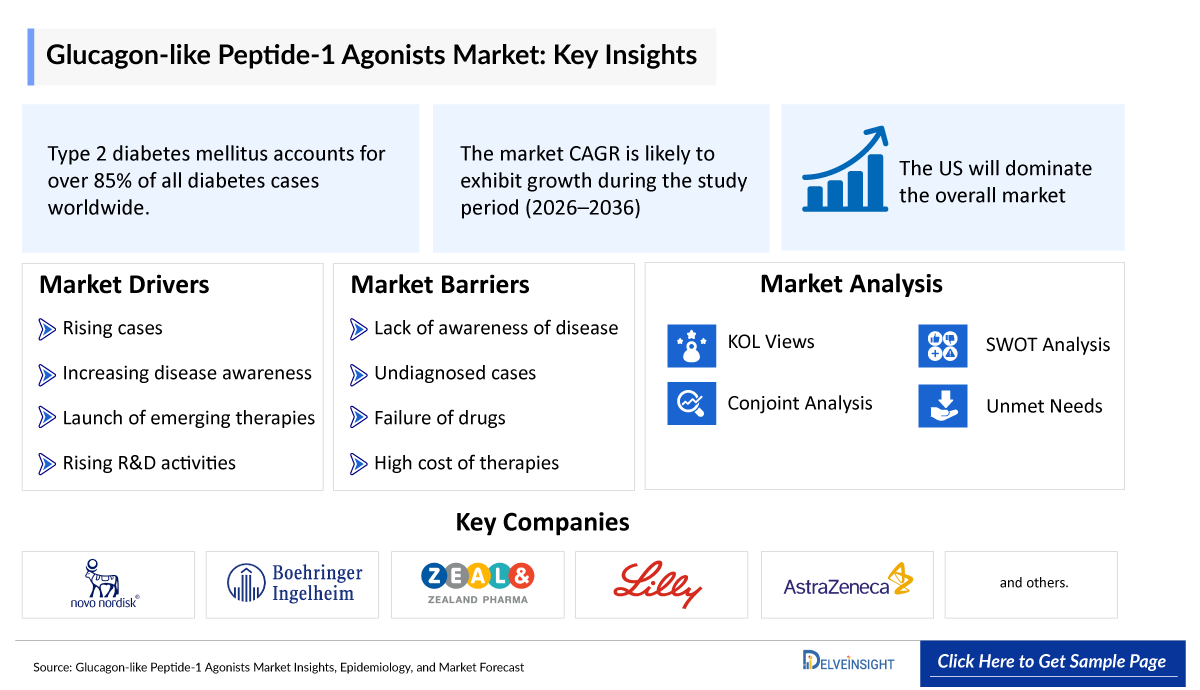
- Type 2 diabetes mellitus accounts for over 85% of all diabetes cases worldwide. As of 2021, approximately 537 million adults were living with diabetes and About 1.4 million new cases of diabetes are diagnosed in United States every year.
- As per study conducted in 2024, it is estimated the 12-month discontinuation rate for GLP-1 agonists to be 36.5% overall, with higher rates in patients with obesity alone compared to those with type 2 diabetes. Factors associated with higher discontinuation included younger age, female sex, and higher out-of-pocket costs.
- According to secondary analysis, use of a once-weekly GLP-1 receptor agonist was independently associated with a 30.5% higher prevalence of increased residual gastric content on preprocedural gastric ultrasonography, a major risk factor for aspiration under anesthesia.
GLP-1 Agonists Market Recent Breakthroughs and Developments
- In Aug 2026, Lttl launched a direct-to-consumer telehealth platform delivering personalized weight management, longevity protocols, and wellness treatments. The service connects patients with licensed clinicians offering GLP-1 compounding options (Semaglutide and Tirzepatide), microdosing formulas, and targeted peptide therapies sourced exclusively through state-licensed 503A compounding pharmacies and FDA-registered active pharmaceutical ingredient manufacturers.
- In Aug 2026, Aurisco Pharmaceutical announced that its site in Yangzhou, China, successfully passed a five-day USFDA pre-approval inspection for Inclisiran Sodium. This achievement marks Aurisco as the world's first generic oligonucleotide active pharmaceutical ingredient (API) manufacturer to complete a USFDA inspection. The evaluation verified cGMP compliance across oligonucleotides, GLP-1 peptides, and small molecules. Receiving an Establishment Inspection Report confirming an approved CAPA plan, Aurisco is positioned to expand access to affordable generic TIDES products globally.
- In August 2026, Eli Lilly reported positive results from three additional Phase III trials evaluating retatrutide in obesity. With these data, the clinical development package is now complete to support global regulatory submissions across obesity, obstructive sleep apnea, and knee osteoarthritis pain. The company plans to submit a Biologics License Application (BLA) to the FDA in Q1 2027.
- In June 2026, Boehringer Ingelheim reported detailed Phase III results from the SYNCHRONIZE-1 and SYNCHRONIZE-MASLD trials, demonstrating that survodutide reduced visceral fat by up to 34% and liver fat by up to 63.1% in people with obesity. The results were presented at the ADA 2026 Scientific Sessions.
- In June 2026, Novo Nordisk reported positive Phase III results from the REIMAGINE 1–3 trials, demonstrating that CagriSema achieved significant reductions in HbA1c and body weight in adults with type 2 diabetes. The findings were presented at the ADA 2026 Scientific Sessions.
Target Pool Assessment of GLP-1 | |
|
Indication |
Estimated Cases in the US (2025) |
|
Type 2 Diabetes |
~32 million |
|
Obesity (Adults and Children) |
~120 million |
|
OSA |
~82 million |
|
MASH |
XX |
GLP-1 Agonists Drug Analysis & Competitive Analysis
The GLP-1 agonist drug chapter provides a detailed, market-focused review of approved therapies and the emerging GLP-1 Agonists pipeline. It covers the GLP-1 Agonists mechanism of action, clinical trial data, regulatory approvals, patents, collaborations, and strategic partnerships for each therapy, along with their advantages, limitations, and recent developments. This section offers critical insights into the GLP-1 AGONIST treatment landscape, supporting market assessment, competitive analysis, and growth forecasting for the GLP-1 AGONIST therapeutics market.
GLP-1 Agonists Approved Therapy
-
Orforglipron (FOUNDAYO): Eli Lilly
Orforglipron is a once-daily oral GLP-1 receptor agonist marketed by Eli Lilly under the brand FOUNDAYO and FDA approved in April 2026 for chronic weight management. It is indicated, in combination with a reduced-calorie diet and increased physical activity, to reduce excess body weight and maintain long-term weight reduction in adults with obesity or adults with overweight with at least one weight-related comorbid condition. Unlike injectable GLP-1 therapies, FOUNDAYO can be taken once daily with or without food and without specific food or water restrictions.
-
Semaglutide (OZEMPIC/RYBELSUS/WEGOVY): Novo Nordisk
Semaglutide is a GLP-1 receptor agonist marketed by Novo Nordisk under different brand names with distinct FDA-approved indications.
-
- OZEMPIC: Indicated as an adjunct to diet and exercise to improve glycemic control in adults with type 2 diabetes mellitus. It is also indicated to reduce the risk of major adverse cardiovascular events in adults with type 2 diabetes and established cardiovascular disease, and to reduce the risk of sustained eGFR decline, end-stage kidney disease, and cardiovascular death in adults with type 2 diabetes and chronic kidney disease.
- RYBELSUS: Indicated as an adjunct to diet and exercise to improve glycemic control in adults with type 2 diabetes mellitus. It is also indicated to reduce the risk of major adverse cardiovascular events in adults with type 2 diabetes who are at high risk for these events.
- WEGOVY: Indicated, in combination with a reduced-calorie diet and increased physical activity, to reduce excess body weight and maintain long-term weight reduction in adults and pediatric patients aged 12 years and older with obesity, and in adults with overweight in the presence of at least one weight-related comorbid condition.
- WEGOVY is also indicated to reduce the risk of major adverse cardiovascular events in adults with established cardiovascular disease and obesity or overweight, and for the treatment of noncirrhotic metabolic dysfunction-associated steatohepatitis (MASH) with moderate-to-advanced fibrosis (F2–F3) in adults. Novo Nordisk continues to be GLP-1 volume leader, with 58% market share.
-
Tirzepatide (MOUNJARO/ZEPBOUND): Eli Lilly
Tirzepatide is a dual glucose-dependent insulinotropic polypeptide (GIP) and GLP-1 receptor agonist marketed by Eli Lilly under different brand names with distinct FDA-approved indications.
-
- MOUNJARO: Indicated as an adjunct to diet and exercise to improve glycemic control in adults with type 2 diabetes mellitus.
- ZEPBOUND: Indicated, in combination with a reduced-calorie diet and increased physical activity, for chronic weight management in adults with an initial BMI of 30 kg/m² or greater (obesity) or 27 kg/m² or greater (overweight) in the presence of at least one weight-related comorbid condition, such as hypertension, dyslipidemia, type 2 diabetes mellitus, obstructive sleep apnea, or cardiovascular disease. ZEPBOUND sales reached USD 4.9 billion in Q2 2026, increasing by USD 1.5 billion from USD 3.4 billion in Q2 2025, representing approximately 44% year-over-year growth, driven by continued increases in US prescription volume and market share.
ZEPBOUND is also indicated for the treatment of moderate-to-severe obstructive sleep apnea (OSA) in adults with obesity, as an adjunct to a reduced-calorie diet and increased physical activity.
GLP-1 Agonist Marketed/Approved Therapies | ||||||
|
Drug/Therapy |
Company |
Indication |
Molecule Type |
MoA |
RoA |
Marketed Region |
|
FOUNDAYO |
Eli lilly |
Chronic weight management in adults with obesity or adults with overweight with at least one weight-related comorbidity |
Small molecule |
GLP-1 receptor agonist |
Oral |
US: 2026 |
|
OZEMPIC |
Novo Nordisk |
T2DM; reduction of major cardiovascular events in adults with T2DM and established cardiovascular disease; reduction of kidney disease progression risk in adults with T2DM and chronic kidney disease |
Peptide |
GLP-1 receptor agonist |
SC injection |
US: 2017; EU: 2018: JP: 2018 |
|
RYBELSUS |
Novo Nordisk |
T2DM; reduction of major cardiovascular events in adults with T2DM at high cardiovascular risk |
Peptide |
GLP-1 receptor agonist |
Oral |
US: 2019; EU: 2020: JP: 2020 |
|
ZEPBOUND |
Eli Lilly |
Chronic weight management in adults with obesity or overweight with at least one weight-related comorbidity; treatment of moderate-to-severe obstructive sleep apnea in adults with obesity |
Peptide |
Dual GIP and GLP-1 receptor agonist |
SC injection |
US: 2023 JP: 2024 |
Note: Detailed marketed therapies assessment of therapies will be provided in the final report.
GLP-1 Agonists Pipeline Analysis
-
CagriSema: Novo Nordisk
CagriSema, developed by Novo Nordisk, is a once-weekly subcutaneous fixed-dose combination of the long-acting amylin analogue cagrilintide (2.4 mg) and the GLP-1 receptor agonist semaglutide (2.4 mg), currently under investigation for weight management in adults with overweight or obesity.
-
Survodutide (BI 456906): Boehringer Ingelheim
Survodutide (BI 456906) is a GCGR/GLP1 dual agonist being developed by Boehringer Ingelheim. Both receptors are critical to controlling metabolic functions. The compound leverages the known effects of the natural gut hormone oxyntomodulin, which has been shown to decrease food intake and increase energy expenditure in humans as well as the established effects of GLP1 agonism on both glucose control and body weight. The drug is currently in Phase III.
Comparison of GLP-1 Agonists Emerging Drugs Under Development | |||||||
|
Drug Name |
Company |
Highest Phase |
Indication |
RoA |
MoA |
Molecule Type |
Anticipated Launch in the US |
|
CagriSema |
Novo Nordisk |
III |
Type 2 diabetes |
SC |
Amylin receptor agonists,GLP-1 receptor agonists |
Peptides |
Information is available in the full report |
|
Survodutide (BI 456906) |
Boehringer Ingelheim |
III |
Obesity, Type 2 Diabetes |
SC |
GLP-1 receptor agonists |
Peptides |
Information is available in the full report |
|
Retatrutide |
Eli Lilly |
III |
T2DM, Obesity, Osteoarthritis, and OSA |
SC |
GLP-1 receptor agonists |
Peptides |
Information is available in the full report |
|
Note: Launch insights are provisional and may change with future report updates or the occurrence of major key catalysts. | |||||||
Note: A detailed emerging therapies assessment will be provided in the final report
GLP-1 Agonists Market Outlook
The GLP-1 receptor agonist Market is expected to maintain strong growth, supported by the increasing burden of type 2 diabetes mellitus and obesity, expanding use of incretin-based therapies, and growing recognition of their broader metabolic and cardiovascular benefits. The market is increasingly shifting from traditional glucose-lowering applications toward chronic weight management and cardiometabolic risk reduction, with semaglutide and tirzepatide emerging as key growth drivers.
Semaglutide currently holds a strong position because of its established use across diabetes and obesity, availability in both injectable and oral formulations, and broad clinical evidence. Meanwhile, tirzepatide, a dual GIP/GLP-1 receptor agonist, is expected to gain significant market share due to its strong efficacy in glycemic control and weight reduction.
In India, tirzepatide is projected to be the fastest-growing product segment, while semaglutide remains the leading product by revenue. GLP-1 therapies offer an effective option for adults with obesity, but WHO emphasizes that medicines alone are insufficient. Obesity requires a multisectoral approach focused on healthier environments, early intervention for high-risk individuals, and lifelong, person-centred care.
The GLP-1 Agonists Market is also expected to benefit from expanding indications, increasing physician adoption, improved patient awareness, and the development of next-generation incretin therapies. Growing interest in oral formulations could further improve convenience and treatment uptake, while competition between innovative therapies and lower-cost alternatives is likely to influence pricing and market access.
GLP-1 Agonists Companies
- Novo Nordisk
- Boehringer Ingelheim
- Eli Lilly
- AstraZeneca, and others
Further details will be provided in the report….
GLP-1 Agonists Drug Class/Insights into Leading Emerging and Marketed Therapies (2022–2036 Forecast)
The current drug class/insights into leading emerging and marketed therapies in GLP-1 receptor agonists are centered on incretin-based metabolic modulation, primarily through activation of the GLP-1 receptor to improve glycemic control, reduce appetite, delay gastric emptying, and promote weight loss.
- GLP-1 Receptor Agonists: Marketed therapies such as liraglutide, dulaglutide, exenatide, lixisenatide, and semaglutide are approved for the management of type 2 diabetes, with semaglutide and liraglutide also approved for chronic weight management. These therapies have established GLP-1 receptor activation as an effective approach for improving glycemic control and reducing body weight.
- Dual/Multireceptor Incretin Agonists: Tirzepatide, a dual GIP/GLP-1 receptor agonist, represents a major advancement beyond selective GLP-1 receptor activation. It provides substantial improvements in glycemic control and weight reduction and has become an important competitor to established GLP-1 RAs. Other next-generation multi-agonists are being developed to further enhance weight loss and metabolic benefits.
- Next-Generation GLP-1 Therapies: The emerging pipeline includes oral GLP-1 receptor agonists, longer-acting formulations, and combination or multi-receptor agonists, with the aim of improving convenience, efficacy, tolerability, and treatment adherence. These approaches are expected to expand the use of incretin therapies beyond diabetes and obesity into broader cardiometabolic conditions.
Further details will be provided in the report….
GLP-1 Agonists Drug Uptake
This section focuses on the uptake rate of potential GLP-1 Agonists drugs expected to be launched in the market during the forecast period (2026–2036). The analysis covers the GLP-1 AGONIST market's uptake by drugs, patient uptake by therapy, and sales of each drug. The uptake analysis evaluates the potential adoption of GLP-1 therapies based on clinical efficacy, safety and tolerability, treatment persistence, dosing convenience, patient and physician acceptance, pricing and reimbursement, competitive dynamics, and expansion into additional indications. These factors are expected to influence the speed of patient uptake, treatment penetration, and sales growth of individual therapies throughout the forecast period.
Further detailed analysis of approved and emerging therapies' drug uptake in the report…
GLP-1 Agonists Market Access and Reimbursement
- The United States
|
The US Reimbursement for GLP-1 Agonists Therapy | |
|
Drug |
Access Program |
|
Semaglutide (OZEMPIC) |
NovoCare Patient Assistance Program |
Reimbursement is a crucial factor that affects the drug’s access to the market. Often, the decision to reimburse comes down to the price of the drug relative to the benefit it produces in treated patients. To reduce the healthcare burden of these high-cost therapies, many payment models are being considered by payers and other industry insiders.
Further details are provided in the final report….
GLP-1 Agonists Therapies Price Scenario & Trends
Pricing and analogue assessment of GLP-1 agonist therapies highlights evolving price dynamics structures. This section summarizes the cost of approved treatments, the closest and most appropriate analogue selection for emerging therapies, and understanding of how pricing influences market access, adherence, and long-term uptake.
Further details are provided in the final report….
GLP-1 Agonists Industry Experts and Physician Views
To keep up with GLP-1 agonist market trends, we take Key Opinion Leaders (KOLs) and Subject Matter Experts (SMEs) opinions working in the domain through primary research to fill the data gaps and validate our secondary research. Industry experts were contacted for insights on GLP-1 agonist emerging therapies, evolving treatment landscape, patient adherence to conventional therapies, therapy switching trends, drug adoption and uptake, accessibility challenges, and epidemiology and real-world prescription patterns in GLP-1 agonist, including MD, PhD, Instructor, Postdoctoral Researcher, Professor, Researcher, and others.
DelveInsight’s analysts connected with 10+ KOLs to gather insights; however, interviews were conducted with 6+ KOLs in the 7MM. Centers such as the University of North Carolina at Chapel Hill, the Berlin Institute of Health at Charité, and the University of Nottingham, etc. were contacted. Their opinion helps understand and validate current and emerging GLP-1 agonist therapies, highlight unmet medical needs, provide epidemiological context, and support strategic decisions for market access, therapy adoption, and pipeline prioritization in GLP-1 agonist.
|
Region |
Key Opinion Leaders (KOLs) and Subject Matter Experts (SMEs) |
|
United States |
“The most common adverse effects associated with GLP-1 agonist decrease over time, suggesting early harms may be overestimated. Semaglutide and liraglutide show more favorable benefit-harm profiles compared to tirzepatide.” |
|
Germany |
“It's crucial to include a broader age range in studies. Many current studies focus on people in their 60s and 70s, but since we also treat younger patients in clinics, we need to include more individuals under 50 for a more comprehensive understanding.” |
GLP-1 Agonists Report Qualitative Analysis: SWOT and Conjoint Analysis
We perform qualitative and GLP-1 Agonists Therapeutics Market Intelligence analysis using various approaches, such as SWOT analysis and conjoint analysis. In the SWOT analysis of GLP-1 agonist, strengths, weaknesses, opportunities, and threats in terms of disease diagnosis, patient awareness, patient burden, competitive landscape, cost-effectiveness, and geographical accessibility of therapies are provided.
Conjoint analysis analyzes GLP-1 Agonists Emerging Therapies based on relevant attributes such as safety, efficacy, frequency of administration, route of administration, and order of entry. Scoring is given based on these parameters to analyze the effectiveness of therapy.
The team of analysts analyzes promising GLP-1 Agonists emerging therapies based on relevant attributes such as safety, efficacy, frequency of administration, route of administration, and order of entry. In efficacy, the trial’s primary and secondary outcome measures are evaluated, whereas the therapies’ safety is evaluated, wherein the acceptability, tolerability, and adverse events are mainly observed. In addition, the scoring is also based on the route of administration, order of entry, probability of success, and the addressable patient pool for each therapy. According to these parameters, the final weightage score and the ranking of the emerging therapies are decided.
Scope of the GLP-1 Agonists Market Report
- The GLP-1 Agonists Market Report covers a segment of key events, an executive summary, a descriptive overview, explaining its causes, signs and symptoms, pathogenesis, and currently available treatments.
- Comprehensive insight has been provided into the epidemiology segments and forecasts, the future growth potential of the diagnosis rate, and disease progression along treatment guidelines.
- Additionally, an all-inclusive account of both the current and emerging treatments, along with the elaborate profiles of late-stage and prominent therapies, will have an impact on the current treatment landscape.
- A detailed review of the GLP-1 agonist Market, historical and forecasted GLP-1 Agonists market size, GLP-1 Agonists market share by therapies, detailed assumptions, and rationale behind our approach is included in the report, covering the 7MM drug outreach.
- The GLP-1 Agonists Market Report provides an edge while developing business strategies by understanding trends through SWOT analysis and expert insights/KOL views, patient journey, and treatment preferences that help in shaping and driving the 7MM GLP-1 agonist market.
GLP-1 Agonists Market Report Insights
- GLP-1 Agonist Patient Population Forecast
- GLP-1 Agonist Therapeutics Market Size
- GLP-1 Agonist Pipeline Analysis
- GLP-1 Agonist Market Size and Trends
- GLP-1 Agonist Market Opportunity (Current and forecasted)
GLP-1 Agonists Market Report Key Strengths
- Epidemiology‑based (Epi‑based) Bottom‑up Forecasting
- Artificial Intelligence (AI)-enabled Market Research Report
- 11-year forecast
- GLP-1 Agonist Market Outlook (North America, Europe, Asia-Pacific)
- Patient Burden Trends (by geography)
- GLP-1 agonist Treatment Addressable Market (TAM)
- GLP-1 Agonist Competitive Landscape
- GLP-1 Agonist Major Companies Insights
- GLP-1 Agonist Price Trends and Analogue Assessment
- GLP-1 Agonist Therapies Drug Adoption/Uptake
- GLP-1 Agonist Therapies Peak Patient Share Analysis
GLP-1 Agonists Market Report Assessment
- GLP-1 Agonist Treatment Practices
- GLP-1 Agonist Unmet Needs
- GLP-1 Agonist Clinical Development Analysis
- GLP-1 Agonist Emerging Drugs Product Profiles
- GLP-1 Agonist Market Attractiveness
- GLP-1 Agonist Qualitative Analysis (SWOT and Conjoint Analysis)
Key Questions Answered in the GLP-1 Agonists Market Report
GLP-1 Agonists Market Insights
- What was the GLP-1 agonist Market size, the GLP-1 Agonists market size by therapies, GLP-1 Agonists market share (%) distribution in 2025, and what would it look like by 2036? What are the contributing factors for this growth?
- What are the anticipated pricing variations among different geographies for the emerging therapies in the future?
- What can be the future treatment paradigm of GLP-1 agonist?
- What are the disease risks, burdens, and unmet needs of GLP-1 agonist? What will be the growth opportunities across the 7MM concerning the patient population with GLP-1 agonist?
- Who is the major future competitor in the market, and how will the competitors affect their market share?
- What are the current options for the treatment of GLP-1 agonist? What are the current guidelines for treating GLP-1 agonist in the US, Europe, and Japan?
Reasons to Buy the GLP-1 Agonists Market Report
- The GLP-1 Agonists Market Report will help in developing business strategies by understanding the latest trends and changing treatment dynamics driving the GLP-1 agonist market.
- Bottom-up forecasting builds from the affected population to product forecasts, delivering a robust, data-driven approach ideal for new therapies and novel classes.
- Insights on patient burden/disease, evolution in diagnosis, and factors contributing to the change in the epidemiology of the disease during the forecast years.
- Understand the existing GLP-1 Agonists Market opportunities in varying geographies and the growth potential over the coming years.
- Identifying strong upcoming players in the GLP-1 Agonists Market will help devise strategies to help get ahead of competitors.
- Detailed analysis and ranking of class-wise potential current and emerging therapies under the conjoint analysis section to provide visibility around leading classes.
- To understand KOLs’ perspectives on the accessibility, acceptability, and compliance-related challenges of existing treatment to overcome barriers in the future.
- Detailed insights into the unmet needs of the existing market so that the upcoming players can strengthen their development and launch strategy.
- This Artificial Intelligence (AI)-enabled report summarizes and simplifies complex datasets within the report into clear, actionable insights for stakeholders, investors, and healthcare providers, enabling faster, data-driven decisions.
Stay updated with us for Recent Articles @ New DelveInsight Blogs