
Psychosis Market
- The psychosis market size is anticipated to grow during the forecast period (2024–2034) owing to the development of late and mid-late-stage assets by several Psychosis companies such as Karuna Therapeutics, Sunovion, Cerevel Therapeutics, Whanin Pharmaceutical, Intra-Cellular Therapies, Vanda Pharmaceuticals, AgeneBio, and others. With the expected approval of these therapies during the forecast period [2024–2034], the overall therapeutic market of psychosis will likely witness a rise at a significant CAGR.
- DelveInsight’s analyst estimated that there had been an increase in psychosis occurrences in recent years, which may be due to a rise in the prevalence of several related psychotic disorders such as schizophrenia, major depressive disorder, bipolar disorder, Parkinson’s disease psychosis, and others.
- Key factors propelling the psychosis Market include increasing prevalent population, awareness, and novel product launches in the forecast period.
- Antipsychotic agents form the gold standard treatment for psychosis. Although they are associated with cognitive decline, risk of mortality, and several off-target or dose-limiting side effects, the class contributes to the maximum share in the current market.
- FANAPT, an approved medication for the treatment of schizophrenia, is in development for psychosis in Parkinson’s disease and schizophrenia patients, which mediates its action via a combination of serotonin 5-HT2 and dopamine D2 antagonism.
- There is a growing emphasis on personalized medicine in mental health, including psychosis treatment. Advances in genetics, neuroscience, and biomarkers research may lead to the development of targeted therapies tailored to individual needs.
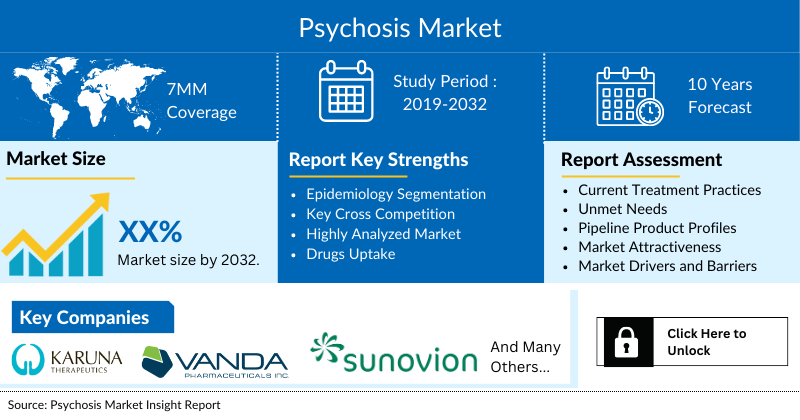
DelveInsight’s report titled “Psychosis Market Insights, Epidemiology, and Market Forecast 2034” comprehensively analysis psychosis. The report includes a detailed examination of the historical and projected epidemiology data, including Total Diagnosed Prevalent Cases of Schizophrenia, Major Depressive Disorder, Parkinson’s disease, and Alzheimer’s disease,Total Diagnosed Prevalent Cases of Psychosis. The Psychosis Market report offers an in-depth understanding of the various aspects related to the patient population, including diagnosis, prescriptions patterns, physician perspectives, market access, treatment, and future market developments for the seven major markets, including the United States, EU4 (Germany, France, Italy, and Spain) and the UK, and Japan from 2020 to 2034.
The report discusses current psychosis treatment practices, algorithms, and unmet medical needs to gauge the market’s overall potential and identify business opportunities.
|
Study Period |
2020 to 2034 |
|
Forecast Period |
2024-2034 |
|
Geographies Covered |
|
|
Psychosis Market |
|
|
Psychosis Market Size | |
|
Psychosis Companies |
Cerevel Therapeutics, Karuna Therapeutics, Sunovion, Vanda Pharmaceuticals, Johnson & Johnson, Teva Pharmaceutical Industries Ltd., H. Lundbeck A/S, Allergan plc, and others |
|
Psychosis Epidemiology Segmentation |
|
Psychosis Treatment Market
Psychosis Overview
Psychosis is a severe mental condition in which thoughts and emotions are so affected that contact is lost with reality. As per the Diagnostic and Statistical Manual of Mental Disorders (DSM-5) and International Classification of Diseases, Tenth Revision (ICD-10), psychosis is a syndrome embedded in several disorders, including Alzheimer’s disease, Parkinson’s disease, schizophrenia, and bipolar disorder with psychotic features. Hallucinations, delusions, disorganized thinking, and speech are major symptoms of psychosis.
Despite various etiologic and physiological hypotheses, the diagnosis of psychotic disorders is clinical and therefore based predominantly on the patient’s history, observed behavior, subjective reports, and mental status examination results. The management of a psychotic patient varies greatly depending on the origin of the psychosis and involves a combination of antipsychotics (such as cognitive-behavioral therapy) and support services. Acadia Pharmaceuticals’ NUPLAZID (pimavanserin) is an FDA-approved atypical antipsychotic for treating Parkinson’s disease psychosis.
Psychosis Diagnosis and Treatment Algorithm
It is necessary to differentiate between psychosis associated with a primary psychotic disorder and psychotic disorders associated with other medical or neurologic conditions. Clinical history is important in comparing an individual’s symptoms with the clinical presentation outlined in recognized classification systems such as the Diagnostic and Statistical Manual of Mental Disorders (DSM-5). To rule out any non-psychiatric causes of psychosis, diagnostic tests such as neuroimaging and electroencephalographic (EEG), genotypic, toxicologic, and serologic assessments are usually performed in selected patients presenting with a first episode of psychosis or with psychotic symptoms associated with preexisting neurodegenerative diseases, other medical conditions, or substance abuse. The differential diagnosis of psychosis from other forms of psychotic disorder is difficult and presents ambiguity during evaluation.
Psychotic disorders can lead to significantly decreased daily functioning, increasing the risk of suicidal conditions compared to the general population. Therefore, treatment with medications like antipsychotics is necessary to relieve symptoms. Clozapine and olanzapine have been shown to reduce the risk of suicide in psychotic patients. Despite the use of antipsychotic drugs for the treatment, these therapies present challenges to the number of side effects and low patient compliance.
Note: Detailed market segment assessment will be provided in the final report....
Psychosis Epidemiology
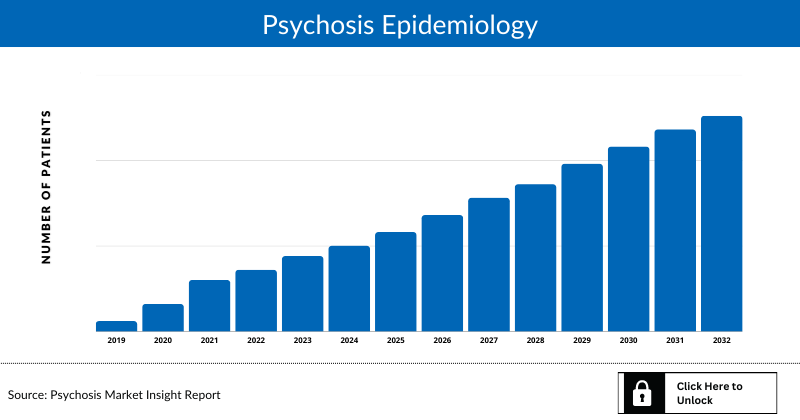
The Psychosis Epidemiology section provides insights into the historical and current psychosis patient pool and forecasted trends for seven major individual countries. It recognizes the cause of current and forecasted trends by exploring numerous studies and views of key opinion leaders. This part of the report also provides the diagnosed patient pool, its trends, and assumptions undertaken.
The epidemiology section of the Psychosis Market report offers information on the patient populations, including historical and projected trends for each of the seven major markets. Examining key opinion leader views from physicians or clinical experts can assist in identifying the reasons behind historical and projected trends. The diagnosed patient pool, their trends, and the underlying assumptions are all included in this section of the report.
Key Findings
- As per the Centers for Disease Control and Prevention (2023), about 1 in 25 US adults live with a serious mental illness, such as schizophrenia, bipolar disorder, or major depression.
- According to Stang et al. (2022), from 669 identified cases of Parkinsonism within Olmsted County, Minnesota, 297 patients were clinically diagnosed with Parkinson’s disease, and 114/297 (38.4%) patients had evidence of psychosis (60% male); the median onset age of psychosis was 79.4 years.
- As per Yoritaka et al. (2013), a study was conducted at Juntendo Hospital in Tokyo on 1453 Parkinson’s disease patients. About 28.6% of patients developed psychosis 9.0 (5.4) years after the onset, and it was more likely to occur in patients with late-onset Parkinson’s disease.
- In a study by Hirono et al. (2023), psychiatric functioning was studied in 228 patients with Alzheimer’s disease; among them, 118 (51.8%) patients showed evidence of delusions or hallucinations.
- Schizophrenia, major depressive disorder, Alzheimer’s disease, and Parkinson’s disease are major disorders that cause psychosis and are considered to draw out the psychosis patient pool, which is being considered in the report.
Psychosis Market Outlook
The gold-standard treatment for psychotic episodes and disorders is antipsychotic medications; however, the choice, dosing, and administration of the medication varies from patient to patient, depending upon the cause. Along with medications, family and caregivers also play an important role in managing psychosis, including providing a safe and therapeutic environment. Further, cognitive behavioral therapy is integral in treating patients with psychotic symptoms and is usually recommended as the initial treatment regime.
For psychosis in Parkinson’s, before 2016, the treatment regime was limited to pharmacotherapy and mainly relied on quetiapine and clozapine. In 2016, the US FDA approved NUPLAZID, pimavanserin, a selective 5-HT2A receptor inverse agonist without dopamine receptor-blocking properties.
Of the currently available antipsychotic drugs, aripiprazole seems to provide the best balance between efficacy and safety in people with Alzheimer’s disease psychosis; pimavanserin has shown promise in Parkinson’s disease-related psychosis, and data from Alzheimer’s disease trials are compelling. Further, aripiprazole, brexpiprazole, and cariprazine are among the preferred antipsychotics in schizophrenia; however, olanzapine and clozapine are avoided due to the worst side effects. Generally, nonpharmacological approaches are preferred as an initial approach before or at least concurrent with medication, provided acute safety issues do not preclude them. In clinical practice, nonpharmacological approaches for treating psychosis in Alzheimer’s disease are a best-practice adjunct to medications when psychotic symptoms are determined to be the primary neuropsychiatric symptoms.
Historically, the mainstays for treating psychosis have been antipsychotic medications. These medications have modest efficacy, but this comes at the cost of a substantial adverse effect burden and mortality risk. Overall, meta-analytical evidence best supports aripiprazole and risperidone, with substantially less evidence for quetiapine and olanzapine. However, the multitude of newer medications, along with an option for long-acting injectable antipsychotics, has given patients various treatment options and addressed compliance issues.
According to DelveInsight, the Psychosis Market in the 7MM is expected to change during the study period 2020-2034 significantly.
Psychosis Drug Chapters
Psychosis Marketed Drugs
NUPLAZID (pimavanserin): ACADIA Pharmaceuticals
In 2016, the US FDA approved NUPLAZID (pimavanserin), a selective 5-HT2A receptor inverse agonist without dopamine receptor-blocking properties. The 5-HT2A receptor plays an important role in psychosis. The recommended dose of NUPLAZID is 34 mg, taken orally as two 17 mg strength tablets once daily. The patents covering the polymorph form and using pimavanserin or NUPLAZID for the approved indication are set to expire between 2022 and 2028.
Psychosis Emerging Drugs
The currently available treatments for psychosis aim to mitigate the complications associated with the condition. The Psychosis Market dynamics are expected to change, primarily due to increased healthcare spending worldwide. Psychosis market players such as Sunovion Pharmaceuticals, Karuna Therapeutics, and Vanda Pharmaceuticals are actively involved in developing psychosis treatments.
Ulotaront (SEP-363856): Sunovion Pharmaceuticals
Ulotaront is a trace-amine-associated receptor 1 (TAAR1) agonist with serotonin 1A receptor agonist activity. It modulates dopaminergic, serotonergic, and glutamatergic activity, thus reducing the associated side effects that lead to increased cardiovascular risk of the traditional antipsychotics. It has completed a Phase II trial for treating Parkinson’s disease psychosis and is being evaluated in Phase III trials in acutely psychotic subjects with schizophrenia.
KarXT (xanomeline-trospium): Karuna Therapeutics
KarXT, developed by Karuna Therapeutics, is the first potential medicine of its kind, a novel and unique dual mechanism that does not rely on the dopaminergic or serotonergic pathway to treat symptoms of serious mental illness. The drug is a muscarinic receptor agonist and has the potential to provide a differentiated therapy for individuals with psychosis but is limited by cholinergic side effects, which are believed to result from the stimulation of muscarinic receptors in peripheral tissue. Further, KarXT methods and compositions, as well as co-formulation compositions, dose levels, and PK, are covered by patent till 2039. It is currently being evaluated in Phase III clinical trials as both a monotherapy and adjunctive therapy for treating psychosis in Alzheimer’s disease and acutely psychotic subjects with schizophrenia.
FANAPT (iloperidone): Vanda Pharmaceuticals
FANAPT (iloperidone) is a novel atypical antipsychotic in the piperidinyl-benzisoxazole class for treating acute manic and mixed episodes associated with bipolar I disorder in adults. The US FDA has approved FANAPT for treating schizophrenia in adults. The mechanism of action involves a combination of 5-HT2 and D2 antagonism. The drug is currently in the Phase II trial for treating Parkinson’s disease psychosis.
Psychosis Market Segmentation
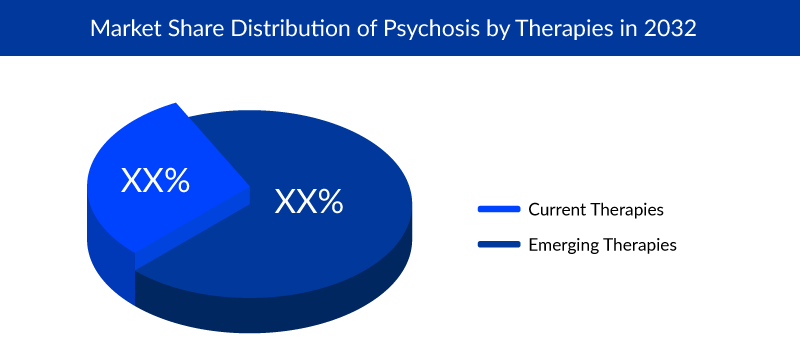
DelveInsight’s ‘Psychosis Market Insights, Epidemiology, and Market Forecast – 2034’ report provides a detailed outlook of the current and future psychosis Market, segmented within countries and therapies. Further, the market of each region is then segmented by each therapy to provide a detailed view of the current and future market share of all therapies.
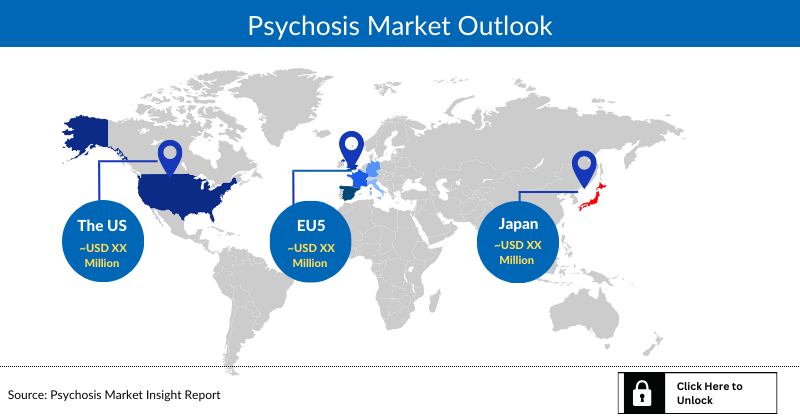
Psychosis Market Size by Countries
The total psychosis Market size is analyzed for individual countries (the United States Market, EU4 (Germany, France, Italy, and Spain), and the UK and Japan). The United States accounted for a larger portion of the 7MM market for psychosis in 2022 due to the high prevalence of psychotic conditions and the higher cost of treatments. The dominance is predicted to continue with the potential early entry of new products.
Psychosis Market Size by Therapies
The current pharmacological treatment regime for psychosis majorly relies on antipsychotic medication. These antipsychotics include both typical and atypical antipsychotics. These antipsychotic agents include quetiapine, clozapine, risperidone, and others. Along with these, novel therapies are approved for different etiology-specific psychosis. As per the analysis, quetiapine has a significant patient share among the psychosis-treated patients in the 7MM.
However, limited efficacy and the side effects associated with antipsychotics, such as extrapyramidal symptoms (EPS), metabolic syndrome, cardiac abnormalities, anticholinergic effects, and sexual side effects, present a major challenge that hinders the psychosis Market growth. Addressing these drawbacks requires ongoing research, the development of novel treatment approaches, increased awareness, and investment in mental health services.
Psychosis Drugs Uptake
This section focuses on the sales uptake of potential psychosis drugs that have recently launched or are anticipated to be launched in the psychosis Market between 2020 and 2034. It estimates the market penetration of psychosis drugs for a given country, examining their impact within and across classes and segments. It also touches upon the financial and regulatory decisions contributing to the probability of success (PoS) of the drugs in the psychosis market.
The emerging psychosis therapies are analyzed based on various attributes such as safety and efficacy in randomized clinical trials, order of entry, and other market dynamics and the unmet need they fulfill in the psychosis market.
Note: Detailed assessment of drug uptake and attribute analysis will be provided in the full report on psychosis.
Psychosis Market Access and Reimbursement
DelveInsight’s ‘Psychosis – Market Insights, Epidemiology, and Market Forecast – 2034’ report provides a descriptive overview of the market access and reimbursement scenario of psychosis.
This section includes a detailed analysis of the country-wise healthcare system for each therapy, enlightening the market access, reimbursement policies, and health technology assessments.
KOL Views
To keep up with current psychosis market trends and fulfill gaps in secondary findings, we interview KOLs and SMEs’ working in the psychosis domain. Their opinion helps understand and validate current, emerging therapies, treatment patterns, and psychosis market trends. This will support the clients in potential upcoming novel treatments by identifying the overall scenario of the market and the psychosis’s unmet needs.
Psychosis: KOL Insights
DelveInsight’s analysts connected with 50+ KOLs to gather insights; however, interviews were conducted with 15+ KOLs in the 7MM. These KOLs were from organizations, institutes, and hospitals, such as Nantes Université in France, the Department of Neurological Surgery at Duke University Medical Center, and Durham in the US.
“Low persistence and compliance in psychosis patients is a pressing issue among physicians. It affects the therapy outcome, often leading to an extremely deteriorated condition.”
“Psychosis is common in Alzheimer’s patients, defined by delusions and/or hallucinations. Psychosis comprises around 40–60% of Alzheimer’s cases and is associated with hastened cognitive decline and elevated mortality compared to Alzheimer’s disease without psychosis.”
Note: Detailed assessment of KOL Views will be provided in the full psychosis report...
Competitive Intelligence Analysis
We perform Competitive and Market Intelligence analysis of the psychosis Market using various Competitive Intelligence tools, including SWOT analysis, Market entry strategies, etc. The inclusion of the analysis entirely depends upon the data availability.
Psychosis Pipeline Development Activities
The Psychosis pipeline report provides insights into Psychosis clinical trials within in Phase II and III. It also analyses psychosis companies involved in developing targeted therapeutics.
Pipeline Development Activities
The Psychosis clincial trials analysis report covers collaborations, acquisitions and mergers, licensing, patent details, and other information for emerging psychosis therapies.
Psychosis Market Report Insights
- Psychosis Patient Population
- Psychosis Therapeutic Approaches
- Psychosis Pipeline Analysis
- Psychosis Market Size and Trends
- Psychosis Market Opportunities
- Impact of Upcoming Psychosis Therapies
Psychosis Market Report Key Strengths
- 10 years Forecast
- The 7MM Coverage
- Psychosis Epidemiology Segmentation
- Key Cross Competition
- Highly Analyzed Psychosis Market
- Psychosis Drugs Uptake
Psychosis Market Report Assessment
- Psychosis Current Treatment Practices
- Psychosis Unmet Needs
- Psychosis Pipeline Product Profiles
- Psychosis Market Attractiveness
- Psychosis Market Drivers
- Psychosis Market Barriers
Key Questions Answered In The Psychosis Market Report:
- What are the key findings of the market across 7MM, and which country will have the largest psychosis market size during the forecast period (2023–2034)?
- At what CAGR is the psychosis Market, and is epidemiology expected to grow in the 7MM during the forecast period (2023-2034)?
- In what ways would the unmet needs impact the psychosis market dynamics and subsequently influence the analysis of related trends?
- What would be the forecasted patient pool of psychosis in the 7MM covering the United States, EU4 (Germany, France, Italy, and Spain), the UK, and Japan?
- What are the current treatment guidelines and options for psychosis in the US, Europe, and Japan?
- What are the latest advancements in novel therapies, targets, mechanisms of action, and technologies being developed to address the limitations of existing therapies for psychosis?
- How many Psychosis companies are currently engaged in the development of therapies for the treatment of psychosis?
Frequently Asked Questions
- What is psychosis?
- Psychosis is a clinical syndrome comprising multiple symptoms, of which delusion, hallucination, and thought disorder may be regarded as the primary symptoms.
- Which diseases cause psychosis?
- Conditions such as Alzheimer’s disease, schizophrenia, Parkinson’s, and bipolar disorders cause psychosis.
- What is the study period of DelveInsight’s Psychosis Market Insight, Epidemiology, and Forecast report?
- The study period of the report is 2020-2034.
- Which leading Psychosis companies expect to launch their drugs during the forecast period (2023–2034)?
- Psychosis Companies such as Karuna Therapeutics, Sunovion, Cerevel Therapeutics, Whanin Pharmaceutical, Intra-Cellular Therapies, Vanda Pharmaceuticals, and AgeneBio are developing therapies for psychosis expected to launch in the forecast period.
- Is the market expecting any changes during the forecast period (2023–2034)?
- The increasing prevalence of the indication and the launch of emerging drugs is expected to change the market with a considerable CAGR.