Pulsed Electromagnetic Field Therapy Devices Market Summary
- The Pulsed Electromagnetic Field Therapy Devices market is estimated at USD 1.3 billion in 2025 and is projected to reach USD 2.5 billion by 2034. Growth is anchored in the rising burden of musculoskeletal disorders and fractures, growing demand for non-invasive and drug-free therapy, and the expanding adoption of home-use and wellness devices.
- The global Pulsed Electromagnetic Field Therapy Devices market is growing at a CAGR of 7.5% during the forecast period from 2026 to 2034.
- By product, the bone growth stimulators segment dominated the Pulsed Electromagnetic Field Therapy Devices market with a 45% share in 2025.
- By application, the bone healing and fracture repair segment dominated the Pulsed Electromagnetic Field Therapy Devices market with a share of 42% in 2025.
- By end-user, the homecare segment dominated the Pulsed Electromagnetic Field Therapy Devices market with a share of 48% in 2025.
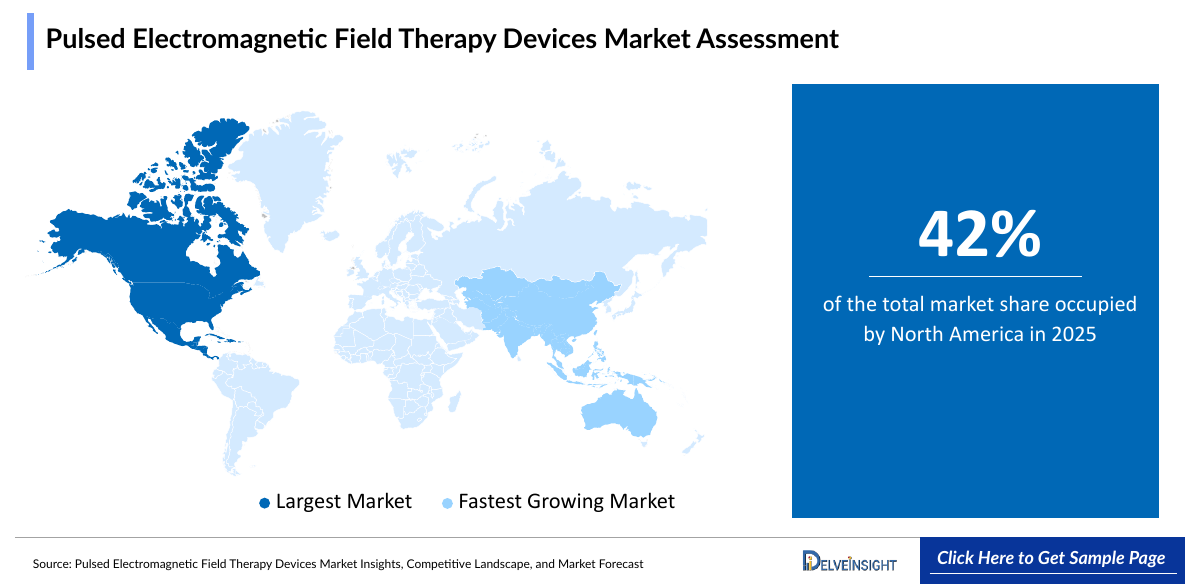
- North America dominated the global Pulsed Electromagnetic Field Therapy Devices market revenue with a share of 42% in 2025, representing the highest regional market share globally.
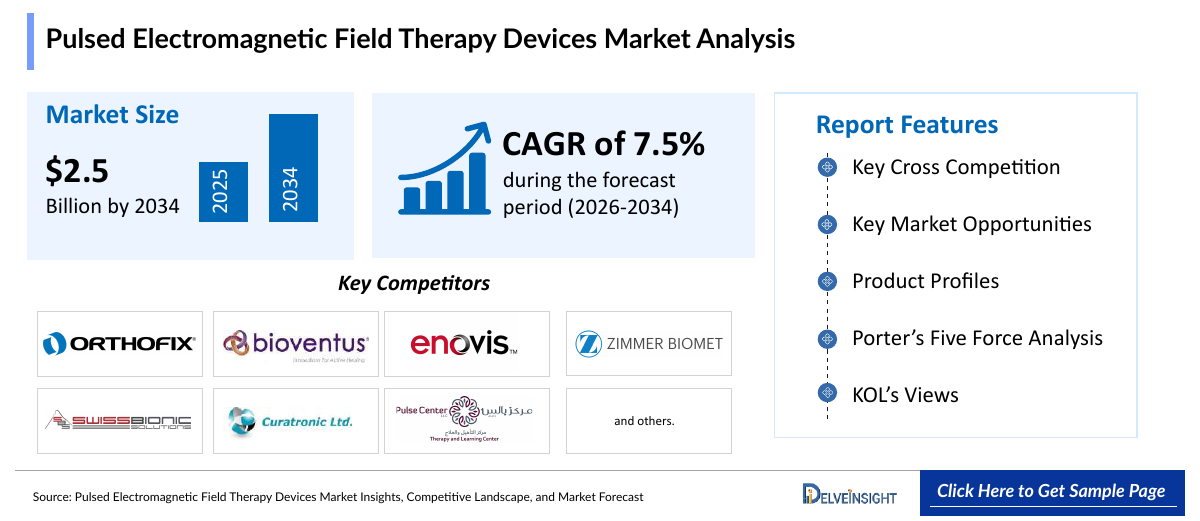
Pulsed electromagnetic field therapy devices deliver pulsed electromagnetic fields to the body to stimulate cellular activity, support tissue healing, and provide therapeutic effects for a range of musculoskeletal and other conditions. The category spans regulated medical devices, most notably pulsed electromagnetic field bone growth stimulators used to promote bone healing in fractures, non-unions, and spinal fusion, supplied by companies such as Orthofix, Bioventus, Enovis through DJO, and Zimmer Biomet, as well as a broad range of wearable and portable devices, whole-body mats and systems, and high-intensity tabletop systems used for pain management, recovery, and wellness, supplied by companies such as Swiss Bionic Solutions, Curatronic, Pulse Centers, Medithera, Oska Wellness, and BEMER. Pulsed electromagnetic field therapy is used across bone healing and fracture repair, pain management, wound healing, sports and rehabilitation, and general wellness, in hospitals and clinics, home settings, and sports and wellness centers. Over the past decade, the medical segment has been anchored by FDA-cleared bone growth stimulators, while the wellness and home-use segment has expanded rapidly with growing consumer interest in non-invasive, drug-free therapies. Driven by the rising burden of musculoskeletal disorders, demand for non-invasive therapy, and expanding home and wellness adoption, pulsed electromagnetic field therapy devices are a growing segment of the physical therapy and wellness device market.
Pulsed Electromagnetic Field Therapy Devices Market Key Growth Drivers
- The rising burden of musculoskeletal disorders, fractures, non-unions, and spinal conditions is expanding demand for pulsed electromagnetic field bone growth stimulators and therapy devices.
- Growing demand for non-invasive, drug-free pain management and recovery is driving adoption of pulsed electromagnetic field therapy.
- The rapid expansion of home-use and wellness devices is broadening the market beyond regulated medical applications.
- The aging population and rising prevalence of osteoporosis and degenerative conditions are increasing the need for bone healing and pain therapies.
- The growth of spinal fusion and orthopedic procedures is driving demand for adjunctive bone growth stimulation.
- Rising consumer awareness and interest in wellness, recovery, and alternative therapies are expanding the consumer device segment.
- The convergence of rising musculoskeletal burden, demand for non-invasive therapy, and expanding home and wellness adoption is expected to sustain steady growth in the global Pulsed Electromagnetic Field Therapy Devices market through 2034.
Key Companies in Pulsed Electromagnetic Field Therapy Devices Market
The competitive landscape is led by the following active developers and manufacturers of pulsed electromagnetic field therapy devices:
- Orthofix Medical Inc.
- Bioventus Inc.
- Enovis Corporation
- Zimmer Biomet Holdings, Inc.
- Swiss Bionic Solutions
- Curatronic Ltd.
- Pulse Centers, LLC
- Medithera GmbH
- Oska Wellness, Inc.
- BEMER International AG
For illustrative purposes, only the top 10 companies are listed in the Table of Contents. The report may include analysis and references to additional companies where relevant to the market assessment.
Pulsed Electromagnetic Field Therapy Devices Market Size
The following snapshot summarizes the principal report metrics for the Pulsed Electromagnetic Field Therapy Devices market.
|
Report Metrics |
Details |
|
2025 Market Size |
USD 1.3 billion |
|
2034 Projected Market Size |
USD 2.5 billion |
|
Growth Rate (2026-2034) |
7.5% CAGR |
|
Largest Market |
North America |
|
Fastest Growing Market |
Asia-Pacific |
|
Market Structure |
Fragmented |
For illustrative purposes, only the top 10 companies are listed in the Table of Contents. The report may include analysis and references to additional companies relevant to the market assessment.
Factors Contributing to the Growth of the Pulsed Electromagnetic Field Therapy Devices Market
Market Drivers
Rising Burden of Musculoskeletal Disorders and Fractures
The rising burden of musculoskeletal disorders, fractures, and spinal conditions is the foundational driver of the pulsed electromagnetic field therapy devices market. Fractures, delayed unions and non-unions, osteoarthritis, and degenerative spinal conditions are common and rising with aging and lifestyle factors, and pulsed electromagnetic field bone growth stimulators are an established, FDA-cleared adjunctive therapy to promote bone healing in difficult fractures, non-unions, and spinal fusion. The large and growing number of patients with fractures and spinal conditions, and the use of bone growth stimulation to improve healing outcomes, drive demand for medical pulsed electromagnetic field devices. The broader use of the therapy for pain and musculoskeletal conditions adds further demand. As the burden of musculoskeletal disorders and fractures continues to rise with population aging, demand for pulsed electromagnetic field therapy devices continues to grow, reinforcing sustained market growth throughout the forecast period.
Growing Demand for Non-Invasive, Drug-Free Therapy
The growing demand for non-invasive, drug-free pain management and recovery is a powerful driver of the pulsed electromagnetic field therapy devices market. Amid concerns about the risks of opioids and other pain medications and surgery, patients and clinicians increasingly seek non-invasive, non-pharmacological options for pain relief, recovery, and healing. Pulsed electromagnetic field therapy is non-invasive and drug-free and is used for pain management, recovery, and musculoskeletal conditions, aligning with this demand. The shift toward conservative and non-pharmacological management of pain and the interest in complementary and recovery therapies expand adoption. As demand for non-invasive, drug-free therapy continues to grow, this trend is expected to be an important driver of pulsed electromagnetic field therapy device demand across the forecast period, particularly in pain management and recovery applications.
Rapid Expansion of Home-Use and Wellness Devices
The rapid expansion of home-use and wellness devices is a defining driver of the pulsed electromagnetic field therapy devices market. Beyond regulated medical bone growth stimulators, a large and rapidly growing segment of wearable, portable, whole-body mat, and tabletop pulsed electromagnetic field devices is used for pain, recovery, and general wellness in home and consumer settings, supplied by companies such as Swiss Bionic Solutions, Curatronic, Medithera, Oska Wellness, and BEMER. Growing consumer interest in wellness, recovery, and alternative therapies, together with the convenience of home use and direct-to-consumer availability, has expanded this segment substantially. The affordability and accessibility of consumer devices broaden the market beyond clinical settings. As the home-use and wellness segment continues to expand with growing consumer interest, it is expected to be a significant driver of market growth across the forecast period, broadening the market beyond regulated medical applications.
Aging Population and Rising Osteoporosis and Degenerative Conditions
The aging global population and rising prevalence of osteoporosis and degenerative conditions are powerful drivers of pulsed electromagnetic field therapy demand. Older adults carry a higher prevalence of osteoporosis, fragility fractures, delayed healing, osteoarthritis, and degenerative spinal conditions, and the number of people aged 60 and older is rising rapidly worldwide. This demographic shift expands the population at risk of fractures and difficult bone healing and seeking pain and musculoskeletal therapy. Impaired bone healing in older patients increases the use of bone growth stimulation, and the burden of chronic musculoskeletal pain in aging populations drives demand for non-invasive therapy. As populations age and the burden of osteoporosis and degenerative conditions grows, demographic trends are expected to be a significant driver of pulsed electromagnetic field therapy device demand across the forecast period.
Growth of Spinal Fusion and Orthopedic Procedures
The growth of spinal fusion and orthopedic procedures is a substantial driver of demand for pulsed electromagnetic field bone growth stimulation. Spinal fusion surgery, a common and growing procedure, often uses adjunctive bone growth stimulation to promote fusion, particularly in patients at risk of non-union, and pulsed electromagnetic field bone growth stimulators are widely prescribed following fusion surgery. The rising volume of spinal fusion, fracture fixation, and other orthopedic procedures, driven by aging populations and degenerative conditions, directly increases demand for adjunctive bone growth stimulation. Clinical use of stimulation to improve surgical and healing outcomes supports adoption. As spinal fusion and orthopedic procedure volumes continue to grow, this trend is expected to be an important driver of pulsed electromagnetic field bone growth stimulator demand across the forecast period.
Rising Consumer Awareness and Wellness Interest
Rising consumer awareness and interest in wellness, recovery, and alternative therapies are opening significant growth opportunities in the consumer device segment. Growing consumer focus on health, fitness, recovery, and wellness, together with increasing awareness of pulsed electromagnetic field therapy through direct-to-consumer marketing, wellness channels, and use by athletes, is expanding demand for consumer and wellness devices. The broadening availability of affordable wearable and home devices, and the positioning of the therapy for recovery, sleep, relaxation, and general wellness, attract a growing consumer base. The wellness and recovery market is large and expanding. As consumer awareness and wellness interest continue to grow, this trend is expected to be an important driver of market growth across the forecast period, particularly for the consumer and wellness device segment, though clinical evidence for some wellness claims remains limited.
Market Restraints
Despite steady momentum, the Pulsed Electromagnetic Field Therapy Devices market faces material constraints. Clinical evidence is well established for pulsed electromagnetic field bone growth stimulation in specific orthopedic indications, but evidence is limited, mixed, or inconclusive for many of the broader pain, recovery, and wellness claims, which constrains clinical acceptance and can expose the wellness segment to skepticism. Regulatory scrutiny of therapeutic claims, particularly for consumer and wellness devices that are not cleared for specific medical indications, limits marketing and can create compliance risk. Reimbursement for bone growth stimulators is subject to coverage criteria and prior authorization, and limited or inconsistent reimbursement can constrain medical device adoption. Low awareness among some clinicians and patients, and the perception of pulsed electromagnetic field therapy as alternative or complementary, limit adoption. Competition from other modalities, including pharmacological therapy, other physical therapies, and surgery, and from a fragmented field of consumer devices of varying quality, pressures the market. The cost of devices, particularly medical bone growth stimulators and high-intensity systems, can limit access. Finally, variability in device quality and standards in the consumer segment and evolving regulatory requirements can restrict growth across parts of the forecast period.
Pulsed Electromagnetic Field Therapy Devices Market Segment Analysis
The Pulsed Electromagnetic Field Therapy Devices Market is segmented by product (bone growth stimulators, wearable and portable devices, whole-body mats and systems, high-intensity and tabletop systems), application (bone healing and fracture repair, pain management, wound healing, sports and rehabilitation, wellness and general health, others), end-user (homecare, hospitals and clinics, sports and wellness centers, others), and geography (North America, Europe, Asia-Pacific, Rest of World).
By Product
Dominant Subsegment: Bone Growth Stimulators.
The bone growth stimulators segment accounted for 45% of the Pulsed Electromagnetic Field Therapy Devices market in 2025. Bone growth stimulators dominate because they are the established, FDA-cleared medical application of pulsed electromagnetic field therapy, with proven efficacy and reimbursement for promoting bone healing in fractures, non-unions, and spinal fusion, and they command the highest per-device value in the market. Pulsed electromagnetic field bone growth stimulators from Orthofix, Bioventus, Enovis, and Zimmer Biomet are widely prescribed, particularly following spinal fusion and for difficult fractures, generating the largest share of market revenue. Wearable and portable devices represent a large and rapidly growing segment used for pain, recovery, and wellness in home and consumer settings, and whole-body mats and systems, offered by companies such as Swiss Bionic Solutions and Medithera, serve wellness and recovery applications. High-intensity and tabletop systems serve clinical and professional settings. Nonetheless, the established medical use, proven efficacy, reimbursement, and high value of bone growth stimulators secure the leadership of this segment across the forecast period, with wearable and wellness devices growing most rapidly.
By Application
Dominant Subsegment: Bone Healing and Fracture Repair.
The bone healing and fracture repair segment accounted for 42% of the Pulsed Electromagnetic Field Therapy Devices market in 2025. Bone healing and fracture repair dominate because this is the established, evidence-based, and reimbursed medical application of pulsed electromagnetic field therapy, delivered through bone growth stimulators used for fractures, non-unions, and spinal fusion. The large and growing number of fractures, difficult healing cases, and spinal fusion procedures, together with the proven role of pulsed electromagnetic field stimulation in promoting bone healing, drives the largest share of the market. Pain management represents a large and growing application, delivered through both medical and consumer devices and driven by demand for non-invasive therapy, and wound healing is an established application. Sports and rehabilitation and wellness and general health represent rapidly growing applications in the consumer and professional segments, driven by recovery and wellness demand. Nonetheless, the established efficacy, reimbursement, and value of bone healing and fracture repair applications secure the leadership of this segment across the forecast period, with pain management and wellness applications growing strongly.
By End-User
Dominant Subsegment: Homecare.
The homecare segment accounted for 48% of the Pulsed Electromagnetic Field Therapy Devices market in 2025. Homecare dominates because pulsed electromagnetic field bone growth stimulators are prescribed for home use over weeks to months of daily therapy, and the large and growing segment of wearable, portable, and whole-body wellness devices is used predominantly in the home. The convenience of home-based, self-administered therapy for bone healing, pain, recovery, and wellness, together with the direct-to-consumer availability of wellness devices, concentrates the largest share of use in the home. Hospitals and clinics represent an important end user for the prescription and initiation of bone growth stimulation, clinical pain and rehabilitation therapy, and professional high-intensity systems, and sports and wellness centers represent a growing end user for recovery and wellness applications. Other settings add further demand. Nonetheless, the home-based nature of prescribed bone growth stimulation and the predominance of home use for wellness and consumer devices secure the leadership of the homecare segment across the forecast period, with clinical and wellness-center settings important for initiation and professional use.
Pulsed Electromagnetic Field Therapy Devices Market Region Analysis
North America accounted for 42% of the global Pulsed Electromagnetic Field Therapy Devices market revenue in 2025, representing the highest regional market share globally. The region's dominance reflects the established use and reimbursement of pulsed electromagnetic field bone growth stimulators, a large volume of spinal fusion and orthopedic procedures, strong consumer demand for wellness and recovery devices, and the presence of leading manufacturers. The United States leads on the strength of widespread prescription of bone growth stimulators, supported by FDA clearance and reimbursement, high spinal fusion volumes, and a large and active consumer wellness market, together with the presence of major players including Orthofix, Bioventus, Enovis, and Zimmer Biomet. The regulatory environment is well established for medical devices, with the Food and Drug Administration providing clearance pathways for bone growth stimulators, while consumer wellness devices operate under different requirements. Strong awareness, distribution, and consumer spending reinforce the market. This combination of medical use, reimbursement, and consumer demand reinforces North America's leadership in the global market.
Fastest Growing Region: Asia-Pacific
Asia-Pacific is the fastest-growing region in the Pulsed Electromagnetic Field Therapy Devices market. The region's elevated CAGR is driven by large populations, a rising burden of musculoskeletal and degenerative conditions, growing orthopedic procedure volumes, expanding healthcare access, and rapidly growing consumer wellness demand across China, Japan, India, South Korea, and Southeast Asia. Rising fracture and spinal fusion volumes, aging populations in several countries, and growing adoption of bone growth stimulation expand the medical segment, while rising incomes, consumer interest in wellness and recovery, and the availability of affordable devices drive rapid growth in the consumer and wellness segment. Domestic manufacturing, particularly in China, is expanding and lowering costs. Both multinational and regional manufacturers are expanding their presence. The combination of large populations, rising musculoskeletal burden, growing procedures, and expanding consumer wellness demand positions Asia-Pacific as the highest-growth region over the forecast period.
Regional Commentary
North America
North America accounted for 42% of the global Pulsed Electromagnetic Field Therapy Devices market revenue in 2025. The United States dominates the region on the strength of established bone growth stimulator use and reimbursement, high spinal fusion volumes, strong consumer wellness demand, and the presence of leading manufacturers, while Canada contributes through its healthcare system and Mexico expands access within its growing market.
Europe
Europe represents the second-largest regional market, led by Germany, the United Kingdom, and France. Growth is supported by established medical use, strong wellness and recovery demand, and the presence of major manufacturers such as Swiss Bionic Solutions, Medithera, and BEMER, while the European Medical Device Regulation shapes requirements for medical devices and claims.
Asia-Pacific
Asia-Pacific is the fastest-growing region, propelled by large populations, a rising burden of musculoskeletal and degenerative conditions, growing orthopedic procedures, expanding healthcare access, and rapidly growing consumer wellness demand across China, Japan, India, South Korea, and Southeast Asia. Expanding domestic manufacturing and affordable devices are broadening adoption.
Rest of World
The Rest of World region, spanning the Middle East, Africa, and South America, is an emerging growth frontier. A rising burden of musculoskeletal conditions, growing orthopedic care, and expanding consumer wellness interest are broadening adoption, while improving access and awareness support growth from a developing base.
Pulsed Electromagnetic Field Therapy Devices Market Competitive Landscape
The Pulsed Electromagnetic Field Therapy Devices market is classified as Fragmented. The medical bone growth stimulator segment is concentrated among a few established companies, led by Orthofix, Bioventus, Enovis, and Zimmer Biomet, while the consumer and wellness segment is highly fragmented, with numerous companies including Swiss Bionic Solutions, Curatronic, Pulse Centers, Medithera, Oska Wellness, and BEMER competing across wearable, whole-body, and tabletop devices.
The competitive landscape can be evaluated across the following dimensions:
- Market concentration: Fragmented overall, with a concentrated medical bone growth stimulator segment and a highly fragmented consumer and wellness segment.
- Leading players: Orthofix, Bioventus, Enovis, and Zimmer Biomet lead the medical bone growth stimulator segment, while Swiss Bionic Solutions, Curatronic, Pulse Centers, Medithera, Oska Wellness, and BEMER are prominent in the wellness segment.
- Geographic reach: Medical device leaders operate established commercial networks, particularly in North America, while wellness companies operate globally through direct-to-consumer and distributor channels.
- Product portfolio strength: Medical players hold FDA-cleared bone growth stimulators, while wellness players hold wearable, whole-body, and tabletop device portfolios.
- Pipeline strength: Development focuses on improved bone growth stimulators, wearable and portable devices, and expanded applications and evidence.
- Strategic partnerships: Collaborations with orthopedic and spine practices for medical devices and with wellness and sports channels for consumer devices shape the landscape.
- M&A activity: Consolidation occurs in the medical segment, while the wellness segment sees continued entry of new companies.
- Manufacturing capabilities: Medical-grade manufacturing and regulatory clearance are key strengths in the medical segment, while the wellness segment has lower barriers to entry.
- Innovation focus: Improved and more convenient bone growth stimulators, wearable and portable devices, expanded clinical evidence, and wellness and recovery applications.
Pulsed Electromagnetic Field Therapy Devices Market Recent Developmental Activities
In 2023 and 2024, Orthofix continued to market its pulsed electromagnetic field bone growth stimulator portfolio for spinal fusion and fracture healing. Strategic significance: Sustains leadership in the established, reimbursed medical bone growth stimulator segment.
In 2023 and 2024, Bioventus continued to market its bone growth stimulator and related orthopedic healing portfolio. Strategic significance: Reinforces Bioventus's position in bone healing and orthopedic therapies.
In 2023 and 2024, Enovis, through DJO and Zimmer Biomet, maintained bone growth stimulator and orthopedic device offerings. Strategic significance: Sustains competition among established medical bone growth stimulator providers.
In 2023 and 2024, the wellness and consumer pulsed electromagnetic field device segment expanded rapidly, with companies such as Swiss Bionic Solutions, Medithera, Oska Wellness, and BEMER growing wearable and whole-body offerings. Strategic significance: Broadens the market beyond regulated medical applications and expands consumer adoption.
In 2023 and 2024, wearable and portable pulsed electromagnetic field devices expanded for pain, recovery, and wellness applications. Strategic significance: Improves convenience and accessibility and drives consumer segment growth.
In 2023 and 2024, growing consumer interest in recovery and wellness, including use by athletes, expanded demand for pulsed electromagnetic field recovery devices. Strategic significance: Strengthens the sports and wellness application segment.
In 2023 and 2024, the rising volume of spinal fusion and orthopedic procedures contributed to demand for adjunctive bone growth stimulation. Strategic significance: Sustains demand for medical bone growth stimulators.
In 2023 and 2024, companies and researchers continued to study pulsed electromagnetic field therapy across pain, bone healing, and other applications. Strategic significance: Builds evidence that may expand accepted applications and support adoption.
In 2023 and 2024, direct-to-consumer and online distribution expanded access to wellness pulsed electromagnetic field devices. Strategic significance: Broadens consumer reach and intensifies competition in the wellness segment.
In 2023 and 2024, regional and new entrants expanded affordable pulsed electromagnetic field device offerings, particularly in Asia. Strategic significance: Broadens access in high-growth markets and intensifies competition.
In 2023 and 2024, regulatory attention to therapeutic claims for wellness devices continued, influencing marketing and compliance. Strategic significance: Shapes how wellness devices are positioned and marketed.
In 2023 and 2024, the European Medical Device Regulation continued to shape requirements for medical pulsed electromagnetic field devices in Europe. Strategic significance: Raises compliance requirements for medical devices and influences market entry.
Pulsed Electromagnetic Field Therapy Devices Market Segmentation
Pulsed Electromagnetic Field Therapy Devices Market by Product
- Bone Growth Stimulators
- Wearable and Portable Devices
- Whole-Body Mats and Systems
- High-Intensity and Tabletop Systems
Pulsed Electromagnetic Field Therapy Devices Market by Application
- Bone Healing and Fracture Repair
- Pain Management
- Wound Healing
- Sports and Rehabilitation
- Wellness and General Health
- Others
Pulsed Electromagnetic Field Therapy Devices Market by End-User
- Homecare
- Hospitals and Clinics
- Sports and Wellness Centers
- Others
Pulsed Electromagnetic Field Therapy Devices Market by Geography
- North America Pulsed Electromagnetic Field Therapy Devices Market
- United States Pulsed Electromagnetic Field Therapy Devices Market Size in USD million (2023-2034)
- Canada Pulsed Electromagnetic Field Therapy Devices Market Size in USD million (2023-2034)
- Mexico Pulsed Electromagnetic Field Therapy Devices Market Size in USD million (2023-2034)
- Europe Pulsed Electromagnetic Field Therapy Devices Market
- Germany Pulsed Electromagnetic Field Therapy Devices Market Size in USD million (2023-2034)
- United Kingdom Pulsed Electromagnetic Field Therapy Devices Market Size in USD million (2023-2034)
- France Pulsed Electromagnetic Field Therapy Devices Market Size in USD million (2023-2034)
- Italy Pulsed Electromagnetic Field Therapy Devices Market Size in USD million (2023-2034)
- Spain Pulsed Electromagnetic Field Therapy Devices Market Size in USD million (2023-2034)
- Rest of Europe Pulsed Electromagnetic Field Therapy Devices Market Size in USD million (2023-2034)
- Asia-Pacific Pulsed Electromagnetic Field Therapy Devices Market
- China Pulsed Electromagnetic Field Therapy Devices Market Size in USD million (2023-2034)
- Japan Pulsed Electromagnetic Field Therapy Devices Market Size in USD million (2023-2034)
- India Pulsed Electromagnetic Field Therapy Devices Market Size in USD million (2023-2034)
- Australia Pulsed Electromagnetic Field Therapy Devices Market Size in USD million (2023-2034)
- South Korea Pulsed Electromagnetic Field Therapy Devices Market Size in USD million (2023-2034)
- Rest of Asia-Pacific Pulsed Electromagnetic Field Therapy Devices Market Size in USD million (2023-2034)
- Rest of the World (RoW) Pulsed Electromagnetic Field Therapy Devices Market
- Middle East Pulsed Electromagnetic Field Therapy Devices Market Size in USD million (2023-2034)
- Africa Pulsed Electromagnetic Field Therapy Devices Market Size in USD million (2023-2034)
- South America Pulsed Electromagnetic Field Therapy Devices Market Size in USD million (2023-2034)
Pulsed Electromagnetic Field Therapy Devices Market Recent Industry Trends and Milestones (2023-2026)
|
Category |
Key Developments |
|
Pulsed Electromagnetic Field Therapy Devices Market Product Approval |
Established FDA-cleared bone growth stimulators from Orthofix, Bioventus, Enovis, and Zimmer Biomet remained central; manufacturers maintained and updated cleared medical devices; the European Medical Device Regulation continued to shape requirements for medical PEMF devices. |
|
Pulsed Electromagnetic Field Therapy Devices Market Product Expansion |
Medical providers sustained bone growth stimulator portfolios; the wellness segment expanded rapidly with wearable, whole-body, and tabletop devices from Swiss Bionic Solutions, Medithera, Oska Wellness, BEMER, and others; wearable and portable devices expanded for pain, recovery, and wellness. |
|
Pulsed Electromagnetic Field Therapy Devices Market Product Investment |
Companies invested in improved bone growth stimulators, wearable and portable devices, and expanded applications and evidence; wellness companies invested in consumer devices and direct-to-consumer channels; regional entrants invested in affordable devices. |
|
Pulsed Electromagnetic Field Therapy Devices Market Company Strategy |
Orthofix Medical Inc., Bioventus Inc., Enovis Corporation, and Zimmer Biomet Holdings, Inc.: FDA-cleared bone growth stimulators for fracture and spinal fusion. Swiss Bionic Solutions, Curatronic Ltd., Pulse Centers, LLC, Medithera GmbH, Oska Wellness, Inc., and BEMER International AG: Wearable, whole-body, and tabletop wellness and recovery devices. |
|
Pulsed Electromagnetic Field Therapy Devices Market Emerging Technologies |
Improved and more convenient bone growth stimulators; wearable and portable PEMF devices; whole-body mat and high-intensity tabletop systems; expanded clinical evidence for pain and healing; and wellness and recovery applications through consumer devices. |
Pulsed Electromagnetic Field Therapy Devices Market Startup Funding and Investment Trends
Investment in the pulsed electromagnetic field ecosystem has concentrated on wearable consumer and wellness devices and next-generation portable therapy technologies. The following companies illustrate recent activity and technology focus.
|
Company |
Total Funding |
Funding Stage |
Main Product |
Core Technology |
|
OmniPEMF (NeoRhythm) |
Venture and crowdfunding |
Early- to growth-stage venture |
NeoRhythm wearable PEMF headband |
Wearable pulsed electromagnetic field device for relaxation, sleep, and wellness |
|
FlexPulse (Gembared) |
Private funding |
Early-stage venture |
FlexPulse portable PEMF device |
Portable, programmable pulsed electromagnetic field device for pain and recovery |
|
Request to unlock the report on the @ Pulsed Electromagnetic Field Therapy Devices Market | ||||
OmniPEMF is developing wearable pulsed electromagnetic field devices such as the NeoRhythm headband for relaxation, sleep, and wellness, while FlexPulse develops portable, programmable pulsed electromagnetic field devices for pain and recovery. Additional capital and entrepreneurial activity continue to flow toward wearable and portable consumer devices, next-generation therapy technologies, and expanded wellness and recovery applications, reflecting conviction that convenient, accessible, non-invasive therapy is a growing consumer and clinical opportunity. Collectively, these efforts signal sustained activity in expanding the reach and applications of pulsed electromagnetic field therapy, particularly in the consumer and wellness segment, even as clinical evidence for some applications continues to develop.
Key Takeaways from the Pulsed Electromagnetic Field Therapy Devices Market Report Study
- Market size analysis for the current pulsed electromagnetic field therapy devices market size (2025), and market forecast for 9 years (2026 to 2034).
- Top key product/technology developments, mergers, acquisitions, partnerships, and joint ventures that happened over the last 3 years.
- Key companies dominating the global pulsed electromagnetic field therapy devices market.
- Various opportunities available for competitors in the pulsed electromagnetic field therapy devices market space.
- What are the top-performing segments in 2025? How will these segments perform in 2034?
- Which are the top-performing regions and countries in the current pulsed electromagnetic field therapy devices market scenario?
- Which are the regions and countries where companies should concentrate their opportunities for pulsed electromagnetic field therapy devices market growth in the future?
Target audience that can benefit from this pulsed electromagnetic field therapy devices market report study
- Pulsed Electromagnetic Field Therapy Devices product providers
- Research organizations and consulting companies
- Pulsed Electromagnetic Field Therapy Devices-related organizations, associations, forums, and other alliances
- Government and corporate offices
- Start-up companies, venture capitalists, and private equity firms
- Distributors and traders dealing in pulsed electromagnetic field therapy devices
- Various end-users who want to know more about the pulsed electromagnetic field therapy devices market and the latest technological developments in the pulsed electromagnetic field therapy devices market