Radiation Induced Oral Mucositis in Prostate Cancer Market
Radiation Induced Oral Mucositis in Prostate Cancer Insights and Trends
- Radiotherapy utilization is rising in both non-metastatic and metastatic settings, with advanced techniques like IMRT and SBRT becoming dominant, while conventional modalities decline; this trend toward higher precision and wider adoption indirectly increases the demand for managing late-onset mucositis and related pelvic radiation complications.
- Prostate cancer is the third most prevalent type of cancer in the US and the fourth most common worldwide. Radiotherapy is a cornerstone of prostate cancer management, with an optimal utilization rate of about 60%. As a result, a substantial and growing survivorship population is exposed to pelvic irradiation.
- In oncology, treatment success is generally measured by whether a tumor is controlled or eliminated, rather than by the “patient’ sustained quality of life”. Yet, late toxicities may develop months or even years after radiotherapy, often going unnoticed by oncology teams and unrecognized by other clinicians as consequences of prior pelvic radiation.
- In 2025, the United Kingdom held the largest market share within the EU4 and the UK, accounting for approximately 35% of the combined market. This dominance reflects UK’s notably higher disease prevalence rate.
- Radiation-induced mucositis in prostate cancer lacks a strong clinical pipeline because it is relatively uncommon compared to other cancers, such as head-and-neck, where mucosal surfaces are directly irradiated. Only a handful of companies are currently active in this segment, including Lipella Pharmaceuticals, which is advancing LP-10 for radiation cystitis and is Phase IIb–ready, and RepoCeuticals, which is developing a topical melatonin in Phase I for radiation cystitis/proctitis, according to its pipeline.
- There are no approved pharmacologic therapies for radiation-induced mucositis in prostate cancer, and current management remains largely supportive, relying on topical agents, symptomatic medications, and endoscopic or procedural interventions for complications.
Radiation Induced Oral Mucositis in Prostate Cancer Market size and forecast
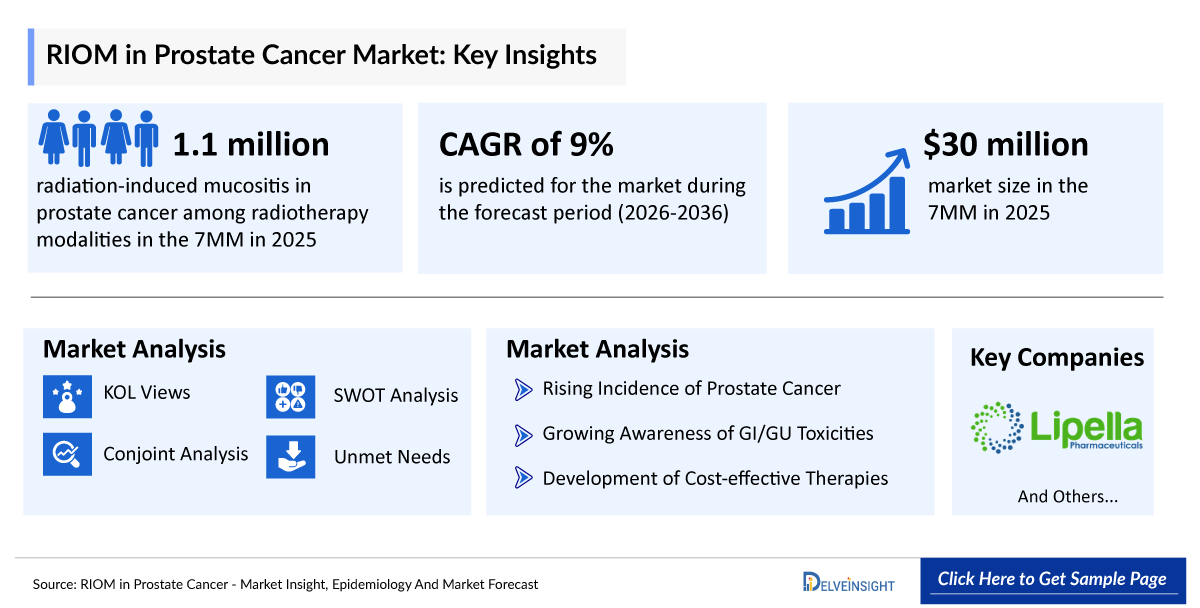
- 2025 Market Size: USD ~30 million
- 2036 Projected Market Size: USD ~75 million
- Growth Rate (2026–2036): 9% CAGR
DelveInsight's ‘Radiation Induced Oral Mucositis in Prostate Cancer Market Insights, Epidemiology and Market Forecast – 2036’ report delivers an in-depth understanding of the Radiation Induced Oral Mucositis in Prostate Cancer, historical and forecasted epidemiology, as well as the Radiation Induced Oral Mucositis in Prostate Cancer market trends in the United States, EU4 (Germany, Spain, Italy, and France) and the United Kingdom, and Japan.
The Radiation Induced Oral Mucositis in Prostate Cancer market report delivers a comprehensive analysis of the current treatment landscape, including standards of care, clinical practices, and evolving therapeutic algorithms. It evaluates, Radiation Induced Oral Mucositis in Prostate Cancer patient burden trends, revenue & market share dynamics, peak patient share & therapy uptake analysis, and provides an in-depth market size assessment, and growth rate projections (Historical & Forecast 2022–2036) across global regions. The report highlights key unmet medical needs in Radiation Induced Oral Mucositis in Prostate Cancer and maps the competitive and clinical landscape to uncover high-value opportunities, providing a clear outlook on future market growth potential.
Geography Covered
|
Study Period |
2022–2036 |
|
Historical Year |
2022–2025 |
|
Forecast Period |
2026–2036 |
|
Base Year |
2026 |
|
Geographies Covered |
|
|
Radiation Induced Oral Mucositis in Prostate Cancer Market CAGR (Forecast period) |
9% (2026–2036) |
|
Radiation Induced Oral Mucositis in Prostate Cancer Epidemiology Segmentation Analysis |
Patient Burden Assessment
|
|
Radiation Induced Oral Mucositis in Prostate Cancer Companies |
|
|
Radiation Induced Oral Mucositis in Prostate Cancer Therapies |
|
|
Radiation Induced Oral Mucositis in Prostate Cancer Market |
Segmented by
|
|
Analysis |
|
Key Factors Driving the Radiation Induced Oral Mucositis in Prostate Cancer Market
- Rising Incidence of Prostate Cancer across key geographies after declined in the early 2000s with preventive screening.
- Growing awareness of GI/GU toxicities will lead to stronger demand for supportive care.
- Development of cost-effective therapies, preventive strategies, and better reporting systems.
Radiation Induced Oral Mucositis in Prostate Cancer Understanding and Treatment Algorithm
Radiation Induced Oral Mucositis in Prostate Cancer Overview and Diagnosis
Radiation-induced toxicities form a spectrum of mucosal and organ injury after radiotherapy, especially in pelvic cancers. It often begins with mucositis, an inflammatory response of the oral and gastrointestinal mucosa that is painful but usually temporary. Pelvic radiation may progress to radiation proctitis, causing diarrhea, urgency, and bleeding acutely or chronic complications such as strictures and fistulas. Inflammation may also involve the bladder (radiation cystitis) with urinary symptoms, or the colon (radiation colitis), which can develop months to years after treatment and range from acute to chronic disease.
Risk factors for radiation-induced mucositis include radiation dose, treatment area, and delivery method. Doses below 45 Gy are linked to minimal long-term effects, while 45–70 Gy increases complications and doses above 70 Gy can cause severe, lasting tissue damage. Diagnosis involves blood and stool tests to detect infection or bleeding, endoscopic procedures such as flexible sigmoidoscopy or colonoscopy with biopsy to assess intestinal injury, as well as STI testing, urinalysis, and cystoscopy to evaluate urinary tract involvement.
Further details are provided in the report.
Radiation Induced Oral Mucositis in Prostate Cancer Treatment Landscape
Radiation-induced mucositis is typically self-limiting and managed with supportive care such as hydration, steroid enemas, and antidiarrheal agents. Several therapies are used to relieve symptoms and promote mucosal healing. Formalin therapy controls rectal bleeding through chemical cauterization, while steroids (often with antibiotics like metronidazole) reduce inflammation and improve symptoms. 5-aminosalicylic acid (5-ASA) agents such as mesalamine help limit inflammatory activity, and sucralfate forms a protective barrier that supports mucosal repair. Short-chain fatty acid (SCFA) enemas may aid healing in acute cases. For persistent bleeding, argon plasma coagulation (APC) is an effective endoscopic treatment, while hyperbaric oxygen therapy may be used for chronic, refractory disease to enhance tissue repair and oxygenation.
Further details are provided in the report.
Radiation Induced Oral Mucositis in Prostate Cancer Unmet Needs
The section “unmet needs of Radiation Induced Oral Mucositis in Prostate Cancer ” outlines the critical gaps between the current state of patient care, diagnosis, and the ideal & effective management of the disease. It highlights the obstacles experienced by patients, clinicians, and researchers and identifies potential solutions for future progress.
- Unaddressed therapeutic gap in radiation-induced mucositis management
- Limited real-world understanding of mucositis risk across radiation techniques
- Preventive measures exist but are limited by access and clinical confidence
- Inability to predict and prevent radiation-induced mucositis in high-risk patients
and others…..
Note: Comprehensive unmet needs insights in Radiation Induced Oral Mucositis in Prostate Cancer and their strategic implications are provided in the full report.
Radiation Induced Oral Mucositis in Prostate Cancer Epidemiology
Key Findings from Radiation Induced Oral Mucositis in Prostate Cancer Epidemiological Analysis and Forecast
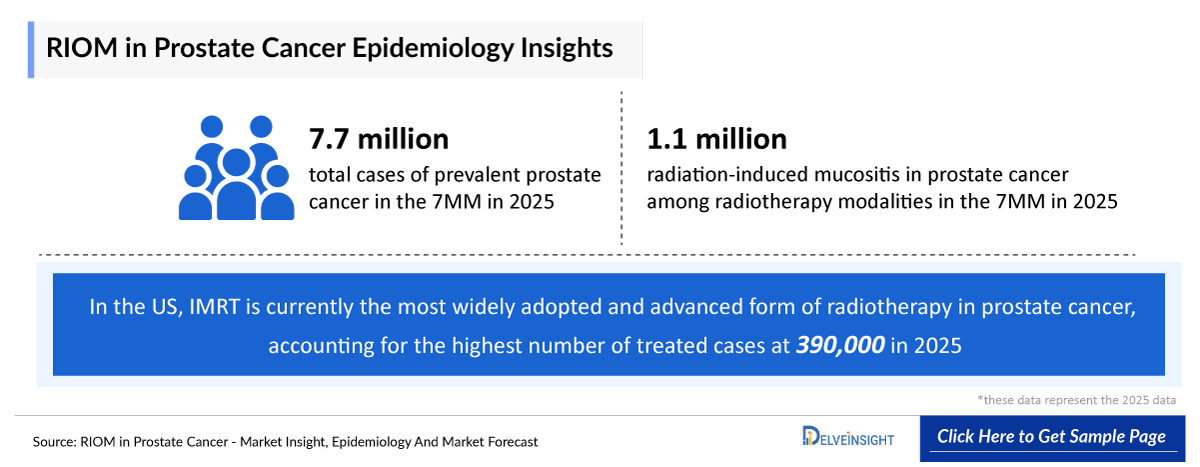
- In 2025, the total cases of prevalent prostate cancer was 7,700,000 in the 7MM. These cases are expected to increase during the forecast period (2026-2036).
- As per DelveInsight’s estimates, In prostate cancer the radiotherapy utilization is highest in localized disease, accounting for 270,000 cases in 2025 and projected to increase by 2036 in the US. This is followed by nmCSPC/nmHSPC, with 254,000 cases in 2025, expected to rise to by 2036.
- In US IMRT is currently the most widely adopted and advanced form of radiotherapy in prostate cancer, accounting for the highest number of treated cases at 390,000 in 2025 and projected to increase by 2036.
- This growth reflects its favorable toxicity profile and ability to deliver higher, more conformal doses. As IMRT continues to replace older techniques, its expanding use is expected to drive the overall radiotherapy-treated population and, consequently, the pool of patients at risk for radiation-related pelvic toxicities.
Radiation Induced Oral Mucositis in Prostate Cancer Drug Analysis & Competitive Landscape
The Radiation Induced Oral Mucositis in Prostate Cancer drug chapter provides a detailed, market-focused review of approved therapies and the emerging pipeline across Phase I–III clinical trials. It covers mechanism of action, clinical trial data, regulatory approvals, patents, collaborations, strategic partnerships upcoming Key catalyst for each therapy, along with their advantages, limitations, and recent developments. This section offers critical insights into the Radiation Induced Oral Mucositis in Prostate Cancer treatment landscape, supporting market assessment, competitive analysis, and growth forecasting for the Radiation Induced Oral Mucositis in Prostate Cancer market.
Radiation Induced Oral Mucositis in Prostate Cancer Pipeline Analysis
LP-10: Lipella Pharmaceuticals
LP-10 is an investigational liposomal formulation of tacrolimus being developed by Lipella Pharmaceuticals as a targeted therapy for hemorrhagic cystitis a serious, often debilitating bladder condition marked by bleeding and inflammation, typically resulting from pelvic radiation or certain chemotherapies. It is designed for intravesical administration, delivering tacrolimus directly into the bladder to maximize local therapeutic effect while minimizing systemic exposure. LP-10 has shown preliminary safety and efficacy in Phase IIa clinical trials, with reductions in hematuria and improved urinary symptoms, and has received FDA Orphan Drug Designation for moderate to severe hemorrhagic cystitis. It is currently being evaluated in Phase II of clinical trials.
Note: Detailed emerging therapies assessment will be provided in the final report.
Radiation Induced Oral Mucositis in Prostate Cancer Key Players, Market Leaders and Emerging Companies
- Lipella Pharmaceuticals, and others
Radiation Induced Oral Mucositis in Prostate Cancer Market Outlook
The market for radiation-induced mucositis in prostate cancer is driven by widespread use of curative-intent radiotherapy and a growing population of long-term survivors. Prostate cancer remains the most frequently diagnosed malignancy among men, with a significant proportion presenting with localized disease and receiving definitive treatment. EBRT, particularly IMRT, is a preferred non-invasive modality due to favorable oncologic outcomes. Consequently, exposure to pelvic radiotherapy is substantial and rising, directly expanding the population at risk for gastrointestinal and genitourinary toxicities.
Management remains fragmented and symptom-driven, with no approved therapies capable of preventing, reversing, or modifying radiation-induced mucosal injury. Radiation proctitis is treated through stepwise escalation, from supportive and topical therapies to endoscopic interventions such as argon plasma coagulation, hyperbaric oxygen therapy, or surgery in refractory cases. Radiation cystitis follows a similar escalation pathway, progressing from oral agents and hyperbaric therapy to intravesical instillations, angioembolization, or, in severe cases, cystectomy. Durable resolution is uncommon, and recurrent or persistent bleeding remains a significant unmet need.
The emerging landscape for radiation-induced mucositis remains narrow, with only a limited number of programs pursuing localized or disease-modifying approaches. LP-10 and 3-D Matrix represent the most clinically advanced efforts, targeting chronic bladder and rectal mucosal injury, respectively, while the broader pipeline remains largely preclinical. HTnB, a South Korean biotech, is developing HT-02 in collaboration with US federal agencies (NIAID, NIH, and AFRRI) for gastrointestinal acute radiation syndrome, with current work focused on preclinical safety, efficacy, and survival outcomes. Similarly, RDD-2007 from RDD Pharma is in early preclinical development, reflecting the nascent state of innovation in this space.
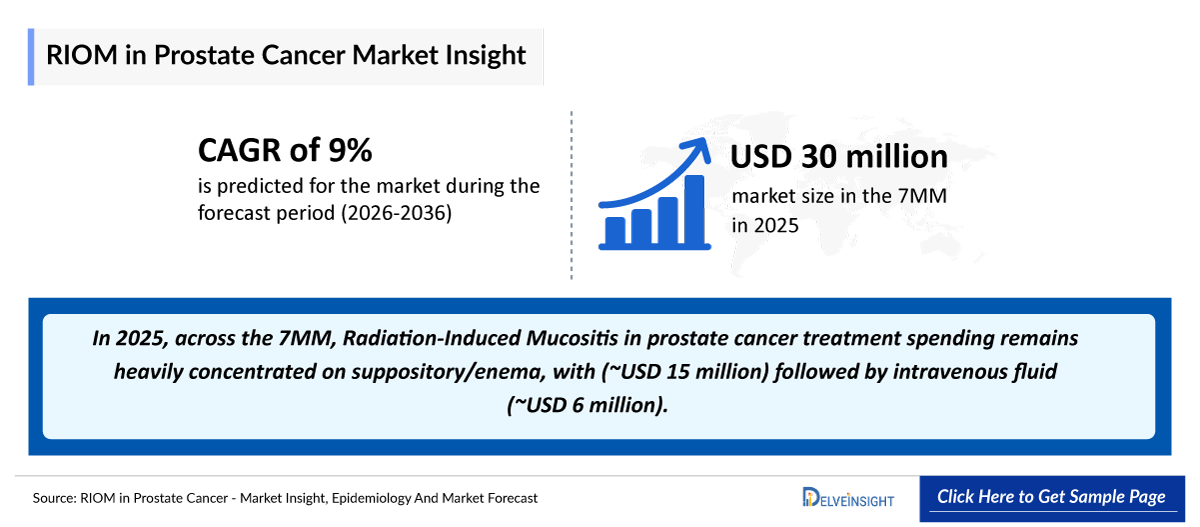
- The total market size for Radiation-induced mucositis in Prostate Cancer in the 7MM was estimated at USD 30 million in 2025, largely dominated by Suppository/enema, followed by Intravenous fluid. By 2036, the market is projected to double, driven by rising prostate cancer cases, expanded use of radiotherapy, longer post-radiation survivorship, and launch of emerging therapies.
- Among 7MM, the United States accounted for the highest market size of Radiation-Induced Mucositis in prostate cancer, with Japan being the second highest contributor for Radiation-Induced Mucositis in prostate cancer total market size.
- In 2025 across the 7MM, Radiation-Induced Mucositis in prostate cancer treatment spending remains heavily concentrated on suppository/enema, with (~USD 15 million) followed by intravenous fluid (~USD 6 million).
Further details will be provided in the report….
Radiation Induced Oral Mucositis in Prostate Cancer Drug Uptake
This section focuses on the uptake rate of potential drugs expected to be launched in the market during the forecast period (2026–2036). The analysis covers the Radiation Induced Oral Mucositis in Prostate Cancer drug’s uptake, performance at peak, factors affecting performance during prime years of growth, patient uptake by therapy, and anticipated sales generated by each drug.
Detailed insights of emerging therapies' drug uptake is included in the report
Scope of the Report
- The report covers a segment of key events, an executive summary, a descriptive overview of Radiation Induced Oral Mucositis in Prostate Cancer, explaining their causes, signs and symptoms, pathogenesis, and currently available treatments.
- Comprehensive insight has been provided into the epidemiology segments and forecasts, the future growth potential of the diagnosis rate, and disease progression along treatment guidelines.
- Additionally, an all-inclusive account of both the current and emerging treatments, along with the elaborative profiles of late-stage and prominent therapies, will have an impact on the current treatment landscape.
- A detailed review of the Radiation Induced Oral Mucositis in Prostate Cancer market, historical and forecasted market size, market share by therapies, detailed assumptions, and rationale behind our approach is included in the report, covering the 7MM drug outreach.
- The report provides an edge while developing business strategies by understanding trends through SWOT analysis and expert insights/KOL views, patient journey, and treatment preferences that help in shaping and driving the 7MM Radiation Induced Oral Mucositis in Prostate Cancer market.
Report Insights
- Radiation Induced Oral Mucositis in Prostate Cancer Patient population forecast
- Radiation Induced Oral Mucositis in Prostate Cancer therapeutics market size
- Radiation Induced Oral Mucositis in Prostate Cancer pipeline analysis
- Radiation Induced Oral Mucositis in Prostate Cancer market size and trends
Report Key Strengths
- Epidemiology-based (Epi-based) bottom-up forecasting
- Artificial Intelligence (AI)-enabled market research report
- 11-year forecast
- Radiation Induced Oral Mucositis in Prostate Cancer market outlook (North America, Europe, Asia-Pacific)
- Patient Burden trends (by geography)
- Radiation Induced Oral Mucositis in Prostate Cancer Treatment addressable Market (TAM)
- Radiation Induced Oral Mucositis in Prostate Cancer Competitve Landscape
- Radiation Induced Oral Mucositis in Prostate Cancer major companies Insights
- Radiation Induced Oral Mucositis in Prostate Cancer price trends and analogue assessment
- Radiation Induced Oral Mucositis in Prostate Cancer therapies and Drug Adoption/Uptake
- Radiation Induced Oral Mucositis in Prostate Cancer therapies Peak Patient Share Analysis
Report Assessment
- Radiation Induced Oral Mucositis in Prostate Cancer Current treatment practices
- Radiation Induced Oral Mucositis in Prostate Cancer Unmet needs
- Radiation Induced Oral Mucositis in Prostate Cancer Clinical development Analysis
- Radiation Induced Oral Mucositis in Prostate Cancer emerging drugs product profiles
- Radiation Induced Oral Mucositis in Prostate Cancer Market attractiveness
- Radiation Induced Oral Mucositis in Prostate Cancer Qualitative analysis (SWOT and conjoint analysis)
FAQs
Market Insights
- What was the Radiation Induced Oral Mucositis in Prostate Cancer market size, the market size by therapies, market share (%) distribution in 2025, and what would it look like by 2036? What are the contributing factors for this growth?
- What are the anticipated pricing variations among different geographies for the emerging therapies in the future?
- What can be the future treatment paradigm of Radiation Induced Oral Mucositis in Prostate Cancer?
- What are the disease risks, burdens, and unmet needs of Radiation Induced Oral Mucositis in Prostate Cancer? What will be the growth opportunities across the 7MM concerning the patient population with Radiation Induced Oral Mucositis in Prostate Cancer?
- Who is the major future competitor in the market, and how will the competitors affect their market share?
- What are the current options for the treatment of Radiation Induced Oral Mucositis in Prostate Cancer? What are the current guidelines for treating Radiation Induced Oral Mucositis in Prostate Cancer in the US, Europe, and Japan?
Reasons to Buy
- The report will help in developing business strategies by understanding the latest trends and changing treatment dynamics driving the Radiation Induced Oral Mucositis in Prostate Cancer market.
- Bottom up forecasting builds from the affected population to product forecasts, delivering a robust, data driven approach ideal for new therapies and novel classes.
- Insights on patient burden/disease incidence, evolution in diagnosis, and factors contributing to the change in the epidemiology of the disease during the forecast years.
- Understand the existing market opportunities in varying geographies and the growth potential over the coming years.
- Identifying strong upcoming players in the market will help devise strategies to help get ahead of competitors.
- Detailed analysis and ranking of class-wise potential current and emerging therapies under the conjoint analysis section to provide visibility around leading classes.
- To understand KOLs’ perspectives on the accessibility, acceptability, and compliance-related challenges of existing treatment to overcome barriers in the future.
- Detailed insights on the unmet needs of the existing market so that the upcoming players can strengthen their development and launch strategy.
- This Artificial Intelligence (AI) enabled report summarize and simplify complex datasets withing the report into clear, actionable insights for stakeholders, investors, and healthcare providers, enabling faster, data driven decisions.