
Ranibizumab Biosimilars Insight Market Summary
- The Ranibizumab Biosimilar Market is rapidly evolving as healthcare stakeholders seek cost-effective alternatives to the originator biologic for the treatment of retinal disorders such as wet age-related macular degeneration (AMD), diabetic macular edema (DME), and retinal vein occlusion (RVO).
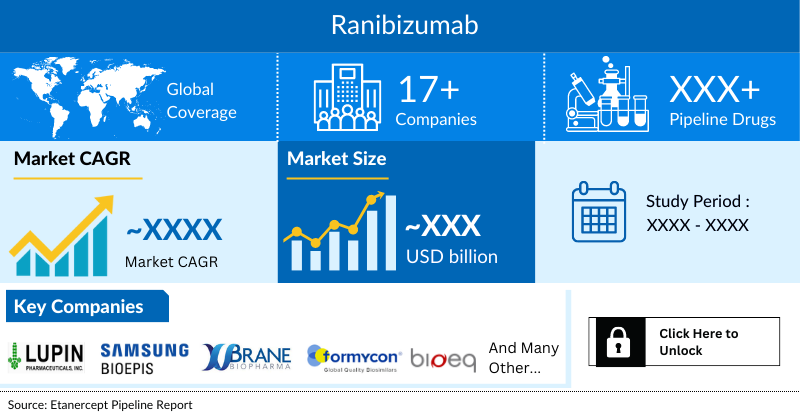
- The leading Ranibizumab Biosimilar Companies such as Intas Pharmaceuticals, Reliance Life Sciences, Senju Pharmaceutical, Lupin, Samsung Bioepis, Xbrane, The consortium Formycon/Bioeq/Coherus BioSciences, Chong Kun Dang Pharmaceutical, BIOCND/Qilu Pharmaceuticals, GENERIUM Pharmaceuticals, Shanghai Biomabs Pharmaceutical, Celon pharma, Biocure Technology, Clonz Biotech, PlantForm Corporation, Siam Bioscience, Polus, Enzene Biosciences, Paras Biopharmaceuticals, and others.
Request for Unlocking the Sample Page of the "Ranibizumab Biosimilar Market"
Key Factors Driving the Ranibizumab Biosimilar Market Growth
-
Rising Prevalence of Retinal Disorders
The increasing incidence of age-related macular degeneration, diabetic macular edema, retinal vein occlusion, and myopic choroidal neovascularization is significantly expanding the eligible patient pool for ranibizumab biosimilars.
-
High Cost of Originator Biologics
The premium pricing of branded anti-VEGF therapies has created strong demand for cost-effective biosimilar alternatives, particularly in price-sensitive and emerging markets.
-
Patent Expirations and Regulatory Approvals
The expiration of key patents for ranibizumab has opened the market to multiple biosimilar entrants, supported by streamlined regulatory pathways for biosimilar approval across major geographies.
-
Improved Access to Anti-VEGF Therapy
Ranibizumab biosimilars are improving treatment accessibility by reducing financial barriers, enabling broader adoption in both public healthcare systems and private ophthalmology practices.
-
Growing Acceptance Among Physicians
Increasing clinical confidence driven by comparable efficacy, safety, and immunogenicity data is encouraging ophthalmologists to adopt ranibizumab biosimilars in routine practice.
-
Favorable Reimbursement and Cost-Containment Policies
Payer-driven initiatives aimed at reducing biologic drug expenditure are promoting biosimilar uptake through preferential reimbursement, substitution policies, and formulary inclusion.
-
Expansion in Emerging Markets
Rapid growth in ophthalmic care infrastructure, coupled with higher awareness and diagnosis rates in emerging economies, is accelerating the penetration of ranibizumab biosimilars.
-
Increased Competition Among Biosimilar Developers
The entry of multiple biosimilar manufacturers is intensifying market competition, leading to price erosion, improved supply reliability, and wider market reach, collectively supporting market growth.
DelveInsight’s “Ranibizumab Biosimilar Insight, 2024” report provides comprehensive insights about 17+ Ranibizumab Companies and 17+ Marketed and Pipeline Drugs in the Ranibizumab Biosimilars landscape. It covers the marketed and pipeline drug profiles, including clinical and nonclinical stage products. It also covers the Ranibizumab Biosimilar Insights Therapeutics assessment by product type, stage, route of administration, and molecule type. It further highlights the inactive pipeline products in this space.
Ranibizumab Biosimilars Insights: Understanding
Ranibizumab Biosimilar Insights Overview
Lucentis (Ranibizumab) is a recombinant humanized IgG1 kappa isotype monoclonal antibody fragment designed for intraocular use. It is indicated for the treatment of patients with Neovascular Age-Related Macular Degeneration (AMD), Macular Edema Following Retinal Vein Occlusion (RVO), Diabetic Macular Edema (DME), and myopic choroidal neovascularization (mCNV). Ranibizumab binds to and inhibits the biologic activity of human vascular endothelial growth factor A (VEGF-A). Ranibizumab, which lacks an Fc region, has a molecular weight of approximately 48 kilodaltons and is produced by an E. coli expression system in a nutrient medium containing the antibiotic tetracycline.
LUCENTIS is indicated for the treatment of patients with:
- Neovascular Age-Related Macular Degeneration (AMD)
- Macular Edema Following Retinal Vein Occlusion (RVO)
- Diabetic Macular Edema (DME)
- Diabetic Retinopathy (DR)
- Myopic Choroidal Neovascularization (mCNV)
"Ranibizumab Biosimilars Pipeline Insight, 2024" report by DelveInsight outlays comprehensive insights of present scenario and growth prospects across the indication. A detailed picture of the Ranibizumab Biosimilars pipeline landscape is provided which includes the disease overview and Ranibizumab Biosimilars treatment guidelines. The assessment part of the report embraces, in depth Ranibizumab Biosimilars commercial assessment and clinical assessment of the pipeline products under development. In the Ranibizumab Biosimilars Market report, detailed description of the drug is given which includes mechanism of action of the drug, Ranibizumab Biosimilars clinical trials, NDA approvals (if any), and product development activities comprising the technology, Ranibizumab Biosimilars collaborations, licensing, mergers and acquisition, funding, designations and other product related details.
Ranibizumab Biosimilars Drugs Analysis
-
Razumab: Intas Pharmaceuticals
Razumab injection is a recombinant humanized IgG1 kappa isotype monoclonal antibody fragment designed for intraocular use and a biosimilar to Ranibizumab. The binding of Razumab to VEGF-A prevents the interaction of VEGF-A with its receptors VEGFR-1 and VEGFR-2 on the surface of endothelial cells and thus inhibit the endothelial cell proliferation, neovascularization and vascular leakage. Razumab has a molecular weight of approximately 48 kilo Daltons and is produced by an E. coli expression system in a nutrient medium containing the antibiotic tetracycline. In June 2015, Intas became the first company globally to develop and launch a biosimilar version of Ranibizumab. RAZUMAB™ is manufactured under strict guidelines for sterile use in the eye and is offered as single dose vial, thus reducing the risk of contamination during use. Intas’ ranibizumab, RAZUMAB is a 100 per cent ‘Made in India’ molecule, a feat achieved by the scientists at Intas and unparalleled till date. It was approved by the Drug Controller General of India for the treatment of Neovascular (Wet) Age-related Macular Degeneration (Wet-AMD), Diabetic Macular Edema (DME), Retinal Vein Occlusion (RVO), and Choroidal neovascularization (CNV).
-
RanizuRel: Reliance Life Sciences
RanizuRel™ (Ranibizumab) is a recombinant humanized IgG1K isotype monoclonal antibody fragment that selectively binds to inhibit biological activity of human vascular endothelial growth factor A (VEGF-A). It is produced in an E.Coli expression system and has a molecular weight of 48 kilodaltons. RanizuRel™ is indicated in Neovascular (Wet) Age-Related Macular Degeneration (AMD) and administered by intravitreal injection. It is recommended to administer RanizuRel once a month (approximately 28 days). The intravitreal injection procedure should be carried out under controlled aseptic conditions. RanizuRel™ is sterile, preservative-free, and clear colourless to pale yellow solution available in 0.5 mg dose single-use vial.
Ranibizumab Biosimilars Emerging Drugs
-
Xlucane: Xbrane
Xlucane is a ranibizumab (Lucentis) biosimilar candidate, a so-called VEGF-A inhibitor, intended to be used to treat a number of serious eye diseases: wet age-related macular degeneration (AMD), diabetic macular edema (DME), diabetic retinopathy (DR), as well as retinal vein occlusion (RVO). A pivotal phase III study, XPLORE, is being conducted to demonstrate equivalence to Lucentis. In October 2021, a Marketing Authorization Application (MAA) for biosimilar ranibizumab that was submitted by Xbrane co-development and commercialization partner, STADA Arzneimittel AG was validated by the European Medicines Agency (EMA).
-
GNR-067: GENERIUM Pharmaceuticals
GNR-067 is a ranibizumab biosimilar being developed by Generium Pharmaceuticals. Ranibizumab binds to the receptor binding site of active forms of VEGF-A, including the biologically active, cleaved form of this molecule, VEGF110. VEGF-A has been shown to cause neovascularization and leakage in models of ocular angiogenesis and vascular occlusion and is thought to contribute to pathophysiology of neovascular AMD, mCNV, DR, DME and macular edema following RVO. The binding of ranibizumab to VEGF-A prevents the interaction of VEGF-A with its receptors (VEGFR1 and VEGFR2) on the surface of endothelial cells, reducing endothelial cell proliferation, vascular leakage, and new blood vessel formation. Currently, it is in Phase III stage of clinical trial evaluation to treat wet Age-related Macular Degeneration.
Further product details are provided in the report……..
Ranibizumab Biosimilars Therapeutics Market Assessment
This segment of the Ranibizumab Biosimilars market report provides insights about the different Ranibizumab biosimilars segregated based on following parameters that define the scope of the report, such as:
Ranibizumab Biosimilars Companies
There are approx. 17+ key Ranibizumab Biosimilars Companies which are developing the therapies for Ranibizumab.
Ranibizumab Biosimilars Phases
DelveInsight’s Ranibizumab Biosimilars Market report covers around 17+ products under different phases of clinical development, like
- Ranibizumab Biosimilar Marketed stage products
- Late stage products (BLA Filed and Phase III)
- Mid-stage products (Phase II)
- Early-stage products (Phase I) along with the details of
- Pre-clinical and Discovery stage candidates
- Discontinued & Inactive candidates
- Route of Administration
Ranibizumab Pipeline report provides the therapeutic assessment of the pipeline drugs by the Route of Administration. Products have been categorized under various ROAs such as
- Oral
- Parenteral
- Intravenous
- Subcutaneous
- Topical.
- Molecule Type
Ranibizumab Biosimilars Products have been categorized under various Molecule types such as
- Monoclonal Antibody
- Peptides
- Polymer
- Small molecule
- Gene therapy
- Product Type
Ranibizumab Biosimilars Drugs have been categorized under various product types like Mono, Combination and Mono/Combination.
Ranibizumab Pipeline Development Activities
The Ranibizumab Biosimilars pipeline segment provides insights into different therapeutic candidates in marketed, phase III, II, I and preclinical stage. It also analyses Ranibizumab biosimilars drugs key Ranibizumab Biosimilars Companies involved in developing key drugs. The Ranibizumab Biosimilars pipeline segment covers the detailed information of collaborations, acquisition and merger, licensing along with a thorough therapeutic assessment of emerging Ranibizumab biosimilar drugs.
Ranibizumab Biosimilars Market Report Highlights
The Ranibizumab Biosimilars companies and academics are working to assess challenges and seek opportunities that could influence Ranibizumab R&D. The therapies under development are focused on novel approaches to treat/improve Ranibizumab.
- In April 2021, Xbrane Partnered with Bausch & Lomb to enter the US market. In October 2021, a Marketing Authorization Application (MAA) for biosimilar ranibizumab that was submitted by Xbrane co-development and commercialization partner, STADA Arzneimittel AG was validated by the European Medicines Agency (EMA).
- In October 2021, Coherus BioSciences announced the United States Food and Drug Administration (FDA) has accepted for review the 351(k) Biologics License Application (BLA) for CHS-201, a biosimilar candidate of reference product Lucentis® (ranibizumab). The FDA has set a Biosimilar User Fee Act action date for August 2, 2023, and, if approved, Coherus plans to launch the Lucentis biosimilar in the U.S. in the second half of 2022.
Ranibizumab Biosimilars Market Report Insights
- Ranibizumab Biosimilar Pipeline Analysis
- Ranibizumab Biosimilars Therapeutic Assessment
- Sales Assessment
- Ranibizumab Biosimilars Unmet Needs
- Impact of Ranibizumab Biosimilar Drugs
Ranibizumab Biosimilar Market Report Assessment
- Ranibizumab Biosimilars Marketed Product Profiles
- Ranibizumab Biosimilars Pipeline Product Profiles
- Ranibizumab Biosimilars Therapeutic Assessment
- Ranibizumab Biosimilars Pipeline Assessment
- Sales Assessment
- Inactive drugs assessment
- Ranibizumab Biosimilars Unmet Needs
Key Questions Answered in the Ranibizumab Biosimilar Insight Report
Current Ranibizumab Biosimilars Treatment Scenario and Emerging Therapies:
- How many Ranibizumab Biosimilars companies are developing drugs?
- How many Ranibizumab Biosimilars are developed by each company?
- How many emerging biosimilars are in mid-stage, and late-stage?
- What are the key collaborations (Industry–Industry, Industry–Academia), Mergers and acquisitions, licensing activities related to the Ranibizumab biosimilars therapeutics?
- What are the clinical studies going on for Ranibizumab biosimilars and their status?
- What are the key designations that have been granted to the emerging drugs?
Stay updated with us for Recent Articles @ New DelveInsight Blogs

