
Spinocerebellar Ataxias Market Summary
- The Spinocerebellar Ataxia Market Size is anticipated to grow with a significant CAGR during the study period (2020-2034)
- The leading Spinocerebellar Ataxia Companies such as Seelos Therapeutics, VICO Therapeutics, Wave Life Sciences, Biohaven Pharmaceuticals, Steminent Biotherapeutics, RETROTOPE, BioGene and others.
- Promising Spinocerebellar Ataxia Therapies such as Troriluzole (BHV-4157), VO659, IB1001, ROVATIRELIN, Stemchymal, and others.
Spinocerebellar Ataxias Market and Epidemiological Analysis
- The worldwide Prevalence of Spinocerebellar Ataxia ranges from 1 to 5 cases per 100,000 individuals, while in Europe, it is estimated between 0.9 and 3 per 100,000. SCA3 is the most common subtype, accounting for 25% to 50% of cases, followed by SCA2 (13% to 18%), SCA6 (13% to 15%), and SCA7, in descending order of occurrence.
- According to Bhandari et al. (2023), the global Prevalence of Spinocerebellar Ataxia ranges from 1 to 5 per 100,000, while the overall prevalence in Europe is between 0.9 and 3 per 100,000, with regional variations such as 2 per 100,000 in Italy. Spinocerebellar Ataxia 3 is the most common type, accounting for 25% to 50% of cases, followed by Spinocerebellar Ataxia 2 (13% to 18%), Spinocerebellar Ataxia 6 (13% to 15%), and Spinocerebellar Ataxia 7.
- Spinocerebellar ataxias are a group of genetic disorders characterized by progressive degeneration of the cerebellum and its connections, leading to problems with coordination, balance, and movement control.
- To date, more than 40 distinct genetic Spinocerebellar ataxias have been identified which are classified according to the genetic loci in order of identification. SCA1 was the first Spinocerebellar ataxias described and then further subtypes are identified sequentially.
- The global prevalence of spinocerebellar ataxia is 1 to 5 per 100,000 and overall European prevalence is 0.9 to 3 per 100,000. SCA3 (25 to 50%) is most prevalent followed by descending prevalence SCA2 (13 to 18%), SCA6 (13-15%), and SCA7.
- Currently, there are no approved therapies for Spinocerebellar Ataxia (SCA), prompting a focus on symptom management through physiotherapy, occupational therapy, and speech therapy in clinical care. Extensive research has significantly advanced the comprehension of SCA pathobiology, uncovering interconnected mechanisms such as proteotoxicity, RNA toxicity, and ion channel dysfunction. This enhanced understanding has unveiled novel targets for the development of treatment strategies.
- Regarding the emerging treatment landscape for Spinocerebellar Ataxia, while there are currently only a few candidates in advanced stages of development, there is optimism surrounding ongoing research efforts. Some potential therapies are in the early stages of development, suggesting promising avenues for future treatment options. Although it may be too early to anticipate their market impact during the forecast period from 2024 to 2034, these developments signify progress in addressing the unmet medical needs of individuals affected by Spinocerebellar Ataxia.
Request for Unlocking the Sample Page of the "Spinocerebellar Ataxias Treatment Market"
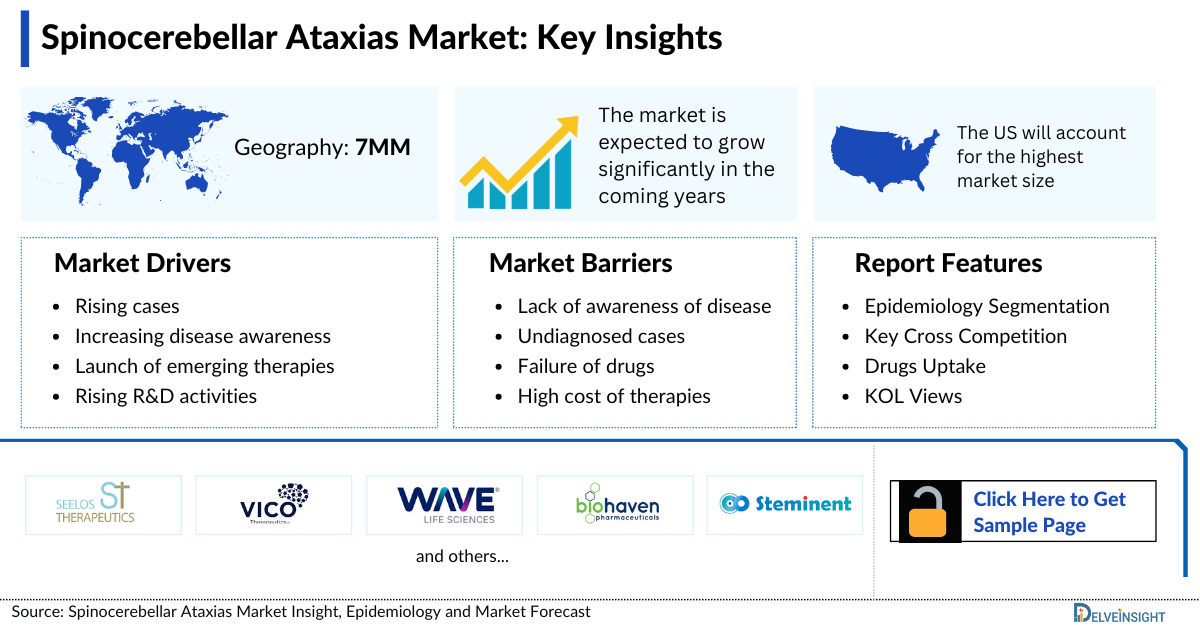
Key Factors Impacting the Spinocerebellar Ataxias Market Growth
-
Rising Awareness and Improved Diagnosis
Growing awareness among neurologists and patients about Spinocerebellar Ataxias (SCAs), supported by better access to genetic counseling and testing, is leading to earlier and more accurate diagnosis. This improved recognition of hereditary ataxias is expanding the diagnosed patient pool, directly contributing to market growth.
-
Advancements in Genetic Testing Technologies
Rapid progress in next-generation sequencing (NGS), whole-exome sequencing, and targeted genetic panels has significantly enhanced the detection of SCA subtypes. These technological advancements are enabling precise subtype classification, facilitating personalized treatment approaches and increasing demand for diagnostic and therapeutic solutions.
-
Increasing Research and Development Activities
Pharmaceutical and biotechnology companies are intensifying R&D efforts to develop disease-modifying and gene-based therapies for SCAs. The growing focus on RNA-targeted therapies, antisense oligonucleotides, and gene replacement strategies is strengthening the pipeline and fueling long-term market expansion.
-
Unmet Medical Need and Lack of Curative Therapies
The absence of approved curative treatments for most SCA subtypes continues to represent a significant unmet medical need. This gap is driving innovation, clinical trial activity, and investment in novel therapeutic modalities, positioning SCAs as a key focus area within the rare neurological disorders market.
-
Supportive Care and Symptomatic Treatment Demand
As disease progression leads to motor impairment and reduced quality of life, the demand for symptomatic treatments, rehabilitation services, and supportive care solutions is increasing. This sustained need for long-term disease management supports steady market growth.
-
Growing Focus on Rare Disease Policies and Incentives
Supportive regulatory frameworks, orphan drug designations, and incentives for rare disease development are encouraging companies to invest in SCA-focused programs. These policies are accelerating clinical development timelines and enhancing the commercial attractiveness of the Spinocerebellar Ataxias market.
DelveInsight's “Spinocerebellar Ataxias Market Insights, Epidemiology and Market Forecast – 2034” report delivers an in-depth understanding of Spinocerebellar Ataxias, historical and forecasted epidemiology as well as the Spinocerebellar Ataxias market trends in the United States, EU4 (Germany, Spain, Italy, and France) and the United Kingdom, and Japan.
Spinocerebellar Ataxias Treatment Market Report provides real-world prescription pattern analysis, emerging drugs, market share of individual therapies, and historical and forecasted 7MM Spinocerebellar Ataxias market size from 2020 to 2034. The report also covers current Spinocerebellar Ataxias treatment practices/algorithms and unmet medical needs to curate the best opportunities and assess the market’s underlying potential.
Scope of the Spinocerebellar Ataxias Market | |
|
Study Period |
2020–2034 |
|
Forecast Period |
2024–2034 |
|
Geographies Covered |
US, EU4 (Germany, France, Italy, and Spain) the UK, and Japan |
|
Spinocerebellar Ataxias Epidemiology |
Segmented by:
|
|
Spinocerebellar Ataxias Companies |
|
|
Spinocerebellar Ataxias Drugs |
|
|
Spinocerebellar Ataxias Market |
Segmented by:
|
|
Analysis |
|
Spinocerebellar Ataxias Understanding
Spinocerebellar Ataxia Overview, Country-Specific Treatment Guidelines, and Diagnosis
Spinocerebellar ataxia is an inherited, progressive, neurodegenerative, and heterogeneous disease that mainly affects the cerebellum. Spinocerebellar Ataxia is a subset of hereditary cerebellar ataxia and is a rare disease. Spinocerebellar ataxia does not compulsorily mean that it is restricted to the cerebellum and spinal cord. It may involve the other parts of the central nervous system as well, such as pontine nuclei, spinal cord, peripheral nerves, cortex, basal ganglia, etc. SCA6 is restricted to the cerebellum whereas SCA2 spares cerebellum. Well-defined and common types are SCA1, SCA2, SCA3, and SCA6, which accounts for more than half of cases and other rare variants constitute the remaining cases.
Spinocerebellar ataxia can result from inherited gene mutations, particularly those involving trinucleotide repeat expansions. While not all types of Spinocerebellar ataxias are linked to the same gene, most follow an autosomal dominant inheritance pattern, where inheriting one mutated gene from a parent is enough to cause the condition. This means that each child of an affected individual has a 50% chance of inheriting the mutation. However, there are also autosomal recessive forms where both parents must pass on an abnormal gene, typically without displaying symptoms themselves.
Spinocerebellar Ataxia Treatment
Spinocerebellar ataxia, a genetic condition lacking a definitive cure, is managed primarily through symptomatic treatment aimed at alleviating associated symptoms such as seizures, tremors, depression, ataxia, and eye issues. Treatment approaches include antiepileptic medications for seizures, botulinum toxin injections to address dystonia, beta-blockers and primidone for tremors, antidepressants to manage depression, and levodopa for Parkinsonism symptoms. Additionally, the use of N-acetyl cysteine has shown promise in neurological disorders and Spinocerebellar Ataxia, while citalopram has demonstrated benefits by reducing ataxin-3 levels and improving patient behavioral status.
Spinocerebellar Ataxia Epidemiology
The Spinocerebellar Ataxia epidemiology chapter in the report provides historical as well as forecasted data in the 7MM covering the United States, EU4 countries (Germany, France, Italy, and Spain), the United Kingdom, and Japan from 2024 to 2034. The Spinocerebellar Ataxia epidemiology is segmented with detailed insights into Total Prevalent cases of Spinocerebellar Ataxias, Total Diagnosed Cases of Spinocerebellar Ataxias, Type-Specific Cases of Spinocerebellar Ataxias, and Total Treated Cases of Spinocerebellar Ataxias.
Key Findings from Spinocerebellar Ataxia Epidemiological Analyses and Forecast
- Spinocerebellar Ataxias are heterogeneous; 47 Spinocerebellar Ataxia subtypes have been identified, and the number of genes implicated in Spinocerebellar Ataxias is continually increasing. Each subtype is named SCA followed by a number; the numbers are progressive and represent the chronological order in which the disease locus or causative gene of the subtype was identified. The research work is still in progress to find out more information. Out of the autosomal dominant ataxias, SCA3 is the most common worldwide, followed by SCA1, 2, 6, and 7.
Spinocerebellar Ataxias Epidemiology Segmentation in the 7MM
- Total Prevalent Cases of Spinocerebellar Ataxias
- Total Diagnosed Cases of Spinocerebellar Ataxias
- Type-Specific Cases of Spinocerebellar Ataxias
- Total Treated Cases of Spinocerebellar Ataxias
Spinocerebellar Ataxias Market Recent Breakthroughs and Developments
- In June 2026, REPROCELL submitted an application for manufacturing and marketing approval in Japan for its innovative regenerative medicine product, Stemchymal. The stem cell therapy aims to suppress the progressive loss of motor function in patients with spinocerebellar ataxia types SCA3 and SCA6. Holding exclusive domestic commercialization rights, REPROCELL will handle distribution, while Taiwan-based Steminent Biotherapeutics manages manufacturing. Having received an MHLW orphan designation, Stemchymal qualifies for a priority review process targeting a nine-month regulatory timeline.
- In December 2025, Sclnow Biotechnology Co. Ltd. announced a study aimed at evaluating the safety and efficacy of human umbilical cord–derived mesenchymal stem cell (UC-MSC) therapy in patients with Spinocerebellar Ataxia, while also investigating the underlying mechanisms of UC-MSC treatment in this condition.
- In December 2025, Arrowhead Pharmaceuticals initiated a Phase I, placebo-controlled, dose-escalation study designed to assess the safety, tolerability, pharmacokinetics, and pharmacodynamics of ARO-ATXN2 in adult patients with Spinocerebellar Ataxia Type 2.
- In May 2025, Biohaven Ltd. (NYSE: BHVN) announced that the FDA has extended the PDUFA date for troriluzole’s NDA for spinocerebellar ataxia (SCA) by three months to allow a full review of recent submissions. An advisory committee meeting is planned but not yet scheduled. The FDA raised no new concerns, with a decision now expected in Q4 2025.
Spinocerebellar Ataxias Drug Analysis
The drug chapter segment of the Spinocerebellar Ataxias Therapeutics Market Report encloses a detailed analysis of Spinocerebellar Ataxias late-stage (Phase III and Phase II) Spinocerebellar Ataxias Pipeline Drugs. It also deep dives into the Spinocerebellar Ataxias clinical trial details, expected market approvals, patent details, the latest news, and recent deals and collaborations.
Spinocerebellar Ataxias Emerging Drugs
-
Troriluzole (BHV-4157): Biohaven
Troriluzole is a novel, oral, third-generation pro-drug and new chemical entity glutamate modulator being in developed for the treatment of Spinocerebellar Ataxias. It is a new chemical entity that modulates glutamate with primary mode of action is to reduce the synaptic levels of glutamate.
-
- In May 2023, the company submitted a New Drug Application (NDA) to the FDA for troriluzole for the treatment of SCA3 but in July 2023, the FDA informed the company that it would not review the recently submitted NDA application for troriluzole given that the study's primary endpoint was not met and thus, would not permit a substantive review.
- In October 2023, the European Medicines Agency (EMA) informed the company that the Marketing Authorization Application (MAA) for troriluzole in the treatment of Spinocerebellar Ataxias has been validated and is now under review by EMA's Committee for Medicinal Products for Human Use (CHMP).
-
VO659: VICO Therapeutics
VO659 is an allele-preferential antisense oligonucleotide product candidate being developed for patients with spinocerebellar ataxia types 3 and 1 (SCA3, SCA1) and is in Phase I/II clinical trial. These polyglutamine diseases are caused by a CAG repeat expansion that results in an elongated polyglutamine tract that makes the resulting mutant protein toxic to nerve cells. VO659 preferentially targets expanded CAG repeats in the mutant mRNA transcript and inhibits mRNA translation leading to reduction of mutant protein with the goal of stopping or reversing disease progression. In preclinical studies, significant reductions in mutant ATXN3 and ATXN1 protein levels were observed in SCA3 and SCA1 mouse models, respectively.
|
Therapy Name |
Company Name |
ROA |
MOA |
Phases |
Any Special Status |
|
Troriluzole |
Biohaven |
Oral |
Glutamate release inhibitors |
III (NDA submitted) |
Orphan Drug Designation and Fast-track Designation |
|
VO659 |
VICO Therapeutics |
Intrathecal |
RNA modulators |
I/II |
Orphan Drug Designation |
|
IB1001 |
IntraBio |
Oral |
Calcium channel modulators |
II |
NA |
Spinocerebellar Ataxias Market Outlook
Major Spinocerebellar Ataxias Companies, such as Biohaven, VICO Therapeutics, IntraBio, and others, are evaluating their lead candidates in different stages of clinical development, respectively. They aim to investigate their products for the treatment of Spinocerebellar Ataxias. While no cure currently exists for Spinocerebellar Ataxia, treatments including medication and physical therapy aim to alleviate gait abnormalities and strengthen muscles. Emerging treatment strategies involve pharmacological agents targeting affected downstream pathways and genetic therapies to reduce toxic polyQ gene products. Additionally, electrophysiologic testing can assess nerve conduction action potential. Nonetheless, diagnosing, prognosticating, and managing Spinocerebellar Ataxia remain challenging due to incomplete comprehension of its pathophysiology, the complexity of initiating factors, and the absence of standardized, evidence-based therapies. Numerous genes have been implicated, wherein mutations can precipitate Spinocerebellar Ataxia.
Key Spinocerebellar Ataxias Companies
Seelos Therapeutics, VICO Therapeutics, Wave Life Sciences, Biohaven Pharmaceuticals, Steminent Biotherapeutics, RETROTOPE, BioGene and others.
Spinocerebellar Ataxia Drugs Uptake
This section focuses on the uptake rate of potential Spinocerebellar Ataxias drugs expected to be launched in the Spinocerebellar Ataxias market during 2024-2034, which depends on the competitive landscape, safety, and efficacy data, along with the order of entry. It is important to understand that the key Spinocerebellar Ataxias companies evaluating their novel therapies in the pivotal and confirmatory trials should remain vigilant when selecting appropriate comparators to stand the greatest chance of a positive opinion from regulatory bodies, leading to approval, smooth launch, and rapid uptake.
Spinocerebellar Ataxias Clinical Trials Activities
The Spinocerebellar Ataxias Therapeutics Market Report provides insights into different therapeutic candidates in Phase III and Phase II stages. It also analyzes key Spinocerebellar Ataxia companies involved in developing targeted therapeutics.
Spinocerebellar Ataxias Pipeline Development Activities
The Spinocerebellar Ataxias market report covers information on collaborations, acquisitions and mergers, licensing, and patent details for Spinocerebellar Ataxias emerging therapies.
Latest KOL Views on Spinocerebellar Ataxias
To keep up with the real-world scenario in current and emerging Spinocerebellar Ataxias market trends, we take opinions from Key Industry leaders working in the domain through primary research to fill the data gaps and validate our secondary research. Industry Experts were contacted for insights on the evolving treatment landscape, patient reliance on conventional therapies, patient therapy switching acceptability, and drug uptake along with challenges related to accessibility.
DelveInsight’s analysts connected with 10+ KOLs to gather insights; however, interviews were conducted with 5+ KOLs in the 7MM. Their opinion helps understand and validate current and emerging treatment patterns of Spinocerebellar Ataxias. This will support the clients in potential upcoming novel treatments by identifying the overall scenario of the market and the unmet needs.
Spinocerebellar Ataxias Report Qualitative Analysis
We perform Qualitative and market Intelligence analysis using various approaches, such as SWOT analysis and Conjoint Analysis. In the SWOT analysis, strengths, weaknesses, opportunities, and threats in terms of gaps in disease diagnosis, patient awareness, physician acceptability, competitive landscape, cost-effectiveness, and geographical accessibility of therapies are provided. Conjoint Analysis analyzes multiple approved and emerging therapies based on relevant attributes such as safety, efficacy, frequency of administration, route of administration, and order of entry. Scoring is given based on these parameters to analyze the effectiveness of therapy.
In efficacy, the trial’s primary and secondary outcome measures are evaluated; for instance, in event-free survival, one of the most important primary outcome measures is event-free survival and overall survival. Further, the therapies’ safety is evaluated wherein the acceptability, tolerability, and adverse events are majorly observed, and it sets a clear understanding of the side effects posed by the drug in the trials. In addition, the scoring is also based on the probability of success, and the addressable patient pool for each therapy. According to these parameters, the final weightage score and the ranking of the emerging therapies are decided.
Spinocerebellar Ataxias Market Access and Reimbursement
Reimbursement of rare disease therapies can be limited due to a lack of supporting policies and funding, challenges of high prices, lack of specific approaches to evaluating rare disease drugs given limited evidence, and payers’ concerns about budget impact. The high cost of rare disease drugs usually has a limited effect on the budget due to the small number of eligible patients being prescribed the drug. The US FDA has approved several rare disease therapies in recent years.
From a patient perspective, health insurance and payer coverage guidelines surrounding rare disease treatments restrict broad access to these treatments, leaving only a small number of patients who can bypass insurance and pay for products independently. The report further provides detailed insights on the country-wise accessibility and reimbursement scenarios, cost-effectiveness scenario of currently used therapies, programs making accessibility easier and out-of-pocket costs more affordable, insights on patients insured under federal or state government prescription drug programs, etc.
Spinocerebellar Ataxias Market Report Scope
- The Spinocerebellar Ataxias Market Report covers a segment of key events, an executive summary, descriptive overview, explaining its causes, signs and symptoms, pathogenesis, and currently available therapies.
- Comprehensive insight has been provided into the epidemiology segments and forecasts, the future growth potential of diagnosis rate, and disease progression along with country specific treatment guidelines.
- Additionally, an all-inclusive account of both the current and emerging therapies, along with the elaborative profiles of late-stage and prominent therapies, will have an impact on the current treatment landscape.
- A detailed review of the Spinocerebellar Ataxias Treatment Market, historical and forecasted market size, market share by therapies, detailed assumptions, and rationale behind our approach is included in the report, covering the 7MM drug outreach.
- The Spinocerebellar Ataxias Market Report provides an edge while developing business strategies, by understanding trends, through SWOT analysis and expert insights/KOL views, patient journey, and treatment preferences that help in shaping and driving the 7MM Spinocerebellar Ataxias Drugs Market.
Spinocerebellar Ataxias Market Report Insights
- Patient-based Spinocerebellar Ataxias Market Forecasting
- Spinocerebellar Ataxias Therapeutic Approaches
- Spinocerebellar Ataxias Pipeline Analysis
- Spinocerebellar Ataxias Market Size
- Spinocerebellar Ataxias Market Trends
- Existing and Future Spinocerebellar Ataxias Drugs Market Opportunity
Spinocerebellar Ataxias Market Report Key Strengths
- 11 Years Spinocerebellar Ataxias Market Forecast
- 7MM Coverage
- Spinocerebellar Ataxias Epidemiology Segmentation
- Inclusion of Country specific treatment guidelines
- KOL’s feedback on approved and emerging Spinocerebellar Ataxias therapies
- Key Cross Competition
- Conjoint analysis
- Spinocerebellar Ataxias Drugs Uptake
- Key Spinocerebellar Ataxias Market Forecast Assumptions
Spinocerebellar Ataxias Market Report Assessment
- Current Spinocerebellar Ataxias Treatment Practices
- Spinocerebellar Ataxias Unmet Needs
- Spinocerebellar Ataxias Pipeline Product Profiles
- Spinocerebellar Ataxias Drugs Market Attractiveness
- Qualitative Analysis (SWOT and Conjoint Analysis)
Key Questions Answered in the Spinocerebellar Ataxias Market Report
- What is the growth rate of the 7MM Spinocerebellar Ataxias treatment market?
- What was the Spinocerebellar Ataxias Market Size, the market size by therapies, market share (%) distribution in 2020, and what would it look like in 2034? What are the contributing factors/key catalysts for this growth?
- Is there any unexplored patient setting that can open the window for growth in the future?
- What are the pricing variations among different geographies for approved and off-label therapies?
- How would the market drivers, barriers, and future opportunities affect the market dynamics and subsequent analysis of the associated trends?
- What are the current and emerging options for the treatment of Spinocerebellar Ataxias?
- How many Spinocerebellar Ataxias companies are developing therapies for the treatment of Spinocerebellar Ataxias?
- What are the recent novel therapies, targets, mechanisms of action, and technologies developed to overcome the limitations of existing therapies?
- What are the country-specific accessibility issues of expensive, recently approved Spinocerebellar Ataxia therapies?
Reasons to Buy the Spinocerebellar Ataxias Market Report
- The Spinocerebellar Ataxias Therapeutics Market report will help in developing business strategies by understanding the latest trends and changing treatment dynamics driving the Spinocerebellar Ataxias Drugs Market.
- Insights on Spinocerebellar Ataxias patient burden/disease, Spinocerebellar Ataxias Prevalence, evolution in diagnosis, and factors contributing to the change in the epidemiology of the disease during the forecast years
- Understand the existing Spinocerebellar Ataxias Drugs Market opportunities in varying geographies and the growth potential over the coming years.
- Distribution of historical and current patient share based on real-world prescription data along with reported sales of approved products in the US, EU4 (Germany, France, Italy, and Spain), the United Kingdom, and Japan.
- Identifying strong upcoming Spinocerebellar Ataxias Drugs Market will help devise strategies to help get ahead of competitors.
- Detailed analysis and ranking of class-wise potential current and emerging therapies under the conjoint analysis section to provide visibility around leading classes.
- Highlights of access and reimbursement policies of approved therapies, barriers to accessibility of expensive off-label therapies, and patient assistance programs.
- To understand Key Opinion Leaders’ perspectives around the accessibility, acceptability, and compliance-related challenges of existing treatment to overcome barriers in the future.
- Detailed insights on the unmet needs of the existing Spinocerebellar Ataxias Drugs Market so that the upcoming Spinocerebellar Ataxias companies can strengthen their development and launch strategy.
Stay updated with us for Recent Articles @ New DelveInsight Blogs