
Stress Urinary Incontinence Devices Market Summary
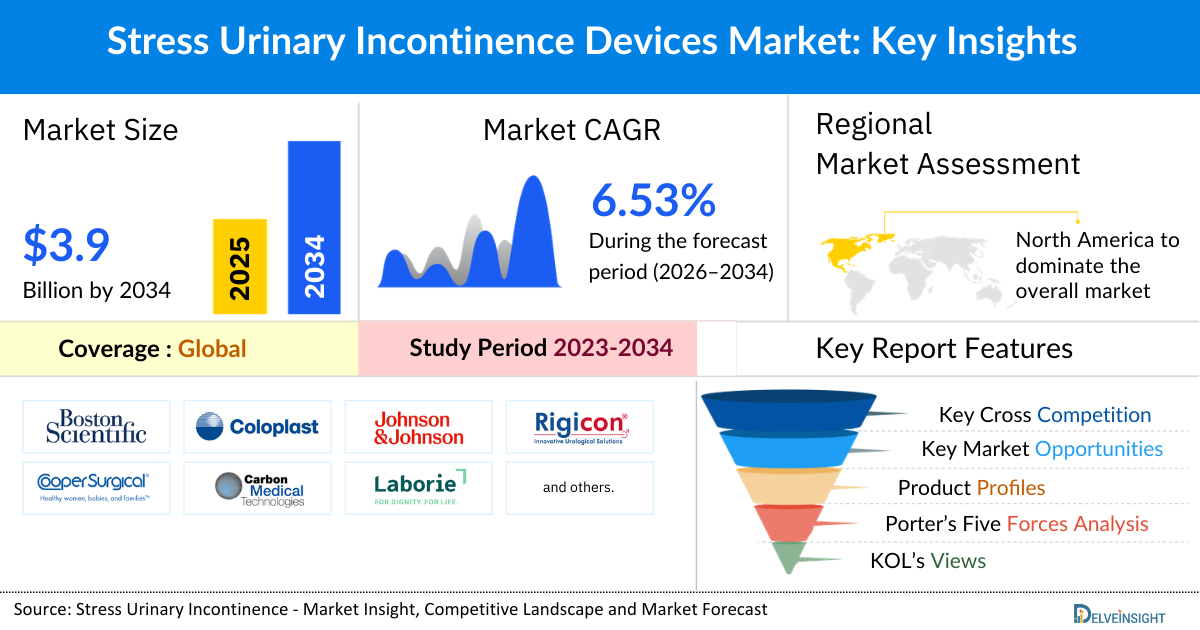
- The global stress urinary incontinence devices market size is expected to increase from USD 2,232.79 million in 2025 to USD 3,929.46 million by 2034, reflecting strong and sustained growth.
- The global stress urinary incontinence devices market is growing at a CAGR of 6.53% during the forecast period from 2026 to 2034.
- The market of stress urinary incontinence devices is being primarily driven by the rising prevalence of stress urinary incontinence, an increasing elderly population driving higher rates of stress urinary incontinence due to pelvic floor weakness, and increasing technological advancements in SUI devices among the key market players.
- The leading companies operating in the stress urinary incontinence devices market include Boston Scientific Corporation, Coloplast A/S, Johnson & Johnson and its affiliates, Caldera Medical, Rigicon Inc., CooperSurgical Inc., Carbon Medical Technologies Inc., Laborie, Cousin Surgery, A.M.I GmbH, Betatech Medical, Promedon GmbH, Merz Aesthetics, Zephyr Surgical Implants, MedGyn Products Inc., Dr. Arabin GmbH & Co. KG, Neomedic International, CL Medical, UroMems, InControl Medical others.
- North America dominates the stress urinary incontinence devices market mainly due to the high number of people affected by stress urinary incontinence and a rapidly growing aging population that is more prone to urological conditions such as pelvic floor weakness. The region also benefits from advanced healthcare infrastructure and early adoption of technologically advanced treatment options, including minimally invasive and innovative devices. In addition, strong awareness about treatment availability and continuous technological advancements among the key medical device companies further support market growth, making North America the leading region in this market. These factors collectively position the region as a leading contributor to the global market.
- In the product segment of the stress urinary incontinence devices market, the sling system category is estimated to account for the largest market share in 2025.
Request for unlocking the report of the @ Stress Urinary Incontinence Devices Market Insights
Stress Urinary Incontinence Devices Market Size and Forecasts
|
Report Metrics |
Details |
|
2025 Market Size |
2,232.79 million |
|
2034 Projected Market Size |
3,929.46 million |
|
Growth Rate (2026-2034) |
6.53% CAGR |
|
Largest Market |
North America |
|
Fastest Growing Market |
Asia-Pacific |
|
Market Structure |
Moderately to Highly Concentrated |
Factors Contributing to the Growth of the Stress Urinary Incontinence Devices Market
- Rising prevalence of stress urinary incontinence and associated risk factors leading to surge in stress urinary incontinence devices: The rising prevalence of stress urinary incontinence is directly driving the growth of the stress urinary incontinence devices market, as more people seek effective treatment to manage their symptoms. Factors such as aging, childbirth, obesity, and pelvic floor muscle weakness are increasing the number of patients affected by this condition. As awareness about available treatment options improves, patients are more willing to consult healthcare professionals and opt for medical devices, including minimally invasive and non-invasive solutions. This growing patient population is increasing demand for advanced and reliable stress urinary incontinence devices, supporting steady market expansion.
- An increasing elderly population driving higher rates of stress urinary incontinence due to pelvic floor weakness: As people grow older, factors such as reduced muscle strength, hormonal changes, and past surgeries make it harder to control bladder function. This leads to a greater number of elderly patients experiencing urine leakage during activities like coughing, laughing, or lifting. As a result, the demand for stress urinary incontinence devices such as slings, artificial urinary sphincters, and non-invasive pelvic floor support devices is increasing, supporting steady growth of the stress urinary incontinence devices market.
- Increase in technological advancements in surgical urinary incontinence devices: The increase in technological advancements is significantly improving the stress urinary incontinence (SUI) devices market by making treatments safer, more effective, and less invasive. New device designs, improved materials, and minimally invasive techniques help reduce surgical complications, shorten recovery time, and improve patient comfort. Advancements such as adjustable slings, smart and automated artificial urinary sphincters, neuromodulation systems, and wearable pelvic floor stimulation devices are also expanding treatment options for patients. These innovations improve clinical outcomes and encourage both patients and healthcare providers to adopt advanced SUI devices, thereby driving overall market growth.
Stress Urinary Incontinence Devices Market Report Segmentation
This stress urinary incontinence devices market report offers a comprehensive overview of the global stress urinary incontinence devices market, highlighting key trends, growth drivers, challenges, and opportunities. It covers detailed market segmentation by Product (Sling System, Artificial Urinary Sphincter, Urethral Bulking Agent, Vaginal Pessaries, and Others), Patient Type (Male and Female), Type (External Devices and Internal Devices), End-User (Hospitals, Ambulatory Surgical Centers, and Others), and Geography. The report provides valuable insights into the competitive landscape, regulatory environment, and market dynamics across major markets, including North America, Europe, and Asia-Pacific. Featuring in-depth profiles of leading industry players and recent product innovations, this report equips businesses with essential data to identify market potential, develop strategic plans, and capitalize on emerging opportunities in the rapidly growing stress urinary incontinence devices market.
Stress urinary incontinence devices are medical devices used to help control urine leakage that happens during activities such as coughing, sneezing, laughing, or exercising. These devices support or strengthen the bladder and urethra, or help improve pelvic floor function, to reduce or prevent urine leakage and improve quality of life.
The overall market for stress urinary incontinence (SUI) devices is being driven by a combination of interconnected factors. The rising prevalence of stress urinary incontinence across different age groups, particularly among women, is significantly increasing demand for effective treatment solutions. This trend is further amplified by the growing elderly population, as age-related pelvic floor weakness and hormonal changes make older adults more susceptible to SUI. In parallel, continuous technological advancements in SUI devices such as improved sling materials, minimally invasive procedures, and enhanced safety and efficacy profiles are encouraging wider adoption by both patients and healthcare providers. Together, these factors are collectively strengthening market growth and expanding the use of SUI treatment devices globally. Together, these factors are accelerating adoption across hospitals and ambulatory surgical centers, fueling robust growth in the stress urinary incontinence devices market.
Get More Insights into the Report @ Stress Urinary Incontinence Devices Market Trends
What are the latest stress urinary incontinence devices market dynamics and trends?
The global market for stress urinary incontinence devices has witnessed significant growth in recent years, largely driven by the increasing prevalence of stress urinary incontinence due to pelvic floor muscle weakness, prostrate surgery and chilbirth.
According to the data provided by the DelveInsight's Business Research LLP (2021-2034), globally, in young adults, SUI is reported in 20–30% of women, while reaching its peak between 45 and 59 years of age with a prevalence of around 30–50%.
Additionally, according to the data provided by the European Association of Urology (2025), the global prevalence of UI is estimated at over 20% of the adult population, with women representing the vast majority of cases.
Furthermore, as per the study provided by the Mayo Clinic (2026), in 2023, approximately, 32% of women will have at least one pelvic floor disorder (PFD) at one time in their life and 16% of men have also been identified with pelvic floor disorders. SUI commonly occurs as a result of weakened pelvic floor muscles caused by pregnancy, childbirth, menopause, aging, obesity, and certain surgical procedures such as hysterectomy. As the global geriatric population continues to rise, especially in developed and emerging economies, the number of patients experiencing involuntary urine leakage during activities such as coughing, sneezing, laughing, or exercising is increasing substantially. This expanding patient pool directly translates into higher demand for effective treatment solutions, thereby accelerating the adoption of SUI devices.
However, the increasing product development activities such as approvals, new product launches, clinical trials among the key market players are further escalating the market. For example, In July 2025, UroMems, a global company developing innovative, mechatronics technology to treat stress urinary incontinence (SUI), received investigational device exemption (IDE) approval from the U.S. Food and Drug Administration (FDA) and French National Agency for the Safety of Medicines and Health Products (ANSM) clearance, enabling the company to begin a first-of-its-kind pivotal clinical trial of the UroActive smart implant to treat stress urinary incontinence (SUI) in men.
However, clinical risks and complications remain key factors limiting the growth of the stress urinary incontinence (SUI) device market. Issues such as mesh erosion, chronic pelvic pain, and postoperative urinary retention can occur in some patients following device implantation, leading to discomfort, additional medical interventions, or even device removal. These potential complications make both patients and healthcare providers more cautious when considering surgical treatment options. As a result, concerns around safety, long-term outcomes, and legal or regulatory scrutiny can slow adoption rates of stress urinary incontinence devices and restrain overall market growth.
Stress Urinary Incontinence Devices Market Segment Analysis
Stress Urinary Incontinence Devices Market by Product (Sling System, Artificial Urinary Sphincter, Urethral Bulking Agent, Vaginal Pessaries, Others), Patient Type (Male and Female), Type (External Devices and Internal Devices), End-User (Hospitals, Ambulatory Surgical Centers, and Others), and Geography (North America, Europe, Asia-Pacific, and Rest of the World).
By Product: Sling System Category Dominates the Market
In the product segment of stress urinanry incontinence devices, the sling system segment, dominates the market with a market share of 46% in 2025. A sling system is a medical device used to treat stress urinary incontinence (SUI), particularly in women. It consists of a narrow strip of synthetic mesh or biological material that is placed under the urethra to provide support and prevent urine leakage during activities such as coughing, laughing, sneezing, or exercising.
The sling works by helping the urethra stay closed when pressure is applied to the bladder, thereby improving bladder control. Sling systems are commonly used in patients with weakened pelvic floor muscles due to childbirth, aging, or hormonal changes. The main advantages of sling systems include their high success rates, minimally invasive nature, and relatively quick recovery time compared to traditional open surgeries. The procedure is usually short, requires smaller incisions, and allows most patients to return to normal activities within a short period. Additionally, sling systems provide long-term symptom relief for many patients and are widely accepted as a standard treatment option for stress urinary incontinence due to their effectiveness and durability.
However, the increase in product development activities are further boosting the overall market of sling system. For instance, in January 2024, UroCure and LiNA Medical USA announced the nationwide commercial launch of two surgical sling systems the ArcSP™ Suprapubic Sling System and the ArcTO™ Transobturator Sling System for the treatment of female SUI.
Thus, the factors mentioned above are expected to boost the market of sling system therey escalating the overall market of stress urinary incontinence devices.
By Patient Type: Female Category Dominates the Market
In the patient type segment of stress urinanry incontinence devices, the female segment, dominates the market with a market share of 79% in 2025. Different types of stress incontinence treatment devices for females include sling systems, vaginal pessaries, electrical stimulators, laser therapy, and vaginal weights, among others. One of the most prominent factors resulting in the development of stress urinary incontinence in females is childbirth. In women, tissue or nerve damage during the delivery of a child can weaken the pelvic floor muscles or the sphincter. Stress incontinence from this damage may begin soon after delivery or occur years later.
Other factors that may worsen stress incontinence in females include illnesses that cause chronic coughing, obesity, smoking, which can cause frequent coughing, as well as high-impact activities, such as running and jumping, over many years.
UNICEF had reported an estimated total of 140 million childbirths for 2021. In childbirth, specifically, vaginal delivery is more likely to develop urinary incontinence than women who've delivered via a cesarean section. Women who have had a forceps delivery to more rapidly deliver a healthy baby may also have a greater risk of stress incontinence.
Considering the increasing prevalence of SUI in females due to a variety of factors such as childbirth, increasing prevalence of obesity among women, and the presence of devices suitable to female anatomy, this category is expected to account for a significant revenue share in the stress urinary incontinence devices market.
By Type: Internal Category Dominates the Market
In the type segment of stress urinanry incontinence devices, the internal segment, dominates the market with a market share of 72% in 2025. Internal stress urinary incontinence devices are placed internally, either temporarily or permanently implanted.
The internally placed devices are either placed via surgery, such as urethral sling systems and urethral bulking agents or simply inserted manually by the patients themselves, such as vaginal pessaries. Many intravaginal devices aim to restore the position of the upper urethra to above the level of the pelvic floor.
In women with intrinsic sphincter deficiency, intraurethral devices may have a role in controlling incontinence by applying external pressure to the bladder base to keep it closed. For instance, in February 2020, Caldera Medical, Inc. received clearance from the US FDA for its Desara One Single Incision Sling System.
In males, the artificial urinary sphincters and urethral inserts provide a feasible option to manage stress urinary incontinence. For instance, another example of internal devices is the Contino® device by Life360, a non-surgical, self-administered medical device. It is inserted into the urethra to provide bladder leakage control.
Considering that the internally placed devices are in direct contact with the site of application and provide immediate relief to patients, this category is expected to account for a significant revenue share in the stress urinary incontinence devices market.
By End-User: Hospitals Category Dominates the Market
Hospitals dominate the stress urinary incontinence (SUI) devices market because they are the primary centers where diagnosis, surgical treatment, and post-operative care are provided under one roof. Most SUI procedures, such as sling implantation or artificial urinary sphincter placement, require specialized surgical facilities, trained urologists or gynecologists, anesthesia services, and advanced medical equipment, all of which are readily available in hospitals. Patients also prefer hospitals due to better safety standards, access to multidisciplinary care, and the ability to manage complications if they arise. In addition, hospitals handle a high volume of elderly and complex cases, benefit from reimbursement support, and are often early adopters of new and advanced SUI devices, which collectively strengthens their leading position in the market.
Hence, owing to all the aforementioned factors, the hospitals category is expected to account for a significant revenue share in the stress urinary incontinence devices market during the forecast period.
Stress Urinary Incontinence Devices Market Regional Analysis
North America Stress Urinary Incontinence Devices Market Trends
North America is expected to account for the highest proportion of 34% of the stress urinary incontinence devices market in 2025, out of all regions. This domination is due to the high number of people affected by stress urinary incontinence and a rapidly growing aging population that is more prone to urological conditions such as pelvic floor weakness and active presence of leading medical device companies driving innovation and new product launches.
According to the study conducted by the International Continence Society (2025), the overall prevalence of urinary incontinence (UI) among U.S. women aged 20 and older was 63%, affecting an estimated 79.5 million women. Mixed UI was the most commonly reported subtype (29.2%), followed by stress UI (23%) and urgency UI (10.8%). A large proportion of women experience urinary leakage at some stage of life, especially during pregnancy, after childbirth, during menopause, and with advancing age. Hormonal changes, pelvic floor muscle weakening, obesity, hysterectomy, and other gynecological procedures further increase susceptibility to SUI. As female life expectancy rises globally and the population of post-menopausal women expands, the number of women seeking long-term and effective treatment options continues to grow. This expanding patient base directly fuels demand for device-based interventions such as mid-urethral sling systems, urethral bulking devices, vaginal pessaries, and pelvic floor electrical stimulation systems.
Additionally, according to the American Cancer Society, it was estimated that approximately 333,830 new cases of prostate cancer will be diagnosed in the United States in 2026. Many men undergoing surgery for prostate cancer experience SUI as a common postoperative complication, leading to a strong demand for effective continence management solutions. Similarly, urinary incontinence in the broader population, caused by aging, childbirth, or pelvic floor dysfunction, is increasing awareness and adoption of SUI devices. This growing patient pool is prompting manufacturers to invest in innovative devices such as male slings, artificial urinary sphincters, and minimally invasive implantable systems.
Furthermore, the increase in product development activities are further escalating the overall market across the region. In August 2024, Yōni.Fit bladder support received 510(k) clearance from the U.S. Food and Drug Administration (FDA) as a new device for the treatment of stress urinary incontinence.
Therefore, the above-mentioned factors are expected to boost the growth of the stress urinary incontinence devices market in North America during the forecast period.
Europe Stress Urinary Incontinence Devices Market Trends
In Europe, the growth of the stress urinary incontinence devices market is strongly supported by the large number of individuals affected by the condition and the rapidly expanding elderly population, which is more vulnerable to urological issues such as pelvic floor weakness. In addition, the strong presence of leading medical device companies in the region is promoting innovation and frequent product launches, further contributing to market expansion.
According to a study published by the National Library of Medicine in 2024, the prevalence of stress urinary incontinence in Europe was estimated to be 14.5% in 2022 among individuals aged 30 to 60 years.
Furthermore, as per the data provided by the Royal College of Obstetricians & Gynaecologist Europe (2023), over 60% of UK women have at least one symptom of poor pelvic floor health. Urinary incontinence and poor pelvic floor health collectively play a critical role in boosting the market for stress urinary incontinence (SUI) devices because they directly increase both the size of the treatable population and the demand for long-term therapeutic solutions. Weak pelvic floor muscles caused by pregnancy, vaginal childbirth, aging, menopause, obesity, chronic coughing, heavy lifting, and certain pelvic surgeries reduce urethral support and bladder control, leading to stress urinary incontinence. As more women experience pelvic floor dysfunction at different life stages, especially postpartum and post-menopause, the prevalence of SUI rises significantly. This expanding patient pool creates sustained demand for device-based treatments such as mid-urethral sling systems, single-incision mini-slings, urethral bulking agents, vaginal pessaries, and pelvic floor electrical stimulation devices.
Asia-Pacific Stress Urinary Incontinence Devices Market Trends
In Asia-Pacific, the stress urinary incontinence devices market is expanding steadily due to the large patient population affected by the condition and the rapidly growing elderly demographic, which is more susceptible to urological problems such as pelvic floor weakness. Moreover, the strong presence of major medical device manufacturers in the region is encouraging continuous innovation and new product introductions, further supporting market growth.
According to a study published by the National Library of Medicine in 2024, the overall rate of female stress urinary incontinence in China was estimated at 24.5%. The study also reported that, in 2023, stress urinary incontinence was consistently observed in about 10% of individuals in their 20s and 30s, including males in Japan. The rising prevalence of stress urinary incontinence is playing a key role in driving the growth of the stress urinary incontinence devices market. As more individuals experience urine leakage due to factors such as aging, pregnancy, childbirth, obesity, and weakened pelvic floor muscles, the demand for effective treatment options continues to increase. This growing patient pool and rising treatment demand are directly contributing to the expansion of the stress urinary incontinence devices market.
Furthermore, According to the International Agency for Research on Cancer, the estimated number of new prostate cancer cases was projected to reach 108,000 in 2025 and was expected to increase to around 113,000 by 2045. Prostate cancer is contributing to the growth of the stress urinary incontinence devices market because many patients experience urinary leakage as a side effect of prostate cancer treatments, particularly prostate surgery (prostatectomy) and radiation therapy. These treatments can weaken or damage the urinary sphincter and surrounding muscles, leading to stress urinary incontinence in men. As the number of prostate cancer cases increases and more patients undergo treatment, the demand for effective management solutions such as artificial urinary sphincters, male slings, and other supportive devices also rises.
Thus, the factors mentioned above are expected to boost the overall market of stress urinary incontinence in the Asia-Pacific region during the forecast period.
Who are the major players in the stress urinary incontinence devices market?
The following are the leading companies in the stress urinary incontinence devices market. These companies collectively hold the largest market share and dictate industry trends.
- Boston Scientific Corporation
- Coloplast A/S
- Johnson & Johnson and its affiliates
- Caldera Medical
- Rigicon, Inc.
- CooperSurgical Inc.
- Carbon medical Technologies, Inc.
- Laborie
- Cousin Surgery
- A.M.I GmbH
- Betatech Medical
- Promedon GmbH
- Merz Aesthetics
- Zephyr Surgical Instruments
- MedGyn Products Inc.
- Dr. Arabin GmbH & Co. KG
- Neomedic Interntional
- CL Medical
- UroMems
- InControl Medical, and others
How is the competitive landscape shaping the stress urinary incontinence devices market?
The competitive landscape of the stress urinary incontinence (SUI) devices market is influenced by strong competition among well-established medical device companies, continuous innovation, strategic partnerships, and regulatory approvals. Major players focus on improving device safety, effectiveness, and ease of use to stand out in a highly competitive market. This has resulted in the introduction of advanced sling systems, adjustable devices, and smart implants designed to improve patient outcomes and reduce complications.
At the same time, large global companies compete with smaller specialized firms and startups that bring new ideas and technologies, such as automated sphincters and customized sling adjustments. Collaborations, mergers, and licensing agreements help companies expand into new regions, strengthen research and development, and speed up product approvals.Regulatory approvals and strong clinical trial results also play an important role, as companies that gain approvals earlier or show long-term safety and effectiveness can capture more market share. In addition, pricing and reimbursement policies affect how widely these devices are adopted, with affordable pricing helping manufacturers increase usage in hospitals and clinics.
Overall, the market remains active and competitive, driven by innovation, product performance, regulatory progress, and strategic business decisions.
Recent Developmental Activities in the Stress Urinary Incontinence Devices Market
- In July 2025, UroMems, a global company developing innovative, mechatronics technology to treat stress urinary incontinence (SUI), received investigational device exemption (IDE) approval from the U.S. Food and Drug Administration (FDA) and French National Agency for the Safety of Medicines and Health Products (ANSM) clearance, enabling the company to begin a first-of-its-kind pivotal clinical trial of the UroActive smart implant to treat stress urinary incontinence (SUI) in men.
- In January 2025, Affluent Medical announced the successful completion of the pilot phase of the clinical study of the Artus system, an artificial urinary sphincter (AUS) designed for the treatment of stress urinary incontinence in men.
- In August 2024, Yōni.Fit received 510(k) clearance from the U.S. Food and Drug Administration (FDA) as a new device for the treatment of stress urinary incontinence.
- In January 2024, UroCure and LiNA Medical USA announced the nationwide commercial launch of two surgical sling systems the ArcSP™ Suprapubic Sling System and the ArcTO™ Transobturator Sling System for the treatment of female SUI.
|
Report Metrics |
Details |
|
Study Period |
2023 to 2034 |
|
Base Year |
2025 |
|
Forecast Period |
2026 to 2034 |
|
Stress Urinary Incontinence Devices Market CAGR |
6.53% |
|
Key Companies in the Stress Urinary Incontinence Devices Market |
Boston Scientific Corporation, Coloplast A/S, Johnson & Johnson and its affiliates, Caldera Medical, Rigicon, Inc, CooperSurgical Inc., Carbon Medical Technologies, Inc., Laborie,CousinSurgery ,A.M.I Gmbh, Betatech Medical, Promedon Gmbh, Merz Aesthetics, Zephyr Surgical Implants, MedGyn Products Inc., Dr. Arabin GmbH & Co. KG, Neomedic International, CL Medical, UroMems, InControl Medical and others. |
|
Stress Urinary Incontinence Devices Market Segments |
by Product, by Patient Type, by Type, by End-user, and by Geography |
|
Stress Urinary Incontinence Devices Regional Scope |
North America, Europe, Asia Pacific, Middle East, Africa, and South America |
|
Stress Urinary Incontinence Devices Country Scope |
U.S., Canada, Mexico, Germany, United Kingdom, France, Italy, Spain, China, Japan, India, Australia, South Korea, and key Countries |
Stress Urinary Incontinence Devices Market Segmentation
- Stress Urinary Incontinence Devices by Product Exposure
- Sling System
- Artificial Urinary Sphincter
- Urethral Bulking Agent
- Vaginal Pessaries
- Others
- Stress Urinary Incontinence Devices by Patient Type Exposure
- Male
- Female
- Stress Urinary Incontinence Devices by Type Exposure
- External Devices
- Internal Devices
- Stress Urinary Incontinence Devices End-Users Exposure
- Hospitals
- Ambulatory Surgical Centers
- Others
Stress Urinary Incontinence Devices Geography Exposure
- North America Stress Urinary Incontinence Devices Market
- United States Stress Urinary Incontinence Devices Market
- Canada Stress Urinary Incontinence Devices Market
- Mexico Stress Urinary Incontinence Devices Market
- Europe Stress Urinary Incontinence Devices Market
- United Kingdom Stress Urinary Incontinence Devices Market
- Germany Stress Urinary Incontinence Devices Market
- France Stress Urinary Incontinence Devices Market
- Italy Stress Urinary Incontinence Devices Market
- Spain Stress Urinary Incontinence Devices Market
- Rest of Europe Stress Urinary Incontinence Devices Market
- Asia-Pacific Stress Urinary Incontinence Devices Market
- China Stress Urinary Incontinence Devices Market
- Japan Stress Urinary Incontinence Devices Market
- India Stress Urinary Incontinence Devices Market
- Australia Stress Urinary Incontinence Devices Market
- South Korea Stress Urinary Incontinence Devices Market
- Rest of Asia-Pacific Stress Urinary Incontinence Devices Market
- Rest of the World Stress Urinary Incontinence Devices Market
- South America Stress Urinary Incontinence Devices Market
- Middle East Stress Urinary Incontinence Devices Market
- Africa Stress Urinary Incontinence Devices Market
Stress Urinary Incontinence Devices Market Recent Industry Trends and Milestones (2022-2026)
|
Category |
Key Developments |
|
Stress Urinary Incontinence Devices Regulatory Approvals |
UroMems - UroActive™ Smart Implant (FDA,ANSM), Watkins-Conti- Yōni.Fit (FDA) |
|
Acquisition in the Stress Urinary Incontinence Devices Market |
Boston Scientific Corporation acquired Axonics, Inc., and Caldera Medical acquired Atlantic Therapeutics, Caldera Medical acquired Ethicon’s GYNECARE TVT product line. |
|
Company Strategy |
Boston Scientific Corporation: The strategy of Boston Scientific Corporation centers on innovation, portfolio expansion, and global growth in the medical devices market. The company invests in research and development, pursues acquisitions and partnerships, and focuses on minimally invasive, cost-effective solutions to improve patient outcomes while strengthening its presence in emerging markets and healthcare networks worldwide. |
|
Emerging Technology |
Smart artificial urinary sphincters (AUS), Neuromodulation and Electrical Stimulation, AI-enabled pelvic floor and home-care devices, Biodegradable and minimally invasive sling technologies. |
Impact Analysis
AI-Powered Innovations and Applications:
Artificial intelligence (AI) is increasingly being integrated into the diagnosis, treatment, and management of stress urinary incontinence, driving innovation within the SUI device market by enabling smarter, personalized, data-driven care. One of the most notable innovations is in smart implantable systems, such as the UroMems UroActive™ smart artificial urinary sphincter, which uses embedded AI-based digital and robotic systems to tailor control algorithms to an individual patient’s activity patterns and sphincter function, potentially improving continence outcomes and quality of life by adapting device behavior in real time based on patient data inputs. AI also enhances digital therapeutic solutions for conservative management, where motion-based pelvic floor muscle training devices with smartphone connectivity provide guided biofeedback and remote performance tracking, improving adherence and effectiveness of pelvic floor rehabilitation compared with standard home programs. Beyond devices themselves, AI-assisted medical imaging and diagnostics are transforming clinical evaluation of pelvic floor disorders; machine learning models applied to ultrasound scans can automatically analyze pelvic floor anatomy and support more accurate identification of SUI-related structural changes, aiding clinicians in treatment planning. Additionally, AI-driven personalized designs for pessaries and other supportive devices are being developed using cloud computing and simulation models that optimize fit based on individual anatomy, demonstrating the potential for truly customized non-surgical solutions. Collectively, these AI innovations from smart implants and digital therapeutic platforms to advanced diagnostic tools improve precision, personalization, remote monitoring, and clinical outcomes, boosting the overall SUI device market by expanding treatment options and enhancing patient engagement.
U.S. Tariff Impact Analysis on Stress Urinary Incontinence Devices Market:
Tariffs in the United States can affect the stress urinary incontinence (SUI) devices market by increasing the cost of imported medical devices, raw materials, and components. Many manufacturers rely on global supply chains, so higher import duties can raise production and purchasing costs. As a result, companies may increase product prices, which can make these devices more expensive for hospitals and patients. This may slow down product adoption, especially in cost-sensitive healthcare settings. Tariffs can also impact manufacturers’ profit margins and force them to look for alternative suppliers or shift production to different regions to reduce costs. In some cases, companies may invest more in local manufacturing to avoid import taxes. On the positive side, tariffs can encourage domestic production and innovation by supporting local manufacturers. This may strengthen the supply chain within the country and reduce dependence on imports over time. Overall, U.S. tariffs can influence pricing, supply chains, and business strategies in the stress urinary incontinence devices market, affecting both manufacturers and healthcare providers.
How This Analysis Helps Clients
- Cost Management: By understanding the tariff landscape, clients can anticipate cost increases and adjust pricing strategies accordingly, ensuring profitability.
- Supply Chain Optimization: Clients can identify alternative sourcing options and diversify their supply chains to reduce dependency on high-tariff regions, enhancing resilience.
- Regulatory Navigation: Expert guidance on navigating the evolving regulatory environment helps clients maintain compliance and avoid potential legal challenges.
- Strategic Planning: Insights into tariff impacts enable clients to make informed decisions about manufacturing locations, partnerships, and market entry strategies.
Startup Funding & Investment Trends:
|
Company Name |
Total Funding |
Main Products |
Stage of Development |
Core Technology |
|
UroMems |
$47 million |
UroActive™ |
Series C |
A smart automated artificial urinary sphincter designed to treat SUI using embedded digital/mechatronic control based on patient activity. |
Key takeaways from the stress urinary incontinence devices market report study
- Market size analysis for the current stress urinary incontinence devices market size (2025), and market forecast for 8 years (2026 to 2034).
- Top key product/technology developments, mergers, acquisitions, partnerships, and joint ventures happened over the last 3 years.
- Key companies dominating the stress urinary incontinence devices market.
- Various opportunities available for the other competitors in the stress urinary incontinence devices market space.
- What are the top-performing segments in 2025? How these segments will perform in 2034?
- Which are the top-performing regions and countries in the current stress urinary incontinence devices market scenario?
- Which are the regions and countries where companies should have concentrated on opportunities for the stress urinary incontinence devices market growth in the future?
Frequently Asked Questions for the Stress Urinary Incontinence Devices Market
1. What is the growth rate of the stress urinary incontinence devices market?
The stress urinary incontinence devices market is estimated to grow at a CAGR of 6.53% during the forecast period from 2026 to 2034.
2. What is the market for stress urinary incontinence devices?
The global stress urinary incontinence devices market size is expected to increase from USD 2,232.79 million in 2025 to USD 3,929.46 million by 2034, reflecting strong and sustained growth.
3. Which region has the highest share in the stress urinary incontinence devices market?
North America is expected to account for the highest proportion of the vital sign monitors market in 2025, out of all regions. This domination is due to the high number of people affected by stress urinary incontinence and a rapidly growing aging population that is more prone to urological conditions such as pelvic floor weakness. The region also benefits from advanced healthcare infrastructure and early adoption of technologically advanced treatment options, including minimally invasive and innovative devices. In addition, strong awareness about treatment availability and continuous technological advancements by key medical device companies further support market growth, making North America the leading region in this market. These factors collectively position the region as a leading contributor to the global market.
4. What are the drivers for the stress urinary incontinence devices market?
The overall market of stress urinary incontinence devices is being collectively boosted by several converging factors. The rising prevalence of stress urinary incontinence and its associated risk factors, such as obesity, pregnancy, childbirth, and lifestyle-related conditions. In addition, the growing elderly population is significantly contributing to market growth, as aging leads to weakened pelvic floor muscles and a higher likelihood of urinary leakage, increasing the need for effective treatment devices. Furthermore, continuous technological advancements in surgical urinary incontinence devices such as minimally invasive procedures, improved sling systems, and advanced implant materials are enhancing treatment outcomes, patient comfort, and recovery time. These developments are encouraging greater adoption of such devices and supporting the overall expansion of the market. Together, these factors are accelerating adoption across hospitals, and ambulatory surgical centers, fueling robust growth in the stress urinary incontinence devices market.
5. Who are the key players operating in the stress urinary incontinence devices market?
Some of the key market players operating in the stress urinary incontinence devices market include Boston Scientific Corporation, Coloplast A/S, Johnson & Johnson and its affiliates, Caldera Medical, Rigicon Inc., CooperSurgical Inc., Carbon Medical Technologies Inc., Laborie, Cousin Surgery, A.M.I GmbH, Betatech Medical, Promedon GmbH, Merz Aesthetics, Zephyr Surgical Implants, MedGyn Products Inc., Dr. Arabin GmbH & Co. KG, Neomedic International, CL Medical, UroMems, InControl Medical others.

