Aplastic Anemia Insights and Trends
- Aplastic anemia is a rare and severe non-malignant disease characterized by autoimmune destruction of early hematopoietic cells. Its global incidence rate ranges from 0.7 to 7.4 cases per million inhabitants per year, with higher rates in Asia compared to Europe and the United States.
- Among pharmacological treatments, PROMACTA / REVOLADE from Novartis is the leading revenue contributor in the 7MM, followed by immunosuppressive therapies (ISTs).
- Hematopoietic stem cell transplantation (HSCT) remains the standard of care in patients aged <40 years; however, IST remains the standard of care in patients >40 years and above. Severity is another important factor when deciding the optimal therapy for Aplastic Anemia patients.
- Based on severity, severe and very severe aplastic anemia (SAA) patients contribute roughly 65%–80% of the total aplastic anemia patient population.
- Despite advances in transplantation safety, outcomes in elderly patients remain suboptimal, with persistent vulnerability to transplant-related complications. Mortality rates of approximately 10–20% continue to be driven by graft-versus-host disease (acute and chronic), infections, and other procedure-related toxicities.
- Incorporating androgens and potentially other growth factors like G-CSF and erythropoietin alongside the current three-drug regimen shows potential for enhancing marrow function and facilitating the recovery of blood counts.
- OMISIRGE, the first cellular therapy approved for SAA, mitigates key constraints of umbilical cord blood (UCB) as a graft source, notably delayed hematopoietic recovery and higher infection risk, while expanding transplant options for patients with SAA requiring HSCT.
- Despite recent approvals, the Aplastic Anemia market is expected to remain largely driven by ISTs and PROMACTA/REVOLADE, including its generics following entry in 2025.
- Limited pipeline activity is likely to constrain innovation and delay therapeutic advancements in the aplastic anemia market, potentially leading to slower uptake of novel treatments and sustained reliance on existing standards of care.
Aplastic Anemia Market Size and Forecast in the 7MM
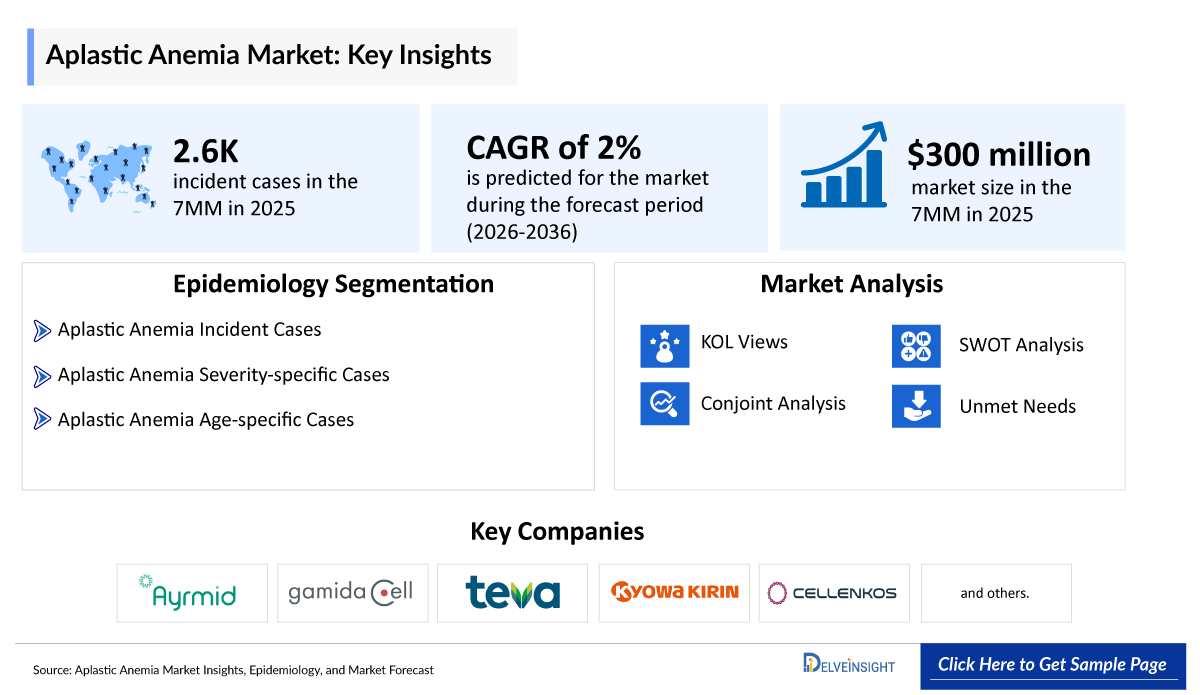
- 2025 Aplastic Anemia Market Size: ~USD 300 million
- 2036 Projected Aplastic Anemia Market Size: USD XXX million
- Aplastic Anemia Growth Rate (2026–2036): ~2% CAGR
DelveInsight's ‘Aplastic Anemia – Market Insights, Epidemiology and Market Forecast – 2036’ report delivers an in-depth understanding of Aplastic Anemia, historical and forecasted epidemiology, as well as the Aplastic Anemia market trends in the United States, EU4 (Germany, Spain, Italy, and France) and the United Kingdom, and Japan.
The Aplastic Anemia market report delivers a comprehensive analysis of the current treatment landscape, including standards of care, clinical practices, and evolving therapeutic algorithms. It evaluates patient burden trends, revenue & market share dynamics, peak patient share & therapy uptake analysis, and provides an in-depth market size assessment and growth rate projections (Historical & Forecast 2022–2036) across global regions. The report highlights key unmet medical needs in Aplastic Anemia and maps the competitive and clinical landscape to uncover high‑value opportunities, providing a clear outlook on future market growth potential.
|
Study Period |
2022–2036 |
|
Historical Year |
2022–2025 |
|
Forecast Period |
2026–2036 |
|
Base Year |
2026 |
|
Geographies Covered |
|
|
Aplastic Anemia Market CAGR (Study period/Forecast period) |
~2% (2026 ̶ 2036) |
|
Aplastic Anemia Epidemiology Segmentation Analysis |
Patient Burden Assessment
|
|
Aplastic Anemia Companies |
|
|
Aplastic Anemia Therapies |
|
|
Aplastic Anemia Market |
Segmented by
|
|
Analysis |
|
Key Factors Driving the Aplastic Anemia Market
Rising Incidence of Aplastic Anemia
Aplastic anemia is an uncommon disorder (~2 cases per million annually in Western populations) but shows a higher incidence in Asian countries. Rising incidence expands the patient pool, increasing demand for treatment and driving market growth.
Reshaping the HSCT Therapy Landscape
OMISIRGE consists of umbilical cord blood–derived hematopoietic stem cells expanded with nicotinamide, addressing key limitations of conventional cord blood transplants such as delayed engraftment and infection risk. It improves access to viable grafts without matched donors and represents a significant advance in SAA management, offering faster hematopoietic recovery with a favorable safety profile compared to traditional or unmodified transplant approaches.
Aplastic Anemia Understanding and Treatment Algorithm
Aplastic Anemia Overview and Diagnosis
Aplastic Anemia is characterized by pancytopenia with a hypocellular bone marrow, excluding marrow failure secondary to chemotherapy or radiotherapy. The lack of pathognomonic markers complicates diagnosis, which depends on marrow histology demonstrating diminished cellularity with fatty infiltration and systematic exclusion of alternative causes. Emerging evidence implicates mechanisms such as accelerated telomere shortening, acquired mutations in myeloid-associated genes, clonal hematopoiesis, and dysregulated cytokine milieus in disease pathogenesis. The clinical manifestations arise from inadequate hematopoiesis, with symptom severity varying widely. Some individuals remain mildly affected and stable for years, whereas others develop progressive, potentially life-threatening complications.
Aplastic anemia is broadly classified into congenital and acquired types. Inherited variants are uncommon and encompass Fanconi anemia, dyskeratosis congenita, congenital pure red cell aplasia, and Shwachman–Diamond syndrome. Management approaches include hematopoietic stem cell transplantation (HSCT) and anti-thymocyte globulin (ATG)-based immunosuppressive therapy (IST).
Aplastic Anemia Diagnosis
Aplastic anemia is diagnosed through a structured integration of clinical presentation, hematologic findings, and bone marrow evaluation, with emphasis on excluding secondary and reversible causes at the outset. Patients commonly present with manifestations of pancytopenia, including fatigue from anemia, recurrent infections due to neutropenia, and bleeding or bruising related to thrombocytopenia, prompting initial laboratory assessment that reveals reduced counts across all three cell lines, accompanied by a low reticulocyte count, indicating diminished marrow production. Definitive diagnosis is established by bone marrow aspiration and biopsy demonstrating a markedly hypocellular marrow with replacement by fat and absence of malignant infiltration or significant fibrosis. Contemporary diagnostic approaches require systematic evaluation for underlying etiologies, including drug or toxin exposure, viral infections, autoimmune disorders, and inherited bone marrow failure syndromes, particularly in younger individuals, alongside screening for paroxysmal nocturnal hemoglobinuria clones given its clinical overlap. Severity assessment, based on the depth of cytopenias and marrow cellularity, is essential for guiding management decisions. Current recommendations also highlight the importance of early specialist referral, HLA typing at diagnosis, and incorporation of molecular testing to identify clonal abnormalities that may influence prognosis and risk of progression to myelodysplastic syndromes or acute leukemia, ensuring a comprehensive and analytically grounded diagnosis.
Further details are provided in the report.
Aplastic Anemia Treatment
Allogeneic hematopoietic stem cell transplantation is the treatment of choice in children and younger adults, involving eradication of defective marrow by chemotherapy followed by intravenous infusion of donor stem cells that engraft and restore hematopoiesis. Optimal donors include matched siblings or genetically similar relatives, though matched unrelated or haploidentical donors are increasingly used. Potential complications include graft rejection and graft-versus-host disease, ranging from mild to life-threatening, often requiring prophylactic or therapeutic immunosuppression. Patients ineligible for transplantation, due to age or donor unavailability, are typically managed with immunosuppressive therapy, as many cases result from immune-mediated marrow destruction; commonly used agents include antithymocyte globulin (ATG), particularly horse-derived, and cyclosporine. Supportive care remains integral, incorporating transfusions, hematopoietic growth factors, infection prophylaxis, iron chelation in chronically transfused patients, and psychosocial support, with regular monitoring to guide individualized management strategies.
Further details related to country-based variations are provided in the report.
Aplastic Anemia Unmet Needs
The section “unmet needs of Aplastic Anemia” outlines the critical gaps between the current state of patient care, diagnosis, and the ideal & effective management of the disease. It highlights the obstacles experienced by patients, clinicians, and researchers and identifies potential solutions for future progress.
- Need for effective treatment options
- Unspecified treatment algorithms for older patients
- Long-term medication adherence
- Relapse after immunosuppressive therapy and others…..
Comprehensive unmet needs insights in Aplastic Anemia and their strategic implications are provided in the full report.
Aplastic Anemia Epidemiology
Key Findings from Aplastic Anemia Epidemiological Analysis and Forecast
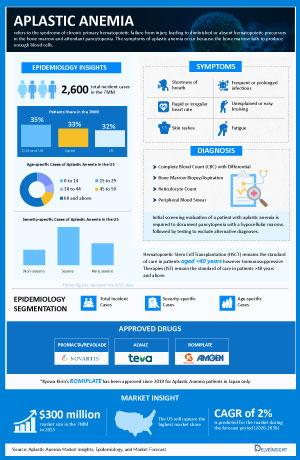
- As per DelveInsight estimates, the total incident population of aplastic anemia in the 7MM was around 2,600 cases in 2025. These cases are projected to increase during the forecast period.
- Japan accounted for the highest Incident cases of aplastic anemia in the 7MM in 2025, with approximately 850 cases.
- In the United States, it is observed that aplastic anemia occurs primarily in the age group of 60 years and above, accounting for ~56% of all cases, in 2025.
- Among EU4 and the UK, Germany accounted for the highest number of aplastic anemia cases, followed by France, whereas Spain accounted for the lowest number of cases in 2025.
- Among the severity-specific cases, SAA was more common in the United States, with ~430 cases in 2025.
Aplastic Anemia Drug Chapters & Competitive Analysis
The Aplastic Anemia drug chapter provides a detailed, market-focused review of approved therapies and the emerging pipeline across Phase I–III clinical trials. It covers the mechanism of action, clinical trial data, regulatory approvals, patents, collaborations, and strategic partnerships for each therapy, along with their advantages, limitations, and recent developments. This section offers critical insights into the Aplastic Anemia treatment landscape, supporting market assessment, competitive analysis, and growth forecasting for the Aplastic Anemia therapeutics market.
Approved Therapies for Aplastic Anemia
OMISIRGE (omidubicel-onlv): Ayrmid (Gamida Cell)
OMISIRGE is the first HSCT therapy for patients with SAA. The therapy is indicated for adults and children aged six years and older who lack a compatible stem cell donor and undergo reduced-intensity conditioning. It was approved by the US FDA in December 2025.
ALVAIZ (eltrombopag choline): Teva Pharmaceuticals
ALVAIZ is an oral thrombopoietin (TPO) receptor agonist that works to increase platelet production by interacting with the transmembrane domain of the human TPO-receptor to initiate signaling cascades that induce proliferation and differentiation of megakaryocytes. In November 2023, the US FDA approved ALVAIZ for the treatment of certain forms of thrombocytopenia and SAA.
ROMIPLATE (romiplostim): Kyowa Kirin
ROMIPLATE is composed of a recombinant protein acting on the thrombopoietin receptor, which has been licensed from Amgen to Kyowa Kirin. It was launched for aplastic anemia in patients who had an inadequate response to conventional therapy in June 2019 in Japan. In September 2023, Kyowa Kirin received approval from the Japanese MHLW for the hematopoietic stimulating agent ROMIPLATE to change the approved indication from “aplastic anemia in patients who had an inadequate response to conventional therapy” to “aplastic anemia” in Japan.
Note: Detailed marketed therapies assessment will be provided in the final report.
Aplastic Anemia Pipeline Analysis
CK0801: Cellenkos
CK0801 is a first-in-class, allogeneic, cord blood-derived T-regulatory cell product, developed from Cellenkos' proprietary manufacturing platform that overcomes immune dysfunction by inhibiting key drivers of inflammation. CK0801 contains robust regulatory T-cells derived from healthy donor cord blood units. The drug CK0801 is currently undergoing evaluation in the Phase I clinical trial.
Note: A detailed emerging therapies assessment will be provided in the final report
Aplastic Anemia Key Players, Market Leaders, and Emerging Companies
- Ayrmid (Gamida Cell)
- Teva Pharmaceuticals
- Kyowa Kirin
- Cellenkos, and others
Aplastic Anemia Drug Updates
- Regeneron announced in 2025 that they have discontinued the study of REGN7257 in Aplastic anemia.
- In February 2026, Ayrmid announced presentation of additional positive results for OMISIRGE in treating SAA at TANDEM 2026.
- In April 2025, Cellenkos announced that the US FDA had granted ODD to its novel cell therapy product, CK0801. Cellenkos was planning for a registration trial of CK0801 in H2 2025.
Aplastic Anemia Market Outlook
Management of aplastic anemia varies according to disease severity. In real-world practice, non-severe aplastic anemia (NSAA) is approached differently from severe and very severe forms (SAA/VSAA), as hematopoietic stem cell transplantation (HSCT) is generally not used in NSAA, and criteria for treatment initiation are less clearly defined, with management often guided by institutional experience. Historically, treatment has centered on immunosuppressive therapy (IST) and bone marrow transplantation (BMT/HSCT). In SAA/VSAA, age is a key determinant of outcomes following matched sibling donor (MSD) transplantation, with younger patients deriving the greatest benefit from upfront HSCT, while older patients—often with prior IST exposure, comorbidities, poorer performance status, and delayed transplantation—tend to have less favorable outcomes, although fludarabine-based regimens may offer some advantage. For patients aged ≥40 years, frontline IST with antithymocyte globulin (ATG) plus cyclosporine remains the standard of care, whereas HSCT is preferred in children and young adults with an MSD. In older patients or those lacking an MSD, IST is favored due to comparable efficacy and lower morbidity, with horse ATG preferred over rabbit ATG based on superior response and survival outcomes; patients with SAA frequently require ongoing transfusion support. In the second-line setting, HSCT is considered for patients refractory to IST, depending on fitness and donor availability, with age thresholds remaining flexible and institution-dependent.
The introduction of thrombopoietin receptor agonists has expanded treatment options, particularly eltrombopag (PROMACTA/REVOLADE), which received EMA approval in 2015 for IST-refractory SAA in patients ineligible for HSCT, approval in Japan in 2017 for both refractory and treatment-naïve patients, and US FDA approval in 2018 as first-line therapy in combination with IST as well as for refractory disease; dosing varies by age and clinical context and may require adjustment in hepatic impairment and certain ethnic groups. Romiplostim is approved for aplastic anemia in Japan, including first-line use, but remains unapproved for this indication in the US and Europe. Most recently, in December 2025, the US FDA approved omidubicel-onlv (OMISIRGE), a cord blood–derived HSCT therapy for patients with SAA lacking suitable donors, which has been shown to accelerate neutrophil recovery and may reduce infection risk.
- According to DelveInsight's analysis, the Aplastic anemia market across the 7MM reached approximately USD 300 million in 2025, with the US holding the largest share.
- The overall market of Aplastic anemia in the 7MM is expected to cross USD 300 million by 2036.
- The aplastic anemia market is projected to decline from 2026 onward, driven by the anticipated entry of generic versions of PROMACTA.
- Treatment for SAA in the elderly is uncertain, considering both illness characteristics and the patient’s health to minimize treatment-related risks. Hematopoietic cell transplantation (HCT) is often a second-line choice for elderly SAA patients.
Further details will be provided in the report….
Drug Class/Insights into Leading Emerging and Marketed Therapies in Aplastic Anemia (2022–2036 Forecast)
The Aplastic Anemia market comprises HSCT therapy, thrombopoietin (TPO) receptor agonist, and cord blood-derived T-regulatory cell product.
- HSCT therapy: OMISIRGE is a nicotinamide-expanded cord blood–derived hematopoietic stem and progenitor cell therapy that enhances stem cell homing, engraftment, and self-renewal. By improving the efficiency and speed of donor cell engraftment, it restores hematopoiesis more rapidly, thereby addressing bone marrow failure in aplastic anemia and reducing complications related to delayed immune and blood cell recovery.
- Thrombopoietin (TPO) receptor agonists: PROMACTA (eltrombopag) and ROMIPLATE (romiplostim) act by stimulating the c-MPL (TPO) receptor on hematopoietic stem and progenitor cells, promoting proliferation and differentiation across multiple blood cell lineages. In aplastic anemia, this helps overcome marrow failure by enhancing residual stem cell activity, leading to improved platelet production and, in many cases, broader hematopoietic recovery.
Further details will be provided in the report….
Aplastic Anemia Drug Uptake
This section focuses on the uptake rate of potential drugs expected to be launched in the market during the forecast period (2026–2036). The analysis covers the Aplastic Anemia market's uptake by drugs, patient uptake by therapy, and sales of each drug.
With the entry of generics, uptake of branded therapies is expected to decelerate, resulting in projected revenue erosion and heightened pricing pressure, while improving patient access. However, with relatively limited emerging drug options, market expansion through novel pharmacotherapies remains constrained. At the same time, increasing adoption and ongoing advances in HSCT are likely to further reshape the treatment paradigm, shifting preference toward potentially curative approaches and influencing overall market dynamics.
Further detailed analysis of emerging therapies' drug uptake in the report…
Market Access and Reimbursement of Aplastic Anemia
The United States
|
The US Reimbursement for Aplastic Anemia Therapies | |
|
Drug |
Access Program |
|
ALVAIZ |
ALVAIZ Savings Card |
Reimbursement is a crucial factor that affects the drug’s access to the market. Often, the decision to reimburse comes down to the price of the drug relative to the benefit it produces in treated patients. To reduce the healthcare burden of these high-cost therapies, many payment models are being considered by payers and other industry insiders.
Further details are provided in the final report….
Aplastic Anemia Therapies Price Scenario & Trends
Pricing and analogue assessment of Aplastic Anemia therapies highlights evolving price dynamics structures. This section summarizes the cost of approved treatments, the closest and most appropriate analogue selection for emerging therapies, and understanding of how pricing influences market access, adherence, and long-term uptake.
- Pricing of Aplastic Anemia Approved Drugs
PROMACTA's annual therapy cost for Aplastic Anemia treatment is approximately USD 195,000 per patient, based on US WAC for a standard 50 mg daily dose.
Further details are provided in the final report….
Industry Experts and Physician Views for Aplastic Anemia
To keep up with Aplastic Anemia market trends, we take Key Opinion Leaders (KOLs) and Subject Matter Experts (SMEs) opinions working in the domain through primary research to fill the data gaps and validate our secondary research. Industry experts were contacted for insights on the Aplastic Anemia emerging therapies, evolving treatment landscape, patient adherence to conventional therapies, therapy switching trends, drug adoption and uptake, accessibility challenges, and epidemiology and real-world prescription patterns in Aplastic Anemia, including MD, PhD, Instructor, Postdoctoral Researcher, Professor, Researcher, and others.
|
Region |
Key Opinion Leaders (KOLs) and Subject Matter Experts (SMEs) |
|
United States |
“Approximately 75% of patients who receive a bone marrow transplant from a compatible donor have a 5-year survival rate. The majority of those without medical attention die within a year as a result of bleeding, infections, or advancement to lymphoproliferative disorders.” |
|
Germany |
“The diagnosis of pAA is difficult because pregnancy causes physiologic hematological alterations in the total blood count, which can conceal the condition. Meticulous monitoring and appropriate support therapy provided by a trained multidisciplinary team have the potential to improve outcomes for women and their newborns. All women should have frequent exams to maximize their care during pregnancy and after birth, and decisive therapy should be provided.” |
DelveInsight’s analysts connected with 10+ KOLs to gather insights; however, interviews were conducted with 6+ KOLs in the 7MM. Centers such as the Düsseldorf Clinics Association, Tennessee State University, and Hirosaki University, etc. were contacted. Their opinion helps understand and validate current and emerging Aplastic Anemia therapies, highlight unmet medical needs, provide epidemiological context, and support strategic decisions for market access, therapy adoption, and pipeline prioritization in Aplastic Anemia.
Qualitative Analysis: SWOT and Conjoint Analysis
We perform qualitative and market Intelligence analysis using various approaches, such as SWOT analysis and conjoint analysis.
In the SWOT analysis of Aplastic Anemia, strengths, weaknesses, opportunities, and threats in terms of disease diagnosis, patient awareness, patient burden, competitive landscape, cost-effectiveness, and geographical accessibility of therapies are provided.
Conjoint analysis analyzes emerging therapies based on relevant attributes such as safety, efficacy, frequency of administration, route of administration, and order of entry. Scoring is given based on these parameters to analyze the effectiveness of therapy.
The team of analysts analyzes promising emerging therapies based on relevant attributes such as safety, efficacy, frequency of administration, route of administration, and order of entry. In efficacy, the trial’s primary and secondary outcome measures are evaluated, whereas the therapies’ safety is evaluated, wherein the acceptability, tolerability, and adverse events are mainly observed. In addition, the scoring is also based on the route of administration, order of entry, probability of success, and the addressable patient pool for each therapy. According to these parameters, the final weightage score and the ranking of the emerging therapies are decided.
Scope of the Report
- The report covers a segment of key events, an executive summary, a descriptive overview of Aplastic Anemia, explaining its causes, signs and symptoms, pathogenesis, and currently available treatments.
- Comprehensive insight has been provided into the epidemiology segments and forecasts, the future growth potential of the diagnosis rate, and disease progression along treatment guidelines.
- Additionally, an all-inclusive account of both the current and emerging treatments, along with the elaborative profiles of late-stage and prominent therapies, will have an impact on the current treatment landscape.
- A detailed review of the Aplastic Anemia market, historical and forecasted market size, market share by therapies, detailed assumptions, and rationale behind our approach is included in the report, covering the 7MM drug outreach.
- The report provides an edge while developing business strategies by understanding trends through SWOT analysis and expert insights/KOL views, patient journey, and treatment preferences that help in shaping and driving the 7MM Aplastic Anemia market.
Report Insights
- Aplastic Anemia Patient Population Forecast
- Aplastic Anemia Therapeutics Market Size
- Aplastic Anemia Pipeline Analysis
- Aplastic Anemia Market Size and Trends
- Aplastic Anemia Market Opportunity (Current and Forecasted)
Report Key Strengths
- Epidemiology‑based (Epi‑based) Bottom‑up Forecasting
- Artificial Intelligence (AI)-enabled Market Research Report
- 11-year Forecast
- Aplastic Anemia Market Outlook (North America, Europe, Asia-Pacific)
- Patient Burden Trends (by Geography)
- Aplastic Anemia Treatment Addressable Market (TAM)
- Aplastic Anemia Competitive Landscape
- Aplastic Anemia Major Companies Insights
- Aplastic Anemia Price Trends and Analogue Assessment
- Aplastic Anemia Therapies Drug Adoption/Uptake
- Aplastic Anemia Therapies Peak Patient Share Analysis
Report Assessment
- Aplastic Anemia Current Treatment Practices
- Aplastic Anemia Unmet Needs
- Aplastic Anemia Clinical Development Analysis
- Aplastic Anemia Emerging Drugs Product Profiles
- Aplastic Anemia Market Attractiveness
- Aplastic Anemia Qualitative Analysis (SWOT and Conjoint Analysis)
FAQs
Market Insights
- What was the Aplastic Anemia market size, the market size by therapies, market share (%) distribution in 2025, and what would it look like by 2036? What are the contributing factors for this growth?
- What are the anticipated pricing variations among different geographies for the emerging therapies in the future?
- What can be the future treatment paradigm of Aplastic Anemia?
- What are the disease risks, burdens, and unmet needs of Aplastic Anemia? What will be the growth opportunities across the 7MM concerning the patient population with Aplastic Anemia?
- Who is the major future competitor in the market, and how will the competitors affect their market share?
- What are the current options for the treatment of Aplastic Anemia? What are the current guidelines for treating Aplastic Anemia in the US, Europe, and Japan?
Reasons to Buy
- The report will help in developing business strategies by understanding the latest trends and changing treatment dynamics driving the Aplastic Anemia market.
- Bottom‑up forecasting builds from the affected population to product forecasts, delivering a robust, data‑driven approach ideal for new therapies and novel classes.
- Insights on patient burden/disease incidence, evolution in diagnosis, and factors contributing to the change in the epidemiology of the disease during the forecast years.
- Understand the existing market opportunities in varying geographies and the growth potential over the coming years.
- Identifying strong upcoming players in the market will help devise strategies to help get ahead of competitors.
- Detailed analysis and ranking of class-wise potential current and emerging therapies under the conjoint analysis section to provide visibility around leading classes.
- To understand KOLs’ perspectives on the accessibility, acceptability, and compliance-related challenges of existing treatment to overcome barriers in the future.
- Detailed insights into the unmet needs of the existing market so that the upcoming players can strengthen their development and launch strategy.
- This Artificial Intelligence (AI) ‑enabled report summarize and simplify complex datasets within the report into clear, actionable insights for stakeholders, investors, and healthcare providers, enabling faster, data‑driven decisions.