Acute Myeloid Leukemia Market Summary
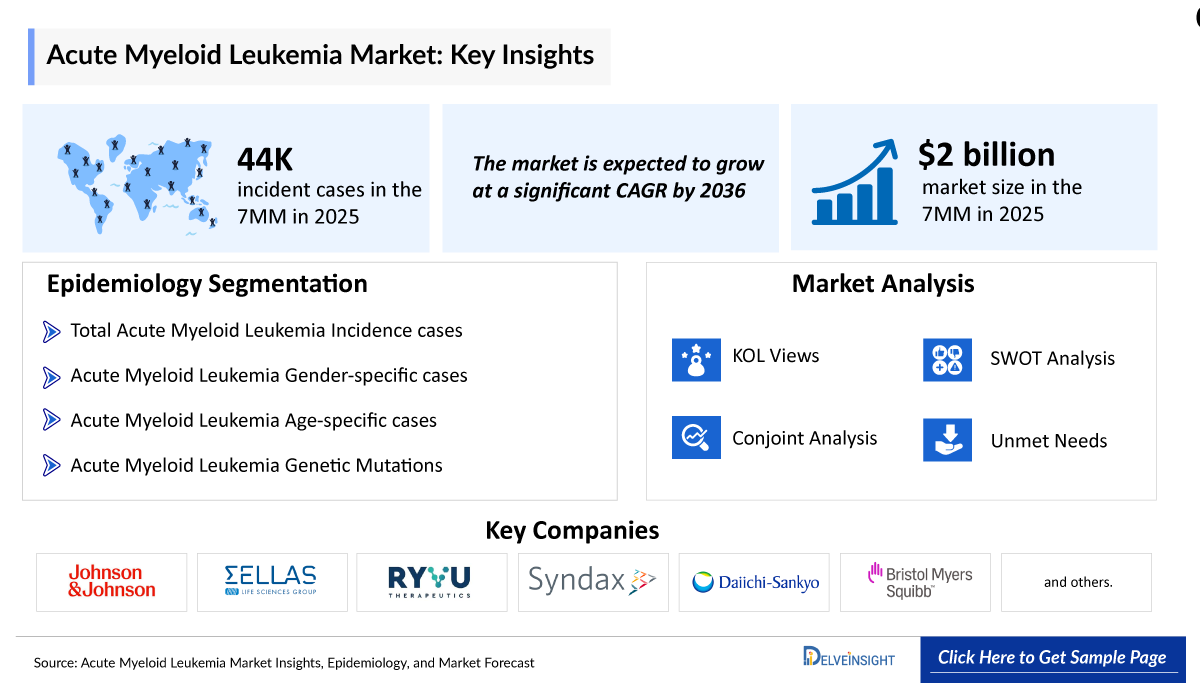
- The Acute Myeloid Leukemia Market is projected to grow at a significant CAGR by 2036 in the leading countries (the US, EU4, UK, and Japan).
- The leading Acute Myeloid Leukemia Companies include Daiichi Sankyo, Agios Pharma, Astellas Pharma, Rigel Pharmaceuticals, Jazz Pharmaceuticals, Novartis, Pfizer, Abbvie, BMS, Arog Pharmaceuticals, Actinium Pharmaceutical, Astex Pharmaceutical, Syndax, Geron, SELLAS Life Sciences, Johnson & Johnson Innovative Medicine, Sanofi, Affimed, Sumitomo Pharma, Kura Oncology, CULLINAN THERAPEUTICS, Molecular Partners, Caribou Biosciences, BioPath Holdings, and others.
Acute Myeloid Leukemia Market and Epidemiology Analysis
- In 2023, the United States accounted for the largest Acute Myeloid Leukemia Treatment Market Size, in comparison to EU4 (Germany, France, Italy, and Spain) and the United Kingdom and Japan.
- AML, a highly aggressive form of leukemia originating in the bone marrow, is treated through intensive or nonintensive approaches centered around chemotherapy, often combined with stem cell transplant, targeted therapies, radiotherapy, or leukapheresis.
- Treatment options depend on patient-specific factors. While multiagent induction chemotherapy can induce complete remission, allogeneic hematopoietic stem cell transplantation remains the only established curative therapy.
- While the majority of newly diagnosed patients with AML, receiving frontline therapy, achieve remission, 30-40% will experience a relapse.
- The KMT2A rearrangement is present in up to 15% of children and adults with acute leukemias and around 80% of infants with acute lymphoblastic leukemia. The NPM1 mutation is more common, occurring in up to 30% of patients with AML.
- Menin inhibitors represent a novel and promising treatment strategy for acute leukemias characterized by KMT2A rearrangements (KMT2Ar) and NPM1 mutations (NPM1m). REVUFORJ (revumenib) has become the first menin inhibitor to receive approval from the US FDA for use in relapsed or refractory KMT2Ar acute leukemias. In addition, multiple other menin inhibitors with unique safety and efficacy profiles are currently undergoing development for the treatment of AML.
- According to the American Cancer Society, in 2026, approximately 22,720 people in the US will be diagnosed with AML, mostly adults, and about 11,500, also mostly adults, will die from it.
- The total 7MM Acute Myeloid Leukemia Incidence Cases in 2023 were 43,500, out of which the highest cases of this disease were seen in the United States.
- While the majority of newly Acute Myeloid Leukemia Diagnosed Patients receiving frontline therapy achieve remission, 30-40% will experience a relapse.
- The Acute Myeloid Leukemia Treatment Market Landscape has remained virtually unchanged for almost five decades. Approved Acute Myeloid Leukemia Drugs in frontline and relapse/refractory setting include VYXEOS (Jazz Pharmaceuticals), revumenib (REVUFORJ), olutasidenib (REZLIDHIA), and gilteritinib (XOSPATA), RYDAPT (Novartis), and ONUREG (BMS), DAURISMO (Pfizer), TIBSOVO (Agios Pharma), VENCLEXTA (Abbvie), IDHIFA (BMS), XOSPATA (Astellas Pharma), VANFLYTA (Daiichi Sankyo), REZLIDHIA (Rigel Pharmaceuticals), and others.
- Key Acute Myeloid Leukemia Companies, including Arog Pharmaceuticals (Crenolanib), Actinium Pharmaceuticals (Iomab-B), Astex Pharmaceuticals (ASTX030), Syndax (Revumenib), SELLAS Life Sciences (SLS009), Johnson & Johnson Innovative Medicine (JNJ-75276617), and others, are currently working on developing therapies for Acute Myeloid Leukemia.
- The KMT2A rearrangement is present in up to 15% of children and adults with acute leukemias and around 80% of infants with acute lymphoblastic leukemia. The NPM1 mutation is more common, occurring in up to 30% of Acute Myeloid Leukemia Patients.
- In January 2026, the FDA granted BTD to ICT01 (IPN60340), an investigational anti-BTN3A antibody, in combination with venetoclax (Venclexta) and azacitidine for first-line treatment of AML.
- Acute Myeloid Leukemia Companies involved in the emerging treatment landscape of AML are SELLAS Life Sciences, Johnson & Johnson, Ryvu Therapeutics SA, Ipsen, and others
- Acute Myeloid Leukemia Market Growth is expected to be mainly driven by the entry of novel therapies with better clinical profiles, an increase in market penetration of targeted/advanced therapies, an upsurge in research and development, an enriched understanding of the disease, and increased AML incidence, and imminent drug launches.
- In February 2024, Gilead Sciences discontinued the Phase III ENHANCE-3 study and the US FDA placed all magrolimab studies in MDS and AML, including related expanded access programs, on full clinical hold. The discontinuation was issued based on the results of an interim analysis of this trial as well as the data from the ENHANCE and ENHANCE-2 studies that demonstrated futility and increased risk of death. With this the company will no longer pursue development of the treatment in hematologic cancers.
- Acute Myeloid Leukemia Market Growth is expected to be mainly driven by the entry of novel therapies with better clinical profiles, an increase in market penetration of targeted/advanced therapies, an upsurge in research and development, an enriched understanding of the disease, and increased Acute Myeloid Leukemia Incidence, and imminent drug launches. Whereas the high cost of therapy, toxic therapies, limitations in designing clinical trials, and low survival rates halt the market growth.
Request for Unlocking the Sample Page of the "Acute Myeloid Leukemia Treatment Market"
Key Factors Driving the Acute Myeloid Leukemia Market Growth
-
Intensified R&D and Clinical Pipeline Activity
Substantial research investments and numerous clinical trials for novel agents, including immunotherapies, Bispecific Antibodies, and new small molecules, are fueling innovation, enriching the drug pipeline, and driving future market growth.
-
Rising Prevalence and Incidence
AML primarily affects older adults, with a median diagnosis age of ~68 years. Globally, AML incidence is about 1.2–4 per 100,000 annually, but rates rise sharply with age. Improved diagnostics, increased awareness, and better cancer registries are identifying more cases earlier, expanding the patient pool and driving treatment demand.
-
Improved Supportive Care and Treatment Accessibility
Oral targeted therapies, better antifungal and antibacterial prophylaxis, and supportive care innovations allow more outpatient or home-based management. This improves patient quality of life and broadens treatment accessibility beyond traditional inpatient settings.
DelveInsight’s "Acute Myeloid Leukemia Treatment Market Insight, Epidemiology, and Market Forecast – 2036" report delivers an in-depth understanding of Acute Myeloid Leukemia, historical and forecasted epidemiology as well as the Acute Myeloid Leukemia market trends in the United States, EU4 (Germany, France, Italy, and Spain) and the United Kingdom, and Japan.
The Acute Myeloid Leukemia Treatment Market Report provides current treatment practices, emerging drugs, Acute Myeloid Leukemia market share of individual therapies, and current and forecasted Acute Myeloid Leukemia market size from 2022 to 2036, segmented by seven major markets. The report also covers current Acute Myeloid Leukemia treatment market practices/algorithms and unmet medical needs to curate the best of the opportunities and assess the underlying potential of the market.
Scope of the Acute Myeloid Leukemia Market | |
|
Study Period |
2022–2036 |
|
Forecast Period |
2026–2036 |
|
Geographies Covered |
|
|
Acute Myeloid Leukemia Epidemiology |
Segmented by:
|
|
Acute Myeloid Leukemia Companies |
|
|
Acute Myeloid Leukemia Drugs |
|
|
Acute Myeloid Leukemia Drugs Market |
Segmented by:
|
|
Analysis |
|
Acute Myeloid Leukemia Understanding
Acute myeloid leukemia is a heterogeneous hematologic malignancy characterized by the clonal expansion of myeloid blasts in the peripheral blood, bone marrow, and/or other tissues. AML can involve tissues outside the bone marrow and blood, including lymph nodes, the brain, skin, and other body parts. The classification of AML depends on the etiology, genetics, immunophenotype, and morphology.
Myelodysplastic syndrome is by far the most typical risk factor for AML. Myelofibrosis and aplastic anemia are two other hematological conditions increasing the risk of AML. The main Acute Myeloid Leukemia symptoms are caused by a lack of normal blood cells; as AML develops quickly, people usually report feeling unwell for only a short period (days or weeks) before they are diagnosed.
Acute Myeloid Leukemia Diagnosis
For many years the Acute Myeloid Leukemia diagnosis was based solely on pathologic and cytological examination of bone marrow and peripheral blood smears. Initially proposed in 1976, the FAB established a classification method that divides the AML into eight different subtypes according to the morphological appearance of blasts and their reactivity with histochemical stains. A way to recognize and classify different subgroups of AML through clinical, morphological, and genetic correlation was proposed by the WHO, which made a new classification that was updated in 2008.
This classification has important differences from the classification of the FAB. Over time, Various tests and examinations are involved in the accurate diagnosis and Acute Myeloid Leukemia classification into different subtypes, including, complete blood count (CBC), flow cytometry, bone marrow aspiration and biopsy, cytogenetic analysis, molecular testing, and immunophenotyping. Various imaging tests such as PET/CT scan or CT-guided needle biopsy are also required to make accurate diagnosis.
Current Acute Myeloid Leukemia Treatment Landscape
Remission is the treatment target for AML, and the current standard of care for AML relies on intense chemotherapy-based induction, consolidation therapy, and hematopoietic stem cell transplantation. Despite induction therapy, there is still minimal residual disease for which consolidation therapy is initiated to prevent any relapse risk by eliminating the residual disease.
Stem cell transplants are intensive treatments with real risks of serious complications, including death, and their exact role in treating AML is not always clear. If further treatment or a clinical trial is not an option, the focus of treatment may shift to controlling symptoms caused by leukemia rather than trying to cure it.
Acute Myeloid Leukemia Unmet Needs
The section “unmet needs of Acute Myeloid Leukemia (AML)” outlines the critical gaps between the current state of patient care, diagnosis, and the ideal & effective management of the disease. It highlights the obstacles experienced by patients, clinicians, and researchers and identifies potential solutions for future progress.
- Genetic heterogeneity and clonal evolution lead to resistance to targeted therapies
- Need for better Minimal Residual Disease monitoring and eradication
- Access to curative therapies
- Precision medicine expansion, and others…..
Note: Comprehensive unmet needs insights in AML and their strategic implications are provided in the full report.
Acute Myeloid Leukemia Epidemiology
The acute myeloid leukemia epidemiology chapter in the report provides historical as well as forecasted epidemiology segmented by the total Acute Myeloid Leukemia Incidence cases, Acute Myeloid Leukemia Gender-specific cases, Acute Myeloid Leukemia age-specific cases, and Acute Myeloid Leukemia genetic mutations in the 7MM covering the United States, EU4 (Germany, France, Italy, and Spain) and the United Kingdom, and Japan from 2022 to 2036.
Acute Myeloid Leukemia Epidemiological Analysis and Forecast
- According to DelveInsight’s estimates, in 2025, the total number of Acute Myeloid Leukemia Incident Cases in the 7MM were ~44,000.
- As per DelveInsight’s estimates, it has been observed that AML is slightly more common in males (~55%) than females.
- AML can occur in children, but it is uncommon in people under the age of 45. The average age of people when they are first diagnosed with AML is about 69.
- Among all the genetic mutations in AML, NPM1 gene mutation accounted for the majority of the cases.
- AML can occur in children, but it is uncommon in people under the age of 45. The average age of people when they are first diagnosed with AML is about 69.
- Among all the genetic mutations in AML, NPM1 gene mutation accounted for the majority of the cases.
Acute Myeloid Leukemia Epidemiology Segmentation
- Total Acute Myeloid Leukemia Incidence cases
- Acute Myeloid Leukemia Gender-specific cases
- Acute Myeloid Leukemia Age-specific cases
- Acute Myeloid Leukemia Genetic Mutations
- Acute Myeloid Leukemia Line-wise Treated Pool
Acute Myeloid Leukemia Market Recent Developments and Breakthroughs
- In January 2026, SELLAS Life Sciences Group announced an agreement with IMPACT-AML, a European collaborative initiative to conduct a clinical study evaluating SLS009. The study in Europe is planned to enroll approximately 40 patients to evaluate SLS009 in combination with azacitidine and venetoclax in patients with newly diagnosed AML with high-risk features.
- In January 2026, Ryvu Therapeutics announced that they have received the minutes of the Type C meeting with the US FDA. The FDA raised no objections to opening the expansion cohort in the US with romaciclib at a dose of 150 mg once daily in combination with venetoclax, which was assessed in Cohort 4 of the RIVER-81 study. After obtaining more mature clinical data from the expansion stage, Ryvu Therapeutics plans to hold a subsequent regulatory meeting with the FDA to discuss the further clinical development strategy for the romaciclib program in the aforementioned regulatory pathway.
- In September 2025, Akeso Inc. (9926.HK) announced that its monoclonal antibody ligufalimab (AK117) received FDA Orphan Drug Designation for treating acute myeloid leukemia (AML). This status offers development support, tax benefits, and up to seven years of market exclusivity upon approval.
- In July 2025, ImCheck Therapeutics announced that the FDA granted Orphan Drug Designation to ICT01, their humanized anti-BTN3A monoclonal antibody targeting γ9δ2 T cells, for treating acute myeloid leukemia (AML). AML is especially challenging to treat in older or unfit patients ineligible for intensive chemotherapy.
- In July 2025, the FDA accepted the supplemental new drug application for INQOVI (decitabine and cedazuridine) plus venetoclax to treat adults with newly diagnosed acute myeloid leukemia (AML) who cannot undergo intensive chemotherapy. The FDA set a standard review with a decision expected by February 25, 2026. This is based on Phase 2b study results from ASCERTAIN-V.
- In July 2025, Syndax Pharmaceuticals announced that the FDA granted Priority Review for its supplemental New Drug Application (sNDA) for Revuforj (revumenib), targeting relapsed or refractory mutant NPM1 acute myeloid leukemia (AML). The FDA’s Real-Time Oncology Review program is expediting the process, with a PDUFA action date set for October 25. Revuforj is an oral menin inhibitor initially approved in 2024 for acute leukemia with KMT2A translocation.
- In June 2025, Senti Biosciences announced FDA orphan drug designation for SENTI-202 to treat relapsed/refractory hematologic malignancies, including AML.
- In June 2025, Kura Oncology and Kyowa Kirin announced the FDA has accepted Kura’s NDA for ziftomenib to treat adult relapsed or refractory AML with NPM1 mutation. The application received Priority Review, with a PDUFA date of November 30, 2025.
- In June 2025, Moleculin Biotech received FDA agreement on a single pediatric approval study to evaluate Annamycin combined with Cytarabine as a second-line treatment for pediatric relapsed/refractory acute myeloid leukemia (R/R AML).
- In March 2025, CERo Therapeutics Holdings, Inc. announced that the FDA gave a positive review on an amendment to its IND regarding Chemistry, Manufacturing, and Controls (CMC). This completes the company's final commitment to the FDA before initiating patient dosing and shortens the manufacturing timeline by about a week.
- In February 2025, Moleculin Biotech, Inc.announced that it received FDA feedback and guidance on its IND amendment, allowing a reduction in the size of its Phase 3 pivotal trial protocol. The trial is evaluating Annamycin in combination with Cytarabine (AnnAraC) for the treatment of AML patients who are refractory to or relapsed after induction therapy (R/R AML) (MB-108).
- In February 2025, Kura Oncology and Kyowa Kirin announced positive topline results from KOMET-001, a Phase 2 registration-directed trial of ziftomenib, a once-daily oral menin inhibitor, in patients with relapsed/refractory NPM1-mutant acute myeloid leukemia (AML).
- In February 2025, Auron Therapeutics, a clinical-stage biotechnology company focused on cell-state plasticity to improve outcomes in oncology and inflammatory diseases, announced progress in its lead KAT2A/B program and clinical candidate, AUTX-703. The company also completed a $27 million Series B financing.
- In Jan 2025, Medexus announced that the FDA approved GRAFAPEX™, an alkylating agent, with fludarabine as a preparative regimen for allogeneic hematopoietic stem cell transplantation (alloHSCT) in adult and pediatric patients aged one year and older with acute myeloid leukemia (AML) or myelodysplastic syndrome (MDS).
- In Jan 2025, PureTech Health announced that the FDA granted Fast Track designation to its investigational drug LYT-200 for treating acute myeloid leukemia (AML). This designation aims to accelerate the drug’s development and review process due to the critical need for new AML treatments.
- In Nov 2024, Shorla Oncology, a U.S.-Ireland specialty pharmaceutical company, announced that the FDA approved IMKELDI (imatinib) oral solution, the first oral liquid form of imatinib for treating certain forms of leukemia and other cancers.
- In Nov 2024, Syndax Pharmaceuticals announced that the FDA approved Revuforj® (revumenib) as the first and only menin inhibitor for treating relapsed or refractory (R/R) acute leukemia with a lysine methyltransferase 2A gene (KMT2A) translocation in adult and pediatric patients aged one year and older.
- In Nov 2024, Lin BioScience (6696, Taiwan OTC) announced that its lead pipeline, LBS-007, received Fast Track Designation from the FDA for the treatment of acute myeloid leukemia.
- In October 2024, the FDA granted fast-track designation to the novel GCN2 kinase modulator HC-7366 for treating adult patients with relapsed or refractory acute myeloid leukemia (AML).
- In September 2024, ImCheck Therapeutics announced that the FDA granted Fast Track designation to ICT01 in combination with azacitidine and venetoclax for treating acute myeloid leukemia (AML) patients aged 75 or older, or those with comorbidities that prevent standard chemotherapy. This decision follows encouraging results from the Phase 1 EVICTION study.
Acute Myeloid Leukemia Drugs Analysis
The AML drug chapter provides a detailed, market-focused review of approved therapies and the emerging pipeline across Phase IIII-I Acute Myeloid Leukemia clinical trials. It covers Acute Myeloid Leukemia mechanism of action, clinical trial data, regulatory approvals, patents, collaborations, strategic partnerships upcoming Key catalyst for each therapy, along with their advantages, limitations, and recent developments. This section offers critical insights into the AML treatment landscape, supporting market assessment, competitive analysis, and growth forecasting for the Acute Myeloid Leukemia Therapeutics Market.
Acute Myeloid Leukemia Marketed Drugs
-
Quizartinib (VANFLYTA): Daiichi Sankyo
Quizartinib (VANFLYTA), developed by Daiichi Sankyo, is an oral, highly potent type II FLT3 inhibitor that selectively targets FLT3-ITD mutations and has been specifically developed for patients with FLT3-ITD positive AML. In July 2023, the US FDA approved VANFLYTA (quizartinib), with standard cytarabine and anthracycline induction and cytarabine consolidation, and as maintenance monotherapy following consolidation chemotherapy, for the treatment of adult patients with newly diagnosed AML that is FLT3 internal tandem duplication (ITD)-positive. Later in September, the drug got approval in Europe for the same patient segment. Quizartinib also is approved in Japan for FLT3-ITD mutation positive AML, and as a monotherapy for relapsed/refractory AML that is FLT3-ITD positive.
-
Revumenib (REVUFORJ): Syndax Pharmaceuticals
Revumenib (REVUFORJ), developed by Syndax Pharmaceuticals, is an oral, selective menin inhibitor designed to disrupt the interaction between menin and KMT2A (MLL) fusion proteins, a key driver in certain genetically defined subsets of AML. The approval of the drug was primarily supported by results from the AUGMENT-101 clinical trial, which demonstrated clinically meaningful response rates, including complete remissions, along with a manageable safety profile. Beyond its approved indication, revumenib continues to be evaluated in multiple ongoing studies across earlier lines of therapy and in combination regimens.
Acute Myeloid Leukemia (AML) Marketed/Approved Therapies | ||||||
|
Drug/Therapy |
Company |
Indication |
Molecule Type |
MoA |
RoA |
Marketed Region |
|
Revumenib (REVUFORJ) |
Syndax Pharmaceuticals |
R/R AML with a susceptible NPM1 mutation |
Small molecule |
MENIN-KMT2A inhibitor |
Oral |
US: 2025 |
|
Quizartinib (VANFLYTA) |
Daiichi Sankyo |
FLT3-ITD mutation positive newly diagnosed AML |
Small molecule |
FLT3 inhibitor |
Oral |
US: 2023 |
|
Azacitidine (ONUREG) |
Celgene/Bristol Myers Squibb |
AML patients who achieved first complete remission |
Small molecule |
DNA methylation inhibitors |
Oral |
US: 2020 |
Acute Myeloid Leukemia Emerging Drugs
-
Bleximenib: Johnson & Johnson
Bleximenib is a MENIN-KMT2A inhibitor in Phase III clinical study by Janssen Research & Development. In june 2025, Johnson & Johnson announced new Phase Ib data showing encouraging antileukemic activity and a promising safety profile for bleximenib in combination with venetoclax and azacitidine for the treatment of AML. The results were featured in an oral presentation at the 2025 European Hematology Association (EHA) Congress (S137). According to the company’s earnings presentation, it is indicated that the organization has planned bleximenib for US submission for r/r AML (cAMeLot-1) in 2026
-
SLS009: SELLAS Life Sciences
SLS009 is a potential first- and best-in-class, highly selective, differentiated small molecule CDK9 inhibitor. Compared with other CDK9 inhibitors, SLS009 has reduced toxicity and increased potency. In patients with AML, data has shown SLS009 to demonstrate a high response rate, specifically among those with unfavorable prognostic factors like an ASXL1 mutation.
Recently, in July 2024, the FDA granted SLS009 a rare pediatric disease designation (RPDD) for the treatment of pediatric patients AML. Previously, the drug has also been granted an orphan drug designation for the treatment of relapsed/refractory AML, and in January 2024, a fast track designation was granted by the FDA to SLS009 for this same indication.
Acute Myeloid Leukemia Emerging Drugs | ||||||
|
Drug Name |
Company |
Highest Phase |
Indication |
RoA |
MoA |
Anticipated Launch in the US |
|
Bleximenib |
Johnson & Johnson |
III |
Newly Diagnosed AML |
Oral |
MENIN-KMT2A inhibitor |
Information is available in the full report |
|
L-Annamycin in Combination With Cytarabine |
Moleculin Biotech |
II/III |
R/R AML |
IV |
Topoisomerase II inhibitor |
Information is available in the full report |
|
SLS009 |
SELLAS Life Sciences |
I/II |
R/R AML |
IV |
CDK9 inhibitor |
Information is available in the full report |
|
Note: Launch insights are provisional and may change with future report updates or the occurrence of major key catalysts. | ||||||
2024 Conferences Key Highlights
|
Drug |
Company |
Title |
Abstract |
Result |
|
European Hematology Association (EHA) 2024 | ||||
|
JNJ-75276617 |
A Phase Ib study of the MENIN-KMT2A inhibitor JNJ-75276617 in combination with venetoclax and azacitidine in relapsed/refractory acute myeloid leukemia with alterations in KMT2A or NPM1 |
S113 |
| |
|
Revumenib |
Revumenib monotherapy in patients with relapsed/refractory KMT2Ar acute leukemia: Topline efficacy and safety results from the pivotal AUGMENT-101 Phase II study |
S131 |
| |
|
Revumenib + azacitidine + venetoclax |
Phase Ib study of azacitidine, venetoclax and revumenib in newly diagnosed older adults with NPM1 mutated or KMT2A rearranged AML: Interim results of dose escalation from the BEAT AML consortium |
S134 |
| |
|
DSP-5336 |
First-in-human Phase I/II study of the MENIN-MLL inhibitor DSP-5336 in patients with relapsed or refractory acute leukemia: Updated results from dose escalation |
S132 |
| |
|
Magrolimab |
Magrolimab vs. placebo in combination with venetoclax and azacitidine in previously untreated patients with acute myeloid leukemia who are ineligible for intensive chemotherapy: The ENHANCE-3 study |
S138 |
| |
|
SAR443579 |
Completed dose escalation from the first-in-human, Phase I/II study of CD123 NK cell engager, SAR443579, in relapsed or refractory acute myeloid leukemia or high risk-myelodysplasia |
S146 |
| |
|
ASCO 2024 | ||||
|
BP1001 |
Interim safety and efficacy of BP1001 in a Phase II acute myeloid leukemia (AML) study. |
6511 |
| |
Acute Myeloid Leukemia Companies, Market Leaders and Emerging Companies
· Johnson & Johnson
· SELLAS Life Sciences
· Syndax Pharmaceuticals
· Ryvu Therapeutics
· Daiichi Sankyo
· Celgene
· Bristol Myers Squibb, and others
Acute Myeloid Leukemia Drugs Market Insights
- FLT3 inhibitors: In some people with AML, the leukemia cells have a change (mutation) in the FLT3 gene. Drugs called FLT3 inhibitors target AML cells with this gene change. FLT3 inhibitors such as midostaurin (RYDAPT), quizartinib (VANFLYTA), and gilteritinib (XOSPATA) are now approved to treat people whose AML cells have an FLT3 mutation. Two generations of FLT3 inhibitors have been developed, each with varying levels of potency and specificity. Research has shown that these inhibitors enhance BCL-2 dependence while reducing BCL-xL and MCL-1 expression. This combination synergistically triggers apoptosis and increases the sensitivity of FLT3-mutated AML cells to venetoclax.
- IDH inhibitors: IDH inhibitors offer promising treatment options for patients with relapsed or refractory AML who have IDH mutations. However, for those newly diagnosed with IDH-mutated AML, these inhibitors may not be the most effective due to their low complete remission rates. While the safety of IDH inhibitors is generally manageable, physicians must remain vigilant in monitoring and addressing the differentiation syndrome adverse events associated with their use. Some of these drugs, such as IDHIFA, REZLIDHIA, and TIBSOVO, are now approved to treat AML with certain IDH gene mutations. Several other IDH inhibitors are now being studied as well.
- BCL-2 inhibitors: Some people with AML have leukemia cells that make too much of a protein called BCL-2. Leukemia cells that have too much BCL-2 tend to be harder to kill with chemo drugs. BCL-2 inhibitors prevent the BCL-2 protein from working in cancer cells. VENCLEXTA is a BCL-2 inhibitor that has been approved to treat AML with too much BCL-2 protein. Several other BCL-2 inhibitors are being studied as well.
Acute Myeloid Leukemia Market Outlook
The goal of treatment is remission and current conventional therapeutic options for AML rely on intensive chemotherapy-based induction and consolidation therapy, together with hematopoietic stem cell transplantation. However, not all patients are eligible for this intensive therapy, which can be both physically and mentally demanding, and this approach is more frequently used in healthy, younger patients. The standard treatment for AML involves cytarabine combined with an anthracycline (e.g., daunorubicin). This regimen has been the backbone of AML treatment for decades, particularly for younger, fit patients.
NPM1-mutant AML represents approximately 30% of new AML cases annually. Ziftomenib became the first investigational treatment to be granted breakthrough therapy designation in NPM1-mutant AML in April 2024. The pipeline therpaies includes SLS009, SNDX-5613/ Chemotherapy Regimen/HiDAC, Bleximenib, and others.
Overall, accelerated drug approvals for targeted therapies and immunotherapies, and expanding precision medicine capabilities are expected to drive steady growth in the 7MM AML market from 2022–2036, with strong commercial implications for both marketed products and emerging pipelines.
Key findings from Acute Myeloid Leukemia Market Forecast Report
- Among the 7MM, the US accounted for the largest market size of revumenib (REVUFORJ) in AML. i.e., USD ~90 million in 2025.
- AML market is expected to be distributed across multiple therapeutic classes, with significant contributions from targeted therapies (e.g., FLT3 and IDH inhibitors), while emerging agents such as menin inhibitors are anticipated to rise.
- The entry of mid- to late-stage pipeline candidates, particularly menin inhibitor and CDK9 inhibitor such as Bleximenib and SLS009, are expected to intensify competition in the AML treatment landscape during the latter half of the forecast period.
Major Acute Myeloid Leukemia Companies
Daiichi Sankyo, Agios Pharma, Astellas Pharma, Rigel Pharmaceuticals, Jazz Pharmaceuticals, Novartis, Pfizer, Abbvie, BMS, Arog Pharmaceuticals, Actinium Pharmaceutical, Astex Pharmaceutical, Syndax, Geron, SELLAS Life Sciences, Johnson & Johnson Innovative Medicine, Sanofi, Affimed, Sumitomo Pharma, Kura Oncology, CULLINAN THERAPEUTICS, Molecular Partners, Caribou Biosciences, BioPath Holdings, and others.
Acute Myeloid Leukemia Pipeline Development Activities
The Acute Myeloid Leukemia therapeutics market report provides insights into different therapeutic candidates in Phase III, Phase II, and Phase I/II stage. It also analyzes key Acute Myeloid Leukemia Companies involved in developing targeted therapeutics. The Acute Myeloid Leukemia therapeutics market report covers detailed information on collaborations, acquisitions and mergers, licensing, and patent details for Acute Myeloid Leukemia emerging therapies.
Acute Myeloid Leukemia Therapies Price Scenario & Trends
Pricing and analogue assessment of AML therapies highlights evolving price dynamics structures. This section summarizes the cost of approved treatments, closest and most appropriate analogue selection for emerging therapies, and understanding of how pricing influences market access, adherence, and long-term uptake.
Latest KOL- Views on Acute Myeloid Leukemia
To keep up with current market trends, we take KOLs and SMEs' opinions working in the domain through primary research to fill the data gaps and validate our secondary research. Some of the leaders like MD, Professor and Vice Chair Department of Critical Care Medicine and Director, PhD, and others. Their opinion helps to understand and validate current and emerging therapies and treatment patterns or Acute Myeloid Leukemia market trends. This will support the clients in potential upcoming novel treatments by identifying the overall scenario of the market and the unmet needs.
Delveinsight’s analysts connected with 20+ KOLs to gather insights; however, interviews were conducted with 10+ KOLs in the 7MM. Centers such as the Johns Hopkins University School of Medicine, University of California, etc., were contacted. Their opinion helps understand and validate AML epidemiology and market trends.
What are the KOL Views on Acute Myeloid Leukemia Market? |
|
“Acute myeloid leukemia treatment is a promising story since over the past ten years, patients have benefited from numerous innovative medicines and a better understanding of the biology of the illness. Nevertheless, there is still a significant medical need for it because the fatality rate is too high. Patients with favorable-risk acute myeloid leukemia had 5-year overall survival rates of 70 – 80%. Certainly, we want the overall survival to be much higher than that.” |
|
“Future improvements in the management of leukemia and lymphoma will result from a careful review of current management strategies. We are fortunate to have access to a variety of effective alternatives, and we are currently comparing side effects and quality of life to see which will keep our patients the safest and maintain their responses for the longest. We have several options. If the patient is in good health, you might consider using FLT3 inhibitors like midostaurin or antibodies like gemtuzumab ozogamicin in addition to severe chemotherapy. Hypomethylating medications combined with venetoclax (Venclexta) or the recently approved ivosidenib may be an alternative if the patient is unable to receive chemotherapy.” |
Acute Myeloid Leukemia Therapeutics Market: Qualitative Analysis
We perform Qualitative and market Intelligence analysis using various approaches, such as SWOT and conjoint analysis. In the SWOT analysis, strengths, weaknesses, opportunities, and threats in terms of disease diagnosis, patient awareness, patient burden, competitive landscape, cost-effectiveness, and geographical accessibility of therapies are provided. These pointers are based on the Analyst’s discretion and assessment of the patient burden, cost analysis, and existing and evolving treatment landscape.
The analyst analyzes multiple emerging therapies based on relevant attributes such as safety, efficacy, frequency of administration, route of administration, and order of entry. In efficacy, the trial’s primary and secondary outcome measures are evaluated. Further, the therapies’ safety is evaluated wherein the acceptability, tolerability, and adverse events are majorly observed, and it sets a clear understanding of the side effects posed by the drug in the trials.
Acute Myeloid Leukemia Therapeutics Market Access and Reimbursement
PANO stands for Patient Assistance Now Oncology is a patient support program provided by the Novartis for RYDAPT, to help the patient get started with the medicine and provide information and resources throughout the treatment.The PANO SRF is a single form with two parts: 1) The patient and 2)The health care professional (HCP). Both parts must be fully completed and submitted to open a case. No follow-up is necessary. PANO will match the two parts and contact the HCP once both parts are received or if the information submitted is incomplete.
The Genentech Oncology Co-pay Assistance Program helps people with commercial health insurance. This might be a plan patients get through the employer or one purchased through a Health Insurance Marketplace. If the patient has commercial health insurance and meets other eligibility criteria, the Genentech Oncology Co-pay Assistance Program for VENCLEXTA may be able to help in paying for medicine. With this program, the patient may pay as little as USD 5 per prescription for VENCLEXTA + azacitidine, or VENCLEXTA + decitabine, or VENCLEXTA + low-dose cytarabine, up to a USD 25,000 yearly limit.
Revumenib Market Access
Considering that the PDUFA action date for the Revumenib is December 26, 2024, regulatory clearance is expected soon. In terms of market access, Syndax has put together a highly skilled team with a considerable amount of expertise collaborating with payers and other trade partners to streamline the introduction of Revumenib. Syndax's payers field team, in collaboration with the Medical Affairs team, is actively pursuing pre-approval information exchange with payers. The company aims to get plans that cover over 90% of all covered lives, including commercial and Part D, before the anticipated approval. Payers are aware about the unmet need in KMT2A-rearranged acute leukemias. The Company anticipates that, after approval, payers will decide on their formulary within six to twelve months. Additionally, Syndax anticipates that plans will allow patients to obtain the medicine through the medical exception process at launch, given the urgent need of the patients. Leading, best-in-class specialty pharmacies that are well-known for their capacity to assist clinicians and patients in gaining access to cutting-edge cancer medications have partnered with Syndax.
Further detailed analysis will be provided in the report….
Scope of the Acute Myeloid Leukemia Market Report
- The Acute Myeloid Leukemia therapeutics market report covers a descriptive overview, explaining its causes, signs and symptoms, pathogenesis, and currently available therapies.
- Comprehensive insight has been provided into Acute Myeloid Leukemia epidemiology and treatment.
- Additionally, an all-inclusive account of both the current and emerging therapies for Acute Myeloid Leukemia is provided, along with the assessment of new therapies, which will have an impact on the current Acute Myeloid Leukemia Treatment Market Landscape.
- A detailed review of the Acute Myeloid Leukemia Treatment Market; historical and forecasted is included in the report, covering the 7MM drug outreach.
- The Acute Myeloid Leukemia Treatment Market Report provides an edge while developing business strategies, by understanding trends shaping and driving the 7MM Acute Myeloid Leukemia drugs market.
Acute Myeloid Leukemia Treatment Market Report Insights
- Patient-based Acute Myeloid Leukemia Market Forecasting
- Therapeutic Approaches
- Acute Myeloid Leukemia Pipeline Drugs Analysis
- Acute Myeloid Leukemia Market Size and Trends
- Acute Myeloid Leukemia Drugs Market Opportunities
- Impact of Upcoming Acute Myeloid Leukemia Therapies
Acute Myeloid Leukemia Therapeutics Market Report Key Strengths
- 11 Years Acute Myeloid Leukemia Market Forecast
- 7MM Coverage
- Acute Myeloid Leukemia Epidemiology Segmentation
- Key Cross Competition
- Highly Analyzed Acute Myeloid Leukemia Drugs Market
- Acute Myeloid Leukemia Drugs Uptake
Acute Myeloid Leukemia Therapeutics Market Report Assessment
- Current Acute Myeloid Leukemia Treatment Market Practices
- Acute Myeloid Leukemia Unmet Needs
- Acute Myeloid Leukemia Pipeline Drugs Analysis Profiles
- Acute Myeloid Leukemia Drugs Market Attractiveness
- Qualitative Analysis (SWOT and Conjoint Analysis)
Key Questions Answered in the Acute Myeloid Leukemia Market Report
Acute Myeloid Leukemia Market Insights
- What was the Acute Myeloid Leukemia drugs market share (%) distribution in 2022 and what it would look like in 2036?
- What would be the Acute Myeloid Leukemia treatment market size as well as market size by therapies across the 7MM during the study period (2022–2036)?
- What are the key findings about the Acute Myeloid Leukemia drugs market across the 7MM and which country will have the largest Acute Myeloid Leukemia market size during the study period (2022–2036)?
- At what CAGR, the Acute Myeloid Leukemia drugs market is expected to grow at the 7MM level during the study period (2022–2036)?
- What would be the Acute Myeloid Leukemia market growth till 2036 and what will be the resultant market size in the year 2036?
- What are the disease risks, burdens, and Acute Myeloid Leukemia unmet needs?
- What is the historical Acute Myeloid Leukemia patient pool in the United States, EU4 (Germany, France, Italy, and Spain), and the UK, and Japan?
- What will be the growth opportunities across the 7MM concerning the patient population of Acute Myeloid Leukemia?
- At what CAGR the population is expected to grow across the 7MM during the study period (2022–2036)?
- How many emerging therapies are in the mid-stage and late stage of development for the treatment of Acute Myeloid Leukemia?
- What are the key collaborations (Industry–Industry, Industry-Academia), Mergers and acquisitions, and licensing activities related to Acute Myeloid Leukemia therapies?
- What are the recent novel therapies, targets, mechanisms of action, and technologies developed to overcome the limitations of existing therapies?
- What are the Acute Myeloid Leukemia clinical trials going on and their status?
- What are the key designations that have been granted for the Acute Myeloid Leukemia emerging therapies?
Reasons to Buy the Acute Myeloid Leukemia Market Report
- The Acute Myeloid Leukemia therapeutics market report will help in developing business strategies by understanding trends shaping and driving Acute Myeloid Leukemia.
- To understand the future market competition in the Acute Myeloid Leukemia drugs market and Insightful review of the SWOT analysis of Acute Myeloid Leukemia.
- Organize sales and marketing efforts by identifying the best opportunities for Acute Myeloid Leukemia in the US, EU4 (Germany, France, Italy, and Spain), the United Kingdom, and Japan.
- Identification of strong upcoming players in the Acute Myeloid Leukemia drugs market will help in devising strategies that will help in getting ahead of competitors.
- Organize sales and marketing efforts by identifying the best opportunities for the Acute Myeloid Leukemia drugs market.
- To understand the future market competition in the Acute Myeloid Leukemia Drugs Market.
Stay updated with us for Recent Articles