Ascites Market Summary
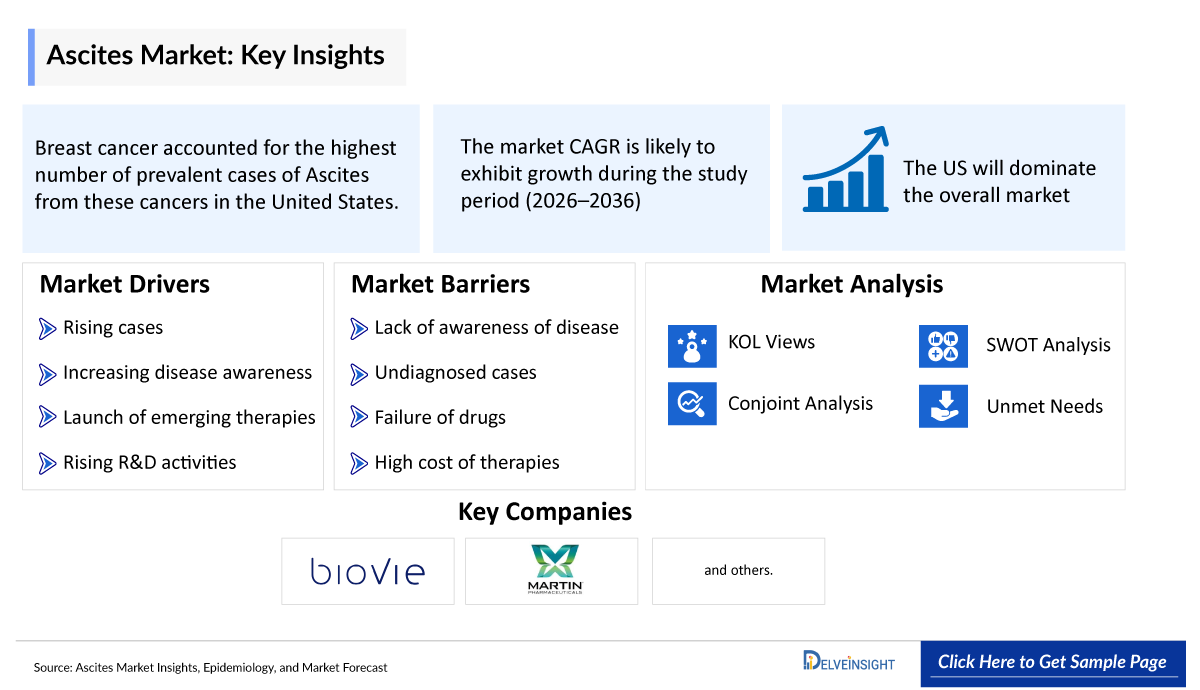
- The Ascites Therapeutics Market is expected to witness steady growth across the major markets, with the United States leading in market size, followed by the EU4 (Germany, France, Italy, and Spain), the United Kingdom, and Japan during the study period.
- The leading Ascites Companies include BioVie, Martin Pharmaceuticals, PharmaIN, and others.
Ascites Market & Epidemiology Analysis
- A significant proportion of the Ascites burden is concentrated among adults, particularly males and individuals with advanced chronic liver disease, underscoring the need for earlier detection of liver dysfunction, timely diagnosis of portal Hypertension and fluid accumulation, improved access to effective disease management, and targeted interventions to reduce complications, hospitalizations, and mortality.
- The treatment of Ascites primarily involves sodium restriction, diuretics such as spironolactone and furosemide, large-volume paracentesis with albumin replacement, and management of the underlying liver disease to control fluid accumulation and prevent complications, while transjugular intrahepatic portosystemic shunt (TIPS) and liver transplantation remain important options for patients with refractory ascites despite limitations related to procedural risks, cost, donor availability, and patient eligibility.
- Currently, there are no approved disease-modifying therapies specifically for Ascites, and treatment primarily relies on diuretics, sodium restriction, paracentesis, and management of underlying liver disease.
- The pipeline remains limited, with a few emerging therapies under development, including Terlipressin (BIV-201), Docarpamine (CIQUAAX), and PHIN-214, among others. These investigational agents are being evaluated for their potential to improve circulatory dysfunction, renal perfusion, and fluid balance, addressing significant unmet needs in patients with refractory or advanced ascites.
 Ascites Market Size and Forecast in the 7MM
| 2025 Ascites Market Size |
~USD XX million |
| 2036 Ascites Market Size |
~USD XX million |
|
Ascites Growth Rate (2026–2036) | ~XX% CAGR |
Request for Unlocking the Sample Page of the Report "Ascites Treatment Market"
Key Factors Driving the Ascites Market Growth
-
Rising Ascites Prevalence
The increasing prevalence of Ascites is a key driver of market growth, fueled by the expanding burden of chronic liver diseases, including alcohol-associated liver disease, viral hepatitis, and metabolic dysfunction–associated steatotic liver disease (MASLD). The growing incidence of hepatic decompensation, particularly among male patients and the aging population, is expected to increase the demand for effective ascites management and treatment options.
-
Emerging Ascites Competitive Landscape
The emergence of novel therapies such as terlipressin (BIV-201), docarpamine (CIQUAAX), PHIN-214, and other investigational agents is expected to be a key driver of the Ascites market. With no FDA-approved disease-modifying therapies currently available for ascites, developers have a significant opportunity to establish the first targeted treatment in this high-unmet-need space. Companies that successfully demonstrate clinical benefit and secure regulatory approval could gain substantial first-mover advantages, including early market penetration, strong physician adoption, premium pricing potential, and leadership in a largely untapped therapeutic landscape. As a result, increasing clinical development activity is expected to intensify competition and stimulate market growth over the forecast period.
DelveInsight's ‘Ascites Market Insights, Epidemiology and Market Forecast – 2036’ report delivers an in-depth understanding of the Ascites, historical and forecasted epidemiology, as well as the Ascites market trends in the United States, EU4 (Germany, Spain, Italy, and France) and the United Kingdom, and Japan.
The Ascites Treatment Market Report delivers a comprehensive analysis of the current treatment landscape, including standards of care, clinical practices, and evolving therapeutic algorithms. It evaluates, Ascites patient burden trends, revenue & market share dynamics, peak patient share & therapy uptake analysis, and provides an in-depth market size assessment, and growth rate projections (Historical & Forecast 2022–2036) across global regions. The report highlights key unmet medical needs in Ascites and maps the competitive and clinical landscape to uncover high‑value opportunities, providing a clear outlook on future market growth potential.
Scope of the Ascites Market Report | |
|
Study Period |
2022–2036 |
|
Historical Year |
2022–2025 |
|
Forecast Period |
2026–2036 |
|
Base Year |
2026 |
|
Geographies Covered |
|
|
Ascites Market CAGR (Study period/Forecast period) |
XX% (2026–2036) |
|
Ascites Epidemiology Segmentation Analysis |
Patient Burden Assessment
|
|
Ascites Companies |
|
|
Ascites Therapies |
|
|
Ascites Market |
Segmented by
|
|
Analysis |
|
Ascites Understanding and Treatment Algorithm
Ascites Overview and Diagnosis
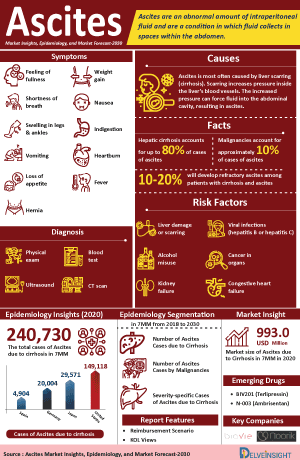
Ascites is a clinical condition characterized by the abnormal accumulation of fluid within the peritoneal cavity, most commonly resulting from underlying liver disease such as cirrhosis, portal hypertension, malignancies, heart failure, or infections. The condition develops due to imbalances in hydrostatic and oncotic pressures, along with sodium and water retention, leading to progressive fluid buildup in the abdomen. Ascites is most frequently associated with advanced chronic liver disease but can occur across a wide range of underlying systemic and intra-abdominal disorders.
It primarily affects individuals with chronic hepatic conditions, alcohol-related liver injury, viral hepatitis, or malignancy, with severity influenced by the progression of the underlying disease and associated complications. Ascites is diagnosed through clinical examination supported by imaging and Ascitic fluid analysis. Key investigations include abdominal ultrasound and diagnostic paracentesis with fluid studies (SAAG, protein, cell count, and culture), along with liver and renal function tests to identify the underlying cause and guide management.
Note: Further details are provided in the report.
Ascites Treatment
The primary goals of ascites treatment are to reduce fluid accumulation, relieve symptoms, prevent complications, improve quality of life, and manage the underlying cause of portal hypertension or liver disease. Management typically includes dietary sodium restriction, fluid management, and diuretic therapy with agents such as spironolactone and furosemide. Large-volume paracentesis with albumin infusion is commonly used for tense or refractory ascites, while antibiotics may be administered for spontaneous bacterial peritonitis. In patients with refractory disease, TIPS can help reduce portal pressure and control fluid recurrence. Liver transplantation remains the only definitive treatment for patients with decompensated cirrhosis and recurrent or treatment-resistant ascites.
Note: Further details related to country-based variations are provided in the report.
Ascites Unmet Needs
The section “unmet needs of Ascites” outlines the critical gaps between the current state of patient care, diagnosis, and the ideal & effective management of the disease. It highlights the obstacles experienced by patients, clinicians, and researchers and identifies potential solutions for future progress.
- Late and under-diagnosis of early-stage ascites
- Lack of reliable non-invasive diagnostic biomarkers
- Poor long-term control of recurrent or refractory ascites
- Limited options for diuretic-resistant patients, and others…..
Note: Comprehensive unmet needs insights and their strategic implications are provided in the full report.
Ascites Epidemiology
Key Findings from Ascites Epidemiological Analysis and Forecast
- The total Ascites Prevalent Cases due to cirrhosis across the 7MM is expected to increase throughout the study period (2022–2036), driven by the growing burden of chronic liver diseases, increasing rates of alcohol-related liver injury, MASLD, viral hepatitis, and improved survival of patients with advanced cirrhosis.
- Among the 7MM, the United States has the highest prevalent cases of Ascites in 2025 due to cirrhosis.
- Among the EU4 & UK, Germany reported the highest Ascites Prevalent Cases, followed by UK and France. Spain was found to have the least cases in 2025 among all European countries.
- In 2025, Malignant Ascites cases are calculated from Ovarian Cancer, stomach cancer, Breast Cancer, and Colorectal Cancer. Breast cancer accounted for the highest number of prevalent cases of Ascites from these cancers in the United States.
- The observed male predominance and earlier onset of Ascites highlight the importance of timely identification and management of underlying liver disease, targeted risk-reduction strategies, and early intervention to prevent disease progression and associated complications.
Ascites Epidemiology Segmentation
- Total Prevalent Cases of Ascites due to Cirrhosis
- Total Prevalent Cases of Ascites by Malignancies
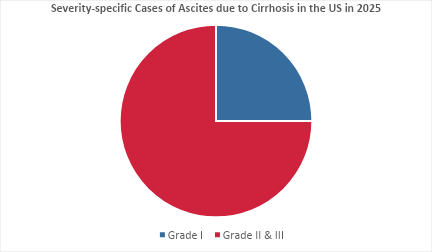
- Severity-specific Prevalent Cases of Ascites due to Cirrhosis
- Total Ascites Treated Cases
Ascites Market Recent Breakthroughs and Developments
- In December 2024, Martin Pharmaceuticals entered into a licensing agreement with Mitsubishi Tanabe Pharma Corporation (MTPC), securing exclusive rights outside Japan and China to access docarpamine-related toxicology, preclinical, clinical safety, and pharmacokinetic data for gastrointestinal indications, including ascites. Under the agreement, MTPC is eligible to receive an upfront payment, as well as future milestone payments and royalties.
- In November 2024, Martin Pharmaceuticals announced that results from its DREAM study of CIQUAAX (oral docarpamine) would be presented at the 75th Annual Liver Meeting (AASLD 2024). The company also reported the allowance of a key US patent covering the use of CIQUAAX for the treatment of ascites, strengthening its intellectual property position and supporting the drug’s development for advanced liver disease complications.
Ascites Drug Analysis& Competitive Analysis
The Ascites drug chapter provides a detailed, market-focused review of approved therapies and the emerging Ascites Pipeline across Phase I–III clinical trials. It covers the Ascites mechanism of action, clinical trial data, regulatory approvals, patents, collaborations, and strategic partnerships for each therapy, along with their advantages, limitations, and recent developments. This section offers critical insights into the Ascites treatment landscape, supporting market assessment, competitive analysis, and growth forecasting for the Ascites therapeutics market.
Ascites Approved Therapies
Ascites remains a significant unmet medical need due to the absence of FDA-approved therapies specifically indicated for its treatment and the limitations of current management approaches, creating substantial opportunities for innovative therapeutic development and future clinical advancements.
Ascites Pipeline Analysis
-
Terlipressin (BIV-201): BioVie
Terlipressin (BIV-201), developed by BioVie, is an investigational continuous-infusion formulation of terlipressin being evaluated for ascites, Hepatorenal Syndrome, and other complications of advanced Liver Cirrhosis. Designed to provide sustained vasoconstrictive activity, BIV-201 aims to improve efficacy and tolerability compared with conventional dosing approaches.
It is initially being developed for ascites, a major complication of decompensated cirrhosis with no FDA-approved drug therapy currently available. The therapy has received FDA Fast Track designation, Orphan Drug designation for ascites and HRS, and US patent protection, underscoring its potential to address significant unmet needs in advanced liver disease.
-
Docarpamine (CIQUAAX): Martin Pharmaceuticals/Mitsubishi Tanabe Pharma Corporation (MTPC)
Docarpamine (CIQUAAX), developed by Martin Pharmaceuticals, is an investigational oral therapy for the treatment of refractory ascites and other complications associated with advanced chronic liver disease. The therapy is being evaluated for its ability to reduce ascites accumulation and decrease the need for repeated large-volume paracentesis procedures by modulating neurohumoral pathways involved in fluid regulation.
CIQUAAX aims to provide a non-invasive treatment option that improves symptom control, enhances quality of life, and addresses a significant unmet need in patients with decompensated liver disease.
Table 1: Ascites Competitive landscape of emerging therapies | |||||||
|
Drug Name |
Company |
Highest Phase |
Indication |
RoA |
MoA |
Molecule Type |
Anticipated Launch in the US |
|
Terlipressin (BIV-201) |
BioVie |
IIa |
Refractory ascites secondary to decompensated cirrhosis |
IV |
Vasopressin V1 receptor agonist (continuous-infusion terlipressin) |
Peptide / Vasopressin analogue |
Information is available in the full report |
|
Docarpamine (CIQUAAX) |
Martin Pharmaceuticals |
IIa |
Refractory ascites in cirrhosis |
Oral |
Aldosterone synthase inhibitor |
Small molecule |
Information is available in the full report |
|
PHIN-214 |
PharmaIN |
I |
Ascites Hepatic |
SC |
Partial vasopressin V1a receptor agonist |
Peptide prodrug |
Information is available in the full report |
|
Note: Launch insights are provisional and may change with future report updates or the occurrence of major key catalysts. | |||||||
Note: A detailed emerging therapies assessment will be provided in the final report
Ascites Companies
- BioVie
- Martin Pharmaceuticals
- PharmaIN, and others
Ascites Market Outlook
The Ascites Market is undergoing a gradual transformation, moving beyond conventional symptom-management approaches such as sodium restriction, diuretics, large-volume paracentesis, and liver transplantation toward targeted therapies aimed at addressing the underlying hemodynamic and pathophysiological mechanisms of fluid accumulation in advanced liver disease.
The development of novel agents, including continuous-infusion vasopressin analogs and other therapies targeting portal hypertension, renal dysfunction, and circulatory abnormalities, reflects a growing focus on improving long-term disease control, reducing recurrence, and delaying disease progression. These advancements are increasing clinical and regulatory interest in innovative ascites treatments and reshaping the future competitive landscape.
With the continued advancement of Ascites Pipeline candidates such as BIV-201, CIQUAAX, PHIN-214, and other emerging therapies, the ascites treatment landscape is evolving toward more disease-specific and mechanism-driven interventions.
Overall, the lack of FDA-approved therapies specifically indicated for ascites, increasing prevalence of chronic liver diseases, growing awareness of cirrhosis-related complications, and continued investment in innovative drug development are expected to drive market growth during the forecast period, creating significant commercial opportunities for both emerging therapies and future approved treatments.
Key Findings from the Ascites Market Report
- According to the estimates, the United States accounted for the largest Ascites Market Share among the major markets during the study period.
- The Ascites Market is shifting from symptomatic management with diuretics and paracentesis toward targeted therapies. Emerging candidates such as BIV-201, CIQUAAX, and PHIN-214 are attracting attention for their potential to improve fluid control and address significant unmet needs in refractory ascites.
- The United States is expected to lead the Ascites Market due to strong research activity and a growing burden of advanced liver disease, while Europe and Japan continue to demonstrate clinical and commercial interest supported by established healthcare systems and increasing demand for innovative treatment options.
Note: Further details will be provided in the report….
Ascites Drug Class/Insights into Leading Emerging and Marketed Therapies (2022–2036 Forecast)
The Ascites Treatment Market Landscape comprises diuretics, vasopressin receptor agonists, aldosterone synthase inhibitors, and other hemodynamic-modulating therapies, each targeting key mechanisms involved in sodium retention, fluid accumulation, and circulatory dysfunction associated with advanced liver disease.
- Diuretics and Standard Therapies: Current management primarily relies on diuretics such as spironolactone and furosemide, which promote sodium and water excretion to reduce fluid overload, often supplemented by paracentesis in patients with refractory disease.
- Vasopressin Receptor Agonists: Emerging therapies such as terlipressin acetate (BIV-201) act on vasopressin receptors to improve splanchnic vasoconstriction, enhance effective arterial blood volume, and reduce the pathophysiological drivers of ascites formation in decompensated cirrhosis.
- Aldosterone Pathway Modulators and Novel Agents: Investigational candidates such as CIQUAAX and PHIN-214 are designed to modulate aldosterone- and vasopressin-mediated pathways involved in fluid retention, with the goal of improving ascites control and reducing dependence on invasive procedures.
Overall, current ascites management remains largely supportive, while emerging therapies targeting circulatory dysfunction and neurohormonal pathways are driving future innovation aimed at improving symptom control, reducing recurrence, and addressing the underlying mechanisms of refractory ascites.
Note: Further details will be provided in the report….
Ascites Drug Uptake
This section focuses on the uptake rate of potential Ascites drugs expected to be launched in the market during the forecast period (2026–2036). The analysis covers the Ascites market's uptake by drugs, patient uptake by therapy, and sales of each drug.
Note: Further detailed analysis of emerging therapies' drug uptake in the report…
Ascites Market Access and Reimbursement
The Ascites Therapeutics Market Report further provides detailed insights on the country-wise accessibility and reimbursement scenarios, cost-effectiveness scenario of approved therapies, programs making accessibility easier and out-of-pocket costs more affordable, insights on patients insured under federal or state government prescription drug programs, etc.
Reimbursement is a crucial factor that affects the drug’s access to the market. Often, the decision to reimburse comes down to the price of the drug relative to the benefit it produces in treated patients. To reduce the healthcare burden of these high-cost therapies, many payment models are being considered by payers and other industry insiders.
Note: Further details are provided in the final report….
Ascites Therapies Price Scenario & Trends
Pricing and analogue assessment of Ascites therapies highlights evolving price dynamics structures. This section summarizes the cost of approved treatments, closest and most appropriate analogue selection for emerging therapies, and understanding of how pricing influences market access, adherence, and long-term uptake.
Note: Further details are provided in the final report….
Industry Experts and Physician Views for Ascites
To keep up with Ascites market trends, we take Key Opinion Leaders (KOLs) and Subject Matter Experts (SMEs) opinions working in the domain through primary research to fill the data gaps and validate our secondary research. Industry experts were contacted for insights on the Ascites emerging therapies, evolving treatment landscape, patient adherence to conventional therapies, therapy switching trends, drug adoption and uptake, accessibility challenges, and epidemiology and real-world prescription patterns in Ascites, including MD, PhD, Instructor, Postdoctoral Researcher, Professor, Researcher, and others.
DelveInsight’s analysts connected with 10+ KOLs to gather insights; however, interviews were conducted with 6+ KOLs in the 7MM. Centers such as the University of Mississippi Medical Center, University of Bologna, and Teikyo University School of Medicine, etc. were contacted. Their opinion helps understand and validate current and emerging Ascites therapies, highlight unmet medical needs, provide epidemiological context, and support strategic decisions for market access, therapy adoption, and pipeline prioritization in Ascites.
Region |
Key Opinion Leaders (KOLs) and Subject Matter Experts (SMEs) |
|
United States |
“Ascites remains a common clinical manifestation of advanced liver disease, with growing emphasis on early diagnosis and targeted management strategies to improve outcomes and reduce complications such as spontaneous bacterial peritonitis and renal dysfunction.” |
|
Japan |
“Ascites continues to represent a significant burden in patients with chronic liver disease, particularly in aging populations, highlighting the need for optimized fluid management and minimally invasive approaches to improve long-term patient care.” |
Ascites Report Qualitative Analysis: SWOT and Conjoint Analysis
We perform qualitative and market Intelligence analysis using various approaches, such as SWOT analysis and conjoint analysis. In the SWOT analysis of Ascites, strengths, weaknesses, opportunities, and threats in terms of disease diagnosis, patient awareness, patient burden, competitive landscape, cost-effectiveness, and geographical accessibility of therapies are provided.
Conjoint analysis analyzes emerging therapies based on relevant attributes such as safety, efficacy, frequency of administration, route of administration, and order of entry. Scoring is given based on these parameters to analyze the effectiveness of therapy.
The team of analysts analyzes promising emerging therapies based on relevant attributes such as safety, efficacy, frequency of administration, route of administration, and order of entry. In efficacy, the trial’s primary and secondary outcome measures are evaluated, whereas the therapies’ safety is evaluated, wherein the acceptability, tolerability, and adverse events are majorly observed. In addition, the scoring is also based on the route of administration, order of entry, probability of success, and the addressable patient pool for each therapy. According to these parameters, the final weightage score and the ranking of the emerging therapies are decided.
Scope of the Ascites Market Report
- The Ascites Therapeutics Market Report covers a segment of key events, an executive summary, a descriptive overview explaining its causes, signs and symptoms, pathogenesis, and currently available treatments.
- Comprehensive insight has been provided into the Ascites epidemiology segments and forecasts, the future growth potential of the diagnosis rate, and disease progression along Ascites Treatment guidelines.
- Additionally, an all-inclusive account of both the current and emerging treatments, along with the elaborate profiles of late-stage and prominent therapies, will have an impact on the current Ascites Treatment landscape.
- A detailed review of the Ascites Therapeutics Market, historical and forecasted market size, Ascites Drugs Market Share by therapies, detailed assumptions, and rationale behind our approach is included in the report, covering the 7MM drug outreach.
- The Ascites Therapeutics Market Report provides an edge while developing business strategies by understanding trends through SWOT analysis and expert insights/KOL views, patient journey, and treatment preferences that help in shaping and driving the 7MM Ascites Drugs Market.
Ascites Market Report Insights
- Ascites Patient Population Forecast
- Ascites Therapeutics Market Size
- Ascites Pipeline Analysis
- Ascites Market Size and Trends
- Ascites Market Opportunity (Current and forecasted)
Ascites Market Report Key Strengths
- Epidemiology‑based (Epi‑based) Bottom‑up Forecasting
- Artificial Intelligence (AI)-enabled Market Research Report
- 11-year Ascites Market Forecast
- Ascites Market Outlook (North America, Europe, Asia-Pacific)
- Patient Burden Trends (by geography)
- Ascites Treatment Addressable Market (TAM)
- Ascites Competitive Landscape
- Ascites Major Companies Insights
- Ascites Price Trends and Analogue Assessment
- Ascites Therapies Drug Adoption/Uptake
- Ascites Therapies Peak Patient Share analysis
Ascites Market Report Assessment
- Ascites Current Treatment Practices
- Ascites Unmet Needs
- Ascites Clinical Development Analysis
- Ascites Emerging Drugs Product Profiles
- Ascites Drugs Market Attractiveness
- Ascites Qualitative Analysis (SWOT and Conjoint Analysis)
Key Questions Answered in the Ascites Treatment Market Report
Ascites Market Insights
- What was the Ascites Treatment Market Size, the Ascites Market Size by therapies, Ascites Drugs Market Share (%) distribution in 2025, and what would it look like by 2036? What are the contributing factors for this growth?
- What are the anticipated pricing variations among different geographies for the emerging therapies in the future?
- What can be the future treatment paradigm of Ascites?
- What are the disease risks, burdens, and unmet needs of Ascites? What will be the growth opportunities across the 7MM concerning the patient population with Ascites?
- Who is the major future competitor in the market, and how will the competitors affect their market share?
- What are the current options for the treatment of Ascites? What are the current guidelines for treating Ascites in the US, Europe, and Japan?
Reasons to Buy the Ascites Market Report
- The Ascites Therapeutics Market Report will help in developing business strategies by understanding the latest trends and changing treatment dynamics driving the Ascites Drugs Market.
- Bottom-up forecasting builds from the affected population to product forecasts, delivering a robust, data-driven approach ideal for new therapies and novel classes.
- Insights on patient burden/disease Ascites Incidence, evolution in diagnosis, and factors contributing to the change in the epidemiology of the disease during the forecast years.
- Understand the existing market opportunities in varying geographies and the growth potential over the coming years.
- Identifying strong upcoming players in the Ascites Drugs Market will help devise strategies to help get ahead of competitors.
- Detailed analysis and ranking of class-wise potential current and emerging therapies under the conjoint analysis section to provide visibility around leading classes.
- To understand KOLs’ perspectives on the accessibility, acceptability, and compliance-related challenges of existing Ascites Treatment to overcome barriers in the future.
- Detailed insights on the unmet needs of the existing Ascites Drugs Market so that the upcoming players can strengthen their development and launch strategy.
- This Artificial Intelligence (AI) - enabled report summarize and simplify complex datasets within the report into clear, actionable insights for stakeholders, investors, and healthcare providers, enabling faster, data-driven decisions.
Stay updated with us for Recent Articles