-market.png&w=256&q=75)
CAR T-Cell Therapy for Acute Lymphoblastic Leukemia Market Summary
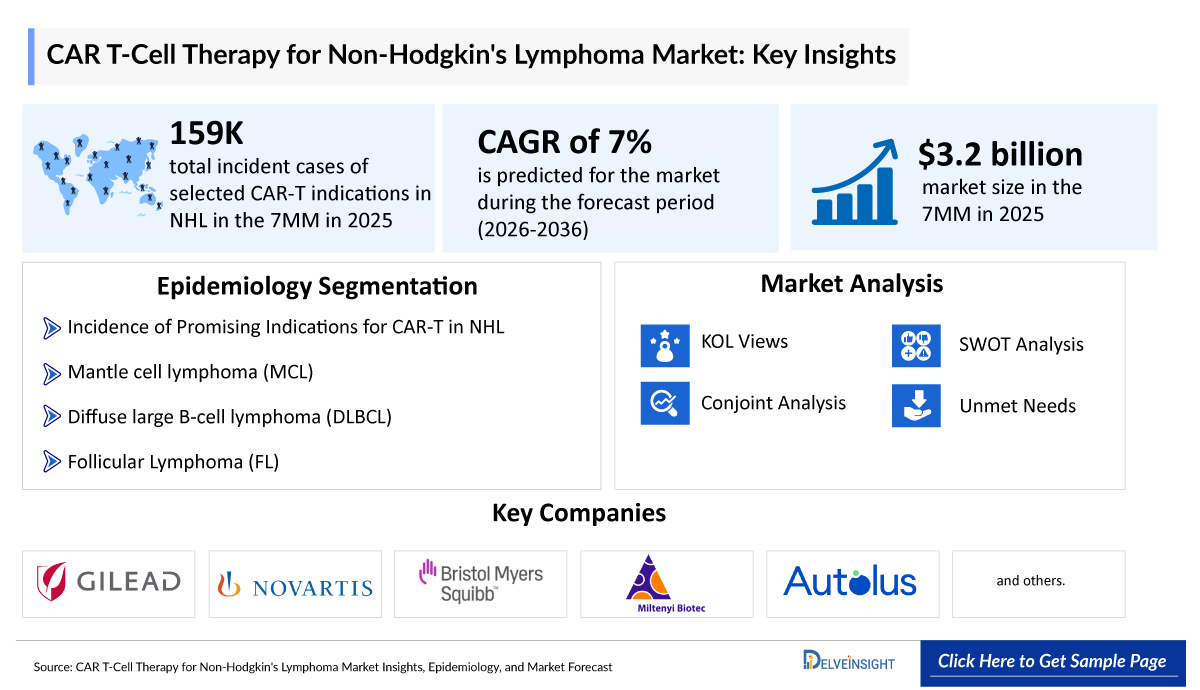
- The CAR-T Cell Therapy in Acute Lymphoblastic Leukemia Treatment Market Size was valued at ~USD 300 million in 2025 and is expected to witness steady growth through 2036. Market expansion is driven by increasing adoption of CAR-T cell therapies, ongoing advancements in immuno-oncology, expanding clinical research, and improved patient access, with the market projected to grow at a CAGR of 6.8% from 2026 to 2036.
- The leading CAR-T Cell Therapy in Acute Lymphoblastic Leukemia Companies include Novartis, Gilead Sciences, Autolus, Cellectis, Wugen, Imviva, and others.
CAR-T Cell Therapy in Acute Lymphoblastic Leukemia Market & Epidemiology Insights
- The ALL market surpassed USD 1,800 million across the 7MM in 2025, driven largely by a transition from low-cost chemotherapy to high-value, innovative therapies, including targeted agents (such as tyrosine kinase inhibitors), monoclonal antibodies, and advanced immunotherapies like CAR-T cell treatments, which not only deliver improved clinical outcomes but also command significantly higher prices.
- CAR-T cell therapy offers durable, long-term benefit through a one-time treatment, potentially avoiding the toxicity associated with salvage chemotherapy and autologous stem cell transplantation in patients with high-risk disease. Its approval has reshaped the standard of care for patients who are primary refractory or experience early relapse following frontline therapy.
- In recent years, immunotherapy has advanced significantly with the emergence of CAR-T cell therapy, representing a major breakthrough in the treatment of Acute Lymphoblastic Leukemia. Approved products such as tisagenlecleucel (KYMRIAH), brexucabtagene autoleucel (TECARTUS), and the more recent obecabtagene autoleucel (AUCATZYL) have established CAR-T therapy as a transformative modality, with the potential to drive the next major leap in leukemia immunotherapy.
- CAR-T cell therapies require further clinical evidence to support their use in earlier lines of treatment. Outcomes are likely to be improved when administered prior to multiple rounds of chemotherapy, as seen in clinical trial populations. Ongoing studies are evaluating the efficacy and safety of CAR-T cell therapy in earlier treatment settings.
- B-cell surface antigens, including CD19, CD20, and CD22, are well-established therapeutic targets in relapsed or refractory (R/R) B-ALL. Among these, CD19-directed CAR-T cell therapies have achieved high complete remission rates of approximately 80–90% in both pediatric and adult populations. However, despite these strong initial responses, long-term durability remains a significant challenge, with nearly half of patients relapsing within 1 to 2 years.
- The limited number of targetable genetic lesions, along with the highly heterogeneous mutational landscape of T-ALL, makes the development of effective targeted therapies particularly challenging. In this setting, approaches that focus on consistently expressed surface antigens, such as CD7, offer a way to bypass reliance on genetic biomarkers and may provide broader applicability across patients.
- Allogeneic stem cell transplantation (allo-SCT) remains the only potentially curative option for patients who achieve complete remission after salvage therapy. However, its use is limited by a substantial risk of treatment-related morbidity and mortality.
- The limited number of targetable genetic lesions, together with the highly heterogeneous mutational landscape of T-ALL, makes the identification of effective therapies challenging. Targeting broadly expressed antigens such as CD7, independent of genetic biomarkers, offers a potential way to overcome these constraints.
CAR-T Cell Therapy in Acute Lymphoblastic Leukemia Market Size and Forecast in the 7MM
| 2025 CAR-T Cell Therapy in ALL Market Size | ~USD 300 million |
| 2036 CAR-T Cell Therapy in ALL Market Size | ~USD XXX million |
| CAR-T Cell Therapy in ALL Growth Rate (2026–2036) | 6.8% CAGR |
Request to unlock the sample page of the "CAR-T Cell Therapy in ALL Treatment Market"
Key Factors Driving the CAR-T Cell Therapy in Acute Lymphoblastic Leukemia Market
-
Rising Incidence of Acute Lymphoblastic Leukemia
The incidence of Acute Lymphoblastic Leukemia has shown a gradual increase globally, primarily driven by population growth, improved diagnostic capabilities, and enhanced disease reporting. It remains the most common pediatric malignancy, with consistently high incidence rates in children, while a modest but notable increase is also being observed in adult populations.
Incidence rates vary geographically, with higher reported cases in developed regions due to more robust healthcare infrastructure and detection systems, contributing to an overall rising global burden of the disease. In the United States, ALL accounts for less than 0.5% of all cancers, with an average lifetime risk of approximately 1 in 1,000 individuals.
-
Emerging CAR-T Cell Therapy in Acute Lymphoblastic Leukemia Competitive Landscape
Some of the CAR-T Cell Therapy in ALL drugs in clinical trials include Lasmecabtagene timgedleucel, WU-CART-007, CTD402, S101, and others.
DelveInsight's "CAR-T Cell Therapy in Acute Lymphoblastic Leukemia Market Insights, Epidemiology and Market Forecast – 2036" report delivers an in-depth understanding of the HNSCC, historical and forecasted epidemiology, as well as the CAR-T Cell Therapy in ALL therapeutics market trends in the United States, EU4 (Germany, Spain, Italy, and France) and the United Kingdom, and Japan.
The CAR-T Cell Therapy in Acute Lymphoblastic Leukemia Treatment Market Report delivers a comprehensive analysis of the current treatment landscape, including standards of care, clinical practices, and evolving therapeutic algorithms. It evaluates CAR-T Cell Therapy in ALL patient burden trends, revenue & market share dynamics, peak patient share & therapy uptake analysis, and provides an in-depth market size assessment and growth rate projections (Historical & Forecast 2022–2036) across global regions. The report highlights key unmet medical needs in CAR-T Cell Therapy in ALL and maps the competitive and clinical landscape to uncover high value opportunities, providing a clear outlook on future market growth potential.
Scope of the CAR T-Cell Therapy for ALL Market Report | |
| Study Period | 2022-2036 |
| Historical Year | 2022-2025 |
| Forecast Period | 2026-2036 |
| Base Year | 2026 |
| Geographies Covered |
|
| CAR T-Cell Therapy for ALL Market CAGR (Study Period/Forecast Period) | 6.8% (2026-2036) |
| CAR T-Cell Therapy for ALL Epidemiology Segmentation Analysis |
Patient Burden Assessment
|
| CAR T-Cell Therapy for ALL Companies |
|
| CAR T-Cell Therapy for ALL Therapies |
|
| CAR T-Cell Therapy for ALL Therapeutics Market |
Segmented by
|
| Analysis |
|
CAR-T Cell Therapy in Acute Lymphoblastic Leukemia Disease Understanding
Acute Lymphoblastic Leukemia Overview
ALL is a cancer of the blood and bone marrow. It arises from immature white blood cells, lymphocytes, within the bone marrow and is characterized by the rapid overproduction of abnormal, immature cells known as lymphoblasts or leukemic blasts. As these blast cells crowd the bone marrow, it can no longer produce sufficient healthy red blood cells, normal white blood cells, and platelets.
This leads to symptoms such as anemia, increased susceptibility to infections, and a tendency to bruise or bleed easily. Over time, the abnormal cells may spread from the bone marrow into the bloodstream and accumulate in other parts of the body, including the lymph nodes, spleen, liver, and the central nervous system (brain and spinal cord).
Acute Lymphoblastic Leukemia Diagnosis
The Acute Lymphoblastic Leukemia Diagnosis involves a combination of clinical evaluation and laboratory testing. It typically begins with blood tests, including a complete blood count, which may show abnormal numbers of white blood cells, red blood cells, and platelets, along with the presence of immature cells called blasts.
A definitive diagnosis is made through a bone marrow aspiration and biopsy, where a sample is examined to confirm the presence of lymphoblasts. Additional tests such as immunophenotyping, cytogenetic analysis, and molecular studies are performed to identify the specific subtype of ALL and detect genetic abnormalities. Imaging studies and lumbar puncture may also be used to determine whether the disease has spread to other organs, including the central nervous system.
Further details are provided in the report...
Acute Lymphoblastic Leukemia Treatment
Long-term chemotherapy is the main treatment for adults with ALL, often combined with targeted therapy or immunotherapy, and in some cases, a stem cell transplant. Treatment depends on factors such as whether the leukemia is B-cell or T-cell type, the risk of relapse, the presence of genetic changes like the Philadelphia chromosome, and the patient’s age and overall health.
Therapy is typically divided into two main phases: remission induction therapy, which aims to destroy leukemia cells and achieve remission, and consolidation therapy, which targets any remaining cells to prevent relapse. Central nervous system (CNS) prophylaxis is also given during treatment to eliminate leukemia cells in the brain and spinal cord, where standard chemotherapy may not reach.
During the induction phase, treatment usually includes combination chemotherapy, sometimes with targeted drugs such as imatinib, along with supportive care like antibiotics and blood transfusions, and CNS-directed therapy. In the post-remission phase, patients receive further chemotherapy, targeted therapy, or stem cell transplantation to maintain remission. For recurrent ALL, treatment options may include additional chemotherapy followed by transplant, immunotherapy, targeted therapy, CAR-T cell therapy, or low-dose radiation therapy to relieve symptoms and improve quality of life.
Further details related to country-based variations are provided in the report....
CAR-T Cell Therapy in Acute Lymphoblastic Leukemia Unmet Needs
The section “unmet needs of CAR-T Cell Therapy in ALL” outlines the critical gaps between the current state of patient care, diagnosis, and the ideal & effective management of the disease. It highlights the obstacles experienced by patients, clinicians, and researchers and identifies potential solutions for future progress.
- Complex administration process and manufacturing challenges
- High risk of relapse after treatment
- CAR-T cell-associated toxicities
- Lagging development of CAR-T cell therapy for T-Cell ALL and others…..
Comprehensive unmet needs insights in CAR-T Cell Therapy in ALL and their strategic implications are provided in the full report...
CAR T-Cell Therapy for ALL Epidemiology
The Acute Lymphoblastic Leukemia epidemiology section provides insights about the historical and current CAR T-Cell Therapy for ALL patient pool and forecasted trends for individual seven major countries. It helps to recognize the causes of current and forecasted trends by exploring numerous studies and views of key opinion leaders. This part of the Acute Lymphoblastic Leukemia market report also provides the diagnosed patient pool and their trends along with assumptions undertaken.
Key Findings from Acute Lymphoblastic Leukemia Epidemiological Analysis and Forecast
- According to DelveInsight’s estimates, the total incident cases of CAR T-Cell Therapy for ALL in the 7MM were approximately 12,000 in 2025.
- In the United States, males are more frequently affected, accounting for approximately 56% of ALL cases in 2025.
- Among the type-specific cases of ALL in the EU4 and the UK, B-cell lymphoblastic leukemia cases were almost 4 times than cases of T-cell lymphoblastic leukemia, in 2025.
- In Japan, approximately 1,400 patients sought treatment for first-line and relapsed cases in 2025, while the number of patients receiving third-line or later therapies was considerably lower, at around 150.
CAR-T Cell Therapies in ALL Epidemiology Segmentation
- Patient Burden Assessment
- Total Incident Cases of ALL
- Gender-specific Incident Cases of ALL
- Age-specific Incident Cases of ALL
- Subtype-specific Incident Cases of ALL
- Genetic mutation-specific Incident Cases of ALL
- Total Treated Cases of ALL
CAR-T Cell Therapy in ALL Market Recent Breakthroughs and Development
- In January 2026, Wugen announced that it has received Breakthrough Therapy Designation from the US Food and Drug Administration (FDA) for its investigational CAR-T cell therapy. Pivotal Study of Sofi-cel for relapsed or refractory T-Cell ALL/LBL in pediatric and adult patients is ongoing.
- According to Cellectis’s latest presentation in 2026, the pivotal Phase II first interim analysis of UCART22 is expected in Q4 2026. The BLA submission is anticipated in 2028.
- The National Institute for Health and Care Excellence (NICE) determined AUCATZYL to be cost-effective, and it was launched in the UK in January 2026. Patients are currently being enrolled for pediatric ALL.
CAR-T Cell Therapy in Acute Lymphoblastic Leukemia Drug Analysis & Competitive Analysis
The CAR-T Cell Therapy in ALL drug chapter provides a detailed, market-focused review of approved therapies and the emerging pipeline across Phase I–III CAR-T Cell Therapy in ALL Clinical Trials. It covers the mechanism of action, clinical trial data, regulatory approvals, patents, collaborations, and strategic partnerships for each therapy, along with their advantages, limitations, and recent developments.
This section offers critical insights into the CAR-T Cell Therapy in ALL treatment landscape, supporting market assessment, competitive analysis, and growth forecasting for the CAR-T Cell Therapy in ALL therapeutics market.
CAR-T Cell Therapies for Acute Lymphoblastic Leukemia Approved Therapies
-
Obecabtagene autoleucel (AUCATZYL): Autolus Therapeutics
AUCATZYL is a highly active CD19 CAR-T cell therapy with a fast off-rate and a well-managed safety profile, approved in the United States, United Kingdom, and European Union. It is the first and currently the only approved CAR-T therapy that uses customized, tumor-burden–guided dosing and does not require an FDA Risk Evaluation and Mitigation Strategy (REMS).
The therapy is supported by an established manufacturing and commercialization infrastructure, with a presence in more than 70 treatment centers across the US. In Europe, pricing and reimbursement evaluation is ongoing on a country-by-country basis.
-
Brexucabtagene autoleucel (TECARTUS): Gilead Sciences (Kite Pharmaceuticals)
TECARTUS contains brexucabtagene autoleucel, a CAR-T cell therapy made from a patient’s own T cells that are genetically modified to express a chimeric antigen receptor (CAR), enabling them to recognize and bind to the CD19 protein on cancerous B cells.
On October 1, 2021, the US FDA approved TECARTUS for the treatment of adults with relapsed or refractory B-cell precursor ALL, and this was followed by approval from the European Commission in September 2022 for adults aged 26 years and older with relapsed or refractory B-cell precursor ALL.
Note: Detailed marketed therapies assessment will be provided in the final report...
CAR-T Cell Therapies for Acute Lymphoblastic Leukemia Pipeline Analysis
-
Lasmecabtagene timgedleucel (Lasme-cel/UCART22): Cellectis
Lasme-cel is positioned to potentially capture a majority of such addressable market given that it provides an alternative target to CD19, one-time dosing, off-the-shelf availability and deep, MRD-responses in the 3L+ setting.
-
WU-CART-007 (soficabtagene geleucel/sofi-cel): Wugen
WU-CART-007 is an allogeneic, off-the-shelf, fratricide-resistant CD7-targeted CAR-T cell therapy engineered to overcome the technological challenges of harnessing CAR-T cells to treat CD7+ hematological malignancies.
In August 2025, Wugen announced the successful close of a USD 115 million equity financing round led by Fidelity Management & Research Company, with participation from RiverVest Venture Partners, Lightchain Capital, Abingworth, ICG, LYZZ Capital, Tybourne Capital Management, Aisling Capital Management, and other leading life sciences investors.
The proceeds will support the advancement of the ongoing pivotal T-RRex study of WU-CART-007 in patients with Relapsed or Refractory T-cell Acute Lymphoblastic Leukemia and T-Cell Lymphoblastic Lymphoma.
Comparison of CAR-T Cell Therapies for ALL Emerging Drugs Under Development | |||||||
|
Drug Name |
Company |
Highest Phase |
Indication |
RoA |
MoA |
Molecule Type |
Anticipated Launch in the US |
|
Lasme-cel (UCART22) |
Cellectis |
II |
Relapsed or Refractory CD22+ B-cell Acute Lymphoblastic Leukemia |
IV |
T lymphocyte replacements |
Allogeneic CAR-T cell therapy |
2029 |
|
WU-CART-007 |
Wugen |
II |
Relapsed/Refractory Cell Acute Lymphoblastic Leukemia/Lymphoblastic Lymphoma |
IV infusion |
T lymphocyte replacements |
Allogeneic CAR-T cell therapy |
Information is available in the full report |
|
CTD402 |
Imviva |
I/II |
Relapsed or refractory T-cell acute lymphoblastic leukemia |
Injection |
T lymphocyte replacements |
Allogeneic CAR-T cell therapy |
Information is available in the full report |
|
Note: Launch insights are provisional and may change with future report updates or the occurrence of major key catalysts. | |||||||
CAR-T Cell Therapy in Acute Lymphoblastic Leukemia Market Outlook
CAR T-Cell Therapy for ALL treatment landscape is stratified by patient age (adolescent/young adult vs older adults) and Philadelphia chromosome status (Ph positive vs Ph negative). Standard approaches include multi-agent chemotherapy, post-remission consolidation and maintenance therapy, targeted agents, immunotherapy, and CAR-T cell therapy, with stem cell transplantation used early in select high-risk patients.
For decades, cytotoxic chemotherapy has remained the backbone of adult ALL treatment, although it is associated with significant toxicities, including infection, bleeding, thrombosis, neuropathy, osteonecrosis, and secondary malignancies such as AML and MDS.
Advances in immunotherapy, particularly CAR-T cell therapy, have transformed the treatment landscape. KYMRIAH (tisagenlecleucel) was the first CAR-T therapy approved (US, 2017) for pediatric and young adult patients with relapsed or refractory (R/R) B cell ALL, demonstrating high remission rates (83% within 3 months) and durable responses, albeit with risks such as cytokine release syndrome (CRS) and neurologic toxicity.
TECARTUS (brexucabtagene autoleucel) was later approved for adults with R/R B cell ALL based on ZUMA 3, showing a 52% complete response rate, with durable outcomes in responders. More recently, AUCATZYL (obecabtagene autoleucel) has been approved for adult R/R B cell ALL, featuring a modified binding design aimed at reducing immunotoxicity while maintaining persistence, highlighting the continued evolution of CAR-T therapies as a major advancement in leukemia treatment.
Key findings from CAR T-Cell Therapy for ALL Market Forecast Report
- According to the estimates, the largest CAR T-Cell Therapy for ALL Treatment Market Size was captured by the United States, i.e., ~USD 220 million in 2025.
- TECATRUS captured maximum CAR T-Cell Therapy for ALL Therapeutics Market revenue (~50%) in 2025, in the 7MM.
- AUCATZYL captured sales of about USD 74 million in 2025, and the company anticipates 2026 sales of about USD 120–135 million.
CAR-T Cell Therapy in Acute Lymphoblastic Leukemia Companies
- Novartis
- Gilead Sciences
- Autolus
- Cellectis
- Wugen
- Imviva, and others.
CAR-T Cell Therapy in Acute Lymphoblastic Leukemia Drug Class/Insights into Leading Emerging and Marketed Therapies (2022–2036 Forecast)
CAR-T Cell Therapy in Acute Lymphoblastic Leukemia is an adoptive cellular immunotherapy in which a patient’s T cells are engineered to express chimeric antigen receptors, most commonly targeting CD19 on malignant B cells. Following reinfusion, these cells recognize and bind tumor cells independent of major histocompatibility complex, triggering T cell activation, expansion, and targeted cytotoxic killing via perforin and granzyme release, enabling deep and durable elimination of leukemic cells, including those resistant to conventional therapies.
Approved therapies such as tisagenlecleucel (KYMRIAH), brexucabtagene autoleucel (TECARTUS), and obecabtagene autoleucel (AUCATZYL) utilize CD19-directed CAR constructs, with design differences influencing expansion, persistence, and safety profiles; notably, AUCATZYL incorporates a modified binding domain aimed at reducing immunotoxicity while maintaining antitumor activity.
Further details will be provided in the report….
CAR-T Cell Therapy in Acute Lymphoblastic Leukemia Drug Uptake
This section focuses on the uptake rate of potential CAR-T Cell Therapies in ALL drugs expected to be launched in the market during the forecast period (2026–2036). The analysis covers the CAR-T Cell Therapy in ALL market's uptake by drugs, patient uptake by therapy, and sales of each drug.
Approved therapies have demonstrated varying levels of uptake, with KYMRIAH experiencing relatively slower adoption, while TECARTUS and AUCATZYL have shown comparatively faster market traction, which is clearly reflected in their respective sales performance, highlighting a shift in treatment preference within the CAR-T cell therapy landscape.
Additionally, emerging CAR-T cell therapies from Cellectis and Wugen are anticipated to enter the market soon, targeting a broader patient population, with one focused on multiple lines of therapy and the other addressing both pediatric and adult populations, and are expected to introduce meaningful competition to current market leaders.
Further detailed analysis of emerging therapies' drug uptake in the report...
CAR-T Cell Therapy in Acute Lymphoblastic Leukemia Market Access and Reimbursement
- The United States
The US Reimbursement for CAR-T Cell Therapy in Acute Lymphoblastic Leukemia Therapies | |
|
Drug |
Access Program |
|
KYMRIAH |
· KYMRIAH cares |
|
TECARTUS |
· Kite Konnect |
Reimbursement is a crucial factor that affects the drug’s access to the market. Often, the decision to reimburse comes down to the price of the drug relative to the benefit it produces in treated patients. To reduce the healthcare burden of these high-cost therapies, many payment models are being considered by payers and other industry insiders.
Further details are provided in the final report...
CAR-T Cell Therapy in Acute Lymphoblastic Leukemia Therapies Price Scenario & Trends
Pricing and analogue assessment of CAR-T Cell Therapy in ALL therapies highlights evolving price dynamics structures. This section summarizes the cost of approved treatments, closest and most appropriate analogue selection for emerging therapies, and understanding of how pricing influences market access, adherence, and long-term uptake.
Pricing of CAR-T Cell Therapy in ALL Approved Drugs
According to Novartis, the manufacturer of KYMRIAH, this CAR-T cell cancer therapy costs USD 475,000 for one treatment course in the United States. KYMRIAH gets Japanese price tag of USD 305,800.
Cost of Therapies are INDCATIVE, and will be updated in the final report…
Industry Experts and Physician Views for CAR-T Cell Therapy in Acute Lymphoblastic Leukemia
To keep up with CAR-T Cell Therapy in ALL Therapeutics Market Trends, we take Key Opinion Leaders (KOLs) and Subject Matter Experts (SMEs) opinions working in the domain through primary research to fill the data gaps and validate our secondary research. Industry experts were contacted for insights on the CAR-T Cell Therapy in ALL emerging therapies, evolving treatment landscape, patient adherence to conventional therapies, therapy switching trends, drug adoption and uptake, accessibility challenges, and epidemiology and real-world prescription patterns in CAR-T Cell Therapy in ALL, including MD, PhD, Instructor, Postdoctoral Researcher, Professor, Researcher, and others.
DelveInsight’s analysts connected with 10+ KOLs to gather insights; however, interviews were conducted with 6+ KOLs in the 7MM. Centers such as the – University of Pennsylvania, University Hospital of Wales, Macmillan Cancer Centre, and Chicago Medicine, etc. were contacted. Their opinion helps understand and validate current and emerging CAR-T Cell Therapy in ALL therapies, highlight unmet medical needs, provide epidemiological context, and support strategic decisions for market access, therapy adoption, and pipeline prioritization in CAR-T Cell Therapy in ALL.
|
Region |
Key Opinion Leaders (KOLs) and Subject Matter Experts (SMEs) |
|
United Kingdom |
“We have seen the best outcomes in clinical trials when using emerging agents in a sequential way and combination. CAR-T cell therapy for ALL is what allogeneic stem cell transplant was in 1980 — a great beginning. Efforts are underway to refine CAR-T cell therapy designs, including dual CAR-T cells targeting CD19, CD22, and CD20. There is hope that CAR-T cell therapy may eventually supplant transplantation. Both antibody and CAR-T cell therapies are exceptional, and rather than being mutually exclusive, they complement each other effectively.” –MD, Macmillan Cancer Centre, United Kingdom |
|
Spain |
“CAR-T cell-based therapies are novel therapeutic approaches that differ substantially from traditional drug therapy, and these therapies are rapidly becoming a standard of care for several B-cell malignancies. Although originally developed in the R/R disease settings, their placement in the therapeutic paradigm is likely to change, with trials already evaluating tisagenlecleucel as first-line therapy for high-risk B-ALL.” – MD, August Pi i Sunyer Biomedical Research Institute, Spain |
CAR-T Cell Therapies in ALL Report Qualitative Analysis: SWOT and Conjoint Analysis
We perform qualitative and CAR T-Cell Therapy for ALL Therapeutics Market Intelligence analysis using various approaches, such as SWOT analysis and conjoint analysis. In the SWOT analysis of CAR-T Cell Therapy in ALL, strengths, weaknesses, opportunities, and threats in terms of disease diagnosis, patient awareness, patient burden, competitive landscape, cost-effectiveness, and geographical accessibility of therapies are provided.
Conjoint analysis analyzes emerging CAR T-Cell Therapy for ALL therapies based on relevant attributes such as safety, efficacy, frequency of administration, route of administration, and order of entry. Scoring is given based on these parameters to analyze the effectiveness of therapy.
The team of analysts analyzes promising CAR T-Cell Therapy for ALL emerging therapies based on relevant attributes such as safety, efficacy, frequency of administration, route of administration, and order of entry. In efficacy, the trial’s primary and secondary outcome measures are evaluated, whereas the therapies’ safety is evaluated, wherein the acceptability, tolerability, and adverse events are majorly observed.
In addition, the scoring is also based on the route of administration, order of entry, probability of success, and the addressable patient pool for each therapy. According to these parameters, the final weightage score and the ranking of the emerging therapies are decided.
Scope of the CAR-T Cell Therapies in ALL Market Report
- The CAR T-Cell Therapy for ALL Therapeutics Market Report covers a segment of key events, an executive summary, a descriptive overview, explaining its causes, signs and symptoms, pathogenesis, and currently available treatments.
- Comprehensive insight has been provided into the epidemiology segments and forecasts, the future growth potential of the diagnosis rate, and disease progression along treatment guidelines.
- Additionally, an all-inclusive account of both the current and emerging treatments, along with the elaborative profiles of late-stage and prominent therapies, will have an impact on the current treatment landscape.
- A detailed review of CAR-T Cell Therapy in ALL Therapeutics Market, historical and forecasted CAR T-Cell Therapy for ALL Treatment Market Size, CAR T-Cell Therapy for ALL Drugs Market Share by therapies, detailed assumptions, and rationale behind our approach is included in the report, covering the 7MM drug outreach.
- The CAR T-Cell Therapy for ALL Therapeutics Market Report provides an edge while developing business strategies by understanding trends through SWOT analysis and expert insights/KOL views, patient journey, and treatment preferences that help in shaping and driving the 7MM CAR-T Cell Therapy in ALL Drugs Market.
CAR-T Cell Therapies in ALL Market Report Insights
- CAR-T Cell Therapy in Acute Lymphoblastic Leukemia Patient Population Forecast
- CAR-T Cell Therapy in Acute Lymphoblastic Leukemia Therapeutics Market Size
- CAR-T Cell Therapy in Acute Lymphoblastic Leukemia Pipeline Analysis
- CAR-T Cell Therapy in Acute Lymphoblastic Leukemia Market Size and Trends
- CAR-T Cell Therapy in Acute Lymphoblastic Leukemia Market Opportunity (Current and Forecasted)
CAR-T Cell Therapies in ALL Market Report Key Strengths
- CAR-T Cell Therapies in ALL Epidemiology based (Epi based) Bottom up Forecasting
- Artificial Intelligence (AI)-enabled Market Research Report
- 11-year Forecast
- CAR-T Cell Therapy in Acute Lymphoblastic Leukemia Market Outlook (North America, Europe, Asia-Pacific)
- CAR-T Cell Therapies in ALL Patient Burden Trends (by Geography)
- CAR-T Cell Therapy in Acute Lymphoblastic Leukemia Treatment Addressable Market (TAM)
- CAR-T Cell Therapy in Acute Lymphoblastic Leukemia Competitive Landscape
- CAR-T Cell Therapy in Acute Lymphoblastic Leukemia Major Companies Insights
- CAR-T Cell Therapy in Acute Lymphoblastic Leukemia Price Trends and Analogue Assessment
- CAR-T Cell Therapy in Acute Lymphoblastic Leukemia Therapies Drug Adoption/Uptake
- CAR-T Cell Therapy in Acute Lymphoblastic Leukemia Therapies Peak Patient Share Analysis
CAR-T Cell Therapies in ALL Market Report Assessment
- CAR-T Cell Therapy in Acute Lymphoblastic Leukemia Current Treatment Practices
- CAR-T Cell Therapy in Acute Lymphoblastic Leukemia Unmet Needs
- CAR-T Cell Therapy in Acute Lymphoblastic Leukemia Clinical Development Analysis
- CAR-T Cell Therapy in Acute Lymphoblastic Leukemia Emerging Drugs Product Profiles
- CAR-T Cell Therapy in Acute Lymphoblastic Leukemia Market Attractiveness
- CAR-T Cell Therapy in Acute Lymphoblastic Leukemia Qualitative Analysis (SWOT and Conjoint Analysis)
- CAR-T Cell Therapies in ALL Market Drivers
- CAR-T Cell Therapies in ALL Market Barriers
Key Questions Answered in the CAR-T Cell Therapies in ALL Market Report
CAR-T Cell Therapies in ALL Therapeutics Market Insights
- What was the CAR-T Cell Therapy in ALL Treatment Market Size, the CAR T-Cell Therapy for ALL Market Size by therapies, CAR T-Cell Therapy for ALL Drugs Market Share (%) distribution in 2025, and what would it look like by 2036? What are the contributing factors for this growth?
- What are the anticipated pricing variations among different geographies for the emerging therapies in the future?
- What can be the future treatment paradigm of CAR-T Cell Therapy in ALL?
- What are the disease risks, burdens, and unmet needs of CAR-T Cell Therapy in ALL?
- What will be the growth opportunities across the 7MM concerning CAR-T Cell Therapy in the ALL patient population?
- Who is the major future competitor in the market, and how will the competitors affect their market share?
- What are the current CAR-T Cell Therapy options for the treatment of ALL? What are the current guidelines for treating CAR-T Cell Therapy in ALL in the US, Europe, and Japan?
Reasons to Buy CAR-T Cell Therapies in ALL Market Forecast Report
- The CAR T-Cell Therapy for ALL Therapeutics Market Report will help in developing business strategies by understanding the latest trends and changing treatment dynamics driving the CAR-T Cell Therapy in ALL Drugs Market.
- Bottom up forecasting builds from the affected population to product forecasts, delivering a robust, data driven approach ideal for new therapies and novel classes.
- Insights on patient burden/disease CAR T-Cell Therapy for ALL Incidence, evolution in diagnosis, and factors contributing to the change in the epidemiology of the disease during the forecast years.
- Understand the existing CAR T-Cell Therapy for ALL Drugs Market opportunities in varying geographies and the growth potential over the coming years.
- Identifying strong upcoming players in the CAR T-Cell Therapy for ALL Drugs Market will help devise strategies to help get ahead of competitors.
- Detailed analysis and ranking of class-wise potential current and CAR T-Cell Therapy for ALL Emerging Therapies under the conjoint analysis section to provide visibility around leading classes.
- To understand KOLs’ perspectives on the accessibility, acceptability, and compliance-related challenges of existing treatment to overcome barriers in the future.
- Detailed insights on the unmet needs of the existing CAR T-Cell Therapy for ALL Drugs Market so that the upcoming players can strengthen their development and launch strategy.
- This Artificial Intelligence (AI) enabled report summarize and simplify complex datasets within the report into clear, actionable insights for stakeholders, investors, and healthcare providers, enabling faster, data driven decisions.
Stay updated with us for Recent Articles @ New DelveInsight Blogs