
Chronic Heart Failure Market Summary
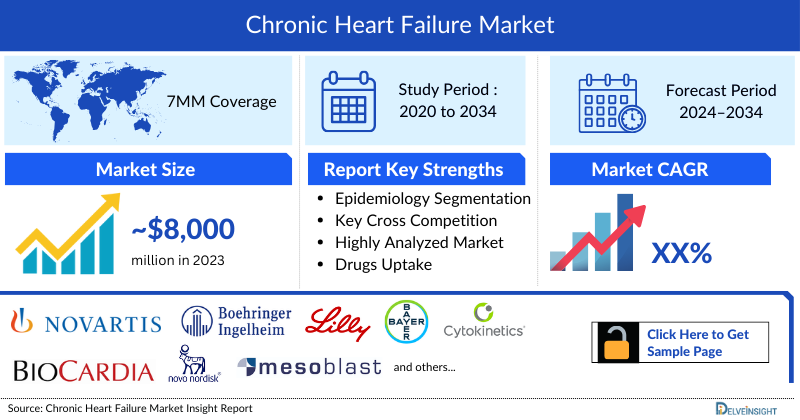
- Chronic Heart Failure Market Size in the 7MM was around USD 8,000 million in the 2023—the increasing prevalence of the disease is expected to fuel the market during 2020–2034.
- The leading Chronic Heart Failure Companies, such as Novartis, Boehringer Ingelheim, Eli Lilly and Company, Bayer, Cytokinetics, BioCardia, Novo Nordisk, Mesoblast, and others
Chronic Heart Failure Market & Epidemiology Analysis
- The Chronic Heart Failure Prevalence continues to rise over time with the aging of the population, improved treatment of and survival with ischemic heart disease, and the availability of effective evidence-based therapies prolonging life in patients with heart failure.
- Off-label therapies and generics occupy the major share of the current Chronic Heart Failure Therapeutics Market as they are cheaper and more easily accessible to patients. Generics of olmesartan, eplerenone, furosemide, and Indapamide are easily available in the market. The presence of generics and off-label therapies is a major barrier to newly developed drugs and hinders market growth.
- The increasing trend of existing key Chronic Heart Failure Companies such as AstraZeneca (FORXIGA), Novartis (ENTRESTO), Eli Lilly Boehringer Ingelheim (JARDIANCE), and others, targeting the label expansion and gaining approval regardless of the patient’s left ventricular ejection fraction status to cater to the wider range of population is likely to propel the Chronic Heart Failure Drugs Market.
- In May 2024, Cardurion Pharmaceuticals presented the results of Phase II CARDINAL HF of CRD740 for heart failure at the annual congress of the Heart Failure Association of the European Society of Cardiology, 2024.
- In March 2024, Mesoblast announced that the FDA supported an accelerated approval pathway for REVASCOR, in patients with end-stage ischemic HFrEF and Left Ventricular Assist Device (LVAD).
- In 2023, the FDA approved INJECTAFER (ferric carboxymaltose injection)/FERINJECT (by American Regent, Vifor, and Daiichi Sankyo) and INPEFA ([sotagliflozin], developed by Lexicon Pharmaceuticals and Viatris).
- Currently, the robust pipeline holds some potential drugs like vicadrostat + empagliflozin (Boehringer Ingelheim), semaglutide and ziltivekimab (Novo Nordisk), omecamtiv mecarbil (Cytokinetics), REVASCOR ([rexlemestrocel-L] Mesoblast), balcinrenone + dapagliflozin and mitiperstat (AstraZeneca), tirzepatide ([LY3298176] Eli Lilly and Company), and others.
Request for Unlocking the Sample Page of the "Chronic Heart Failure Treatment Market"
Key Factors Impacting the Chronic Heart Failure Market
-
Aging Population & Rising Heart Failure Prevalence
CHF risk increases with age. Growing elderly populations in developed and many emerging markets expand the patient pool. Based on DelveInsight's assessment in 2024, the 7MM had approximately 20 million diagnosed prevalent cases of heart failure.
-
Dominance of FORXIGA
AstraZeneca’s FORXIGA is the leading prescribed SGLT2 inhibitor globally by volume. FORXIGA has emerged as an important therapy in chronic heart failure, showing benefits beyond glucose control.
-
Emergence of Novel Chronic Heart Failure Drug Classes
Many major companies are investing in different mechanisms of action for the treatment of CHF, such as SGLT2 inhibitors, cardiac myosin activators, myeloperoxidase inhibitors, mineralocorticoid receptor antagonists, GLP-1 receptor agonists, cell therapies, and others, which will boost the CHF market in the future.
-
Ongoing Clinical Trials in HFpEF
Many clinical trials addressing the effects of drugs on HFpEF are underway, providing possible medical evidence for the future treatment of HFpEF.
-
Increasing Chronic Heart Failure Clinical Trial Activity
The CHF pipeline possesses some drugs in mid and late stage developments including cardiAMP cell therapy and cardiALLO cell therapy (BioCardia), HS-001 (Heartseed and Novo Nordisk), STM-01 (Secretome Therapeutics), OZTx-556 (Orizuru Therapeutics), omecamtiv mecarbil and CK-4021586 (CK-586) (Cytokinetics), tirzepatide (LY3298176) (Eli Lilly), CRD-740 and CRD-750 (Cardurion Pharmaceuticals), AZD5462 (AstraZeneca and Mitsubishi Tanabe Pharma), and others.MRI
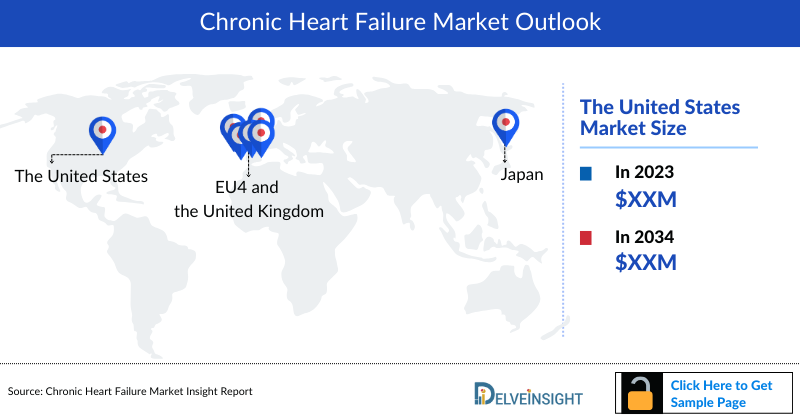
DelveInsight’s “Chronic Heart Failure Treatment Market Insights, Epidemiology, and Market Forecast – 2034” report delivers an in-depth understanding of Chronic Heart Failure, historical, and forecasted epidemiology as well as the Chronic Heart Failure market trends in the US, EU4 (Germany, France, Italy, Spain), and the UK, and Japan.
The Chronic Heart Failure Treatment Market Report provides current treatment practices, emerging drugs, Chronic Heart Failure market share of individual therapies, and current and forecasted Chronic Heart Failure market size from 2020 to 2034, segmented by 7MM. The report also covers current Chronic Heart Failure treatment market practices/algorithms and unmet medical needs to curate the best of the opportunities and assess the underlying potential of the market.
Chronic Heart Failure Understanding
DelveInsight’s Chronic Heart Failure treatment market report gives a thorough understanding of Chronic Heart Failure by including details such as disease definition, symptoms, causes, pathophysiology, diagnosis, and treatment. Chronic Heart Failure commonly referred to as heart failure is a chronic progressive condition in which the heart cannot generate a cardiac output sufficient to meet the body’s demands without increasing diastolic pressure resulting from any cardiac disease compromising ventricular systolic or diastolic function.
The common term for describing heart failure is based on left ventricular ejection fraction. Also, heart failure with normal LVEF (=50%) is known as heart failure with preserved ejection fraction and heart failure with decreased LVEF (<40%) as heart failure with reduced ejection fraction. Heart failure with a 40–49% middle range is known as heart failure with mid-range ejection fraction (HFmrEF). The signs and symptoms of Chronic Heart Failure are subtle at the initial stage, and these are generally misguided for common signs of aging. The common symptoms of Chronic Heart Failure are because of extra fluid or congestion, which leads to vessel blocking. The starting of the congestion in the lungs is forwarded to the different body parts.
Chronic Heart Failure Diagnosis
The assessment for Chronic Heart Failure is achieved using numerous parameters, like physical testing of the patient to know the occurrence of clinical symptoms of heart failure, various blood tests, urine analysis, fasting glucose, and lipid profile, metabolic profiling for serum electrolytes, and thyroid hormone estimation. Apart from these routine tests, different imaging techniques like chest X-ray, ECG, MRI, and others are used for diagnosing Chronic Heart Failure.
The patient’s journey begins with the onset of symptoms like breathlessness at night, congestion of the lungs, difficulty in walking, and edema in the legs. Following an initial visit with a general practitioner, during which the patient underwent a complete physical examination, and the results revealed a few alarming findings related to Chronic Heart Failure, the patient was referred to a cardiologist. Further, the cardiologist will immediately recommend a blood examination, assessment of brain natriuretic peptide (BNP) or N-terminal pro-b-type BNP (NT-proBNP), and ECG is prescribed to diagnose heart failure. If the test result shows an increased BNP level and an abnormal ECG—the possibility of heart failure is confirmed. Once heart failure is confirmed an echocardiogram is done to measure the ejection fraction, which helps in identifying causes and stages of heart failure, and also helps in undertaking proper treatment decisions.
Chronic Heart Failure Treatment
Currently, Chronic Heart Failure treatment depends on angiotensin-converting enzyme inhibitors, angiotensin receptor II blockers, beta-blockers, and diuretics. Additionally, other therapies, such as aldosterone antagonists, amiodarone, antiaggregants, anticoagulants, calcium antagonists, diuretics, and nitrates, among others, are used for the treatment of patients affected by heart failure. In addition to this, the treatment of heart failure should be viewed uninterruptedly. In general, early treatment focuses on lifestyle changes (quitting smoking, avoiding alcohol, caffeine, and stress, reducing fluid intake, and reducing the amount of salt in the diet) and optimization of necessary medical therapies. The next step in treatment might include more intense medical therapies or the installation of a device, such as a pacemaker or Implantable Cardioverter Defibrillator (ICD).
Chronic Heart Failure Epidemiology
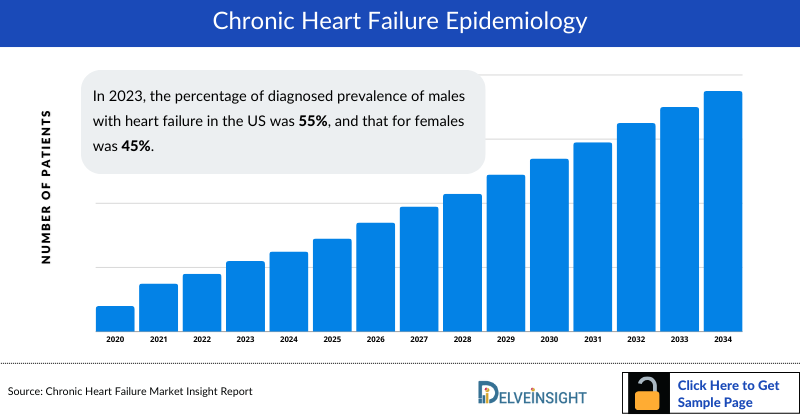
As the market is derived using the patient-based model, the Chronic Heart Failure epidemiology chapter in the report provides historical as well as forecasted epidemiology segmented by total diagnosed prevalent cases of heart failure, gender-specific cases of heart failure, ejection fraction-specific cases of heart failure, NYHA class-specific cases of heart failure, type-specific cases of heart Failure, and age-specific cases of heart failure in the 7MM covering the US, EU4 (Germany, France, Italy, Spain) and the UK, and Japan from 2020 to 2034.
Key findings from the Chronic Heart Failure Epidemiological Forecast
- Driven by multiple factors, the number and distribution of reported cases of Chronic Heart Failure have increased over time in the 7MM, among which the US contributed the major patient share.
- As per DelveInsight’s estimate, the total Chronic Heart Failure diagnosed prevalent cases in the 7MM were approximately 20,360,000 in 2023.
- In 2023, the percentage of diagnosed prevalence of males with heart failure in the US was 55%, and that for females was 45%.
- In the UK, among all the four NYHA Classes of heart failure, Class II accounted for around 45% of the total diagnosed prevalent heart failure cases in 2023.
- Among the EU4, the highest number of diagnosed prevalent cases of Chronic Heart Failure were found in Germany, followed by France, and Spain, and the lowest number of diagnosed prevalent cases in Italy in 2023.
- In Japan, the age-specific dignosed prevalent cases of heart failure in 2023 accounted for approximately 4,444,000 (for age group more than 60 years), 634,900 (for age group 40-59 years), and 211,600 (for age group below 39 years).
Chronic Heart Failure Epidemiology Segmentation in the 7MM
- Total Diagnosed Prevalent Cases of Heart Failure
- Gender-specific cases of Heart Failure
- Ejection fraction-specific cases of Heart Failure
- NYHA class-specific cases of Heart Failure
- Type-specific cases of Heart Failure
- Age-specific cases of Heart Failure
Chronic Heart Failure Market Recent Developments
- In October 2025, the FDA approved Lasix® ONYU, a novel furosemide injection drug-device combo from SQ Innovation and Ligand Pharmaceuticals for treating edema in adults with chronic heart failure. Lasix ONYU features a high-concentration formulation with Ligand’s Captisol® technology and a reusable infusor, enabling subcutaneous administration at home without healthcare professional supervision.
- In April 2025, Mesoblast (ASX:MSB; Nasdaq:MESO) announced plans to meet with the FDA to discuss the accelerated approval pathway for Revascor® (rexlemestrocel-L) in treating ischemic chronic heart failure with reduced ejection fraction (HFrEF) and inflammation.
- In January 2025, the FDA approved the abbreviated new drug application (ANDA) for Lupin’s Sacubitril and Valsartan tablets, the generic equivalent of Novartis' Entresto, used to reduce cardiovascular risks in adults with chronic heart failure and decreased ejection fraction.
- In January 2025, FIRE1 announced it received Breakthrough Device Designation from the FDA and was accepted into the FDA’s Total Product Lifecycle Advisory Program (TAP). FIRE1’s Norm heart failure management system empowers patients with physician-directed self-management, reducing healthcare staff burden and helping patients stay healthier at home.
Chronic Heart Failure Drug Analysis
The drug chapter segment of the Chronic Heart Failure treatment market report encloses a detailed analysis of Chronic Heart Failure-marketed drugs and late-stage (Phase III and Phase II) Chronic Heart Failure pipeline drugs analysis. It also helps understand the Chronic Heart Failure clinical trial details, expressive pharmacological action, agreements and collaborations, approval and patent details, advantages and disadvantages of each included drug and the latest news and press releases.
Congestive Heart Failure Marketed Drugs
-
INJECTAFER (ferric carboxymaltose injection)/FERINJECT: American Regent, Vifor, and Daiichi Sankyo
INJECTAFER (ferric carboxymaltose injection) is indicated for the treatment of iron deficiency in adult patients with heart failure; Iron Deficiency Anemia (IDA) in adult and pediatric patients 1-year of age and older who have either intolerance to oral iron or unsatisfactory response to oral iron; and adult patients with IDA who have non-dialysis dependent chronic kidney disease. Its dosing for iron deficiency in adult patients with heart failure and NYHA class II/III is based on patient weight and hemoglobin level starting at a single 500mg dose up to two 1000mg doses separated by six weeks. A maintenance dose of 500mg may be administered at 12, 24, and 36 weeks for certain patients based on their serum ferritin levels and transferrin saturation value. INJECTAFER is manufactured and marketed under the name of FERINJECT (Ferric Carboxymaltose) by CSL Vifor outside of North America. CSL Vifor specializes in strategic global partnering, in-licensing and developing, manufacturing, and marketing pharmaceutical products for precision healthcare, aiming to help patients around the world lead better, healthier lives. In June 2023, Daiichi Sankyo and American Regent announced that the US FDA approved INJECTAFER for the treatment of iron deficiency in adult patients with heart failure categorized as NYHA class II/III to improve exercise capacity. The approval was supported by INJECTAFER data from a randomized controlled study CONFIRM-HF.
-
INPEFA (sotagliflozin): Lexicon Pharmaceuticals and Viatris
INPEFA (sotagliflozin) is an oral inhibitor of two proteins responsible for glucose regulation known as SGLT2 and SGLT1. SGLT2 is responsible for glucose reabsorption by the kidney, and SGLT1 is responsible for glucose absorption in the gastrointestinal tract. In May 2023, Lexicon Pharmaceuticals announced that the US FDA had approved INPEFA (sotagliflozin) to reduce the risk of cardiovascular death, hHF, and uHF visits in adults with heart failure or Type 2 Diabetes Mellitus, Chronic Kidney Disease, and other cardiovascular risk factors. The broad label encompasses heart failure patients across the full range of LVEF, including HFpEF and HFrEF, and for patients with or without diabetes. The approval of INPEFA in heart failure indication, along with the breadth of the label, is a major milestone in Lexicon’s path to fulfilling its mission of pioneering medicines that transform patients’ lives.
Chronic Heart Failure Emerging Drugs
-
Omecamtiv mecarbil: Cytokinetics
Omecamtiv mecarbil is a selective small-molecule cardiac myosin activator. It is designed to directly target the contractile mechanism or pumping function of the heart. By stimulating cardiac myosin, a protein responsible for converting chemical energy into the mechanical force that helps the heart contract, omecamtiv mecarbil may improve cardiac muscle performance. Preclinical research has shown that cardiac myosin activators increase cardiac contractility without affecting intracellular myocyte calcium concentrations or myocardial oxygen consumption. It has completed its Phase III for Chronic Heart Failure and its Phase III for HFrEF is anticipated in the fourth quarter of 2024.
-
KERENDIA (finerenone): Bayer
Finerenone is a nonsteroidal, selective Mineralocorticoid Receptor (MR) antagonist that has been shown to block the harmful effects of MR overactivation. MR overactivation contributes to Chronic Kidney Disease (CKD) progression and cardiovascular damage, which can be driven by metabolic, hemodynamic, or inflammatory and fibrotic factors. Finerenone is marketed as KERENDIA or, in some countries, as FIRIALTA, and approved for the treatment of adult patients associated with Type II Diabetes (T2D) in more than 90 countries worldwide, including in China, Europe, Japan, and the US. It has completed its Phase III trial for heart and left ventricular ejection fraction =40% and the company is anticipating the first submission of the drug by mid-2025.
Chronic Heart Failure Drugs Market Insights
Currently, heart failure treatment depends on angiotensin-converting enzyme inhibitors, angiotensin receptor II blockers, beta-blockers, and diuretics. Other therapies, such as aldosterone antagonists, amiodarone, antiaggregants, anticoagulants, calcium antagonists, diuretics, and nitrates, are used to treat patients affected by heart failure. The majority of therapies are prescribed in combination, and beta-blockers are one of the most prescribed classes.
Among the approved therapies, ENTRESTO is Novartis' one of the most important drugs, and its revenue is expected to rise in the next years. At present, ENTRESTO leads the Chronic Heart Failure market among the approved therapies. After a slow beginning, ENTRESTO has emerged as one of Novartis' most important growth drivers. With the current approval in preserved ejection fraction, ENTRESTO is getting bigger and better.
For many years, ENTRESTO had unparalleled access to the Chronic Heart Failure market; nevertheless, the introduction of SGLT2 inhibitors (FARXIGA, and JARDIANCE), VERQUVO, and other new medicines will pose a threat to this billion-dollar medication. In addition to this, Novartis expects to lose exclusivity in the United States in 2025. There is a threat of generics. Several patent lawsuits are being pursued by Novartis.
SGLT2 inhibitors have also made inroads into the Chronic Heart Failure market. Even though JARDIANCE and FARXIGA are old candidates, they are new to the Chronic Heart Failure market. The future of SGLT-2 drugs in heart failure appears to be promising. Even though both medications appear to be promising, AstraZeneca and Lilly/Boehringer will not have much time to convince heart specialists because FARXIGA's US patent expires in 2025 and JARDIANCE's expires in 2028. Sotagliflozin is a newly approved SGLT2 inhibitor, and gaining market share from older medications such as FARXIGA and JARDIANCE could be difficult.
Chronic Heart Failure Market Outlook
After a scarcity of sustainable new therapies for more than a decade, new classes of agents for the treatment of patients with Chronic Heart Failure were approved by the US FDA – VERQUVO (vericiguat), ENTRESTO (sacubitril/valsartan), a combined Angiotensin Receptor-neprilysin Inhibitor (ARNI) and CORLANOR (ivabradine), a sinoatrial node modulator. Both drugs are recommended for use as part of a comprehensive medical therapy regimen.
Recently approved INJECTAFER (ferric carboxymaltose injection)/FERINJECT by American Regent, Vifor, and Daiichi Sankyo and INPEFA (sotagliflozin) by Lexicon Pharmaceuticals and Viatris, in 2023 are the newest additions for treating heart failure. These drugs are indicated for the treatment of iron deficiency in adult patients with heart failure and to reduce the risk of cardiovascular death, hHF, and uHF visits in adults with heart failure or type 2 diabetes mellitus, chronic kidney disease, and other cardiovascular risk factors, respectively. VERQUVO is a stimulator of soluble guanylate cyclase.
Other than these, other candidates like FARXIGA (dapagliflozin) or JARDIANCE (empagliflozin) are recommended to reduce the risk of heart failure hospitalization and cardiovascular death in HFrEF patients already receiving guideline-directed medical therapy, regardless of the presence of Type 2 Diabetes mellitus. Therefore, the current treatment landscape for this patient pool includes a range of drugs with a variable mechanism of action, offering safe and tolerable treatment options. Recently, some approved drugs also got the label expansion for treating Chronic Heart Failure in pediatric and adult patients.
Many Chronic Heart Failure Companies are investing in different mechanisms of action for the treatment of Chronic Heart Failure, SGLT2 Inhibitors, cardiac myosin activators, myeloperoxidase inhibitors, mineralocorticoid receptor antagonists, GLP-1 receptor agonists, cell therapies, and others, which will boost the Chronic Heart Failure market in the future. Conclusively, the emerging pipeline for treating patients with Chronic Heart Failure is filled with potential drugs and cell therapies that can significantly capture a major market share, once launched into the Chronic Heart Failure treatment space.
The Potential Chronic Heart Failure Drugs and cell therapy that can mark a significant change in the upcoming period include vicadrostat + empagliflozin (Boehringer Ingelheim), Semaglutide and Ziltivekimab (Novo Nordisk), Omecamtiv Mecarbil (Cytokinetics), REVASCOR ([rexlemestrocel-L] Mesoblast), Balcinrenone + dapagliflozin and Mitiperstat (AstraZeneca), Tirzepatide ([LY3298176] Eli Lilly and Company), CardiAMP Cell Therapy (BioCardia), KERENDIA ([finerenone], Bayer), CRD-740 (Cardurion Pharmaceuticals), and others are evaluating their lead candidates in different stages of clinical development, respectively Key players like Bayer (KERENDIA [finerenone]), BioCardia (CardiAMP Cell Therapy), Mesoblast (REVASCOR [rexlemestrocel-L]), scPharmaceuticals (FUROSCIX Infusor), Cytokinetics (omecamtiv mecarbil), Lexicon Pharmaceuticals (sotagliflozin) and others are evaluating their lead candidates in different stages of clinical development.
- The Chronic Heart Failure Market Size in the 7MM was approximately USD 5,600 million in 2023 and is projected to grow during the forecast period (2020-2034).
- Among the 7MM the US contributed the largest market share of the total Chronic Heart Failure market size and will continue to experience a steep rise in the market size throughout the forecast period.
- In 2023, among the EU4 countries and the UK, Germany had the maximum revenue share, while the UK had the smallest market share.
Chronic Heart Failure Drug Uptake
This section focuses on the uptake rate of potential Chronic Heart Failure drugs expected to be launched in the market during 2024–2034. The landscape of Chronic Heart Failure treatment market has experienced a profound transformation with the uptake of novel drugs. These innovative therapies are redefining standards of care. Furthermore, the increased uptake of these transformative drugs is a testament to the unwavering dedication of physicians, oncology professionals, and the entire healthcare community in their tireless pursuit of advancing cancer care. This momentous shift in treatment paradigms is a testament to the power of research, collaboration, and human resilience.
Chronic Heart Failure Clinical Trials Activities
The Chronic Heart Failure therapeutics market report provides insights into different therapeutic candidates in Phase III and Phase II stages. It also analyzes key Chronic Heart Failure Companies involved in developing targeted therapeutics.
Chronic Heart Failure Pipeline Development Activities
The Chronic Heart Failure therapeutics market report covers information on collaborations, acquisitions and mergers, licensing, and patent details for Gastric cancer therapies.
Latest KOL Views on Chronic Heart Failure
To keep up with current epidemiology and market trends, we take KOLs and SMEs’ opinions working in the Chronic Heart Failure domain through primary research to fill the data gaps and validate our secondary research. Industry Experts contacted for insights on Chronic Heart Failure's evolving treatment landscape, patient reliance on conventional therapies, patient’s therapy switching acceptability, drug uptake along with challenges related to accessibility, include Medical/scientific writers, Cardiologists, and Professors: MD, Cardiologist at Mayo Clinic, Cardiologist and HOD of Mount Sinai Hospital, and Others.
Delveinsight’s analyst connected with 50+ KOLs (cardiologists, physicians, researchers, principal investigators, etc.) across the 7MM. Centers such as Mount Sinai Hospital, Mayo Clinic, Southern Illinois University; University of Verona, Verona, Italy; University of Valencia and INCLIVA Biomedical Research Institute, Valencia, Spain; and others were contacted. Their opinion helps to understand and validate current and emerging therapies, treatment patterns, and Chronic Heart Failure market trends. This will support the clients in potential upcoming novel treatments by identifying the overall scenario of the market and the unmet needs.
Chronic Heart Failure Therapeutics Market: Qualitative Analysis
We perform Qualitative and market Intelligence analysis using various approaches, such as SWOT and Conjoint Analysis. In the SWOT analysis, strengths, weaknesses, opportunities, and threats in terms of disease diagnosis, patient awareness, patient burden, competitive landscape, cost-effectiveness, and geographical accessibility of therapies are provided. These pointers are based on the Analyst’s discretion and assessment of the patient burden, cost analysis, and existing and evolving Chronic Heart Failure treatment market landscape.
Conjoint Analysis analyzes multiple approved and emerging therapies based on relevant attributes such as safety, efficacy, frequency of administration, route of administration, and order of entry. Scoring is given based on these parameters to analyze the effectiveness of therapy. According to these parameters, the final weightage score and the ranking of the emerging therapies are decided.
Reducing the risk of the combined endpoint of cardiovascular death or hospitalization for heart failure, based on a time-to-event analysis, played an important role as a part of the efficacy parameter. Moreover, the adverse events during the analysis are majorly observed as safety parameters. The ranking of drugs and cell therapies was done accordingly.
Chronic Heart Failure Therapeutics Market Access and Reimbursement
The burden of heart failure is multifaceted, including impacts on quality of life, medical comorbidities, and financial costs to patients and the health care system. Medications constitute the majority of direct costs for patients with heart failure. Many nonprofit organizations, companies, government hospitals, and private healthcare insurance companies provide low-cost copay programs to reduce the financial burden of medication on the patient. By receiving financial assistance, patients can focus on improving their health and overall quality of life.
According to the NICE UK, ENTRESTO is recommended as an option for treating symptomatic Chronic Heart Failure with reduced ejection fraction only in people:
- NYHA Class II-IV symptoms
- With a left ventricular ejection fraction of 35% or less
- Who are already taking a stable dose of Angiotensin-converting Enzyme (ACE) inhibitors or Angiotensin II Receptor blockers (ARBs)
This guidance is not intended to affect the position of patients whose treatment with sacubitril valsartan was started within the NHS before this guidance was published. Treatment of those patients may continue without change to whatever funding arrangements were in place for them before this guidance was published until they and their NHS clinician consider it appropriate to stop.
The Chronic Heart Failure therapeutics market report further provides detailed insights on the country-wise accessibility and reimbursement scenarios, cost-effectiveness scenario of approved therapies, programs making accessibility easier and out-of-pocket costs more affordable, insights on patients insured under federal or state government prescription drug programs, etc.
Chronic Heart Failure Therapeutics Market Report Scope
- The Chronic Heart Failure therapeutics market report covers a segment of key events, an executive summary, and a descriptive overview, explaining its causes, signs and symptoms, pathogenesis, and currently available therapies.
- Comprehensive insight has been provided into the epidemiology segments and forecasts, the future growth potential of diagnosis rate, disease progression, and treatment guidelines.
- Additionally, an all-inclusive account of the current and emerging therapies, along with the elaborative profiles of late-stage and prominent therapies, will impact the current Chronic Heart Failure treatment market landscape.
- A detailed review of the Chronic Heart Failure treatment market, historical and forecasted Chronic Heart Failure market size, Chronic Heart Failure drugs market share by therapies, detailed assumptions, and rationale behind our approach is included in the report, covering the 7MM drug outreach.
- The Chronic Heart Failure therapeutics market report provides an edge while developing business strategies, by understanding trends, through SWOT analysis and expert insights/KOL views, patient journey, and treatment preferences that help in shaping and driving the 7MM Chronic Heart Failure drug smarket.
Chronic Heart Failure Therapeutics Market Report Insights
- Patient-based Chronic Heart Failure Market Forecasting
- Therapeutic Approaches
- Chronic Heart Failure Pipeline Drugs Analysis
- Chronic Heart Failure Market Size and Trends
- Existing and Future Chronic Heart Failure Drugs Market Opportunity
Chronic Heart Failure Therapeutics Market Report Key Strengths
- 11-Year Chronic Heart Failure Market Forecast
- The 7MM Coverage
- Chronic Heart Failure epidemiology segmentation
- Key Cross Competition
- Conjoint Analysis
- Chronic Heart Failure Drugs Uptake
- Key Chronic Heart Failure Market Forecast Assumptions
Chronic Heart Failure Therapeutics Market Report Assessment
- Current Chronic Heart Failure Treatment Market Practices
- Chronic Heart Failure Unmet Needs
- Chronic Heart Failure Pipeline Drugs Analysis Profiles
- Chronic Heart Failure Drugs Market Attractiveness
- Qualitative Analysis (SWOT and Conjoint Analysis)
Key Questions Answered in the Chronic Heart Failure Market
Chronic Heart Failure Treatment Market Insights
- What was the Chronic Heart Failure Drugs Market Share (%) distribution in 2020, and what would it look like in 2034? What are the contributing factors for this growth?
- What are the key findings of the market across the 7MM, and which class will account for the largest market share during the forecast period (2024–2034)?
- How will the launch of FUROSCIX affect the treatment paradigm in the management of Chronic Heart Failure?
- Will the label expansion of ENTRESTO bring a significant impact on its market growth during the forecast period?
- What would the impact of SGLT2 inhibitors be on the treatment paradigm in the management of Chronic Heart Failure?
- What is the impact of off-label usage of conventional therapies on the current Chronic Heart Failure market and what are the prospects? What are the various strategies adopted by the pharma giants to tackle this threat?
- What are the pricing variations among different geographies for approved and off-label therapies?
- How would the market drivers, barriers, and future opportunities affect the market dynamics and subsequent analysis of the associated trends?
Chronic Heart Failure Epidemiology Insights
- What are the disease risks, burdens, and FUROSCIX Unmet needs? What will be the growth opportunities across the 7MM concerning the patient population of Chronic Heart Failure?
- What is the historical and forecasted Chronic Heart Failure patient pool in the 7MM, and where can one observe the highest patient population and growth opportunities?
- What are the key factors driving the epidemiology trends for seven major markets covering the United States, EU4 (Germany, Spain, France, Italy), the UK, and Japan?
- Which age group accounts for the major share of the diagnosed Chronic Heart Failure population?
- Which Class of Chronic Heart Failure is the largest contributor to the total Chronic Heart Failure patient pool among all the four NYHA Classes?
- What factors are contributing to the rise in the prevalence rate of Heart failure?
Current Chronic Heart Failure Treatment Market Scenario, Marketed Drugs, and Emerging Therapies
- What are the current options for the treatment of Chronic Heart Failure? What are the current guidelines for treating Chronic Heart Failure in the US and Europe?
- How many companies are developing therapies for the treatment of Chronic Heart Failure?
- How many emerging therapies are in the mid-stage and late stage of development for treating Chronic Heart Failure?
- What are the recent novel therapies, targets, mechanisms of action, and technologies developed to overcome the limitations of existing therapies?
- What are the key designations that have been granted for emerging therapies for Chronic Heart Failure?
- What is the cost burden of approved therapies on the patient?
- What are the key designations that have been granted for emerging therapies for Chronic Heart Failure?
- Patient acceptability in terms of preferred treatment options as per real-world scenarios?
- What are the country-specific accessibility issues of expensive, recently approved therapies? Focus on reimbursement policies.
- What is the 7MM historical and forecasted Chronic Heart Failure Drugs Market?
Reasons to Buy the Chronic Heart Failure Market Report
- The Chronic Heart Failure therapeutics market report will help develop business strategies by understanding the latest trends and changing treatment dynamics driving the Chronic Heart Failure market.
- Insights on patient burden/disease: Chronic Heart Failure Prevalence, evolution in diagnosis, and factors contributing to the change in the epidemiology of the disease during the forecast years.
- To understand the existing Chronic Heart Failure drugs market opportunity in varying geographies and the growth potential over the coming years.
- Distribution of historical and current patient share based on real-world prescription data along with reported sales of approved products in the US, EU4 (Germany, France, Italy, and Spain), the United Kingdom, and Japan.
- Identifying strong upcoming players in the Chronic Heart Failure drugs market will help devise strategies that will help get ahead of competitors.
- Detailed analysis and ranking of class-wise potential current and emerging therapies under the Conjoint analysis section to provide visibility around leading classes.
- Highlights of access and reimbursement policies of approved therapies, barriers to accessibility of expensive off-label therapies, and patient assistance programs.
- To understand Key Opinion Leaders’ perspectives around the accessibility, acceptability, and compliance-related challenges of existing treatment to overcome barriers in the future.
- Detailed insights on the unmet needs of the existing Chronic Heart Failure drugs market so that the upcoming players can strengthen their development and launch strategy.
Stay Updated with us for Recent Articles:-